Green, Greener, Greenest–Which City? Says Who? And How?

260cd679-e63d-417f-84b1-be816cf7f658-2060x1236

The Clifton Suspension Bridge in Bristol, 2015 Green Capital of Europe. Photograph: Destination Bristol.com/EPA

This is one of the environmentally-oriented rankings that many of us think about, from time to time, and then throw our hands in the air in frustration at the criteria used for judging green-ness, or what is often green-ish-ness. Thanks to the Guardian for asking the questions we want answered when it comes to rankings like this:

Where is the world’s greenest city?

Bristol is the ‘green capital’ of Europe, but its predecessor Copenhagen comes top in a Europe-wide index. Curitiba, San Francisco and Singapore all have strong eco-friendly claims too – so what’s the best way to compare cities’ greenness?

It’s easy to say we’d like our cities to be cleaner and greener. But what does that even mean? “Greenness” is a concept that’s hard to pin down – there’s no official list of the top 50 most eco-friendly cities, nor any widely agreed set of measurements for working out how green a city actually is.


Continue reading

Don’t Go Away Mad, Just Go Away

koch_sitegraphic-830x467

The Koch brothers are a wondrous phenomenon. You probably knew that. What can you do (?), you might ask. We know the feeling. Well, here is something. A public service announcement from our colleagues at EcoWatch, linking to a petition effort worthy of your consideration:

The Natural History Museum just released an unprecedented letter signed by the world’s top scientists, including several Nobel laureates, calling on science and natural history museums to cut all ties to the fossil fuel industry.

The letter comes on the heels of recent news that Smithsonian-affiliated scientist Willie Soon took $1.25 million from the Koch brothers, Exxon Mobil, American Petroleum Institute and other covert funders to publish junk science denying man-made climate change, and failed to disclose any funding-related conflicts of interest.

In particular, it points a finger at the Smithsonian National Museum of Natural History (D.C.) and the American Museum of Natural History (NY), where David Koch is a member of the board, a major donor and exhibit sponsor.

Oil mogul David Koch sits on the boards of our nation’s largest and most respected natural history museums, while he bankrolls groups that deny climate science.

Sign this petition to the Smithsonian and the American Museum of Natural History: It’s time to get science deniers out of science museums. Kick Koch off the Board! Continue reading

And the Wheels of the Bus Go Round and Round…

Bristol’s Bio Bus runs on faeces and household waste. Photograph: Ben Birchall/PA

A little over 2 years ago contributor Megan Madill wrote about one of the “Green Cities” of Europe, not to mention all the wonderful bike sharing (and bike friendly) initiatives worldwide.

But this news from the city of Bristol via the Guardian takes first prize. The innovation itself is a wonderful thing, but our applause actually goes more to the cheeky graphics.

UK’s first ‘poo bus’ hits the road

Britain’s first “poo bus”, which runs on human and household waste, goes into regular service this month. Continue reading

Rooftop Solar Panels in Utility Corporation’s Cross-Hairs

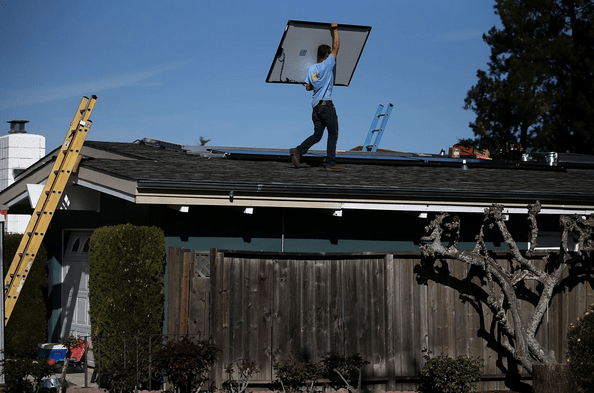
SolarCraft worker Craig Powell carries a solar panel on the roof of a home in San Rafael, Calif. The average price of photovoltaic cells has plummeted 60 percent since 2010. (Justin Sullivan/Getty Images)

SolarCraft worker Craig Powell carries a solar panel on the roof of a home in San Rafael, Calif. The average price of photovoltaic cells has plummeted 60 percent since 2010. (Justin Sullivan/Getty Images)

Conflicts between the use of alternative energy technologies such as solar and the status quo of fossil fuel based utility companies is nothing new, but was less of an issue when the infrastructure of the former was so costly few people could afford the investments required. But more efficient designs and lower production costs have made the panels and system more accessable to more people, enough so that utility executives are pushing for legislation that will stem the tide by mounting surcharges and other disincentives.

“The utilities are fighting tooth and nail,” said Scott Peterson, director of the Checks and Balances Project, a Virginia nonprofit that investigates lobbyists’ ties to regulatory agencies. Peterson, who has tracked the industry’s two-year legislative fight, said the pivot to public utility commissions moves the battle to friendlier terrain for utilities. The commissions, usually made up of political appointees, “have enormous power, and no one really watches them,” Peterson said. Continue reading

Arizona Utilities: A Thorn in the Side of Distributed Generation

Nationwide, utilities have been wary of the expansion of residential solar (termed Distributed Generation in the energy industry), as we discussed in a previous post. The contentions between utility executives and DG providers came to head an announcement from Salt River Project.

SolarCity Files Lawsuit Against Salt River Project for Antitrust Violations

SolarCity’s dispute with SRP claims that that new surcharges “sabotaged” customers’ ability to generate their own power.

The crux of SRP’s (a major Arizona utility) new fee is this: all customers who have solar arrays installed after December of 2014 will be assessed a $50 “demand charge,” which will apply regardless of how much or little power the customer’s array produces. Therefore, any new residential solar customer should expect to pay at least $600 per year, in addition to their variable utility costs. SunPower, the solar company for which I work, has determined that the SRP fees have made residential solar non-viable overnight. SolarCity has taken the same position and is now suing the utility for antitrust violations.

Continue reading

21st Century Alchemy

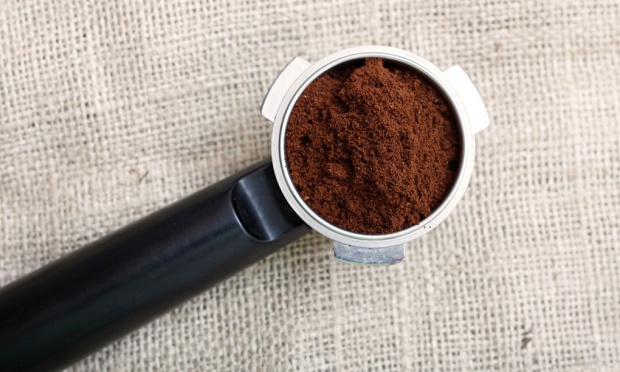
Scientists at the City University of Hong Kong can turn coffee grounds and stale bakery goods into a sugary solution that can be applied to manufacture plastic. Photograph: Alamy

Scientists at the City University of Hong Kong can turn coffee grounds and stale bakery goods into a sugary solution that can be applied to manufacture plastic. Photograph: Alamy

We frequently talk about the recycling on these pages, with an eye toward the developing awareness that the concept is no longer limited to inorganic, static materials. This recent article in the Guardian indicates that plant cellulose based plastic is just the tip of the iceberg in the possible ways to convert the mountains of food waste in many parts of the world into materials with environmental benifits.

Scientists at the City University of Hong Kong have found that they can turn coffee grounds and stale bakery goods – collected from a local Starbucks – into a sugary solution that can be used to manufacture plastic. The food waste was mixed with bacteria and fermented to produce succinic acid, a substance usually made from petrochemicals, that can be found in a range of fibres, fabrics and plastics. Continue reading

Transformative Practices For A Better World

Christophe Archambault/AFP/Getty Images

Students use tablets in a classroom in Mae Chan, a remote town in Thailand’s northern province. Christophe Archambault/AFP/Getty Images

Scanning the developing world, anywhere that poverty puts lives at risk, it is useful to have a short list of particularly transformative practices as in this four minute story podcast from National Public Radio (USA):

There are so many projects in global health that sometimes it’s hard to figure out which ones are the most important.

So Lawrence Berkeley National Laboratory set out to list the 50 breakthroughs that would most transform the lives of the poor, especially in sub-Saharan Africa and South Asia. Shashi Buluswar, an author of the study, spoke with Morning Edition‘s Renee Montagne. Here’s a sampling:

A low cost, fuel-free way to desalinate water. Many people in the world do not have enough fresh water to grow crops, and more and more fresh water runs off into oceans. Desalination creates usable water out of salty or brackish sources. “Right now it’s tremendously energy intensive and expensive,” Buluswar tells Montagne, “so trying to come up with a much more affordable, scalable and energy-efficient way of desalinating water would be tremendous.” Continue reading

Fixed-Dome Bio Gas

Bio-

Bio-Gas Plant

In my opinion sustainable tourism/practices, if done correctly and efficiently, will both benefit the environment and a company or individual. Although today, we are still trying to accomplish the previous with as much at hand as possible. Ideally, sustainability will come hand in hand with positive environmental outcomes and social and economic benefits.
However, some practices are more beneficial (in both instances) than others. Take recycling paper for example: the margin in producing new paper vs. recycling is much lower so incentives are likely lower. Aluminum cans on the other hand are much more cost effective to recycle, bringing higher benefits to both the producer (by reusing material) and for the environment (aluminum has a longer decomposition time). Continue reading

Urban Homesteading, Inspiration For Kayal Villa & 51

This urban homestead produces 6,000 pounds of food a year.

This urban homestead produces 6,000 pounds of food a year.

When Kayleigh completed her internship, she left in place a great banana genome initiative as part of the edible gardens landscape at Marari Pearl; ditto for the farm-to-table initiative at Kayal Villa, supplying organic produce and dairy to 51, the restaurant at Spice Harbour. Reading the article below, as always with such stories, we are glad to be part of this particular corner of the green revolution with goals akin to those of a family in Pasadena, California, USA:

Think you can’t grow much food in an urban area? Think again. One family’s 4,000 square foot farm in Pasadena, California “not only feeds a family but revolutionizes the idea of what can be done in a very unlikely place—the middle of a city.” KCET reporter Val Zavala gives us a glimpse into the Dervaes family’s Path to Freedom Urban Homestead. “I brought the country to the city rather than having to go out to the country,” said Jules Dervaes, who created the farm with his three adult children, Justin, Anais and Jordanne.

Continue reading

Please Do The Needful

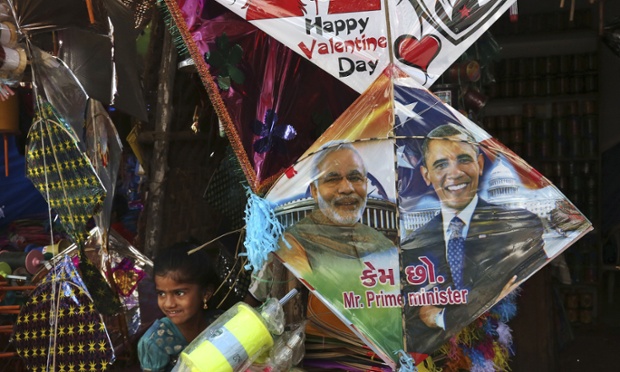
An Indian girl stands near a kite with portraits of India’s Prime Minister Narendra Modi and US President Barack Obama, displayed for sale at a shop ahead of the Hindu festival of Makar Sankranti, also knowns as kite festival, in Hyderabad, India, 12 January 2015. Photograph: Mahesh Kumar A./AP

An Indian girl stands near a kite with portraits of India’s Prime Minister Narendra Modi and US President Barack Obama, displayed for sale at a shop ahead of the Hindu festival of Makar Sankranti, also knowns as kite festival, in Hyderabad, India, 12 January 2015. Photograph: Mahesh Kumar A./AP

Down here in Kerala the air is perfectly clean, and the biodiversity hotspot of the Western Ghats may spoil us into thinking all is well with the environment; but it is not. And the meeting of these two heads of state could do something substantive about it. We hope they do (the needful, as they say in India):

…“The co-operation on clean energy and climate change is critically important,” Ben Rhodes, the deputy national security adviser, told a conference call with reporters.

America is hoping to persuade India, one of the world’s biggest emitters, to commit to an ambitious post-2020 plan for reining in its greenhouse gas emissions ahead of the international climate change meeting in Paris this December. Continue reading

Samso Sheds Light On Maine’s Green Desires

18-SAMSO-1-largeHorizontal375

Wind turbines on the Danish island of Samso. Credit Erik Refner for The New York Times

College of the Atlantic, referenced in the story below, came to our attention once before, to very good effect. The wonderful Krulwich, who has been a mainstay of our onward links since the early days, got us to follow the College. And here it is again, in good light. Also, we knew that Danes creatively care about light, and had read about this island, but had not shared a story about the island until now:

Danish Ingenuity Fuels Green-Energy Ideas

Residents of islands off Maine’s coast seek to draw on the experiences of the Danish island Samso in an effort to explore alternative sources of light and heat.

Not Cool, Greenpeace

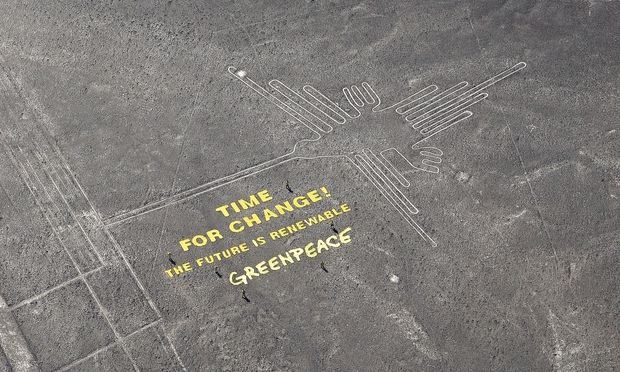
Greenpeace’s ‘time for change’ message next to the hummingbird geoglyph in Nazca. Photograph: Thomas Reinecke/TV News

Greenpeace’s ‘time for change’ message next to the hummingbird geoglyph in Nazca. Photograph: Thomas Reinecke/TV News

Hard to believe, but sometimes otherwise smart people do really dumb things, and sometimes apologies cannot correct the damage:

Greenpeace has apologised to the people of Peru after the government accused the environmentalists of damaging ancient earth markings in the country’s coastal desert by leaving footprints in the ground during a publicity stunt meant to send a message to the UN climate talks delegates in Lima. Continue reading

Lima, Climate Change, Key Takeaways

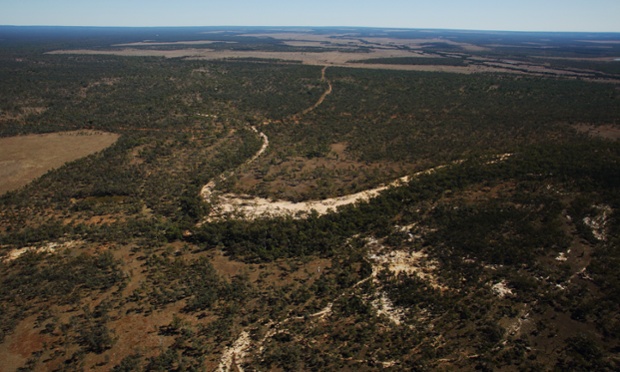
The Galilee basin in central Queensland: ‘it would produce 6% of the carbon necessary to take the planet past a 2C temperature rise, the red line set by the world’s governments’. Photograph: Andrew Quilty/PR

The Galilee basin in central Queensland: ‘it would produce 6% of the carbon necessary to take the planet past a 2C temperature rise, the red line set by the world’s governments’. Photograph: Andrew Quilty/PR

We new that his leaving 350 would not mean any retreat from activism. Proof positive here. Thanks to Bill McKibben and the Guardian for their attention to this week’s meetings in Lima:

The world’s nations are meeting in Lima, near the equator, to pledge and promise about global warming. But the actual worth of those promises can be more accurately gauged in the far north and the far south of the planet, where real decisions in the next months will show whether the climate concern is rhetorical or real.

By now most people know about the northern example: the tar sands of Alberta. Some time in the coming months the new Republican-controlled Congress will demand that Obama approve the construction of the Keystone XL Pipeline. If he vetoes that call and sticks to his principles, it will help keep expansion of the tar sands complex in check. That won’t make up for America’s vast expansion of oil and gas drilling in recent years, but it will send some kind of signal: there is a limit somewhere to how much fossil fuel we plan to extract. Continue reading

Rainwater Harvesting, Try This At Home

rainhouse

Thanks to Conservation for this reference to a concept, a design, and a design firm which all catch our full attention:

THIS ENTIRE HOUSE IS A WATER FILTER

Hungarian design firm IVANKA is an avant-garde concrete company. Over the past decade, they’ve developed unexpected ways to incorporate this utilitarian material into everything from designer handbags to BMW concept cars. Lately, though, the company is focusing not just on luxury goods but on the most basic of everyday resources: clean water. Their new “bio-concrete” could turn houses, schools, and factories into giant water filters to produce drinking water from rain. Continue reading

Who’s Got Your Back, Long Term?

Stewartjp-mediumThreeByTwo210We read both publications regularly, and find that both cover environmental issues well, as such; but the difference between this New York Times article and the New Yorker post we started the day with speaks for itself. We understand the purpose of the article below meeting current needs, but do we really need our news to be so parochial? Sorry, Times. You will have to work harder for your subscription money.

Steep Slide in Oil Prices Is Blessing for Most

If history is any guide, it’s hard to see falling oil prices as anything but good news for everyone whose fortunes aren’t tied to oil.

Doses Of Truth On Oil Prices, Alternative Energy And Climate Change

PHOTOGRAPH BY DANIEL ACKER/BLOOMBERG VIA GETTY

PHOTOGRAPH BY DANIEL ACKER/BLOOMBERG VIA GETTY

There is a quarter hour podcast about the Lima climate change talks that is as good as it gets in terms of bringing complex issues to a bearable level of simplicity (spoiler alert: our maven of doom is at her best in terms of realism), and that dose of information pairs well with this dose by Michael Specter, the New Yorker‘s other “tough truths” guy:

Just before the turn of the millennium, I met a man who had recently invested a fortune in wind power. He said he wanted to do all that he could to slow the course of climate change. He was also convinced that, as the world began to run out of oil, alternative sources of energy would offer a unique entrepreneurial opportunity. “Oil prices will fluctuate for a while,” he told me. “But, eventually, they can only move in one direction. Up. Oil is a finite resource and, as supplies dwindle, the costs will have to rise. That will make alternatives like wind power much more attractive.” Continue reading

Solar To Take Prime Position On Cost Basis Soon

iHF9w5iJW38M

Thanks to Bloomberg for the surprising news:

While You Were Getting Worked Up Over Oil Prices, This Just Happened to Solar

By Tom Randall

Continue reading

Neighborhood Electric Vehicles

Ecocruise Cruser Sport (Ecocruise Vehicles)

Ecocruise Cruser Sport (Ecocruise Vehicles)

Thanks to the BBC for this new entrant into our vocabulary:

Ecocruise Cruser Sport is the golf cart, accelerated

…Depending on the region in which they are registered, NEVs are limited by law (and usually, by engine output) to speeds below 25mph or 35mph. The best resemble earnest attempts at space capsules, the worst evoke street-legal golf carts (and often because they are, quite simply, street-legal golf carts).
Continue reading

The Worst News Of The Week

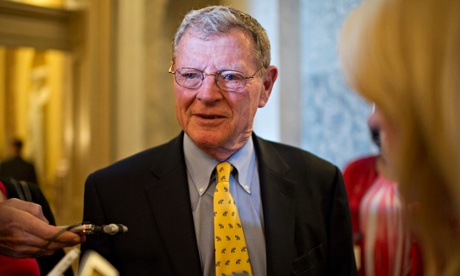
Republican Senator Jim Inhofe is expected to get the Senate top environmental job. Photograph: Tom Williams/Getty Images

Republican Senator Jim Inhofe is expected to get the Senate top environmental job. Photograph: Tom Williams/Getty Images

Read it and weep (thanks to the Guardian):

Climate change denier Jim Inhofe in line for Senate’s top environmental job

Obama faces a fight to protect his climate change agenda after midterm results suggest Senate’s top environmental post will fall to Republican stalwart of climate denial

The Senate’s top environmental job is set to fall to Jim Inhofe, one of the biggest names in US climate denial, but campaigners say Barack Obama will fight to protect his global warming agenda.

Continue reading

Don’t Just Sit There!

The WeBike cycling desk can be found at airports and train stations across in Western Europe. WeWatt

The WeBike cycling desk can be found at airports and train stations across in Western Europe. WeWatt

Do something! That is a call to action everyone has heard at some moment in their life, from a drill sergeant, a coach, a parent…and it turns out there is good reason to heed the call for the sake of longevity. And entrepreneurs are doing something about it to give you options in unexpected ways and places, as we learn in this story from National Public Radio (USA):

Amsterdam is famous for its laissez-faire attitude about extracurricular activities, its beautiful canals and of course, its bicycles. Now, even if you only have a layover at Amsterdam’s Schiphol Airport, you can get in some pedaling, and power your phone and other devices at the same time. Continue reading