Advances In Solar-Based Flight

We do not expect this to mean we will board such a plane anytime soon, but anyway thanks to the New York Times for this news about advances in in our ability to harness the sun in ever-better ways:

SOLAR-01-thumbStandardSwiss Pilots to Fly Solar Plane Around World

The trip, which will begin and end in Abu Dhabi, will involve about 25 days of flying over four to five months, with stops in Asia, the United States and Southern Europe or North Africa.

Add Agrivoltaics To Your Green Vocabulary

agrivoltaics

Farming food and fuel, side by side

Thanks to Conservation, and particularly Courtney White, for this synopsis:

What is the best way to utilize sunlight—to grow food or to produce fuel?

For millennia, the answer was easy: we used solar energy to grow plants that we could eat. Then, in the 1970s, the answer became more complex as fields of photovoltaic panels (PVPs) began popping up all over the planet, sometimes on former farmland. In the 1990s, farmers began growing food crops for fuels such as corn-based ethanol. The problem is that the food-fuel equation has become a zero-sum game. Continue reading

Grouse, Green Goals, Collaboration Required

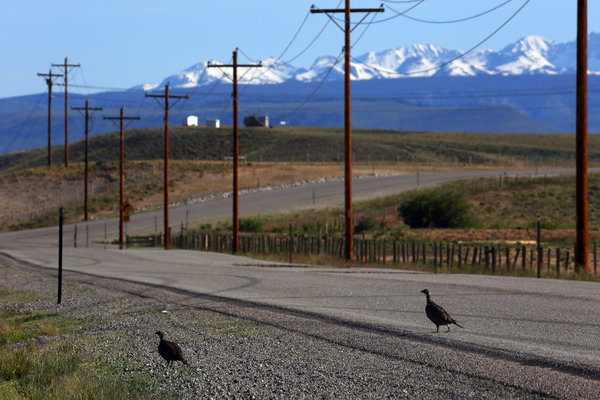
Sage grouse in a part of Wyoming where Shell has gas fields. Credit Jim Wilson/The New York Times

Sage grouse in a part of Wyoming where Shell has gas fields. Credit Jim Wilson/The New York Times

Conservation is a classic collective action challenge. Collaboration is a requisite for success. This New York Times report on the struggle between the energy needs of a country, and efforts to conserve a bird species illustrates how green priorities can sometimes conflict in unexpected ways, and how cooperation can prevail for the common good:

…On paper, at least, the Wyoming plan is in line with federal goals, officials say. It cordons off large areas as critical for the bird to survive, and its authors say it is the best compromise they could fashion.

Nestled in the gray-green sagebrush on the sprawling ranches or pecking their way along the dusty roads near the Pinedale Anticline gas fields, the squat, mottled-brown birds appeared unruffled. But they are persnickety creatures easily disturbed by human activities. Every year, males return to relatively open areas called leks, splaying their tail feathers and puffing up their chests as they waddle and call to attract hens. Vulnerable to predators like coyotes and eagles, the grouse depends on vast expanses of sagebrush for food and shelter. Wyoming’s plan would restrict development to levels that would not disturb the birds. For example, it would limit surface disturbance to 5 percent a square mile and ban activity within 0.6 miles of the leks. Continue reading

More On Tesla’s Mr. Musk

Photograph by Dario Cantatore/Getty.

Photograph by Dario Cantatore/Getty.

We like him more the more we hear of him, and while we do not know enough to gush, nor to promote his automotive products, we pass along this interesting news as recorded on the New Yorker‘s website:

Yesterday, one of the more interesting people in Silicon Valley did one of the more interesting things that the car industry has seen in a while. Elon Musk, the C.E.O. of Tesla, opened up all of his patents. “Tesla will not initiate patent lawsuits against anyone who, in good faith, wants to use our technology,” he wrote in a blog post. Tesla’s competitors can now freely take advantage of its batterieschargers, or sunroofs. Continue reading

New Tesla Model Test Driven

Samuel Gibbs test-drives a Tesla Model-S. Photograph: Antonio Zazueta Olmos

Samuel Gibbs test-drives a Tesla Model-S. Photograph: Antonio Zazueta Olmos

Its availability is limited to a few places. Its numbers are limited, period. But in the UK it is about to grow a new market, so this review is timely. We are not in the business of promoting automobiles or other consumer products but several La Paz Group contributors have been in the vicinity of the home location of this car and its claims of zero emissions are such that we could not help noting this remarkable thing:

…Inside it’s all premium Silicon Valley technology. Musk likes to think of Tesla as the “Apple” of cars, which might explain why there is what looks like a large iPad complete with Apple-style graphics where the centre console should be. The 17in touchscreen controls almost everything about the car, from the air conditioning and music to opening the sunroof and firing up the heated windscreen wipers. Continue reading

National Trust, Innovator With Alternative Energy

Plas Newydd National Trust property in Wales, where a new marine pump has been installed. Photograph: National Trust

Plas Newydd National Trust property in Wales, where a new marine pump has been installed. Photograph: National Trust

Thanks to the Guardian for its environmental coverage (which used to be more abundantly interesting, but credit still due for its commitment to coverage), and this story in particular:

A 300-year-old country mansion is to get environmentally-friendly heating from the ocean with the UK’s biggest marine source heat pump, the National Trust said. Continue reading

A Story About The Wind And The Cloud

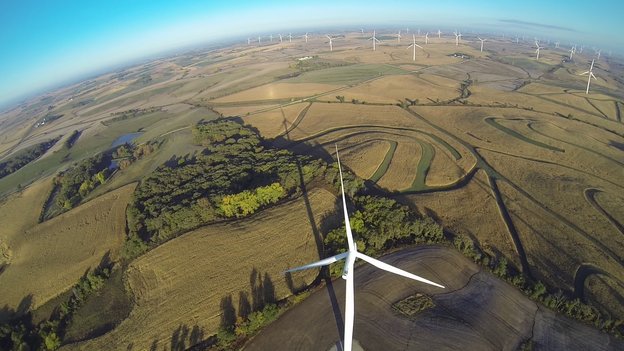
MidAmerican Energy's wind farm in Adair, Iowa. Facebook is working with MidAmerican to build a similar wind farm near Wellsburg, Iowa, where it will help power Facebook's planned data center. Courtesy of MidAmerican Energy

MidAmerican Energy’s wind farm in Adair, Iowa. Facebook is working with MidAmerican to build a similar wind farm near Wellsburg, Iowa, where it will help power Facebook’s planned data center. Courtesy of MidAmerican Energy

Thanks to National Public Radio (USA) for this story about sourcing power for the special needs of modern technology:

You hear the term “the cloud” or “cloud computing,” and you picture something puffy, white, clean and quiet. Cloud computing is anything but.

Even from a distance you can hear the hum of a modern data center. Last week, I visited one of the largest in Santa Clara, Calif., in the heart of Silicon Valley. It’s called SC1, is owned by DuPont Fabros Technology and is about a quarter-mile long.

“It’s about the same size and length as a Nimitz aircraft carrier,” says Paul Hopkins, a regional vice president for the company, shortly after buzzing me through the door.

The entrance is guarded, and employees need fingerprint scans to get in and out. Hopkins has agreed to show me around. Continue reading

Better Brewed Beer

foamy-beer

A time-honored artisanal endeavor is quietly articulating a 21st century version of industrial production

When we have links to articles reviewing the literature of vegetarian cooking and/or first-person stories, told in multiple parts about the ecological benefits of eating invasive fish species, it is only fitting that we offer information about ecologically sensitive beverages. The community of craft beer producers in the USA in particular has undergone nothing less than a renaissance. Thanks to the magazine website of Conservation for this story:

From the outside, the New Belgium Brewery, located on 50 acres near downtown Fort Collins, Colorado, appears to be an environmentalist’s dreamscape. Company-issued bicycles surround the facility. A parking lot next to the brew house has an electric car charging station. Solar panels layer the roof of the bottling plant. A well-worn biking path snakes across the property. Continue reading

Energy, Development and the Global Environment

Bosch is testing the viability of electric cars in Singapore. Photograph: Samuel He/Bosch

Bosch is testing the viability of electric cars in Singapore. Photograph: Samuel He/Bosch

Normally we avoid articles that look strictly like press releases promoting a PR firm’s client.  However, in this case, a couple of exceptions were allowed.  First, we like the storyline because of its relevance to three years’ worth of posts on our site.  Second, there is not one iota of obnoxious flimflam, which is what normally forces us to avoid press releases.

But, an additional component to this one really made the difference. Nearly one year ago two of Raxa Collective’s contributors had the opportunity to visit Duke University and sit in the office of the founder and director of their Center for Energy, Development and the Global Environment. A conversation that was meant to last 15 minutes continued for hours that day, because of the credible commitment that Center and its leadership are making to ensure that future business leaders see sustainability as serious business. So, we gladly pass this newsworthy article on:

When it comes to sustainability ambitions, Singapore might take the prize. The island nation, which currently relies on neighboring Malaysia for its water, is aiming for water self-sufficiency by 2050, with 55% of its water needs met via recycled water and 25% from seawater desalination. Continue reading

Scientists Working On Infrared-Based Renewable Energy

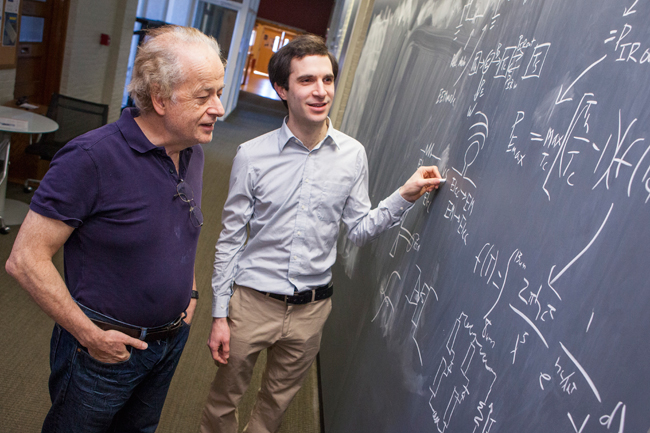
Harvard physicists Federico Capasso (left), Steven J. Byrnes (right), and Romain Blanchard propose a new way to harvest renewable energy. (Photo by Eliza Grinnell, SEAS Communications.)

Harvard physicists Federico Capasso (left), Steven J. Byrnes (right), and Romain Blanchard propose a new way to harvest renewable energy. (Photo by Eliza Grinnell, SEAS Communications.)

Thanks to the Harvard School of Engineering And Applied Sciences for this press release of important renewable energy scientific news:

Infrared: A new renewable energy source?

HARVARD PHYSICISTS PROPOSE A DEVICE TO CAPTURE ENERGY FROM EARTH’S INFRARED EMISSIONS TO OUTER SPACE

By Caroline Perry

When the sun sets on a remote desert outpost and solar panels shut down, what energy source will provide power through the night? A battery, perhaps, or an old diesel generator? Perhaps something strange and new.

Physicists at the Harvard School of Engineering and Applied Sciences (SEAS) envision a device that would harvest energy from Earth’s infrared emissions into outer space.

Heated by the sun, our planet is warm compared to the frigid vacuum beyond. Thanks to recent technological advances, the researchers say, that heat imbalance could soon be transformed into direct-current (DC) power, taking advantage of a vast and untapped energy source. Continue reading

New Energy Possibilities, Reported Long-Form

140303_r24681_p233

Commercial reactors modelled on ITER could generate power with no carbon, virtually no pollution, and scant radioactive waste. Illustration by Jacob Escobedo.

We pepper this blog with long-form journalism’s best contributions to our knowledge about environmental and cultural issues that seem relevant to community, conservation and collaboration. This week’s New Yorker has an article that stretches the boundaries of serious reporting on alternative energy, worth every moment of reading (it is about as long as long-form gets; click the image to the right to go to the source):

Years from now—maybe in a decade, maybe sooner—if all goes according to plan, the most complex machine ever built will be switched on in an Alpine forest in the South of France. The machine, called the International Thermonuclear Experimental Reactor, or iter, will stand a hundred feet tall, and it will weigh twenty-three thousand tons—more than twice the weight of the Eiffel Tower. At its core, densely packed high-precision equipment will encase a cavernous vacuum chamber, in which a super-hot cloud of heavy hydrogen will rotate faster than the speed of sound, twisting like a strand of DNA as it circulates. Continue reading

Making The Best Of A Surprise, Geothermal Energy Moves Forward In Iceland

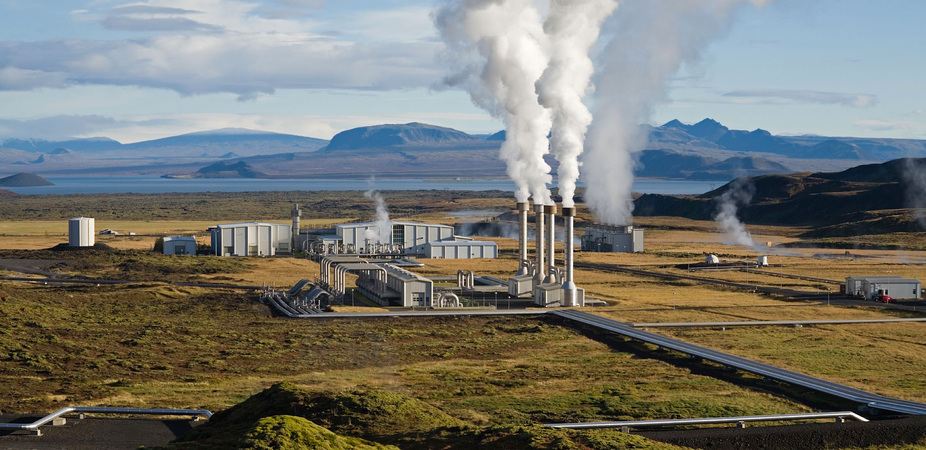
Getting into hot water - one of Iceland’s geothermal power plants. Gretar Ívarsson

Getting into hot water – one of Iceland’s geothermal power plants. Gretar Ívarsson

Frankly, we are more attuned at this moment to the historical vantage point, with this series reminding us of the earth’s untamed appearance via Iceland in centuries prior; but mindful of the future, of the need to find suitable energy solutions, and generally of our interest in scientific discovery the following article catches our attention:

Can enormous heat deep in the earth be harnessed to provide energy for us on the surface? A promising report from a geothermal borehole project that accidentally struck magma – the same fiery, molten rock that spews from volcanoes – suggests it could.

The Icelandic Deep Drilling Project, IDDP, has been drilling shafts up to 5km deep in an attempt to harness the heat in the volcanic bedrock far below the surface of Iceland. Continue reading

First Porsche, First Green Automobile?

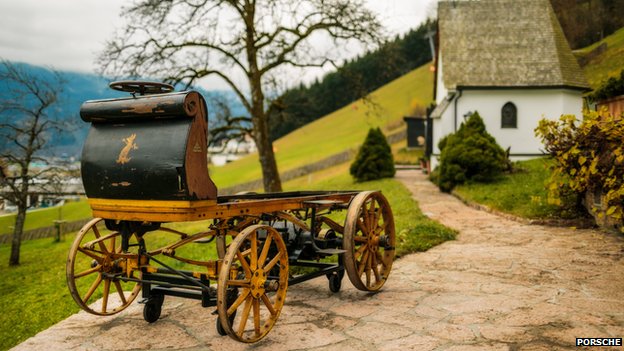
This is the first Porsche-designed vehicle, which had been stored in an Austrian garage since 1902

This is the first Porsche-designed vehicle, which had been stored in an Austrian garage since 1902

We are decidedly not the go-to source for information about automobiles, though from time to time we have been known to point out the innovations related to green tech and cars. Thanks to the BBC for their coverage of this intriguing conservation story we might file under cultural heritage, or alternative energy vehicles, or both:

Luxury automaker Porsche has revealed the first car designed by its founder was electric, in a show at its museum in Stuttgart-Zuffenhausen, Germany.

Ferdinand Porsche’s design was dubbed the Egger-Lohner electric vehicle C.2 Phaeton model, or the P1 for short. Continue reading

Solar’s Messy Compromises

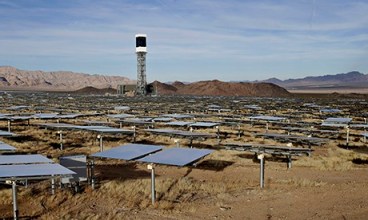
BrightSource Energy's Ivanpah Solar Electric Generating System in the Mojave Desert. Photograph: Isaac Brekken/Washington Post

BrightSource Energy’s Ivanpah Solar Electric Generating System in the Mojave Desert. Photograph: Isaac Brekken/Washington Post

It’s not easy being green.  Even seeming no-brainers like this solar initiative requires complicated tradeoffs between one environmental objective and another:

…The Ivanpah Solar Electric Generating System will send that power across California, the Golden State, early this year, becoming the largest solar plant in the world to concentrate the sun’s rays to produce electricity. Such utility-sized solar plants are beginning to appear across the US, with 232 under construction, in testing or granted permits, many in the south-west and California, says the Edison Electric Institute, which represents utilities. The scale of the largest plants is difficult to imagine in the eastern part of the country, where a relative lack of available open land and unobstructed sunlight have limited solar facilities to perhaps a tenth the size of the West’s plants. In the west, ample sun, wide-open spaces, financial incentives, falling costs and state mandates have made big solar plants possible…

…But even as the largest plants are helping utilities meet state requirements for renewable energy, the appetite for them may be waning, say experts. The next phase of solar development – especially in the east – may feature smaller projects located closer to cities. Environmental groups want regulators to look at sites such as landfills and industrial zones before allowing construction in largely undisturbed environments such as deserts. Continue reading

Self-Sufficiency Taken To The Outer Extremes

Before the lights go out on the last New Yorker issue of 2013, one more of several articles we found worth the read, and relevant to our common themes of interest–community-building, innovation, environmentalism, farming, etc.–on this blog, even if we tend to incremental change rather than the radicalism on display here:

Marcin Jakubowski, the owner of a small farm in northwestern Missouri, is an agrarian romantic for high-tech times. A forty-one-year-old Polish-American, he has spent the past five years building industrial machines from scratch, in a demonstration of radical self-sufficiency that he intends as a model for human society everywhere. He believes that freedom and prosperity lie within the reach of anyone willing to return to the land and make the tools necessary to erect civilization on top of it. His project, the Global Village Construction Set, has attracted a following, but among the obstacles he has faced is a dearth of skilled acolytes: the people who show up at his farm typically display more enthusiasm for his ideas than expertise with a lathe or a band saw. Continue reading

Will We Ever Tire Of This? Probably Not

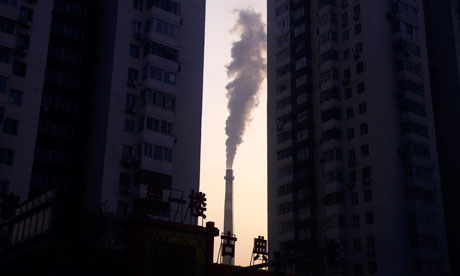
Oil, coal and gas companies are contributing to most carbon emissions, causing climate change and some are also funding denial campaigns. Photograph: David Gray/Reuters

Oil, coal and gas companies are contributing to most carbon emissions, causing climate change and some are also funding denial campaigns. Photograph: David Gray/Reuters

It bears repeating:

The climate crisis of the 21st century has been caused largely by just 90 companies, which between them produced nearly two-thirds of the greenhouse gas emissions generated since the dawning of the industrial age, new research suggests.

The companies range from investor-owned firms – household names such as Chevron, Exxon and BP – to state-owned and government-run firms.

The analysis, which was welcomed by the former vice-president Al Gore as a “crucial step forward” found that the vast majority of the firms were in the business of producing oil, gas or coal, found the analysis, which has been published in the journal Climatic Change. Continue reading

Food-Related Whodunnit

Illustration for "HOT GREASE, The Wild West of used-cooking-oil theft"

Illustration for “HOT GREASE, The Wild West of used-cooking-oil theft”

Food and/or its by-products are not the centerpiece of any literary genre that we know of, other than cookbooks and more recently food histories.  This week’s New Yorker has a welcome addition in the annals of food as a key ingredient in other genres:

A few months ago, in a clanging, hissing plant on the outskirts of Newark, a tanker truck backed up to a deep reservoir and delivered thousands of dollars’ worth of raw material—what people in the rendering industry sometimes refer to as “liquid gold.” The plant’s owner is a company called Dar Pro, and the C.E.O., Randall Stuewe, looked on while a hose from the truck gushed a brown fluid, filled with fine sediment and the occasional mysterious solid. Slowly, the pit became a pool, whose surface frothed and eddied and gave off a potent odor of old French fries, onion rings, and batter-fried shrimp. “Used cooking oil,” Stuewe told me. “We process two billion pounds a year.” Continue reading

If You Happen To Be In Austin

An expected 3,000 attendees are gathering in Austin, Texas, for SXSW Eco next week. Photograph: Austin CVB

An expected 3,000 attendees are gathering in Austin, Texas, for SXSW Eco next week. Photograph: Austin CVB

We normally think of technology or music when we think of Austin, or SXSW.  This even provides more to think about with regard to either of them. Thanks to the Guardian for letting us know about it:

Activists and industrialists might be like oil and water, but 3,000 of these strange bedfellows are gathering together in Austin, Texas, to discuss oil and water at SXSW Eco 2013 next week. Now in its third year, the annual conference aims to encourage cross-sector collaboration between professionals in business, government, academia and nonprofits on topics ranging from policy to consumer engagement. Continue reading

It’s Never Too Late

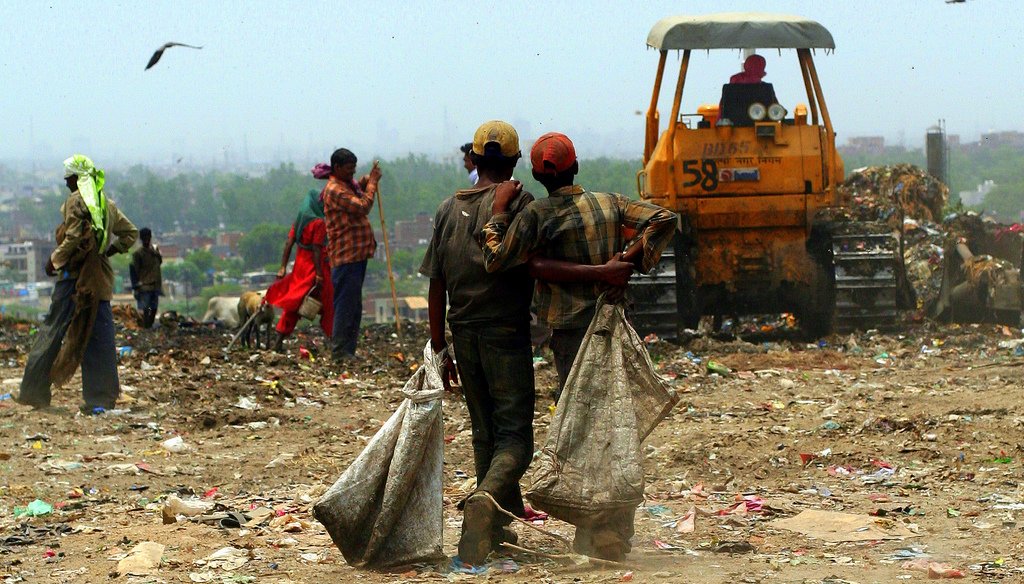
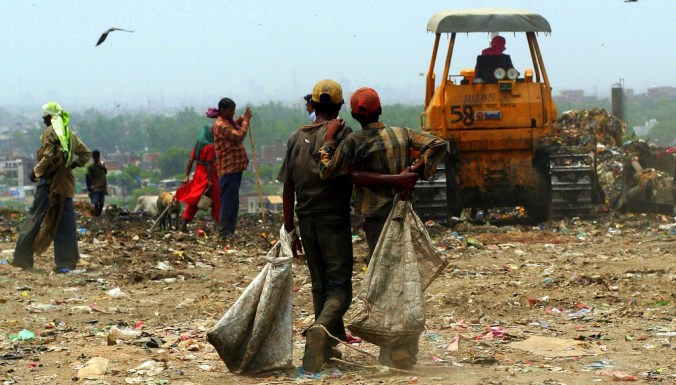
Recycling In India

Photograph Credit: mackenzienicole

To be completely honest, helping the environment had rarely been a crucial concern of mine.  Actually, that’s an understatement: Helping the environment had rarely been a concern of mine at all.  Growing up, my parents tried to nudge me the right way.  For example, they always told me not to waste food – the theme of this year’s World Environment Day.  However, it didn’t actually sunk in.  At buffets I would take more food than I actually needed so I could try everything before it was gone. To me, this was well justified – we were paying the same amount regardless of what we took, right? I even scorned my parents’ initiative to use fluorescent light bulbs in the house; I didn’t see the benefit of using light bulbs that took a while to light up.

This past summer I decided to come to India and intern for Raxa Collective to experience something both culturally and professionally different.  From the moment I arrived I was amazed at the passion with which Amie, Crist, and the rest of the Raxa Collective staff operated.  Cardamom County already had numerous eco-friendly initiatives in place such as their natural farm, composting, and the use of glass water bottles in the restaurant, solar panels to heat the water in the kitchen, and compact fluorescent lighting (CFL).  However, it was evident that the Raxa Collective staff was not willing to settle.  Continue reading

What Should We Expect of Solar?

I was pleased to see our fellow contributors give voice to the promising outlook of solar energy in a recent post. There is no doubt that this technology will be a game-changer for utilities in the coming century, and I’m excited to be a part of it. Last month, I was thrilled to start my first full-time position at SunPower Corporation, one of the largest solar cell manufacturers in the United States. Tempering that excitement was the knowledge that, at least for the short term, I wouldn’t be traveling to India to work with Crist and some of his wonderful staff. But let’s back solar.

This is every solar installer’s dream: a perfectly tilted, south-facing, non-shaded, sun-bathed roof.

Continue reading