
Thanks to the Atlantic‘s website team of science writers (click the image above to go to the video), we never tire of getting a better understanding of why:
Solar is not like other energy sources. Continue reading
Thanks to the Atlantic‘s website team of science writers (click the image above to go to the video), we never tire of getting a better understanding of why:
Solar is not like other energy sources. Continue reading
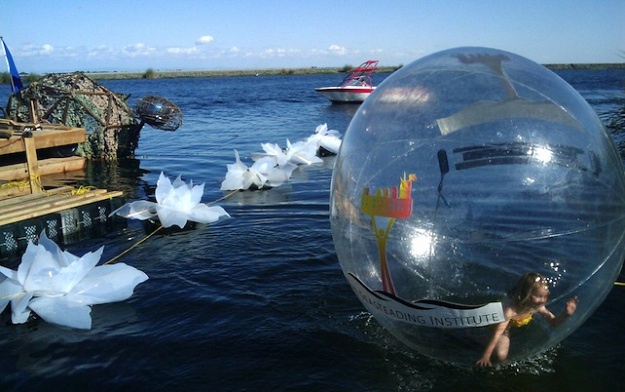
An article recently published in n+1 examines a utopian futurist form of an idea that seems oddly symmetric with Seth’s posts about the history of exploration using Iceland as a case study. Looking back, we see much in common with explorers, pioneers, pilgrims and adventurous thinkers of all sorts. Looking forward, we are inclined to embrace smart, creative, enthusiastic group efforts to resolve seemingly intractable challenges. Especially when they involve living on boats. We recommend reading the following all the way through:
To get to Ephemerisle, the floating festival of radical self-reliance, I left San Francisco in a rental car and drove east through Oakland, along the California Delta Highway, and onto Route 4. I passed windmill farms, trailer parks, and fields of produce dotted with multicolored Porta Potties. I took an accidental detour around Stockton, a municipality that would soon declare bankruptcy, citing generous public pensions as a main reason for its economic collapse. After rumbling along the gravely path, I reached the edge of the Sacramento–San Joaquin River Delta. The delta is one of the most dredged, dammed, and government subsidized bodies of water in the region. It’s estimated that it provides two-thirds of Californians with their water supply. Continue reading
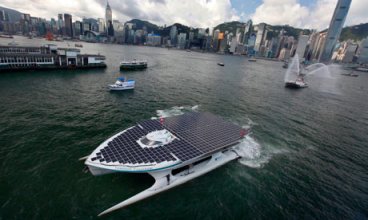
MS Türanor SolarPlanet will measure emissions in the open ocean. Photograph: Alex Hofford/EPA
The Guardian is reporting on a floating phenomenon worth a look if you want to peer into the future of climate change science:
The solar-powered boat docked in Battery Park City in New York could easily have been packed off to a museum as a relic.
This organization and its founder came to our attention recently in a by-now familiar manner: our go-to podcast for interesting and inspiring stories of entrepreneurs, From Scratch, featuring Bunker Roy. Read about Barefoot College here and then click through their site to see more about their accomplishments:
In the late 60’s, a very small group of determined individuals in India, coming out of a sound educational system, felt it necessary to look for alternative ways of living, thinking and looking for rural solutions. Continue reading
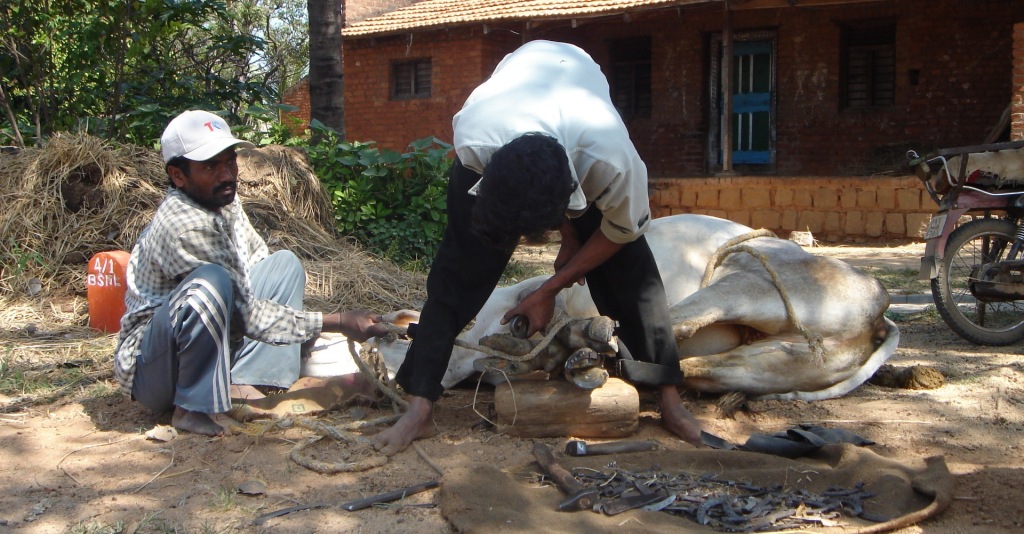
Photo Credits: Ramesh Kidangoor
In most of the South Indian states villages are still using the bullock cart for transporting goods and people, mostly in farms and plantations. The oxen are fitted with horseshoes in order to protect their hooves from heat and uneven roads. Continue reading
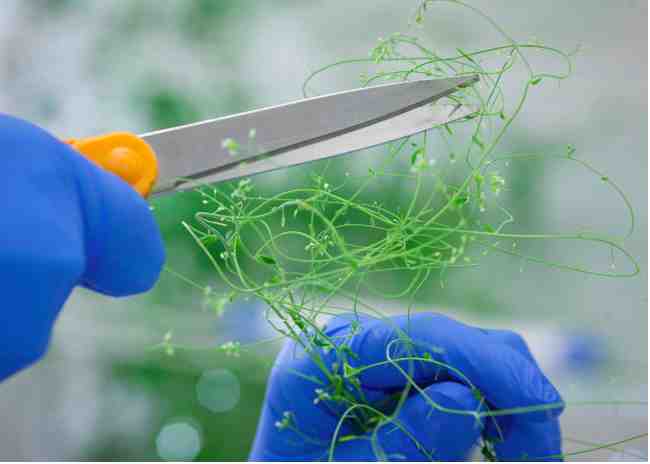
Thanks to the New York Times for the link to this tree-hugger’s get rich quick scheme:
Hoping to give new meaning to the term “natural light,” a small group of biotechnology hobbyists and entrepreneurs has started a project to develop plants that glow, potentially leading the way for trees that can replace electric streetlamps and potted flowers luminous enough to read by. Continue reading

Click the image above to go to the website of these entrepreneurs who seem to be on their way with a new form of aviation. Just today the plane made its first landing and stayover en route from West to East coast of the USA. You can visit the plane if you happen to be in Phoenix between today and Tuesday:
The first leg of the 2013 Across America mission was concluded successfully. Bertrand Piccard did a wonderful job throughout the flight, bringing HB-SIA safely from San Francisco to Phoenix, and landing at 00:30 am MST (UTC-7) on Runway 08, Saturday May 4th. Continue reading
This appears to be the only product of this design firm that has an ecologically sound intent–does it work? we wonder, so please let us know if you know–which you can read about by clicking in the rocking chair link in the “works” section:
Rocking Chair
It has triggered the media interest about me, my studio and our work. Continue reading

Mahindra Reva promises E2O electric car will go on sale this month
Because of their impact on the environment globally, we pay attention to this blog for news on the greening of cars and the automotive industry. They, for their part, cull from important journalistic enterprises such as The Economic Times:
Mahindra Reva is determined to launch its E2O electric microcar in India this month, despite the end of federal subsidies that lower the purchase price for consumers. Continue reading

Canal solar power: Gujarat has attracted investments of Rs 9,000 crore so far on solar energy projects.
To some it might seem odd to compare Gujarat’s innovative solar canal project to Panama’s nearly 100 year old global game changer. Although there are obvious and vast differences, there is also something powerfully familiar about the ultimate impact of the two projects.
While the 48 mile (77 km) Panama Canal saved ships traveling between the Pacific and Atlantic Oceans from taking the 8000 miles (12,875 km) journey around the southern tip of South America, the Solar Canal Project provides a duel purpose alternative energy system that both creates clean energy and conserves water. Continue reading

Photo Credits: Ramesh Kidangoor
Bullock carts play an important role in both rural and urban transportation in India. Even in the 21st century they are frequently used for the transfer of materials and people in villages and cities alike. Continue reading
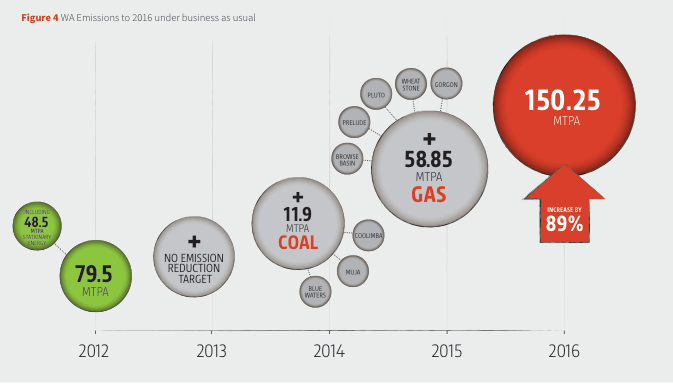
An article that, like the graph above, defines the BAU scenario, is worth reading just to get those three letters fixed in our mind’s eye. The Greens of Western Australia will not leave it to your imagination; rather they’ll wonk you into submission to the facts and into action politically to resist BAU:
The Greens Party has unveiled an ambitious new document that outlines possible pathways to turn Western Australia – one of the most energy-intensive states in the world – into one where its stationary energy needs are powered 100 per cent by renewable energy sources in less than two decades.
Continue reading

For reasons we never fully understand, an old post suddenly gets a large number of views. It happened yesterday with this one. Okay, we get that people are interested in understanding as much as possible about environmental issues such as fracking and they pursue as many sources of information as possible to stay apprised. Search engine algorithms connect them on occasion to items our cabinet of curiosities. The news stories, photos and videos and personal accounts collected on this blog–are meant to add up to something, but we do not fret about the calculus. We just keep on looking, gathering, posting and expect the points to make themselves. It may be the occasional coincidences that fuel our commitment to this improvisational approach.
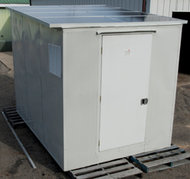
Continuing a topic covered recently in MIT’s Technology Review–namely the use of alternative energy to solve some basic needs in India’s rural areas–today’s Green Blog covers another innovation:
Milk? Garbage. Spinach? Garbage. Leftover Thai takeout? Garbage. For millions in the Northeast, clearing out the fridge after days without power was just one more unsavory chore that was part of the cleanup process after Hurricane Sandy passed through.
But in the developing world, throwing out food because of inadequate refrigeration isn’t just annoying, it’s a devastating and irreparable economic blow that keeps farmers trapped at the level of subsistence and threatens food security. In India, the government estimates that anywhere from 30 to 40 percent of food spoils long before it finds its way to the table. Continue reading
 This post continues my discussion of biofuels from Part 1.
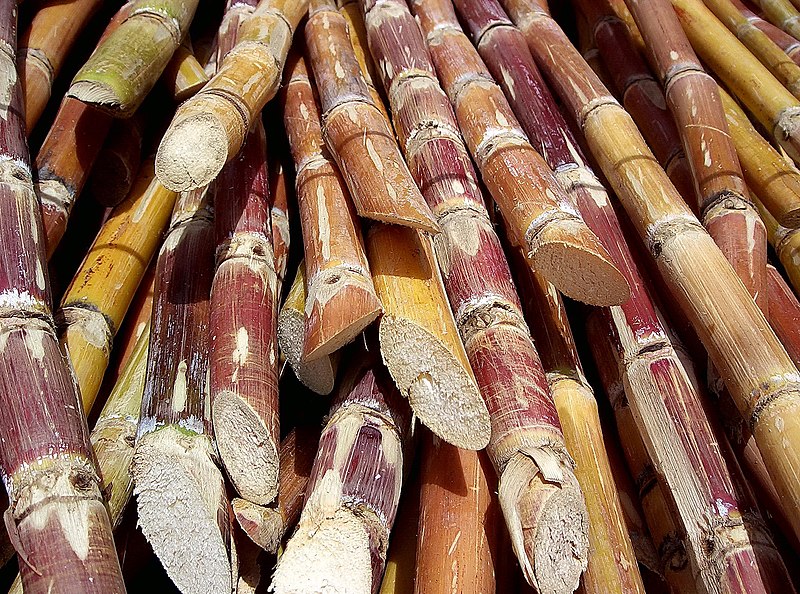
Brazil contains many of the world’s biodiversity hotspots, as well as one of the most important CO2-sinks in the form of rainforests. As the second largest sugarcane grower in the world, Brazil’s biofuel production relies heavily on sugarcane ethanol, which has one of the highest savings in GHG emissions compared to fossil fuels. However, increasing sugarcane production is not sustainable in the long-term if one of Brazil’s goals is to curtail GHG emissions, since growing more sugarcane means cutting down more rainforest. Instead, second- and third-generation (advanced) biofuels should be considered viable options for replacing sugarcane, or at least strongly supplementing it.
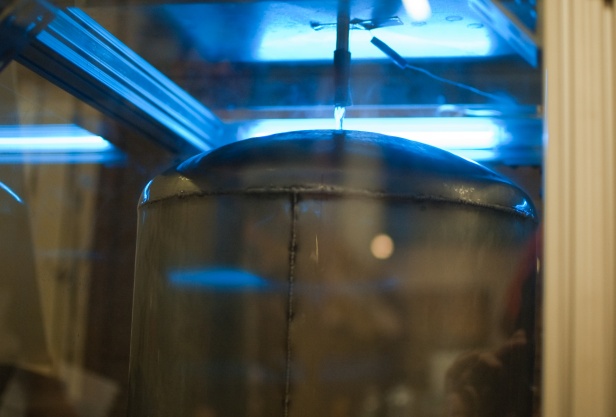
This photo shows a prototype of Promethean Power’s thermal storage. Inside the tank is a phase-change material that rapidly chills milk when it’s poured over the surface. Credit: Martin LaMonica
The MIT Technology Review provides a readable explanation of new technology, made even more readable due to the application of that technology:
Novel Energy Storage to Chill Milk in Rural India
After a few technology U-turns, startup Promethean Power moves ahead with thermal battery to overcome unstable grid at Indian dairies. Continue reading

Recent research shows an excess of strengthening sugar molecules in the willows’ stems, which attempt to straighten the plant upwards in the presence of windy conditions. These high-energy sugars are fermented into biofuels.
Click the image to the right to go to the surprisingly accessible article from an otherwise engineer-oriented publication:
Willow trees cultivated for green energy can yield up to five times more biofuel if they grow diagonally, compared with those that are allowed to grow naturally up towards the sky.
This effect had been observed in the wild and in plantations around the UK, but scientists were previously unable to explain why some willows produced more biofuel than others.Now British researchers have identified a genetic trait that causes this effect and is activated in some trees when they sense they are at an angle, such as where they are blown sideways in windy conditions.
The effect creates an excess of strengthening sugar molecules in the willows’ stems, which attempt to straighten the plant upwards. These high-energy sugars are fermented into biofuels when the trees are harvested in a process that currently needs to be more efficient before it can rival the production of fossil fuels. Continue reading

Image via Renaissance Ronin
The United States plans to produce 70 billion liters of advanced biofuels by 2020. In 2007, the global production of all biofuels roughly matched this amount, and the US used 24% of its corn to produce its share of the ethanol included in those 70 billion liters. Even given this impressive amount of corn used for ethanol, American corn ethanol only accounted for 1.3% of the US’ national liquid fuel consumption. An increase in either corn harvests or ethanol production efficiency is clearly necessary if the US is to meet the 2020 goal with corn alone. Given the significant drawbacks to producing more corn, and the unlikelihood of efficiency increasing enough to meet requirements, it would be more prudent to invest in second- and third-generation, or advanced, biofuels.
These biofuels, such as ethanol made from cellulose, biogas, or hydrocarbon fuels converted from biomass to liquid (BtL) are made from feedstock rich in cellulose like grass and wood. Advanced biofuels have better environmental profiles than what are referred to as first generation biofuels (e.g. ethanol produced from corn or sugarcane) because they generally require less land and are converted from biomass more efficiently—the processes also use less energy and water than ethanol since they do not involve distillation. A biofuel’s emissions depend largely on land considerations, nativity to the region, and feedstock technology. If land was converted from forest or prairie, the feedstock was not native to the region, and the feedstock required excessive fertilizers to grow, then GHG emissions are higher. Continue reading
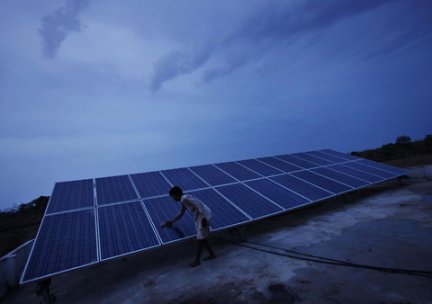 Green Blog updates us on the state of affairs in India with regard to solar energy:
After years of lagging behind China and the West in the adoption of solar power, some states in India are proposing to build solar farms at a galloping pace that leaves them at risk of falling short of electricity (a familiar problem here) or of paying higher prices for it. Continue reading
We have linked to 350, its various activities and sister concerns plenty of times before, but this three minute thought bubble is another good link to get the point: we all must do our part. We link to organizations and actions instead of his name because we recognize the temptation to idolize Bill McKibben for his activism; if we do that without taking action, what is the point?
 Organikos