Charisma & Conservation

The video above stands on its own, worthy of a few minutes, but it brings to mind the role of charisma in conservation. We find it easier to worry about large, iconic species. Some creatures are brought back from the brink of extinction, only to experience the same fear and hatred, or worse, fate that brought them to that brink in the first place.  The editorial below, from today’s Guardian, reminds us that the uniquely human form of charisma called celebrity plays its own role, raising interesting questions.  Why celebrate not vultures and their mostly unknown guardians? Adam Welz has a few relevant thoughts:

My last post was about the need to reduce demand for rhino horn and ivory in Asia to stem Africa’s current poaching crisis. This week my inbox bulged with photos of mega-celebs trying to do just that.

Actor Edward Norton filmed a couple of public service announcements in New York on Tuesday to raise awareness of the illegal ivory trade, and yesterday Prince William, David Beckham and basketball player Yao Ming got together in London to film another brace of spots about rhino and elephant killing. The ads will go out this year as part of campaigns put together by the nonprofit WildAid, working in conjunction with other organisations. Continue reading

Convocation Power Well Used

Open, N.Y.

Open, N.Y.

We are grateful when people whose name and heritage give them convocation power use their power on behalf of others less fortunate (until they shake our confidence), so we give thanks to the New York Times and to Peter Buffett, both privileged, for sharing this startling opinion piece. We, a small group of moderately privileged people with a small platform for sharing ideas, are particularly interested in the intersection of good and market forces, so Mr. Buffett’s challenge here is germane to our mission and to our practice:

I HAD spent much of my life writing music for commercials, film and television and knew little about the world of philanthropy as practiced by the very wealthy until what I call the big bang happened in 2006. That year, my father, Warren Buffett, made good on his commitment to give nearly all of his accumulated wealth back to society.

Continue reading

Reconsidering Deaccession

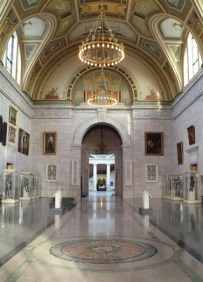
DIA-II We understand and sympathize with Mr. Schjeldahl’s reconsideration of the implication of his earlier post, considering the volume of vitriol among the comments that followed it. But the core point of that post was lost in the reconsideration:

I take back my endorsement, in an earlier post, of the idea that the city of Detroit should ease its financial crisis by selling art works from the collection of the Detroit Institute of the Arts. I also apologize to the many whom my words pained. Continue reading

Reducing Waste While Contributing to Communities

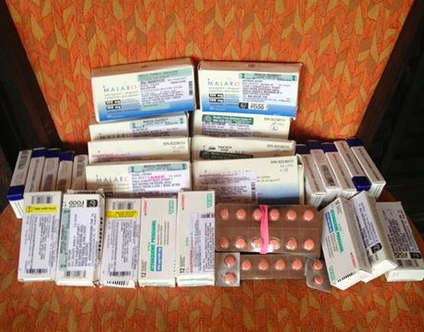
When “first world” travelers are planning a trip to the “third world”, their doctors often require them to take a handful of vaccinations, and a few prescriptions. This summer, about 40 students from a graduate program at the University of Western Ontario interned in Kerala, hosted by Raxa Collective; many of them, to err on the side of caution brought medicines for tropical diseases, including malaria. However, most of those medications are not needed in Kerala, whose health profile is comparable to Costa Rica, and which happens to be malaria-free.

As weeks progressed, many of the interns stopped taking their pills and consequently they were left with an excess, which are worth much more to those in need than in the garbage can back home. Continue reading

Save Soil, Perhaps Even Improve It By Drinking Organic Coffee

SaveOurSoil_LOGOThe news we pointed to about coffee-making best practices was mainly about the last step of a long chain–when the coffee is just about to give its olfactory, gustatory and other pleasures upon consumption.  It linked to an earlier post about the artisanal agriculture link in the coffee-making value chain, but here we add one more link on that topic. It has strong recommendations about what else we as consumers might do to assist in coffee-making best practices. It brings to mind topics we have covered in non-coffee posts, such as altruism, which we have considered more than once; and collective action, likewise more than a passing interest.

When we have the opportunity to support a good cause, at minimum we can give it attention here by linking to it, and with great pleasure we do so for our friends at Counter Culture Coffee:

Our soils are in crisis. Conventional, chemical-based farming is destroying soil health, leaving farms with increasingly barren earth. Extraordinary coffee – that which we are dedicated to – needs rich, thriving soil, since healthy soil leads to healthy coffee trees, prosperous farms, and delicious coffee. Continue reading

Barefoot College

This slideshow requires JavaScript.

This organization and its founder came to our attention recently in a by-now familiar manner: our go-to podcast for interesting and inspiring stories of entrepreneurs, From Scratch, featuring Bunker Roy. Read about Barefoot College here and then click through their site to see more about their accomplishments:

In the late 60’s, a very small group of determined individuals in India, coming out of a sound educational system, felt it necessary to look for alternative ways of living, thinking and looking for rural solutions. Continue reading

Community, Collaboration, Career

If you spend five minutes listening to Gerald Chertavian in the video above, and it resonates in any manner, then you should learn more about the organization he formed.  It came to our attention, as many other great stories have recently, thanks to From Scratch, Jessica Harris’s radio show and podcast repository. Continue reading

Earth Day In Historical Context

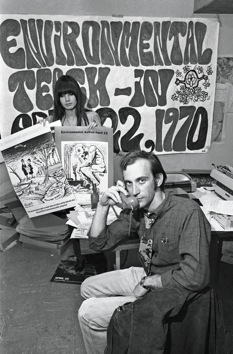
Earth Day began as a minimally organized teach-in.

Earth Day began as a minimally organized teach-in.

Those who do not know their environmental history may or may not be doomed, but they are missing something. Knowing the history is a pleasure in itself, as this article in the current issue of the New Yorker demonstrates.  Know this:

…Earth Day’s success was partly a matter of timing: it took place at the moment when years of slowly building environmental awareness were coming to a head, and when the energy of the sixties was ready to be directed somewhere besides the Vietnam War and the civil-rights movement. A coterie of celebrated environmental prophets—Rachel Carson, David Brower, Barry Commoner, Paul Ehrlich—had already established themselves, and Rome reminds us of  Continue reading

Is Giving the Secret to Getting Ahead?

This slideshow requires JavaScript.

From this week’s Sunday New York Times an article by Susan Dominus in which the:

organizational psychologist Adam Grant argues that the key to hyperefficiency is tirelessly helping others. Continue reading

Echoes Of Net Impact 2010

AlexCountsAlex Counts spoke at the Net Impact Conference in 2010, which took place at Cornell University during the spring semester, while I was teaching a course there. I had the good fortune of being recommended to listen to his talk.  Today I had the good fortune of encountering him again, on this podcast series that I have so far been batting 1,000 with:

Microfinance lending, the practice of making small loans to individuals who would otherwise not qualify for traditional loans, has been a proven method of nurturing entrepreneurship in developing countries. As a college student, Alex read about the work of Noble Prize winning Dr. Muhammad Yunus and his efforts in microfinance. Continue reading

Waste Reduction By Altruistic Design

This slideshow requires JavaScript.

If you search around long enough on words such as altruism and design–both topics we pay attention to on this site–eventually you will encounter these folks. This particular product caught our attention and we see no harm in promoting it:

GOEDZAK IS A SPECIAL GARBAGE BAG FOR ITEMS THAT ARE STILL USEABLE. IT’S A FRIENDLY WAY TO OFFER PRODUCTS A SECOND CHANCE AND STIMULATE SUSTAINABLE BEHAVIOR. Continue reading

Victory Is Good, Goodness Is Great

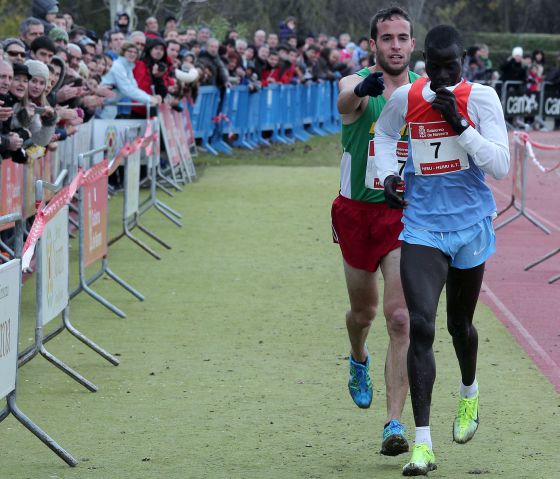
Fernández Anaya helps Mutai toward the line / CALLEJA (DIARIO DE NAVARRA

Fernández Anaya helps Mutai toward the line / CALLEJA (DIARIO DE NAVARRA

On the rare occasion that we highlight a sporting event, the reason for doing so in this case is simple: we have been on the lookout for acts of goodness, random or otherwise, since starting this site.  This is as random as it gets:

…Spanish athlete Iván Fernández Anaya was competing in a cross-country race in Burlada, Navarre. He was running second, some distance behind race leader Abel Mutai – bronze medalist in the 3,000-meter steeplechase at the London Olympics. Continue reading