MycoHab & Other Namibian Wonders

Desert in Namibia

Namibia has a severe housing shortage, with woody encroacher bush reducing the amount of land available for building. Photograph: Hoberman Collection/Universal Images Group/Getty

Mycological options for solving problems are abundant. We had not considered odor as a key potential obstacle, so thanks to Ester Mbathera for this reporting from Namibia:

‘People think they’ll smell but they don’t’: building homes from mushroom waste and weeds

A sustainable project aims to repurpose encroacher bush to create building blocks to solve Namibia’s housing crisis

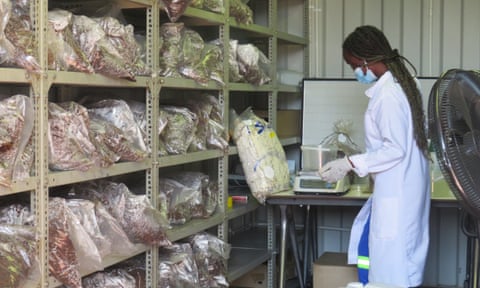
Oyster mushrooms in bags on a shelf with a woman using weighing scales

The remnants of the oyster mushrooms grown on weeds of encroacher bush will be used to create building blocks. Photograph: Ester Mbathera

People think the house would smell because the blocks are made of all-natural products, but it doesn’t smell,” says Kristine Haukongo. “Sometimes, there is a small touch of wood, but otherwise it’s completely odourless.”

Haukongo is the senior cultivator at the research group MycoHab and her job is pretty unusual. She grows oyster mushrooms on chopped-down invasive weeds before the waste is turned into large, solid brown slabs – mycoblocks – that will be used, it’s hoped, to build Namibian homes. Continue reading
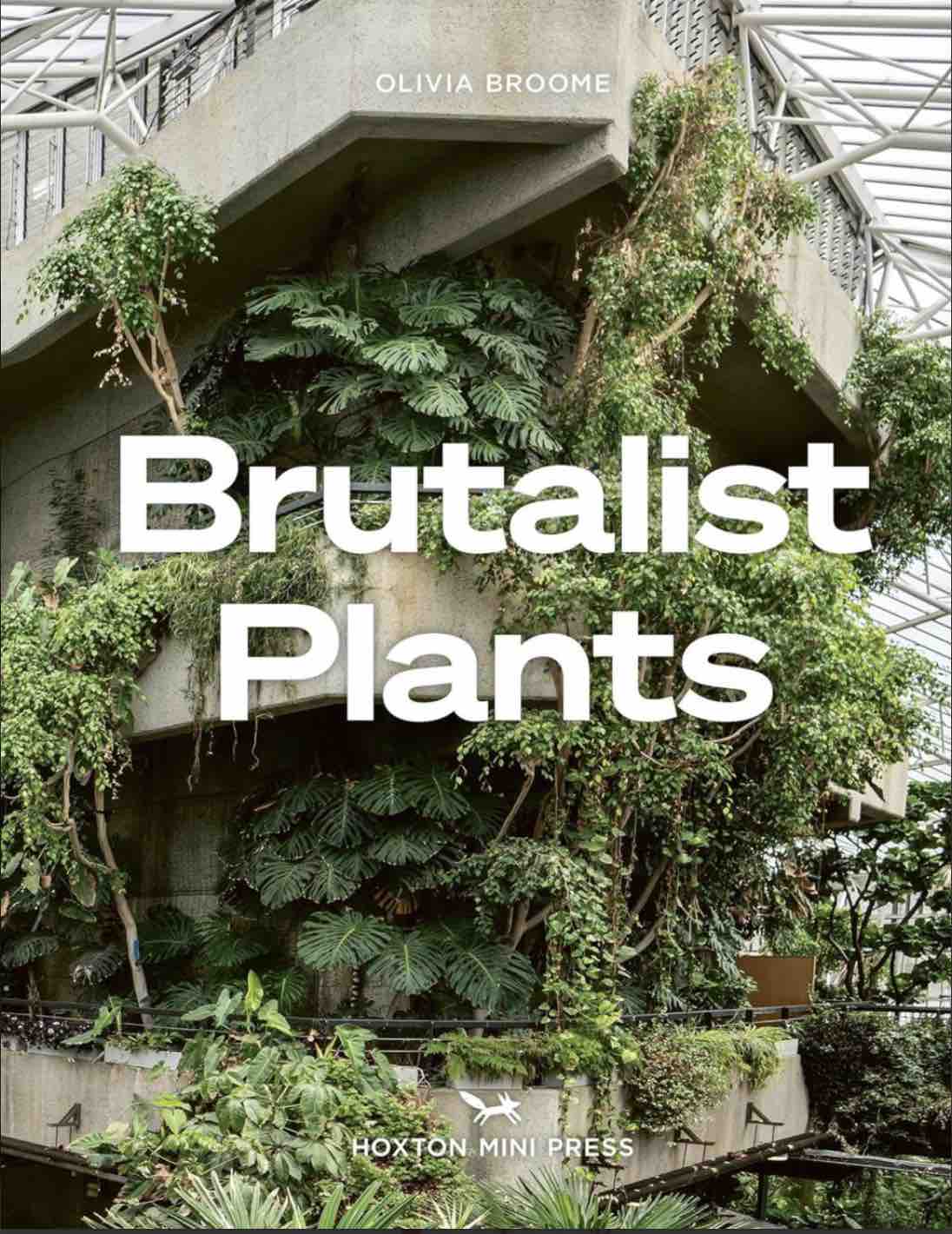
Brutalist Plants, Reviewed

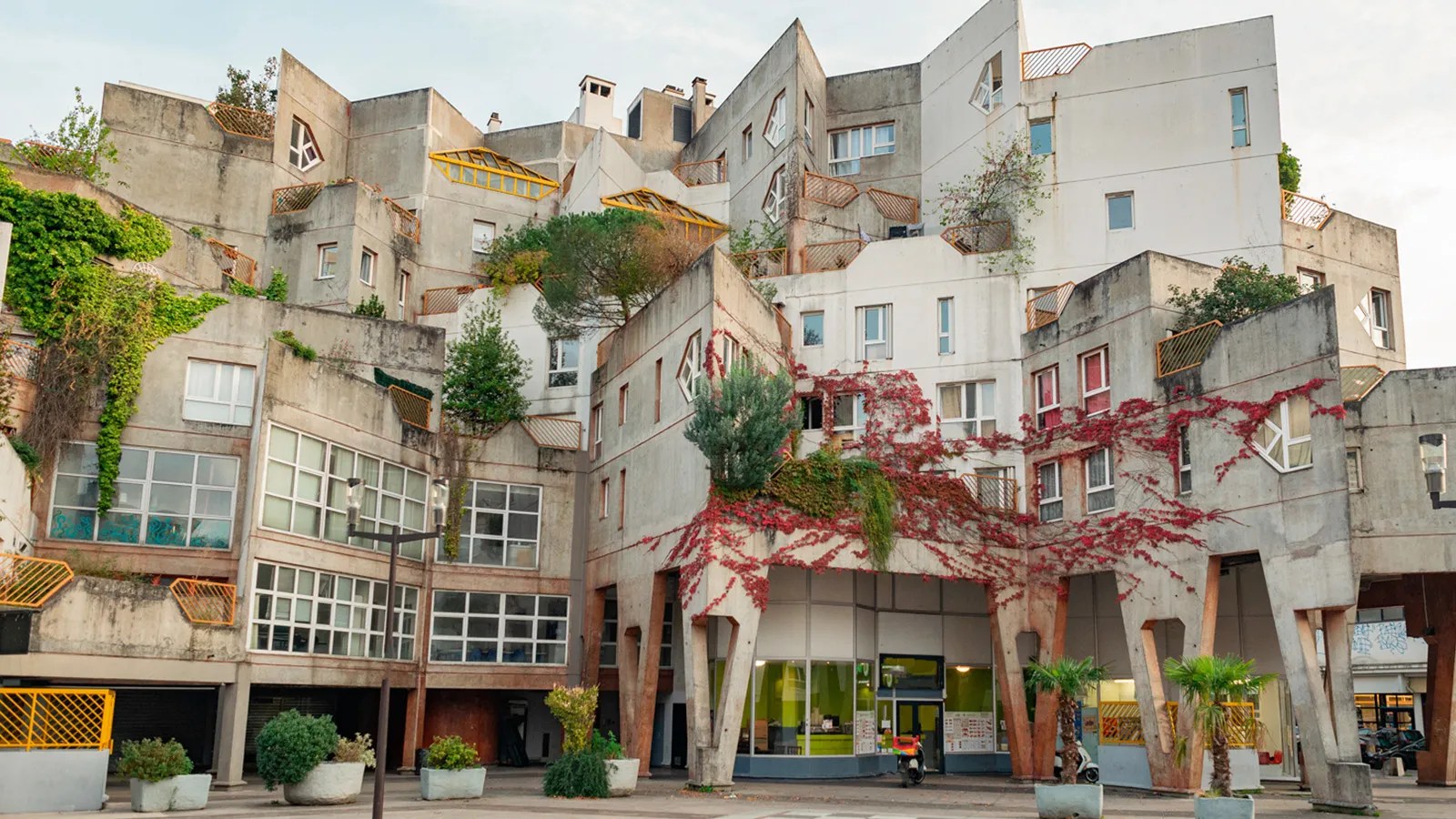
Les Étoiles d’Ivry, Paris, France. Architect: Jean Renaudie (Image credit: pp1 / Shuterstock)

Olivia Broome’s new book is reviewed in Wallpaper:

‘Brutalist Plants’ is a new monograph capturing the best of eco-brutalism

‘Brutalist Plants,’ the new book by Olivia Broome, captures concrete architecture engulfed with nature

‘Brutalist Plants’ is a new book featuring an impressive selection of imagery that captures the very best of the trend of ‘eco-brutalism’. This texture-rich movement has been gathering attention recently, focusing on brutalist architecture that has been – to varying degrees – embraced by flora, as planting engulfs entire structures, creating a calming concrete jungle for urban living. Continue reading

The Paper Log House On View Until December

The Paper Log House at The Glass House. Photo by Michael Biondo.

The building in the background of the photo above has never featured in any of our architecture-focused posts before, even though architecture has been a key theme since our start, and especially after hosting these interns in India. I know why I never wanted that particular architect in our pages, but nevermind that. This post is about another architect’s achievement, which I plan to visit if I get close enough before December:

SHIGERU BAN: THE PAPER LOG HOUSE

The Glass House, Shigeru Ban Architects (SBA), and The Irwin S. Chanin School of Architecture of The Cooper Union announce the completion of Shigeru Ban: The Paper Log House at The Glass House. Students from The Cooper Union joined in erecting the structure through a unique opportunity offered this semester for the university’s Building Technology course. The collaborative installation will be on display April 15th through December 15th 2024 for The Glass House’s more than 13,000 annual visitors. Continue reading

Dutch Water Knowhow Is Respectable

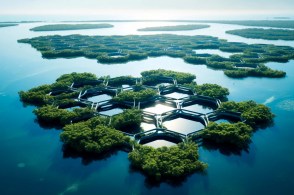
Waterstudio renderings like this one, of a floating “city” in the Maldives, are created using tools including Photoshop and the A.I. program Midjourney. Art work courtesy Waterstudio / Dutch Docklands

We respect the Dutch for their respect of nature, particularly their respect for the power of water and their longstanding determination to harmonize our life with it. This profile extends our respect:

A Dutch Architect’s Vision of Cities That Float on Water

What if building on the water could be safer and sturdier than building on flood-prone land?

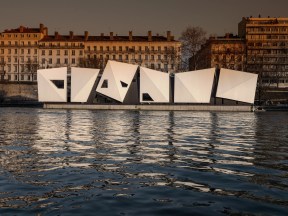
Koen Olthuis, the founder of the architectural firm Waterstudio, believes that floating buildings like the Théâtre L’Île Ô, in Lyon, will transform urban living like skyscrapers did a century ago. Photograph by Giulio Di Sturco for The New Yorker

In a corner of the Rijksmuseum hangs a seventeenth-century cityscape by the Dutch Golden Age painter Gerrit Berckheyde, “View of the Golden Bend in the Herengracht,” which depicts the construction of Baroque mansions along one of Amsterdam’s main canals. Handsome double-wide brick buildings line the Herengracht’s banks, their corniced façades reflected on the water’s surface. Interspersed among the new homes are spaces, like gaps in a young child’s smile, where vacant lots have yet to be developed.

A rendering of a floating forest in the Persian Gulf, devised as part of a strategy to combat heat and humidity. When building projects on the water, Olthuis says, “you have to be very, very patient.” Art work courtesy Waterstudio

For the Dutch architect Koen Olthuis, the painting serves as a reminder that much of his country has been built on top of the water. The Netherlands (whose name means “low countries”) lies in a delta where three major rivers—the Rhine, the Meuse, and the Scheldt—meet the open expanse of the North Sea. More than a quarter of the country sits below sea level. Over hundreds of years, the Dutch have struggled to manage their sodden patchwork of land. Continue reading

The Vertical Forest In Milan

The Vertical Forest, a residential complex in Milan. Marta Carenzi/Archivio Marta Carenzi/Mondadori Portfolio, via Getty Images

Italy has not figured in our climate change solutions coverage, until now. Our thanks to Stephen Wallis and the New York Times for this:

A Growth Spurt in Green Architecture

Buildings made shaggy with vegetation or fragrant with wood are no longer novelties.

In the lineup of climate villains, architecture towers above many. The building and construction industries account for some 37 percent of worldwide carbon dioxide emissions, according to the United Nations Environment Program. Three of the most commonly used building materials — concrete, steel and aluminum — generate nearly a quarter of all carbon output. Continue reading

Dickson D. Despommier Discussing The New City Concept

The vertical farming part of this concept is one we have linked to many times. The appeal is not difficult to grasp even if sometimes the concept is stretched. This is different and worth hearing him out:

Dickson Despommier Wants Our Cities to Be Like Forests

A leading proponent of vertical farming discusses how urban areas should adapt to a perilous environmental future.

Illustration by Daniele Castellano

In 2000, Dickson D. Despommier, then a professor of public health and microbiology at Columbia University, was teaching a class on medical ecology in which he asked his students, “What will the world be like in 2050?,” and a follow-up, “What would you like the world to be like in 2050?” As Despommier told The New Yorker’s Ian Frazier in 2017, his students “decided that by 2050 the planet will be really crowded, with eight or nine billion people, and they wanted New York City to be able to feed its population entirely on crops grown within its own geographic limit.” Continue reading

Bird-Friendly Architecture

The New York Times building uses fritted glass clad with rods, which make its facade more visible to birds. Photograph: Daniel Slim/AFP/Getty Images

Birds fall victim to carelessly designed buildings. Bravo to the New York Times for building a bird-friendly HQ. Also to the Guardian for reporting on their competitor’s leadership, and on the architects leading the way with careful design:

Buildings kill a billion US birds a year. These architects want to save them

Highly transparent glass can lead to devastating collisions. But innovations in design are creating safer skylines – without sacrificing beauty

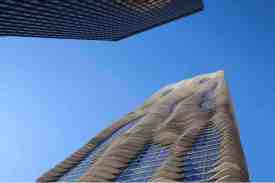
Chicago’s Aqua Tower was designed with birds in mind. Photograph: Radomir Rezny/Alamy

Chicago’s 82-story Aqua Tower appears to flutter with the wind. Its unusual, undulating facade has made it one of the most unique features of Chicago’s skyline, distinct from the many right-angled glass towers that surround it.

In designing it, the architect Jeanne Gang thought not only about how humans would see it, dancing against the sky, but also how it would look to the birds who fly past. The irregularity of the building’s face allows birds to see it more clearly and avoid fatal collisions. “It’s kind of designed to work for both humans and birds,” she said.

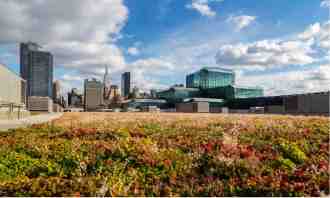
A green roof on the Javits Convention Center serves as a sanctuary for birds. Photograph: David Sundberg/Courtesy of Dan Piselli

As many as 1 billion birds in the US die in building collisions each year. And Chicago, which sits along the Mississippi Flyway, one of the four major north-south migration routes, is among the riskiest places for birds. This year, at least 1,000 birds died in one day from colliding with a single glass-covered building. Continue reading

Paris & Continuous Greening

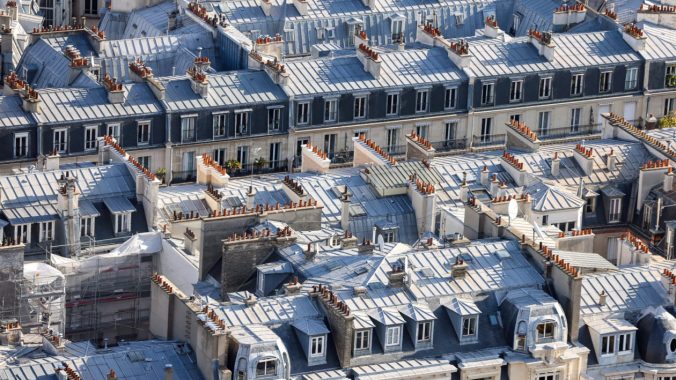
Paris’ iconic zinc roofs can heat up to 194 degrees F on a hot summer day. JAN WOITAS / PICTURE-ALLIANCE VIA GETTY IMAGES

We have celebrated the many greening efforts made in Paris over the last decade, and today is a small but important addition to our knowledge of those commitments. Our thanks to Jeff Goodell in Yale e360:

A rendering of a rooftop terrace installed by the Parisian startup Roofscapes. ROOFSCAPES

Paris When It Sizzles: The City of Light Aims to Get Smart on Heat

With its zinc roofs and minimal tree cover, Paris was not built to handle the new era of extreme heat. Now, like other cities worldwide, it is looking at ways to adapt to rising temperatures — planting rooftop terraces, rethinking its pavements, and greening its boulevards.

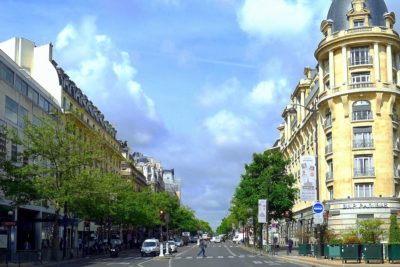
The tree-lined Boulevard des Italiens is much cooler than nearby streets that lack trees.

The tree-lined Boulevard des Italiens is much cooler than nearby streets that lack trees. MBZT VIA WIKIPEDIA

There’s a long tradition in France of taking August off for holiday. Paris virtually shuts down as the temperature drifts around in the seventies, and people go to the beach or the mountains to cool off and relax. Think of it as an old‑fashioned adaptation to heat. People who stick around during August are often older or have jobs that require them to stay and keep the city functioning. Continue reading

Natural History Anew

An image from 1957, when the cross and square design was still legible. American Museum of Natural History

We have featured so many natural history museums in our pages over the years that one more might have been redundant; but no:

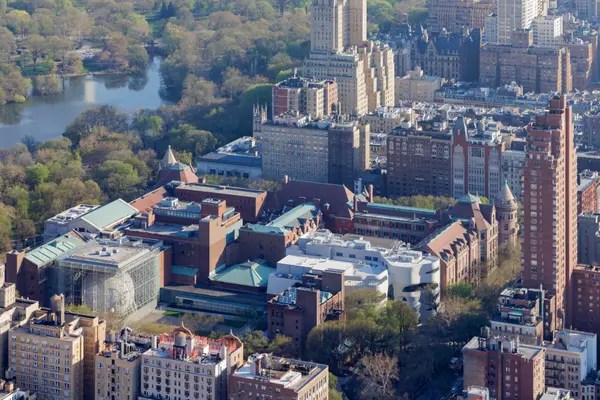
A new aerial photo shows the museum today, as a crazy quilt of buildings from many eras, with Gilder on the right. Iwan Baan

The article below, by Michael Kimmelman with photographs and video by Peter Fisher, allows us to imagine the experience of a new view on natural history in New York City.

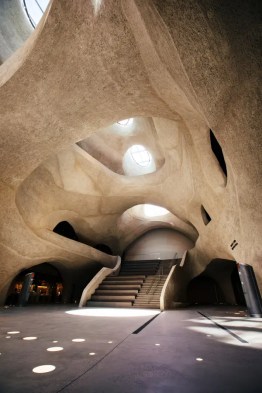
The view at the entrance toward the monumental staircase with bleacher seats.

We are ready to be awed:

The stunning $465 million Richard Gilder Center for Science, designed like a canyon, is destined to become a colossal attraction.

When plans for it first surfaced, I wondered if the new Gilder Center at the Natural History museum might end up looking overcooked.

From the outside it’s a white-pink granite cliff with yawning windows shaped a little like the openings to caves, nestling the museum’s wonderful Romanesque Revival addition from the turn of the last century. Past the front doors, that cliff face morphs. It becomes an atrium in the guise of a towering canyon, a city block deep.

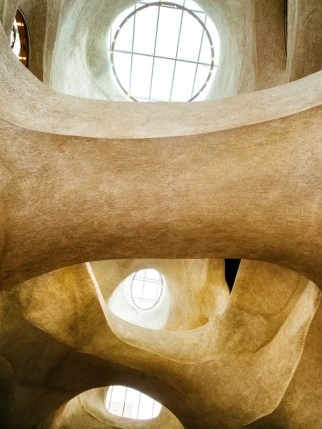
Skylights and balconies in the atrium of the new Richard Gilder Center for Science, Education and Innovation.

For its architects, Jeanne Gang and her team, Gilder was clearly a gamble and leap of faith, bucking today’s innocuous norms, almost begging for charges of starchitectural self-indulgence.

Now that it’s built, I love it.

I wouldn’t go so far as to equate it with the curvaceous genius of Gaudi or with Saarinen’s groovy TWA Terminal, but it’s in the family. Like them, Gilder is spectacular: a poetic, joyful, theatrical work of public architecture and a highly sophisticated flight of sculptural fantasy. New Yorkers live to grouse about new buildings. This one seems destined to be an instant heartthrob and colossal attraction. Continue reading

Libraries Old & New

Adults and children in a room of a library with bookshelves, an orange light in the ceiling and an orange wall.

The Adams Street Library in Dumbo, Brooklyn, has a children’s space with hues reminiscent of a Creamsicle. Justin Kaneps for The New York Times

The name Michael Kimmelman is rare in these pages, but in covering one of our favorite topics he gets our full attention again today:

As New York Weighs Library Cuts, Three New Branches Show Their Value

Facing a giant budget deficit, Mayor Eric Adams proposed cuts to New York libraries. But they play an outsize role in the city, offering services and safety.

Adults and children gather in a well-lit children’s room in a library that is filled with bookshelves. One child sits on a color-blocked rug, drawing.

The children’s room at the Macomb’s Bridge branch in Upper Manhattan; below, the entrance and canopy outside refer to the original landmarked architecture. Justin Kaneps for The New York Times Image

A city is only as good as its public spaces. The Covid-19 pandemic was another reminder: For quarantined New Yorkers, parks, outdoor dining sheds and reopened libraries became lifelines.

But now Mayor Eric Adams wants to slash funds for parks ($46 million) and for libraries ($13 million this fiscal year, more than $20 million next), and the City Council is debating the dining sheds. The sheds need regulation and the city budget needs to be cut by perhaps $3 billion. That said, if you don’t find the current political conversation shortsighted, you might want to do what I recently did and check out some of the library branches that have opened since the start of 2020. I visited three of them — each one a boon for its neighborhood, and money well-spent. Continue reading

Wonders Of The Yucatán

In Calakmul and elsewhere, the fierce jaguar was worshiped as a deity. Ancient rulers and warriors adorned themselves with the animal’s skulls, skins, fangs and claws. Adrian Wilson for The New York Times

Several months ago when we confirmed our plans to attend a wedding in Merida, Mexico on November 5, Calakmul came to mind. We had already explored many famous Maya sites in Central America, most recently in Belize, not to mention Mexico, over the last three decades; and we have also been fortunate with big cat sightings.

We decided against extending our stay, choosing to spend a few days in Mexico City instead (I have been obsessed with Barragán in recent years, so seeing his former home and workshop there was a must). Charly Wilder‘s article in the New York Times, which I am only seeing now, makes me wonder when we will return to see what we neglected in the Yucatan:

The number of jaguars is growing in Mexico, especially in areas of the Yucatán Peninsula. Patryk Kosmider/Getty Images

Thanks to Mexican conservation efforts, the jaguar is making a comeback in the Yucatán Peninsula. A traveler ventures into its habitat in the tropical jungles surrounding an ancient Maya city.

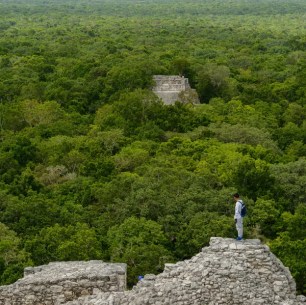
From the top of the great pyramid of the ancient Maya city of Calakmul in the southern Yucatán Peninsula in Mexico, you can see all the way to Guatemala. The jungle stretches out infinitely in every direction, an ocean of green punctuated only by the stepped pyramid peaks of two other Maya temples. Continue reading
Hotel-ish Homes For Birds, Brooklyn Botanic Garden

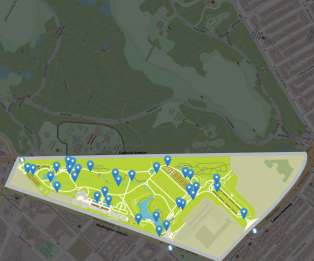
Artist-made birdhouses are installed throughout the Garden as part of For the Birds. Use the exhibition map or scan the list below to explore!

Zach Helfand gives us a quick sketch of what happens when celebrities, and celebrity architects, collaborate on behalf of birds. When you next have the opportunity to visit the Brooklyn Botanic Garden, keep this initiative in mind:

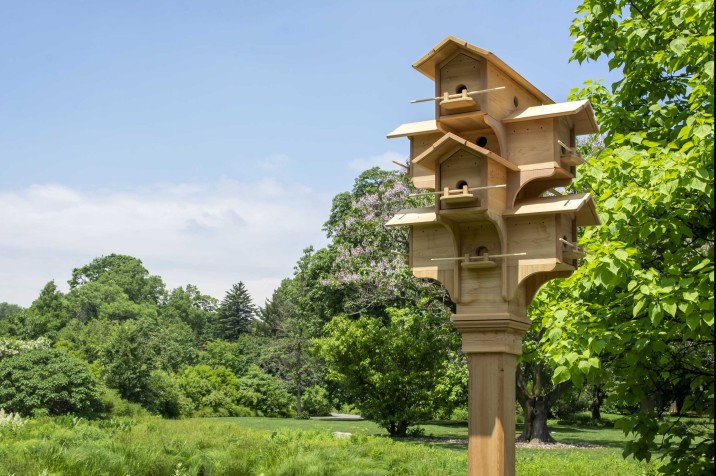
To benefit the Audubon Society, “For the Birds,” a COVID passion project, brings together ornithophiles and artist-designed birdhouses, including a 12BR Apt, A/C, No Elv, Vus.

100 Martin Inn birdhouse on location at Brooklyn Botanic Garden.

The recent housing market has brought about ruinous price increases, a bidding war over a fifth-floor walkup studio with no oven, and enough of a civic exodus for the Post to declaim, earlier this month, “listen up, new york—florida sucks, and you’ll all be back in five years.” But that doesn’t mean deals can’t be had. Take a unit that just went on the market. It’s a newly built architect-designed twelve-bedroom in shall we say Crown Heights, with finishes by a master carpenter and three-hundred-and-sixty-degree views of Prospect Park. Continue reading

Library!

The Long Room is at the heart of a $95 million conservation project at Trinity College Dublin’s Old Library. Paulo Nunes dos Santos for The New York Times

The exclamation point in this post’s title signifies enthusiastic appreciation for a pleasant surprise. A story about libraries to take the mind off all that other news, and point it to lasting treasures. Our thanks to Ed O’Loughlin for the story, Paulo Nunes dos Santos for the photos, and The New York Times for the publication:

An Irish National Treasure Gets Set for a Long-Needed Restoration

The majestic Old Library at Trinity College Dublin, where some of Ireland’s most ancient and valuable books are stored, is a popular tourist attraction.

A librarian walking along the corridors in the upper gallery. Paulo Nunes dos Santos for The New York Times

DUBLIN — The Long Room, with its imposing oak ceiling and two levels of bookshelves laden with some of Ireland’s most ancient and valuable volumes, is the oldest part of the library in Trinity College Dublin, in constant use since 1732.

But that remarkable record is about to be disrupted, as engineers, architects and conservation experts embark on a 90 million euro, or $95 million, program to restore and upgrade the college’s Old Library building, of which the Long Room is the main part. Continue reading

The Mural Is The Thing

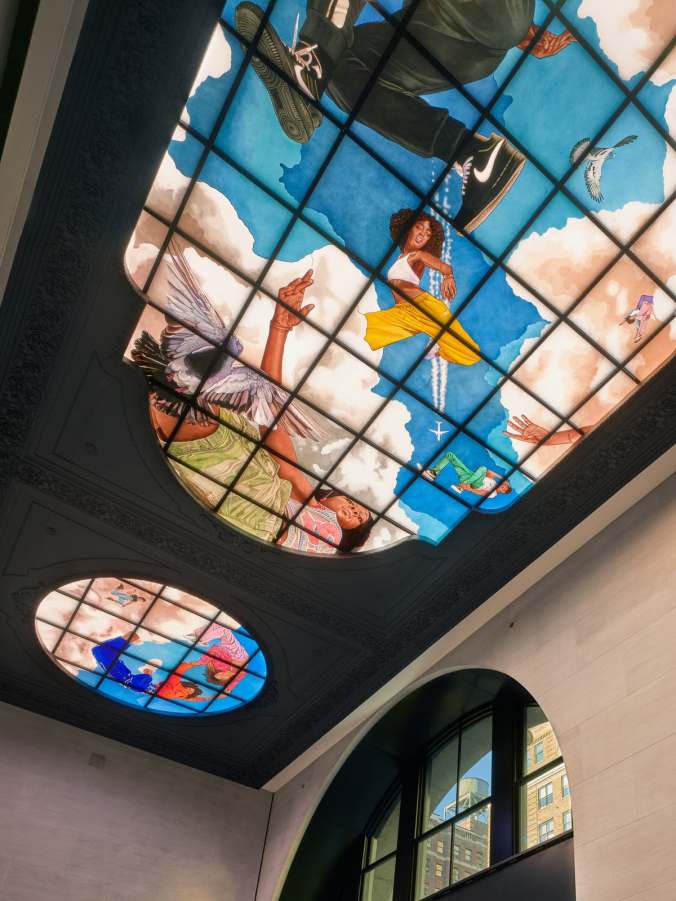
Kehinde Wiley’s backlit, hand-painted, stained-glass triptych called “Go” depicts sneaker-clad break dancers who appear to float across a blue sky. The woman’s pointing finger nods to the Sistine Chapel’s “Creation of Adam.” Andrew Moore for The New York Times

In the mid-1980s we lived a few blocks south of Penn Station, and avoided it studiously. If I could right now, I would rush to see it, thanks to Ian Volner’s essay below. I recommend reading it in full because it is neither puff piece nor fashion statement, but a comment on important issues of our day. Like the two essays I referenced earlier by Casey Cep, this essay makes me believe in the importance of this project, as if the project itself is a public statement of intent. The description of the stained glass mural was more than sufficient, but still I had to find an image of it (the one above is from a review I missed a few weeks ago in the New York Times).

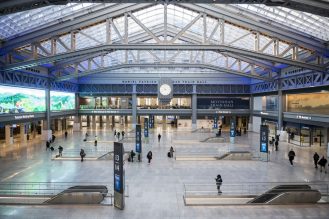
The Moynihan Train Hall’s Glorious Arrival

The new transit hub redeems the destruction of the original Penn Station. Photograph by Mark Kauzlarich / Bloomberg / Getty

The film noir “Killer’s Kiss,” from 1955, is an almost perfect dud. But because it was filmed on location in New York—and because its director was a twenty-seven-year-old photographer named Stanley Kubrick—it’s worth watching for the first scene and the last, which occur in the same place: the passenger concourse of the original Pennsylvania Station in Manhattan, where the protagonist, having escaped from shadowy thugs, waits impatiently for his lover. Kubrick captures the hero from a low angle, and, overhead, the arched trusses holding up the station’s glass-and-iron roof seem impossibly high. The building looks very dirty, but the ambient soot in the air catches the sunshine as it streams down from above, making the light appear more abundant, almost solid. Continue reading

Let Rem Koolhaas Take Your Mind Off Other Things

Kormann-RemKoolhaas-3

Rem Koolhaas’s new show tells a story that stretches from ancient Rome and China to the environmental, existential crisis of the present. Photograph by Laurian Ghinitoiu / Courtesy AMO

Thanks to Carolyn Kormann for the welcome distraction:

Rem Koolhaas’s Journey to the Countryside

Kormann-RemKoolhaas-1

One morning last week, the Dutch architect Rem Koolhaas was slowly turning in place in the center of the Guggenheim Museum’s rotunda, his face tilted up toward the sun-flooded glass roof. Suspended above his bald head was a miniature yellow submarine with a long needle at one end, like a bayonet. The device, Koolhaas explained, was something Australians developed to exterminate starfish. “Because of global warming, they are proliferating to the extent that they need to be killed, to protect the great barrier reef,” Koolhaas said. “The sub injects them with poison.” He smiled slyly. “Organic poison.” Continue reading

Libraries As Architectural Gems

merlin_160635033_dcbb54ea-d450-4d75-b097-f8896ca277ee-superJumbo.jpg

Winnie Au for The New York Times

We occasionally hail architecture, and frequently hail libraries as essential to our shared humanity, and when we get the chance to hail both at the same time, the world seems in good order:

Why Can’t New York City Build More Gems Like This Queens Library?

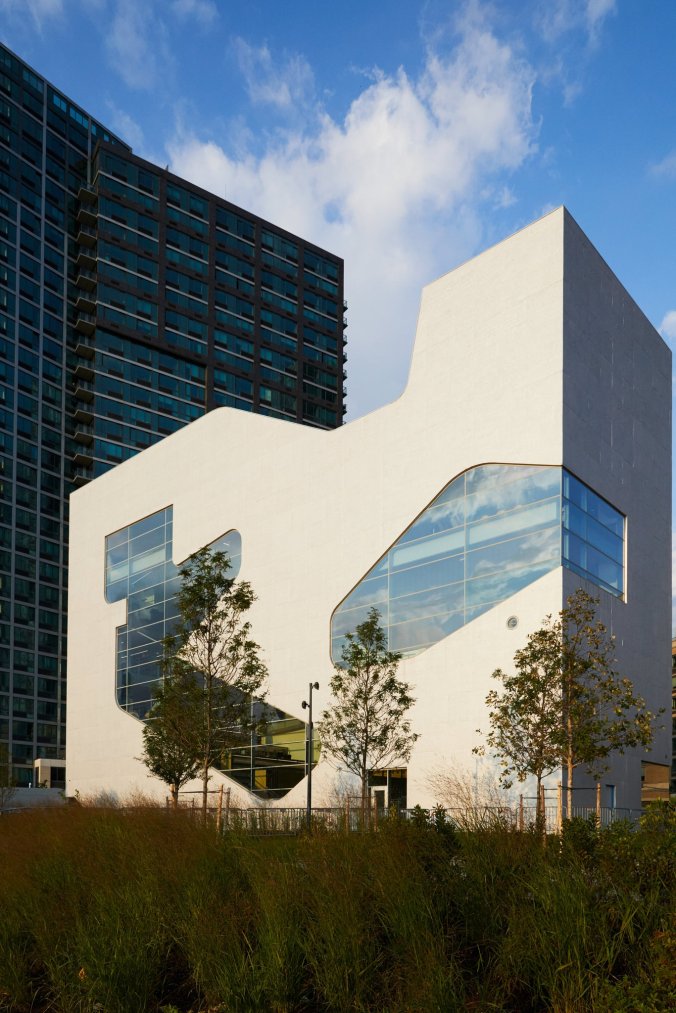
The Hunters Point Community Library is one of the finest public buildings New York has produced this century. But it cost more than $40 million, took a decade and almost died.

merlin_160635120_4fd39dfa-a3bd-40a6-bad9-ffa64e5cd502-superJumbo.jpg

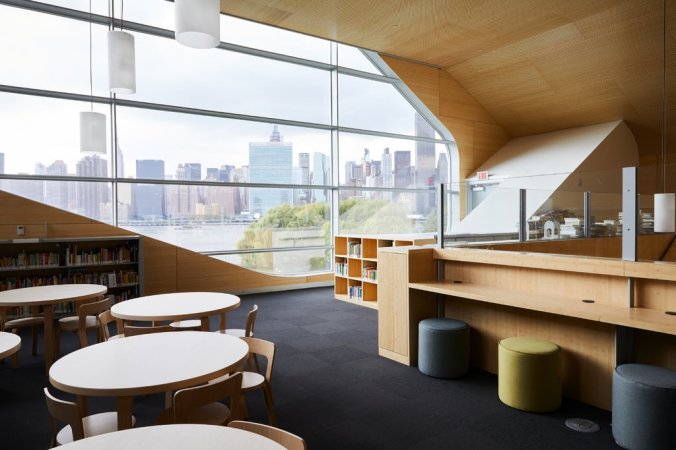
The canyon-like lobby entrance of Hunters Point Community Library. Winnie Au for The New York Times

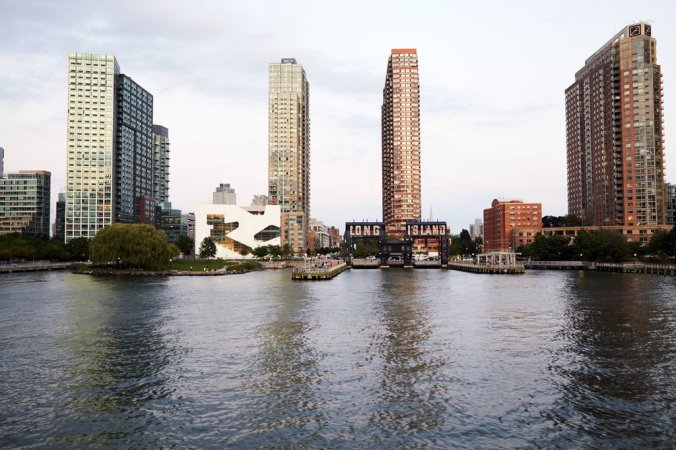
Against a phalanx of mostly dreary new apartment towers, the soon-to-open Hunters Point Community Library by Steven Holl Architects is a diva parading along the East River in Queens, south of the famous Pepsi sign. With its sculptured geometry — a playful advertisement for itself — it’s even a little like the Pepsi sign.

Compact, at 22,000 square feet and 82 feet high, the library is among the finest and most uplifting public buildings New York has produced so far this century.

merlin_160635054_78b92219-8a07-43e8-980e-5ddde3eca8e6-jumbo.jpg

Winnie Au for The New York Times

It also cost something north of $40 million and took forever to complete. So it raises the question: Why can’t New York build more things like this, faster and cheaper?

merlin_160635087_be5c3790-f4e6-4775-896c-faed62eae8bb-jumbo.jpg

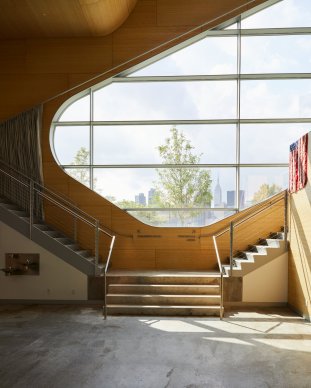
The library is full of nooks and corners, illuminated by big windows with sculptured walls covered in bamboo.Credit Winnie Au for The New York Times

Opening Sept. 24, Hunters Point is surely what Queens Library officials and the borough’s former president, Helen M. Marshall, had in mind when the project was proposed more than 15 years ago: a crown jewel among Queens branches, at a singular, symbolic spot facing the United Nations and Louis Kahn’s exalted Four Freedoms Park across the water. Continue reading

The Logic of the Weave

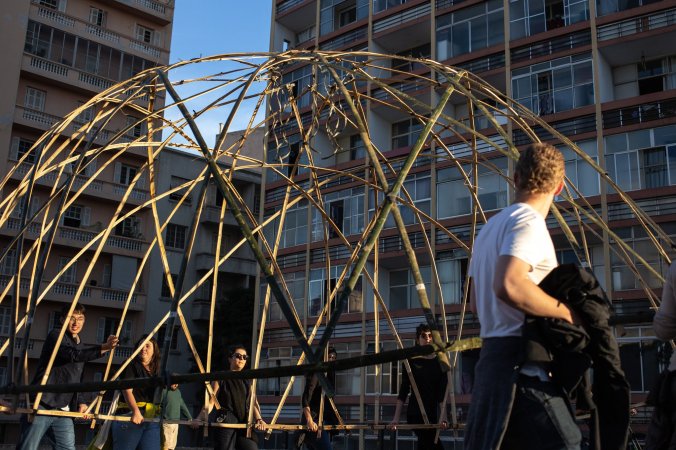
The bamboo dome “had even more useful structural properties than I had envisaged,” Ms. Martin said. “Deployability, nice structural stability and highly portable.”Credit Gabriela Portilho for The New York Times

Limits often lead to creative solutions. That’s exactly what is happening in Brazil. Alison Martin is pushing the limits of what can be built from weaving bamboo and is helping to create more natural cityscapes. She is surprising even the computer engineers with the strength and shapes of her material, all without the use of nuts and bolts. This is a new way of combining nature and architecture. Her work is also helping to solve some of the problems created by elevated highways. These highways block out the sun and create “a fracture in the urban environment”.

With designer and artist Alison Grace Martin, architects and engineers are embracing “the logic of the weave.”

SÃO PAULO, Brazil — On a Tuesday afternoon in early July, Alison Grace Martin, the British artist and weaver, joined a steady stream of Paulistanos along the elevated freeway that curves through downtown São Paulo. The two-mile “Minhocão” (named after a mythic “gigantic earthworm”) was closed to cars that day. The only traffic was on foot and bikes, skateboards and scooters. Picnickers lounged on the median sipping wine. Children ran after soccer balls. A retriever chased a coconut; a pit bull peed on a pile of bamboo.

The bamboo — freshly cut and split into strips about 20 feet long — had arrived with Ms. Martin and engineer James Solly, who were leading an urban design workshop, “High Line Paulista,” inspired loosely by Manhattan’s elevated greenway. Their students for the week had carried the strips, which would be put to use in an experimental dome construction, like a barn-raising, but with bamboo.

Plans have long been in the works to turn the Minhocão into a park. Since its opening in 1971, the freeway has been the subject of controversy: a concrete scar that bifurcated neighborhoods, smothering residents with noise and pollution.

“It ripped apart the urban fabric,” said Franklin Lee, from São Paulo, and director of the workshop with his partner Anne Save de Beaurecueil. (The workshop is part of the Architectural Association international visiting school program.) In January, after years of discourse and debate, the mayor, Bruno Covas, announced that the freeway would eventually be deactivated, finally making way for “Parque Minhocão.”

Continue reading

Mass Timber & Metrics Of Ecology

Mjosa-Tower_Norway_42987-Bilder-til-Mj_starnet-episode-3_web.jpg

Mjösa Tower, the world’s tallest wooden building, under construction in Brumunddal, Norway. ANTI HAMAR

Thanks to Yale e360 and especially to Jim Robbins, as always, for keeping us up to date on the most interesting new developments in our natural world and its built spaces:

As Mass Timber Takes Off, How Green Is This New Building Material?

Mass timber construction is on the rise, with advocates saying it could revolutionize the building industry and be part of a climate change solution. But some are questioning whether the logging and manufacturing required to produce the new material outweigh any benefits.

Carbon12_Portland_web.jpg

Carbon 12 in Portland, Oregon is the tallest building in the United States made with mass timber. COURTESY OF KAISER + PATH
2 / 4

The eight-story Carbon 12 building in Portland, Oregon is the tallest commercial structure in the United States to be built from something called mass timber.

If the many fervent boosters of this new construction material are right, however, it is only one of the first mass timber buildings among many, the beginning of a construction revolution. “The design community in Portland is enthralled with the material,” said Emily Dawson, an architect at Kaiser + Path, the locally-based firm that designed Carbon 12.

The move to mass timber is even farther along in Europe. That’s because mass timber – large structural panels, posts, and beams glued under pressure or nailed together in layers, with the wood’s grain stacked perpendicular for extra strength – is not only prized as an innovative building material, superior to concrete and steel in many ways, it is also hoped it will come into its own as a significant part of a climate change solution. Continue reading

Green Building Techniques Inspired By Insects

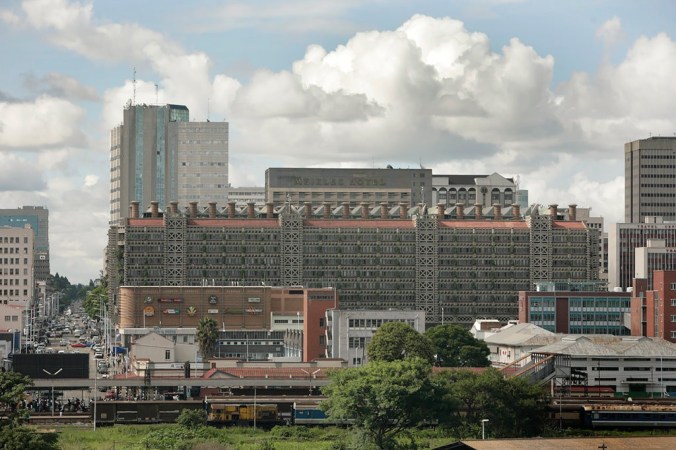
The air conditioning system of the Eastgate Centre in Harare, Zimbabwe, was inspired by termites’ nests. Credit David Brazier, via Wikimedia Commons

It’s been quite some time since we posted about biomimicry. Thanks as always to JoAnna Klein for this illuminating story:

What Termites Can Teach Us About Cooling Our Buildings

“We think humans are the best designers, but this is not really true,” a researcher said.

In the capital of Zimbabwe, a building called Eastgate Centre holds nearly 350,000 square-feet of office space and shops. It uses 90 percent less energy than a similar sized building next door.

What’s Eastgate Centre’s secret? Termites.

merlin_152612904_38aa91c7-eec0-456c-ae7a-09920b6f5ed5-jumbo.jpg

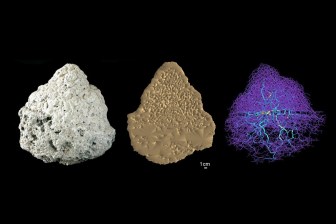
Three views of a termites’ nest, including from left, a photo of the nest, a tomography of the the nest’s interior and the networks of galleries and paths in it. Credit G. Theraulaz, CRCA, CBI, CNRS, Toulouse

In the 1990s, Mick Pearce, the building’s architect, took his inspiration from mounds built by fungus-farming termites he saw on a nature show. The insects created their own air conditioning systems that circulated hot and cool air between the mound and the outside.

As architects and builders seek new and improved ways to cool buildings without using more energy in a warming world, a study of another type of termite mound suggests that Mr. Pearce won’t be the last human to take design tips from these cockroach cousins. Continue reading

Buoyant Foundation’s Intriguing Architectural Innovation

This is the kind of story that displays the odd new reality of what can count for optimism–finding intriguing solutions for mankind’s self-inflicted catastrophes. From Anthropocene:
float-when-it-floods.jpg

Amphibious Architecture

Float when it floods

By Emily Anthes

amphibious-house.jpg

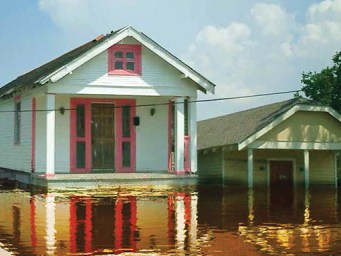
Amphibious structures are not static; they respond to floods like ships to a rising tide, floating on the water’s surface.


Last June, not long after a catastrophic thunderstorm swept through southern Ontario, bringing a month’s worth of rain in just a few hours, a group of 75 architects, engineers, and policymakers from 16 countries gathered in the city of Waterloo to discuss how humanity will cope with its waterlogged future. The timing of the conference was a fitting meteorological coincidence; in a world increasingly transformed by climate change, heavy rains and major floods are becoming more common, at least in some areas. In the summer of 2017 alone, Hurricane Harvey dumped more than 50 inches of rain over Texas; a monster monsoon season damaged more than 800,000 homes in India; and flash floods and mudslides claimed at least 500 lives in Sierra Leone. In the past two decades, the world’s ten worst floods have done more than a 165 billion dollars’ worth of damage and driven more than a billion people from their homes. Continue reading