Pause and Reflect

Land Art Installations can be as varied as the land they sit upon and the vision of the individuals who create them.   Sometimes urban and often in wilderness areas, they almost always offer a window into the hearts of their creators.

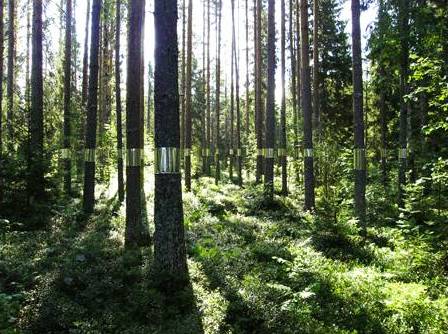
I’ve spoken about the convergence of art and architecture in previous posts, and Swedish firm Kjellgren Kaminsky Architecture was one such example.   Whereas the installation Clear Cut makes a visual statement about a particular conservation issue, Reflecting Time is a study of the interaction of  light and landscape.

The team headed north along the Norwegian coast, their only tools for this ephemeral installation 100 simple reflectors and the cameras they would need to record the work.  They climbed the seaside mountain, placing the reflectors in straight, parallel lines that defied the undulating landscape.  Then they spent time by the sea itself, marking the coast with tiny glimmers.

The tide is strong in Norway shifting the sea level up to 2 meters every day. A line of reflectors marked the coast, sometimes the reflectors lay on the ground later they float in the water. We made a ring further out in the sea untouched by the tide. It had an ephemeral glow that fascinated us.

In both cases the changing light and tides did the work, the art lay in meditating on the results.

Tree House Redux


When I ponder the question “why I travel” I often return to the same answer; I travel to gather new experiences, to learn, to refresh, to reconnect with something lost.  I think we all have the tendency to become complacent with the familiar. Even one step outside of that familiarity brings us closer to a broader vision.  And for many who live in urban areas, the drive to step outside is a power in itself.  I believe we are programmed to feel connected with the outdoors, soothed by the power of green, taking in spiritual chlorophyll like deep breaths, to speak metaphorically.

But not everyone who craves communion with nature is ready to “rough it” in her embrace.  An innovative hotel built in Sweden’s Boreal forest (the same forest region that has inspired Land Art Installations) offers an inspiring way to wake up amid birdsong. Continue reading

The Forest For The Trees

“Nature is my manifestation of God.
I go to nature every day for inspiration in the day’s work.”
― Frank Lloyd Wright

Architects taking their inspiration from nature isn’t an innovation, in fact, its retrieving what has often been forgotten. Sometimes that inspiration leads them outside of the building process altogether and into the sphere of Art, or to be more precise, into the sphere of Land Art Installation. Continue reading

Green House Redefined

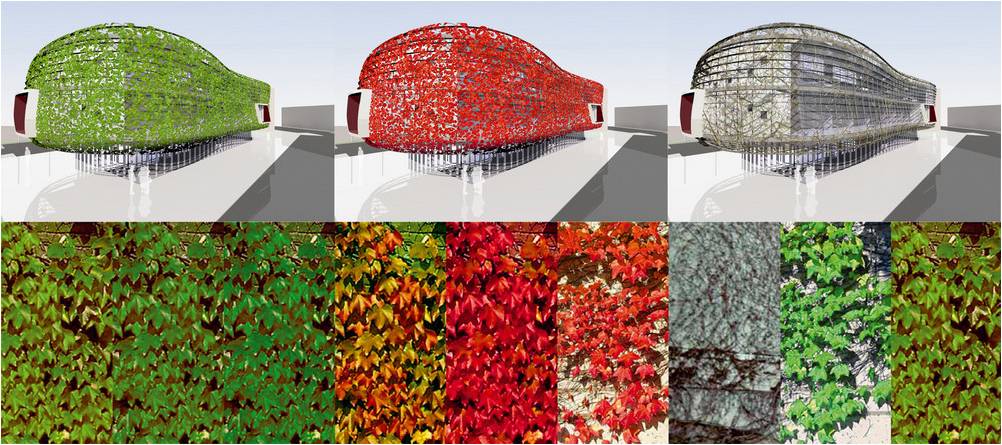
Use of natural light, passive and active energy saving systems, relative position to the sun, air flow, leaf moistened air….

This doesn’t sound like “business as usual” for a municipal building. But the Noain City Hall in Navarre, Spain designed by Award winning Zon-e Arquitectos stems  logically from the fact that the region leads Europe in its use of renewable energy technology.  Continue reading

High Line Skyline

An aerial shot looking down on the Washington Grasslands section of the park, with Rashid Johnson’s artwork Blocks and Yutaka Sone’s Little Manhattan visible, both 2015 Commissions.

Railroads were one of the most significant early forces of change to the landscape of North America.  They not only moved freight and people but they participated in opening up the newly formed National Parks to visitors with the creation of the now iconic grand hotels.

Some of the railway’s original train tracks were marked and put back in their original locations. You’ll see them throughout the park today. Photo by Rick Darke

But as roads began to rival rails the network underwent a steady decline, and fewer and fewer resources were being put into their maintenance.

Fast forward a century–give or take a decade–and we find railroads, or at least rail corridors, going back to one of their greatest historical traits; as a pathway to nature.

In the 1980s the U.S. Congress passed an amendment allowing the use of soon-to-be-abandoned rail lines for hiking and biking trails.The highly successful “Rails-to-Trails” program has lead to nearly 1,012 rail-trails in the U.S. with a total trail mileage of more than 11,000.

Not just a U.S. phenomenon, there are similar programs in Canada, Mexico, Europe and Australia, to name a few.  (Tasmanian Trail anyone?) Continue reading