Library Futures

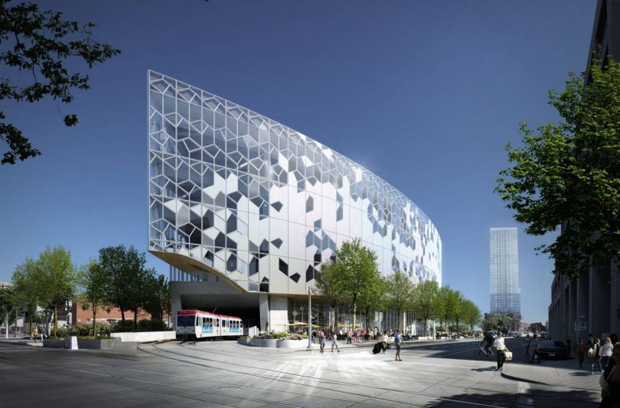
The New Central Library, Calgary, Canada - Snøhetta

The New Central Library, Calgary, Canada – Snøhetta

Thanks to Phaidon for these images and accompanying story that leads us to believe that libraries are less endangered than we might otherwise have thought, a story about a beautiful new library:

Snøhetta unveils ‘floating’ library design in Canada

Calgary design will feature arches inspired by cloud formations and will house over half-a-million books

As the Frankfurt Book Fair opens this week work has already begun in Calgary, Alberta, to construct a home for 600,000 books directly above a transport hub. The New Central Library by Norwegian starchitects Snøhetta will sit at the intersection of Downtown Calgary and the cultural hotspot that is East Village.

Trains on the light rail track will chug along tracks that appear out of the base of the slim, curved structure, with the library ‘lifted’ above the public transport below. A covered plaza has been created by cutting away the ground levels of the building, as if slicing through the corner of a pat of butter. Continue reading

Greening Headquarters

Thanks to Alexandra Lange and the Culture Desk at the New Yorker’s website for this explanation of the latest, greatest in green building:

Two recent dispatches from the frontiers of office design: a drone video of the vast circular excavations for Apple’s new Cupertino headquarters, and the news that Weyerhaeuser, the tree- and forest-products company, was selling its own earthwork-like 1971 building to move to Pioneer Square, in downtown Seattle. These projects have more in common—for better and for worse—than you might think. Weyerhaeuser (shrinking) is giving up the suburbs of Federal Way, Washington, for the dream of urban connection, even as growing companies drape themselves in vines to make their out-of-town locations seem like the earth-friendly choice. Continue reading

Why We Walk

Photo Courtesy of digitaldeconstruction.com

Photo Courtesy of digitaldeconstruction.com

I have been endlessly fascinated by walking. I asked myself Why We Walk while I walked 400 km on the Camino de Santiago. A recent article by Adam Gopnik in the New Yorker has brought me to this question again in a new context. The article talks about what it means to be a pedestrian in the modern world and how the role of walking has changed as it’s become less necessary. The sad thing about walking for pleasure instead of necessity means that it occurs less. Many of us spend our lives in the sitting position: sitting in cars to then go sit at work and then sitting at home after a long day of sitting. I’m generalizing here as I call myself out on my sedentary life. Our bodies are made to walk, so I must ask myself, Why Don’t We Walk?

Roads are not enjoyable to walk in an increasingly auto dependent world. When living in a residential area there isn’t much activity to make walking around something that invites ‘randomness’. Adam Gopnik writes in the New Yorker about Why We Walk. He says,”We start walking outdoors to randomize our experience of the city, and then life comes in to randomize us.” The sidewalks are public space. In the suburbs we have a lot of private space and little public space. I have to wonder how it could affect our psyche to not brush up against the world. I wonder what we take away when we lose the opportunity to have chance interactions in indeterminate public spaces.  I wonder how creative we could be as a culture if the majority of our interactions with strangers didn’t occur over money exchanges. Adam Gopnik talks about the vague excitement and pure chance of walking in New York City.

You could walk anywhere. Saturday all day, Sunday all day, I’d tramp through the lower-Manhattan neighborhoods. The differences, architectural and social, among Tribeca and SoHo and the East Village, to name only contiguous areas, were distinct and vivid and nameable then: cast-iron buildings shading off into old egg- and paper-carton factories sweetly interrupted by small triangular parks, and edging over, as you walked east, into poor-law tenements that were just being reclaimed by painters. I would set off on a Saturday morning and walk all day, and achieve Kazin’s feeling of vague excitement, of unearned release, in a way that I have never felt before or since.

I like this description because it shows the way he was able to interact with the environment around him as a walker. Suburbs that are designed for cars make walking an outdated form of transportation. It’s inefficient and time consuming if you live in a city that’s designed for cars rather than pedestrians. In the suburbs, there aren’t many people dancing in the ‘sidewalk ballet’ as Jane Jacobs puts it. So, I just wonder what a healthier culture there would be if there were more public space for people to live outward facing lives that brushed up against each other.

The article brings up a quote from Frédéric Gros’s book A Philosophy of Walking, “The purpose of walking, is not to find friends but to share solitude, for solitude too can be shared, like bread and daylight.” This quote to me highlights the sort of communion we can have with each other while walking. While I was walking the Camino, I felt that communion with fellow walkers as well as with the landscape. I was sharing solitude with the landscape. I think taking away that walking aspect of communion in our lives further isolates us from nature. Continue reading

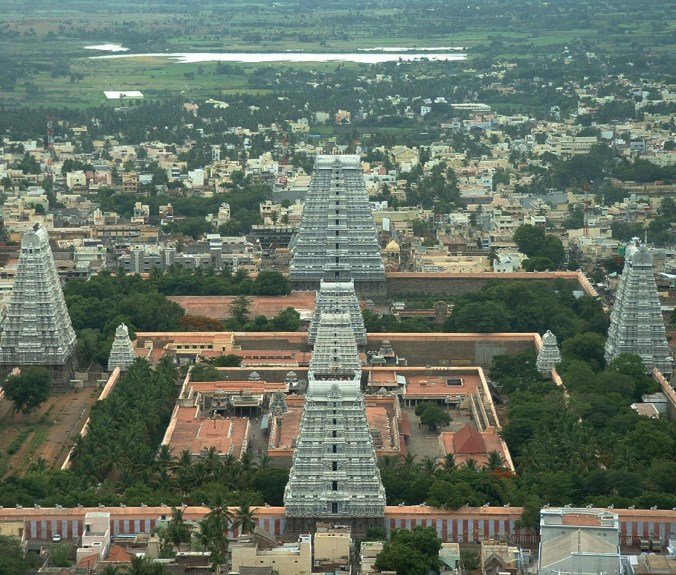
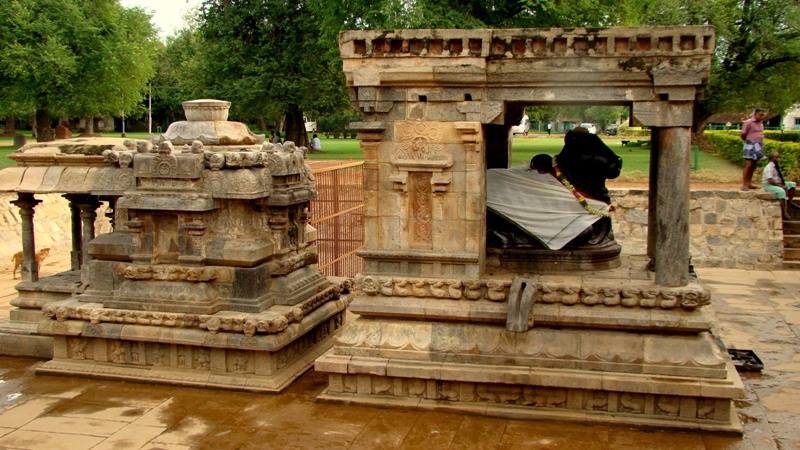
Brihadeeswarar Temple, Thanjavur – Tamil Nadu

Photo credits : Binu Kumar

Photo credits: Binu Kumar

Brihadeeswarar Temple was an imperial monument to Chola power and the greatest artistic accomplishments of the late Chola period. This Temple was the greatest single undertaking of the South Indian temple builders, taking almost 15 years to complete. Continue reading

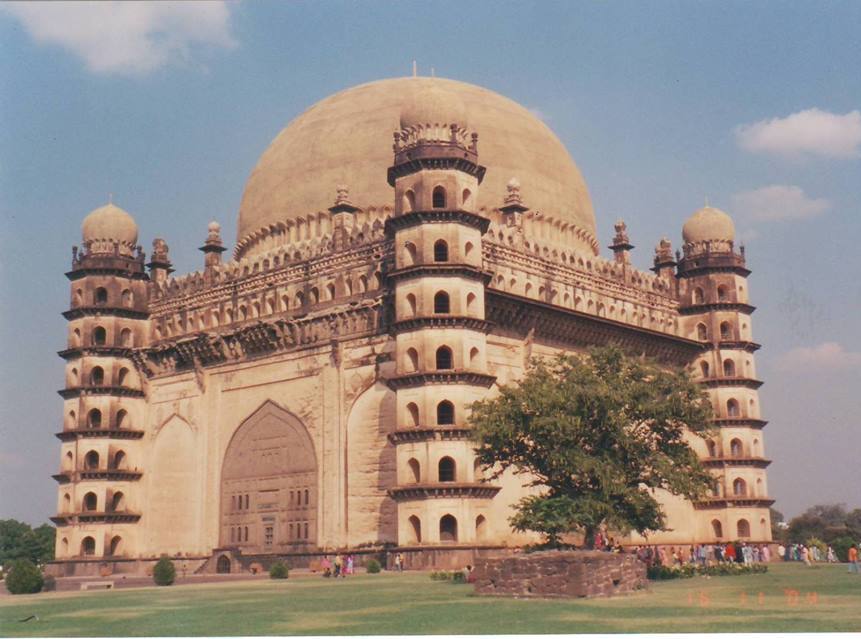
Gol Gumbaz

Photo credits : Vijay Mampilly

Photo credits : Vijay Mampilly

Gol Gumbaz is one of the largest and most famous monuments in India. Gol Gumbaz was constructed as a mausoleum for Sultan Mohammed Adil Shah, the seventh ruler of Adil Shah dynasty (1627- 57). Construction was completed in 1656. The monument’s central tomb remains a popular tourist attraction, but in fact the entire building, despite its simple design, stands as a masterpiece of Deccan-era architecture. Continue reading

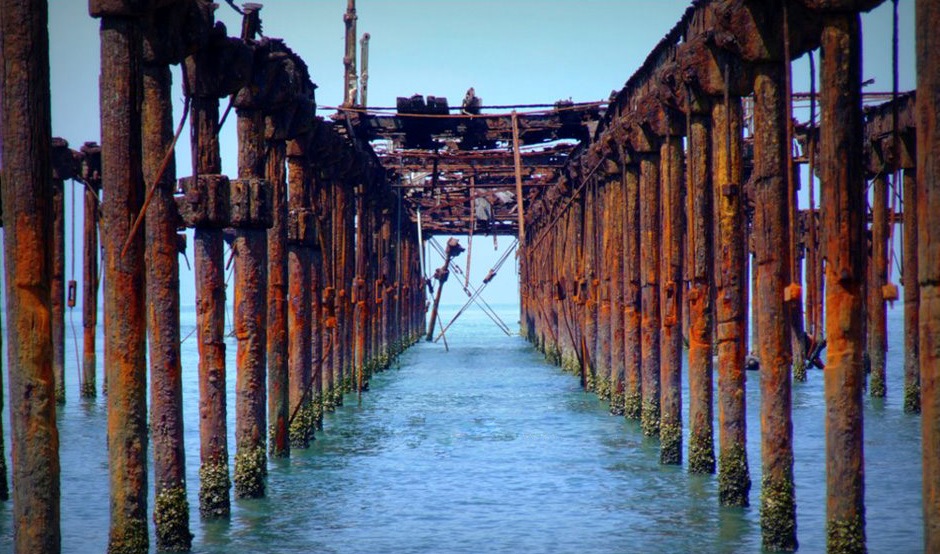
Glory Of The Past – Allappuzha

Photo credits: Ramesh Kidangoor

Photo credits: Ramesh Kidangoor

Situated at the south-western tip of Lake Vembanad, Allappuzha had its heyday as a commercial hub in 1775-76 when Dewan Raja Keshavadas built it as a major port of the erstwhile Travancore state. Allapuzha had the dual advantage of cheap inland water transport on its eastern end and calm seas suitable for an all-weather port on the west. Continue reading

Visiting Madurai Meenakshi Amman Temple

madurai_temples

Upon visiting the Meenakshi Temple, I removed my shoes, checked my bag at the door and proceeded my barefoot adventure through the eastern tower of the temple city. Maduri is known as temple city because of how vast the Meenakshi temple is. There are 12 towers, the four larger ones face each of the directions North, East, South, and West. We explored the 1000 pillar hall, the holy pond, and many other parts of the ancient temple.  It seemed like every corridor and wall had some sort of sacred art or story to it. The history of the temple is as vast as temple city itself. The temple dates back at least 2500 years. In 1310, the temple was almost completely destroyed by an Islamic conqueror and so many of the important sculptures were destroyed. It was restored in the 14th century though by Hindu kings who regained power.

Continue reading

Meenakshi Temple Gopuram – Madurai

Photo credits : Remash Kidangoor

Photo credits: Remash Kidangoor

Madurai has a historical legacy over 2500 years, making it the oldest city in Tamil Nadu. On the banks of the river Vaigai, Meenakshi Temple dominates the city of Madurai, which evolved around it. The architecture in this temple is purely Dravidian, but the styles of many dynasties have influenced the decorations and construction of Meenakshi since it has changed hands over the centuries. Continue reading

Airavatesvera Temple – Tamil Nadu

Photo credits : Binu Kumar

Photo credits: Binu Kumar

Airavatesvara Temple is locateded at Darasuram near Kumbakonam in Tamil Nadu. It was built by Raja Raja II during 1150 AD. The temple stands out for its intricate, beautiful sculptures. Continue reading

Travancore Royal Palace – Kerala

Photo credits : Binu Kumar

Photo credits: Binu Kumar

The Travancore Royal Palace is one of the most beautiful and largest palaces of the Travancore Royal family. It is the official residence of the royal family, and was built in 1915 by Sree Moolam Thirunal. This palace has great historical importance in India and is one of the finest examples of Kerala architecture. Continue reading

Matrimandir – Auroville, Pondicherry

Photo credits : Binu Kumar

Photo credits: Binu Kumar

The spectacular Matrimandir (meaning “Temple of the Mother” in Sanskrit) can be found in Auroville, Pondicherry, India. The Matrimandir can’t be called a temple in the typical sense of the word. It isn’t a church or other place of worship, nor is it strongly associated with any religions. It is, instead, envisioned as a place of spiritual energy. The Matrimandir appears as a large golden sphere that seems to be rising out of the earth. Continue reading

Straw Bale Construction: Part 3/3

Guest Author: Virginia Carabelli

For Part 2, click here, or if you’re new to the post this is Part 1.

You might wonder at this point, what about permits? All materials used for building in the US have to be tested in a federally approved lab. Straw bales not only passed the required standards, but exceeded them in many tests. Federal building codes supersede state building codes, meaning that no state can legally forbid its use. Most people, including many building departments, are unaware of this fact. Each state, has slightly different requirements. For example, if you live in a seismologically active area, your building code will reflect that (by the way, straw bales perform exceedingly well in earthquakes).

So if you want to build a post and beam structure with straw bale insulation (which is the basic building technique), you should have no problem. However, if you want to build a load-bearing structure (no post and beam to support your roof), you will have to restrict yourself to a small building, following a given formula depending on the size of your straw bales. You might run into some resistance in certain states, although load-bearing was one of the required tests passed by this material. Here in New York, several lovely load-bearing straw bale structures have been legally built. Continue reading

Straw Bale Construction: Part 2/3

Guest Author: Virginia Carabelli

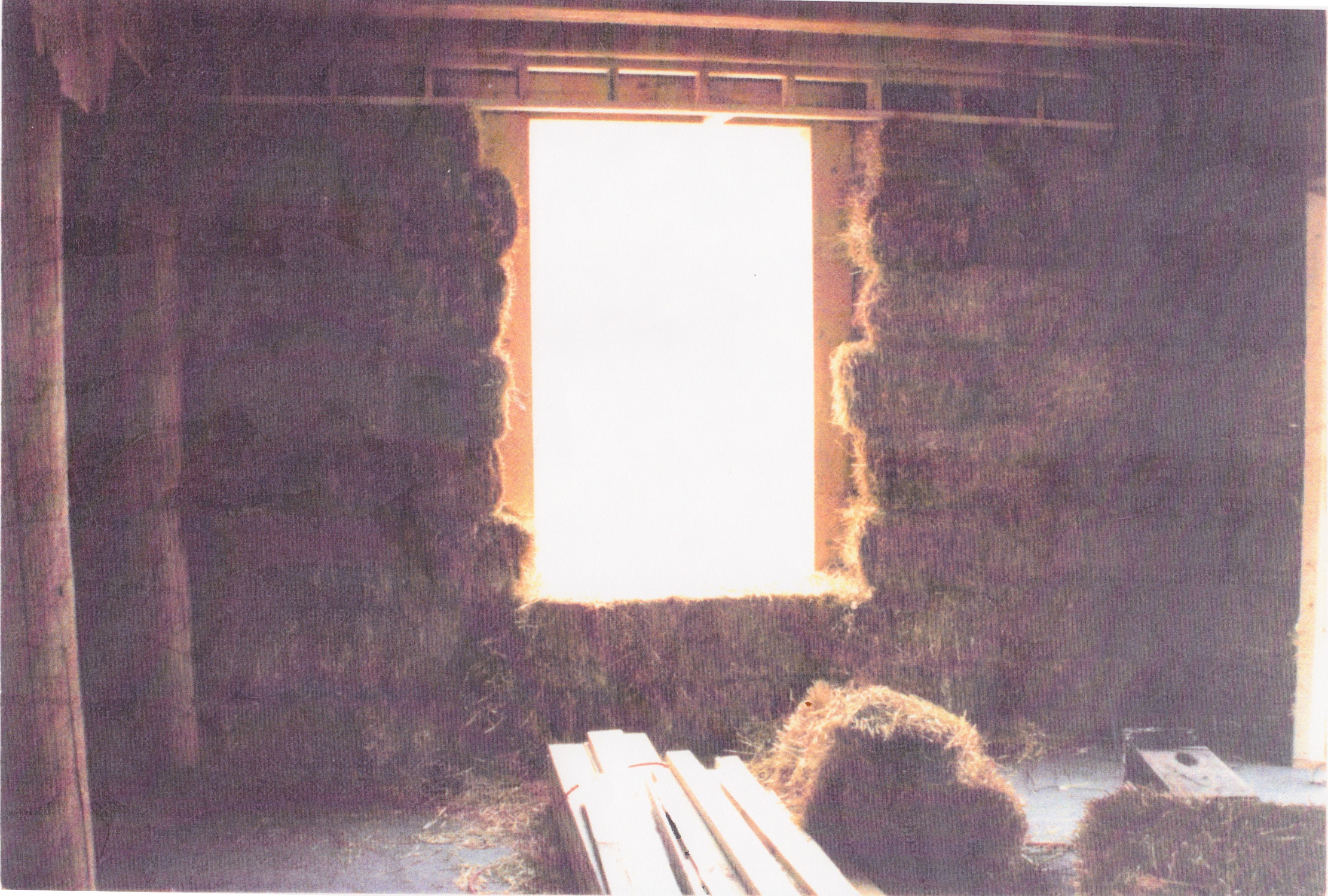
Before

Before

In case you missed the first part of this post, click here.

At this point, let me get the three things that may be on your mind out of the way, before I move to introduce the building technique, without getting too technical.

1. Fire – Fire needs oxygen to burn, a compacted straw bale + encasing in cement or mud plaster offers no oxygen for fire to take hold. Try and burn your phone book as is (do they still make them?) and you’ll see what I mean. At worse, it will smolder.

2. Pests – Straw is like a little stalk of bamboo, in a way. It is the stem of grains whose function is to carry nutrients to the head. It has no nutritional value, protein, etc., so bugs are not very interested in it—they prefer hay or alfalfa. In fact, Continue reading

Straw Bale Construction: Part 1/3

Guest Author: Virginia Carabelli

Hello everyone, I am delighted to be invited by RAXA Collective to participate in such a wonderful community! My name is Virginia Carabelli. I was born in Italy and raised both there and in France. I moved to the US in my late teens to attend college and fell in love with this beautiful country. I have always been more comfortable in nature and silence and have never been very interested in the rat race and busi-ness. I would much rather be than do.

I’ve always found our human ways mostly destructive and superficial, and had a plan since childhood to live life on my own terms as much as possible. In 1989 I achieved one of my childhood dreams: I bought a beautiful piece of property in a verdant valley in New Mexico, where I could live at least partially off the land. The community was mixed Spanish/Pueblo Indian, and many families lived in trailers (by that I do not mean a nice double-wide, but rather a large shipping container on cement blocks). Ecologically speaking, the valley was a fragile environment. With those two things in mind I said a simple prayer asking for guidance to build a home that would be in harmony with nature and also provide some good affordable housing for those in need. I had no idea how to do this, but I had only to wait a couple of weeks for Matts Myhrman to coincidentally walk into my life. Continue reading

Architecture And National Identity

morephaidoninvenicetalk

Our interest, invariably, is to showcase authentic culture in each project in every location where we play a role. Mostly, this means how our team members showcase their communities to visitors from other communities in other parts of the world. But it also means something about architecture and design. With the recent opening of Spice Harbour, and the soon-to-open Marari Pearl, we have found ourselves describing the architecture of each property without reference to local or national architectural style so much as to what is “appropriate” to the location.

We admit we do not always know exactly what we mean when we say this. On the other hand, we are content to note that even the “experts” do not always have neat answers to such complex questions, as noted on Phaidon’s website about a forum at the Venice Biennale:

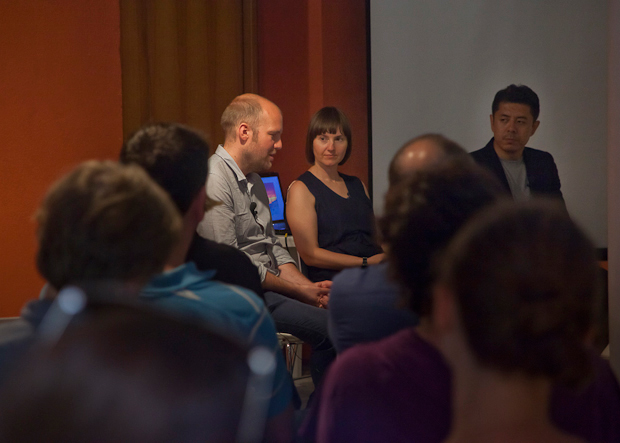
…The debate was ably chaired by the British Council’s Vicky Richardson who began by asking Stephan Petermann a little about the brief set by Koolhaas for this year’s biennale.

“What we were hoping for is that the countries would reveal themselves and their national characteristics by looking at their own history,” he said. “We think they have. It might not be as blatant as the provocation we made, but (you can see it) in the subtleties of the details and angles that some countries take. I hope that people enjoy the diversity of the directions we took.”

Continue reading

Architectural Moveables

carrybuildingslead

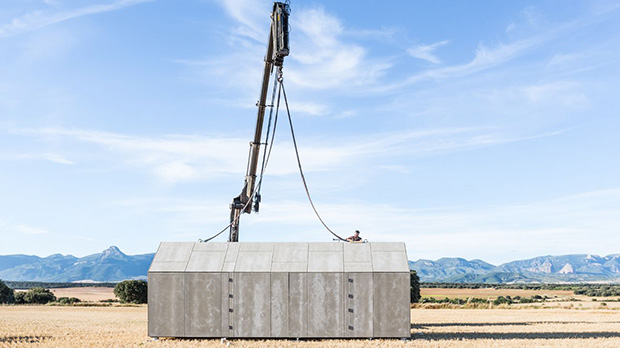
Casa Transportable ÁPH80 by Ábaton is one of the Atlas choices

Thanks to Phaidon for their attention to architecture that not only moves users, but which users can move:

Regular Phaidon readers will already be familiar with our recently launched Online Atlas, the dedicated resource website for architects, students and true lovers of architecture .

The site, which features over 130,000 images, 3,079 projects from 1,537 architects in 115 countries around the world is an invaluable aid to anyone who works in the industry and needs to know who did what, where – and, of course, how.

The Atlas editors have a regular feature in which they focus on a specific, occasionally left field aspect of architecture or an architectural project each week. It’s called Editors’ Focus and the first one was all about small buildings; a more recent post dwelt on nine of the hardest to construct buildings listed. This latest round-up takes in portable architecture. Continue reading

Relationships Across The Boundaries Of Photography And Architecture

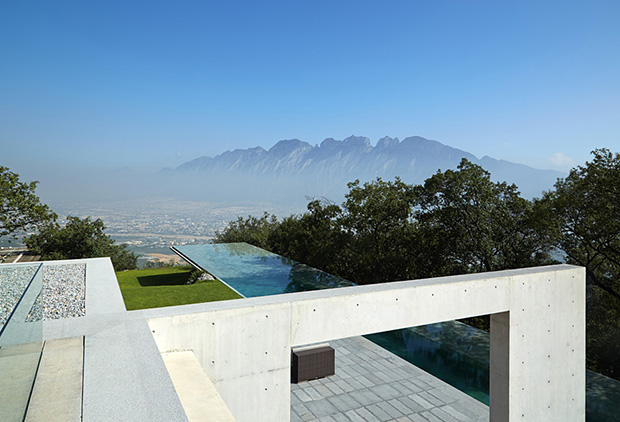
Tadao Ando's Monterrey house, by Edmund Sumner

Tadao Ando’s Monterrey house, by Edmund Sumner

Thanks to Phaidon for this story on the relationship between architecture and photography, or rather architects and photographers:

By the time Edmund Sumner was given his first camera, at the age of eight, he was already surrounded by, and wholly obsessed with, design. Edmund’s father was an interior designer whose clients included the likes of The Rolling Stones; his sister took up the paternal profession, while his brother became an architect.

Sumner, for his part, decided to photograph buildings for a living, and working with his wife, the architectural journalist Yuki Sumner, has specialised in architectural photography, with particular emphasis placed on contemporary Japanese design.

Continue reading

Ekambareswar Temple – Tamil Nadu

Photo credits : Renuka Menon

Photo credits: Renuka Menon

Located in Kanchipuram in the state of Tamil Nadu, Ekambareswar Temple is one of  the famous Hindu temples dedicated to Lord Shiva. This vast temple, covering an area over 40 acres, is one of the most ancient in India having been in existence since at least 600AD.

Continue reading

Tibetan Golden Temple – Karnataka

Photo credits : Jithin Vijay

Photo credits: Jithin Vijay

The Tibetan Golden Temple is situated in Kushalnagar Mysore, in the state of Karnataka. It is the second largest Tibetan settlement outside of Tibet and China. The Golden Temple is the main attraction in Kushalnagar; its walls are adorned with colourful paintings depicting gods and demons from Buddhist mythology. Continue reading

Landscape Restoration

Tianjin-225x132

Turenscape Qiaoyuan Wetland Park in Tianjin, China, has terraced ponds that incorporate designed experiments to monitor benefits.

We watch for stories about innovative approaches to fixing things in the natural environment, wherever those stories may be found.

And whatever name they may be given.

Thanks to Yale360 for their ongoing attention, including this recent article:

Rebuilding the Natural World: A Shift in Ecological Restoration

From forests in Queens to wetlands in China, planners and scientists are promoting a new approach that incorporates experiments into landscape restoration projects to determine what works to the long-term benefit of nature and what does not.

by Richard Conniff Continue reading