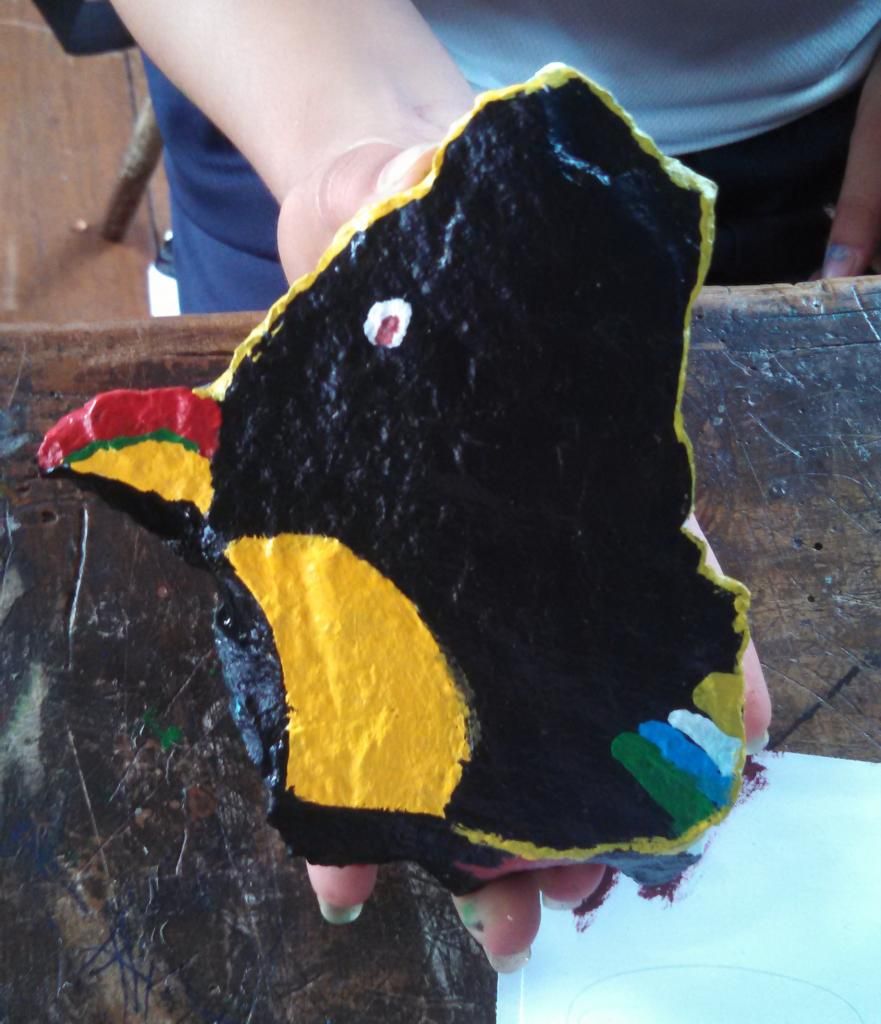
Tacacorí Rocks Birds

A sixth-grade creation

Starting last week, I began the next art project at the elementary school in Tacacorí. After learning that over time the papier-mâché creations succumbed to the Central Valley’s relative humidity and became difficult to preserve, I decided to find a more solid medium. I liked the idea of recycled plastic bottles from the hotel but I worried about the extensive use of scissors they’d require and all the sharp plastic edges that would be created in the process. Instead, I went with the option that, although not exactly recycled, at least doesn’t require industrially-created materials and is fairly abundant: rocks. And the best part is that stone is impervious to humidity (on the scale of time that we’re thinking about).
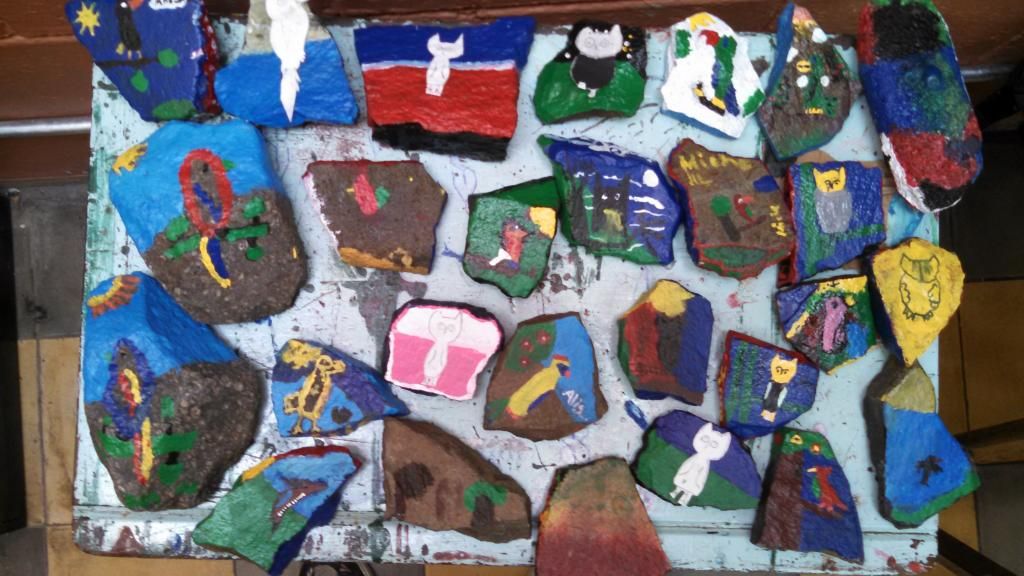
Fifth-grade creations — some kids pasted paper versions of their bird on the rock.

In the slideshow below, you can see some of the fifth- and sixth-graders’ works of art Continue reading
Xandari Pysanky

This slideshow requires JavaScript.

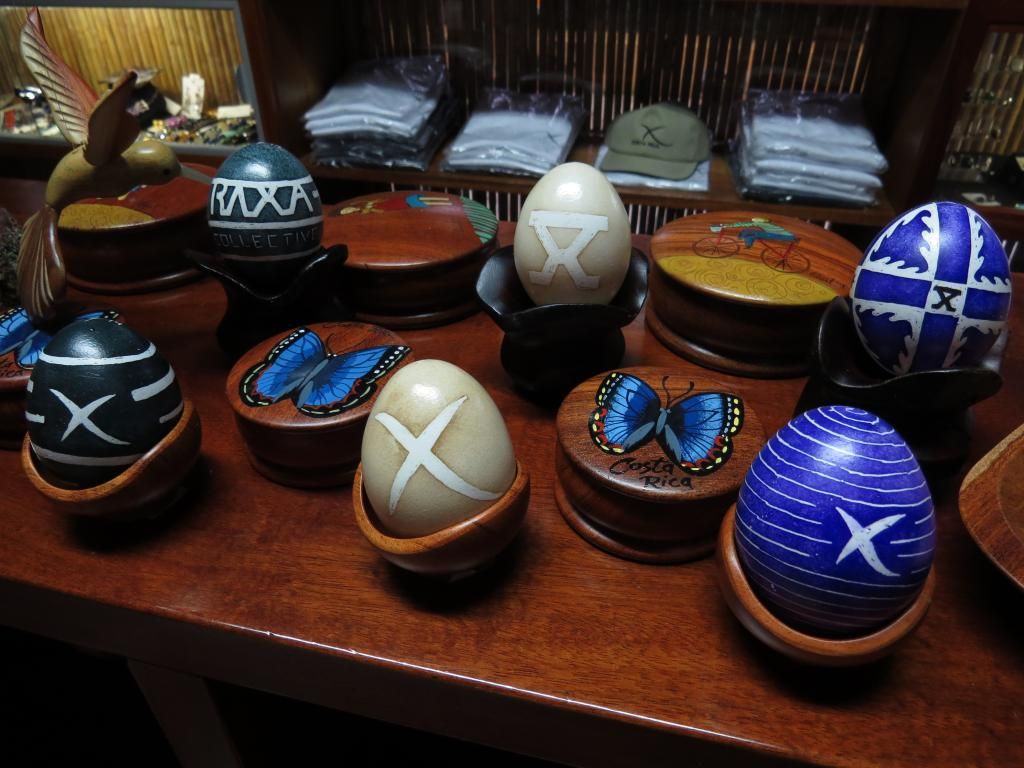
Sample eggs in the Xandari gift shop

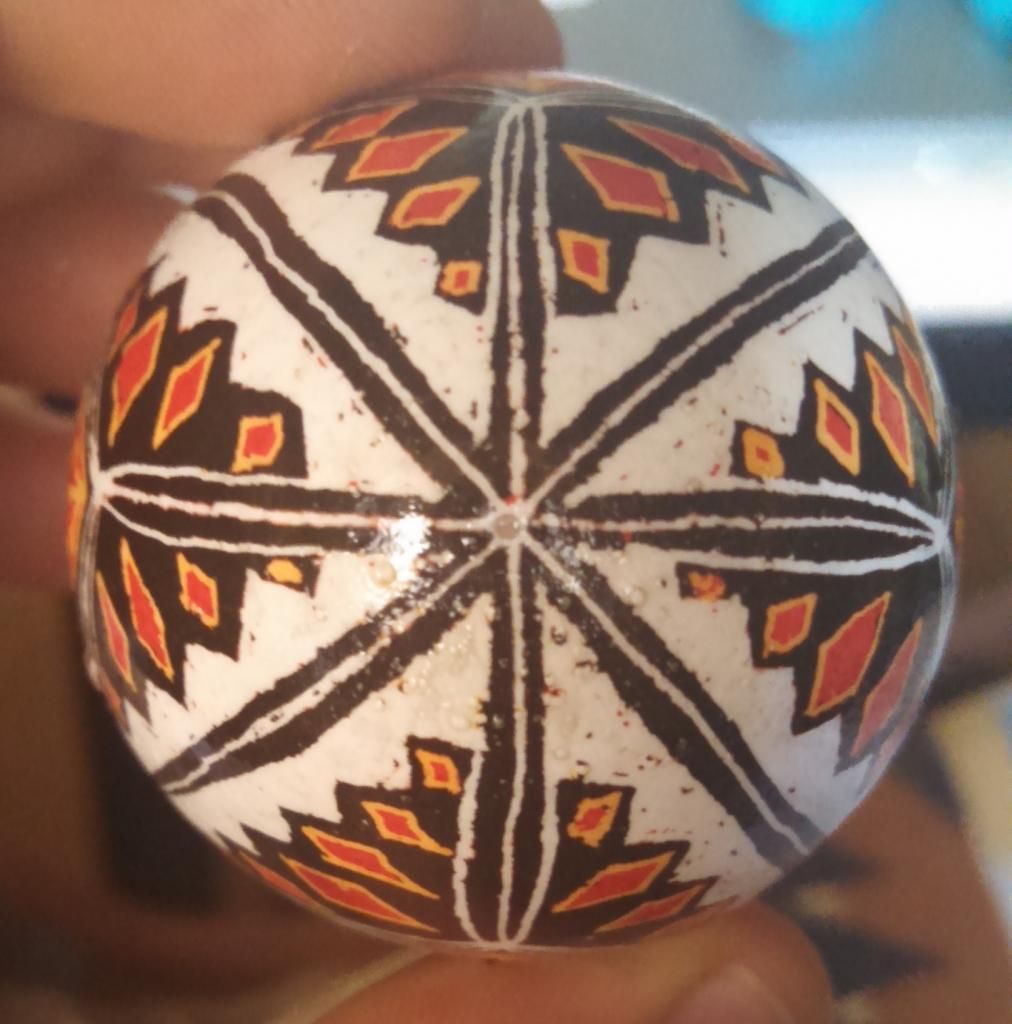
Over the last four days, I made six sample eggs with parts of the designs I had drafted and shared in my last post on the subject. With a slightly limited palette of dye colors (black and purple so far) and an attempt at a home-made coffee-based dye (i.e. coffee), I followed three very simple color schemes and tried a couple different design themes.

I also tried my hand at some vinegar etching, which I had read about recently and seemed like a cool way to  Continue reading

Pysanky (Part Three)

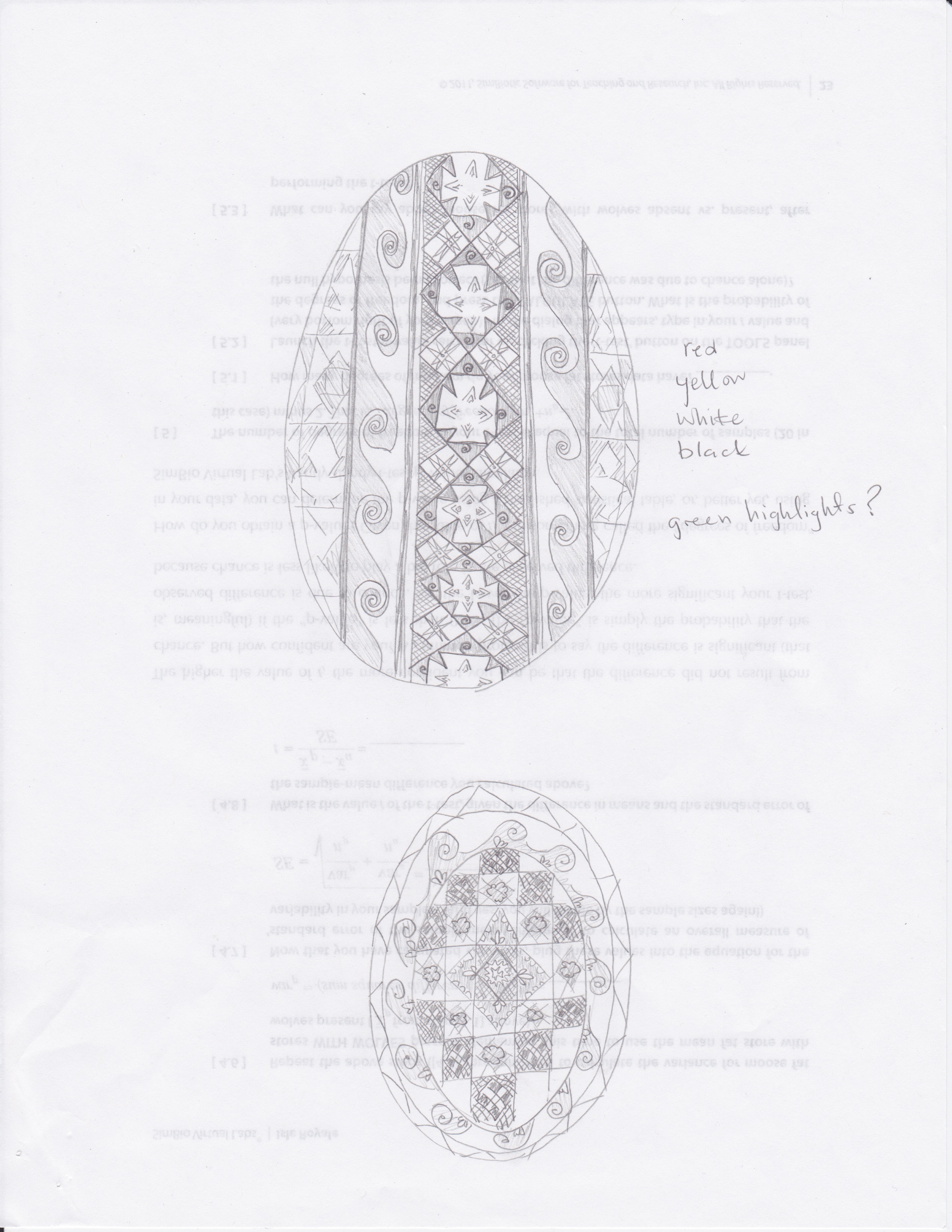
Egg blueprints

Egg blueprints for a previous project

Access Part One and Part Two if you haven’t checked them out yet!

As we reach the end of September, it may seem strange to be posting about a traditional art form that generally revolves around the festivities of Easter. Even though none of my egg creations have had religious foundations behind them, I’ve still always worked on them in the springtime around holy week because that’s the accepted time to be fashioning and gifting “Easter eggs.” Being at Xandari for the past several months, however, where the gift shop could always use another little shelf of locally-crafted artwork souvenirs, I’ve been thinking about making a round of trial eggs to put up for sale and see how it goes. After all, we could dedicate any profits to more artwork supplies for the Tacacorí school or another good local cause.  Continue reading

Pysanky (Part Two)


To continue learning about the process of creating pysankyContinue reading

Pysanky (Part One)

Several years ago, my aunt gave my mom and me a starter kit to make Ukrainian Easter eggs, knowing that the two of us enjoyed art and working on detail-oriented things. Included in the package was this book, which contains a great history of the tradition as it evolved in communities around the US through the work of Ukrainian immigrants. The book also, of course, explains how to make the eggs and includes many fantastic photos of eggs that the authors or their friends have created over the years, in countless patterns and color schemes. These exemplary eggs have served as perfect inspirational diving-boards for my mom and me as we create our own pysanky every year (when we have the time).

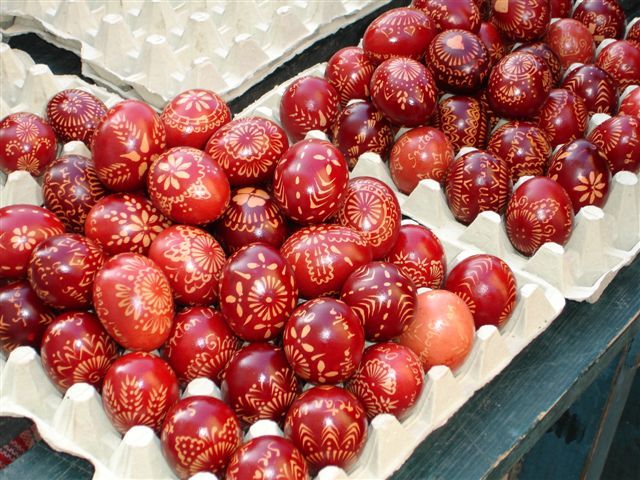
Croatian Easter eggs made for neighbors, friends, and family

The process always starts with creating the dyes. In Croatia, on the island of Koločep where my family lived for a year, we learned that villagers use a boiling water bath of red onion skins, walnuts, roots, and herbs. This creates a reddish dye that stains the egg a reddish color. The problem is that the boiling water also removes the wax that covered the egg before it was placed in the dye, so you only get two shades on the egg, but that’s Continue reading

Early Audubon

Box 8. L'avocette de Buffon. Near Nantes, France, [1805 or 1806]. 1 drawing : pastel, graphite, and ink on paper ; 47 x 31 cm. Depicts the Avocet (Recurvirostra avosetta) standing on the ground with no background details. Unsigned. Audubon no. 117.

Box 8. L’avocette de Buffon. Near Nantes, France, [1805 or 1806]. 1 drawing : pastel, graphite, and ink on paper ; 47 x 31 cm. Depicts the Avocet (Recurvirostra avosetta) standing on the ground with no background details. Unsigned. Audubon no. 117.

Thanks to correspondent Kate Kondayen for this item, possibly of interest to our Cornell Lab of Ornithology friends, in the Harvard Gazette this week:

Growing up in the late 18th century, John James Audubon regularly skipped school and headed to the fields, spending his early years developing the techniques that led to his career as a famed naturalist who made pioneering contributions to art and science. Continue reading

Art, Mission-Driven & Philanthropy-Facilitated

withcap21


There is enough here to think we may be looking at a first cousin of entrepreneurial conservation. But with philanthropic channeling of initiatives and required resources, rather than straight business doing the channeling. We like it. The mission is to activate through art:

Project Perpetual harnesses the creative energy of the world’s leading contemporary artists and global influencers to raise funds and facilitate advocacy for children who are identified as high-risk by the United Nations Foundation.

Each project personally engages influencers in government, business, entertainment, and culture to part with an object of particular significance. Prominent artists then use these as inspiration to create unique works, transforming meaningful gestures into everlasting statements.

Continue reading

Banksy, Entrepreneurial Conservationist?

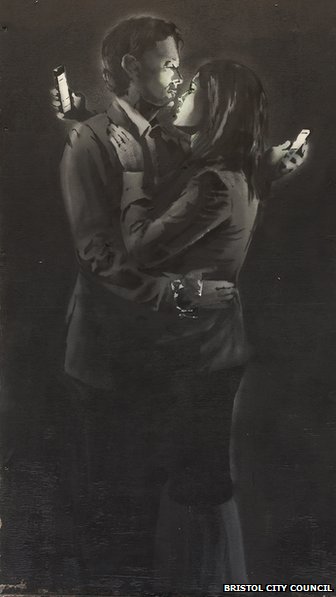
_77174539_mobile_lovers_by_banksy

Banksy’s Mobile Lovers appeared in a doorway in April

Street art is not everyone’s cup of tea, but you kind of have no choice but to love this story:

Banksy’s Mobile Lovers sale to ‘keep Broad Plain boys’ club open’

A Banksy artwork has been sold to a private collector for enough money to keep the seller – a cash-strapped boys’ club – open for “a few years”.

The sale price of Mobile Lovers, which has been on display at Bristol Museum and Art Gallery, will be revealed on Wednesday when it is handed over.

The piece of street art appeared in a Bristol doorway in April, but a row broke out over who owned it.

Banksy then wrote to hard-up Broad Plain Boys’ Club saying it was theirs.

Broad Plain will be sharing a portion of the proceeds with a number of other voluntary sector youth clubs across the city. Continue reading

Lost At Sea

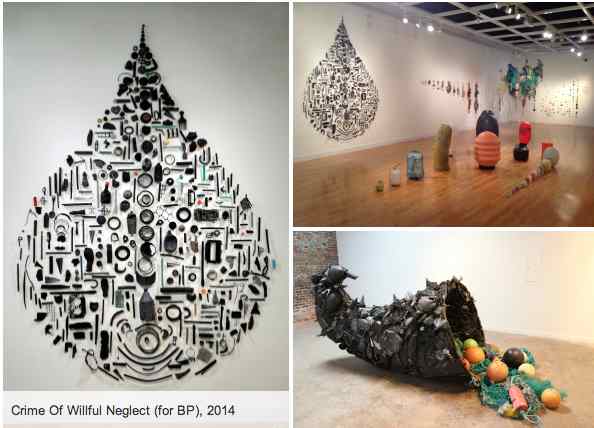
From the Drifters Project by Pam Longobardi

From the Drifters Project by Pam Longobardi

The world’s oceans effect all life on earth and it’s no longer news that even the most pristine places on earth are impacted by our “toxic legacy,” as artist Pam Longobardi puts it. The project statement for her Drifters project is really worth reading. Here is an excerpt I found particularly poignant:

Plastic objects are the cultural archeology of our time.  These objects I see as a portrait of global late-capitalist consumer society, mirroring our desires, wishes, hubris and ingenuity.  These are objects with unintended consequences that become transformed as they leave the quotidian world and collide with nature to be transformed, transported and regurgitated out of the shifting oceans.  The ocean is communicating with us through the materials of our own making.  The plastic elements initially seem attractive and innocuous, like toys, some with an eerie familiarity and some totally alien.  At first, the plastic seems innocent and fun, but it is not.  It is dangerous.   We are remaking the world in plastic, in our own image, this toxic legacy, this surrogate, this imposter.

By doing this Drifters project, she has removed thousands of pounds of material that would be considered trash and then presenting it within a cultural context. Amie wrote a previous post about artists using ocean trash as materials for art. They too found themselves telling the story of global consumerism using plastic.   Continue reading

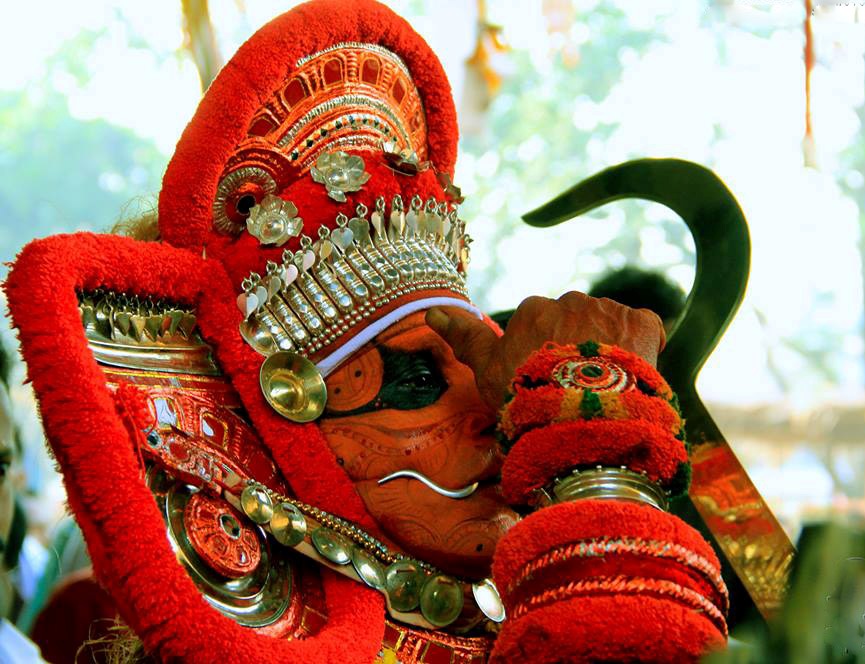
Festival Of The Gods – Theyyam

Photo credits : Shymon G

Photo credits: Shymon G

Theyyam is one of the most popular ritualistic dances of Kerala. It is a devotional performance with a surrealistic representation of the divine. Almost every village in Kerala has its own temple with an annual festival. So there’s always a local festival happening somewhere or the other, each with its own special flavour. Continue reading

Seeing in the Dark

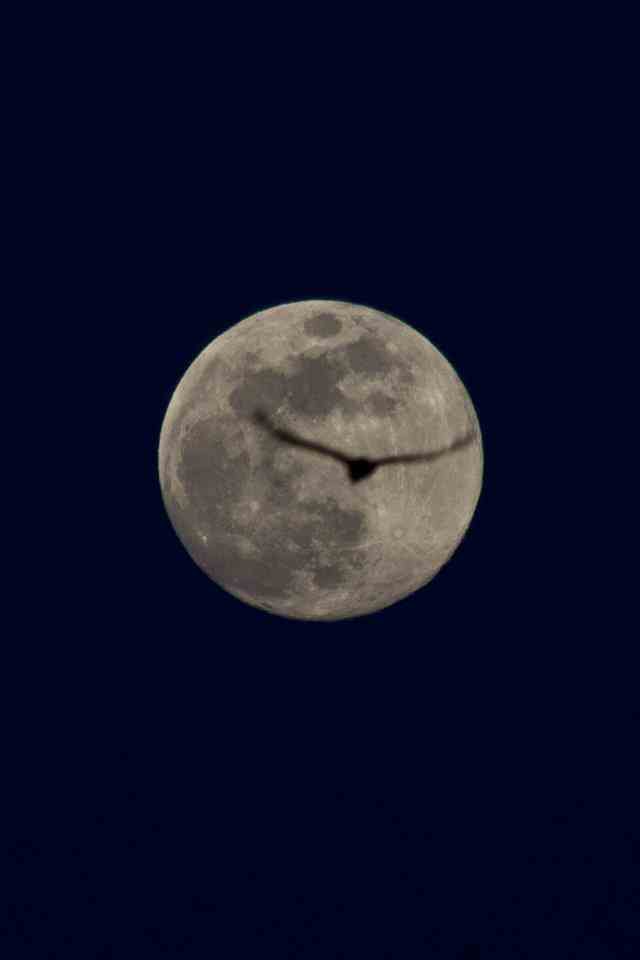
7296_591181947589412_1926452569_n

Full moon shot Kayal Villa. Photo: Milo Inman

That traveling state of mind woke up a part of my brain that’s been sleeping for a while. I’ve been feeling my grey matter stretch as a fellow Raxa friend put it. An idea I’ve been thinking about started while on the Camino de Santiago pilgrimage when a man told my friend and me not to walk the Camino at night. He said, “If God wanted us to walk the Camino at night, he would have put a light in the sky so we could see the Camino’s beauty”.

We were confused- why didn’t he see beauty in walking at night under the full moon and stars? After that, my friend and I began to contemplate how darkness has been associated in both sacred and secular literature with the lack of spiritual enlightenment, lack of awareness; in our language, to say something is dark has bad connotations. We felt more motivated than ever to walk at night.

We began to question how a society’s aversion to darkness could inform everything. We considered how the aversion to darkness could be a deeper layer to the resistance to female equality and even environmental understanding of the interdependency of nature and cycles of dark and light.

Continue reading

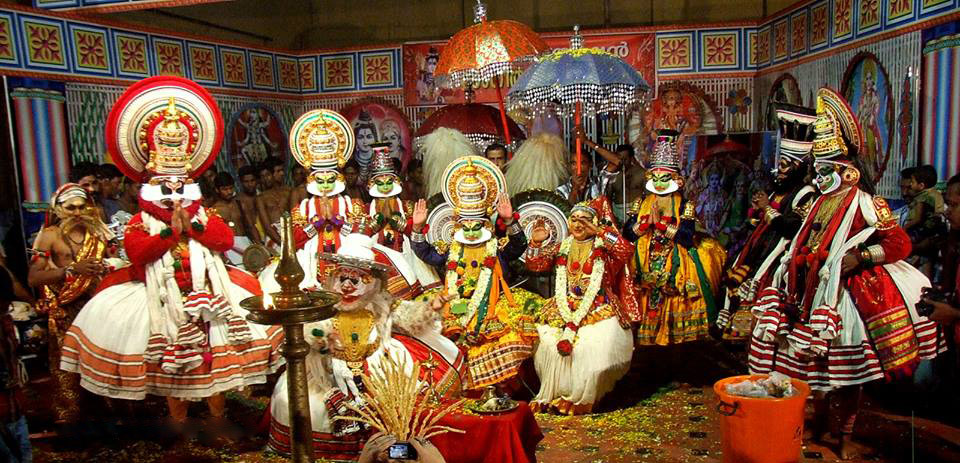
Temple Dance – Kerala

Photo Credits : Ramesh Kidangoor

Photo Credits: Ramesh Kidangoor

Kerala temples offer a veritable array of performing arts, often related to religious rituals and and mythological stories. The rhythm and elegance of the temple dances of Kerala are a result of  the various cultural influences that took place in the state. The dramatic costumes, vibrant colors, and throbbing music all make watching temple dances an unforgettable experience. Continue reading

Melodious Rhythms of India: the Nadaswaram

Photo credits : Ramesh Kidangoor

Photo credits: Ramesh Kidangoor

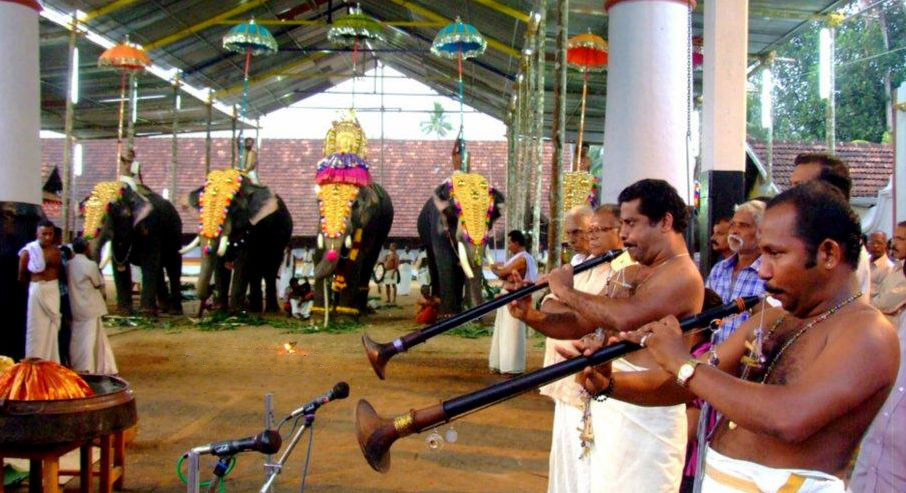
Kerala lays claim to a wide range of native musical instruments, which all together play host to a great range of unique sounds and melodies. The nadaswaram is a wooden-body pipe about two and a half feet long. This double-reed wind instrument is typically played during temple rituals and processions, weddings, and other celebrations. The nadaswaram is thought to achieve the peak of its acoustic quality in open environments where the sounds can resonate outwards, which is why it has evolved into a procession instrument. Continue reading

Visiting Madurai Meenakshi Amman Temple

madurai_temples

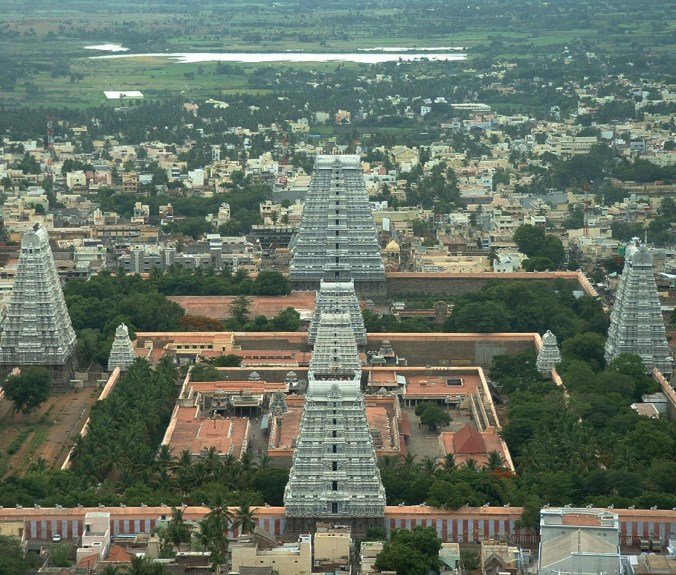
Upon visiting the Meenakshi Temple, I removed my shoes, checked my bag at the door and proceeded my barefoot adventure through the eastern tower of the temple city. Maduri is known as temple city because of how vast the Meenakshi temple is. There are 12 towers, the four larger ones face each of the directions North, East, South, and West. We explored the 1000 pillar hall, the holy pond, and many other parts of the ancient temple.  It seemed like every corridor and wall had some sort of sacred art or story to it. The history of the temple is as vast as temple city itself. The temple dates back at least 2500 years. In 1310, the temple was almost completely destroyed by an Islamic conqueror and so many of the important sculptures were destroyed. It was restored in the 14th century though by Hindu kings who regained power.

Continue reading

Bird Fun (…and Aristotle?) around Tacacorí

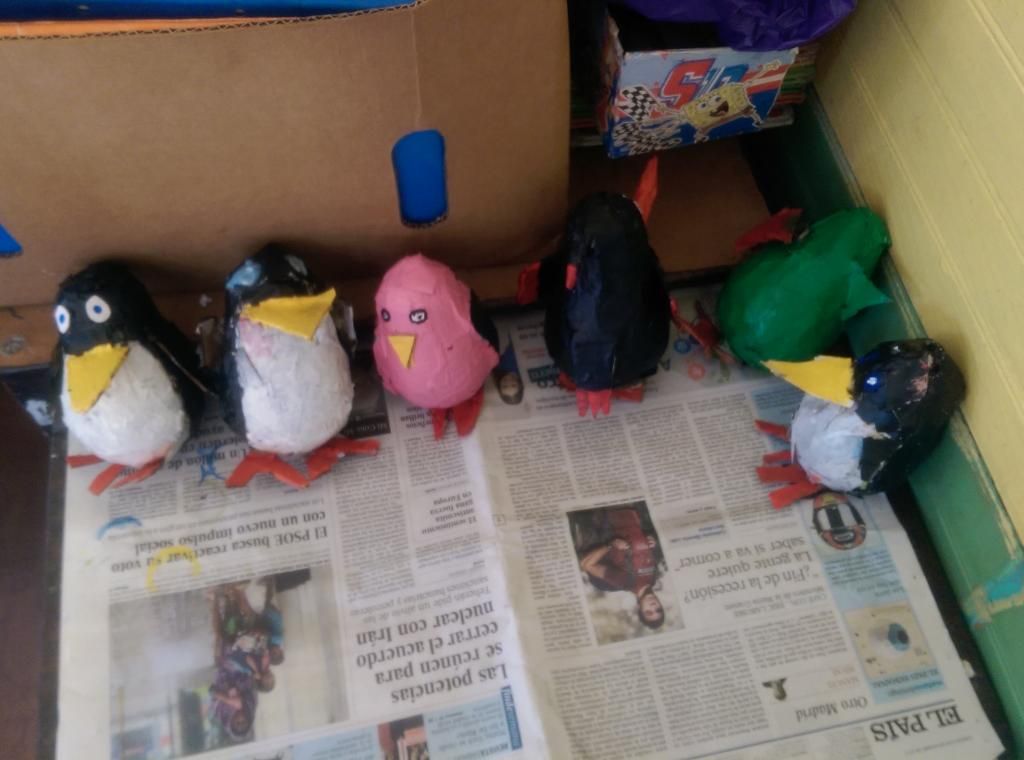
Papier-mâché penguins and other birds from the fourth grade class

In his recent post on our work at the local school in Tacacorí, Seth outlined our papier-mâché and painting ambitions with the third and fourth grades there. The second half of the week, Seth and I were split up because of the kids’ conflicting class schedules. I took fourth grade on the last few days, and he worked with third grade.

In his Poetics, Aristotle elaborates an aesthetic theory partly on the basis of μίμησις (mimēsis), or “imitation.” According to Aristotle, humans are “mimetic” beings, that is, disposed to imitate nature and other human beings. Art’s basis is precisely in Continue reading

Celebrating Birds with Tacacori Students

About fifteen minutes downhill from Xandari by foot, the primary school at Tacacori serves first through sixth graders from the local community. Xandari has collaborated with the school on multiple occasions in the past, and also regularly cares for their grounds (mowing the lawn, etc.). This semester, third and fourth graders don’t have an art class in their normal schedule, so it seemed a perfect opportunity for James and me to go over and do a week-long art project with the kids.

Of course, I stuck with what I know best for art projects with young children, and decided upon papier-mâché and painting on little cardboard canvases, just like I had done in the Galápagos a couple years ago. James and I went to the third and fourth grade classes during their Spanish classes and for about an hour and twenty minutes each a day we showed them how to use newspaper, glue, and a balloon to create the body of a bird. Then, with recycled cardboard from Xandari, we gave them canvases to paint on as well as the materials to make beaks, wings, tails, and feet for the birds.  Continue reading

Classical Dance

Photo credits ; Ramesh Kidangoor

Photo credits: Ramesh Kidangoor

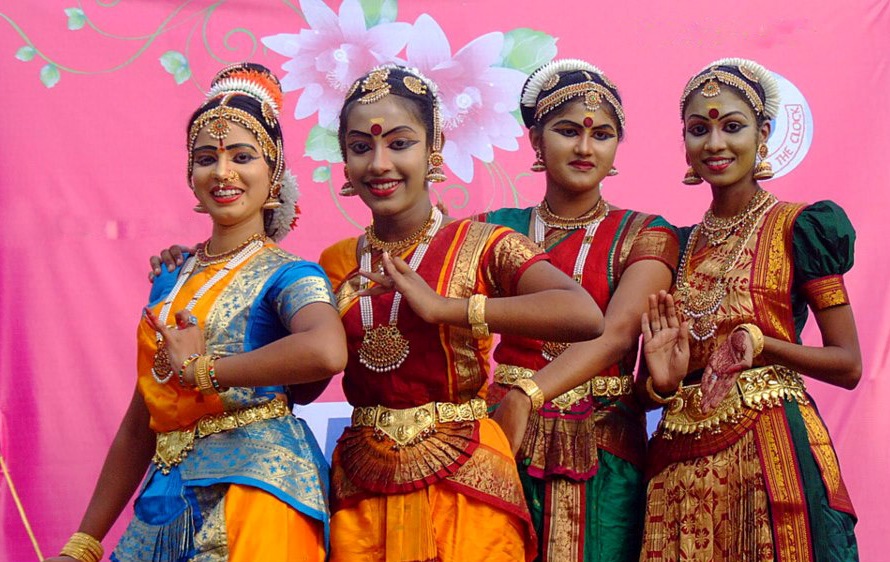
Classical dance forms in South India have accumulated from ancient customs that were closely linked to day-to-day life and culture of native peoples. The region around Kerala has thousands of years of tradition in fine arts and classical and folk dances. Continue reading

Musical And Photographic Patrimony

This slideshow requires JavaScript.

We are always moved by exhibitions that intersect our interest in cultural and historical patrimony, as in the case of this event at the Foley Gallery (which comes to our attention thanks to the New Yorker‘s coverage of the arts):

Lisa Elmaleh first heard Appalachian folk music in 2010, and “it stirred something in my soul,” she told me. Since then, she has followed folk musicians from Ohio to Georgia, capturing them with her nineteen-forties Century Universal 8 x 10 camera and the hundred-and-fifty-year-old tintype process. Continue reading

If You Happen To Be In Florence, Alabama (USA)

Robert Rausch for The New York Times. Tom Hendrix at the Florence, Ala., memorial he built for his great-great grandmother, Te-lah-nay, a Yuchi Indian.

Robert Rausch for The New York Times. Tom Hendrix at the Florence, Ala., memorial he built for his great-great grandmother, Te-lah-nay, a Yuchi Indian.

Thanks to the New York Times for this coverage of a moving tribute to one man’s lineage and his peoples’ heritage:

Off Alabama’s Beaten Path, Tribute to a Native American’s Journey Home

Tom Hendrix has built a mile-long stone wall to memorialize his Native American great-great grandmother, who was displaced during the Trail of Tears.

Ken Brown, Come to Kerala!

This slideshow requires JavaScript.

The colorful ebb and flow of  daily life is evident in our Spice Harbour neighborhood of Mattanchery. We keep wondering what odd-abilia Ken Brown would find waiting for him here!

(all photos ©Ken Brown)