
Photo credits: Ramesh Kidangoor
Chettikulangra Temple is dedicated to the Goddess Bhadrakali. The temple is famous for the Bharani festival, with special rituals and Kettukazhcha processions attract numerous devotees. Continue reading
Photo credits: Ramesh Kidangoor
Chettikulangra Temple is dedicated to the Goddess Bhadrakali. The temple is famous for the Bharani festival, with special rituals and Kettukazhcha processions attract numerous devotees. Continue reading
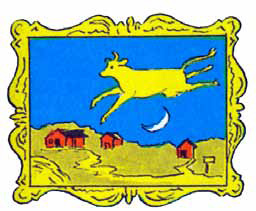
Last time we mentioned this library, it was to raise some important questions; on a previous occasion to recommend a lecture; this time we recommend what looks like an important exhibition curated by Leonard S. Marcus:
The ABC of It is an examination of why children’s books are important: what and how they teach children, and what they reveal about the societies that produced them. Through a dynamic array of objects and activities, the exhibition celebrates the extraordinary richness, artistry, and diversity of children’s literature across cultures and time. Continue reading

Photograph by Daniel Giannoni. With eyes wide open, a painted Wari lord stares out from the side of a 1,200-year-old ceramic flask found with the remains of a Wari queen. Giersz and his colleagues think the Wari may have displayed the body of the queen after death in a royal ancestor cult.
Heather Pringle, at National Geographic, shares this about the photos (click on any image to go to the source) from this rare find:
The Wari forged South America’s earliest empire between 700 and 1000 A.D., and their Andean capital boasted a population greater than that of Paris at the time. Today, Peru’s Minister of Culture will officially announce the discovery of the first unlooted Wari imperial tomb by a team of Polish and Peruvian researchers. In all, the archaeological team has found the remains of 63 individuals, including three Wari queens. Continue reading
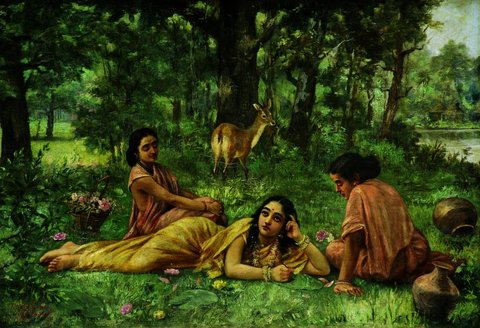
The Shakuntala Patralekhan artwork by Raja Ravi Varma from the Kiran Nadar Museum of Art collection.
Thanks to Aayush Soni at India Ink:
NEW DELHI— In 1881, Sayaji Rao Gaekwad III, was looking for a painter to create his portrait as the newly crowned maharaja of Baroda, a princely state in Western India. As always, he sought the help of his mentor, Thanjavur Madhava Rao, the diwan, or chief minister, of his state, who had held the same position in the princely state of Travancore in southern India from 1857 to 1872. Continue reading

Tholpavakoothu
Tholpavakoothu is a traditional form of shadow art using leather puppets. It is an important part of the temple festivals in Kerala, especially in Palakkad. The performance spans seven to 21 days; the belief being that the Devi witnesses the performance. Continue reading

Photo credits: Ramesh Kidangoor
Kalamezhuthu is the art of creating very large pictures on the floor, and is a unique form of art found only in Kerala. Typically, Kalamezhuthu is conducted as part of the general festivals in temples. The patterns that are drawn and the colors that are used are traditionally stipulated. Additionally, the colored powders used for the Kalams (drawings) are prepared solely from natural products. Kalams are drawn in connection with the worship of Gods and Goddesses, and are drawn directly with the hands. No tools are ever used. Continue reading
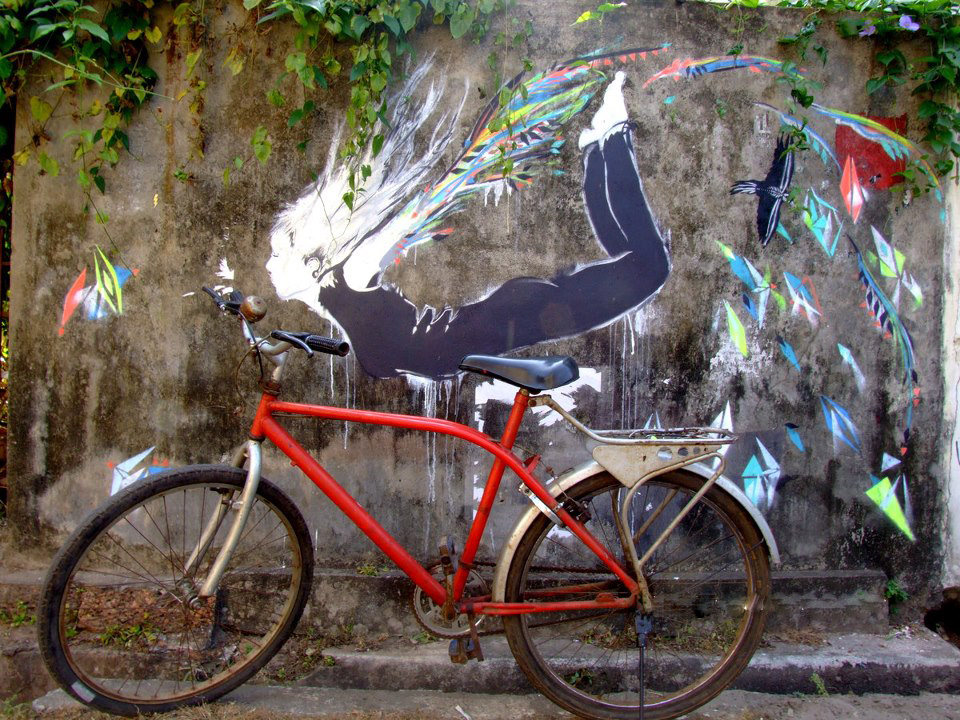
Photo Credits : Ramesh Kidangoor
Cochin Carnival is celebrated at Fort Cochin annually during the last ten days of December. The carnival is celebrated as a continuity of the Portuguese New Year festivals during the colonial years. During the carnival period all establishments in the city don white paper buntings. All available space on the streets is used to host traditional competitions such as kalam vara (floor drawing), tug-of-war, and bicycle racing. Additionally, people often play beach volleyball or go for a swim in the sea. The festivity and revelries continue until midnight of December 31st, culminating in a marvelous show of fireworks. Continue reading

Photo credits: R Ranjith
Kathakali is known for its heavy, elaborate makeup and costumes.In fact, the makeup is so intricate and the costumes so huge and heavy that it looks as though the artist is wearing a mask. The makeup is based on a certain set of colors each of which is used to represent a particular character. Only natural dyes are used on the face and the process will take hours. Continue reading
Hey you! We think of you guys almost every day, and this vimeo made it necessary to stop and post a quick hello. The property we called Harbour is looking fabulous. And the property called Pearl down at Marari beach is curvaceous in exactly the manner we talked about. We have heard rumors that one of you got a job in New York. True or false? The rest of you? Stay in touch!
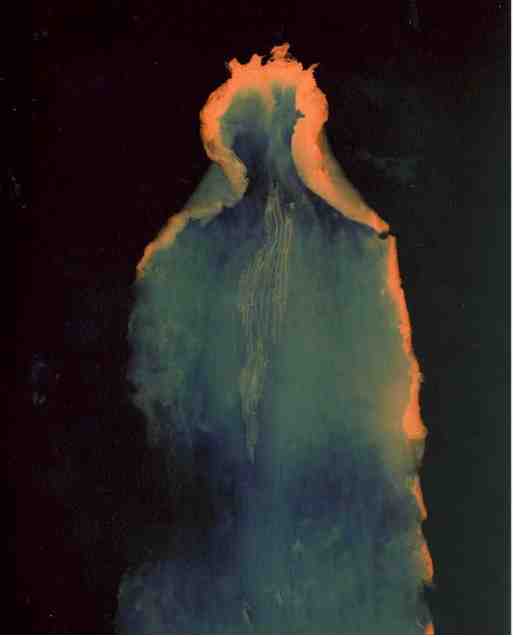
We mentioned recently that we are crowd-sourcing a new way of looking at decor for Cardamom County. National Public Radio (one of the great investments made by the tax-payers of the USA, in collaboration with loyal listeners who donate funds to their local stations) has a food-focused blog that has introduced us to a photographer of Indian heritage who grew up in the USA and has traveled around the world doing what photographers do: seeing the world through the lens, differently than we might otherwise see it. Here he is concerned, curious and creative in his exploration of what is in the food we eat:
These intriguingly abstract images are part of a photo series called Naturally Modified — the brainchild of photographer Ajay Malghan. To create them, he shines colored lights through thin slices of fruits and vegetables onto light-sensitive paper. So what you end up seeing isn’t a picture of the food itself, but an ethereal image of its shadow. Continue reading
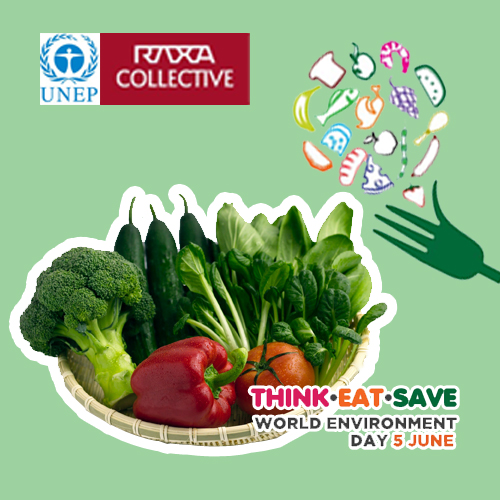
On June 5, we’ll celebrate World Environment Day. This year UNEP focuses on the theme Food waste/Food Loss. At Raxa Collective we’ll be carrying out actions and sharing experience and ideas. Come and join us with your ideas and tips to preserve foods, preserve resources and preserve our planet.
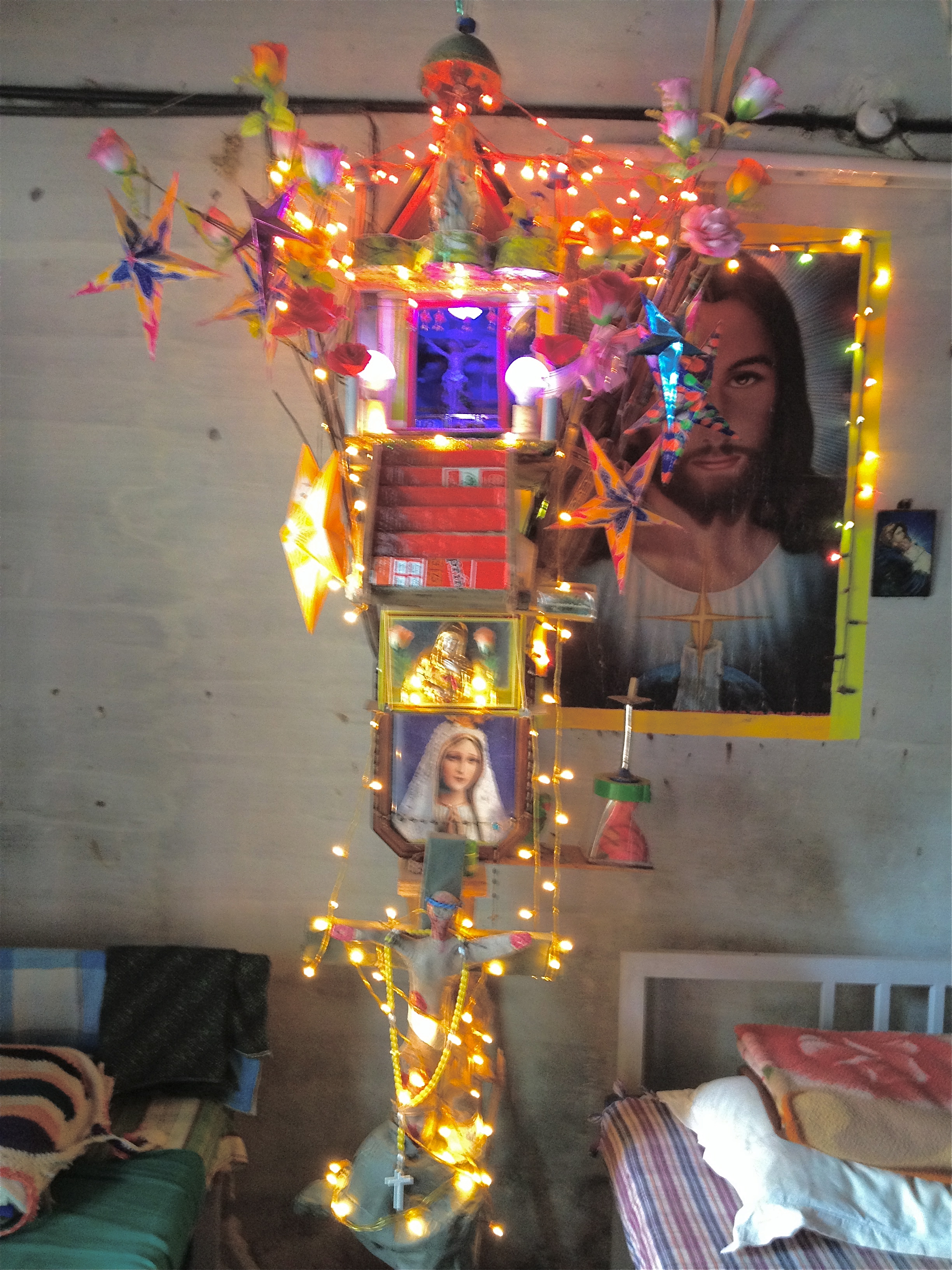
Tomorrow we’ll be celebrating World Environment Day at the Kumily Sneshashram, a long-term shelter for homeless, disabled and elderly people. Locals call this place run by Franciscan sisters, “Akasha parava”: birds in the sky. We’ll be bringing a special meal and one of the people we will be working with is Chandran, the artist behind this brilliant installation made of coffee tins, religious artefacts, procession lights and flowers. Meet Chandran… Continue reading
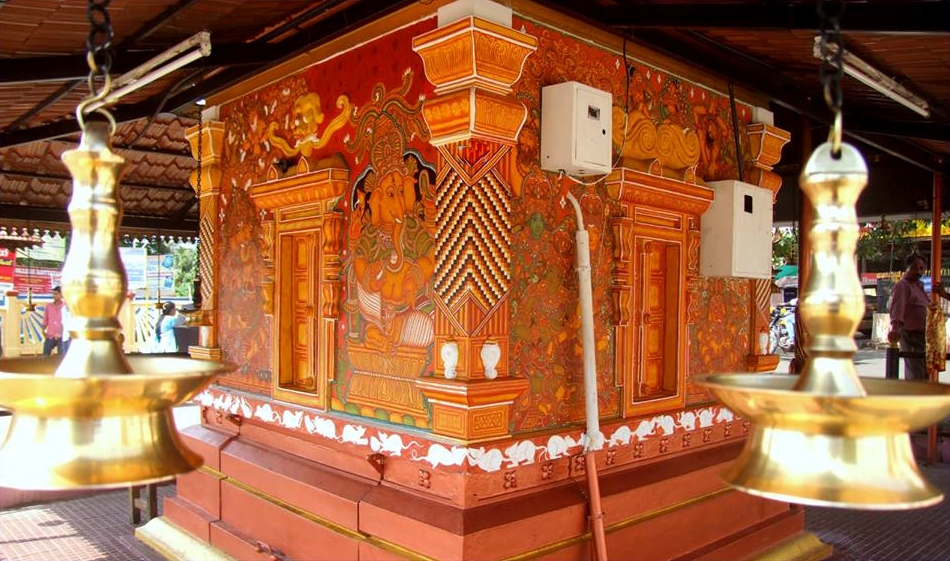
Photo Credits: Ramesh Kidangoor
The city of Kottayam is referred to as both the “land of literacy” due to its numerous institutions of higher eduction, as well as the “land of Latex” due to its rubber plantations. The Indian government has just added the moniker of “land of the mural paintings”. Continue reading
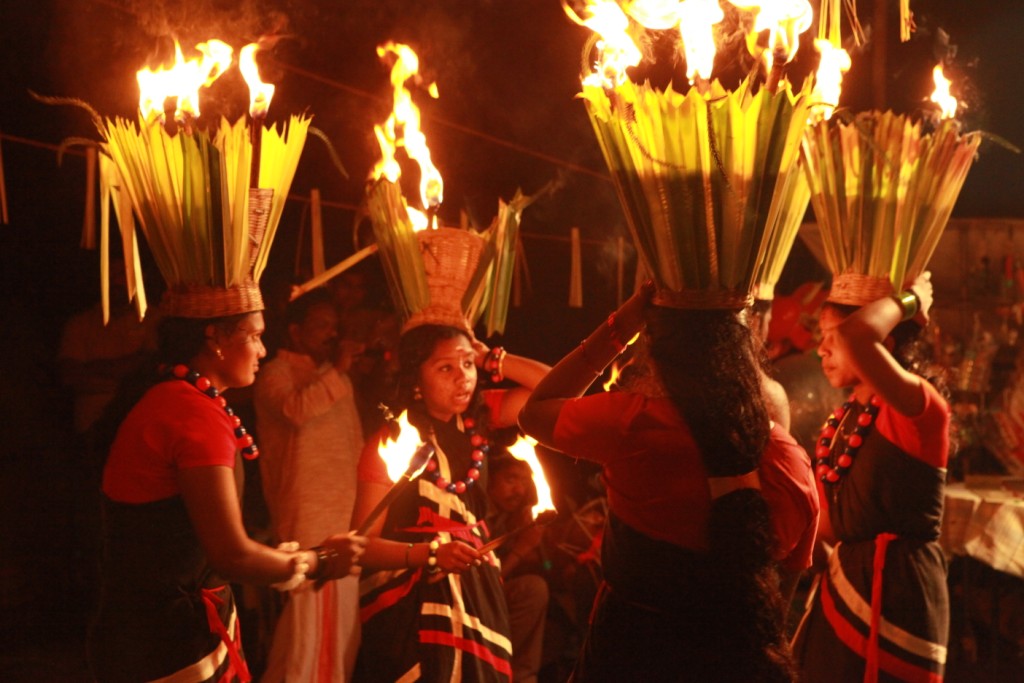
In India Kerala is famous for its Tribal folk dances. There are more than fifty well-known popular folk dances in the state which are mostly performed for religious influences, during harvesting, sowing of seeds, festivals etc. Tribal dances are often accompanied by songs & instruments.

After our renovation of the reception area at Cardamom County last year, we decided to leave the largest wall–a spectacular, privileged space for art–completely white until we found exactly the right piece. Given the property’s location in the hills where the best cardamom in the world grows, we formed a vision for a piece of art that would abstract cardamom in some beautiful way. We spoke to the director of the government’s cardamom research laboratory, thinking they might have some molecular images of cardamom (more on which after the jump) but they did not. And so we dropped that idea, but we are still looking. And that is how we happened upon the image above, and the description of this and others by the same artist on a Japanese design website:
Using his background in computer graphics and illustration, media artist Makoto Murayama creates technical, scientific blueprints of flowers that look like they belong in a manual for semiconductors. In fact, his work has just been selected as part of thesolaé art gallery project, an initiative to bring art into the offices of Tokyo Electron, one of Japan’s largest semiconductor companies. Continue reading
Every day for the past three years or so we have posted a few personal accounts, links to news stories, sometimes told through video, etc. all in the interest of highlighting collaborative, community-based contributions to conservation. We reach far and wide for inspiration, and some daily features are there not as a direct statement about conservation but about the world we see around us. So when we see a story about world building though media, and a name like 5D Institute, it catches our attention. According to their website, the future of narrative media is a form of world building, and an important contribution to it can be found here:
5D Institute is a cutting edge USC non-profit Organized Research Unit dedicated to the dissemination, education, and appreciation of the future of narrative media through World Building. World Building is the interdisciplinary process of building worlds that evolve into containers for the new narrative resolutions. World Building is the intersection of creativity and technology for students in academia and industry who need to understand now how to thrive in the media jungle of the future. World Building works beyond the edges of known media to express the full arc of our creative role in making new narrative worlds. Continue reading
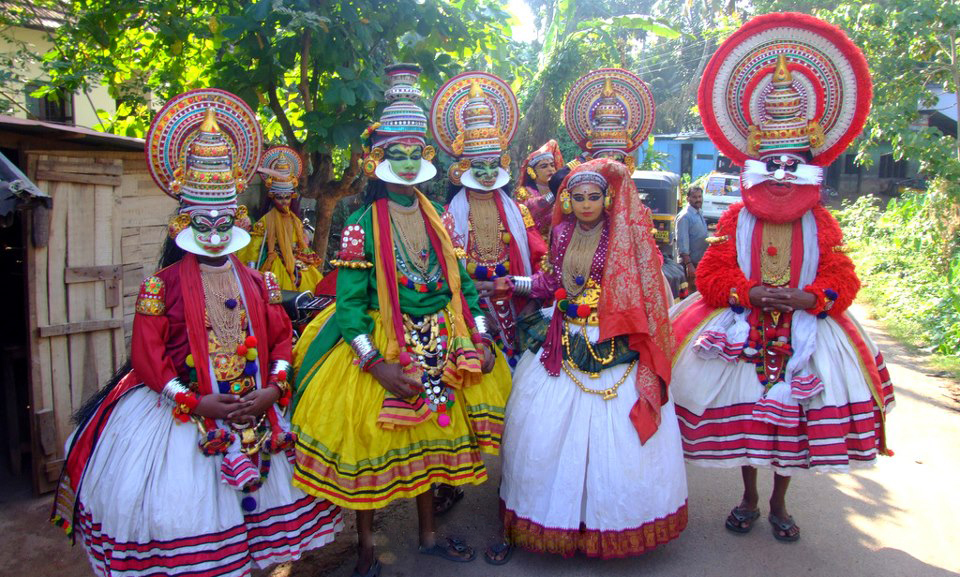
Photo Credits: Ramesh Kidangoor
From December to May Kerala comes alive with its colorful Temple festivals. Each Temple has its own lore, ranging from the fantastic to the bizarre, and always involving many people within their communities. Kerala’s classical arts such as Kathakali, Theyyam and Panchavadyam, among others enjoy a frenzied resurrection during the festival season. Continue reading
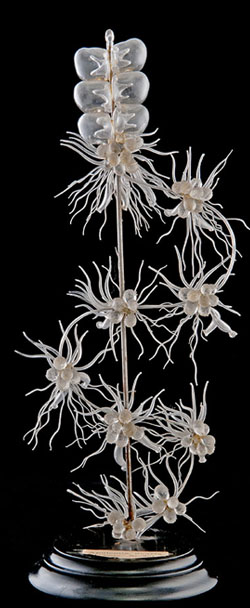 An article in today’s New York Times by C. Drew Harvell profiles the Blaschkas, glassmakers who were commissioned to create anatomically perfect sculptures of marine creatures for scientific purposes starting in the late 1800s, and current efforts to find living specimens of the same. From the introduction to one of the original collections, at Cornell University:
Before Jacques Cousteau and the aqualung, before Kodachrome and underwater photography – there were the Blaschkas, father and son glassworkers who produced some of the most extraordinary glass objects that have ever been made. Their work has been described as “an artistic marvel in the field of science and a scientific marvel in the field of art.”
Artifacts inevitably reflect the cultural values leading to their creation. In 19th century Europe and America, an explosion of interest in science and education directly affected Leopold and Rudolf Blaschka. Reflecting these interests, new museums were built and opened to the public. They differed from earlier museums not only by admitting the public but also by featuring collections that illustrated science and natural history and often displayed systematic arrangements of plants and animals.


My colleagues pressed me to arrive at Kathakali half an hour early : “You cannot miss the make-up session”, they insisted. Kathakali is non-speaking theatre you see. So the performance starts early on, before the show even starts. Continue reading
Thanks to MyModernMet for the notification about this:
Street artists JR and José Parlá recently teamed up to create enormous and yet very intimate portraits of senior citizens who survived the Cuban Revolution (1953-1959). Continue reading

The New Yorker’s Joan Acocella profiled Basil Twist in a recent issue, and the magazine’s online team visited Twist at his studio, which you can see in the video above (click on the image), and the profile itself is worth a read:
“The crucial point about puppets,” Twist told me, “is that they are real and unreal at the same time.” At the beginning of the twentieth century, many writers and visual artists (Alfred Jarry, Paul Klee, Oskar Schlemmer, Sophie Taeuber-Arp), looking for something that was a little bit human, but much more art, made puppets, or works for puppets. The trend continues. Continue reading
 Organikos