Wild Things Lurk In Tranquil Places

Two of Milo’s recent posts–one about appetites and the other about maternal instincts–provide reminders that as beautiful as nature is, there are situational downsides. In an earlier post we mentioned Walton Ford, and it is interesting to consider Milo’s photographic observations in light of Ford’s work.  And since Milo was writing from India, perhaps even in conjunction with the musical encounter below.

This slideshow requires JavaScript.

Do not let Milo’s fearsome photography, nor Walton Ford’s phantasmagorical extrapolations, lead you astray. Continue reading

Flowers in Kerala

I’ve posted about flowers in Kerala before, with no knowledge of their names or properties. Salim has covered many flowering plant species in his posts, providing scientific, cultural, and historical insights for each species. My aim is not to educate, but to encourage further interest via art.  Continue reading

Stars Shine, Colors Flow

Some pieces of art are so iconic and powerful it is difficult to imagine any interpretation or alteration that wouldn’t result in angry outcries.  (The cleaning of the Sistine Chapel ceilings is a case in point.)  The piece below, created by Greek artist Petros Vrellis successfully balances reverence and imagination.

Continue reading

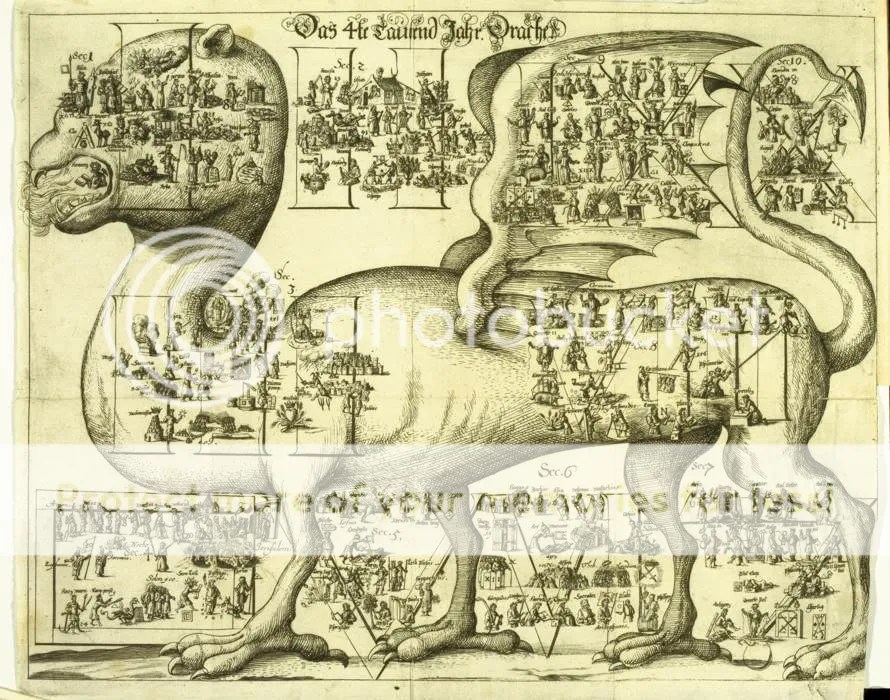
Temporal Mapping

Thanks to The Morning News, and Rosecrans Baldwin in particular, for bringing this book out of the specialty section and to our attention:

Selections from a captivating history of timelines—from time circles to time dragons, to a history of the world drawn on a single piece of paper.

Continue reading

Is It Winter?

The leading international forum for literary culture, aka The Times Literary Supplement, has a blog that covers more than literary topics.  Click the photo to the right if you enjoy the snippet here:

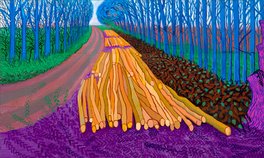
In his new biography of David Hockney, Christopher Simon Sykes tells a story about the practicalities of making pictures: the young art student, caught up in a flurry of creativity, ran out of paint and couldn’t afford to buy any more. Continue reading

Peel, Warp, Rust

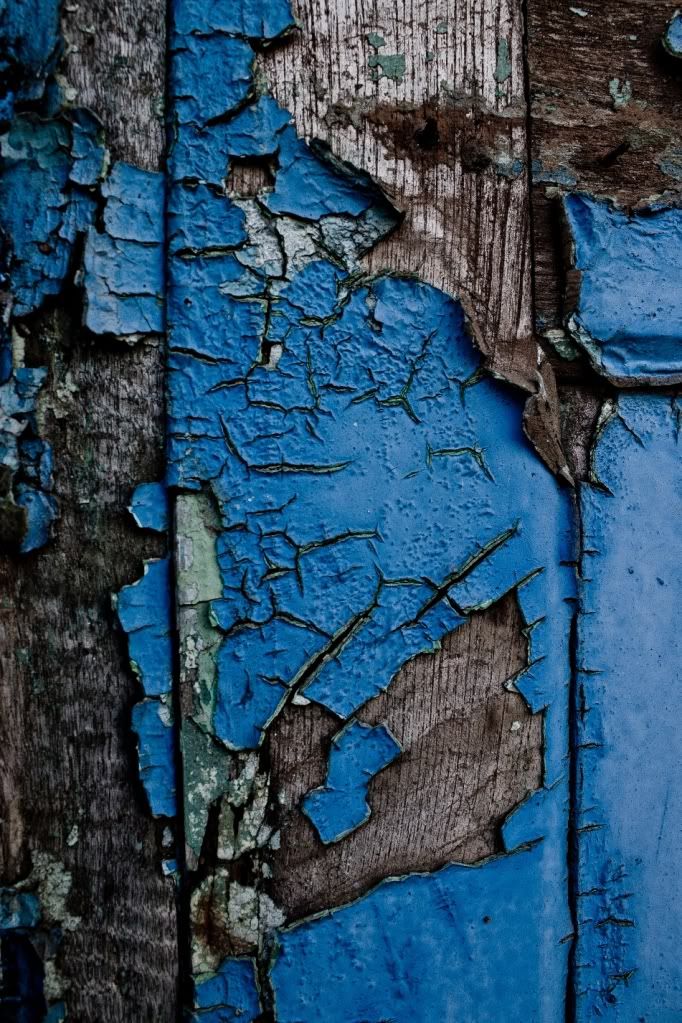
Urban decay. From a bird’s eye view, an old city overgrown may look as clean and composed as a modern metropolis. But for an insect on a wall, every surface is a landscape; cracked and scarred, bruised and faded. Paint peels, creepers climb, and dust invades, creating an eerily beautiful  visage of element and age. Historic Fort Kochi has no shortage of crumbling buildings and waterfronts, most of which are still in use. Mattancherry’s spice wholesalers operate out of buildings with as much character as themselves, and ferries come and go from half-sunken jetties of old stone. Any of a thousand walls can be seen as a canvas, small pieces of which may paint a tale of time.  Continue reading

Feathered Finery

This slideshow requires JavaScript.

I am constantly amazed by the number of artists who find inspiration from the world of ornithology. Whether crafted with bits of baubletufts of fabric or a steady, painterly hand, birds have attracted the artistic imagination since mankind had tools to immortalize it.

Working with handmade clay, paper and paint, this “birdophile” artist who works under the name “Dou Dou” (the French term for a child’s “lovey”, or something that is most cherished) makes no secret of her feelings for the world’s feathered creatures.  Continue reading

Margin Calls

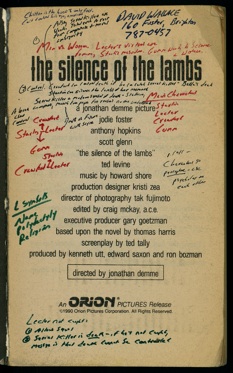
Click the image to the right for an explanation of what that image has to do with the remarkable world of marginalia, which begins:

“In getting my books,” Edgar Allan Poe wrote in 1844, “I have always been solicitous of an ample margin; this is not so much through any love of the thing in itself, however agreeable, as for the facility it affords me of penciling in suggested thoughts, agreements, and differences of opinion, or brief critical comments in general.”

A certain Mr. Wallace, of literary fame, apparently had reason to write in the spaces of whatever was at hand.  But that is a matter of quite trivial pursuit compared to Kerouac’s marginalia while reading Thoreau.

Continue reading

Pied Paddy Skimmer, Revisited

A few days ago while walking around Kumily, I saw one of Kerala’s more common species of dragonfly, Neurothemis tullia. Having written about the species before, I didn’t photograph it as usual, until I realized I had a new accessory on my person. The reverse lens adapter is a brilliant money saver, and while not quite as powerful or versatile as a macro lens, costs close to 50 times less than a new lens. Using the final technique described here, the adapter basically replaces the duct tape and allows for much steadier hands. Focusing is still very difficult, and the focal plane is usually limited to under a centimeter, but this often allows for very unusual and abstract images. Such as this young female Pied Paddy Skimmer:

Continue reading

Munnaranorama

Creating panoramas is an imprecise art – a photographer has to account for several variables when planning a shot. Composition is itself the most simple of these variables – despite the fact that what you see is rarely what you get. A good vantage point at a higher altitude than the subject is ideal, although occasionally elements which frame in the view add interest to the image. Symmetry isn’t necesary, but unbalanced shots should have either objects of interest or follow the rule of thirds (which is by no means an actual rule). A panorama need not be a full 360 degrees, and besides the ‘wow’ factor there is usually little value to this property. The picture ends up being more like a strip than something easily viewable, and takes a great deal of time to see and appreciate.


Continue reading

Theyyam – The Ritual Dance

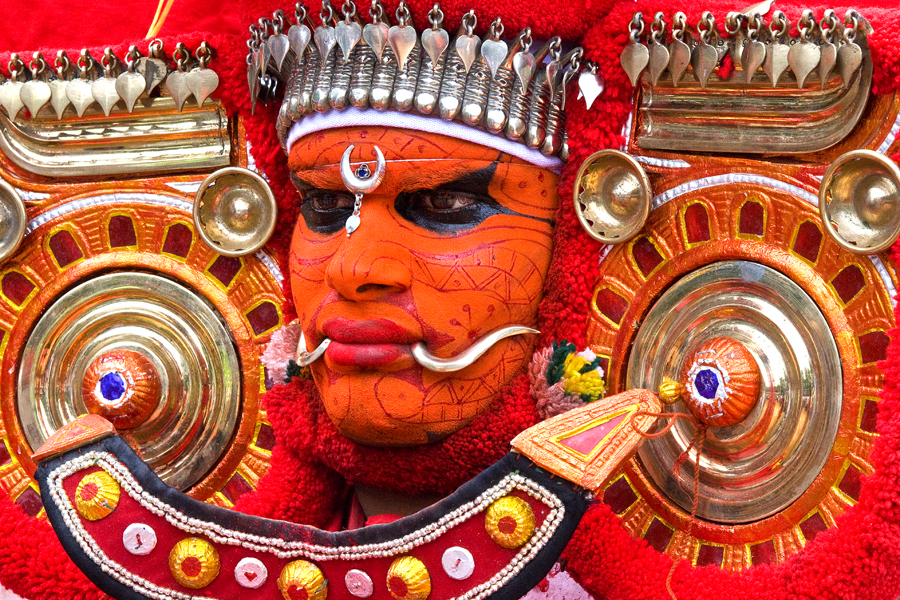
Photo: T J Varghese- taken from a temple festival near kannur, North kerala

Kerala is a land of old traditions, rituals, customs and arts. Most of them spring from folk tradition but they are often related to religious rituals and mythological stories.

Theyyam is one of the oldest popular devotional performance of Kerala. The performer usually takes a role of one deity and continue the character over the year. Continue reading

Perspective’s The Thing

The first day of the Chinese new year offered the opportunity to reflect on commitment and the second offers something randomly different from the same source.  Click the image to the left for the bio of Douglas Coupland, an artist whose work seems worth seeking out:

What’s both eerie and interesting to me about déja vus is that they occur almost like metronomes throughout our lives, about one every six months, a poetic timekeeping device that, at the very least, reminds us we are alive. I can safely assume that my thirteen year old niece, Stephen Hawking and someone working in a Beijing luggage-making factory each experience two déja vus a year. Not one. Not three. Two. Continue reading

India Art Fair 2012

In case you are on your way to India, and can divert to Delhi for a day or two, here is a diversion to justify it (click the image above to go to the website):

The 4th edition of India Art Fair, formerly India Art Summit, will once again bring focus to the rapidly growing Indian art market. The 3rd edition in 2011 drew 128000 visitors over 4 days. While 80% of the galleries reported buoyant sales, the fair also attracted a record number of new collectors (30-40%). In only three years, India Art Fair has consolidated its position as the region’s leading platform for modern & contemporary art. Continue reading

You Value The Books You Turn To In Need

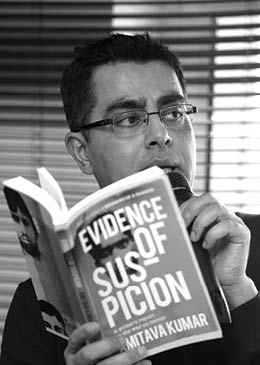
Click the image to the left for a trip to Jaipur via The Guardian and the fertile mind of Amitava Kumar:

When I was younger books were fetish objects. They sat in a small group on a bare shelf or a window sill, depending on whether I was at home or staying in my room at the college hostel. Now, with more money, I’m able to acquire the books more easily, and they have lost their ancient magic as objects. Now, they are treasured as friends. Or, more likely, as guilty reminders of money wasted — because I hardly have the time to read one-tenth of the books I buy.

Mr. Kumar is quoted here in a series called “Of Writers & Reading” in honor of the Jaipur Literature Fest. Continue reading

What The Sea Provides

For over a decade Judith Selby Lang and Richard Lang have been scouring their stretch of Kehoe Beach along Northern California’s Point Reyes National Seashore.  Far from the classic beach comber either in search of drift wood or with metal detector in hand, the eyes  of this artist couple are caught by the most pedestrian of materials: plastic.
Continue reading

Imposing Birds

Paula Swisher, a Pennsylvania artist, creatively superimposes birds onto textbook pages through colored pencil and other media. These mixed images are great juxtapositions of wild beauty and careful order; colorful flight and monochrome data.

While visiting the state of Karnataka recently, in the Rajiv Gandhi National Park, I saw many birds (as well as countless deer, about a dozen elephants, and a couple mongooses–but these mammals are for another post). Several pieces of Swisher’s art reminded me of some of these birds:

This slideshow requires JavaScript.

Continue reading

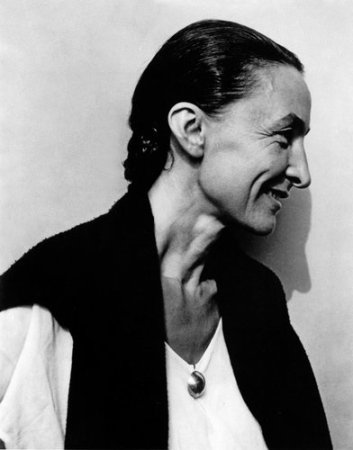
Georgia O’Keeffe, 1932

This photograph, taken by Alfred Stieglitz 15 (or 16 or 17, see the endnote in the article from which it is taken) years after they first met, is not one commonly seen of the artist.  First, she is smiling.  Second, she is younger than the most commonly known photographs of her.  The great statement from the beginning of the article from which this comes is:

O’Keeffe achieved a strong personal presence as well through the proliferation of photographs of her hard-bitten, heroic face, which seemed to evoke the early pioneers.

Continue reading