REMOC: Behind the Seams

This one was actually made by Ana's daughter Meli - it must be a family tradition!

I don’t know what I was expecting when Ana Teresa invited me to take a look at her studio. On the one hand, I’d seen the quality of the products on the shelves in REMOC, and thus knew that the craftswomen were not amateurs; but I also knew that many of them didn’t have high incomes or hours to invest in their business – one of the challenges of the trade, for them, is that they are making a living while maintaining a home for their families and fulfilling their duties as a wife and mother. So, despite knowing that the work they produce is ‘serious’, I was still impressed when Ana ushered me through a door I’d thought led to a garage, and I found myself in a real, fully equipped artisan’s workshop. Continue reading


Backwaters Home: Pampa Villa

Pampa Villa On The Pamba River

We have mostly shown images of life on Kerala’s backwaters from the perspective of boats, as in looking at and looking from.  As Milo’s recent post showed (at the tail end, so to speak), there is much more life on these waters than first meets the eye of the occasional visitor.  The view above is from the river, looking at a home that Raxa Collective recently took responsibility for.

This responsibility included modifications to the interiors in order to make it more welcoming to travelers.  It had served as the home of a prosperous resident of the backwaters, but now is open to receive visitors whose preferences in terms of privacy, decor and food (at least spice levels) often differ from those of locals, at least a bit.

Continue reading

Haiku and Homilies

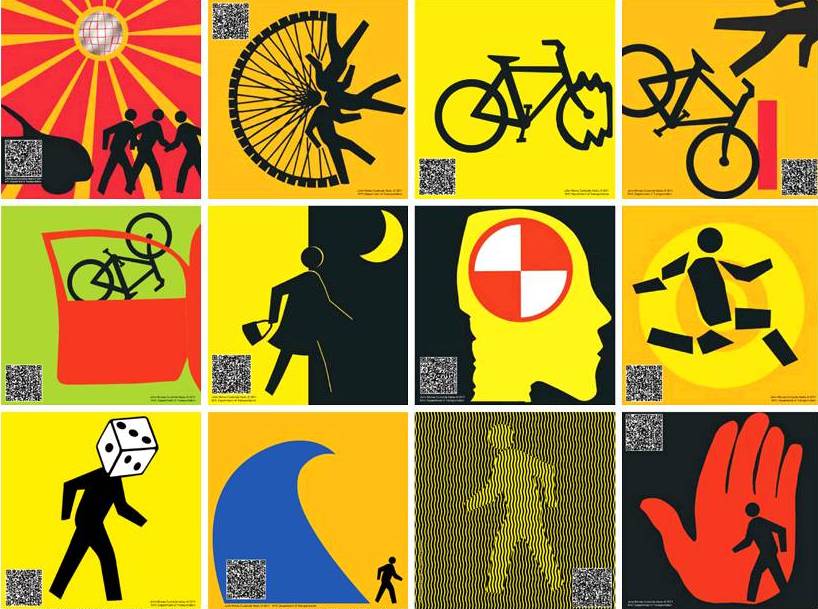
From New York to Paris to Bombay, navigating city streets can be a challenging choreography between bipeds, bicycles and motorized vehicles.  In places like India that dance expands to include the more than occasional quadruped as well.

We’ve written about driving in India on several other occasions, and to mitigate the apparent chaos the Indian Government has a program of sometimes rhyming, often droll, road signs that include little “ditties” such as:

Speed Thrills But Kills

Impatient on the Road, Patient in the Hospital

Safety On Road; Safe Tea At Home!

Reach Home In Peace, Not In Pieces!

Continue reading

License To Obsess

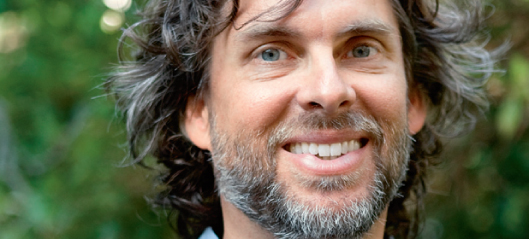
If your life has a certain soundtrack and you read American literary fiction, you may have already encountered the novels of Michael Chabon.  Click the image above for a snapshot interview with him.  When he announced at the beginning of this year that he was working on a new novel, it was seen by many in a blog post split over two days.  A turn of phrase in the middle of the second post resonates with the small group of people who form Raxa Collective:

…thanks to Wax Poetics, one unexpected but maybe not unforeseeable result of the decision to have some characters own a shop together selling battered old things that are beautiful and valuable only to a small number of randomly assorted Geeko-Americans has been the joyful return to my life of hip-hop…

Things that are beautiful and valuable only to a small number: those are the things we are focused on here.  See all of Salim’s recent posts for examples.  Milo’s too.  Chabon’s new novel may focus on the culture of hip-hop, which you will not likely encounter on our pages, but the underlying idea has both profound and light-hearted implications. Continue reading

Vive La Différence

One of our favorite phrases comes to mind upon seeing the news that Umberto Eco, whose book on experiential travel is as must-read as it is little-known, is curating an exhibition on lists at a museum.  Long live the difference: the man of letters, whose academic work on semiotics even many scholars are challenged by, can write trash-free page-turners as well as travel books and, why not, curate a museum exhibition.  Long live the difference: the museum that resists the trashy blockbusters can invite a man such as this to open his cabinet of curiosities. Continue reading

Snow Angels

It says a lot when a children’s book reaches the “ripe old” age of 50 while still remaining universally popular.  The Snowy Day by Ezra Jack Keats is such a one. Winner of the Caldecott Medal for the year’s most distinguished American picture book, the title was ground breaking despite its simplicity.  Through the use of colorful, textured illustrations and an unaffected story line, the book “changed the face of children’s books” by featuring a little black boy in a manner neither condescending nor provocative;  He was merely a little boy. Continue reading

Peter Donnelly, Come To India!

New Brighton Pier, in Christchurch New Zealand, is fortunate in many ways.  Beautiful beach, wind for kites, friendly people.  But most of all, that fellow with the rake and the spring in his step.

And, as far as one can tell from the 10 minutes below (after the jump), that fellow has something to say.  As we did with another artist, we extend an invitation.  Could someone let Peter know?

Continue reading

A Campo Weekend

The weekend before last I was fortunate enough to be invited to the estancia of an artist with whom I am collaborating with on a joint project.  A well established painter here in Buenos Aires, Marta Diez has had many exhibitions here in the city, as well as some abroad, most notably at the Palais de Tokyo in Paris last year.  Her estate is still in the province of Buenos Aires, and yet is located a good 650 kilometers south from the city center, near a town called Bahia Blanca.

Continue reading

Thekkady’s Streets

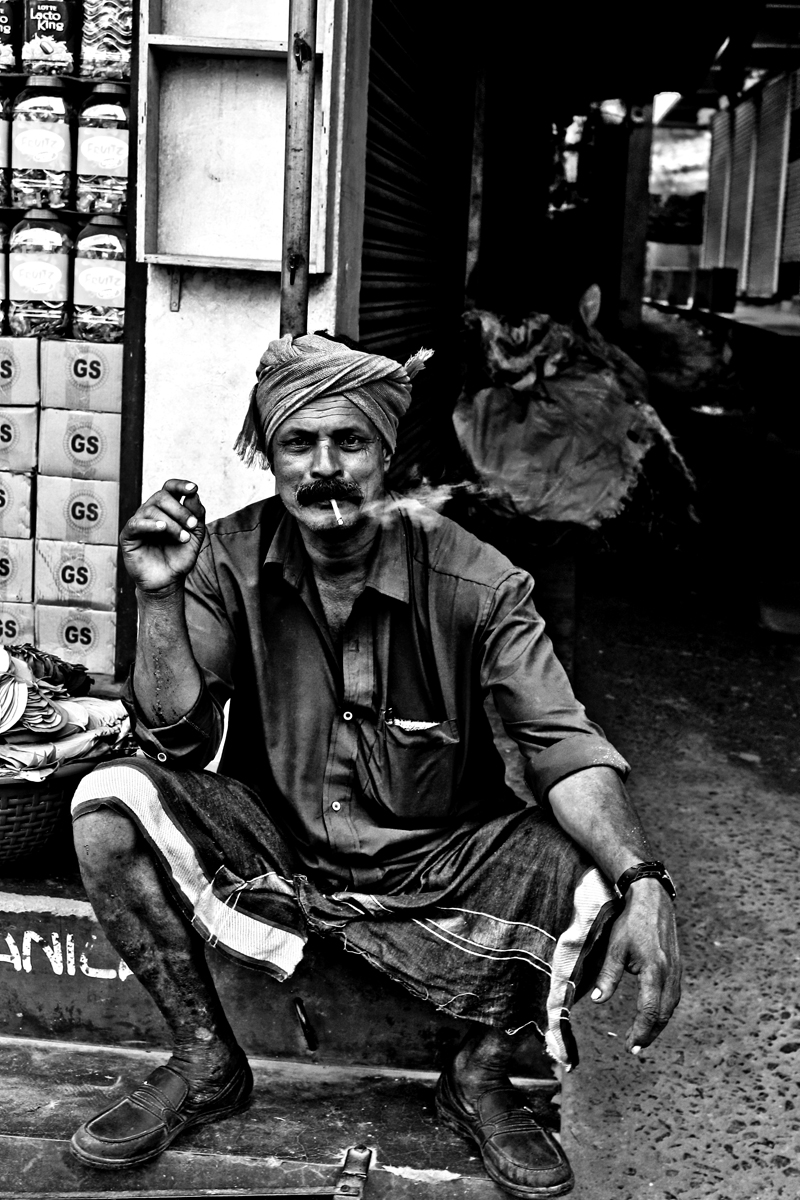
Although I thoroughly enjoy viewing street photography for its spontaneity, diversity, and ability to display the flow of life of any culture, I generally refrain from partaking due to a generally awkward disposition and inhibitions around strangers. Being unusually tall (to Indians) and quite white, I also get a lot of stares as it is, and waving a camera around at people certainly does not make me go unnoticed. However, in areas more frequented by ‘foreigners’ such as Thekkady, a tall Caucasian isn’t all that exciting, and many locals are in fact enthusiastic to have their pictures taken.

Continue reading

What More About Picasso?

We had mentioned in an earlier post encountering this source of interesting observations, and now another from the same (click on the image for the full thought and information about the exhibition):

The idea of Picasso always precedes the experience of seeing Picasso’s art. Looking at drawings from the artist’s early years in the Frick Collection’s cramped basement, I wondered what we can say about Picasso that hasn’t already been said. I’ve previously encountered this question with artists whose reputations (and market value) are in such high esteem that it is almost impossible to see the work as separate from the artist’s image. Even in this small show, with works that look decidedly un-Picasso, I found it difficult to view the drawings as anything other than work of this great artist.

Continue reading

Arctic Circle, Stop Motion

Imagine being talented enough to make that short, brilliant piece.  Now imagine being that talented and having the opportunity to share the stage with the master:

I recently took part in a presentation at Toronto’s TIFF Bell Lightbox and had the opportunity to screen The Arctic Circle for Tim Burton. After the screening, I had a few minutes on stage to get his reaction and ask a few questions.

The art is the thing, but watching the young artist on stage with the master is fun too…

Continue reading

3 Minute Wonders: You Get What You Pay For

It is easy to be skeptical about the relationship between buzz and art, where buzz is meant to be a synonym for meaningful discussion. At 2:23 in this clip one person eloquently suggests that this is art because it has generated discussion. But has it?

Continue reading

Arts & Science

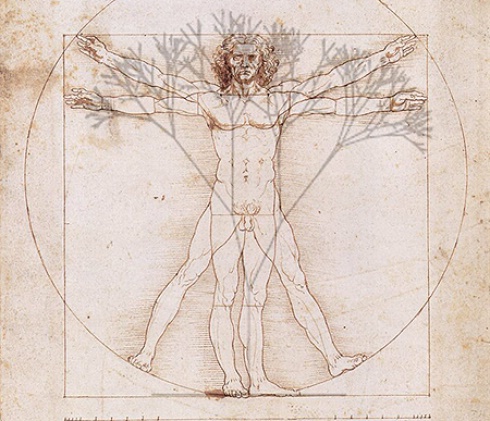
Every year, some percentage of undergraduate students majoring in an academic discipline within the liberal arts, often aka Arts and Science, wonder: what’s next?  As in, what will I do when I complete my degree?  Many do not need to wonder because they are on a clear path–pre-med or pre-law for example.  But for those wondering, we hope our site sheds some light on the variety of possibilities.  For one example (click the image above for the source) we like the idea of literally combining art and science (so did da Vinci):

…a mysterious, nearly universal growth pattern first observed by Leonardo da Vinci 500 years ago: a simple yet startling relationship that always holds between the size of a tree’s trunk and sizes of its branches.  A new paper has reignited the debate over why trees grow this way, asserting that they may be protecting themselves from wind damage.

Continue reading

Emergence

Rainforests have dense canopies. The plants in the undergrowth struggle to survive using the limited sunlight that reaches the lower levels of the jungle, and many plants don’t make it. When the weak plants die, their lifeforce nourishes the survivors. It has been this way for millions of years, and walking through the forest, the evidence crunches and crackles underfoot, or in more moist areas, decomposes rapidly into a soft, nutritious humus. Easing oneself out of the forest and into a clearing can be soothing – only upon emerging into the vivid sunlight and open air does one realize how resonant the forest can be. Continue reading

Waterborne Mysteries

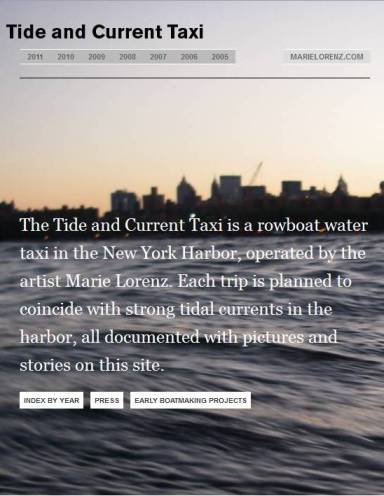
Click the image to the left and you will find yourself somewhere in the Marie Lorenz realm.  It may be easier to understand this realm if you see some of her more “traditional” art, and especially the evolution of that art, at her own website first.

If you happen to be in New York City, you have an advantage: you can experience this realm firsthand. If not, maybe a description of some of her other recent art will give a small portion of perspective to the Tide and Current Taxi:

Recently I have been making collographs of things that I find on the beach. This project is an attempt to find out the story that an object tells about itself. I think of it as another way to collaborate with the tide – because of how the harbor collects things from the city, and distributes them around the shore according to their density, buoyancy, and shape. Continue reading