Usually with animation the charm is in the execution… Here the Hungarian poem is also hauntingly beautiful.
Usually with animation the charm is in the execution… Here the Hungarian poem is also hauntingly beautiful.
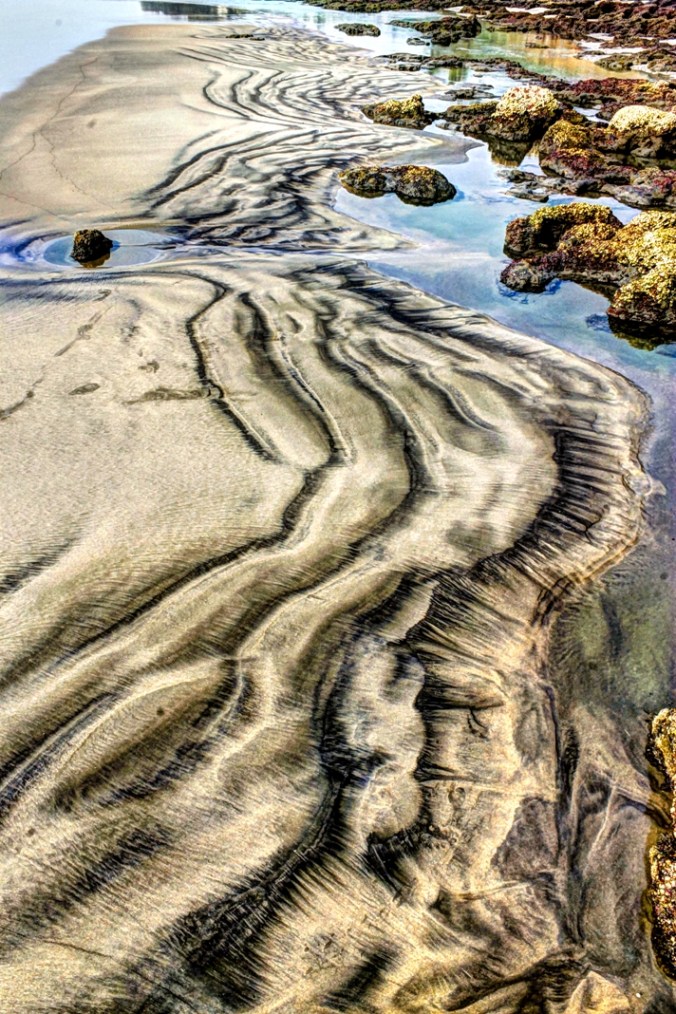
Not to be confused with sand sculpture, sand scripture is the graceful story a million grains of sand tell of the passing of time. Sand isn’t only found on the beach – riverbanks, empty fields, and desert dunes host the legion grains, akin in countlessness to the untold billions of stars in the universe. The ocean’s tides tell stories, however, with the pliable mass of silica as the medium.
There are needs, and there are wants.
A toothpick sculpture? Not necessary for San Francisco to demonstrate its greatness (as might have been an underlying objective of the commission). Not sufficient for that purpose either.
 Click the photo to the left to read the interview of mother by daughter, artist by artist. The interviewer shares this perspective on the interviewee’s art:
Her work has, over the years, centred on forgotten, vanishing worlds, art and language that exist on the margins. The epigraphs to her novels (TS Eliot, Emily Dickinson, Borges …) often make reference to the persistence of memory. She writes: “The ancient Chinese believed time is not a ladder one ascends into the future but a ladder one descends into the past.” Her new book, The Artist of Disappearance, is made of three delicate stories about the frailty as well as the transforming power of art.
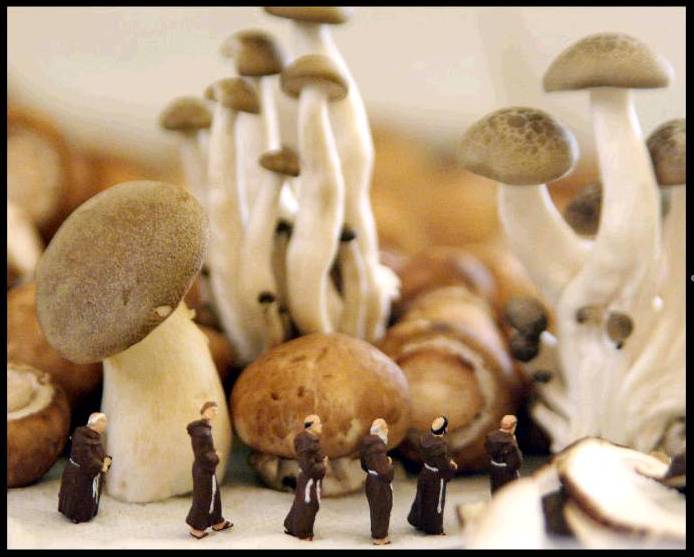
In this season of Thanksgiving and other food focused festivals, it seemed appropriate to highlight the artist Matthew Carden. He and his wife Jennifer Carden clearly have a loving relationship with food that doesn’t take itself too seriously. Continue reading
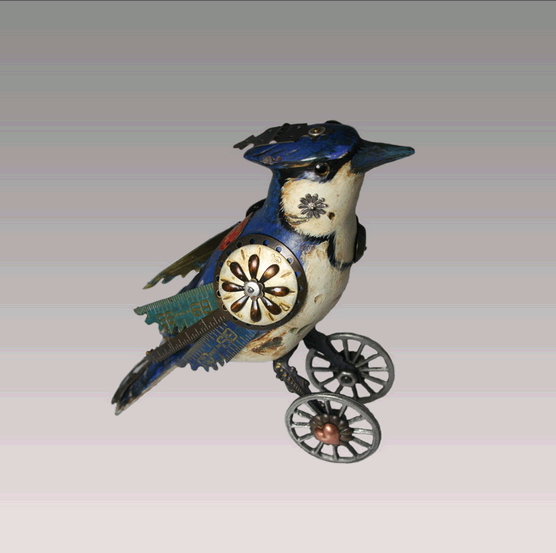
Blue Jay on Wheels by Mullanium
Sometimes I wonder whether the attraction to birds is universal. Based on bird watcher statistics I would lean toward a “yes”. Is it the colorful plumage that so attracts us? The cheery tweets and chatters? The flamboyant beaks, wattles, crests and tails? Or is it just that anthropomorphically curious tilt of the head? Continue reading
In a recent post, note was taken of a new bumper sticker. Milo, who normally is more of a nature photographer, was walking in Cochin this morning and started snapping photos of vehicles. Could it be?
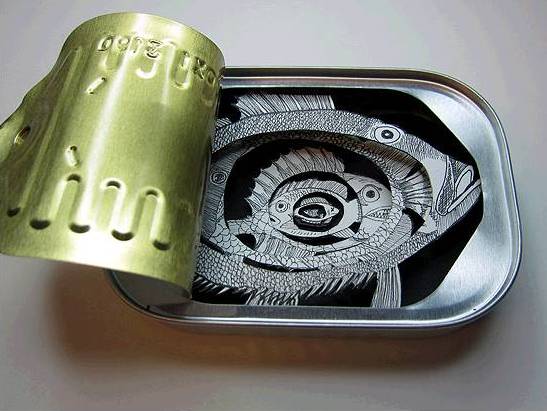 Like a Fish Needs a Bicycle, Jim Doran
When I recently came across the artist/web designer Jim Doran’s work my mind began to swim with connections. In a world where resources, whether our land or our seas, are becoming more and more precious, the more we need to give free rein to our imaginations. In other words, rarely are solutions found within the status quo. Continue reading

As the son, brother and father of photographers I have to acknowledge that I am partial to the notion that people with cameras can produce rapturously important works of art. Further, I am partial to landscape photography. Recently I started to realize how quaint my understanding of the economics of being an “art” photographer, landscape or otherwise, has been; and those economics just experienced a tectonic shift.
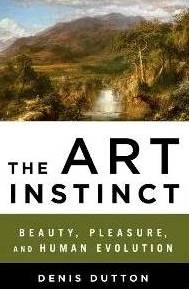
The arts in all their glory are no more remote from the evolved features of the human mind and personality than an oak is remote from the soil and subterranean waters that nurture and sustain it. The evolution of Homo sapiens in the past million years is not just a history of how we came to have acute color vision, a taste for sweets, and an upright gait. It is also a story of how we became a species obsessed with creating artistic experiences with which to amuse, shock, titillate, and enrapture ourselves, from children’s games to the quartets of Beethoven, from firelit caves to the continuous worldwide glow of television screens.
—Denis Dutton
The late philosophy professor, editor, writer (and occasional provocateur) Denis Dutton spent a great deal of his professional life closing the gap between art and science. Continue reading
Sometimes it takes another person’s perspective on a familiar place or object to see it in a new light–drawing an outline around a space highlights an additional dimension. Be it a Parisian bridge that is crossed by thousands daily without a second’s thought, or pathways through Manhattan’s Central Park, both locations represent an aspect of the “heart of the city”. (For centuries, the Pont Neuf has literally been the heart of Paris, connecting the Île de la Cité with the left and right banks of the Seine, and the eponymous nature of Central Park requires little explanation.)
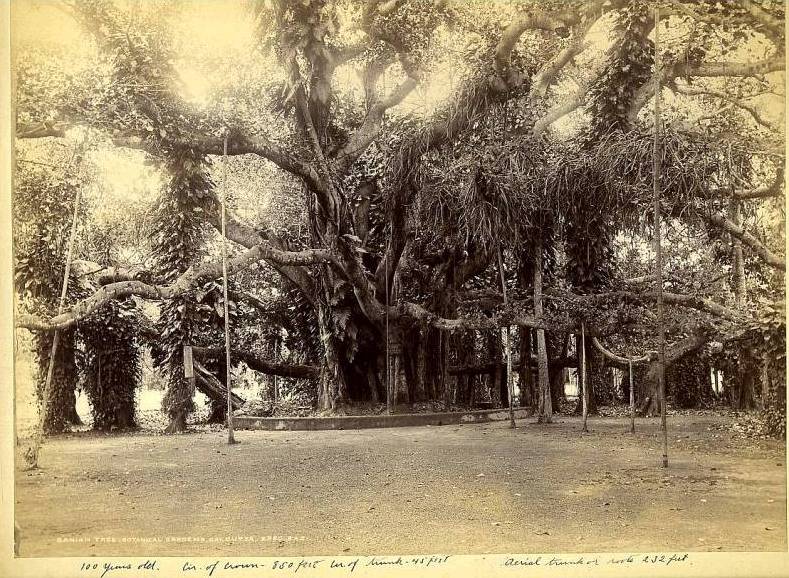
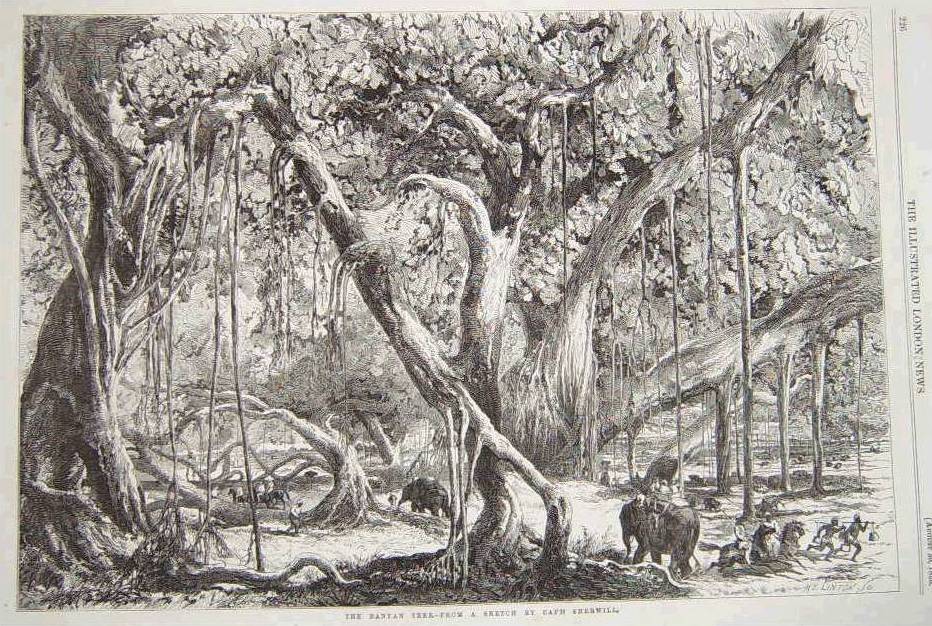
The fig-tree at this day to Indians known
In Malabar or Deccan, spreads her arms,
Branching so broad and long, that on the ground
The bended twigs take root, and daughters grow
About the mother tree, a pillar’d shade,
High over-arched and echoing walks between.
–John Milton, Paradise Lost
An interesting question to ask about a fully intact and functional brain’s cognitive abilities is this: how do we know that each individual’s perception isn’t unique, whether it’s visual, olfactory, or of any other sense? Processing and emotional responses aside – how do we know that people actually see things the same way, physically? The color I identify as red might appear as residing on the opposite end of the spectrum to someone else, despite the light’s wavelength being constant. The smell I identify as vanilla may be different from another person’s perception of vanilla’s odor, but because we are both correctly identifying the scent as that of vanilla, it is both futile and impossible to determine whether or not the stimulus is perceived identically between the two people.
Enter science! Everyone’s nose (at least those without ‘abnormalities’) has the same scent molecule receptors, meaning we all have the same capabilities for smelling the odors in the air (yes, they are molecules! they are not magically dispersed by the scent fairies, contrary to popular belief). Continue reading
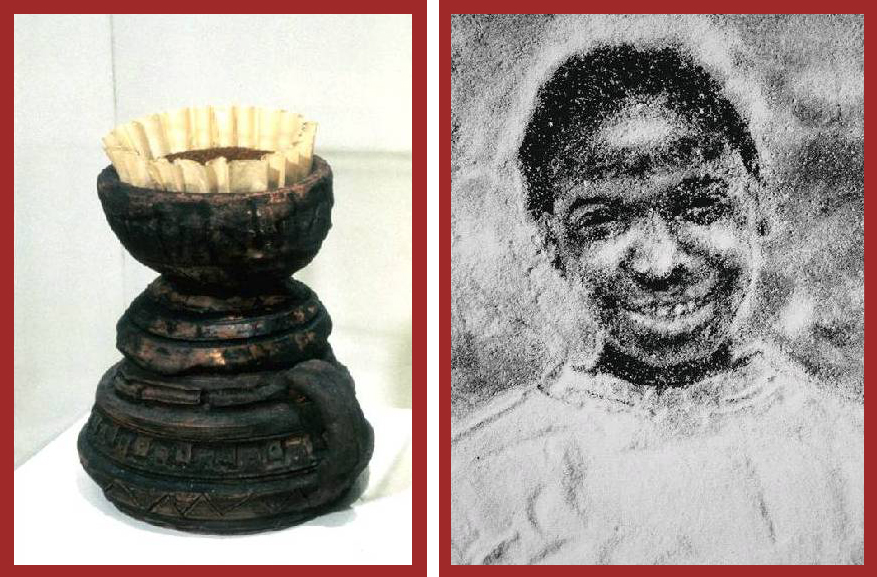
When I posted about the artist Vik Muniz a few days ago I wrote primarily about his collaborative film with director Lucy Walker. I feel I didn’t do justice to the general wit of his work. Like fellow artists Chris Jordan and Mary Ellen Croteau, Muniz is an ultimate recycler, but his “puckish” personality informs his work, both through his choice of medium (sugar to create shimmering portraits of the children of cane workers on St. Kitts) or visual jokes (Pre-Columbian drip coffee maker). Continue reading
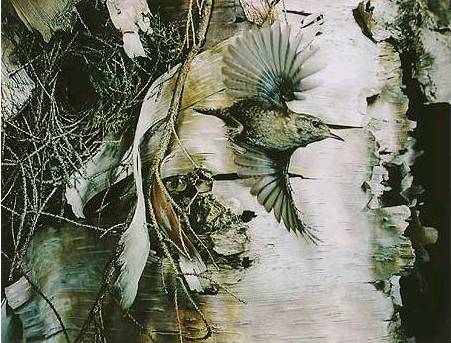 Eliot Porter Winter Wren, 1969 Amon Carter Museum Collection*
Sometimes it takes a scientific mind to re-calibrate the artistic eye. Eliot Porter’s parents had instilled a love of nature and science in him from an early age, and he’d been photographing birds since received his first camera at the age of 10. His training in medicine and as a chemical engineer didn’t dampen his interest, in fact he was among the first to bridge the gap between photography as a fine art and its foundations in technology and science. Continue reading
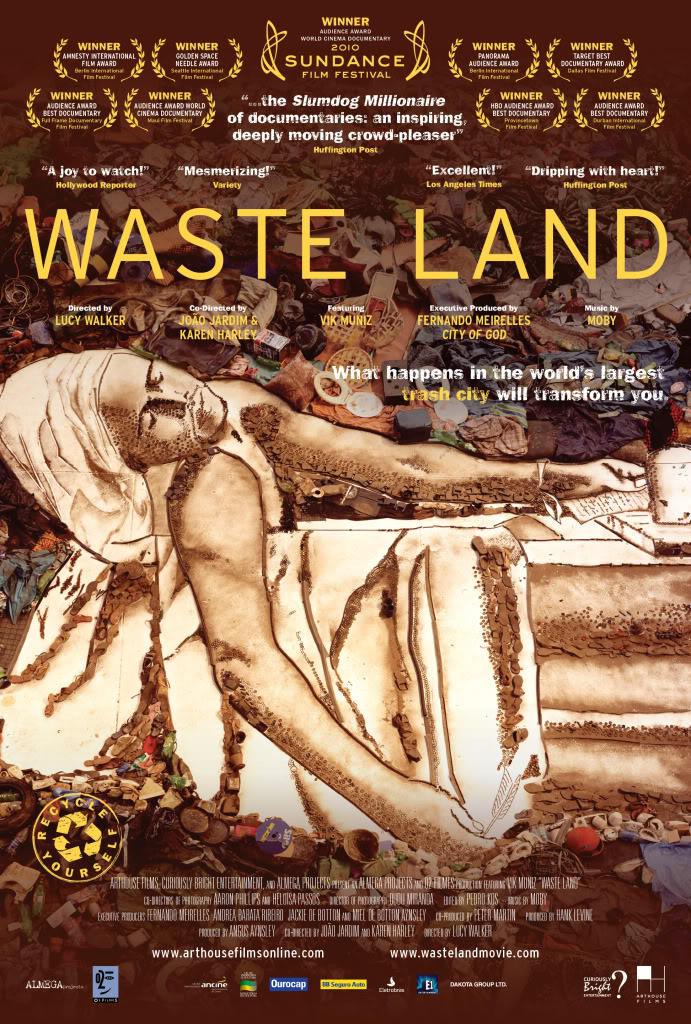
The beautiful thing about garbage is that it’s negative; it’s something that you don’t use anymore; it’s what you don’t want to see. So, if you are a visual artist, it becomes a very interesting material to work with because it’s the most nonvisual of materials. You are working with something that you usually try to hide. –Vik Muniz
Brazilian artist Vik Muniz is known for his visual wit using either the world’s detritus or the generally unexpected as the medium for his portraits and landscapes. Each piece, formed by ink drops, chocolate drips, dust motes, thread swirls or garbage itself, is temporary by nature, achieving permanence via a camera’s lens. Continue reading
On the fringes of our intent at this site, where culture is sometimes king, sometimes queen, and sometimes jester: a pause to refresh our memory of what many of us consider a not-so serious cultural artifact. The traditions associated with October 31 in the USA represent a rich co-mingling of sacred, sacrilegious and purely commercial interests; in Mexico and elsewhere those of November 1 or so represent mostly sacred, family-focused interests. But both share, at least in recent times, an orientation toward humor and its ability to soothe fears. In that specific path of tradition, the following seems just right for the transition from October 31 to November 1:
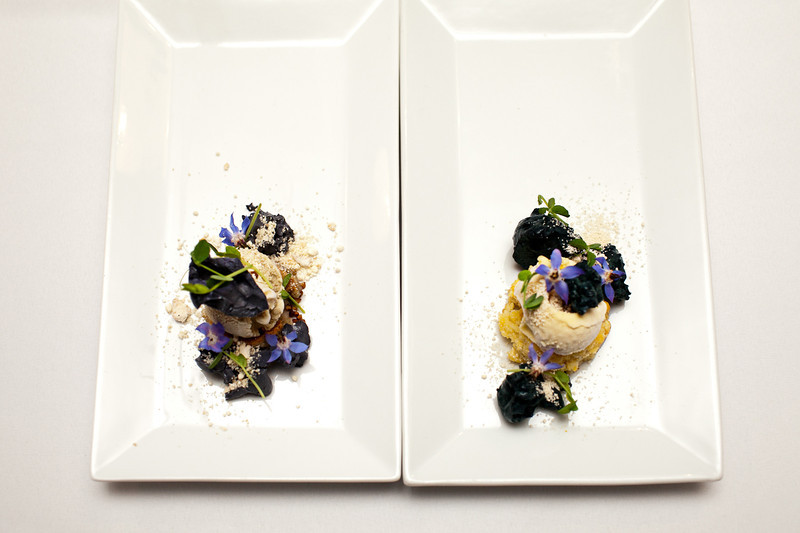
I had a thought once about couples where one person was a vegetarian and the other was a meat eater. It seemed like they could really never share a meal and have the same experience without one person–usually the omnivore–compromising to suit the mutually agreeable meal. To a normal, well adjusted human being, this is a totally banal observation that wouldn’t warrant losing sleep over.
But to us at Studiofeast, we thought it’d be cool to do a meal where an omnivore and a vegetarian could both share the same meal without the former forgoing meat or the latter having to try flesh. That was the seed of an idea that grew into our most recent dinner: a 7 course meal with an omnivore and vegetarian option where each corresponding course looked identical across the meat/vegetable line. And on July 17th, we seated 40 guests–20 omnivores on one side of the table, 20 vegetarians sitting opposite them–and served them our Doppelganger Dinner.
See the whole story here. Continue reading
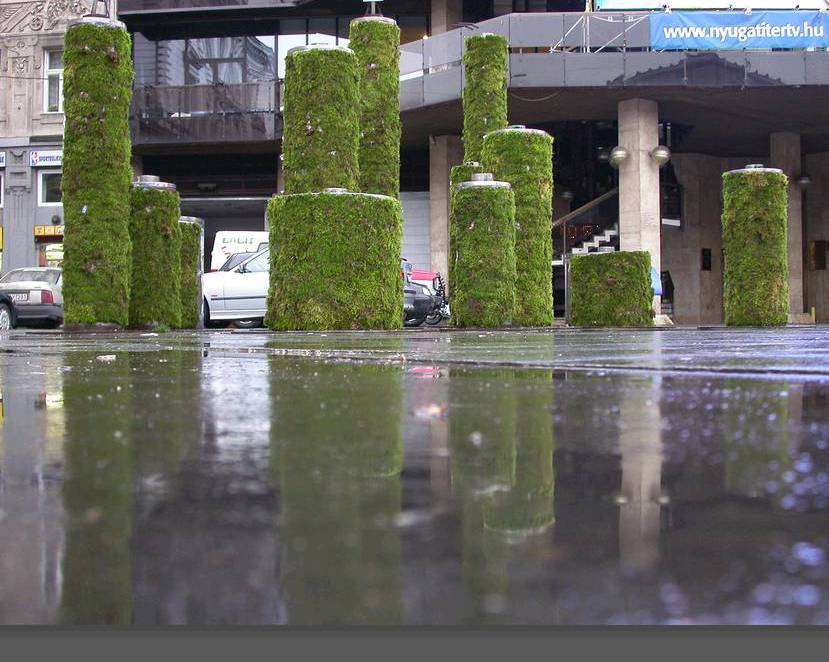
Mosstika: As It Started, Budapest, 2004
Nature calls to us. All the more so in urban settings. This is evident in the long history of elaborate parks and gardens in major cities, dating back to Frederick Law Olmstead, André Le Nôtre and beyond. Olmstead’s designs were meant to emulate the Savana landscape that strikes so strong a chord in people around the world, whereas Le Nôtre helped define that famously manipulated symmetry of the classic French garden.
Both respond to what we now refer to as biophilia, the magnetic draw that nature has on each of us. The question we have to ask ourselves is which one is “Art”. Not an easy task, to be sure. Perhaps the solution is to say “both” and leave it at that. Continue reading


 Organikos