From the World of Photography

One of the first things you’ll notice about Danh's images is that they’re kind of blue. But they’re not hand-colored or toned post-process. Daguerreotypes are naturally sensitive to blue and ultraviolet light, meaning the brightest spots, like the sky or a waterfall, take on a blue tint when overexposed. PHOTO: Danh

One of the first things you’ll notice about Danh’s images is that they’re kind of blue. But they’re not hand-colored or toned post-process. Daguerreotypes are naturally sensitive to blue and ultraviolet light, meaning the brightest spots, like the sky or a waterfall, take on a blue tint when overexposed. PHOTO: Danh

The daguerrotype makes for an interesting chapter in the history of photography. One reason why you should catch the last two days of the exhibition of Binh Danh‘s daguerrotypes of Yosemite National Park. Address: The National Gallery of Art in Washington, D.C; head to the exhibition titled “The Memory of Time”.

Standing in front of photographer Binh Danh’s daguerreotype of Yosemite Falls, on display at the National Gallery of Art in Washington, D.C., I saw myself staring back through the image.

If you look at a daguerreotype in person (unfortunately you can’t tell on a screen), you can see your reflection in the silver plate. At first I tried to move off to the side to get an unobstructed view, until I realized that being confronted with my reflection might be part of the experience. It turns out that this is exactly what Danh had in mind. “Conceptually, I hope one contemplates the land in relationship to one’s body and even identity.”

Continue reading

The Japanese Fine Art of Bragging

Gyotaku, the art of making inked prints from real fish, originated in 19th century Japan. Above, three examples from modern Gyotaku artist Heather Fortner (from left): Under the Rainbow Rainbow Trout; Little big skate and Primary colors butterfly ray. Courtesy of Heather Fortner

Gyotaku, the art of making inked prints from real fish, originated in 19th century Japan. Above, three examples from modern Gyotaku artist Heather Fortner (from left): Under the Rainbow Rainbow Trout; Little big skate and Primary colors butterfly ray. Courtesy of Heather Fortner

How did fishermen record their trophy catches before the invention of photography? In 19th century Japan, fishing boats were equipped with rice paper, sumi-e ink, and brushes in order to create gyotaku: elaborate rubbings of freshly caught fish.

Fish printing often attracts those who have a connection with the ocean or marine life. Wada, who is Japanese-American, grew up in Hawaii and was taught how to fish by his family at a young age. And before she became a gyotaku artist, Fortner was a commercial fisherman, research vessel deckhand, and a ship’s officer and Master in the U.S. Merchant Marine. “I have always loved the ocean and anything from the ocean,” she says.

She adds: “Gyotaku allows you to express an appreciation for the natural world by partnering with the finest artist in the world: Mother Nature.”

Continue reading

The World’s Lone Weaver of Sea Silk

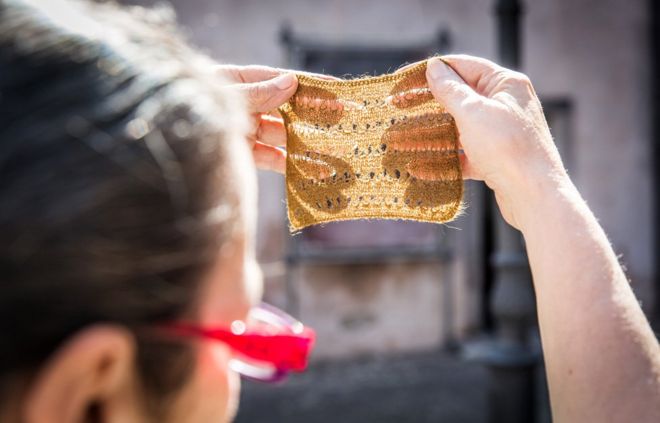
Chiara Vigo is the only woman in the world who still works the byssus, better known as the silk of the sea, the same way women in ancient Mesopotamia used to weave it in order to make clothes for their kings. PHOTO: BBC

Chiara Vigo is the only woman in the world who still works the byssus, better known as the silk of the sea, the same way women in ancient Mesopotamia used to weave it in order to make clothes for their kings. PHOTO: BBC

The Italian island of Sardinia. A place where coastal drives thrill, prehistory puzzles, endearing eccentricities exist. As DH Lawrence so succinctly put it: ‘Sardinia is different.’ The island has been polished like a pebble by the waves of its history and heritage. And an indispensable part of it is Chiara Vigo, who is thought to be the only women left who can harvest sea silk, spin it and make it shine like gold. By her own admission, Vigo is neither an artist nor an artisan. She is a master. While an artist creates over inspiration and an artisan produces and sells, masters pass their art on. Like she hopes to.

Continue reading

Designing the World

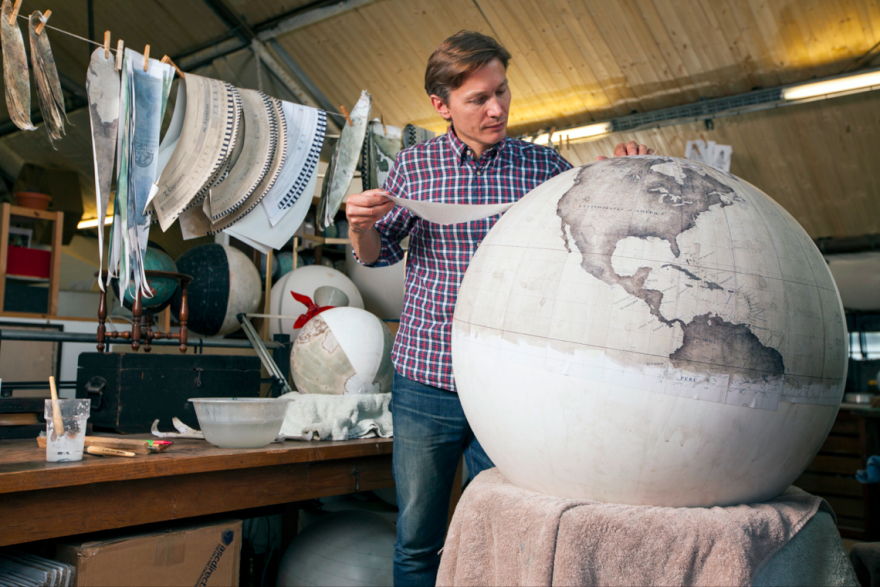
It took a long time to make one that was perfectly balanced and approx. 2 years before Bellerby produced a globe that I could sell. (Photo by Stuart Freedman)

It took a long time to make one that was perfectly balanced and approx. 2 years before Bellerby produced a globe that I could sell. (Photo by Stuart Freedman)

When is the last time you looked at a map? No, we’re not talking GPS-powered imagery and guidelines but a physical entity. Like a globe. Like the collectibles Peter Bellerby and his company painstakingly churn out. In fact, they are one of the only two workshops in the world still in the business of handcrafting globes.  And in the business of preserving a dying craft.

Continue reading

Introducing Taxi Fabric

In Mumbai, India—a city of nearly 19 million people—over 50,000 taxis pick up at least 25 to 30 people every day. For the majority of Mumbaikars, the iconic black and yellow taxis are the most convenient form of transportation in the city. And now a new vehicle of design, dialogue, and a sense of belonging – thanks to the Taxi Fabric project.

Continue reading

The Ultimate Architect of Cardboard Buildings

“What is the difference between temporary architecture and permanent architecture?” No architect is more qualified to explore that question than Japanese architect Shigeru Ban. “Temporary” architecture, in disaster zones, is Ban’s calling card. For over 20 years, the 2014 winner of the Pritzker Prize, architecture’s Nobel, has best been known for his well-publicized humanitarian work. From Rwanda to Japan to Nepal, he has turned cheap, locally-sourced objects—sometimes even debris—into disaster-relief housing that “house both the body and spirit,” as Architectural League president Billie Tsien puts it.

Continue reading

Are You Looking at My Shoes?

An ongoing exhibition at the Victoria and Albert Museum explores extremes of footwear from around the globe, in 200 pairs of shoes

An ongoing exhibition at the Victoria and Albert Museum explores extremes of footwear from around the globe, in 200 pairs of shoes

If you happen to be on Cromwell Road in London, United Kingdom, then let your feet take you to the Victoria and Albert Museum. To be more precise, to this exhibition titled Shoes: Pleasure and Pain. Among the 200 plus pairs of footwear exhibited until January, 2016 are a sandal decorated in pure gold leaf originating from ancient Egypt and contemporary creations from Jimmy Choo, Manolo Blahnik and Christian Louboutin. The exhibit explores three different themes: transformation, status and seduction. Transformation looks at the mythical aspect of shoes in folklore. Status examines how impractical shoes are worn to represent a privileged lifestyle. Finally, seduction explores the concept of footwear as a representation of sexual empowerment and pleasure. Talk about history meeting its contemporary.

Continue reading

Your Worst Dragons Are Your Best Teachers

PHOTOGRAPH BY ELI REED/MAGNUM

PHOTOGRAPH BY ELI REED/MAGNUM

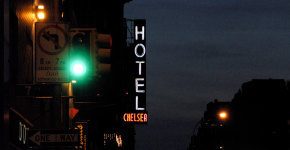
Amie and I lived around the corner from the Chelsea Hotel during the second term of Ronald Reagan’s presidency. At that moment in our lives, newly married and full of that kind of hope, we nonetheless observed with concern the culture of the USA changing radically around us. New York City, in particular seemed an epicenter for the demonization of “welfare queens” (Reagan terminology) and homeless people (of which there was a sudden massive increase due to various social safety nets being eliminated, a result of the “Reagan revolution”), while the values associated with speculative money, and cronyism, were ascendant.

It seems to me in hindsight that it was the moment when entrepreneurial capitalism receded as a driving force of the culture, giving way to a strong strain of some other form of capitalism. A much darker, or at least shadier, form that culminated in the economic tragedies of recent years in the USA, including contagious sub-strains that made their way to Europe and can be seen in the Greek tragedy today.

Reading that the Chelsea Hotel is g0ing “boutique” is at first depressing, but then not; it is a reminder of how New York City has been transformed by the new rules of capitalism; yet encouraging, even if the Chelsea Hotel’s role as an institution will be lost, because some of its core values remain intact as residents live out their terms there. The heartless strain of capitalism that bred and multiplied in the 1980s, which we have thought monstrous, has forced us to look for answers, which in turn has led us to the entrepreneurial conservation concept that animates our work, daily. The dragon sometimes teaches:

At a moment when the once beautifully entangled fabric of New York life seems to be unravelling thread by thread—bookstore by bookstore, restaurant by restaurant, and now even toy store by toy store—it might be time to spare a thought or two for the Chelsea Hotel. At the hotel on Twenty-third Street, famously rundown and louche—the Last Bohemia for the Final Beatniks, our own Chateau Marmont, where Dylan Thomas drank and Bob Dylan wrote “Sad-Eyed Lady of the Lowlands” and Leonard Cohen wore (or didn’t; people argue) his famous blue raincoat, and Sid Vicious killed (or didn’t; they argue that, too) Nancy Spungen—the renovators and gentrifiers have arrived. The plastic sheeting is everywhere, the saws buzz and the dust rises. In a short time, the last outpost of New York bohemia will become one more boutique hotel. Continue reading

A Garden of Waste

Successful stories of upcycling, recycling and effective waste management are heartwarming to say the least. Because they speak of someone thinking about the future and taking the time and effort to act on a lay thought. That’s what the world (and the environment) needs – time. And, Nek Chand, who was born in Pakistan but made India his home, gave almost 60 years of his life to make trash beautiful, to give it meaning and purpose. He created a garden of sculptures and waterfalls out of trash over 40 acres and managed to hide it from everybody for 18 years. It was his secret to keep and is now Chandigarh’s pride. The nation’s, too.

In his spare time, Chand began collecting materials from demolition sites around the city. He recycled these materials into his own vision of the divine kingdom of Sukrani, choosing a gorge in a forest near Sukhna Lake for his work. The gorge had been designated as a land conservancy, a forest buffer established in 1902 and nothing could be built on it. Chand’s work was illegal, but he was able to hide it for eighteen years before it was discovered by the authorities in 1975. By this time, it had grown into a 12-acre (49,000 m2) complex of interlinked courtyards, each filled with hundreds of pottery-covered concrete sculptures of dancers, musicians, and animals.

Continue reading

Museums, Libraries, And An Innovative Hybrid

DRAWING BY LINYU YEN, COURTESY THE SKETCHBOOK PROJECT

DRAWING BY LINYU YEN, COURTESY THE SKETCHBOOK PROJECT

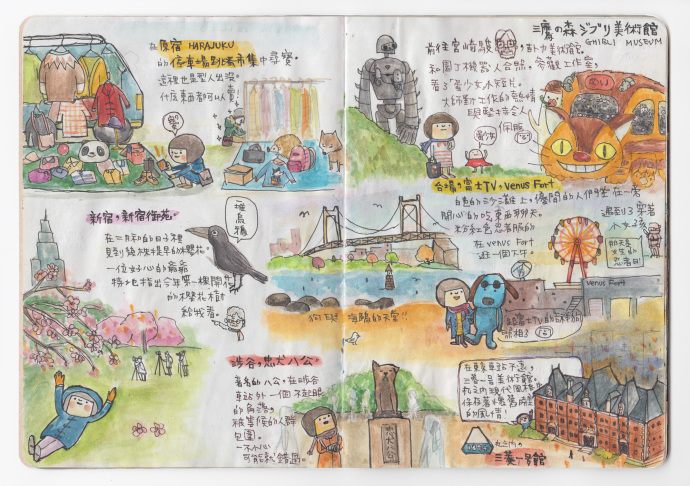
Museums, as well as libraries and other community institutions get a disproportionate share of our attention on this blog. When we see a random variation like the following, we cannot help but follow the trail (thanks to Jordan Kisner):

One recent Wednesday afternoon, a man wandered into a library on North Third Street in Brooklyn and asked how he could sign up for a library card. The young woman behind the counter smiled and explained that at this particular library there were no cards—or even traditional books. The Brooklyn Art Library, housed in a Williamsburg storefront with unfinished floors and exposed piping, is, instead, home to the Sketchbook Project, a collection of crowdsourced sketchbooks that is, according to its staff, the largest in the world. The project was founded in 2006, when Steven Peterman and Shane Zucker, two art students living in Atlanta, began mailing blank Moleskines to anyone who wanted one for a small fee, and then archiving whatever came back. Now anyone can pay twenty-eight dollars for a sketchbook, or sixty-three dollars for a digital membership, which means that their books will be scanned in full and archived online in a digital library. Continue reading

Over Bullets and Blood Trails

No, this is no story of gore or of violence that have come to be a mainstay of sentences framed around Karachi and Pakistan. No, sir, no. But, this is still a story of a battle – one where paint brushes and colors are the arms for the cause of reclaiming a city. For a city whose walls are spattered with political slogans, hate graffiti and dubious advertisements of faith healers, a group of artists have a makeover in mind. They don’t talk about the healing power of art for nothing.

According to Wajiha Naqvi, the ‘I Am Karachi’ campaign manager, the consortium is trying to create a counter-narrative to promote tolerance, peace and diversity through reclaiming public spaces in the city. For her, the idea behind ‘Reimagining the Walls of Karachi’ is to evoke a sense of civic activism, unity and interest among the residents of Karachi, inspiring individuals and communities to take ownership by protecting their walls, their spaces and, ultimately, their city.

Continue reading

If You Happen To Be In New York City

Richard Serra, left, and Philip Glass in the 1970s. Credit Richard Landry

Richard Serra, left, and Philip Glass in the 1970s. Credit Richard Landry.

Two Raxa Collective contributors remember reading and discussing a profile of Richard Serra a dozen years ago (linked in the announcement below) in advance of a visit to the architectural wonder in Bilbao, Spain created by Frank Gehry. Serra’s persona, his strong views on the boundaries between art and architecture, enrich the viewing experience of his sculpture, especially if that sculpture is viewed within a Frank Gehry building. Now there is an opportunity to experience Serra’s sculpture in the context of one of the most revered living composers.

If you are a fan of cross-arts collaboration, this upcoming performance should be on your radar.  If you have been looking for a way to make a contribution to solve a specific problem related to the recent earthquake in Nepal, then the only question is whether you will be in New York City on June 27 when these two luminaries in their respective field offer a remarkable such opportunity:

The composer Philip Glass once worked as an assistant for the sculptor Richard Serra, after the two befriended each other in Paris in the early 1960s and swapped cultural touchstones.

Continue reading

To Touch is to See

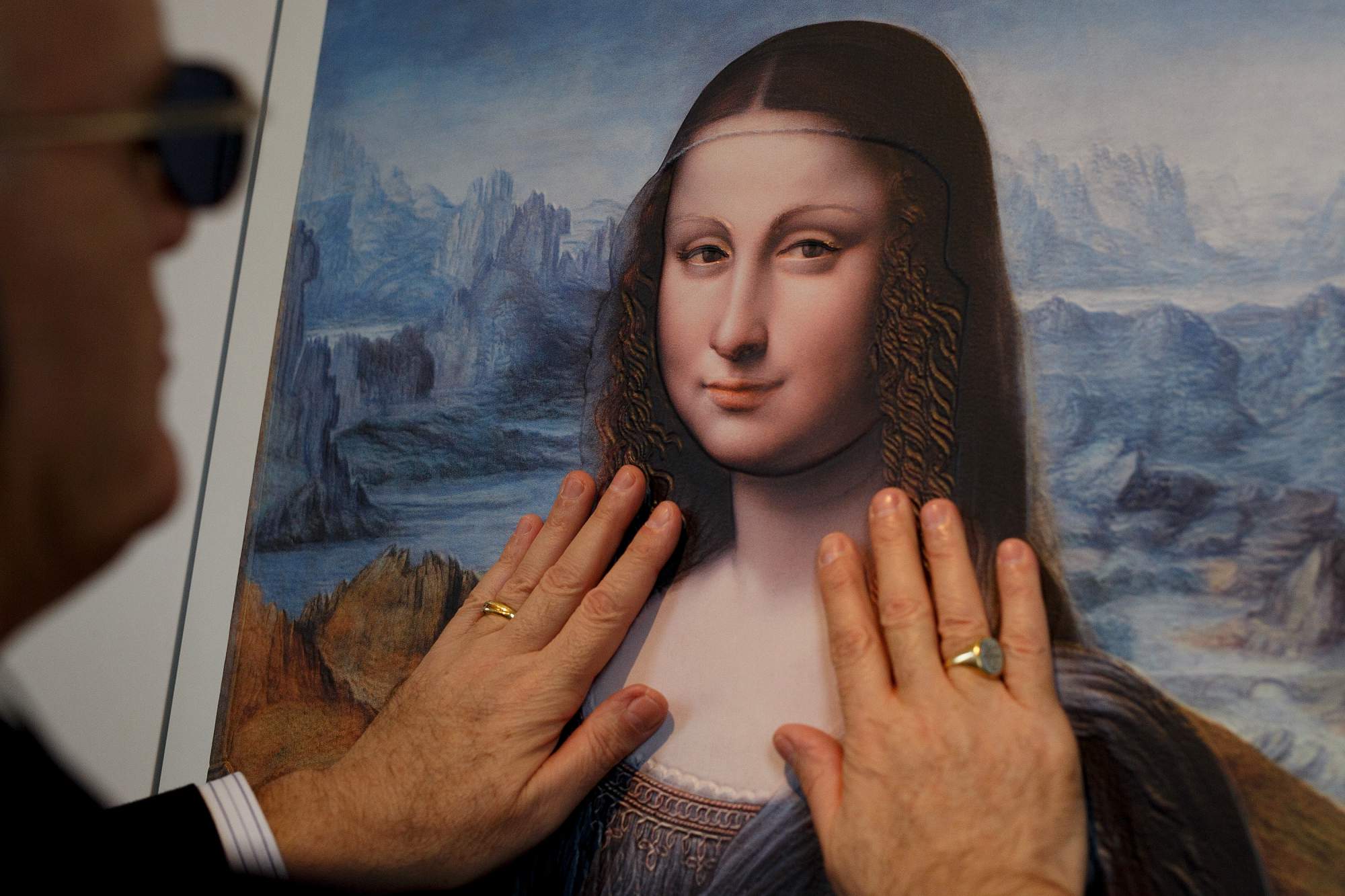
The paintings at Prado Museum in Madrid employ the Didu technique. PHOTO: Pablo Blazquez Dominguez

What is the place of hand sanitizer in a museum when all you are constantly reminded is to not touch the exhibits? But till June 28, the Prado Museum in Madrid will keep those at hand. For visitors – those with sight and the blind – are encouraged to feel their way around duplicated 3-D works of the likes of Francisco Goya (regarded both as the last of the Old Masters and the first of the moderns), Diego Velazquez (of the Spanish Golden Age) and even one painted by Leonardo da Vinci’s assistant. And those gifted with sight can don opaque glasses and be guided by their hands. Isn’t there more than just one way to see art?

Continue reading

In Art’s Holy Name, From Italy

When you are a native of the land, you inevitably end up being a guide. From the fastest route to reach the airport, places to visit in Fort Kochi and Mattanchery, and the lowdown on where to get the best seafood – it is assumed that you know it all. And, rightly so. For every textbook guide on India/ Kerala will tell you that you shouldn’t miss what’s left of the Chinese fishing nets, about taking a walk in Jew Town and catching a cultural performance or two. The Santa Cruz Basilica, too, will be on the must-do list. But only a native can tell you of the Italian Jesuit priest, who studied Michelangelo’s repertoire in Rome, and came to Cochin after he was commissioned to paint in churches. And that he died here, too.

Continue reading

Clothed in History

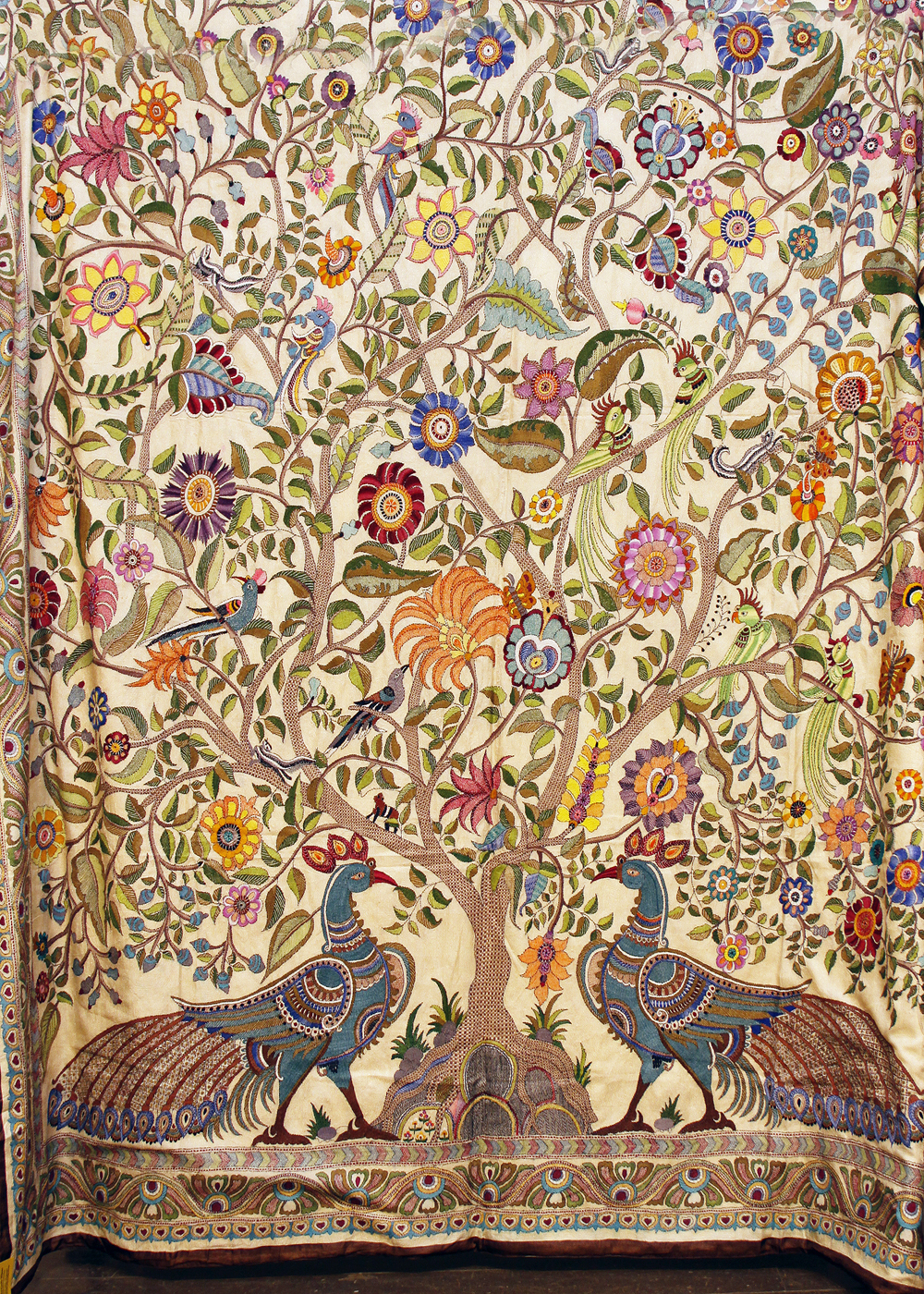
Kalamkari embraces the world of gods and was once used to decorate temples and chariots. Today, in India, it is the face of a dying craft of printing by hand. PHOTO: J Niranjan

If you happen to be around the Metropolitan Museum of Art (gallery 199 in specific) or have Internet hours in hand, the ongoing exhibition titled Sultans of Deccan India (1500-1700) is worth a dekko. A show of opulence enjoyed by kings of the Deccan region in India, the exhibition features 200 artifacts that explore poetic lyricism in paintings, exquisite metalwork, and a distinguished form of fabric production. Known as kalamkari, this cotton fabric is painstakingly dyed using natural vegetable colors and decorated with intricate and detailed paintings by hand. Practised and protected by a small community in the state of Andhra Pradesh today, the family craft faces the Herculean task of survival in the face of plagiarism, lack of government support, and the decreasing number of artisans.

Continue reading

Art in the House

Straddling the colorful neighborhoods of Mattanchery and Fort Kochi, Xandari Harbour (XH) is in good art company. With galleries hugging the street at every corner and local cafes dedicating their walls to the cause of promoting artists of the land, you are never too far from colors. The second edition of the Kochi Muziris Biennale too played its role in resuscitating street art and bringing art vocabulary into everyday conversations. The canvas so full of action and art being our foremost form of decor in rooms and at the restaurant, 51, it was an obvious choice when it came to bringing life to the bland walls of our staff cafeteria. Continue reading

A feast for your eyes

98 2.5 cm cubes of raw food make this stunning isosymmetric photograph. COURTESY: Lernert & Sander

98 2.5 cm cubes of raw food make this stunning isosymmetric photograph. COURTESY: Lernert & Sander

When it comes to food, they say you eat with your eyes first. And you cannot help but do just that when it comes to Lernert & Sander’s new work, Cubes. May be that’s after you’ve tried identifying as many of the 98 cubes of raw food (we couldn’t help ourselves, too!). Commissioned by Dutch newspaper De Volkskrant last year for a feature on the nation’s eating habits, the duo started with what they could find in their neighborhood grocery store. Each type of food was then cut into cubes of 2.5 cm with a custom-designed tool, placed equidistant from the camera, each row photographed separately, and the entire image put together using digital compositing. No, absolutely no use of Photoshop. The equal distances and the one single size put all the vegetables, fruits and meats on equal footing. The digital editing turned the physically impossible feat into visual reality.  Continue reading

If You Happen To Be In Georgia…

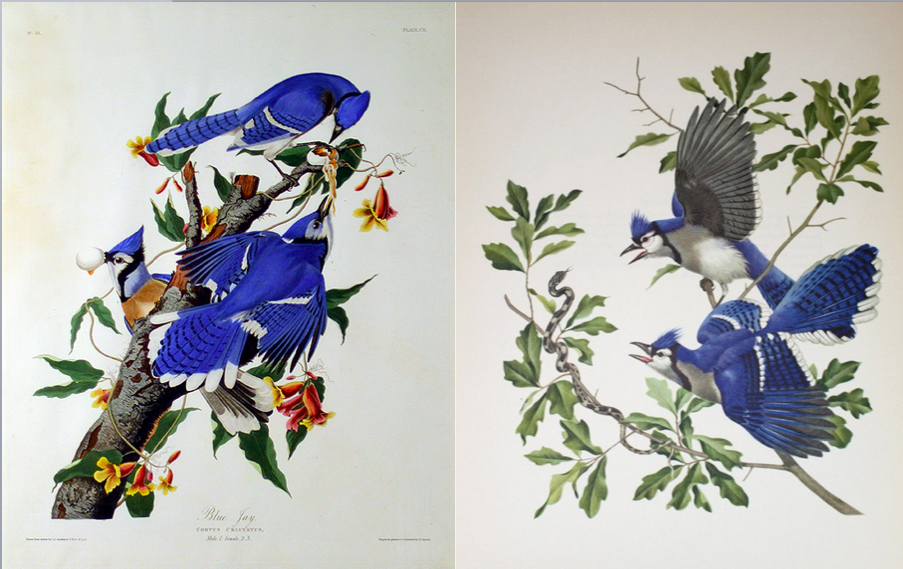
Blue Jays. Left: John James Audubon; Right: Athos Menaboni

Blue Jays. Left: John James Audubon; Right: Athos Menaboni

It should come as no surprise to visitors to this site that a significant amount of our attention is taken up by birds. Their importance is manifold, not just environmentally, but artistically. We’re also fans of the Liberal Arts, so we’re particularly excited to see these interests come together this month at two Liberal Arts colleges in Georgia.

One does not have to be a birder or an art aficionado to have heard of John James Audubon. Much of the world knows the name due to the Audubon Society, but fewer have heard of Athos Menaboni, who Times Magazine once called “Audubon’s heir”, despite the fact that the two men never met. Continue reading

If You Happen To Be On Ponce De Leon

Screen Shot 2015-04-25 at 5.25.37 AM

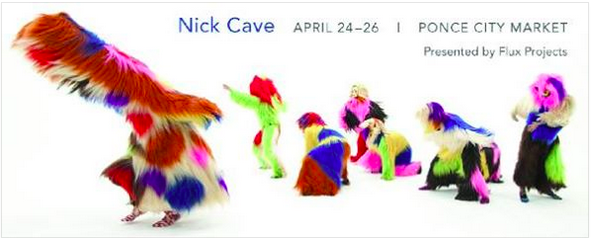
It’s been awhile since we wrote about Nick Cave and the inspired and inspiringly creative form of upcycling he applies in his “happenings”. It seems particularly appropriate that this particular Flux Project (sounds pretty pop-up, right?) takes place at Atlanta’s Ponce City Market, an adaptive reuse renovation of the historic 1926 Sears & Roebuck building into an urban community of hub of living, work and public space.

About the work

Up Right: Atlanta is a “call to arms, head and heart” for Cave initiates—the lead characters of this work. Through the performance, they are prepared mind, body and spirit to face the forces that stand in the way of self-hood, to enter a world over which they have complete control. Initiates become warriors of their own destiny.

Continue reading

Prosek, Eels, Conservation

Screen Shot 2015-04-24 at 4.54.32 AM

When we invited James Prosek to Kerala it was in part due to his artistic sensibility with eels, and a year after that invitation we gave that peculiar but enchanting sensibility more attention.  But by then we had already noticed his bird work at the Cornell Lab of Ornithology, which Seth had watched as it went up, and his family went to inspect at the time of his graduation from Cornell. And so while Prosek has a long history with aquatic conservation Raxa Collective had a new view of Prosek that gravitated to his work with birds.

We are now glad to be reminded of his aquatic passions, in a blog post about conservation by Silvia Killingsworth, the managing editor of The New Yorker, where Prosek features as one of several consulted experts on the fate of the “lowly” eel, which turns out to be much more fascinating than expected (do read the post from start to finish for both conservation and foodie reasons):

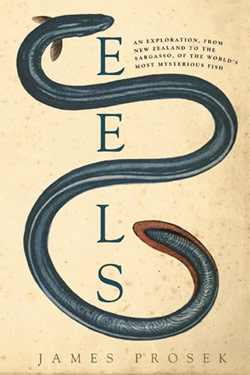
book_eels-lg…Both the Japanese and European species have been listed as endangered by the International Union for the Conservation of Nature.

And yet, according to James Prosek, an artist, naturalist, and the author of the book “Eels,” the American eel will never be listed under the Endangered Species Act. The E.S.A, Prosek told me last week, “works well for creatures that could go down to a population of six hundred, and eels will never get down to that. Maybe a million, and that won’t be enough to sustain collective consciousness”—it won’t sound bad enough to make the public care. Continue reading