Southern Roots Run Deep

Ms. Gomez grew up pulling mangoes from the trees and buying sugar cane from the vendors gathered outside her parochial school. Evan Sung for The New York Times

While Crist may have had the good fortune to enjoy a taste of Kerala with Asha Gomez during travel away from our home there, I was busy exploring the market byways for local ingredients and food ways. What a fascinating story to hear that Asha is actually experiencing that same sense of discovery and exploration within her own home state.

It looks like Crist might have gotten his wish for Asha to come to Kerala, after all!

A Chef’s Quest in India: Win Respect for Its Cooking

“I think I had disconnected myself from this place in some way by saying for so long that the U.S. was home,” said Ms. Gomez, 47, who had moved from the Indian state of Kerala to the state of Michigan as a teenager. “There is still so much a part of me here. I think I had forgotten that.”

Ms. Gomez had come to this land of ports, tea estates and spice gardens not only to reconnect with a part of herself, but also to find new ways to use her camera-ready personality and kitchen chops to lasso Kerala’s beautiful food culture and drag it back to the United States.

“I have to remove people from the mentality that all Indian food should be clumped up into nine dishes that are not really Indian dishes,” she said. “Not all Indian food belongs on a buffet line at $4.99. Indian food is 5,000 years of tradition and history, and it belongs right up there with French cuisine.”

Her frustration over American interpretations of the beloved coconut-scented fish curries, dosas and carefully layered beef biryanis of her homeland echoes the lament of countless cooks who have immigrated from countries like China, Mexico or Vietnam only to find their food mangled to meet the limitations of a new country’s palate and relegated to its cheap-eats guides.

“I wish I could say to every immigrant cook in America, ‘Why do you think your food should be any less than any other cuisine that comes from anywhere else in the world?’” Ms. Gomez said. Continue reading
Organic, Bird-Friendly Cold Brew Coffee At Chan Chich Lodge

07COLDBREW1-master1050-v2

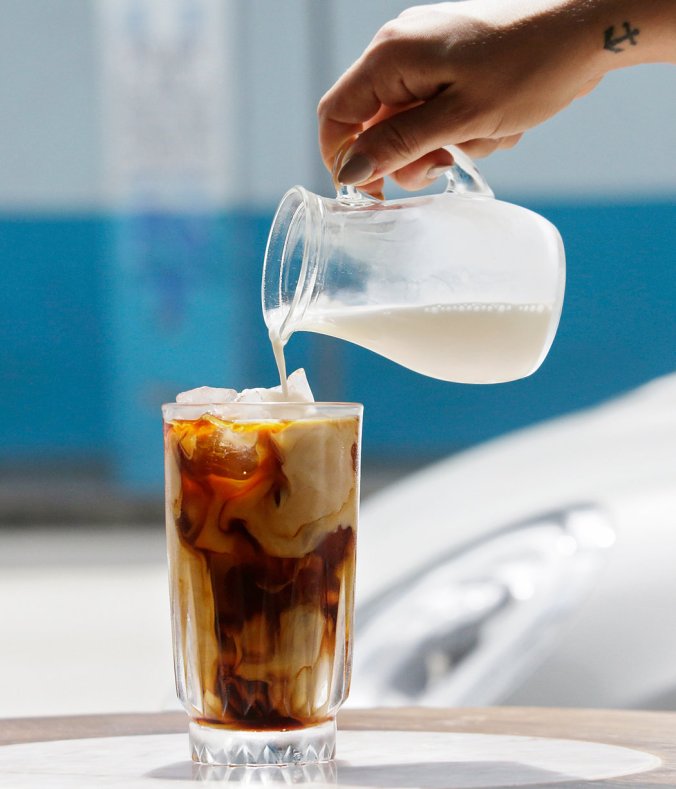
At All Day, a coffee shop in Miami that’s on the must-visit list of coffee fanatics, cold brew is the foundation of the menu. Credit John Van Beekum for The New York Times

Apparently it is iced coffee season up north. It is intern season here at Chan Chich Lodge. Maybe an intersection? Emily, from an agriculture and environmental engineering background, and Alana who is an aspiring sustainable hospitality developer are off to the races, as they say. They were out in the forest yesterday with GPS tools, a GIS mapping app and the assistance of Migde and Hector on the trails, developing a more scientific way of estimating the incidence of Ramon trees in our 30,000 acres.

More on that from them. But more on coffee from me. We have been cultivating an estate coffee unique to Belize, organic and as bird-friendly as you will find. Let’s add cold brew to your list of summer experimentation? Migde and Hector, aka bartender and waiter and therefore defacto coffee baristas, will be setting up the instrumentation in the kitchen.

How Cold Brew Changed the Coffee Business

Continue reading

Remembering Hurricane Earl

JillMagid2

Jill Magid: “Una carta siempre llega a su destino”. Los Archivos Barragán. MUAC, 2017.

Last year when I was first spending extended time at Chan Chich Lodge, I got to experience the reality of what had up to then been a cliche phrase–a force of nature. I had some minor experience with earthquakes, certainly other-worldy, and I have witnessed flooding and historic snowstorms. Nothing had ever exhilarated me for hours on end the way this hurricane did.

And what I chose to do during that experience has stuck with me as much as the hurricane itself. So I had to visit the website of the museum where this exhibit is hosted. And I had to read what happened after the end of that story:

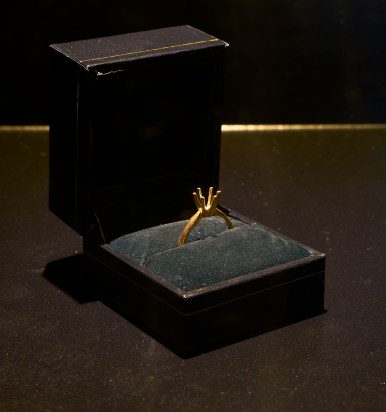
…One premise of Magid’s work is that the ring is not and will never be for sale. It can be accepted only by Zanco and only in exchange for the archive… When addressing claims that she had disrespected Barragán’s legacy, she shook her head. “Not only do I love his work, but the questions around his archive—what is accessible and what is not—affect the way his legacy goes forward,” she said. Continue reading

Historians Do Not Get Mad, They Give Perspective

ian-frazierNormally we clip short excerpts and link to full articles, or whatever it is we think worth sharing from a third party source. The exception is, on rare occasions, with important news that should be read in full at once, such as a public service announcement. Here is one of those, in our estimation. We suggest you read it to the end, now. Ian Frazier, a staff writer at The New Yorker, has avoided the sap, but treads close to the heartwarming notion that folks in a divided, tense situation might be able to listen to one another, with the help of a mission-driven historian:
Patricia Limerick, well-known historian of the American West, gave a talk at the community center in the town of Burns, Oregon, one evening not long ago with her heart slightly in her throat. Limerick belongs to the small category of historians who are occasionally recognized on the street, and she gives talks all the time. What made this one different was that Burns is the county seat of Harney County, home of the Malheur National Wildlife Refuge, the site, last year, of a six-week takeover by armed protesters, who demanded that the federal government return the land—though to whom was not exactly clear. One of the occupiers was killed in the standoff. Limerick knew that her audience, about seventy-five county residents, included both supporters and opponents of the protest. The mood in the room seemed congenial, not tense, but she couldn’t be sure. A local man had told her about a past confrontation between the two sides in which many had likely carried firearms. He said he thought that if someone had dropped a book people might have started shooting. Continue reading

Eat More Sweets

Sax-TheSrirachaArgumentforImmigration-600

When fighting for the rights of immigrants, food just might be an unexpected weapon. PHOTOGRAPH BY ANNA QUAGLIA / ALAMY

Here is an idea I can believe in, not strictly because I like the type of sweets in the photo to the right (akin to those in my home growing up, made by my immigrant mom) but including that; mainly I like the idea of consuming certain items as a proxy for something more important. In a post titled THE SRIRACHA ARGUMENT FOR IMMIGRATION, by David Sax, this proxy is made clear in a concise 5-minute read:

Shout Out To Friends In India

Good chocolate was impossible to come by in our early years in Kerala. So when we see this video we think wistfully about the progress on that front. The same film maker who worked with Amie on the series of shorts we wanted for the various Xandari properties–who we adored working with and whose final product was as good or better than what we had expected–has shared a link with us. It is a client in Kerala who, in a few minutes, has the chance to tell their story visually as well as verbally. We look forward to meeting the folks at Liso next time we are in Kochi.

Sense & Sensibility Off Grid

170313_r29532-600

“Sanditon” is robust, unsparing, and alert to all the latest fashions in human foolishness. Illustration by Rutu Modan

It has been nearly two decades since we adopted and adapted the two words, made meaningful as a study in contrasts and complementary values by a favored novelist, to remind us of what we are out to accomplish.

In recent weeks at Chan Chich Lodge the senses have been stimulated by wildlife sightings. Meditation on and in nature seems to fix, if momentarily, everything.

Apart from those meditations our guests find time to relax in a hammock, reading. Whether on paper (we prefer its off grid feel), or even on modern devices (on which there are some clear advantages) reading is a perfect complement to the day’s action. The quiet contemplation is a perfect counterpart to the nature excursions, so we are pleased to see Jane Austen has more to say than any of us knew:

On March 18, 1817, Jane Austen stopped writing a book. We know the date because she wrote it at the end of the manuscript, in her slanting hand. She had done the same at the beginning of the manuscript, on January 27th of that year. In the seven weeks in between, she had completed eleven chapters and slightly more than nine pages of a twelfth—some twenty-three thousand five hundred words. The final sentence in the manuscript runs as follows: Continue reading

New Life For Paper Maps

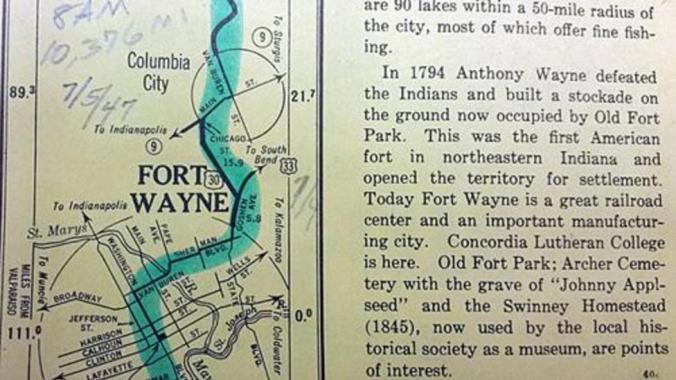
p04b372q

If you are old enough to remember regularly using postal services, as in letters printed on paper, placed in paper envelopes with stamp(s) affixed, then you can appreciate the assumption that paper maps are on their way out just like old fashioned letter-writing and sending. This article on the BBC website catches our attention for a counter-intuitive finding:

Why Paper Road Maps Won’t Die

In an age of Google Maps and GPS, paper maps sales are on the rebound

How did we manage to get from point A to B before GPS and navigation apps — especially when such journeys were long distances? Continue reading

Guilt In The Eye Of The Beholder

00otg-losangeles-master768.jpg

A raspberry dessert at Café Gratitude in Hollywood. Credit Monica Almeida/The New York Times

A few days back I was struck by a post on this site about lab-grown foods, and wanted to continue the thought exercise by sharing a few comments on a brief article I had just read elsewhere on the intersection between performance art and food issues. Two more cents to add here, by way of a few excerpts from this fascinating, if alarming, article:

Eschewing a Vegan Lifestyle at Home, but Still Embracing It at Work

Continue reading

Patrimonial Matrimonial Innovation

10tuscany1-master768.jpg

A fort atop the Italian town of Montalcino. In October, residents there and in neighboring San Giovanni d’Asso will vote on whether to merge the two communities. CreditNadia Shira Cohen for The New York Times

Although we appreciate, even adore, the wines and the fungi referenced in this story, it is worth reading for a look at practical issues facing aging towns that possess world class patrimony:

A Merger of Brunello and Truffles? 2 Tuscan Towns May Be Better Together

By

SAN GIOVANNI D’ASSO, Italy — Two small towns in southeastern Tuscany, one famous for red wine, the other for truffles and organic grain, are considering a municipal marriage of convenience that could blur their cherished identities, separately formed over the centuries.

With a population of just 853, San Giovanni d’Asso can no longer deliver basic services to its citizens on a daily basis. Left with only three town officials to do the work, something as simple as getting an identity card drawn up and stamped requires making an appointment days in advance.

So the town’s mayor, Fabio Braconi, picked up the phone back in 2014 and sought help from a neighbor, Montalcino, 10 miles to the south across rolling wheat fields. Continue reading

When Silence Is Golden

Finland

It is not a principle of branding, per se, that silence is golden; just the opposite normally, since getting the message out is the point, and messages seem defined by noise, however subtle or clever. But Finland, by way of this article in Nautilus, has had me thinking, in the couple days since I read it, about alternative views on the value of silence, on messaging, on branding:

One icy night in March 2010, 100 marketing experts piled into the Sea Horse Restaurant in Helsinki, with the modest goal of making a remote and medium-sized country a world-famous tourist destination. The problem was that Finland was known as a rather quiet country, and since 2008, the Country Brand Delegation had been looking for a national brand that would make some noise.

Over drinks at the Sea Horse, the experts puzzled over the various strengths of their nation. Here was a country with exceptional teachers, an abundance of wild berries and mushrooms, and a vibrant cultural capital the size of Nashville, Tennessee. These things fell a bit short of a compelling national identity. Someone jokingly suggested that nudity could be named a national theme—it would emphasize the honesty of Finns. Someone else, less jokingly, proposed that perhaps quiet wasn’t such a bad thing. That got them thinking. Continue reading

Float

The ocean stirs the imagination and inspires the heart. In its frolicking waves and every grain of sand is a story of the earth. And the beautifully timed crash of the waves whisper about nature’s simple treasures. For the sea and its tales along the land are a continual miracle. – Rosanna Abrachan

The tale we hear is thrilling – of knowledge passed down for generations, of artisanal fishing practices that grace us with sustenance from the Arabian Sea without depleting her waters.

Come sea!

Roots and Anchors

Anybody can welcome you to a destination. Tell you about the must-do and the must-see. Weave you through its facts and fables, seat you through its culinary journey. At Xandari, we welcome you to our people. And the living stories they are. From what’s cooking to an effective cure for colds, good ol’ ways of growing with the land to dreams by the beach, we hear them loud. And, are part of them.

Here’s to our pride. Here’s to our people. Here’s to our family.

Rosanna Abrachan

Community, Collaboration and Conservation are the “3 Cs” that we stand by, and crafting these videos felt like a large family gathering with a smorgasbord of experiences to choose from. Thank you Anoodha and the RAXA Collective –Xandari Pearl teams!

Stay tuned for more!

Fish Fraud Falling

fish-marketThanks to Conservation Magazine for pointing us to this bit of scientific evidence that, while fisheries are on the whole in a dismal state, steps are being taken in Europe to address one of the symptoms:

Over the past few years, dozens of studies have documented a global fish fraud epidemic, in which fish are mislabeled as species they are not. It’s a problem with detrimental environmental, economic, and even potential health effects. Continue reading

Brew-born Time Travel

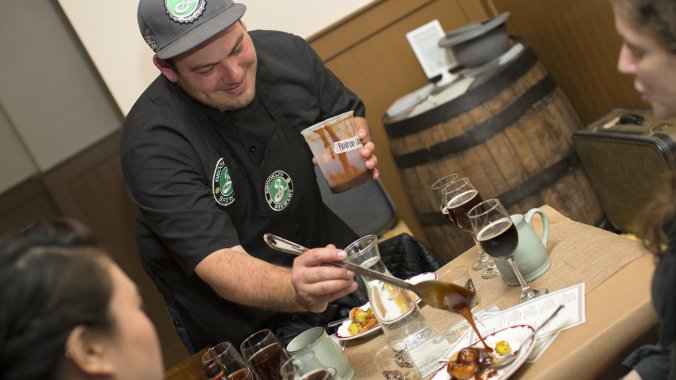
Chef Andrew Gerson of Brooklyn Brewery organized a dinner party featuring ingredients used by Dutch settlers and Native Americans living in 1650s New York City. Courtesy of Brooklyn Brewery

Chef Andrew Gerson of Brooklyn Brewery organized a dinner party featuring ingredients used by Dutch settlers and Native Americans living in 1650s New York City. Courtesy of Brooklyn Brewery

Thanks to the folks at the salt, and National Public Radio (USA) for this one:

Brooklyn Brewery Dares Diners To Eat Like Dutch Settlers

HANSI LO WANG

You can find food from just about any part of the world in New York City.

The Brooklyn Brewery is trying to push New Yorkers’ palates even further by going back in time.

This week, it hosted a dinner party inspired by the local cuisine of Dutch settlers and Native Americans in the 1650s.

Back when New York wasn’t even New York yet, and before the English took over in 1664, the Dutch called the city New Amsterdam.

Continue reading

The Critic As Cold Water Splashed Refreshingly On The Face Of Modernity

Schjeldahl-Bjork-690

Björk is a restlessly experimental (and therefore fallible), tremendous creative force, not a tarnishable brand. CREDIT PHOTOGRAPH BY JONATHAN MUZIKAR


The opening paragraph of this brief review is worth the click, but the point we would like to bring to your attention is what follows. Sometimes an artist’s museum show can be taken down, critically speaking, with the museum bearing the brunt of the shame. And this point is directly linked to the now well-established concern that art in our age is as much a racket as it is an essential embodiment of culture. This reviewer, and his peers quoted in the opening paragraph, remind us of why we depend on critics for the insight that comes with an occupation whose singular focus is to help us decide whether a certain journey is worth making, or not:

…And yet Björk is unscathed. All the critics (now including me) hasten to acknowledge her musical genius and personal charisma. No detour into lousy taste—even at times her own, as in her partnership, lately ended, with the mercilessly pretentious Matthew Barney—can dent her authenticity. Her music videos (an oasis at the show, in a screening room) typically bring out the best in collaborating directors, musicians, designers, costumers (notably the late Alexander McQueen), and technicians. But if she chances to bring out the worst in star-struck curators, so what? Björk is a restlessly experimental (and therefore fallible) tremendous creative force, not a tarnishable brand. Continue reading

Bookstores, Breweries, Bunk

Local Habit, in San Diego, offers a variety of California craft beers. Beer has become as much a part of the San Diego identity as surf and sun. CREDIT PHOTOGRAPH BY EROS HOAGLAND/THE NEW YORK TIMES/REDUX

Local Habit, in San Diego, offers a variety of California craft beers. Beer has become as much a part of the San Diego identity as surf and sun.
CREDIT PHOTOGRAPH BY EROS HOAGLAND/THE NEW YORK TIMES/REDUX

It was already so good at what it did in print, it was easy to wonder what would come next. How to respond to the digital era? The New Yorker‘s transformation has been welcome, and Tim Wu is clearly an awesome part of it, as you may already know:

Consider a few surprising and optimistic facts for the new year: nationwide, independent bookstores have grown by about twenty per cent since 2009; meanwhile, American craft breweries collectively now sell more than 16.1 million barrels of beer annually, outpacing, for the first time, Budweiser. This isn’t the only evidence that small-scale businesses are making a comeback. Over the last ten years, the long-running decline of small farms has levelled out, and more than three billion dollars was spent last year on more than four thousand independent feature films. Over all, since 1990, small businesses (with, generally, fewer than five hundred employees or less than $7.5 million in annual receipts) have added millions of employees, while big businesses have shed millions. Continue reading

Luxury, Heritage, Authenticity And Progress

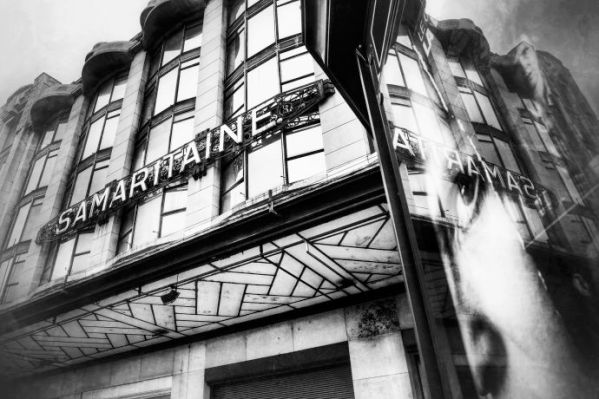
A plan to turn the old Samaritaine department store into a five-star hotel is at the center of a debate about what Paris is becoming. CREDIT PHOTOGRAPH BY DENIS ALLARD / REA / REDUX

A plan to turn the old Samaritaine department store into a five-star hotel is at the center of a debate about what Paris is becoming. CREDIT PHOTOGRAPH BY DENIS ALLARD / REA / REDUX

One of the great essayists of our time on a topic we find hitting very close to home as an organization that recycles usage of places in a manner that generates profit, to support conservation, looking forward while trying to retain the core of authenticity:

The Pont des Arts, in Paris, is a steel-and-wood footbridge that connects Left Bank to Right—or, more important to its history and its name, connects the École des Beaux-Arts, where generations of French artists were told how to draw, to the Louvre, where generations went to find out how to look. It was, until relatively recently, a soulful and solitary passerelle, where one could stand for hours in winter, mostly alone, staring out at the view west toward the older, stone parapet of the Pont Royal and the Eiffel Tower, or east toward Notre-Dame and the sharp-jawed Île de la Cité. The view north, toward the Right Bank, remained, until the end of the twentieth century, interestingly mixed, with the newly cleaned Cour Carrée of the Louvre straight ahead and, just to the right, the shiplike prow of the Samaritaine department store, proudly flying a couple of pennants from its top.

In the past nine years, all that has changed. Continue reading

Joint Ventures In Thanksgiving Cooking

Renee Comet Photography/Restaurant Associates and Smithsonian Institution

Renee Comet Photography/Restaurant Associates and Smithsonian Institution

We had not seen this book when it was first published two years ago, but now will seek it out to authenticate our commemorations for our table mates in distant lands:

The Native American Side Of The Thanksgiving Menu

Everyone knows the schoolhouse version of the first Thanksgiving story: New England pilgrims came together with Native Americans to share a meal after the harvest. The original menu was something of a joint venture, but over the years, a lot of the traditional dishes have lost their native flavor.

For those who want to create a feast that celebrates the flavors that Native Americans brought to the table, Chef Richard Hetzler put together an entire menu of options from his award-winning cookbook,The Mitsitam Cafe Cookbook. The recipes are drawn from the Mitsitam Native Foods Cafe at the Smithsonian National Museum of the American Indian, where Hetzler was lead chef until summer 2014. Since opening the cafe, he told NPR’s Celeste Headlee he observed a growing interest in native cooking.

Continue reading

Origins Of Chocolate In Costa Rica

We had not heard of this series until now, but considering the geographic and foodstuff focus of this current episode, we want to know more, especially considering what we learn in the show’s About section:

Iron Way Films, the creators of Original Fare, has spent the last seven years traversing the globe in search of authentic stories and incredible locations. We’ve explored tropical oceans with musicians & pro-surfers. Road horses through big sky back country with ranch riders. Tasted backyard wine deep in the tiny towns of Provence. We’ve glamped, we’ve camped, we’ve lived on boats and spent far too much time in rental cars.

But we always sought to uncover what makes a place special- and what makes it unique.

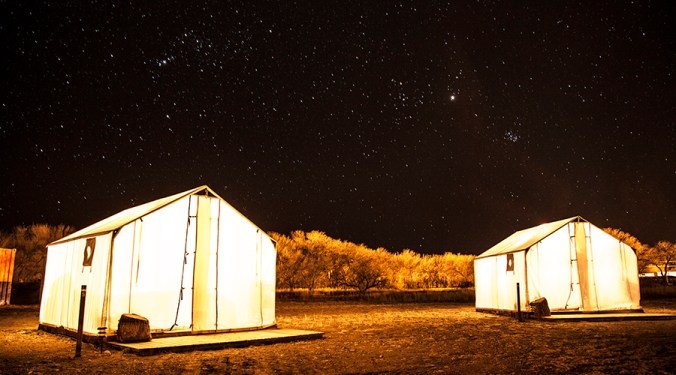
EL-COSMICO-NIGHT-TENT900x5001

Continue reading