Turmeric, Biopiracy & Fighting For What’s Right

Agung Parameswara/Getty Images

During our seven years living in India, plenty of posts on this platform referred to turmeric due to its culinary value. Its value to our wellbeing is a more recent focus of attention, and we appreciate the fight to keep it accessible to all:

How one man fought a patent war over turmeric

Back in the 1990s, Dr. Raghunath Mashelkar was in his office in New Delhi when he came across a puzzling story in the newspaper. Some university scientists in the U.S. had apparently filed a patent for using turmeric to help heal wounds. Continue reading

That’s What We’re Talking About

Screen Shot 2014-11-13 at 2.39.36 AMAmong the surprising things we have learned from India’s Prime Minister in recent months is that he is appointing a new Minister within this enormous, complex democracy, one that intrigues (Reuters story associated with the headline after the jump):

Screen Shot 2014-11-12 at 9.14.59 PMIndia gets minister for yoga and traditional medicine

BY ADITYA KALRA

Interesting that when we click through to the Department’s website we find that it has a long history predating the Prime Minister (the position, the appointment and the Department are all news to us, but we are not clear on why Reuters and other news agencies suggest that the Prime Minister has created  this new government agency):

Welcome to AYUSH

Department of Indian Systems of Medicine and Homoeopathy (ISM&H) was created in March,1995 and re-named as Department of Ayurveda, Yoga & Naturopathy, Unani, Siddha and Homoeopathy (AYUSH) in November, 2003 with a view to providing focused attention to development of Education & Research in Ayurveda, Yoga & Naturopathy, Unani, Siddha and Homoeopathy systems. The Department continued to lay emphasis on upgradation of AYUSH educational standards, quality control and standardization of drugs, improving the availability of medicinal plant material, research and development and awareness generation about the efficacy of the systems domestically and internationally. Continue reading

Notes from the Garden: The Gift of Cardamom

10304348_10201573979311117_9159413022094666722_n

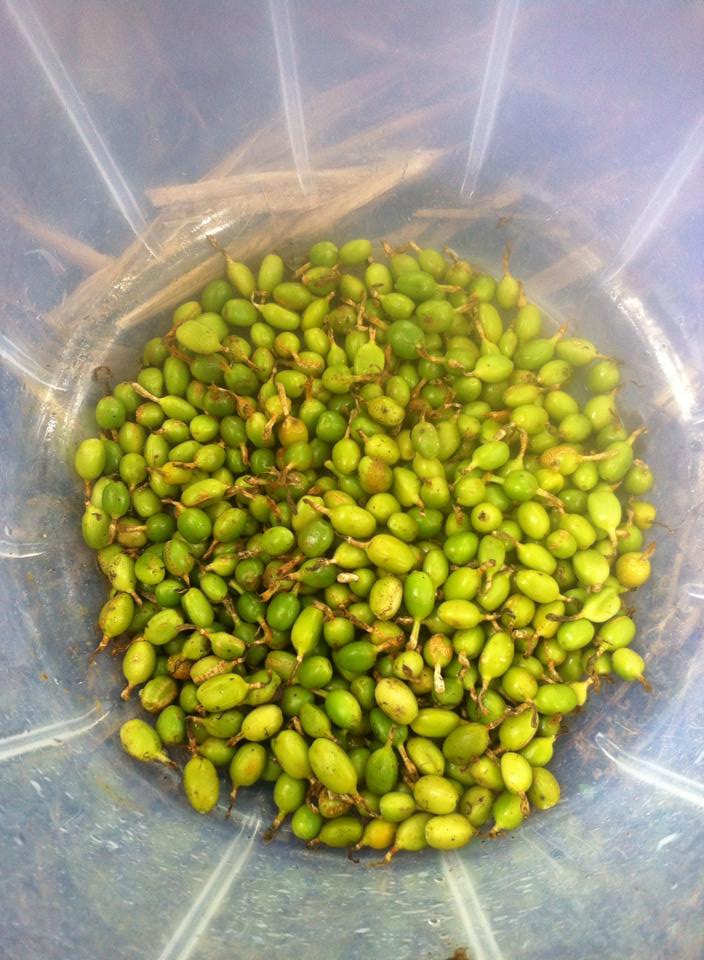
Today’s task in the garden was to harvest the ever-abundant cardamom in Cardamom County.

This is a task that cannot be completed by machines, so even in commercial fields, it must be handpicked. That is because figuring out which ones are ripe requires tuned fingers.

It was a bit of a learning curve for me at first because I thought I was supposed to be looking for which ones were the darkest, but then I learned otherwise.

I was looking for the ones that fell off easily into my hand from tugging slightly. When ripe, the small seed pods on the inside are dark colored.

10501720_10201573978111087_4542956712817123894_n

We may be most familiar with this sweet spice in masala chai tea, but it has many uses.

To do a little research, I asked the Ayurvedic doctor here if he could enlighten me on some of the traditional medicine uses of cardamom. He said that it is good for throat and lung troubles, skin problems such as acne, and digestive issues.

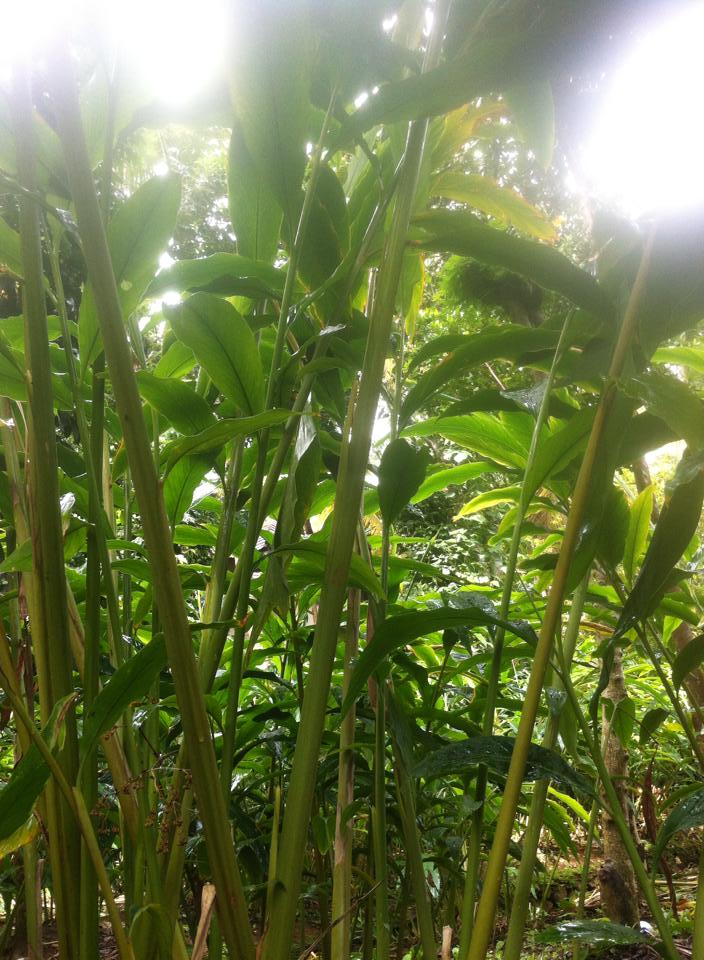
The type of cardamom we have here is the Malabar variety and it is native to Kerala. The green leaves are pretty tall- probably about 5 feet on average. The pods are on short vines that cluster at the bottom of the tall leaves.

When we were harvesting them, it started  Continue reading

Indian Licorice – Abrus precatorius

Photo credits : Shymon

Photo credits: Shymon

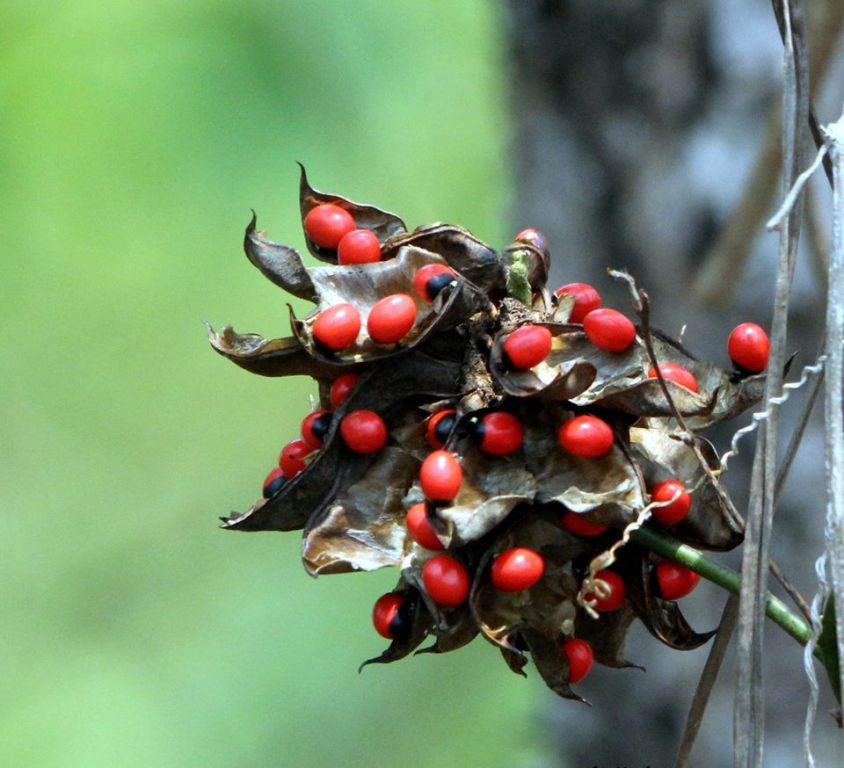
Indian Licorice (Abrus precatorius) is a native of India and the tropical and sub-tropical areas of the Western Ghats. Despite its name, Indian Licorice is not closely related to the licorice (Glycyrrhiza glabra) that lends its flavor to candies, beverages, and other foods. The seeds are bright red and black in color and highly poisonous. Continue reading

Banyan Trees

Photo credits : Renjith

Photo credits: Renjith

The national tree of India, the Banyan is one of the most magical and mystical of trees. In Indian culture the Banyan tree is considered to be sacred and leaves of the tree are considered to be the resting place of Lord Krishna. It is also believed that Buddha achieved enlightenment while sitting under a Banyan tree. Continue reading

Al Fresco Ayurveda

Uruli

Brass Uruli

At Cardamom County we make every effort to ensure the uniqueness of our guests’ experience. One way is to invite them to watch our Ayura staff along with Dr. Pameela, our in-house Ayurvedic doctor, prepare the traditional herbal oils used in Ayurvedic massage. They first harvested the special herbs in our gardens. The herbs are then soaked in water overnight to extract a concentrate that by morning turns into a rich concoction called kashaya. This mixture is then brought to a boil in a large brass vessel called an uruli. Continue reading

Wild Flowers: “Touch-Me -Not” (Mimosa pudica)

Mimosa pudica

Mimosa pudica

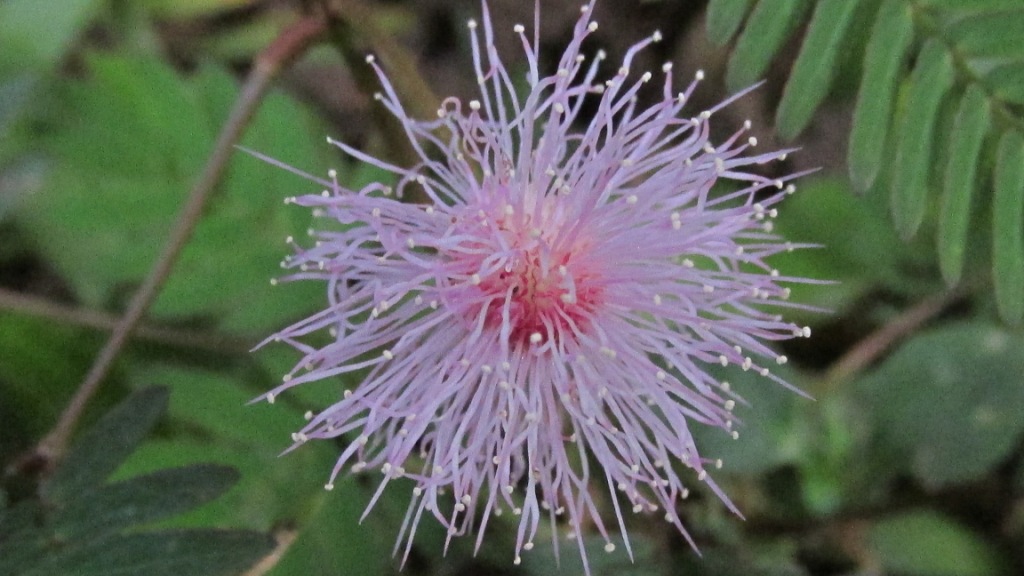
“Touch-me-not” is a low growing prickly shrub with very sensitive compound leaves that close together and droop down when touched. The genus name is derived from Greek mimos, which means mimic and pudica, which means shy, referring to the sensitive leaves. Continue reading

Greater Cat Ears – Wild Flowers

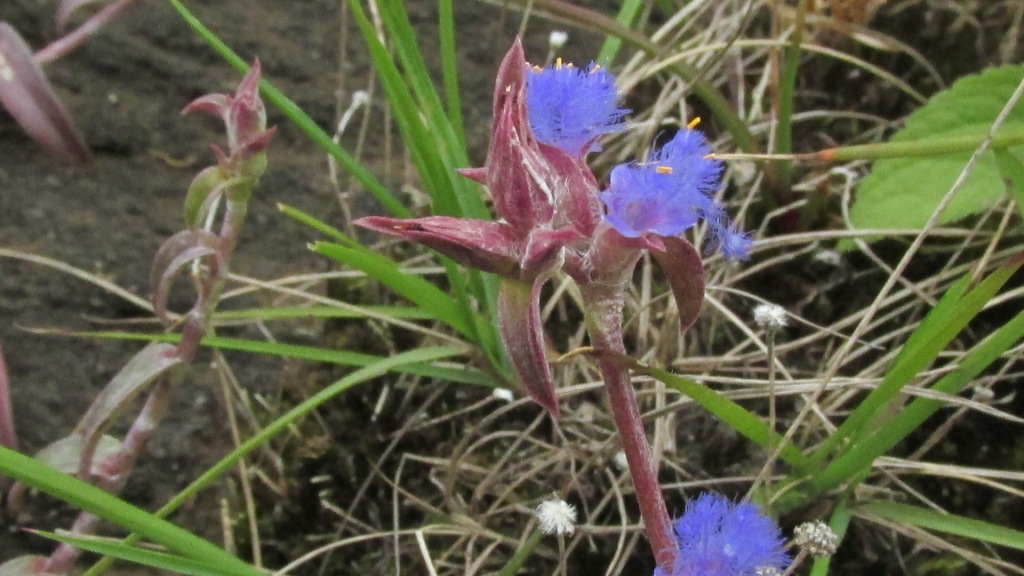
Cyanotis tuberosa

Cyanotis tuberosa

Native of peninsular India and Sri Lanka,this stocky succulent herb is seen among the rocks in gravelly and sandy soil growing up to 1200 meters. The plants blooms during September, October and November. Continue reading

Marma Chikitsa – Ayurveda Treatment

Photo credit : Ranjith

Photo credits: Ranjith

Ayurveda is science of life. Although Ayurveda is practised all over India, Kerala is perhaps the only state where this science of medicine still follows age-old traditional laws. Marma Points are positions on the body where flesh, veins, tendons, bones and joints meet. Oil therapy is an important Marma Chikitsa, where warm Medicated oils are used in specific Marma points. Continue reading

Nandyarvattam Plant

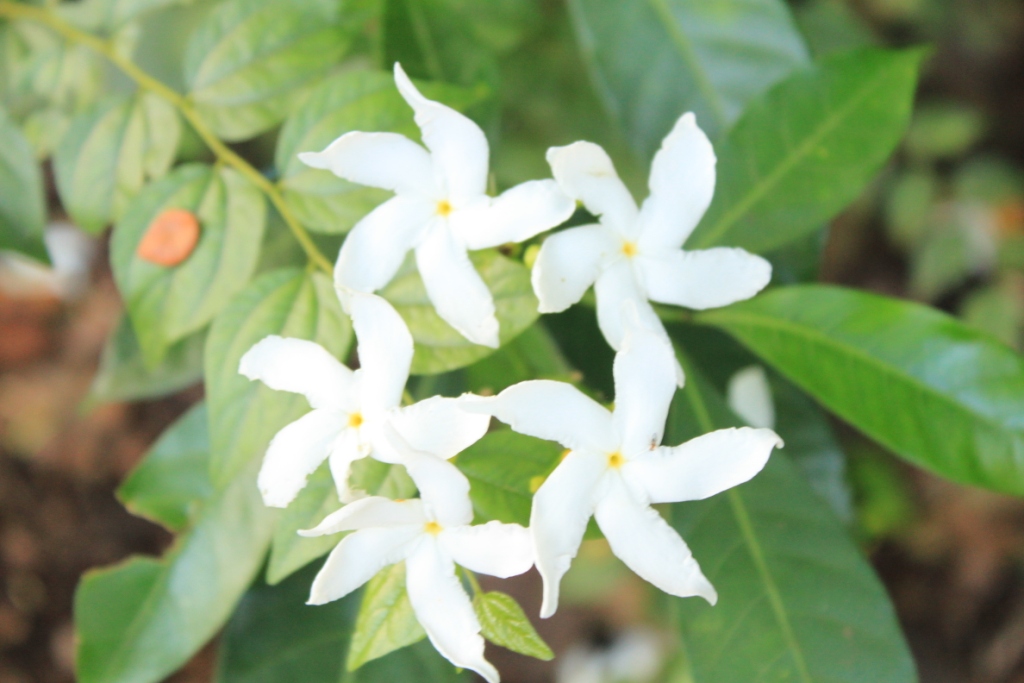
Tabernaemonta divaricata

Tabernaemonta divaricata

Nandyarvattam, also known as Crape Jasmine or East Indian Rosebay,  is an evergreen shrub is commonly found in Kerala. It can grow up to 5 to 6 feet and blooms throughout the year. Continue reading

Common Rattle Pod Flower- Crotalaria retusa

Common Rattle Pod plants are frequently found along river banks and fields as well as in the hills up to 1200 meters. The flowers are showy and large, and favored by carpenter bees. Continue reading

Incredible India!

As countries go, India is just about as varied as they come. With a history of people coming here to either lose themselves or find themselves, it’s simultaneously colorful, soulful and gritty.

This offering by the Indian tourism board will take your breath away!

Red Bead Tree Seed – Adenanthera pavonina

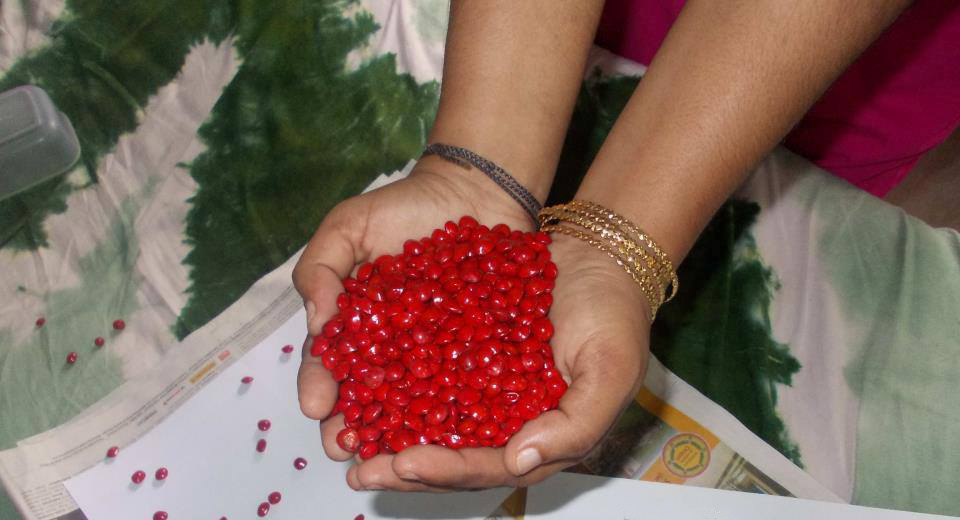
Adenanthera pavonina seeds

Adenanthera pavonina seeds

Red bead seeds have been a symbol of love for centuries. Asian goldsmiths use these bright red seeds for making jewelry as well as a standard for weighting precious metals and diamonds. Continue reading

Kizhi – Ayurvedic Treatment

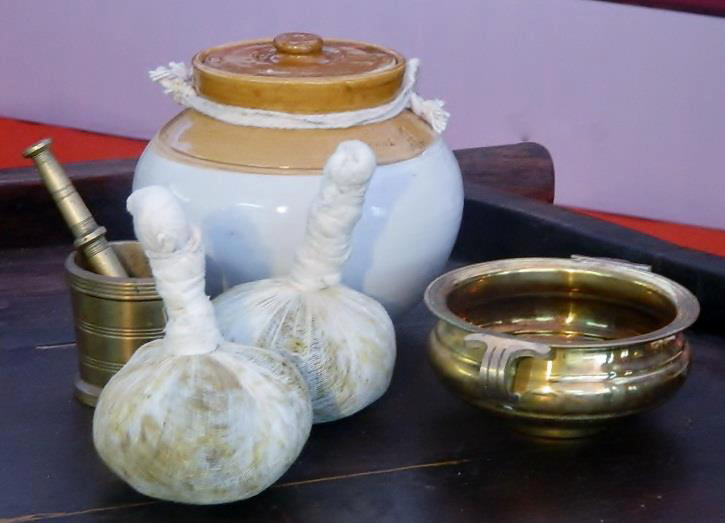
Kizhi

Kizhi

Ayurveda is the science of life. Mythology says that this science of healing originated in the cosmic consciousness of Brahma – The Creator. Kizhi Treatment is a therapy where heated herbs and medicinal oil is tied in cloths and used as a bolus on the effected body part. Continue reading

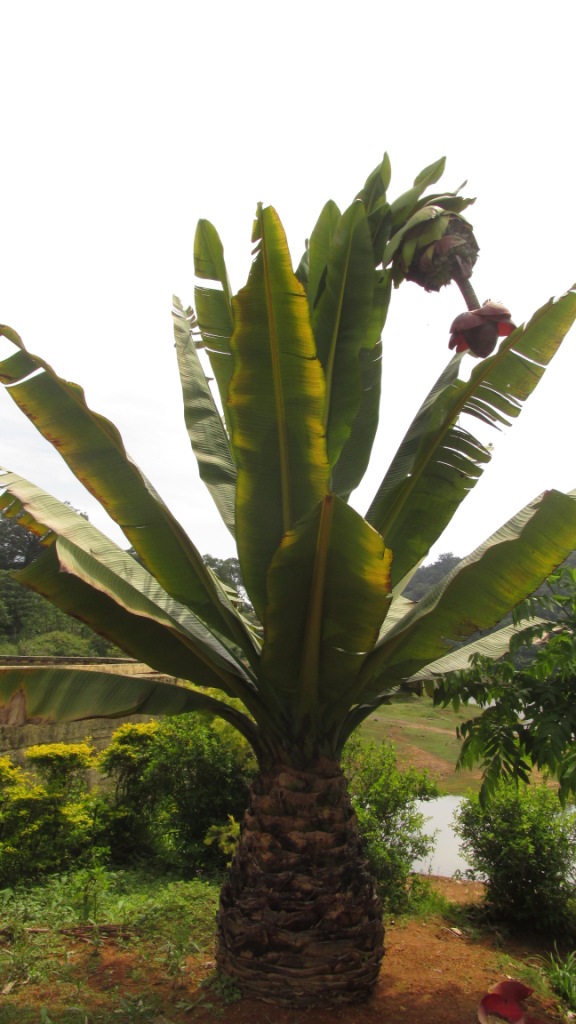
Western Hill Banana – Ensete superbum

The Western Hill Banana is a large succulent herb that naturally grows in the rocky slopes and cliffs of South India’s Western Ghats. These plants are commonly growing in the forests above 1000 meters. The fruits of this plant is used in many traditional medicines. Continue reading

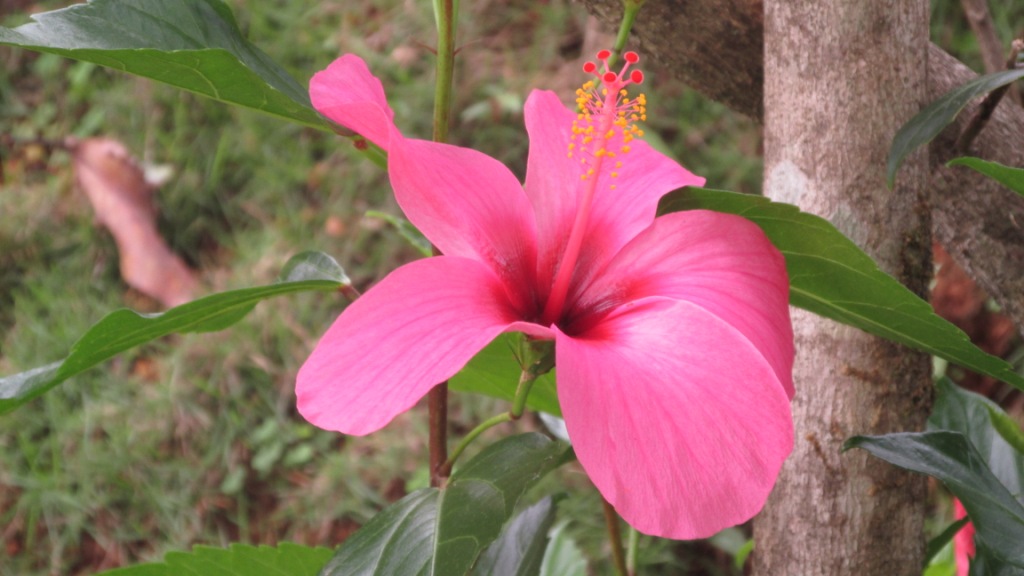
Hibiscus Flower

Hibiscus flowers are very common in the Hill Ranges of Kerala. There are multiple hybrids in a wide range of colors such as white, red, orange and pink. Hibiscus plants are also used in Ayurveda medicines. Continue reading

Ayurveda in Kerala: getting back in shape

Ayurveda, India’s traditional medicine is a major presence in healthcare in Kerala. My colleague Lissi has ten years of experience practicing ayurvedic massage. She started her training at an ayurvedic hospital before enrolling at an ayurvedic institute. There, she pursued her apprenticeship while practicing at the hospital. Continue reading

Simple health tips to travel in Kerala from our Ayurvedic doctor

The first aid kit I packed to come here in Kerala is the size of a small shoebox. Except for mosquito repellent and cold cream I have yet to use it, and although I should be relieved, I am annoyed. It’s the heaviest part of my luggage and I’ll probably carry it all back home ! A lot of this medication treats tummy-aches and Kerala has a strong system of traditional medicine, Ayurveda, that handles those issues well and without the long tail of potential side effects.

“You were right to take precautions, when traveling you never know where you’re going to land and what you’re going to find.  Kerala is rich in water sources and is not at risk for Malaria. But you may want to travel to other parts of India which are less fortunate in those regards.” Dr Sulficker reminded me. Dr Pameela Sulficker is the Ayurvedic doctor here at Cardamom County, she introduces travelers to ayurveda at the Ayura Wellness Center. Continue reading

Betel Leaf – Pan Leaf (Piper betle)

Betel is the leaf of a climbing vine that belongs to the Piperaceae family. A member of the same family as black pepper, they both require a support tree to grow. The plant has many traditional medicinal uses; in Kerala people use the betel leaf to treat headaches, arthritis and joint pain, in China and Thailand the root of the plant is used for toothache. Continue reading

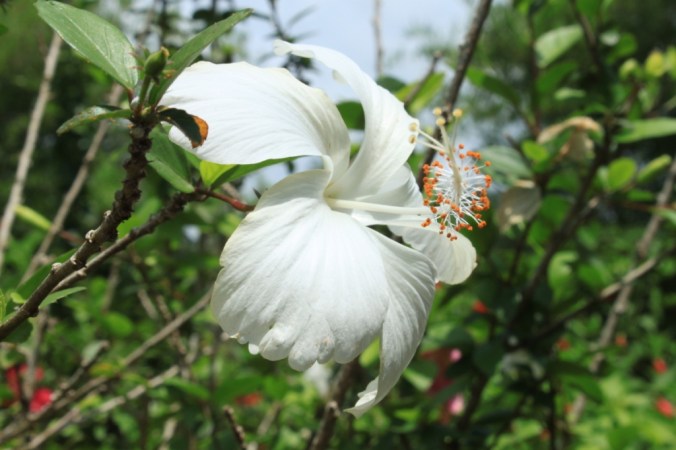
White Hibiscus

White Hibiscus is an ornamental flower commonly growing in the hill ranges of Kerala. In Ayurveda medicine white hibiscus root is used for cough and hair growth. The flower and leaf is also used as shampoo and conditioner.