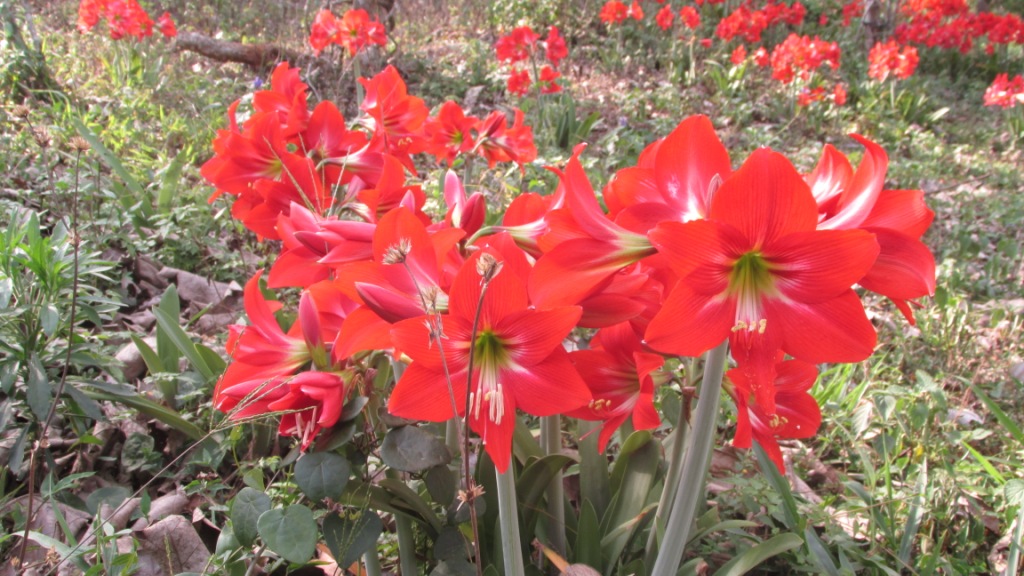
The Red Trumpet Lily is an ornamental flower commonly seen in the hill stations of Kerala that are above 800 meters. These plants bloom during the summer with group of flowers in each branch. Continue reading
The Red Trumpet Lily is an ornamental flower commonly seen in the hill stations of Kerala that are above 800 meters. These plants bloom during the summer with group of flowers in each branch. Continue reading

Photography by Robert Polidori. BLUE HEAVEN | Built in the 15th century by Rao Jodha, the walls of the fortress of Mehrangarh are 70 feet thick. Many of the houses of Jodhpur are painted blue to deflect the sunlight, and, according to folklore to repel insects.
The Wall Street Journal carries a feature that is quite our cup of tea:
EACH SPRING, Maharaja Gaj Singh II hosts a Sufi music festival inside his family’s vast desert fort in the Indian city of Jodhpur. From a distance, this monumental sandstone fortress, called Mehrangarh, looms over the city’s chalky blue buildings, evoking the country’s ancient and otherworldly history. And yet people fly in from across the globe because the festival—and the maharaja who hosts it—blends old India so deftly with new. Continue reading

Photo credits: R Ranjith
Kathakali is known for its heavy, elaborate makeup and costumes.In fact, the makeup is so intricate and the costumes so huge and heavy that it looks as though the artist is wearing a mask. The makeup is based on a certain set of colors each of which is used to represent a particular character. Only natural dyes are used on the face and the process will take hours. Continue reading
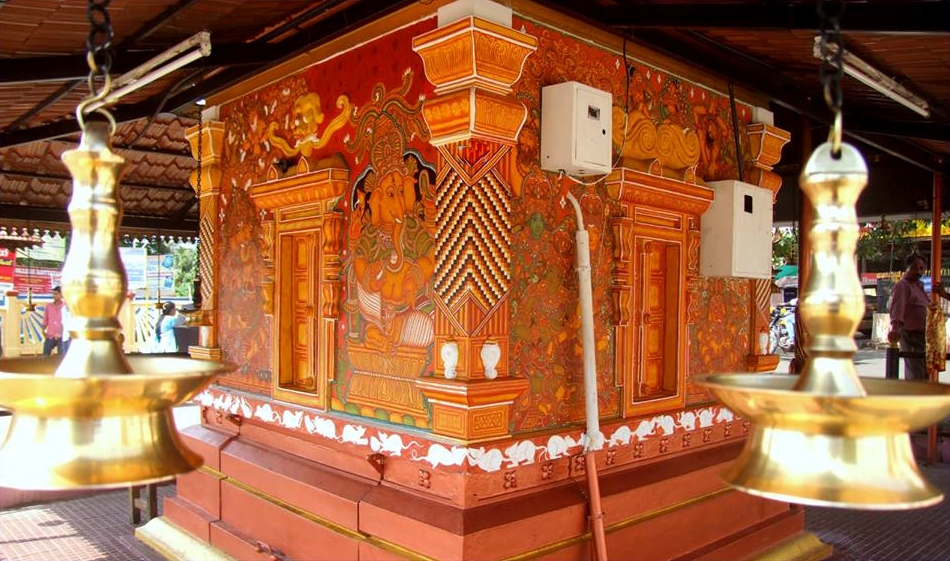
Photo Credits: Ramesh Kidangoor
The city of Kottayam is referred to as both the “land of literacy” due to its numerous institutions of higher eduction, as well as the “land of Latex” due to its rubber plantations. The Indian government has just added the moniker of “land of the mural paintings”. Continue reading
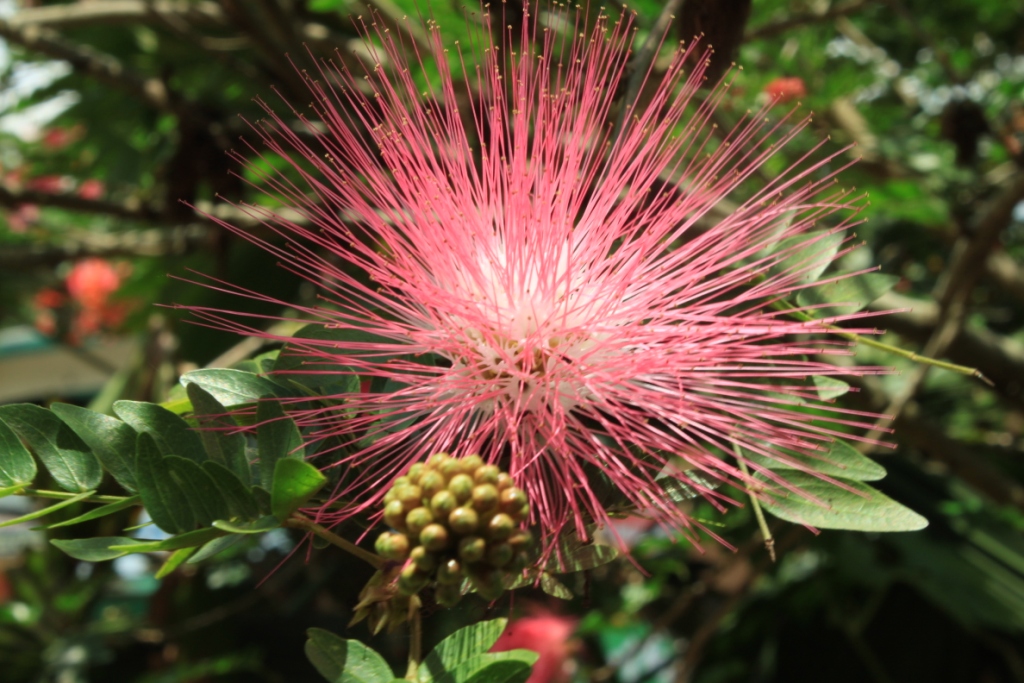
Native to the tropical and sub-tropical regions of India and West Africa, the Calliandra haematocephala is a fast growing evergreen plant that can reach the height of 15 ft. The stamens of the flower are smooth and soft, spreading out in an arching circle, giving rise to the common name Powder Puff Tree.
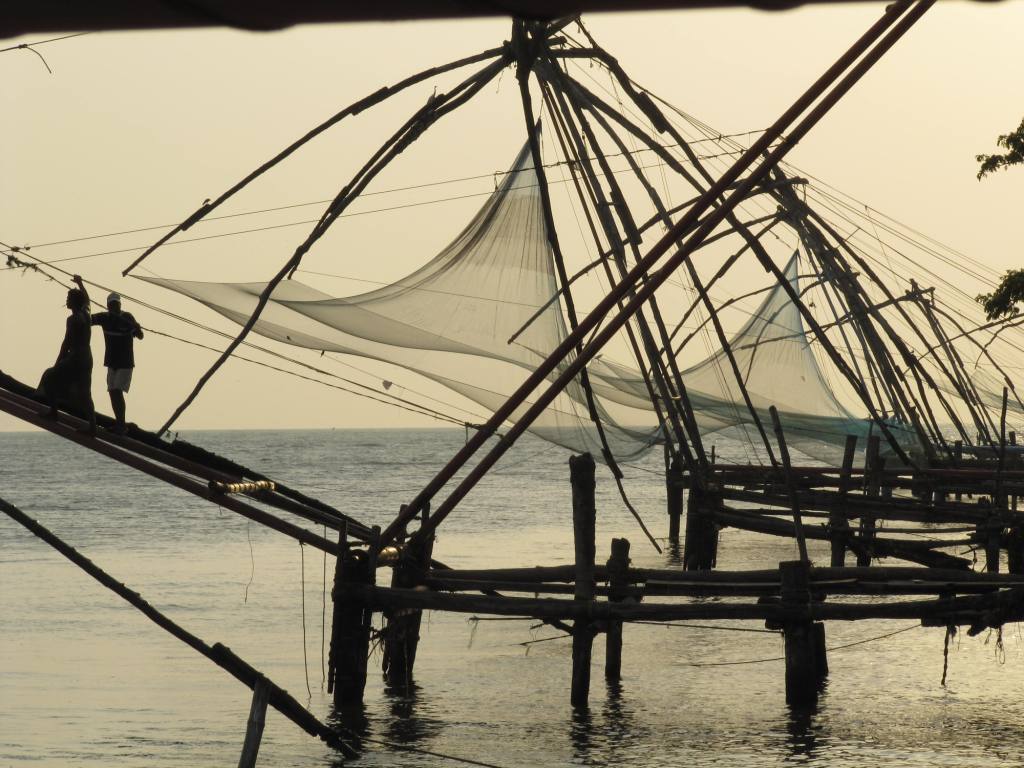
The Chinese Fishing Net is one of the tourist attractions in Kerala that is a living fishing method in use for the last 650 years. Locally it is known as Cheenavala. By origin it was introduced by the Chinese explorer Zheng He. Continue reading
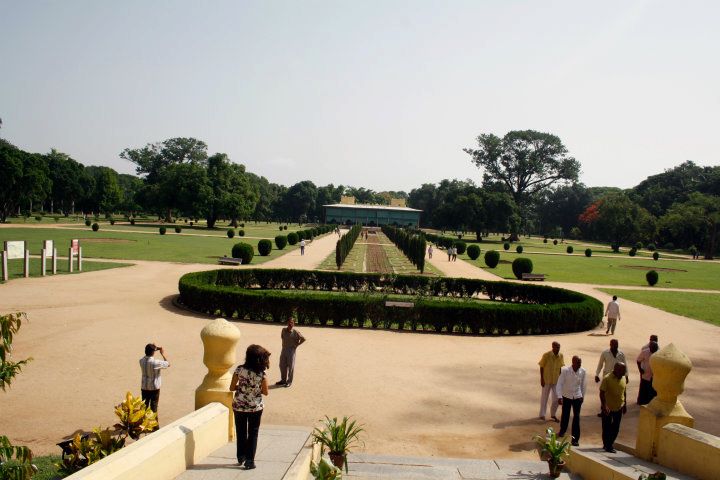
Photo Credits: Dileep Kumar
Known as the “Tiger of Mysore”, Tipu Sulthan was the ruler of the Mysore Kingdom from 1782 to 1799. The construction of the summer residence was started by his father Hyder Ali. Built with French rosewood and adorned with pillars, this beautiful palace is surrounded by ornamental trees and a beautiful garden.
Continue reading
To make a beautiful “uruli”, a traditional Kerala bowl filled with water and flowers, you need a keen eye. Picking the right flowers, drying them if it rained, placing them artfully, it is a craft. Continue reading
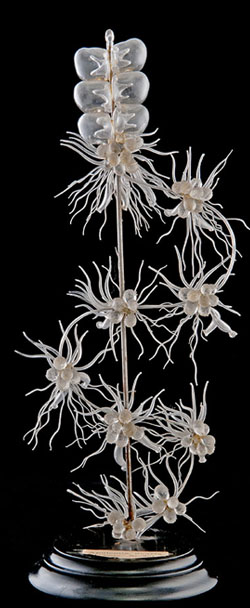 An article in today’s New York Times by C. Drew Harvell profiles the Blaschkas, glassmakers who were commissioned to create anatomically perfect sculptures of marine creatures for scientific purposes starting in the late 1800s, and current efforts to find living specimens of the same. From the introduction to one of the original collections, at Cornell University:
Before Jacques Cousteau and the aqualung, before Kodachrome and underwater photography – there were the Blaschkas, father and son glassworkers who produced some of the most extraordinary glass objects that have ever been made. Their work has been described as “an artistic marvel in the field of science and a scientific marvel in the field of art.”
Artifacts inevitably reflect the cultural values leading to their creation. In 19th century Europe and America, an explosion of interest in science and education directly affected Leopold and Rudolf Blaschka. Reflecting these interests, new museums were built and opened to the public. They differed from earlier museums not only by admitting the public but also by featuring collections that illustrated science and natural history and often displayed systematic arrangements of plants and animals.
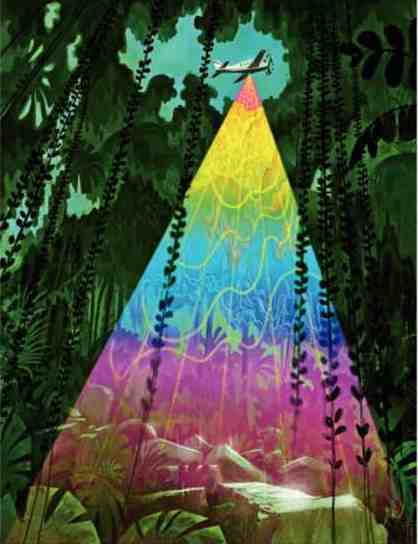
Another great article (click the image to the left to go to the source), complementing this recent one from the New Yorker, about one special location within the region several members of Raxa Collective have called home for most of the last two decades:
The rain forests of Mosquitia, which span more than thirty-two thousand square miles of Honduras and Nicaragua, are among the densest and most inhospitable in the world. “It’s mountainous,” Chris Begley, an archeologist and expert on Honduras, told me recently. “There’s white water. There are jumping vipers, coral snakes, fer-de-lance, stinging plants, and biting insects. And then there are the illnesses—malaria, dengue fever, leishmaniasis, Chagas’.” Nevertheless, for nearly a century, archeologists and adventurers have plunged into the region, in search of the ruins of an ancient city, built of white stone, called la Ciudad Blanca, the White City. Continue reading

Thekkady Flower Show
The 7th Annual Thekkady Flower Show took place from 9th to 15th of April 2013. Although the numerous flowers on display were the main attractions tourists could also enjoy and learn about local cuisines, traditional art forms, classical dances and tribal medicines. Continue reading
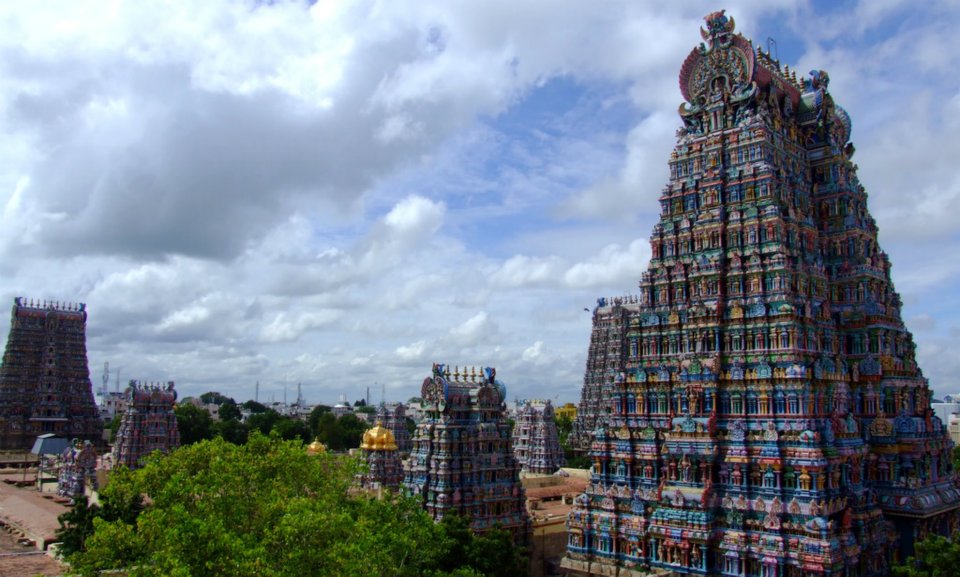
Photo credits: Ramesh Kidangoor
Located on the banks of the Vaigai River, Madurai is the oldest city in Tamil Nadu with an historical legacy over 2500 years old. The famous Meenakshi Temple dominates the city, which evolved around it. The architecture is purely Dravidian but there is an amalgam of many styles dictated by many dynasties as the temple changed hands many times. Continue reading
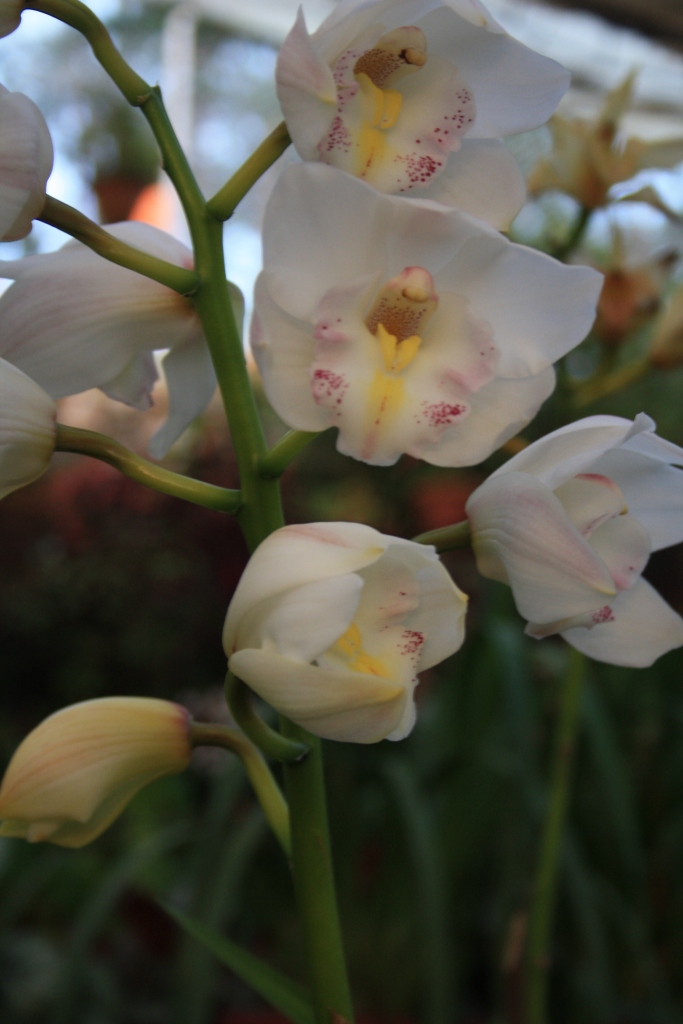
Feather Hill flowers are hybrid orchids in the Cymbidium family. Up to 15-25 butterfly-shaped white flowers adorned with light pink spots hang gently on the strong stems. Cymbidiums grow widely in Kerala’s Western Ghats above 1500 meters. Continue reading

Photo Credits: Ramesh Kidangoor
Aihole was the capital of the Chalukyan Kings, who between the 4th and 6th century A.D began experimenting with the idea of constructing temples with stone blocks. Aihole has over 125 temples, all intricately carved and rich in detail. Durga temple has a semicircular apse and a sanctum, encircled by a richly carved colonnaded passageway. Durga temple is roofed in the usual flat Early Western Chalukyan manner. The niches in the circumambulatory passage around the sanctum are filled with statues; notable among them are splendid images of Durga and Shiva. Continue reading

Photo Credits: Ramesh Kidangoor
Kailasanatha temple is the largest and most important of the temples built by Rajasimha, the last king of the first Pandyan empire. Dating from the 7th century, this is one of the oldest temples in Kanchipuram and is a rare example of the Dravidian style. A wall of fifty-eight small shrines further encloses the main shrine. Continue reading
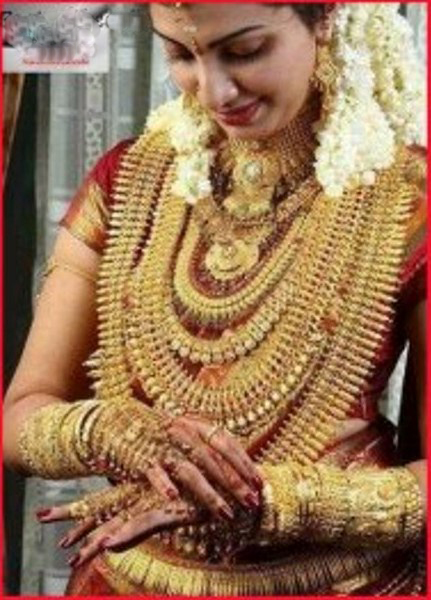
Photo credits: Best Of Kerala
Throughout history the people of Kerala have had a special affinity for gold ornaments compared to people in other parts of India. Keralites love gold and the state is noted for a variety of gold designs made by traditional goldsmiths. Due to the influences of modern-day fashions the current trends are quite different. Continue reading

Cycle 2, Version 3 by Sopheap Pich, 2008. Photo credit (c) The Metropolitan Museum of Art.
For the next several months, The Metropolitan Museum of Art (aka The Met) has quite a few great special exhibits open that I would recommend seeing. My two favorites from a visit to The Met last week are titled “Cambodian Rattan: The Sculptures of Sopheap Pich” and “Birds in the Art of Japan,” both on the second floor in the Asian Art section.
In the first exhibit, Pich uses wire, bamboo, rattan, and a couple other materials to craft beautiful abstract or representational sculptures, which are presented, as you can see in the picture on the left, with great lighting to create superb shadows around the piece. Pich and his assistants had to boil the rattan and bamboo cane in diesel oil to remove insect eggs, prevent fungal damage, and preserve the cane from discoloration.
We have mentioned this fellow more than once, and we have an ongoing thing for libraries (thank you Toronto Public Library for making this possible, and may you do the right things in order to live forever!). Now we must mention the journalist who conducts this “interview” by asking few questions, brilliantly, and then brilliantly getting out of the way and letting his interviewee speak. And speak he does. If you have a better definition of art, operatic or otherwise, please let us know. This is worth every minute, so wait until you have time to watch it from beginning to end.
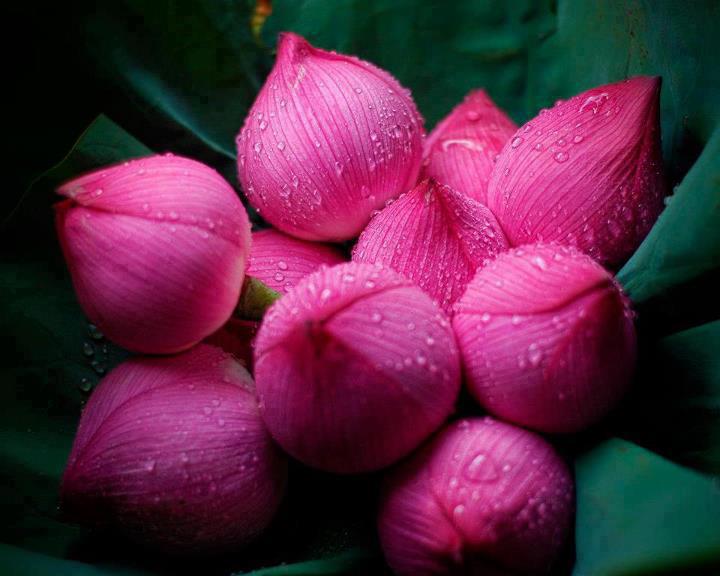
Photo Credits: Ramesh Kidangoor
Lotus, the national flower of India, symbolizes beauty, majesty, spirituality, purity, wealth, serenity and knowledge. It is an aquatic plant that belongs to the Nelumbonaceae species with broad floating leaves and bright aromatic flowers that grows in shallow waters. Its seeds, leaves, flowers and roots are all edible and used in a variety of medicines. Lotus is also a sacred flower for Hindus and Buddhists. Continue reading

Photo credits: M N Shaji
Situated south of Palakkad Gap in an area once famed for its luscious oranges, Nelliyampathi is now blanketed in tea, coffee and cardamom plantations. The region was once owned by the Maharajas of Kollengode and Kochi and is now a part of the Nenmara Forest Division. It’s close proximity to the Parambikulam, Anamalai and Peechi-Vazhana wildlife sanctuaries add to its appeal. Continue reading
 Organikos