Biophilia Revisited

This slideshow requires JavaScript.

 Biophilia, the word, came to our attention several years ago, but the concept has been part of our personal ethos for decades. We’re particularly invigorated by the multi-faceted (pun not actually intended) way the word can be applied to so many concentrations, from the scientific, to the literary, to the artistic, to the spiritual.

The work of American artist Christopher Marley attracts on numerous levels. His new book inspires on the design front. For more images and information to pique the interest read McKenna Stayner’s piece in the New Yorker here.

About the book

Christopher Marley’s art expresses his passionate engagement with the beautiful forms of nature. Beginning with insects and moving on to aquatic life, reptiles, birds, plants, and minerals, Marley has used his skills as a designer, conservator, taxidermist, and environmentally responsible collector to make images and mosaics that produce strong, positive emotional responses in viewers. Marley has a brilliant eye for color and pattern in different natural objects, and he expertly captures the deep relationships among them. Biophilia (literally, “love of living things”) is a must-have for nature lovers, designers, artists, craftspeople, and anyone looking for visual inspiration in the arts.
Continue reading

Thanks Ed, This One Is For Our Go-To Marine Ecosystem Colleague

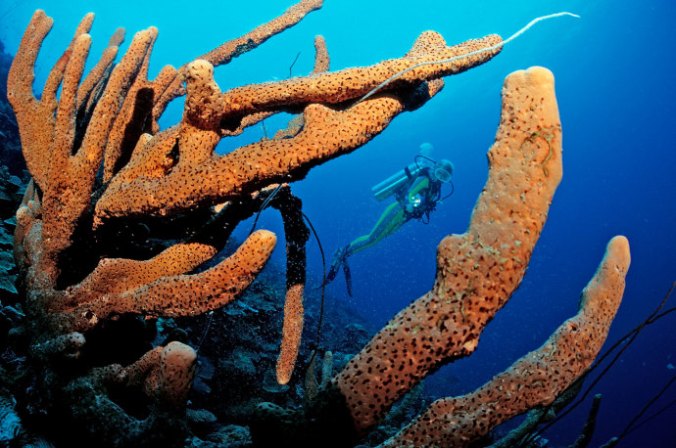
By ignoring sponges, we blind ourselves to a wondrous hidden biology and get a misleading view of evolution. CREDIT PHOTOGRAPH BY REINHARD DIRSCHERL/ULLSTEIN BILD VIA GETTY

By ignoring sponges, we blind ourselves to a wondrous hidden biology and get a misleading view of evolution. CREDIT PHOTOGRAPH BY REINHARD DIRSCHERL/ULLSTEIN BILD VIA GETTY

In the words of the FM disc jockeys of our youth, we send this one out to Phil:

In the final exams for our undergraduate zoology degrees, my fellow-majors and I were given an assortment of petri dishes, each of them containing an animal. Our task was to classify the creatures to the phylum level. Now, more than a decade later, I can conjure up only two of the test dishes. The first contained a dead cockroach (phylum: Arthropoda). The other contained a rock in a thin layer of water, with a green, slimy film on one of its faces. Midway through the allotted time, the invigilator observed aloud that many of us seemed to be trying to classify the rock. It was, he assured us, a rock. The unspoken corollary: we should perhaps focus instead on the slime. Continue reading

Prosek, Eels, Conservation

Screen Shot 2015-04-24 at 4.54.32 AM

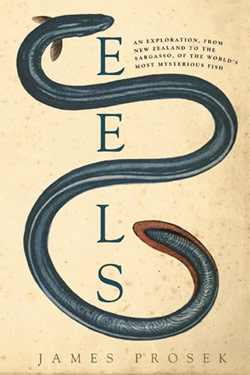
When we invited James Prosek to Kerala it was in part due to his artistic sensibility with eels, and a year after that invitation we gave that peculiar but enchanting sensibility more attention.  But by then we had already noticed his bird work at the Cornell Lab of Ornithology, which Seth had watched as it went up, and his family went to inspect at the time of his graduation from Cornell. And so while Prosek has a long history with aquatic conservation Raxa Collective had a new view of Prosek that gravitated to his work with birds.

We are now glad to be reminded of his aquatic passions, in a blog post about conservation by Silvia Killingsworth, the managing editor of The New Yorker, where Prosek features as one of several consulted experts on the fate of the “lowly” eel, which turns out to be much more fascinating than expected (do read the post from start to finish for both conservation and foodie reasons):

book_eels-lg…Both the Japanese and European species have been listed as endangered by the International Union for the Conservation of Nature.

And yet, according to James Prosek, an artist, naturalist, and the author of the book “Eels,” the American eel will never be listed under the Endangered Species Act. The E.S.A, Prosek told me last week, “works well for creatures that could go down to a population of six hundred, and eels will never get down to that. Maybe a million, and that won’t be enough to sustain collective consciousness”—it won’t sound bad enough to make the public care. Continue reading

Green, Cause And Effect, Explained

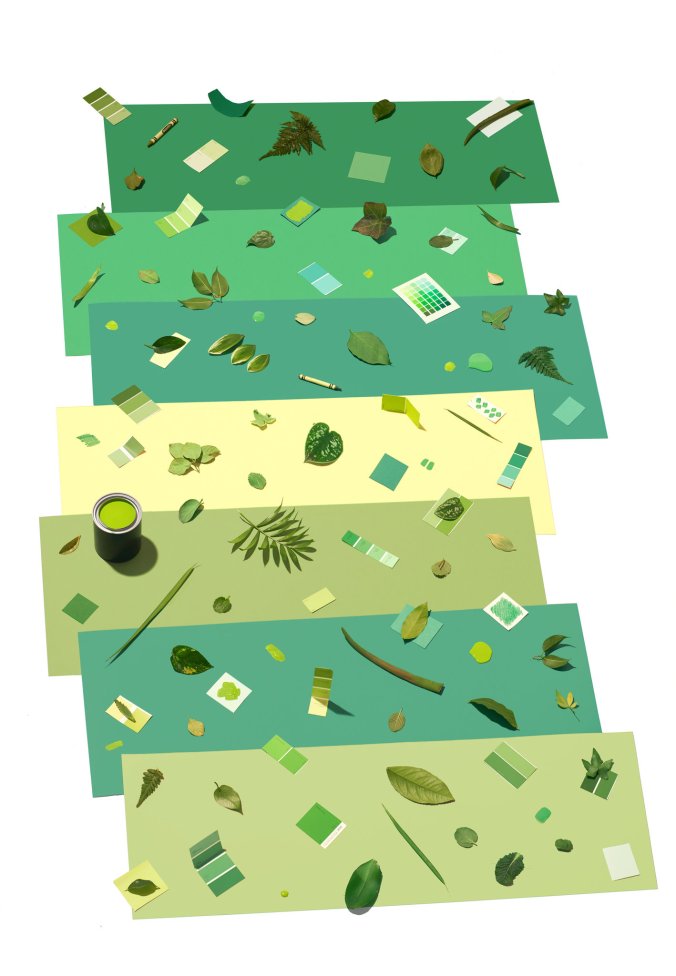
Photo Illustration by Andrew B. Myers for The New York Times

Photo Illustration by Andrew B. Myers for The New York Times

Considering she is one of our favorite science writers, it has been a while; just over a year in fact, since we last we read of her, at which time she was in one of our favorite locations. The wait was worth it, because this article helps us understand why we reference green so often in these pages:

…Goethe praised green as the “soothing” marriage of the chromatic opposites yellow and blue. George Washington called green “grateful to the eye,” and painted his Mount Vernon dining room a brilliant verdigris. And let’s not forget that everybody’s favorite elephant, Babar, wore a dapper suit in a “becoming shade of green.” Continue reading

In The Name Of Chocolate

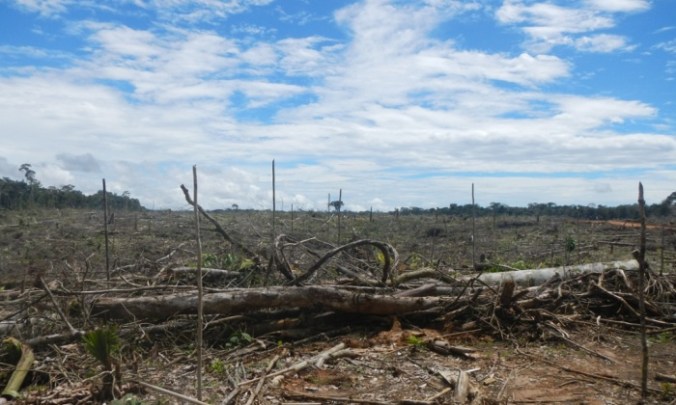
The Tamshiyacu plantation in northern Peru where it is alleged a United Cacao subsidiary illegally cleared primary rainforest. Photograph: Environmental Investigation Agency

The Tamshiyacu plantation in northern Peru where it is alleged a United Cacao subsidiary illegally cleared primary rainforest. Photograph: Environmental Investigation Agency

Thanks to the Guardian‘s renewed environmental reporting efforts for this investigative delicacy:

Can Peru stop ‘ethical chocolate’ from destroying the Amazon?

NGOs allege illegal deforestation of primary rainforest to plant cacao and oil palm

David Hill

Cattle-ranching, logging, mining, highways, hydroelectric dam projects, oil and gas, soy, oil palm. . . These are what first come to mind to many people when thinking about how the Amazon is being destroyed, but what about chocolate too?

NGO Environmental Investigation Agency (EIA) released a report on 7 April mainly about monoculture oil palm plantations, which it describes as a “major new threat to Peruvian forests.” The report, Deforestation by Definition, focuses on the Romero Group, Peru’s “largest economic actor”, and what it calls the “Melka Group”, a network of 25 companies recently established in Peru and controlled by businessman Dennis Melka, a major player in the destructive oil palm industry in Malaysia.

According to EIA, two “Melka Group” companies have illegally deforested an estimated “nearly 7,000 hectares” of mainly primary rainforest in Peru over the last three years, and others have acquired at least 456 “rural properties” and requested the government set aside another 96,192 hectares.

Continue reading

48 Hours Of Rainforest Fate

Nikki Burch

Nikki Burch

We have read this in both its original home, and here on vox, and commend it as much as we recommend it:

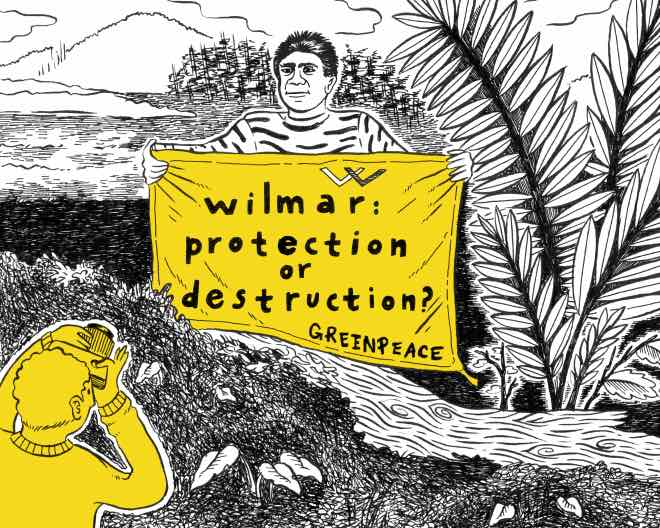
Glenn Hurowitz sat down for his Thanksgiving meal discouraged. He’d spent 2013 flying halfway around the world to cultivate a fragile relationship with Kuok Khoon Hong, CEO of the world’s largest palm oil corporation, Wilmar. Kuok was the linchpin, Hurowitz believed — a single person who might turn the entire palm oil industry around. Wilmar buys palm oil from 80 percent of the world’s suppliers. If Kuok committed to buying only from farmers who promised not to cut down the rainforest, it would set off a chain reaction that might save hundreds of species from extinction and squelch one of the world’s biggest sources of carbon emissions. But after months of progress, the signals he’d been getting from Kuok were not encouraging. Continue reading

Eye-Popping Understanding Of Palm Oil

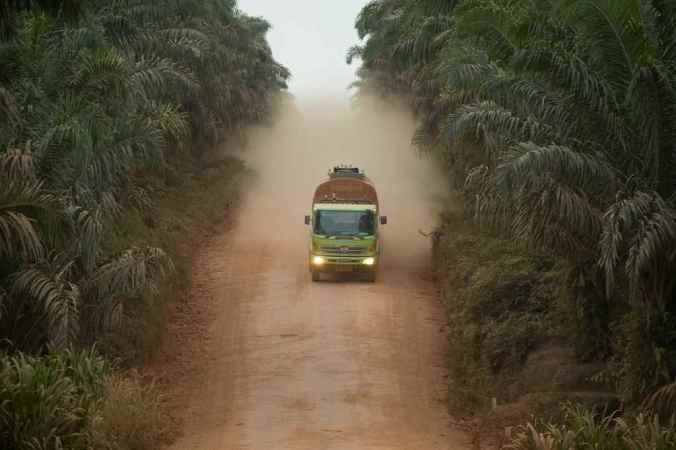
A Cargill-run palm plantation in Borneo in 2009. Image: ​David Gilbert/RAN

A Cargill-run palm plantation in Borneo in 2009. Image: ​David Gilbert/RAN

Every now and then we of non-technical education read an article written by and for a technical audience, and kind of get it, and feel the stretch is worth the effort. Raxa Collective works in locations where palm oil is grown, and recently has scouted locations in Borneo that make this article both eye-opening and eye-popping:

THE BUILDING BLOCKS OF EVERYTHING

The Race for Sustainable Palm Oil

WRITTEN BY ALEX SCOTT FOR CHEMICAL & ENGINEERING NEWS

Palm oil is a wonderfully versatile and cheap raw material. On its own or via chemical derivatives, the oil makes its way into many packaged foods and into household products ranging from fine cosmetics to heavy-duty detergents.

Some 63 million metric tons of palm oil is harvested annually from tropical plantations, 87 percent of it coming from Malaysia and Indonesia. Palm oil is derived from the flesh and kernel of the fruit of oil palms. Demand for the oil is set to exceed 70 million metric tons by the middle of the next decade.

But palm oil’s large-scale use has environmental costs. In Southeast Asia, it is the leading driver of deforestation. Indonesia has the third-largest area of contiguous tropical forest in the world, but according to a 2007 United Nations Environme​nt Programme report, 98 percent of the country’s natural rainforest will be destroyed by 2022 unless strict conservation measures are implemented. Continue reading

Environmentalism, Puritanism and a Binocular View

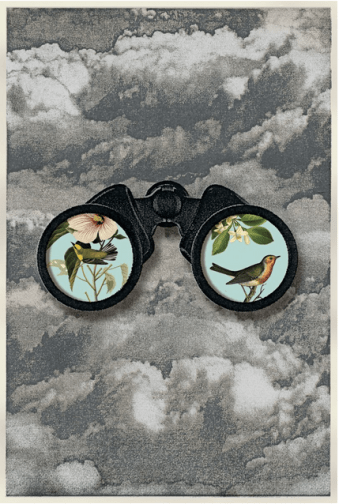
To slow global warming, we could blight every landscape with biofuel crops and wind turbines. But what about wildlife today? CREDIT ILLUSTRATION BY OLIVER MUNDAY

Jonathan Franzen, a writer who we have chosen to link to numerous times mainly because he is also clearly a bird guy, has a small masterpiece in this week’s New Yorker. Please, read it:

Last September, as someone who cares more about birds than the next man, I was following the story of the new stadium that the Twin Cities are building for their football Vikings. The stadium’s glass walls were expected to kill thousands of birds every year, and local bird-lovers had asked its sponsors to use a specially patterned glass to reduce collisions; the glass would have raised the stadium’s cost by one tenth of one per cent, and the sponsors had balked. Around the same time, the National Audubon Society issued a press release declaring climate change “the greatest threat” to American birds and warning that “nearly half ” of North America’s bird species were at risk of losing their habitats by 2080. Audubon’s announcement was credulously retransmitted by national and local media, including the Minneapolis Star Tribune, whose blogger on bird-related subjects, Jim Williams, drew the inevitable inference: Why argue about stadium glass when the real threat to birds was climate change? In comparison, Williams said, a few thousand bird deaths would be “nothing.” Continue reading

To The Forest, Once Again

Screen Shot 2015-03-28 at 7.05.16 AM

Oliver Sacks, this week, shares a very brief, but powerful reverie that also brings our attention to the man above and the book below.  All seem worthy of your time:

Driving down Ninth Avenue, choking on diesel fumes from a truck just ahead of us, I say to my friend Billy (he is exactly two-thirds my age), “I wonder whether you will see the end of internal-combustion engines, the end of oil, a cleaner world.”

Screen Shot 2015-03-28 at 7.14.40 AMA cleaner world. The thought zooms me away from Ninth Avenue to a forest world—in particular, to the one described in “That Glorious Forest,” Sir Ghillean Prance’s book about his thirty-nine visits to the Amazon in the past fifty years. Prance, one of our greatest tropical botanists, is very much in the tradition of Henry Walter Bates and Alfred Russel Wallace and Richard Spruce, who charted the region in the eighteen-fifties. But Prance’s is not just a botanical eye: he sees what we are doing to the Amazon and its many peoples; he speaks for conservation Continue reading

A Tiger’s Tail

This slideshow requires JavaScript.

If you want to get a different perspective and a unique image, you have to be very attentive and keep your camera / lens / eyes focused on your subject.

This is Sonam, one of the Tigresses of Tadoba who had made a kill near a waterbody and likes to come down to the water to cool herself.

Her typical behaviour was to sit in the water for long time and finally get back to her kill.

Continue reading

Recognizing the Gift of the Galapagos

157

“We’ve all been given a gift, the gift of life. What we do with our lives is our gift back.”

-Edo, Sacred Economics

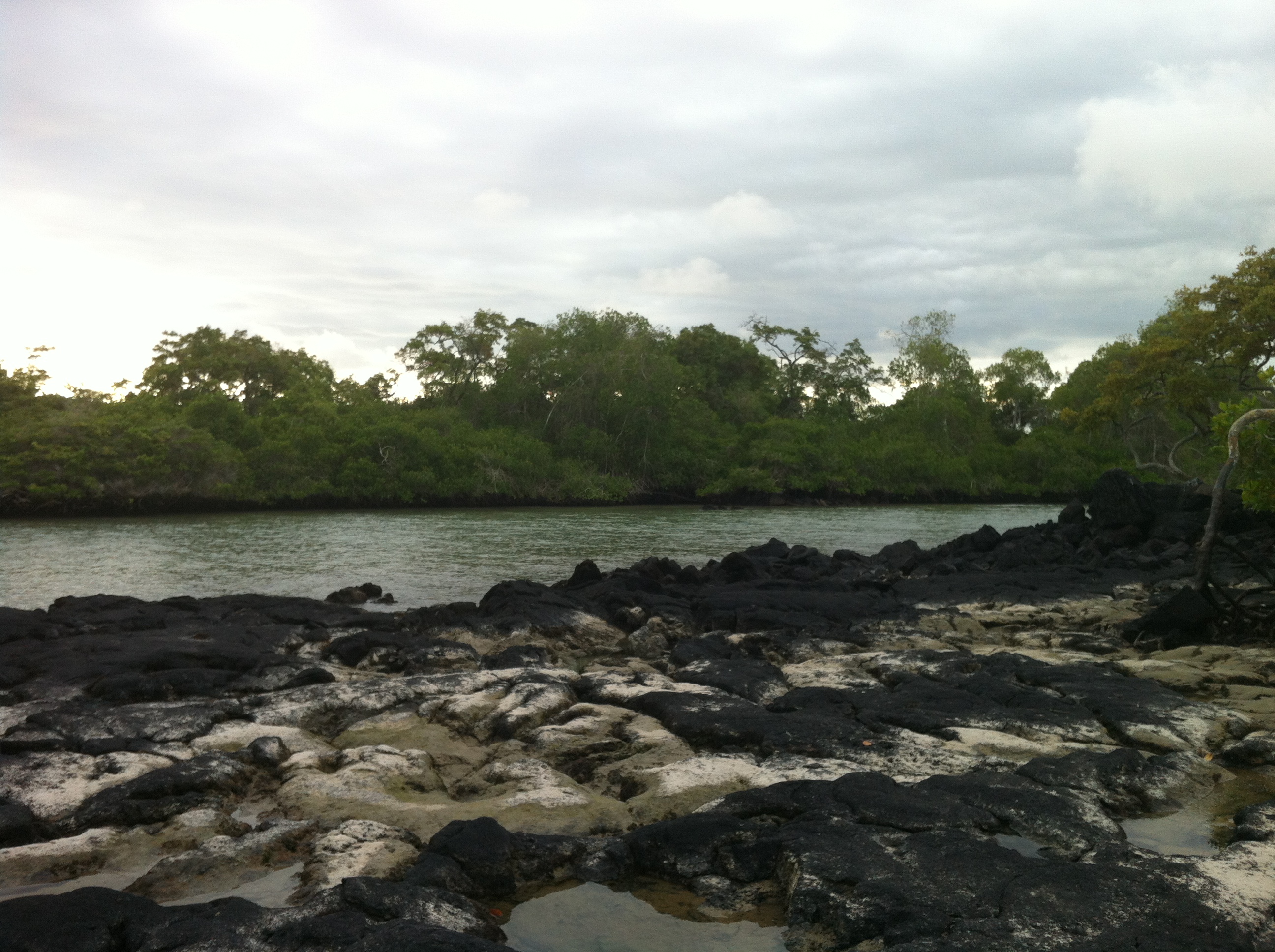
Being in the Galapagos was such a gift.

I remember reading a list in the newspaper when I was 14- something like “Top 10 Places to Visit Around the World”, and the Galapagos was on it with descriptions of black rocks and blue-footed boobies and I remember thinking how can I lead a life that takes me to places like that? The Galapagos Islands are a sacred mecca of biodiversity that most people will never have the privilege to see and I feel uncomfortable that I went without having to make any particular effort: I just chose a college and a study abroad program and voilà! my dreams came true. I feel immense gratitude for this. More importantly I feel a sense of obligation. I have an obligation to respond to this gift wisely and with intention in the way I conduct my life.

The sense of obligation is interesting to me because currently I’ve been reading about gift economies in my Economic Anthropology class. There is a concept called hau from the New Zealand Maori that tries to explain the sense of obligation to reciprocate when given a gift. From Wilk and Cligget’s book Economies and Cultures:

Hau is a term for the force of the identity of the owner of an object, which is attached to the object. Thus, upon giving the object away, part of the owner’s hau goes with it. And this is why receiving the gift always carries an obligation to reciprocate, because the hau wants to return to its original owner, though now it may be attached to another’s object.

In class, we’ve been talking about when things are separated from their origin, their story, the people who made it, there is some kind of erasure of the hau that represents the giver and we don’t feel compelled to respond in kind. Continue reading

Another Reason To Flock to Ranganathittu Bird Sanctuary

It’s not surprising that for the 3rd year running India has been among the top 3 participating countries in the Audobon Society’s Great Backyard Bird Count. According to GBBC statistics, India nearly doubled the number of checklists submitted to more than 6,800 and reported the greatest number of species with 717.

Many of those lists have come from the south Indian states of Karnataka and Kerala, so we’re excited to help promote this additional forum for Celebrating Birds.

Karnataka’s first Bird Festival aims to put focus on birds and bird watching in Karnataka. To provide a platform for well-known naturalists, experts, forest officers, bird photographers to share their insights & thoughts. This festival also focusses on putting bird conservation on the center-stage and raise the attention of nature enthusiasts and general public towards the significance of birds and the important role they play in the ecosystem.

Continue reading

If You Happen To Be In Ithaca: But You Don’t Have To Be

One of the many reasons we highlight the Cornell Lab of Ornithology on the pages of this site is the vastness of their offerings to both students and the general community (actual and virtual) sharing current studies in the field of ornithology. Continue reading

Largest Marine Reserve, 2015 Edition

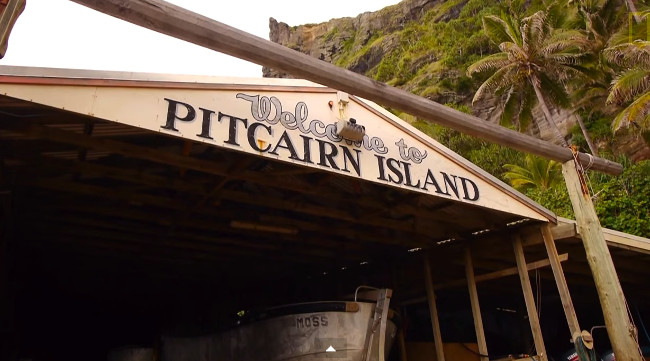
Pitcairn’s residents implored the UK government to protect the area, which is threatened by illegal fishing.

Pitcairn’s residents implored the UK government to protect the area, which is threatened by illegal fishing.

We hope they keep getting formed in larger and larger swaths of territory, and we will celebrate every time the ante gets upped this way:

British Prime Minister David Cameron’s government announced the creation of the world’s largest contiguous ocean reserve on Wednesday, protecting 322,000 square miles around the remote Pitcairn Islands in the South Pacific. To put that in perspective, that’s three and a half times the size of the United Kingdom and bigger than the state of California, according to National Geographic. Continue reading

Progress, Destruction & Roads

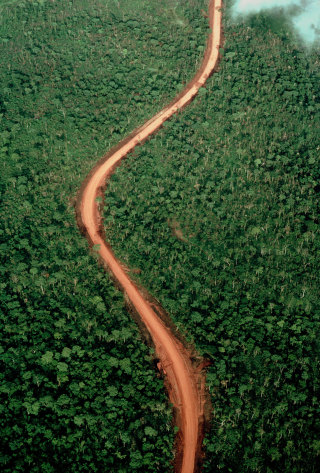
Nijhuis-Habitat-Fragmentation-320

A new study looks at the worldwide effects of habitat fragmentation. CREDIT PHOTOGRAPH BY GEORG GERSTER / PANOS

From the Elements section of the New Yorker’s website, this note on roads, a clear symbol (and tangible form) of what most of us would count as progress, related to development, is worth a two minute read. Another reminder that roads, like other signs of progress, can also have unintended and irreversible destructive consequences for nature, for habitat that also sustains human life:

The first paved highway across the Brazilian Amazon began, in the nineteen-seventies, as a narrow, hard-won cut through dense rainforest. The road, which connects the northern port city of Belém with the country’s capital, Brasília, twelve hundred miles away, was hailed as a huge step in the region’s development, and so it was: it quickly spawned a network of smaller roads and new towns, drawing industry to the Brazilian interior. But the ecological price was high. Today, much of the Belém-Brasília highway is flanked by cattle pastures—a swath of deforestation some two hundred and fifty miles wide, stretching from horizon to horizon. Across the planet, road construction has similarly destroyed or splintered natural habitats. In equatorial Africa’s Congo Basin, logging roads have attracted a new wave of elephant poachers; in Siberia, road expansion has caused an outbreak of wildfires; in Suriname, roads invite illegal gold mining; and in Finland, so many reindeer are killed by cars that herders have considered marking the animals with reflective paint. Continue reading

Old Primate, New Name

Captive lesula from the DRC. Photograph: Maurice Emetshu/AFP/Getty Images

Captive lesula from the DRC. Photograph: Maurice Emetshu/AFP/Getty Images

Thanks to the Guardian for this article on the discovery that there is a primate that had not yet been named:

It all started with Georgette’s pet monkey. Deep in the Democratic Republic of Congo (DRC) rainforest, in the remote village of Opala, a team of researchers noticed a little girl with a strange-looking monkey on a leash in 2007. The girl, Georgette, told the scientists it was called ‘lesula,’ but no one had heard of it nor did the animal look like anything found in the DRC. They snapped a photo. Continue reading

Green turtle links Costa Rica’s Cocos Island with Ecuador’s Galapagos

Sanjay

Sanjay the green sea turtle is equipped with satellite tags before being released into the ocean. (Courtesy of PRETOMA)

To this day, scientists have tracked three different turtles that have traveled between two of the most fragile and important island ecosystems: The Galapagos Islands in Ecuador and The Cocos Island in Costa Rica. We are just starting to understand the importance of these breeding grounds and their interconnectivity with turtle migration and reproduction.

One normal migration for turtles, one giant discovery for humankind.

With his 14-day journey from the waters of Costa Rica’s Cocos Island National Park to the Galapagos Marine Reserve in Ecuador, “Sanjay,” an endangered green sea turtle, established the first direct migration link between the two protected areas.

Sanjay was one of three green sea turtles tagged by scientists from the marine conservation groups Turtle Island Restoration Network and PRETOMA during a 10-day research expedition. Using a $4,000 satellite tag, biologists from the organizations were able to map Sanjay’s exact migration.

“It’s truly remarkable. Sanjay knew where he was headed, Continue reading

Coral Manipulation

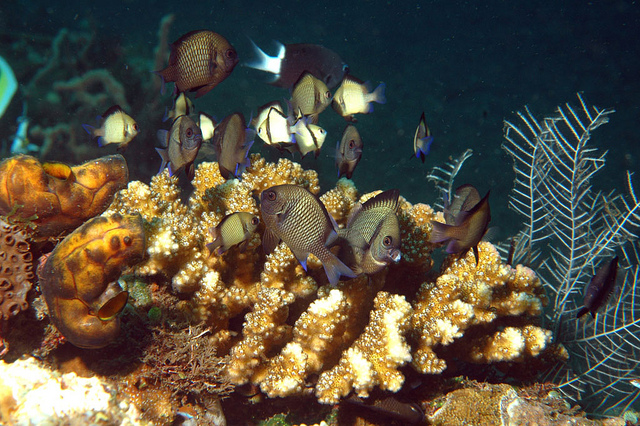
Coral garden in Indonesia. Credit: Global Environment Facility via Flickr (Creative Commons License)

Coral garden in Indonesia. Credit: Global Environment Facility via Flickr (Creative Commons License)

We’re keeping an eye on the health of coral reefs in the Caribbean with the help of RAXA contributor Phil Karp, who has been writing specifically about the impact of invasive lionfish on the marine ecosystem.  In this piece for Conservation Magazine, Sarah DeWeerdt discusses the option of taking a more active role in improving the health of corals through acclimatization:

The past several decades have been tough on the world’s coral reefs. Warming waters, ocean acidification, invasive predators, and toxic runoff have hammered these iconic hotspots of underwater biodiversity.

In response, conservationists have developed coral ‘gardens’ where young corals are reared to help rebuild damaged reefs. But some scientists worry that existing restoration strategies won’t match the pace and magnitude of the threats these animals face.

In a paper published February 2 in the Proceedings of the National Academy of Sciences, biologists from the Australian Institute of Marine Science and the Hawaii Institute of Marine biology propose a more radical approach, which they call assisted evolution.

Continue reading

Better Buying, Canned Tuna Edition

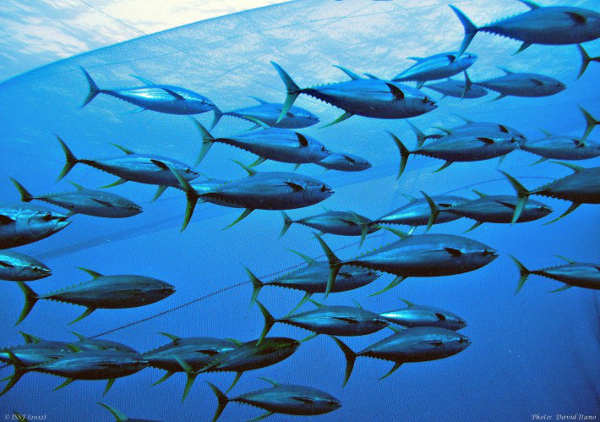
Seafood companies are responding to the public’s increased interest in whether fishing practices deplete tuna populations. Photo credit: David Hano/International Sustainable Seafood Foundation

Seafood companies are responding to the public’s increased interest in whether fishing practices deplete tuna populations. Photo credit: David Hano/International Sustainable Seafood Foundation

Thanks to Ecowatch for the updated primer on better canned tuna shopping criteria:

Canned tuna is one of the world’s most popular packaged fish, but it has also long been controversial. Between issues of overfishing resulting in fishery depletion and bycatch that threatens other species including the much-publicized incidental capture of dolphins by tuna fishermen, it has gotten a bad name. With the increased awareness of the harm tuna fishing can cause, companies have stepped up to try to reassure consumers that they are paying attention to the health of our oceans. Continue reading

Whales Need To Eat, Just Like The Rest Of Us

1000 (1)

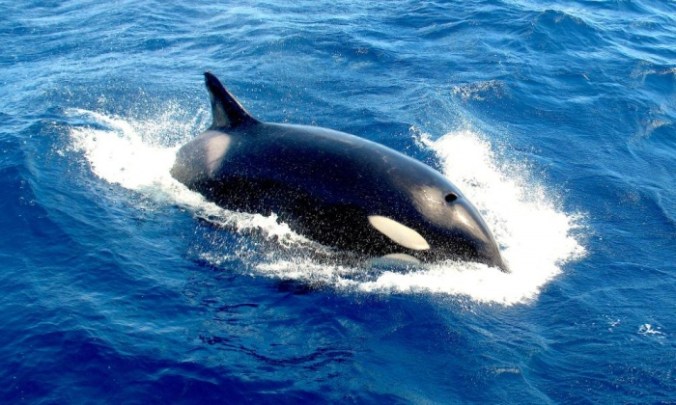
The Guardian‘s Environment section gets us thinking, today, about the unfortunate qualifier–killer–to the name of this amazing animal. All of us non-vegetarians are killers, right? We just hide that fact as conveniently as we can. The spectacular fashion in which this particular marine mammal satisfies its appetites is something to behold:

Even before our boat left the shelter of Bremer Bay boat harbour, in south-west Western Australia, shortly after dawn on the first day of the region’s 2015 killer whale season, it felt like we were already at the edge of the world.

I was there to see a tiny place, far out to sea, that marine scientists and environmentalists regard as one of the most special ocean ecosystems anywhere in Australia’s commonwealth waters.

We would motor more than 65km offshore to a location not much bigger than a few football fields, where the ocean is 4.5km deep and weather conditions are almost always treacherous. Where we were going there was a not a single distinguishing feature or landmark – just a GPS point.

More than anything, though, no one yet knows for sure why each year, during February and March, life from around the Southern Ocean converges on that relatively minute speck in the ocean wilderness. Continue reading