If You Happen To Be Anywhere In the World…

Our interest in birds shouldn’t come as a surprise to readers of these pages. With contributors Seth and Justin on a Smithsonian Expedition in search of the Golden Swallow, over 3 years of our Bird of the Day feature from many talented photographers, and a plethora of posts about the subject, we assume it’s obvious.

Prior to 2013 the Great Backyard Bird Count focussed on North America, but that year it went global and the results were amazing! Continue reading

Marine Reserves, Unexpected Effects

fish-680x450

Marine reserves have been of interest since the first months of this blog in 2011 and are still a mainstay of our incoming and outgoing newsfeeds. Much of our recent interest in the intersection between marine biology and conservation has been focused on invasive species since 2013, due to the super series penned by Phil Karp, most recently added to last week. Thanks to Jason G. Goldman and Conservation for this summary of a special topic within this intersection:

Most marine reserves are optimized for reef fish. These are fish that are born, live, reproduce, and ultimately die in a small area – sometimes on just a single reef. Where there is connectivity across a large area, it’s usually while the fish is in its larval stage. Once it matures, it stays put.

It’s a fitting strategy for conserving fish that live on coral reefs, rocky reefs, or in kelp forests, but does it do much to help those species that are more migratory? These are animals, like the Gulf of Mexico’s gag grouper, that spend their childhoods in one place, a nursery habitat like a mangrove, estuary, or kelp forest, and then migrate to live out their adult years in an adult habitat, like a reef or along the continental shelf. Continue reading

Beavers Build Habitats, and Sometimes That’s a Good Thing

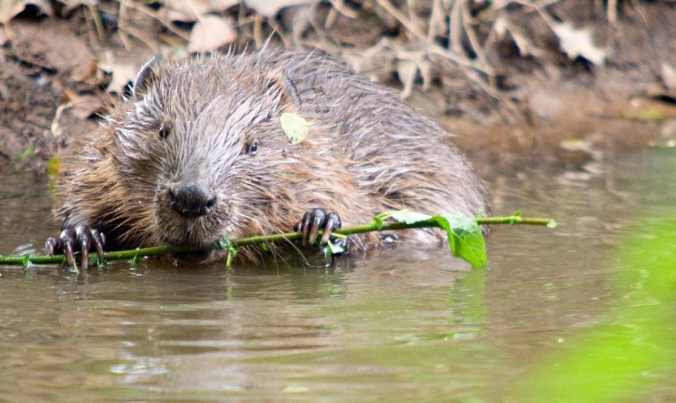
'Beavers create habitats and opportunities for just about everything else.' Photograph: Ben Lee

‘Beavers create habitats and opportunities for just about everything else.’ Photograph: Ben Lee

We’ve written about this industrious animal before on these pages, but in a completely different light. As with many introduced species, there are frequently unintended consequences on a disastrous environmental scale when the species has no natural predators in their new locations. Indeed there are huge areas of new wetlands in Patagonia’s Tierra del Fuego, but at the expense of millions of trees. (It’s actually calculated that in Patagonia beavers cause the 15 tons of biomass per year.)

However the case in Northern England and Scotland is quite different.

Beavers lower the canopy around a water body by felling trees and digging canals – opening it up. Solar energy piles in to places that have been in shade for decades. They stir life into action, kicking up nutrients as they beaver about their daily doings. Nature loves change; it frees up opportunities. Species of every size and shape wade in and snatch their chances. Beavers shift everything, tirelessly, instinctively, creatively. That’s why ecologists call them a “keystone species”. By doing their own thing, they create habitats and opportunities for just about everything else. Continue reading

Aerial Insectivores

Cockpit Country

Cockpit Country

As we head west along the southern portion of Cockpit Country from Barbecue Bottom Road and Albert Town, we’re noticing a big difference in the amount of aerial insectivores we’re able to see while out hiking every day.

Justin and John on the trail from Windsor to Troy

During our initial excursions into the bush, we were taking densely wooded trails that required constant vigilance of the path in front of us due to shifting stones, twisting roots, and strong ground vines. In some of the worse areas we needed machetes to clear vegetation and big fallen trees, and even when we had time to look up at the skies they were often covered by thick canopy.

Continue reading

Let Nature Do Its Own Work

The Pine Marten, once common in the UK, is a natural predator of the grey squirrel and has successfully reduced their numbers in Ireland. Photograph: Alamy

The Pine Marten, once common in the UK, is a natural predator of the grey squirrel and has successfully reduced their numbers in Ireland. Photograph: Alamy

Not every problem in the natural world has a solution, let alone a simple one; and there is always that law of unintended consequences, but we like the way this proposal sounds as an alternative to other forms of eradication:

Is there anything more stupid than the government’s plan to kill grey squirrels?

I ask not because I believe – as Animal Aid does – that grey squirrels are harmless. Far from it: they have eliminated red squirrels from most of Britain since their introduction by Victorian landowners, and are now doing the same thing in parts of the continent. By destroying young trees, they also make the establishment of new woodland almost impossible in many places. As someone who believes there should be many more trees in this country, I see that as a problem. A big one.

No, I oppose the cull for two reasons. The first is that it’s a total waste of time and money. Here’s what scientists who have studied such programmes have to say: Continue reading

Jamaican Hummingbirds

Red-billed Streamertail (male) by Seth

During the first week of our time in Jamaica, all of us were able to see the three species of Jamaican hummingbirds, although none of us had gotten a really good look at the prize: a male Red-billed Streamertail. Male Red-billed Streamertails are iridescent green with a black cap and two extremely long tail feathers that flutter behind the birds when they flit around. The birds move quite quickly and are often in and out of your field of view in a flash, but their call is relatively loud–as is the hum from their wings–so with practice you can locate them eventually.

Jamaican Mango by Seth

Jamaican Mangos are the largest hummingbird in the country and very recognizable given their flashy purple plumage and strongly decurved bills. From what I’ve noticed they perch for fairly long periods scanning their territory for intruders (most hummingbirds do something like this all the time), and this offers good photo opportunities. Continue reading

Fighting Invasive Lionfish – Update

I’ve posted previously about the lionfish invasion that is threatening coral reef and other marine ecosystems throughout the Caribbean, Gulf of Mexico, and Southern Atlantic Seaboard of the United States. Availability and dissemination of information about the invasion was recently given a big boost through launch of the Invasive Lionfish Web Portal The portal is a collaborative effort of a number of partners, led by the Gulf and Caribbean Fisheries Institute. It is a great resource, providing links to a range of information about the invasion, including journal articles, videos, photos, recipes, a Twitter feed, etc..

Another recent development has been the release of a draft United States National Invasive Lionfish Prevention and Management Plan. Developed by the U.S. Government’s Aquatic Nuisance Species Task Force, the plan is intended to help coordinate the actions of the various government agencies and other stakeholders involved in dealing with the invasion. While such a plan is long overdue, and in that sense is welcome, I’m quite disappointed that the plan largely ignores, and indeed implicitly discourages, an important element of an effective strategy for addressing the invasion – namely the use of market-based approaches.

As I’ve indicated in my previous posts, the Atlantic lionfish invasion is a unique problem that requires innovative solutions. Continue reading

A Reflection On My Summer In Kerala

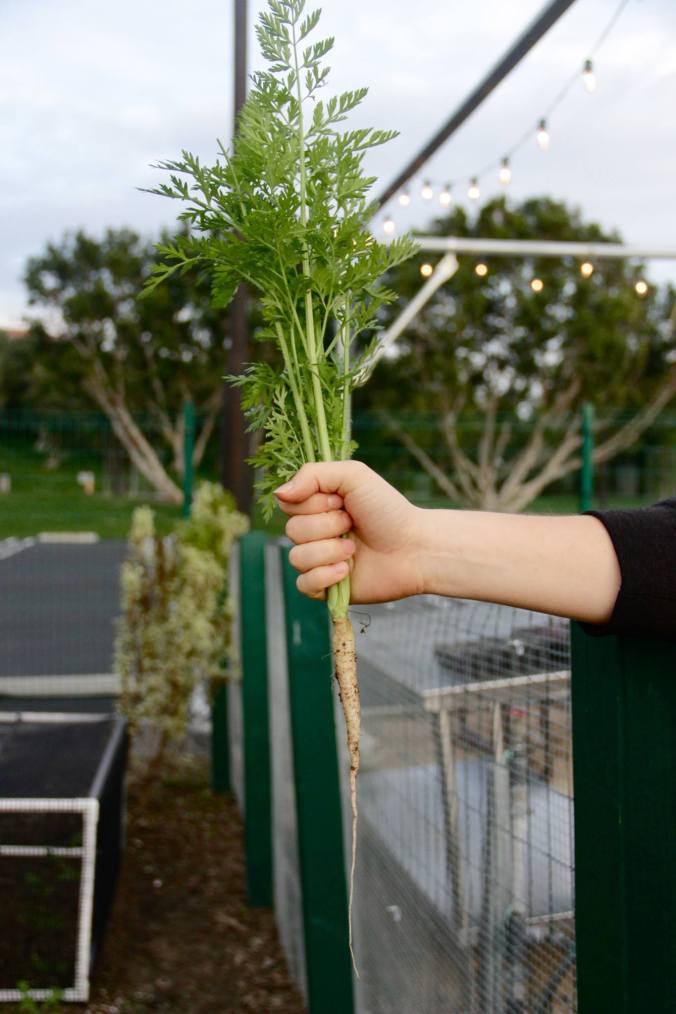
Soka Instructional Garden, photo courtesy of Nina Boutin

Soka Instructional Garden, photo courtesy of Nina Boutin

It has been a little over 4 months since I finished my internship, which has given me a lot of time to integrate and reflect on what I learned at Raxa Collective. I spent my first month in Thekkady at Cardamom County and my second month in Cochin at Spice Harbour. I am deeply grateful for this experience because it has informed my personal growth and career path in ways that are hard to articulate, but- I will try.

The month before coming to India, I walked part of the Camino de Santiago, a pilgrimage in Spain. If that wasn’t exhausting enough, I promptly went to India, and when I got to Raxa Collective, I hit the ground running, trying to figure out how I could best be of service and learn as much as possible. I expected for it to be difficult, but I didn’t know how it would be (though I was forewarned about the monkeys).

I’m working towards an environmental studies liberal arts degree at Soka University. A liberal arts degree is interdisciplinary, therefore I’m always looking for the intersection between things people think are separate. Profit and conservation are definitely things people usually think are separate.

I got to look deeply into the way those can intersect when I interviewed Crist about the path they have taken up until now. That interview has been so valuable for me in planning a business model that incorporates environmental and cultural conservation. Now, I think I want to start a restaurant that incorporates my passion for local food, biodiversity, sustainability, agriculture, and community. Continue reading

Introduction & Upcoming posts

I would like to take a quick moment to introduce myself, my goals for the next few months and what I will be posting in this blog. I am a recent graduate from the University of Central Florida, Rosen School of Hospitality Management and I was born in Costa Rica.

I am excited to be interning at Marari Pearl (Kerala, India) starting this January. I don’t believe there will be a lack of material for me to write about in Kerala with its unique culture, customs, spicy foods and amazing animals! This will be my first time to Asia and I am quite sure it will be a great and rewarding culture shock and I want to convey my observations and thoughts about something totally new to me. Continue reading

Avian Odyssey

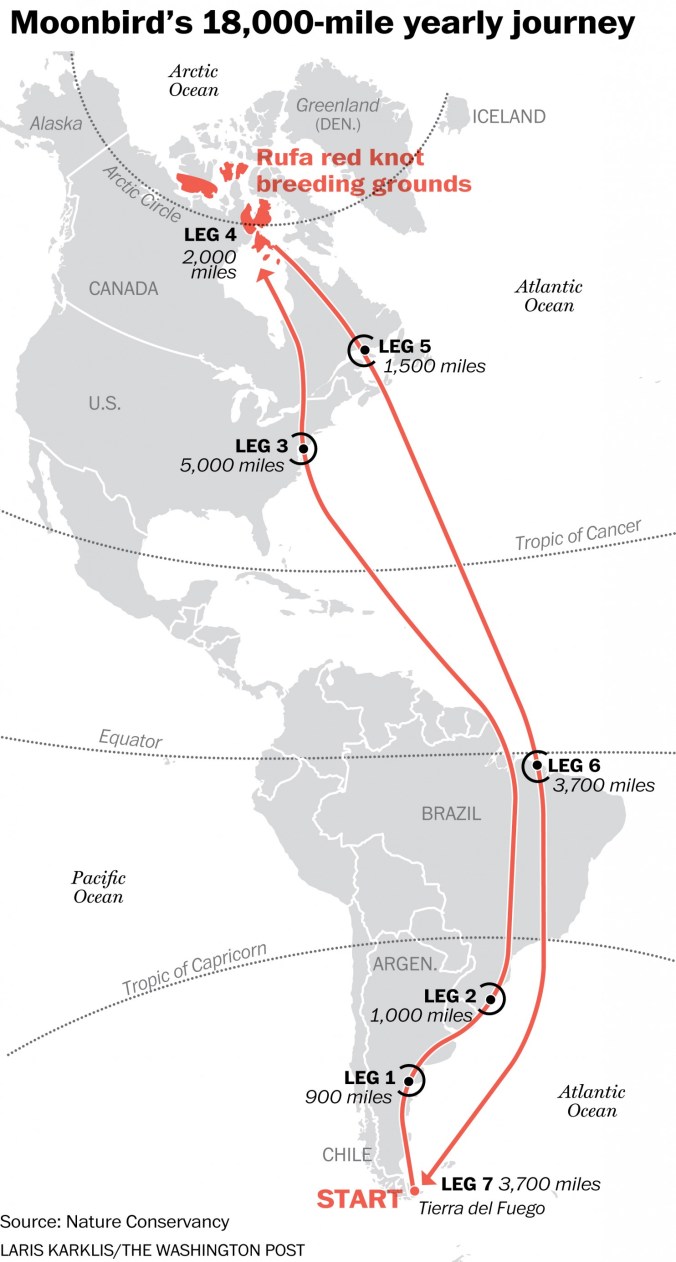
As Seth and his team are in flight for their odyssey in search of the golden swallow, it seems fitting that we come across the stories of epic avian journeys. Just about a year ago we posted about the bar-tailed godwit, and it seems the species has some stiff competition in the semipalmated sandpiper.

Scientists from the Manomet Center for Conservation Sciences recovered data from a geolocator tagged sandpiper from sub-Arctic Coats Island revealing that the bird flew over 10,000 miles in the past year, including a remarkable six day, 3,300-mile nonstop flight across the Atlantic Ocean. Continue reading

Citizen Science, Decades In Development

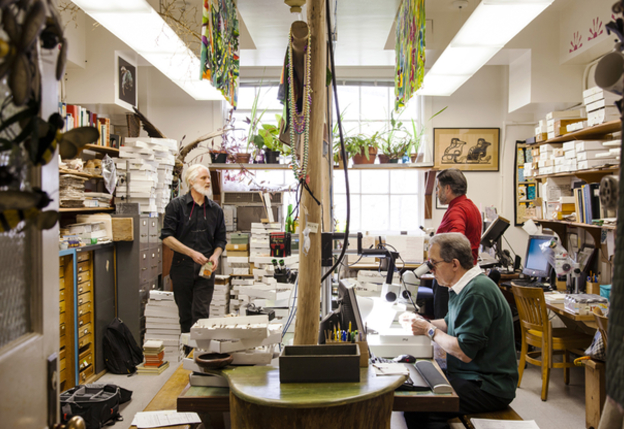
In Droege's lab at the Patuxent Wildlife Research Center, pizza boxes provide storage to thousands of pinned bee specimens. Volunteers Gene Scarpulla (in green) and Tim McMahon peer through microscopes to ID the insects.  Credit: Robert Wright

In Droege’s lab at the Patuxent Wildlife Research Center, pizza boxes provide storage to thousands of pinned bee specimens. Volunteers Gene Scarpulla (in green) and Tim McMahon peer through microscopes to ID the insects. Credit: Robert Wright

We started, before even knowing the terminology, paying attention to citizen science on this blog when we began to understand the parallels with entrepreneurial conservation. And now we link to stories whenever we can that help us better understand it:

Three Generations of Citizen Science: The Incubator

Once Sam Droege gets a research project up and running, he dreams up a new one–and builds it.

BY ANDY ISAACSON

It was a bright, breezy day in late April, the flowering azaleas having finally shrugged off the winter that overstayed its welcome, when Sam Droege sailed onto the grounds of the U.S. National Arboretum in Washington, D.C., behind the wheel of a pterodactyl. It was actually a ’98 forest-green Saturn, which Droege had painted with yellow wings and a red-and-yellow beak that tapered to a point down the center of the hood. A piece of wood, lined with a rusty crosscut saw, had been bolted to the roof: the crest. Little jingle bells, inspired by richly adorned buses in Pakistan, dangled from chains screwed into the rear bumper. Droege still had designs for neon undercarriage lights, and a mosaic of mirror shards to line the car’s ceiling–“but why stop there?” he wondered. It was a work in progress.

Continue reading

Horseshoe Crab, An Awesome Creature Facing Awesome Challenges, Creating Awesome Challenges

imrs

This is not the first time we have read about the various reasons to appreciate the horseshoe crab, though apparently we have only posted on small feature on them before. However, they play a critical role in the livelihood of another creature from a different part of the animal kingdom, as this story in the Washington Post describes:

“We had actually attached small devices that tracked their migrations,” explains Niles, “and they made 6 day flights without stopping to get to the Delaware Bay. So they would arrive completely bereft of energy, their weight would be sometimes far lower than their fat free weight, which meant they were burning muscle to get to the Delaware Bay. And the horseshoe crabs were laying eggs in such density that there was no work involved.” Continue reading

Ecological Hero That Happens To Be Charismatic

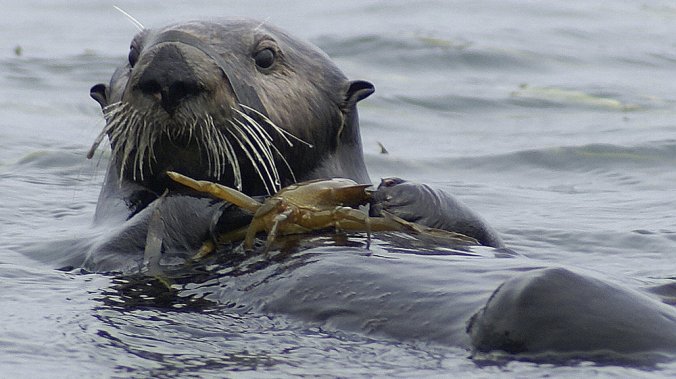
This sea otter, about to eat a crab in the Elkhorn Slough National Estuarine Research Reserve, is cute, sure. But more importantly, it's indirectly combating some harmful effects of agricultural runoff and protecting the underwater ecosystem. Rob Eby/AP

This sea otter, about to eat a crab in the Elkhorn Slough National Estuarine Research Reserve, is cute, sure. But more importantly, it’s indirectly combating some harmful effects of agricultural runoff and protecting the underwater ecosystem. Rob Eby/AP

Listen to this four minute explanation of how important sea otters are, not just for entertainment purposes but for the ecological services they provide:

On the roof of the Monterey Bay Aquarium in Monterey, Calif., in a large plastic tank, a sea otter mother named Abby floats with her adopted pup, known as 671.

For up to nine months, Abby will raise her little adoptee, and when 671 is ready, she will be released into a protected inland salt marsh called Elkhorn Slough, just off Monterey Bay.

That’s where 671 will set to work to preserve the estuary, says Tim Tinker, who tracks otters for the U.S. Geological Survey. Continue reading

Cool Green Science Celebrates The Celebrate Urban Birds Initiative

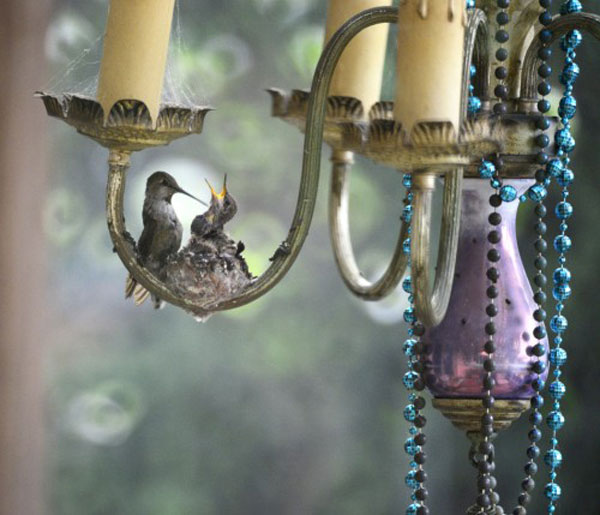
Hummingbirds nesting in a patio chandelier. Photo by Lydia D’moch for the CUBs Funky Nests in Funky Places 2014 competition.

Hummingbirds nesting in a patio chandelier. Photo by Lydia D’moch for the CUBs Funky Nests in Funky Places 2014 competition.

The Nature Conservancy is currently promoting their blog called Cool Green Science, which we expect to be a new source for us to regularly share links to on topics we particularly care about.  We like the blog’s stated purpose:

noun 1. Blog where Nature Conservancy scientists, science writers and external experts discuss and debate how conservation can meet the challenges of a 9 billion + planet.

2. Blog with astonishing photos, videos and dispatches of Nature Conservancy science in the field.

3. Home of Weird Nature, The Cooler, Quick Study, Traveling Naturalist and other amazing features.

Cool Green Science is managed by Matt Miller, the Conservancy’s deputy director for science communications, and edited by Bob Lalasz, its director of science communications.

Of course we would like you to consider visiting Xandari for this purpose, but we appreciate Lisa Feldkamp’s point. She is the senior coordinator for new science audiences at The Nature Conservancy and earlier this week she posted on a topic that is near and dear to us:

What is Celebrate Urban Birds?

You don’t need to book a trip to Costa Rica or the Amazon to enjoy great birding. Continue reading

Birds, Feathers, And Birds Of A Feather

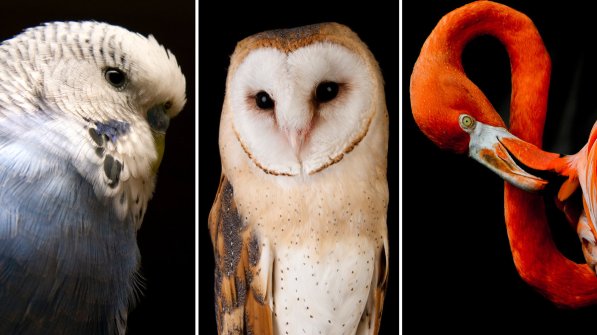
Recent research sequenced 48 bird species, including (from left) the budgerigar, the barn owl and the American flamingo. (Left and center)iStock; (Right) Chris Minerva/Ocean/Corbis

Recent research sequenced 48 bird species, including (from left) the budgerigar, the barn owl and the American flamingo. (Left and center)iStock; (Right) Chris Minerva/Ocean/Corbis

Thanks to National Public Radio (USA) for this podcast of a story we know our ornithologically-inclined readers will appreciate:

What do a pigeon and a flamingo have in common? Quite a bit, according to a reordering of the evolutionary tree of birds.

One of a series of studies published Thursday in Science is the latest step toward understanding the origins of the roughly 10,000 bird species that populate our planet. Continue reading

Ticking Clocks Of Botanical Gardens

shutterstock_192530375-copy

Image © KPG_Payless | Shutterstock

Thanks to Conservation for Roberta Kwok’s summary of scientific news we had not quite expected, nor wished for:

A relaxing stroll in a botanic garden sounds like a lovely way to spend an afternoon. These green oases can encourage people to appreciate nature and bring attention to conservation issues. But some botanic gardens might harbor an ecological threat: they could be prime sources for invasive species to spread into the wild. Continue reading

Geckos, A 10th Latitude Lovely

science-take-gecko-sfSpan-v3

Geckos are in most of our favorite places–Kerala, Costa Rica, Ghana–which share some 10th Latitude commonalities in different continents.  They are one tiny example of the commonalities, but one that most of us love, for reasons we cannot begin to explain. So for us this story is a welcome puzzle solver for mysteries we did not know needed explaining, yet enjoy the answers:

SCIENCETAKE

Climbing a Glass Building? Try a Gecko’s Sticky Pads

By JAMES GORMAN

The lizard and, well, Spider-Man, have ideal tools for scaling slippery surfaces. Engineers have copied the gecko’s clingy foot pads.

Sea Snakes, Rhinos, And The Close Observation Of Two Tragic Commons

rhino-snake-680x450

Thanks as always to Conservation, and in this case to Jason G. Goldman for the excellent summaries of scientific findings each week. There is not much happy news in this story, but nonetheless it is critical reading because of the detailed observation of the scientists:

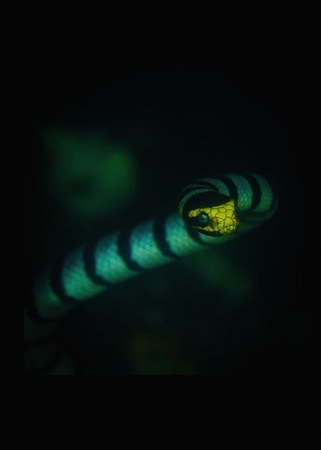
Each month, hundreds of squid fishing vessels return to port in Vietnam loaded not just with squid, but also with sea snakes harvested from the Gulf of Thailand. Each month, the seven major snake processing facilities move an average of 6,500 kilograms of sea snakes, which are sold for between $10 and $40 per kilogram, depending on species. By comparison, squid sell for between $7 and $20 per pound, making sea snakes the more lucrative catch.

In the most recent issue of the journal Conservation Biology, Vietnam Academy of Science and Technology researcher Nguyen Van Cao and colleagues argue that the harvest of sea snakes from the Gulf of Thailand is perhaps the world’s largest systematic exploitation of marine reptiles in the world, but it’s one that is woefully ignored or, at best, underscrutinized. Continue reading

The Sophie’s Choices Of Conservation

Screen Shot 2014-11-21 at 5.53.37 PM

Life is not fair.  Sometimes it is really unfair, especially when it comes to entire lifeforms disappearing, or not disappearing, subject to choices we humans make, with all our inherent biases. Thanks to Nautilus for bringing this research to our attention:

Which Endangered Species Would You Save?

Conservation is in the eye of the beholder.

BY CARRIE ARNOLD

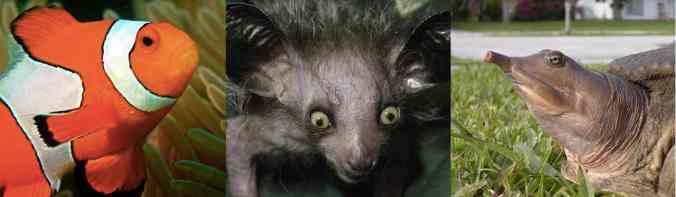
You have just been appointed Conservation Czar. But there is a catch. You can only save three animals. Look at the 12 animals below and click on the three that you would save. After you make your choices, you will learn about the endangered status of each animal.

Continue reading

Around The World Of Coffee In One Hour

Screen Shot 2014-11-18 at 11.47.40 AM

Click the image above, or title below, to go to the video:

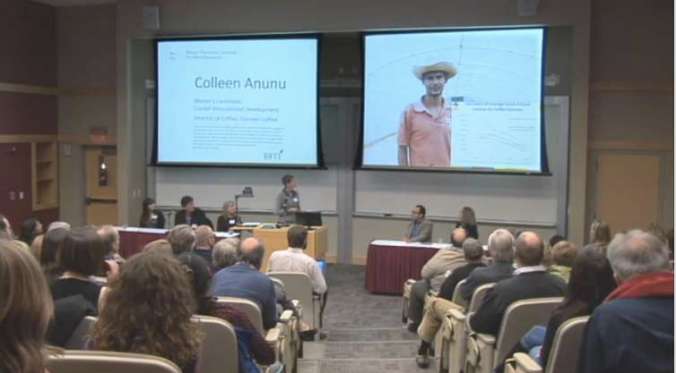
Coffee: From Gene to Bean to Global Scene

Six researchers from the Boyce Thompson Institute for Plant Research, Cornell University’s Lab of Ornithology, Dyson School of Applied Economics and Management, School of Hotel Administration, and College of Agriculture and Life Sciences investigate the culture of coffee, including: consumer tastes and choices, the social impact of development and production, the ecological impacts of coffee farms, and how the plant’s genome sequence can provide insight into this popular beverage.