A Book To Gift The Bird-Lovers In Your Life

raffin_birdsofpandemonium_hc_jkt_rgb_hr-updated

We first heard about it here. This book may be the perfect solution to your next gift-giving occasion for the bird lover(s) in your life. We are still on alert and concerned about Amazon, so if you do not have find this in your local bookstore, please place your order somewhere that supports independent booksellers, or perhaps National Public Radio (USA) for this book. The publisher has this to say about the book:

“A remarkable book. Reading about the birds of Pandemonium will make you laugh and cry; it will make you see more clearly the need to take care of our planet; and it will confirm that one person with a passion can make a difference.” —Jeff Corwin, nature conservationist Continue reading

Chefs Celebrating Biodiversity

Brazilian fruits, including jambu and tapereba (lower right), displayed for a gathering of chefs in Sao Paolo. Paula Moura for NPR

Brazilian fruits, including jambu and tapereba (lower right), displayed for a gathering of chefs in Sao Paolo. Paula Moura for NPR

Thanks to the salt, as always, for bringing us diverse stories about what we eat, where it comes from, and who is doing what to ensure that our food future is a good one:

Culinary superstars gathered in the Brazilian city of Sao Paulo this month at an event organized by the Basque Culinary Center. But they weren’t there to cook. Instead, the the famous chefs were talking about biodiversity. Continue reading

A National Park Provides The Basis For A Unifying Theory Of Nature And Conservation

213442

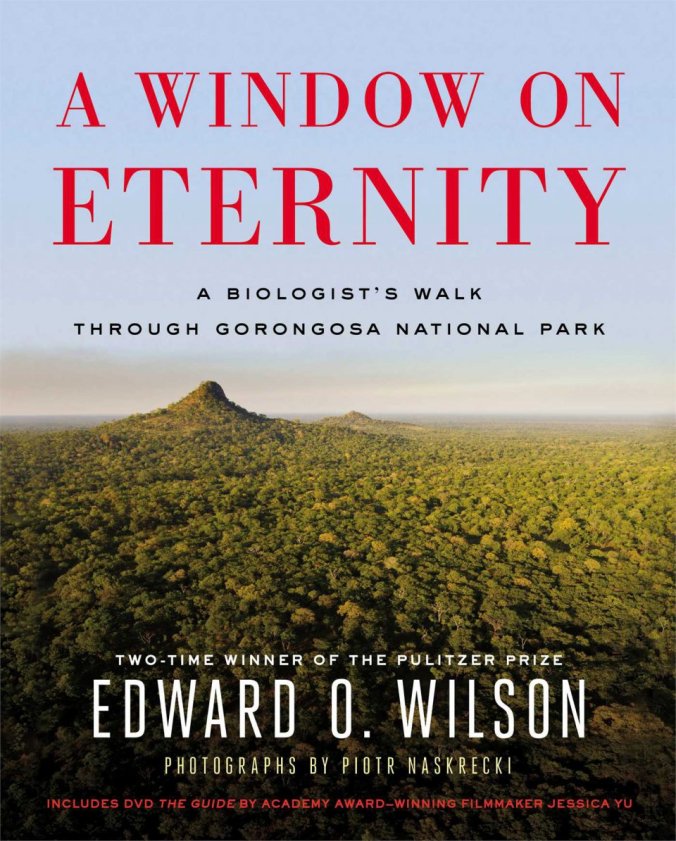
Screen Shot 2014-11-11 at 4.41.14 PMThe last time we mentioned him, it was upon discovering a new (to us) resource and today we realize we had not yet taken the opportunity to highlight this book which he published earlier this year. His interview in late May, seen here on the website of another foundation that bears his name, is worth watching to help decide whether this book is for you, or not.

The excellent NHBS, a UK-bsed website, has this to say:

A Window on Eternity is a stunning book of splendid prose and gorgeous photography about one of the biologically richest places in Africa and perhaps in the world. Gorongosa National Park in Mozambique was nearly destroyed in a brutal civil war, then was reborn and is now evolving back to its original state. Edward O. Wilson’s personal, luminous description of the wonders of Gorongosa is beautifully complemented by Piotr Naskrecki’s extraordinary photographs of the park’s exquisite natural beauty. A bonus DVD of Academy Award-winning director Jessica Yu’s documentary, The Guide, is also included with A Window on Eternity…(continued after the jump)

EOWilson

Continue reading

The Other Amazon; Is This Progress?

p029jk53

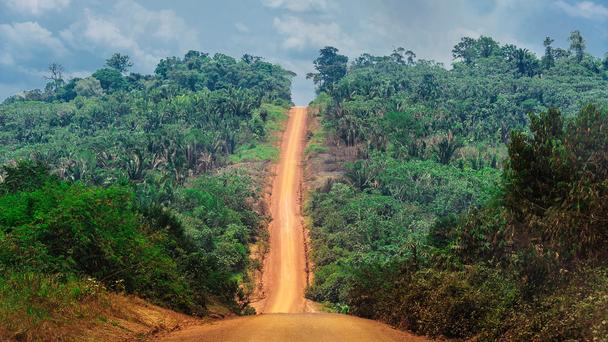
Difficult to say definitively whether it represents progress or not, but new roads usually give that sensation.  The one exception may be when the road opens up otherwise inaccessible wilderness (thanks to the BBC for this story):

Into the Amazon

Coursing 2,000km through the heart of the Amazon rainforest, the Trans-Amazonian Highway was one of the region’s first roads, constructed in the 1970s as a crude track hacked through dense foliage – “highway” was a generous description. It was built to connect the Amazon to Brazil’s growing farming and cattle breeding economy, and over the years, virgin forests have given way to cattle ranches, logging stations and gold mines. (Coen Wubbels)

Manta Matching

mantaray

Click the image above or the title below to go to the article:

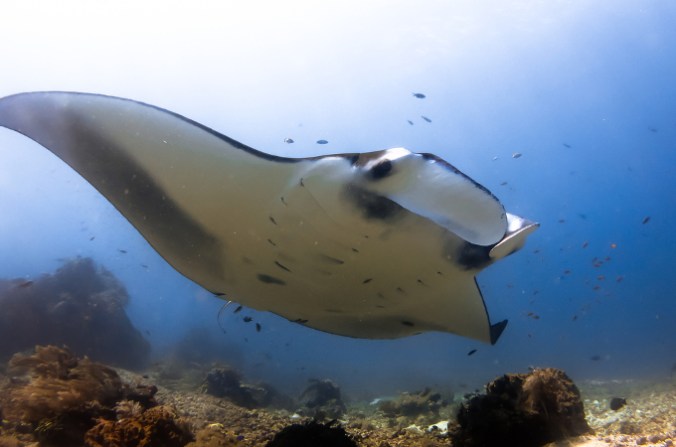
WANDERING MANTA RAYS HIGHLIGHT GAPS IN MARINE CONSERVATION

Earlier this year we showcased a study showing how reef fish don’t exactly pay much attention to where humans draw conservation lines. Just because a Marine Protected Area, or MPA, exists, doesn’t mean a species we might be keen on saving will stay inside its borders. Manta rays, a charismatic and threatened group of animals, are now showing us how understanding and targeting certain species may help improve ocean conservation.

Continue reading

The Bat Cave, Protected

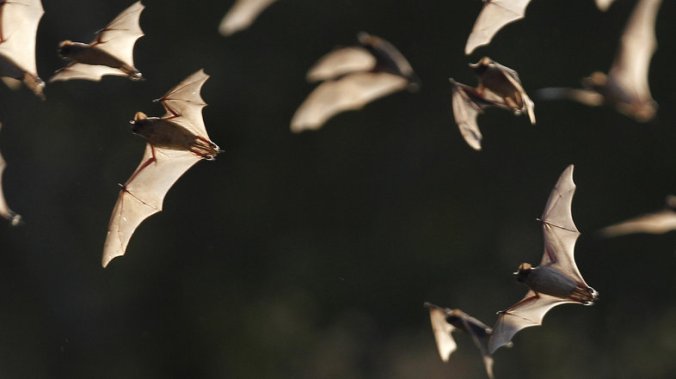
The Bracken Bat Cave outside San Antonio, Texas, is home to millions of bats. Here, a few of them emerge from the colony in 2011.

The Bracken Bat Cave outside San Antonio, Texas, is home to millions of bats. Here, a few of them emerge from the colony in 2011. Eric Gay/AP

Thanks to National Public Radio (USA) for this story on bat habitat conservation:

Down a narrow gravel drive and a short walk past cactus and scrub cedars outside of San Antonio, Texas, is a gaping, dark cave mouth, 60 feet wide, nestled at the bottom of a steep hill.

This is the Bracken Bat Cave. Each night at 7:30, millions of bats spiral out of the deep cave and streak off toward the darkening southern sky.

Thanks to a $20 million deal signed Friday by San Antonio, conservation groups and a local developer, the night sky around the cave will stay dark, and the mother and baby bats inside will have a buffer between them and the hazards of city sprawl. Continue reading

Awesomeness In Small Images

Screen Shot 2014-10-31 at 9.37.39 AM

Screen Shot 2014-10-31 at 9.37.03 AM

We have pointed out photography competitions many times over the last several yearsIf you are so inclined, so equipped, and capable, we applaud you already:

The Nikon International Small World Competition first began in 1975 as a means to recognize and applaud the efforts of those involved with photography through the light microscope.

Since then, Small World has become a leading showcase for photo-micrographers from the widest array of scientific disciplines.

A photomicrograph is a technical document that can be of great significance to science or industry. But a good photomicrograph is also an image whose structure, color, composition, and content is an object of beauty, open to several levels of comprehension and appreciation.

The Nikon Small World Competition is open to anyone with an interest in photography through the microscope. Truly international in scope, entries have been received from the United States, Canada, Europe, Australia, Latin America, Asia, and Africa. Winners have included both professionals and hobbyists. Continue reading

End The Exotic Pet Trade

31salamander-1-thumbStandard

Thanks to the New York Times‘ weekly Science section for a reminder of all the reasons why wild animals should not be traded as pets across regions of the world:

Infection That Devastates Amphibians, Already in Europe, Could Spread to U.S.

Fire-bellied newts imported from Asia through the pet trade may be spreading a fungal disease that is killing off fire salamanders in Europe, according to researchers.

Kerala’s Tigers, And Protectors

DSCN2857_JPG_2171199f

Tribal conservationist Babu: School dropout launches a website with info on tiger conservation in Parambikulam reserve.

The Hindu carries a story, close to our hearts and activities, about a heroic member of a local indigenous community devoted to conservation for the tiger and all it depends on:

He may be the answer to the debate on tiger versus tribal, where tiger conservation and livelihood of forest-dwelling tribespeople fail to find a common ground. A school dropout from the Sunkam tribal colony inside the Parambikulam tiger reserve, he has designed a website to bring to the outside world the biodiversity of the reserve and highlight its tiger conservation efforts. Continue reading

Profits, Privileges, Environmental Destruction

Mombiot blog on sea protection : Fishing boats near the beach at Flamborough head Yorkshire

Fishing boats near the beach at North Landing, Flamborough Head, on the Yorkshire coast. Falmborough Head is home to one of the UK’s three ‘no take’ zones – that in total cover just 5 sq km. Photograph: Paul Richardson/Alamy

The excellent Guardian editorialist, whom we have linked to more than once, strikes again:

Ripping up the sea floor on behalf of royal profits

George Monbiot: Even the pathetic laws protecting marine life in this country are instantly swept aside in response to lobbying by Prince Charles’s tenants

A few days ago, I visited the Flamborough Head “no take zone”, one of the UK’s three areas in which commercial fishing is prohibited.

Here marine life is allowed to proliferate, without being menaced by trawlers, scallop dredgers, drift nets, pots and all the other devices for rounding it up, some of which also rip the seabed to shreds. A reef of soft corals, mussels, razorfish and other species has begun to form, in which plaice and cod, crabs and lobsters can shelter, unmolested by exploitation. Fantastic, isn’t it?

Well curb your enthusiasm. Continue reading

Jaguar, Conservation, Book Time

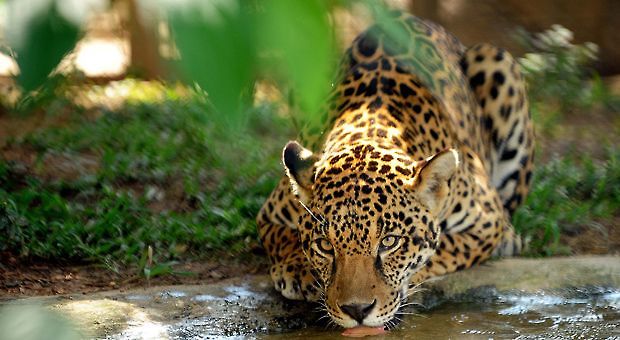
A captive jaguar drinks water in an enclosure at Petro Velho Farm, a refuge of the non-governmental organization NEX in Corumba de Goias, about 80 km from Brasilia, on January 11, 2013. EVARISTO SA/AFP/Getty Images

A captive jaguar drinks water in an enclosure at Petro Velho Farm, a refuge of the non-governmental organization NEX in Corumba de Goias, about 80 km from Brasilia, on January 11, 2013. EVARISTO SA/AFP/Getty Images

Listening to this interview it is just enough to clue you in to how Alan Rabinowitz has touched the lives of so many with the work he has done on behalf of jaguars and particularly conservation of their habitat:

Jaguars are the world’s third-largest wild cat – after tigers and lions. They have distinctive black rosettes on their fur and can weigh up to 250 pounds. Jaguars have been eradicated from 40 percent of their historic range. Today they live along a corridor from Argentina to Mexico. Their future is threatened by illegal hunting, deforestation and a loss of prey. One of the world’s leading big cat experts is responsible for creating a jaguar preserve in Central America, the first of its kind. In a new book, he shares why he’s committed to giving a voice to jaguars and how they helped him find his own voice.

Continue reading

On the Road to 100 Species at Xandari

Silhouette of the Blue-crowned Motmot, one of Xandari’s most colorful and exciting resident species due to its racquet-tipped tail and partly iridescent plumage.

Over the last four months or so that I’ve been birding around Xandari, in the beginning with the help and company of James, Xandari’s species list on its eBird hotspot has been growing, if not daily, then at least weekly. James and I had charged ourselves with documenting every resident species before the migrants came down starting in September and October. When James left to go back to school in early August, we had seen or heard 80 species on or from property.

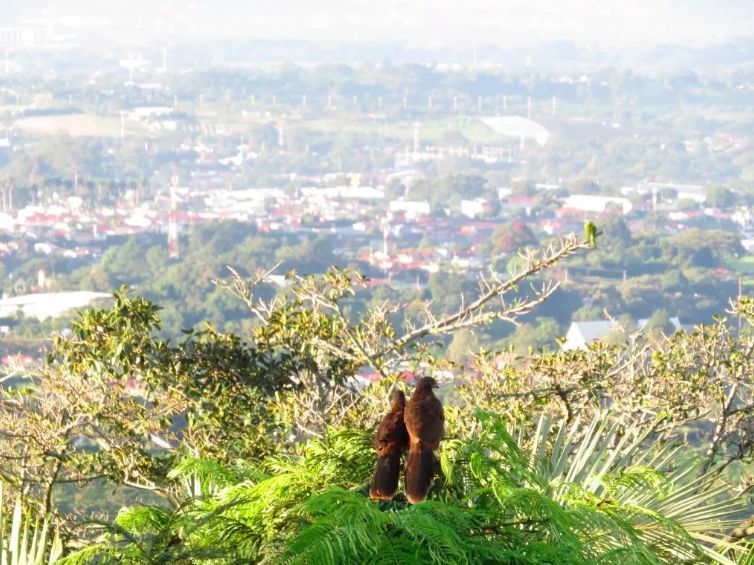
A pair of Gray-headed Chachalacas enjoying the view of Alajuela. Seen from Xandari’s balcony restaurant.

Since then, I’ve seen Continue reading

Biophilia By Any Other Name

Screen Shot 2014-10-19 at 11.38.13 AM

Thanks to Conservation for their regular daily feature, summarizing important research findings related to the environment, and for reminding us in the story below of the great scientist E.O. Wilson, who might note that the findings below are essentially a reflection of his ideas on biophilia. Click on the banner above to go to a new resource that we have just discovered that honors the scientist, and read on for the scientific findings that demonstrate his genius observation even without referencing him:

We’ve been hearing for a while now how simply being around green space more can be beneficial. Early this year, for example, a study found that moving to areas with more trees and vegetation led to an immediate and prolonged improvement in mental health. Just looking at a tree every now and then seems to give us all a boost. Continue reading

If You Happen To Be In Eleuthera…

Bahamas-Lionfish-Jewelery

Regular readers of this site are familiar with contributor Phil Karp’s wonderful posts about this invasive species. He’s been advising this group in Eleuthera for several months. We wish we could be there!

Can you?

Flowering Plants Of The Western Ghats

05tv_western_ghat__2140103e

For flower lovers, ecologists, and concerned citizens everywhere, important news in today’s Hindu:

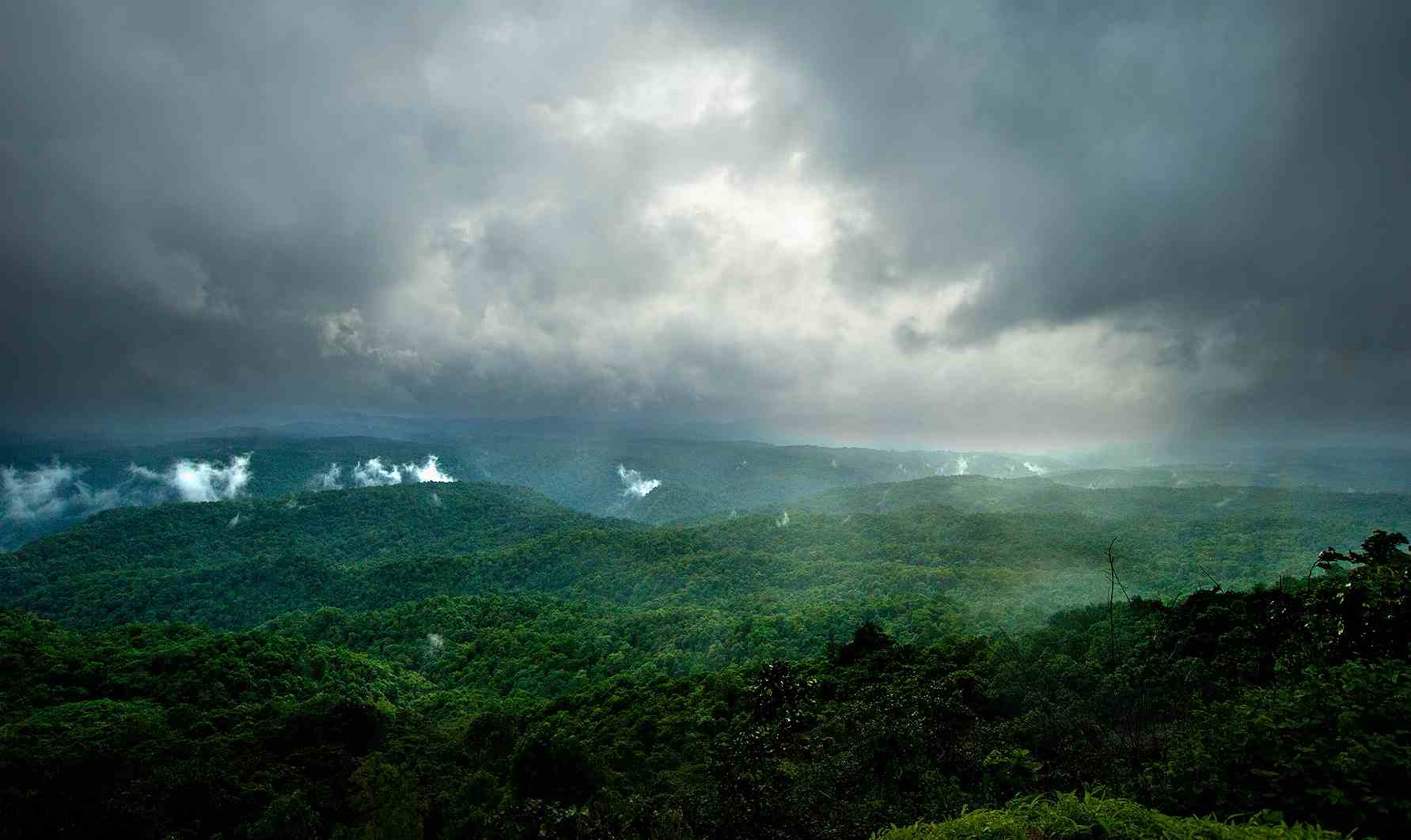
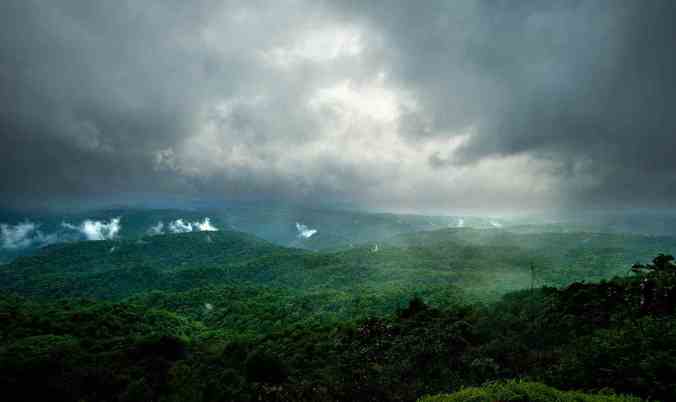
As a global biodiversity hotspot and a world heritage site, the Western Ghats is a magnet for conservationists, nature lovers, scientists and researchers hoping to delve into the secrets of its abundant flora and fauna. But despite decades of study by individuals and groups, an essential reference work cataloguing the rich biodiversity of the region has remained a dream.

In a bid to address this need, scientists at the Jawaharlal Nehru Tropical Botanic Garden and Research Institute (JNTBGRI) at Palode near here have come out with a comprehensive work on the flowering plants of the Western Ghats.

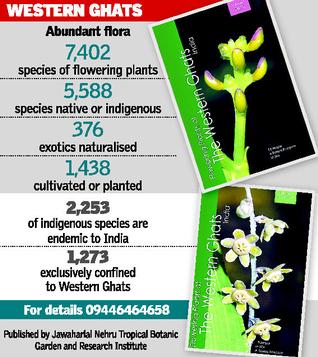
Published in two volumes, the 1,700-page book reveals the occurrence of a total of 7,402 species of flowering plants in the region, out of which 5,588 species are native or indigenous. Of the rest, 376 are exotics naturalised and 1,438 species are cultivated or planted as ornamentals. Continue reading

World Wildlife Week: Tigers & Territories!

habitat


As a part of celebrating World Wildlife Week I was sharing information about the importance of saving our Natural Heritage, trying to create awareness among the growing population of nature lovers and wildlife photographers.

In the previous posts I discussed the relationships between healthy ecosystems, the well-being of wildlife and humans.

Here I’ll address another essential element for a healthy tiger population – territories!

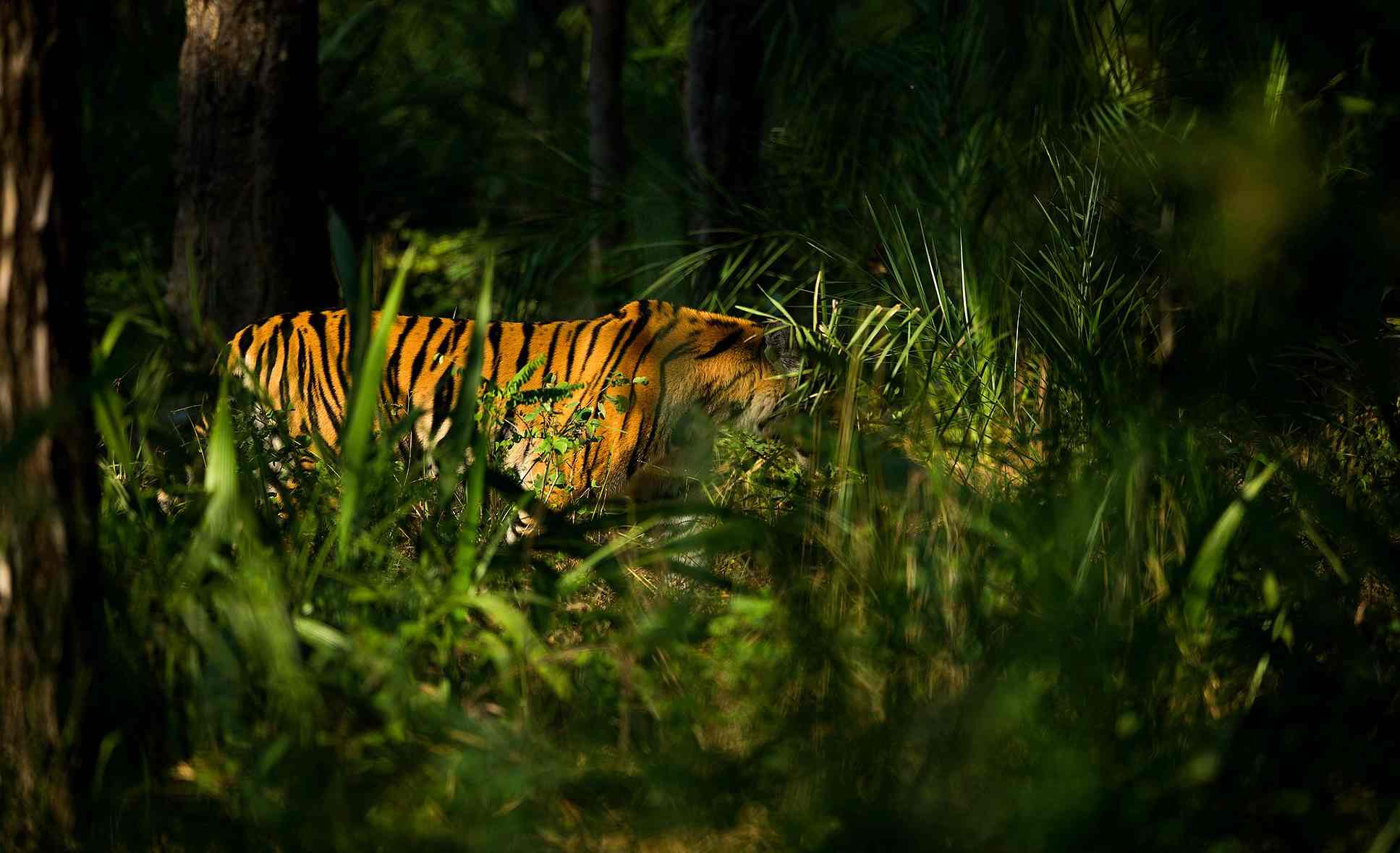
Next to food, the most important requirement for a tiger is territory. A male tiger with a territory encompassing those of several females has more mating opportunities. A female in control of a ‘home range’ with abundant prey has the best chance of raising more cubs.

With so much at stake, tigers are fiercely possessive of their turf, and scent-mark and defend their territories from rivals.

There is increased pressure on the Tiger territories from the development front. Environmental and forest clearances have been delinked to allow work on linear projects, such as highways, on non-forest land without waiting for approvals for the stretches that require forest land.

India has ONLY 4.9% of total geographic area established as protected area (PAs). If we are not able to increase this, we need to see how we can at least protect that. But look at this news published in hindustantimes:

In a boost to the real estate sector, the environment ministry may soon allow state governments to take a call on setting up new townships, information technology and developmental parks near tiger reserves, national parks, eco-sensitive zones and critically polluted areas.

The ministry has already issued draft rules proposing delegation of its power to decide on construction projects within 10 kms of wildlife areas and critically polluted areas to the state governments.

Till now, the Centre used to examine such projects to consider their impact on wildlife before giving a go-ahead. But now, the ministry has proposed the “general condition” for construction projects including information technology parks, hotels and offices will “not” apply. Continue reading

Giraffes Deserve Science As Much We Need Good Science Writers

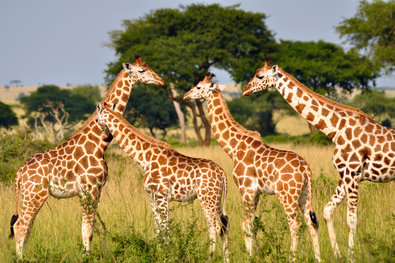
Julian Fennessy. Giraffes are the “forgotten megafauna,” said the  executive director of the Giraffe Conservation Foundation.

Julian Fennessy. Giraffes are the “forgotten megafauna,” said the executive director of the Giraffe Conservation Foundation.

We have been highlighting science writers since our outset as a blog, following a longstanding respect from our contributors for their particular talent, which has made us richer by reaching fruit that is sometimes too high on a tree to reach and bringing it where we can reach it.

From the current New York Times weekly section highlighting and explaining scientific matters of interest to us with one of the greatest writers in the genre, we now turn our attention to giraffes for the first time in our several years sharing (and as pointed out in the article we can only wonder why we have not paid more attention to such a creature prior to now):

SCIENCE TIMES: OCT. 7, 2014

Our Understanding of Giraffes Does Not Measure Up

By NATALIE ANGIER

Giraffes may be popular — a staple of zoos, corporate logos and the plush toy industry — but until recently almost nobody studied giraffes in the field so there is much we don’t know about them.

World Wildlife Week: Spotted and Sambar Deer

tiger hunt

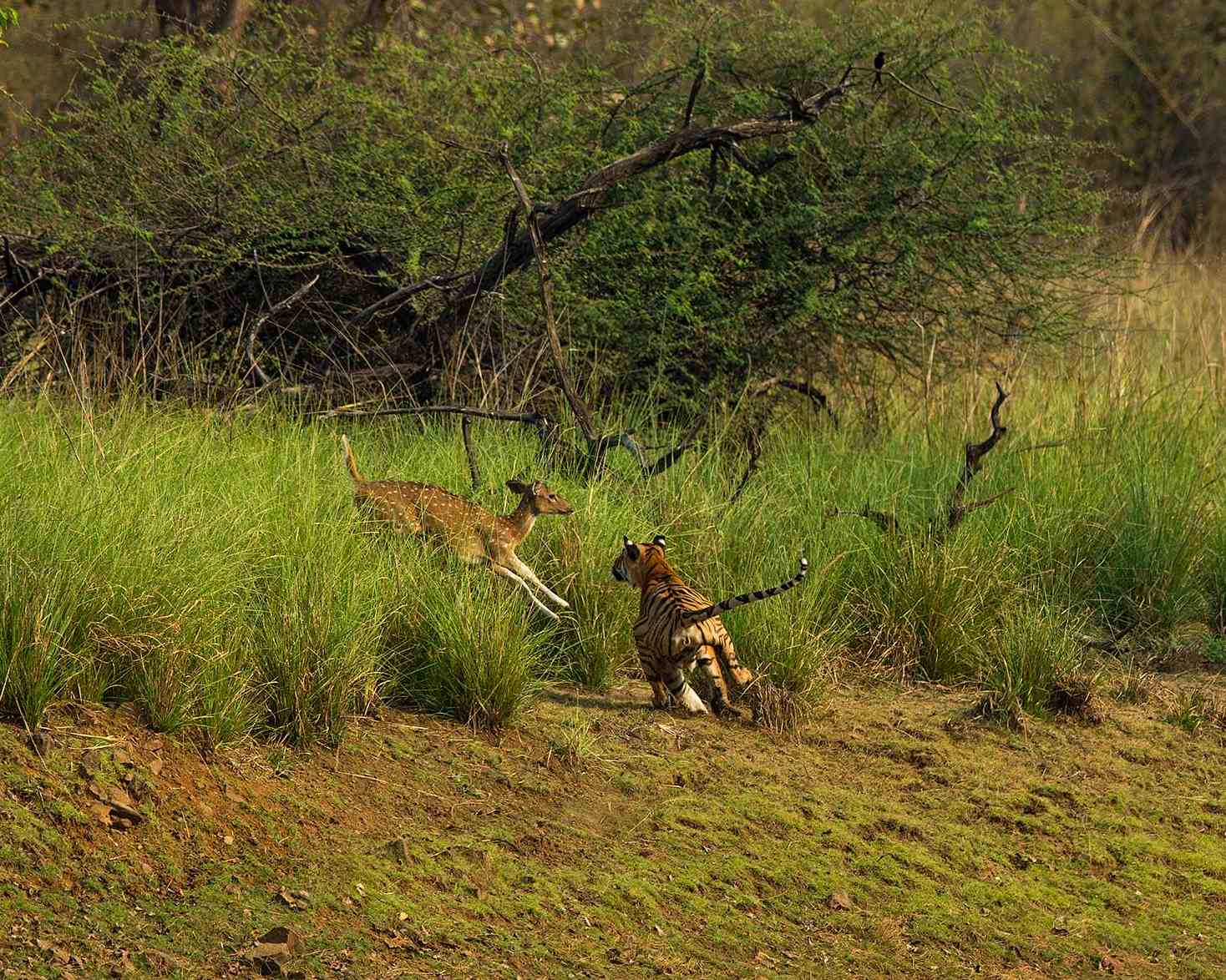
As a part of celebrating World Wildlife Week I will be sharing information about the importance of saving our Natural Heritage, hopefully trying to create awareness among the growing population of nature lovers and wildlife photographers. My first post makes the correlation between a healthy tiger habitat with our own well-being.

Now let me talk about the importance of deer in our forests.

One of the primary reasons why large areas of forest in India no longer have tigers is because local people have hunted and eaten away most of the prey animals. While the direct poaching of tigers is contributing to their rapid decline now, it is the steady erosion of the tiger’s prey base that has resulted in low numbers of tigers to start with.

An adult tiger needs about 3000 kg of food a year. This translates roughly into one deer-sized animal every week.

Continue reading

World Wildlife Week: Why Save the Tiger?

tiger by Sudhir Shivaram

As a part of celebrating World Wildlife Week I will be sharing information about the importance of saving our Natural History, hopefully trying to create awareness among the growing nature lovers. Lets start with why we need to save the Tiger.

The tiger is at the top of the food chain. Therefore, the healthy presence of tigers indicates healthy forests. The presence of tigers in a forest has dual benefits, firstly, it keeps the ungulate (hoofed animals like deer and wild boar) population in check and also keeps humans at bay as most people are scared of venturing into a tiger or lion forest. This mostly applies to poor villagers and not poachers and hunting tribes. If there is no apex predator, herbivores wreak havoc and humans enter the forest for farming, logging, and poaching of smaller animals with less fear. The existence of tigers is vital for the survival of forests. But why do we need forests? Think of the forest as a gigantic sponge. A sponge absorbs water and stores it until and unless you squeeze it out.

Continue reading

Sovereign Lepidoptera

This slideshow requires JavaScript.

The seasonal migrations that occur in the animal kingdom annually vary in scale on many levels and cover nearly all classifications and all ecosystems of land, sea and air. Climactic conditions and other environmental changes impact these movements on a regular basis. In the case of the monarch butterfly migrations from North America to Mexico, the fragile balance is especially evident as populations are noticably dropping due to habitat loss, insecticide/herbicide use and extreme weather. (An interesting note in this case is that the migration itself was initially caused by human impacted landscape changes when the great North American forests began to be cleared for agriculture in the 1600s.)

Milkweed is the sole food plant for the monarch caterpillers. Continue reading