Mayan-Like Patterns

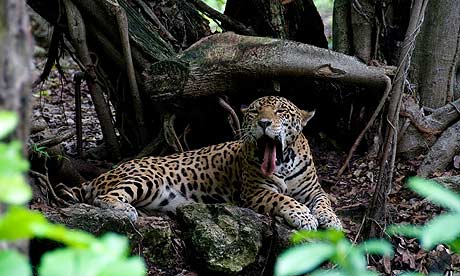
A jaguar – a symbol of Mayan royalty – is endangered but roams free in the Maya Biosphere Reserve, Guatemala. Photograph: Larry Larsen/Alamy

A jaguar – a symbol of Mayan royalty – is endangered but roams free in the Maya Biosphere Reserve, Guatemala. Photograph: Larry Larsen/Alamy

We make frequent links and comment on topics meant to raise awareness about innovative, fun and sometimes loony efforts—from the humble to the grand– to avert environmental collapse.  The dangers are real enough that we assume readers get enough of the doom and gloom elsewhere, so that we can focus our efforts on evidence of potential solutions, and encourage collective action.

The photo above accompanies a story in the Guardian worth a read, to put in perspective why it is that the Mayan calendar doomsdate hoopla, or at least some of the accompanying history, was worth a bit of attention:

…Today, much of the Mayans’ ancient homeland is a 7,700-square mile protected area in Guatemala called the Maya Biosphere Reserve. With an area greater than the states of Connecticut and Rhode Island combined, the reserve protects the largest remaining forest in Central America. Beneath the canopy, monumental vestiges of temples and palaces attest to past splendour. Similar magnificence is found in the reserve’s wildlife. The jaguar, once a symbol of Mayan royalty, still roams free in one of Central America’s last wild places. Continue reading

Periyar Tiger Reserve (Thekkady, Kerala)

The Periyar Tiger Reserve is one of India’s most famous wildlife sanctuaries. Periyar was declared a Forest Reserve in the late 19th centuary, a Wildlife Sanctuary in the 1930s and a Tiger Reserve in 1977. This land of emerald vistas, productive grasslands, orchid-studded rain forests, moss-laden trees and dripping ferns provide food and shelter to mammals, including Elephants, Tigers, Dholes, Leopards, and Wild gaur, as well as birds, amphibians and insects.

Continue reading

Marine Protected Areas As Collective Action

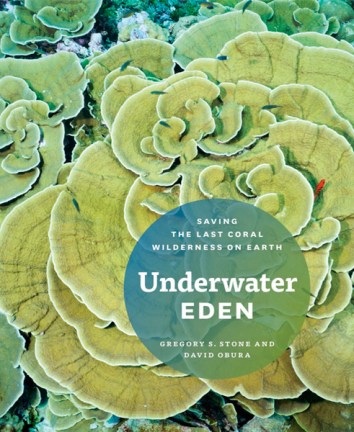
There are newer, larger marine protected areas. How and why do such areas come to be and how do they fare? According to this review the book to the left explains, and is even published as an authorial act of entrepreneurial conservation:

The Phoenix Islands Protected Area (PIPA) came into existence in 2006.  It was, at the time, the largest marine protected area in the world and was the result of a courageous step by the government of the Republic of Kiribati – a South Pacific nation consisting of what was once known Continue reading

Farming, Biodiversity & Cooperative Conservation

All over the world farmers like Bishnu Maya (in Nepal) are the main custodians of agricultural biodiversity through the conservation, use and improvement of plant genetic resources on-farm

Click the image above to go to the source of this interesting look at the relationship between farming, biodiversity and conservation:

The study ‘Flows under stress: availability of plant genetic resources in times of climate and policy change’ describes how eight members of the CGIAR Consortium, whose research is focused on plant genetic resources, are (re)organizing their conservation and improvement activities in light of climate change adaptation. Continue reading

Biodiversity At Our Doorstep

Between the Western Ghats’ recent World Heritage Site designation and Periyar Tiger Reserve’s U.N. accolades reported here, awareness of our neighborhood is most certainly on the rise.

We’ve commented on PTR’s enlightened leadership previously, but it’s always encouraging to hear additional applause.

The Periyar Tiger Reserve (PTR) has won the coveted U.N.-India Biodiversity Governance award instituted by the Government of India and the United Nations Development Programme (UNDP) for the best managed protected area of the country.

Continue reading

If You Happen To Be In Hyderabad

Inviting film to the table seems like a powerful, creative idea:

The Ministry of Environment and Forests, Government of India, and the National Biodiversity Authority are hosting an International Biodiversity Film Festival and Forum in Hyderabad as part of COP-11 in association with CMS Environment. Continue reading