Everything is good in a banana

My colleague Vinod is an expert on sustainable tourism in India, he has studied the alternatives to plastics. He explained to me that after Brazil, India is the largest producer of bananas in the world… Continue reading

Entomological Wonders

The New Yorker’s website has a post by Michael Lemonick describing a natural wonder than most people would not likely rate as highly as, say, an aurora borealis. But if you happen to be in the USA during the coming months, prepare for a natural shock and awe:

…The chirp of a single Magicicada septendecim, a type of cicada, is hardly noticeable. The simultaneous chirping of a million of them—a very rough estimate of how many insects will populate each infested acre—is not quite deafening, but it’s certainly overwhelming. The sound, a shrill, relentless whine, has been likened to the screech of a jet engine. Continue reading

Underdogs, Against All Odds, Stage Successful Comeback

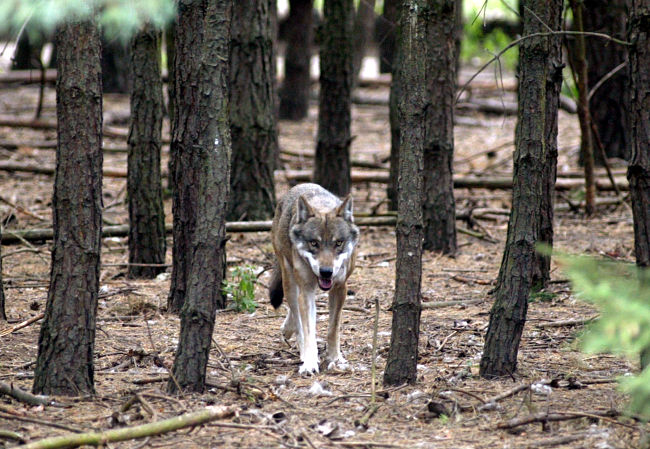
Thanks to the Atlantic Monthly‘s website for this story (click the image above to go to the source) about the resurgence of one of nature’s most historically feared beasts. Although the return of these animals has made relations between conservationists and farmers more difficult in Germany as elsewhere, the net gain for our natural world speaks for itself:

…Wolves have been absent from Germany for nearly a century, hunted out of existence by the end of the 1800s.

But over the past 10 years, they’ve made a comeback as packs from Poland and Russia have migrated into the sparsely populated eastern German state of Brandenburg. Today, some 160 wolves in 17 packs rove south and east of the capital Berlin, occasionally wandering into the city. Continue reading

Lost City Of The Monkey God

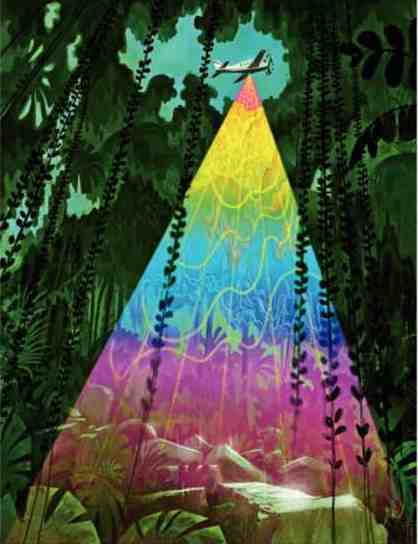
Another great article (click the image to the left to go to the source), complementing this recent one from the New Yorker, about one special location within the region several members of Raxa Collective have called home for most of the last two decades:

The rain forests of Mosquitia, which span more than thirty-two thousand square miles of Honduras and Nicaragua, are among the densest and most inhospitable in the world. “It’s mountainous,” Chris Begley, an archeologist and expert on Honduras, told me recently. “There’s white water. There are jumping vipers, coral snakes, fer-de-lance, stinging plants, and biting insects. And then there are the illnesses—malaria, dengue fever, leishmaniasis, Chagas’.” Nevertheless, for nearly a century, archeologists and adventurers have plunged into the region, in search of the ruins of an ancient city, built of white stone, called la Ciudad Blanca, the White City. Continue reading

Reserva Los Cedros, Ecuador & Photos

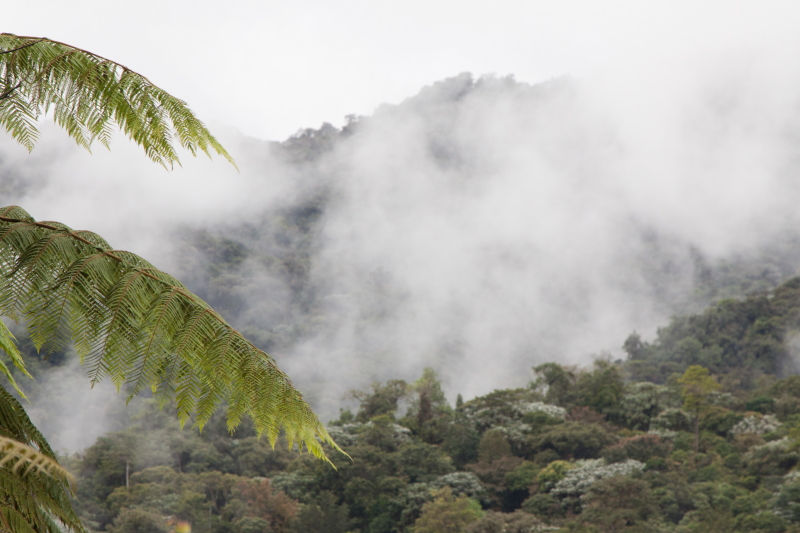
Reserva Los Cedros  is a place of hidden beauty, starting with it’s location. Although only 60km from Quito, it takes a full day, about four modes of transportation, and a bit of very muddy hiking to get there. There reserve just feels distinctly…hidden. It can be reached only by a ~2 hour hike on a smally, unmarked trail, and from its center you can’t see past the nearest hillside. The rest of the surrounding landscape is hidden by forest and clouds. Even from Google Earth it’s invisible ( 0.308390°, -78.779466°).

Los Cedros has good reason to hide. Continue reading

Travel For The Marine Biodiversity, Support Conservation in Baja California Sur

This slideshow requires JavaScript.

We’ve posted about the biodiversity of this spectacular region before so when we came across this article highlighting the Cabo Pulmo National Marine Park it definitely drew our attention.

The park is

a 27.5-square-mile ecosystem with an unusual history and an uncertain future. At least 226 fish species live in the park, and it is home to the only living hard coral reef in the Sea of Cortez. But environmentalists fear that a major resort development could significantly alter this delicate fringe of Baja, both above ground and underwater. Continue reading

Lost and Found In Ghana

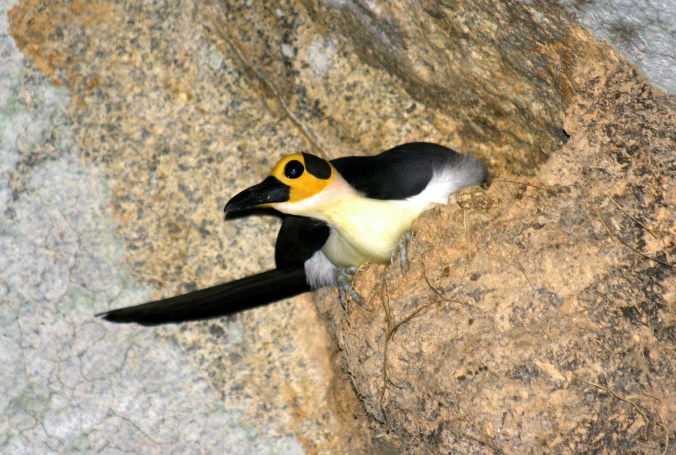
White-necked Picathartes - Photo Credit: David Shackelford Rockjumper Birding Tours

White-necked Picathartes – Photo Credit: David Shackelford Rockjumper Birding Tours

In March we’d introduced the White-necked Rock Fowl in our Bird of the Day series, and then neglected to tell the full story behind this charismatic bird. Shame on us! But better late than never I’m happy to share it now.

West Africa’s Upper Guinean forest block stretches along the coast from Sierra Leone to Ghana, and along with the Congolian forest block is considered a biodiversity hotspot. Up until the mid-1960s-early 1970s it is believed there were at least 200-300 breeding pairs of the endemic white-necked picathartes in Ghana alone. But up until 10 years ago there hadn’t been reports of the bird for nearly 4 decades, leading conservationists to believe it eradicated from the region.

Our colleague John Mason from the Nature Conservation Research Centre (NCRC) in Ghana has provided us with this fascinating story:

Efforts to locate rockfowl were not successful until 2003, when a research team from Louisiana State University, working in collaboration with NCRC and WD, re-discovered rockfowl in Ghana.  A single individual was mist-netted and one breeding site was recorded in the Subim Forest Reserve.  Subsequently the Ghana Wildlife Society located two additional colonies near this first site.  Continue reading

2013 Goldman Award Winner

2013_azzamalwash_profile

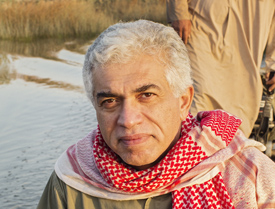
Recently brought to our attention due to a short documentary, today’s news puts new wind in his sails with the award of this much-deserved prize (click the image to the right to go to the website):

Giving up a comfortable living and family life in California, Azzam Alwash returned to war-torn Iraq to lead local communities in restoring the once-lush marshes that were turned to dust bowls during Saddam Hussein’s rule.

The Mesopotamian marshlands in southern Iraq are known by many as the birthplace of civilization. Situated between the Tigris and Euphrates rivers, the area was once an oasis of aquatic wildlife filled with lush reed beds, water buffalo, lions, foxes and otters. It was also one of the world’s most important migratory flyways for birds.

In the mid-1990s, Saddam Hussein burned, drained and poisoned the area in retaliation of Shiite Arabs, who had staged uprisings following the Kuwait invasion and fled to the marshes for refuge. The wetlands once known as the Garden of Eden turned to dust bowls, driving out the descendants of ancient Sumerians who had inhabited the area for thousands of years. Continue reading

Beauty Of Kerala – Wayanad

photo Credits: Nidhin Poothully

Photo credits:  Nidhin Poothully

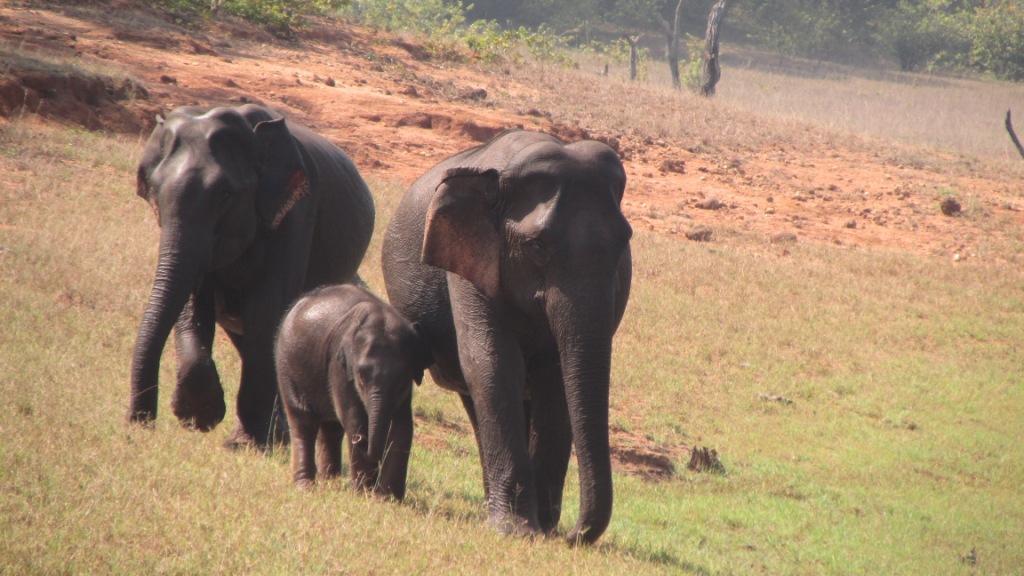
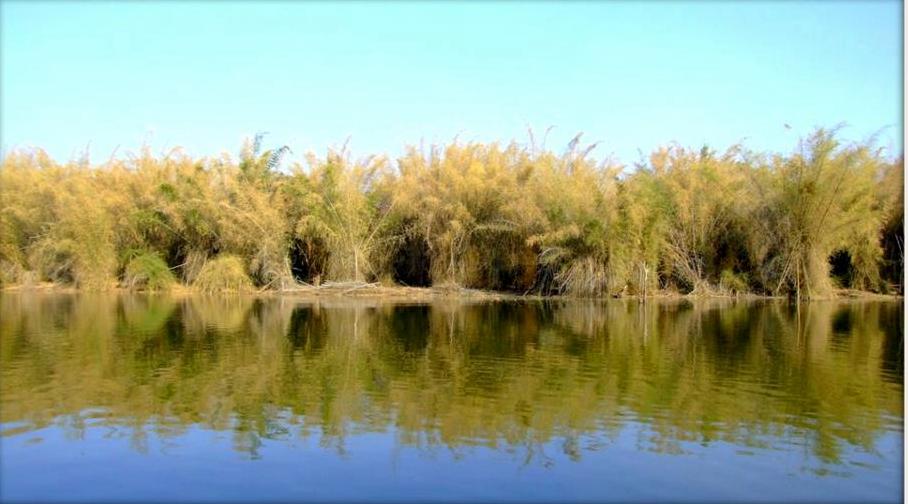
The road leading to Wayanad is smooth and even and surrounded by greenery from deciduous forest to soaring bamboos. The sanctuary around Wayanad is rich in fauna and flora. Elephants are the most common wildlife sighting, sometimes even amidst the the thick bamboo groves flanking the road en route to the sanctuary. Continue reading

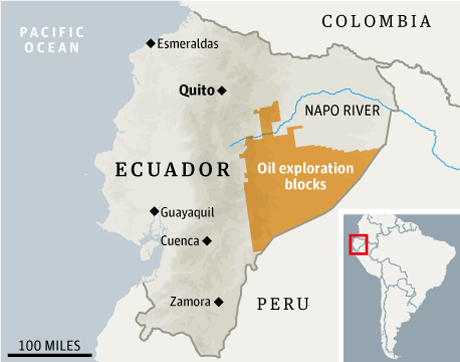
Really, Ecuador & China?

Ecuador-map-001

From today’s Guardian (click the image above to go to the source):

Ecuador plans to auction off more than three million hectares of pristine Amazonian rainforest to Chinese oil companies, angering indigenous groups and underlining the global environmental toll of China’s insatiable thirst for energy. Continue reading

Beauty Of Kerala – Nelliyampathy

Photo credits: M N Shaji

Photo credits: M N Shaji

Situated south of Palakkad Gap in an area once famed for its luscious oranges, Nelliyampathi is now blanketed in tea, coffee and cardamom plantations. The region was once owned by the Maharajas of Kollengode and Kochi and is now a part of the Nenmara Forest Division. It’s close proximity to the Parambikulam, Anamalai and Peechi-Vazhana wildlife sanctuaries add to its appeal. Continue reading

Nagarahole National Park – Karnataka

Photo credits: Ramesh Kidangoor

Nagarahole National Park is located near Mysore in Karnataka, covering an area of 643.39 sq km. This national park is one of the best-maintained wildlife reserves in the country. The name of the park is derived from naga, which means cobra in Kannada (the local language of Karnataka) and hole, referring to streams, or river. The park, also known as Rajiv Gandhi National Park, has an  abundance of fauna including spotted deer, wild boar, gaur, elephants, leopard and tigers. Continue reading

Rainforest Primer

Statistics:

  •   .03% of the world’s surface with 5% of the world’s biodiversity.
  •   130 species of freshwater fish
  •   160 species of amphibians
  •   208 species of mammals
  •   220 species of reptiles
  •   850 species of birds, including 52 species of hummingbirds alone
  •  1,000 species of butterflies
  •  1,200 varieties of orchids
  •  9,000 species of plants
  •  34,000 species of insects
  • twelve climatic zones
  • 5 types of forest: mangrove, rain forest, cloud forest, lowland tropical dry forest, deciduous forest
  • Landmass of 19,730 square miles – approximately the size of West Virginia

But statistics only tell a rather 2 dimensional story. Continue reading

Herbivores, Unite

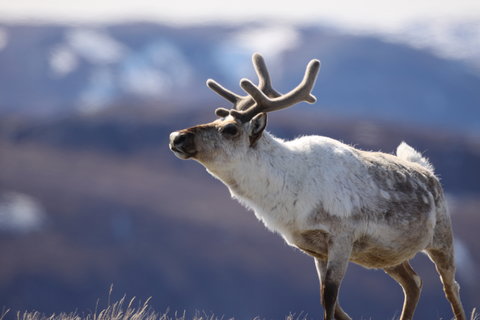
Eric Post/Pennsylvania State UniversityGrazing and biodiversity: an adult male caribou in Greenland.

Eric Post/Pennsylvania State University
Grazing and biodiversity: an adult male caribou in Greenland. 

Thank you, Green Blog:

In the unending quest for effective ways of adapting to climate change, it seems that musk ox and caribou may have some of the answers.

According to a study published this week, the large herbivores that inhabit Greenland and other regions in the far north can play an important role in maintaining biodiversity in a warming climate. Continue reading

Camera Traps, Unite

This slideshow requires JavaScript.

Sharing technology, data, knowhow.  Pooling resources in the common interest across regions of the tropical world for the sake of biodiversity conservation.  Take a look at what TEAM is doing. A six minute video appears on the Guardian‘s website, providing much-appreciated coverage:

One million images of wildlife in 16 tropical forests around the world have been captured by the Tropical Ecology Assessment and Monitoring (TEAM) Network. Since it began its work in 2008 to monitor changes in wildlife, vegetation and climate, cameras in the the Americas, Africa and Asia have photographed more than 370 different species including elephants, gorillas, chimpanzees, large cats, honey badgers, tapirs and tropical birds Continue reading

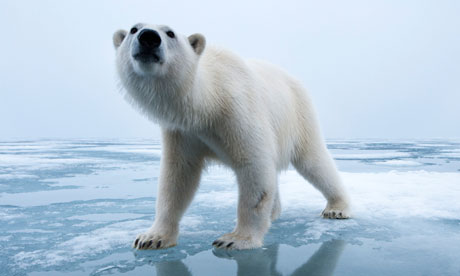
If Green Is The New Black, Perhaps Polar Bear Is The New Panda

Some polar bears may have to be placed in temporary holding compounds until it is cold enough for them to go back on to the sea ice, say scientists. Photograph: Paul Souders/Corbis

Some polar bears may have to be placed in temporary holding compounds until it is cold enough for them to go back on to the sea ice, say scientists. Photograph: Paul Souders/Corbis

This story in the Guardian‘s Environment section, one of the longest stories that section has ever run, is worth the time to read.  It raises a kind of semi-doomsday scenario, and in the process heightens sensitivity to this particular magnificent charismatic megafauna.  Decades back, WWF leveraged the Panda into a strong iconic hot-button for the need of donations to conservation NGOs.  This article got us thinking whether the polar bear is now the hot button icon for increasing the sense of urgency needed to do something about climate change:

The day may soon come when some of the 19 polar bear populations in Canada, Alaska, Greenland, Norway, and Russia will have to be fed by humans in order to keep them alive during an extended ice-free season or prevent them from roaming into northern communities. Some bears may have to be placed in temporary holding compounds until it is cold enough for them to go back onto the sea ice. In worst-case scenarios, polar bears from southern regions may have to be relocated to more northerly climes that have sufficient sea ice cover. Continue reading

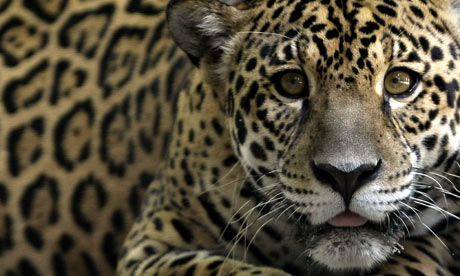
Guyana’s Jaguars

Jaguars once roamed widely from the south-western United States to Argentina, but have lost nearly half of their natural territory and have disappeared altogether from some countries. Photograph: Mauricio Lima/AFP/Getty Images

Jaguars once roamed widely from the south-western United States to Argentina, but have lost nearly half of their natural territory and have disappeared altogether from some countries. Photograph: Mauricio Lima/AFP/Getty Images

Bravo to Panthera for its achievements in the couple of years since we first learned about it in this 60 Minutes segment.  And thanks to the Guardian‘s ongoing coverage of such important topics:

The lushly forested nation of Guyana on Thursday joined a regional pact to protect jaguars, the elusive spotted cat that is the biggest land predator in the Americas but has become vulnerable as expanded agriculture and mining carves away at their fragmented habitat. Continue reading

Kuruva Dweep – Wayanad, Kerala

Photo credits: Shaji Kumily

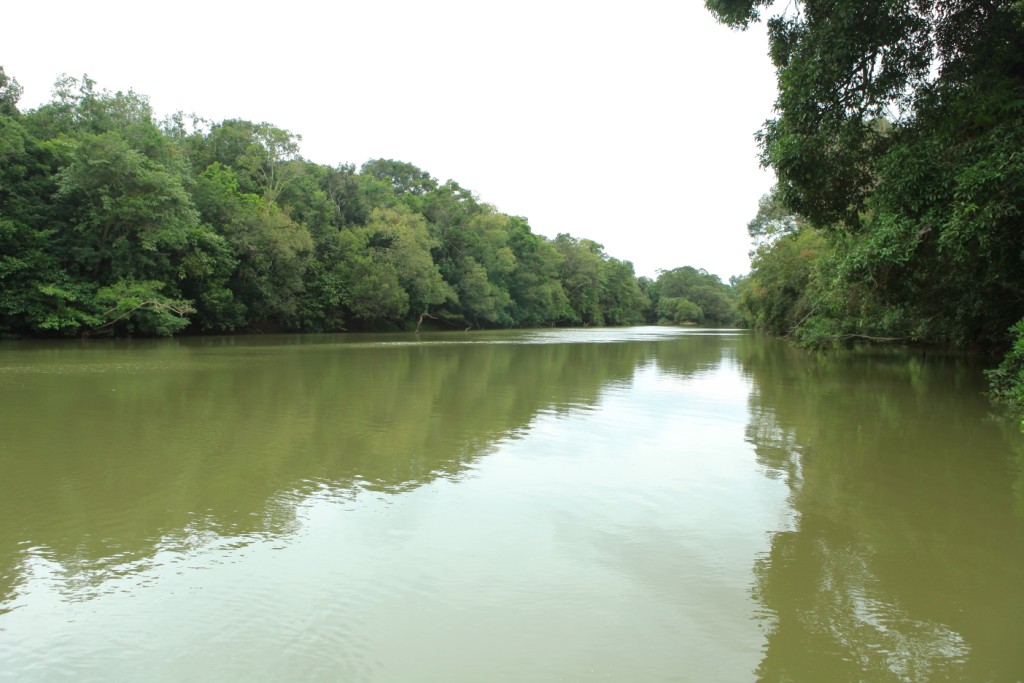
Most of the 40 odd rivers that originate in the Western Ghats flow west to the Arabian Sea, but three flow east to the neighbouring states of Karnataka and Tamil Nadu. The Kabini is one of these rivers. It develops from two separate rivulets that wind around a 950 acre wooded island nestled amidst sylvan surroundings, called Kuruva Dweep. Continue reading

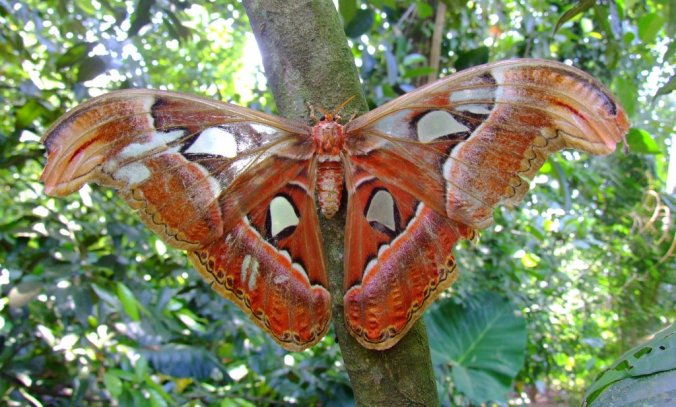
Atlas Moth – Attacus atlas

Photo Credit : Ramesh Kidangoor

The Western Ghats is one of the richest treasure troves of biodiversity on this planet, haven for moths, butterflies and other insects. Among the diverse species is the Atlas Moth, with the largest wing surface area in the world having a span reaching over 25 cm (10 in). Continue reading