What Else is Out There?

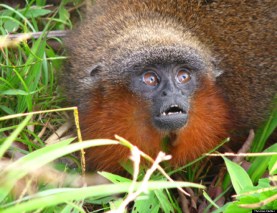
Thanks to the World Wildlife Fund, 441 new species of plants and animals have been discovered in the Amazonian rainforest, including a truly bizarre looking monkey that apparently purrs like a cat when content, as well as a… vegetarian piranha.

Image

Newly discovered Titi Monkey. Photo Courtesy World Wildlife Fund

It is a good feeling in any naturalist’s gut, amateur or professional, too know that undiscovered species still remain in today’s world — where technology and advancements in various facets of our lives thanks to 21st century progressivism don’t leave much to the imagination; it seems as though the mystique of discovery still remains just as true to many of us as it did when we were children. Unfortunately this is not the case for absolutely everyone, but for those who are still amazed by the world, discoveries such as this are a blessing.

Continue reading

Periyar Sightings – October 15th, 2013

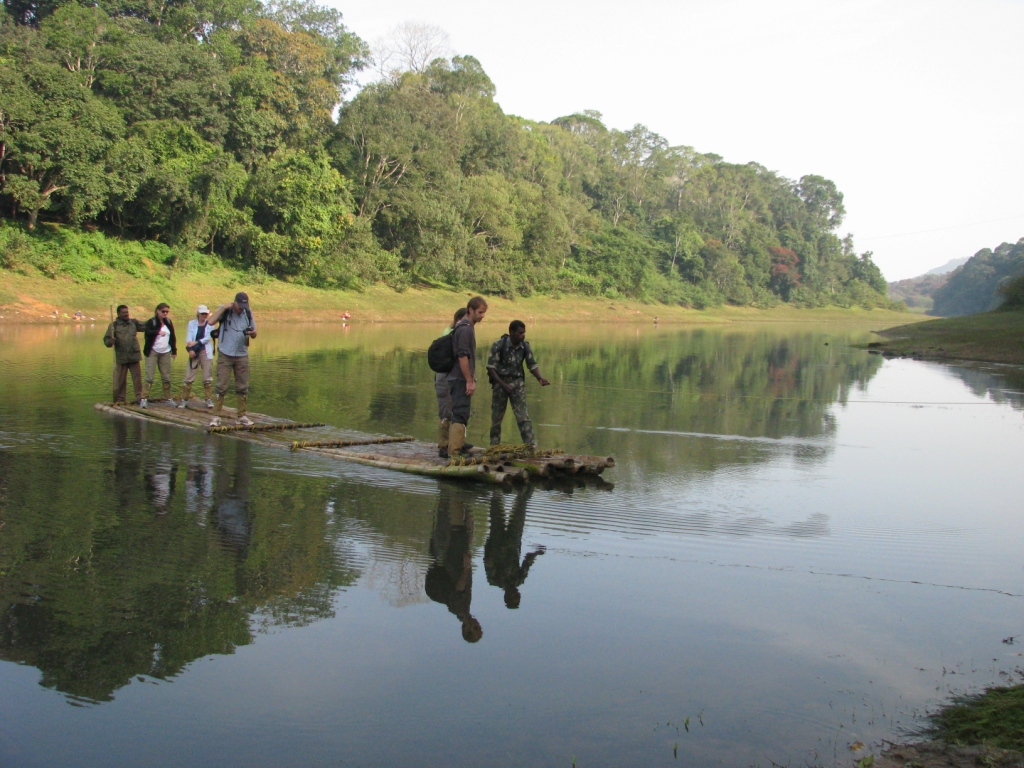
Photo Credits : Manoj Vasudevan

Photo Credits: Manoj Vasudevan

Mr. Manoj Vasudevan, the leader of a visiting tour group, joined the nature walk last week at the Periyar National Park. We love it when our guests share their  shots with us ! Continue reading

Extinction Reversal

When Phil first mentioned the series he would share here, the fit could not have been more perfect. It was based on his own experience as a diver; on his own informed understanding of environmental challenges at once universal and personal (as a diver, he has witnessed changes that disturb him); on his role as a citizen science participant; and on his belief in entrepreneurial conservation as a solution to some otherwise intractable challenges.

We prefer the first person here, but also share as much as we can of what science has to say on these subjects through our reliable cadre of science journalists. Carl Zimmer, over at National Geographic‘s Phenomena site, writes about genetically engineering in the wild, which raises important, obvious and not so obvious ethical issues:

Back in April, I wrote in National Geographic about the provocative idea of bringing extinct species back to life. In the five months that have passed since then, I haven’t spotted any mammoths or saber-tooth lions drifting through my front yard. If “de-extinction” ever does become real, it won’t for quite a while.

What I have seen over the past five months is a new conversation. Part of the conversation has revolved around the specifics of de-extinction. Some people are open to the possibilities of rebuilding genomes and embryos of vanished species. Some people find it a flashy distraction from the real work of fighting the current wave of extinctions. Continue reading

Little Wonder

Thanks to the Science section folks at the New York Times, who have added to an already excellent Tuesday paper section with lots of excellent online resources such as this (click the image to the left to go to the video):

SCIENCE

ScienceTake: A Frog’s Secret to Sticking

Nature is full of animals with amazing abilities that scientists are trying to understand, and the torrent frog is one of them. True to its name, it lives stuck to waterfalls.

Really, Karnataka?

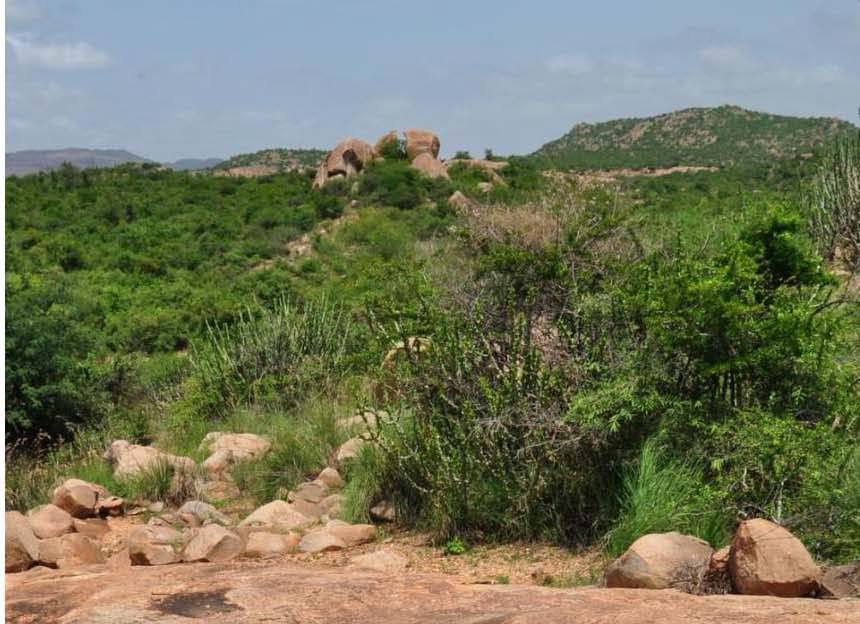
Forest near Daroji Sanctuary, Karnataka; photo credit: Santosh Martin

Forest near Daroji Sanctuary, Karnataka; photo credit: Seshadri K.S

We’ve stated before that our site is not dedicated to outrage, but we do make an effort to point out questionable environmental decisions by corporations and countries when we see them.

So when it came to our attention that the minister of tourism in the Indian state of Karnataka was spearheading a plan to create a zoo/wildlife safari within the buffer zone of the Daroji Bear Sanctuary we had to take notice. According to Santosh Martin, honorary wildlife warden for the region

The fragile ecosystem is home to critically endangered species of both animals and plants including pangolins, sloth bears, wolves, leopards, etc., which are classified as Schedule I by the WPA. This site is also a breeding ground for the Indian eagle owl, brown fish owl and possibly the blue tailed bee eater. More than 150 bird species have been documented in this area by naturalists which include the yellow-throated bulbul, painted spur-fowl, painted sand grouse, etc. Continue reading

Citizen Science in Belize – Update – If You Can’t Beat’em, Wear’em

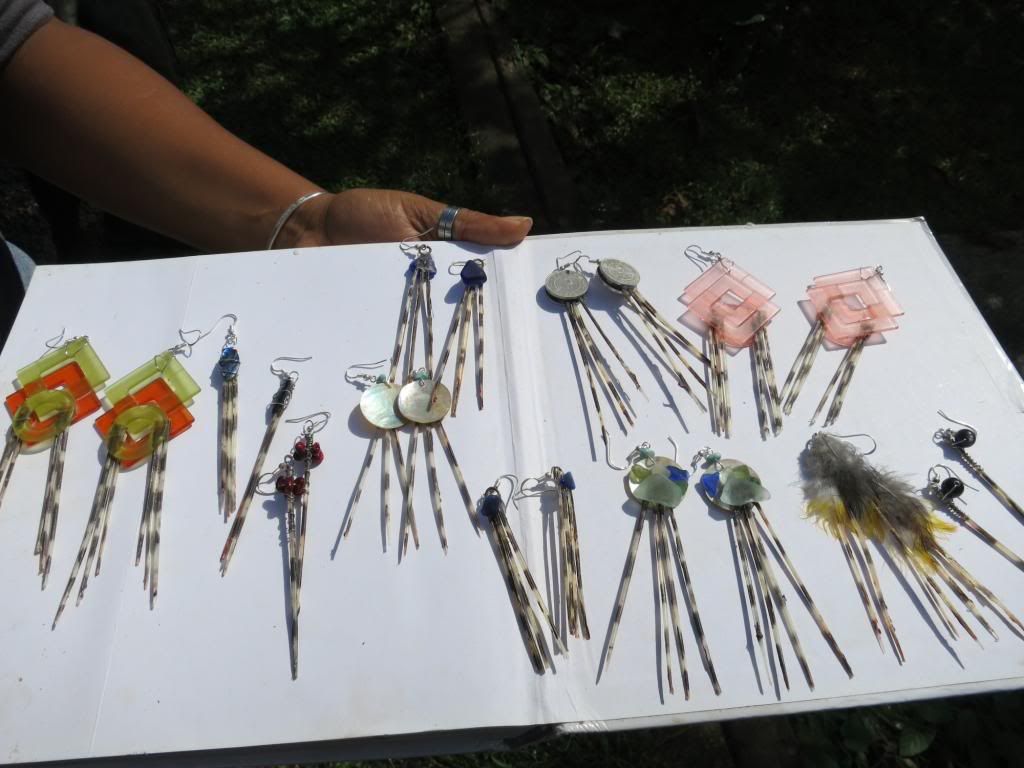
Lionfish spine earrings crafted by Palovi Baezar, Punta Gorda, Belize. Credit: Polly Alford, ReefCI

In earlier posts about my volunteer experience in Belize with ReefCI, I talked about the lionfish invasion that is threatening coral reef and other marine ecosystems throughout the Caribbean, Gulf of Mexico, and Southern Atlantic Seaboard of the United States, and noted that, at least for the foreseeable future, human intervention, particularly the establishment of a commercial fishery for the species, appears to be the only solution to keep the invasion under control.

I mentioned the idea of lionfish jewelry as a possible way of increasing the economic return to fisherfolk who may otherwise be reluctant to go after lionfish given the difficulty of catching them (the fish must be harvested by spearing or hand netting rather than through traditional methods such as lines or nets). I’ve been pleased to learn that at least one artisan in Belize has picked up on the idea, using some of the lionfish spines that I collected while I was there. She has already crafted some beautiful earrings (see photo above) and is working on other jewelry items as well as decorative mirrors. Elsewhere, jewelry crafted from lionfish tails and fins is being sold online, and through a retail outlet in Curaçao.  Continue reading

Stories from the Field: Lakkavalli Forest Range, Bhadra Wildlife Sanctuary

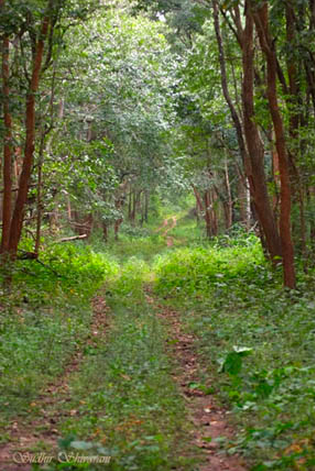
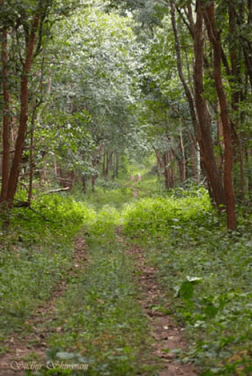
Lakkavalli Forest Range, Bhadra Wildlife Sanctuary

Lakkavalli Forest Range, Bhadra Wildlife Sanctuary; photo credit: Sudhir Shivaram

On Global Tiger Day Amie introduced the idea that I’ll be sharing my experiences as a wildlife photographer. Much of my time is spent doing workshops throughout India, but I’m happy to reach into the archives of my pictorial adventures to share with Organikos readers.

This is a safari from my earlier days photographing wildlife, and it’s an experience that I’ll always remember! It was around 1 pm when we reached the Lakkavalli Forest guest house, situated on top of a hill, overlooking the Bhadra dam. The road was good and the drive was quite scenic. We took the Bangalore-Tumkur-Tiptur-Arsikere-Tarikere route. As soon as we reached the guest house, we took our gear and headed into the forest. Though it was 2:30 in the afternoon and we knew that it wasn’t the best of times for spotting wildlife, we wanted to spend more time in the forest.

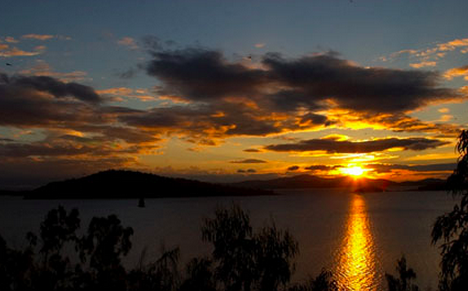
The forest was crawling with millions of Giant Wood Spiders. The webs spread across trees, with arachnids waiting patiently for their prey. The Lakkavalli range has a good concentration of mammals, but our timing wasn’t great on the first day. An interesting fact about the Bhadra Wildlife Sanctuary is the work done by the then DFO, Mr. Yatish Kumar, who was successful in re-locating 17 villages from within the sanctuary to the outskirts of the park. As the forest officials say, people in these villages admire him so much for his accomplishments, that they have named one of the villages as Yatish Nagar. The day’s sightings were limited to some Deer, Sambars and Gaurs. We came back to our guest house just in time for some spectacular sunset scenes.

Photo credit: Sudhir Shivaram

The next morning, driver Suresh along with guard Shivarudrappa picked us up. At the sanctuary entrance a forest watcher joined us. We were very eager to sight a tiger, as a particular route (Paramagudda) was quite famous for frequent tiger sightings. We never knew what the forest had in store for us but it turned out to be my most memorable safari to date. An hour’s drive into the forest yielded nothing. Suddenly the watcher, seated at the back of the jeep shouted, “Chirte sir, Chirte” (Leopard sir, Leopard). Continue reading

Citizen Science in Belize: Part 2/2 – If You Can’t Beat’em, Eat’em

Photo by Alexander Vasenin

Lionfish sushi – Photo © World Lionfish Hunters Association (click on photo to visit their website)

In Part 1 of this post I talked about the lionfish invasion that is threatening coral reef and other marine ecosystems throughout the Caribbean, Gulf of Mexico, and Southern Atlantic Seaboard of the United States.  Scientists, environmental groups and governments that are studying the problem have all come to the conclusion that it is probably impossible to eradicate lionfish in the Atlantic – they are here to stay. Continue reading

Conservation and Your Health

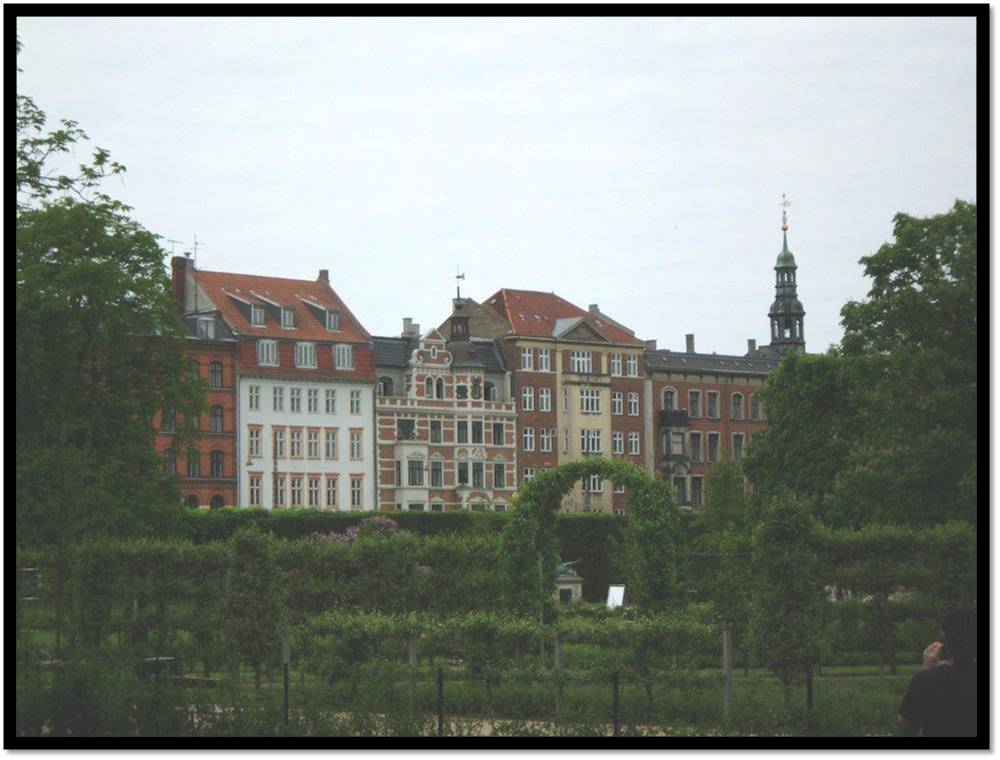
Park in København  -Enriching the city's biodiversity

Park in København -Enriching the city’s biodiversity

Conservationists have always referenced the benefits of biodiversity to the natural world, but many people wouldn’t associate that benefit with our own species. Humans have always had a bond and relation with the natural world, so it is logical that the change, no matter how small, in one would affect the other. According to a Discovery Magazine article, there is new compelling evidence out there showing that biodiversity is good for our health, and the lack of it in urban areas might be the cause of the rise in inflammatory and allergy problems.

The main evidence comes from a Finnish study that found that children who lived in a more biodiverse environment were less likely to have an allergic reaction to a controlled allergen substance than children who did not.

…the urban-dwelling nature of developed countries may be to blame for their increasing problem with inflammatory diseases. If so, conservation of natural spaces, including parks and other green initiatives, may be key to protecting the health of future generations. Continue reading

Citizen Science in Belize: Part 1/2

Photo © ReefCI

Photo © ReefCI

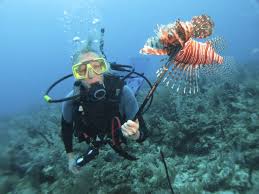
It might seem strange to accompany a posting about marine conservation with a photo of a fish on a spear, but in this case, it is entirely warranted.

I recently returned from the Sapodilla Cayes Marine Reserve in Southern Belize, where I spent two weeks working as a volunteer with ReefCI, a NGO dedicated to coral reef ecosystem conservation. Located 30 miles off the coast of Belize on the southern tip of the Mesoamerican Barrier Reef (the second largest in the world, after Australia’s Great Barrier Reef), the Sapodilla Cayes constitute a unique ecosystem.

Along with other volunteers, I assisted the ReefCI marine biologist with population surveys of conch, lobster, and commercial fish species, as well as coral reef health checks. At least one, and sometimes two surveys were carried out each day. The data collected is provided to the Belize Fisheries Department as well as to other cooperating NGOs.

Now about that fish on a spear. One of ReefCI’s projects is lionfish control. Spears Continue reading

Prehistoric Hemispherical Face-Off

Robert Krulwich/NPR

Wondrous prehistory, thanks to Robert Krulwich:

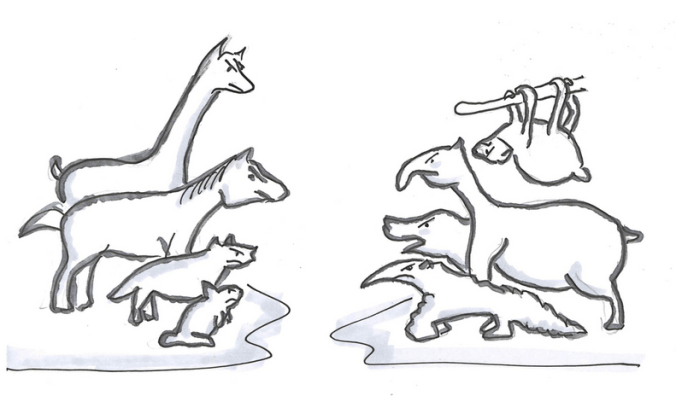
This is the story of two continents doing battle, North America versus South America. It is also a biological mystery.

For a very long time, North America and South America were separate land masses. The Pacific Ocean slipped between them, flowing into the Caribbean. The Isthmus of Panama was there, but it was underwater. The two continents didn’t touch.

As a result animals on both continents, especially mammals, evolved independently. They didn’t, couldn’t, interbreed. And yet, both North and South America had mountains, plains, long lazy rivers, deltas and supported similar forms of mammalian life. In fact, when biologists look back at the fossils, they found almost mirror like populations. Continue reading

Protecting The Largest Forests

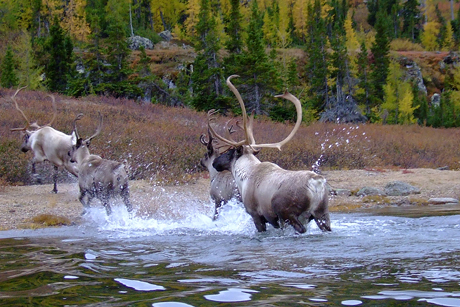
Photo courtesy Valerie Courtois, Canadian Boreal Initiative. Migratory tundra caribou in the boreal region of Quebec migrate hundreds of miles and require large tracts of protected wilderness.

Photo courtesy Valerie Courtois, Canadian Boreal Initiative. Migratory tundra caribou in the boreal region of Quebec migrate hundreds of miles and require large tracts of protected wilderness.

Thanks to Krishna Ramanujan for this story in the Cornell Chronicle about the new mega-scale of conservation planning:

At least half of Canada’s 1.4 billion acre boreal forest, the largest remaining intact wilderness on Earth, must be protected to maintain the area’s current wildlife and ecological systems, according to a report by an international panel of 23 experts. Continue reading

Extinction Is Forever, Except When It Is Not

But where would I live? Royal BC Museum

But where would I live? Royal BC Museum

From the fellow who brought you Dolly, a philosophical yet practical consideration of the ethics of cloning an extinct species:

It is unlikely that a mammoth could be cloned in the way we created Dolly the sheep, as has been proposed following the discovery of mammoth bones in northern Siberia. However, the idea prompts us to consider the feasibility of other avenues. Even if the Dolly method is not possible, there are other ways in which it would be biologically interesting to work with viable mammoth cells if they can be found. Continue reading

A Tiger’s Tale

Photo credit: Sudhir Shivaram

A few months ago I wrote about the RAXA Collective and Pixetra Photography master bird photography class held at Cardamom County. It was an amazing experience in and of itself, but it also gave us the opportunity to meet the instructor, wildlife photographer Sudhir Shivaram, and some talented participants, one of whom is now a contributor to our site. (I’m always keeping my hopes up that others will join her!)

During the 3 day workshop, between treks in the Periyar Tiger Reserve, the Megamalai Wildlife Sanctuary and a private 200 acre cardamom plantation, I spoke with Sudhir about his experiences as a photographer and an ambassador for Indian wildlife conservation.

He’s been photographing wildlife in India for well over a decade, so I asked him to describe his most memorable “capture”. He shared this experience from 2006 in the Bhadra Tiger Reserve:

10 years of wildlife photography and I had never seen a tiger in the wild, let alone photographing one. Many of my friends advised me to go to Bandhavgad if I wanted to see a Tiger. But I always had the wish to see my first Tiger in the wild in the south Indian forests. On March 17th 2006, I had seen my first tiger at BRT Wildlife Sanctuary- just the body and the tail. That too for a fraction of a second. And this visit to Bhadra along with Vijay and Yathin proved to be a lucky one. I had shot my first Leopard at Bhadra on 31 Oct 2004 (which is my website logo). And 2 years later, I was seeing and photographing my first Tiger at the same place. Here’s the sequence of events which followed then. Continue reading

Fruit, Every Day, Everywhere


We appreciate the reminder provided by one of the Atlantic’s many talented writers, about a topic we have had more than passing interest in for the last couple years. Our own previous mention of this film, and the phenomenon make this article no less interesting:

There are more than a thousand banana species in the world, but you’ve probably only ever tasted one. The Cavendish banana is the one we know and love. It’s the one the international banana economy is based on–the only species that’s exported from one country to another, anywhere in the world. But its extinction is coming… Continue reading

Collaborative Poaching-Patrol

The Hindu— File Photo

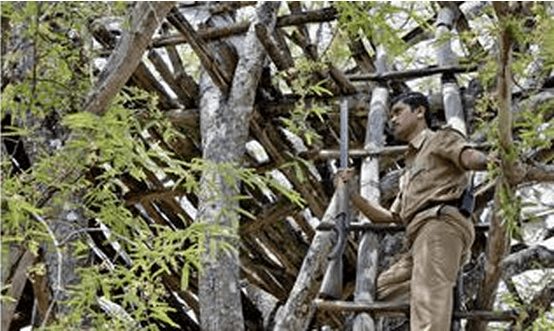
We’ve written about the importance of forest stewards before, primarily because in many cases they straddle the roles of guard and guide within the territories they protect. But many of those protected areas in India are suffering from severe shortages of qualified field staff, putting enormous areas of land, not to mention the wildlife that call it home, at risk.

But the Karnataka Eco-Tourism Development Board is initiating an innovative plan to train volunteers to be forest naturalists who will assist the forestry department a minimum of two weeks per year in their anti-poaching activities.

In order to create this pool of trained volunteers, the Karnataka Eco-Tourism Development Board is offering, for the first time in the country, three- and four-day Naturalist and Volunteer Training. The board is offering the training programme in association with Jungle Lodges and Resorts Ltd. Continue reading

Wild Periyar – Dholes (Asiatic Wild Dog)

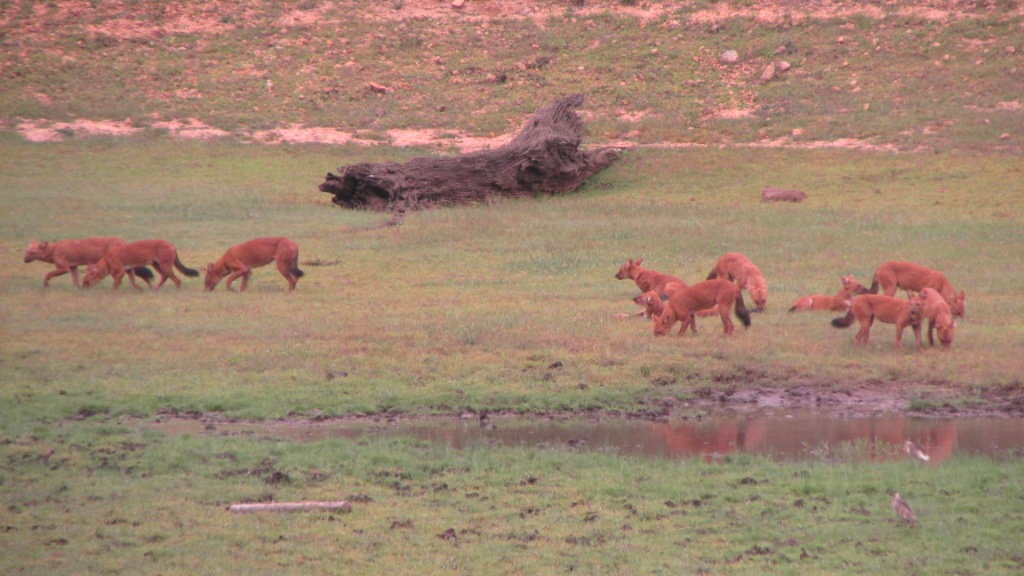
Recently disignated as a World Heritage Site by UNESCO, the Western Ghats and Periyar Tiger Reserve are among India’s prime ecological hot spots The rich and productive banks of the Periyar reservoir attract Wild Dogs that gather near the lake looking for Sambar Deer and Wild Boar. Continue reading

Diurnal bats

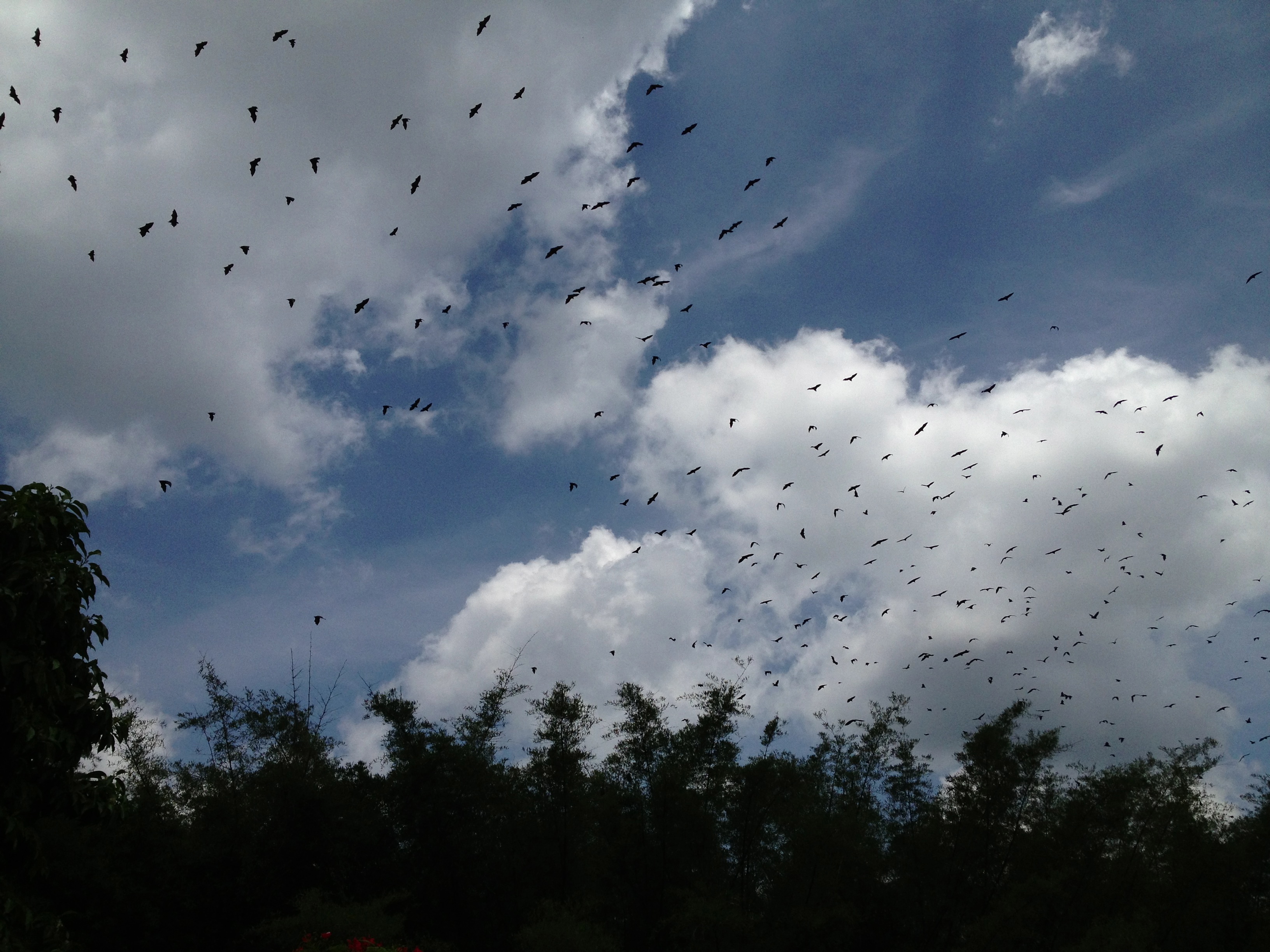
The forest canopy of the Periyar Tiger Reserve is rich in fruit all year round and bats feel very much at home.  Out of the 119 species of bats found in India, 28 occur in Kerala. As many as six species of bat have been recorded in the Periyar :  the  flying fox, the shortnosed fruit bat,  the Great-Eastern horse-shoe bat, the Tickell’s bat, the Common yellow bat, and the Painted bat.

Bats usually roost in camps in the bamboo across the road from Cardamom County, hanging upside down all day and feeding on the abundant fruit in the area after sunset. However when I sighted this wide cloud of bats around midday on the rooftop of the restaurant, it got me wondering : what disturbed them during the day ? Continue reading

Save Soil, Perhaps Even Improve It By Drinking Organic Coffee

SaveOurSoil_LOGOThe news we pointed to about coffee-making best practices was mainly about the last step of a long chain–when the coffee is just about to give its olfactory, gustatory and other pleasures upon consumption.  It linked to an earlier post about the artisanal agriculture link in the coffee-making value chain, but here we add one more link on that topic. It has strong recommendations about what else we as consumers might do to assist in coffee-making best practices. It brings to mind topics we have covered in non-coffee posts, such as altruism, which we have considered more than once; and collective action, likewise more than a passing interest.

When we have the opportunity to support a good cause, at minimum we can give it attention here by linking to it, and with great pleasure we do so for our friends at Counter Culture Coffee:

Our soils are in crisis. Conventional, chemical-based farming is destroying soil health, leaving farms with increasingly barren earth. Extraordinary coffee – that which we are dedicated to – needs rich, thriving soil, since healthy soil leads to healthy coffee trees, prosperous farms, and delicious coffee. Continue reading

Siberian Tigers Return, Humans Shrug In Ambivalence

Decades of poaching and logging in China and elsewhere have ravaged the Siberian tiger population, with only about 500 left in the wild worldwide. Photograph: Tim Davis/Corbis

Decades of poaching and logging in China and elsewhere have ravaged the Siberian tiger population, with only about 500 left in the wild worldwide. Photograph: Tim Davis/Corbis

In our day to day work, how humans and wild animals interact is often a matter of personal fulfillment, though at times we tend to the challenging aspects as well.  The Guardian‘s coverage of the fate of charismatic mega-felines falls into this latter category with a mixed message of one wild animal’s population rebound and what can only be described as practical human reaction:

…Decades of poaching and logging have ravaged the population of the big cat, also known as Amur tigers– only about 500 still live in the wild worldwide. In 2010, Chinese authorities launched an initiative to boost numbers in the Hunchun National Siberian Tiger Nature Reserve near the country’s border with Russia and North Korea. Continue reading