Bees’ Emotions

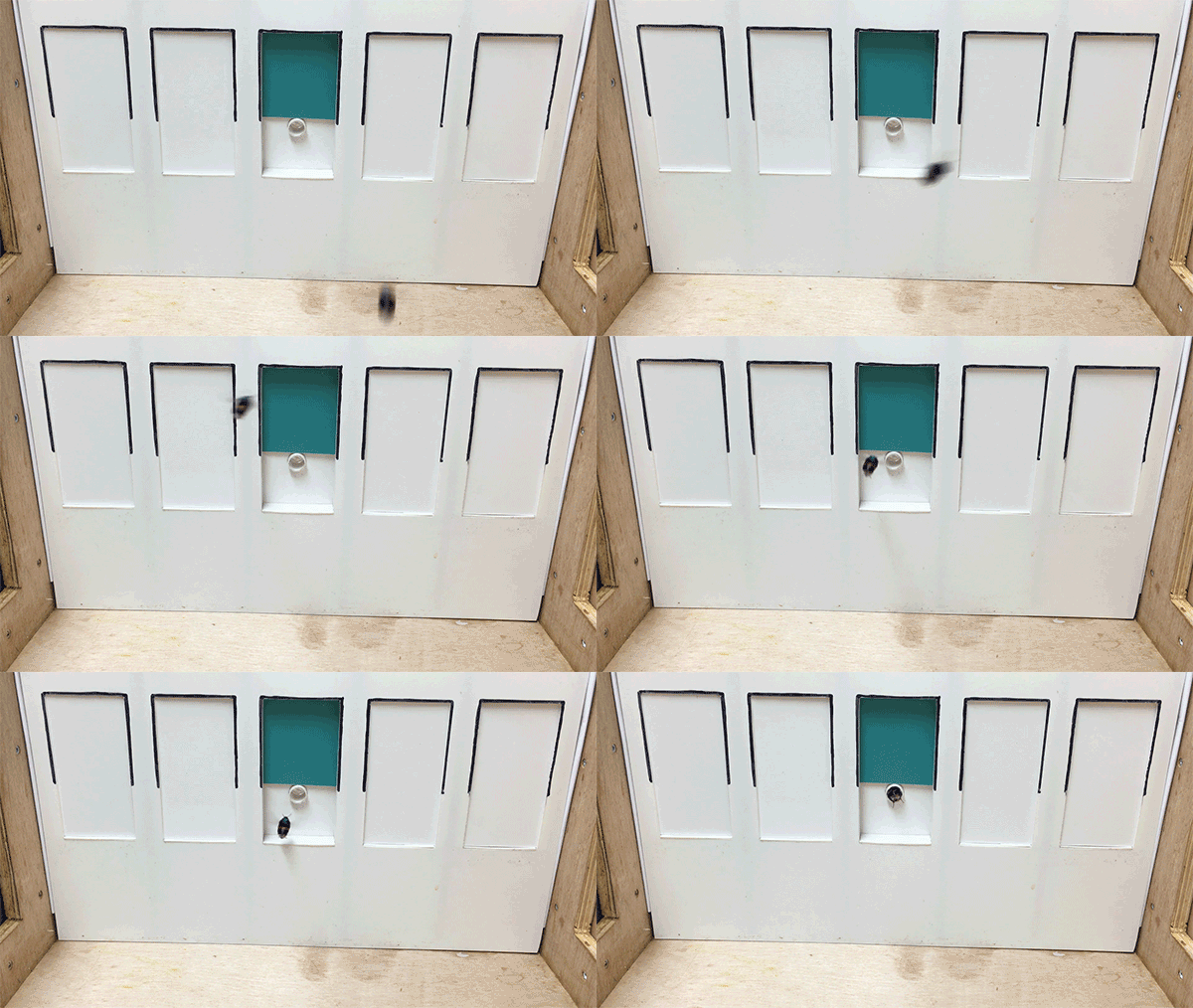
bees-experiment.gif

A bee enters a cylinder with an ambiguous reward in the study of bee “feelings.” CreditClint J. Perry

We avoid gimmickry but now a bee has finally convinced us that a gif can do just what is needed to convey a point:

The Sweet Emotional Life of Bees

By

It is hard enough to figure out emotions in humans — but insects?

Nonetheless, as far back as Darwin, scientists have suggested that insects have something like emotional states, and researchers continue, despite the difficulties, to try to pin those states down. Continue reading

Get Jolted By Understanding Fish Better

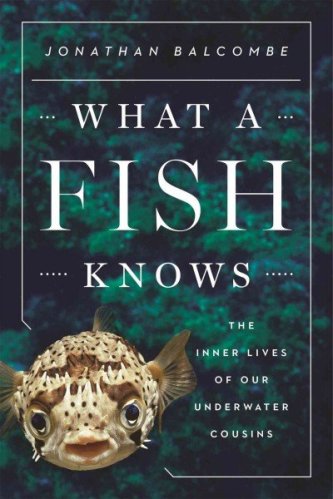
9780374288211_custom-a8005fb568cedbbcdfa556084e27717de66bba19-s400-c85The morning walk’s provided a different sensation from the learning component of the morning walk a few days back, giving me a jolt of new appreciation for all that I have no clue about related to life underwater; the jolter was an ethologist, of all things:

…The knifefishes of South America and the elephant-nose fishes … [are] both electric-producing, so they have EODs, which are electric organ discharges, and they use those as communication signals, and they communicate in some pretty cool ways. They will change their own frequency if they’re swimming by another fish with a similar frequency, so they don’t jam and confuse each other. They also show deference by shutting off their EODs when they’re passing by a territory holder…

Continue reading

The Future Of Coffee Matters To Us For More Than One Reason

3000

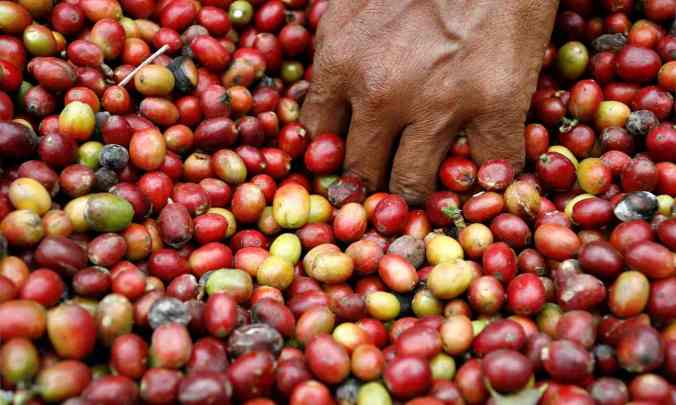
A farmer with coffee cherries from his latest crop, the seeds of which are roasted, ground and brewed to make coffee. Photograph: YT Haryono/Reuters

We work in several countries where coffee production is important to the national economy. We serve coffee in every property we have ever managed. Many of us working in La Paz Group are coffee junkies.

But more than that, as I have mentioned at least once in these pages, we care extra deeply about the future of coffee because on one of the properties we manage, some excellent arabica estate coffee is growing in the shade of a rainforest canopy. I owe you more on that topic. For now, what has my attention is ensuring the long run sustainability of this organic coffee production.

So you can be sure of where some of our team members will be next Tuesday. Join us if you can:

Climate change is threatening the world’s coffee supplies: what can we do? – live chat

Join us on this page on Tuesday 20 September, 2-3pm (BST), to debate the future of coffee, and the millions who depend on it, in the face of climate change

What we’ll be discussing Continue reading

Seagrass In The Food Chain

090616_Daru_0005.jpg

Harvard University Post-Doctoral Fellow in Organismic and Evolutionary Biology, Barnabas Daru, researches seagrasses of the world. He is at Carson Beach in South Boston, where he found no seagrasses. Rose Lincoln/Harvard Staff Photographer

Postdoctoral researchers contribute to scientific knowledge akin, perhaps, to the way seagrass contributes to the robustness of a marine ecosystem’s biodiversity:

Strong case for seagrass

Researcher behind biodiversity analysis cites key role in food chain

By Alvin Powell, Harvard Staff Writer

new analysis of a key contributor to the marine food web has turned up a surprising twist: more unique species in cooler waters than in the tropics, a reversal of the situation on land.

The findings highlight the need to direct limited conservation dollars according to science, with a focus on places where biodiversity is most at risk, said Barnabas Daru, Harvard Herbaria Postdoctoral Fellow in Organismic and Evolutionary Biology, who performed the analysis on the world’s 70 species of seagrass.

Daru acknowledged that seagrass isn’t as exciting as sharks or tuna, or as marine mammals such as seals, dolphins, and manatees. But for anyone who cares about the health of marine animals, he said, the role of humble seagrass at the beginning of the marine food chain is key. Continue reading

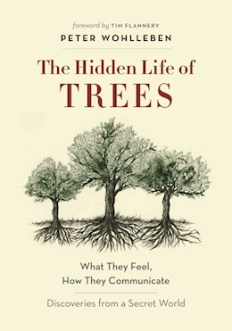
The Man Behind The Hidden Life of Trees

3648

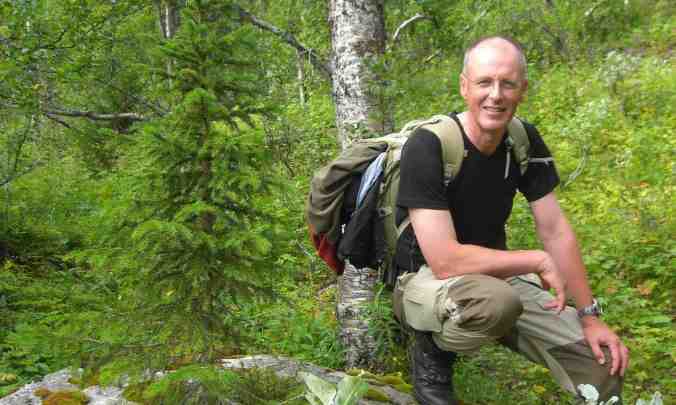
Trees a crowd … Peter Wohlleben and friends. Photograph: Peter Wohlleben

9781771642484The man who thinks trees talk to each other

Beech trees are bullies and willows are loners, says forester Peter Wohlleben, author of a new book claiming that trees have personalities and communicate via a below-ground ‘woodwide web’

Early this year I linked out to a profile of Peter Wohlleben, and that post was remarkably well received. The post about the woodwide web concept more recently, clearly connected conceptually, was also well received, while pointing to the findings of other researchers (if you did not listen to the Radio Lab piece, do yourself a favor and do so). I am happy to link to more about the ideas in this book, and to learn more about the man himself:

Trees have friends, feel loneliness, scream with pain and communicate underground via the “woodwide web”. Some act as parents and good neighbours. Others do more than just throw shade – they’re brutal bullies to rival species. The young ones take risks with their drinking and leaf-dropping then remember the hard lessons from their mistakes. It’s a hard-knock life.

Continue reading

Keystone, Canary, and Weedy Species

canary_art22-1068x479

Art © US State Dept./Doug Thompson

We wrote on these two biodiversity conservation ideas in the last month, and will continue to develop that theme for some time. Writing for The Guardian, biologist James Dyke explains a recent scientific study he was involved in that divided organisms into three distinct types, with “canary” species being the most important to monitor as indicators for ecosystem health:

The Earth’s biodiversity is under attack. We would need to travel back over 65 million years to find rates of species loss as high as we are witnessing today.

Conservation often focuses on the big, enigmatic animals – tigers, polar bears, whales. There are many reasons to want to save these species from extinction. But what about the vast majority of life that we barely notice? The bugs and grubs that can appear or vanish from ecosystems without any apparent impact?

Continue reading

All About Horns

05waqanimalhorns-adapt-590-1

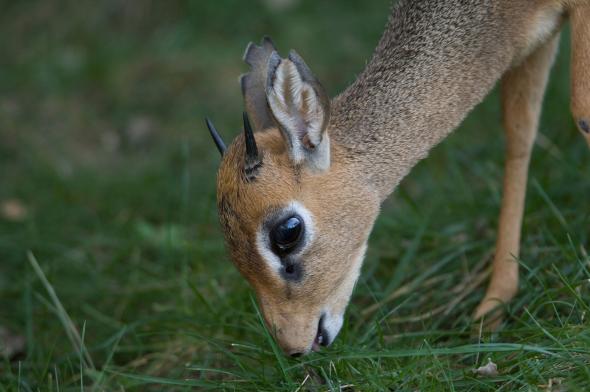
A dik-dik, a type of dwarf antelope with tiny horns. All photos by National Geographic

Horns are a curious biological development that come in all shapes and sizes and serve different purposes. There are plenty of white-tailed deer around the Gallon Jug Estate, some of which are young bucks with anywhere from one- to five-point antlers, and last night two guests actually watched a pair of these males butting heads within Chan Chich Lodge. An article by National Geographic enlightens us to the horny way of life:

Horns evolved independently in many animals to meet similar needs—first as weapons, and then as defenses against rivals, says Don Moore, director of the Oregon Zoo in Portland.

Horns likely initially inflicted body blows, but became larger and more elaborate as they absorbed blows to the head. This strategy led some animals, like pronghorns, to essentially wrestle (watch a video), whereas others, like sheep, ram their opponents.

Continue reading

Wood Wide Web

7650980706_652e5ab178_k.jpg

Forests and fungi–words that make me think of Milo circa 2010-2012 in the south of India, especially in the Periyar Tiger Reserve (but also later, writing about fungi in relation to food waste). When I first heard this a week ago, it seemed typical of Radiolab’s attention to quirky outlier science stories:

From Tree to Shining Tree

Saturday, July 30, 2016

A forest can feel like a place of great stillness and quiet. But if you dig a little deeper, there’s a hidden world beneath your feet as busy and complicated as a city at rush hour.

In this story, a dog introduces us to a strange creature that burrows beneath forests, building an underground network where deals are made and lives are saved (and lost) in a complex web of friendships, rivalries, and business relations. It’s a network that scientists are only just beginning to untangle and map, and it’s not only turning our understanding of forests upside down, it’s leading some researchers to rethink what it means to be intelligent.

And it was typical, in that sense. But Milo’s attention to the underworld of fungi, which at the time seemed to me as quirky as this Radiolab story does today, got me to start paying attention to anything in our news network with certain keywords (mushroom, fungi, etc.) and just now I came across a short journalistic account that taps into the same science as the Radiolab piece above, and I am realizing it may not be merely quirky: Continue reading

Tropical Kingbirds Make Good Parents, Part Two

Yesterday I wrote and shared a video about this particular flycatcher’s protective nature, but it’s important to note that this behavior isn’t limited solely to the Tropical Kingbird. Neither is the rigorous feeding displayed in the video below. Most birds take good care of their young, whether by bringing meals every couple minutes or by picking up their poop and depositing it away from the nest – which you can see the parent kingbird do at 00:30 and 2:31. I apologize for publishing this in low resolution and pixelating the cuteness, but it’s the best one can do when off-grid in the middle of the Belizean jungle!

Continue reading

Tropical Kingbirds Make Good Parents, Part One

Just a few days ago, I was working from my laptop in one of the Chan Chich Lodge common areas when I saw an Ocellated Turkey on the road – not a peculiar sight at all – that walked a few steps before suddenly doing a swift yet panicked pirouette  – a slightly less usual occurrence, in my brief experience with the scintillant species. I grabbed my camera, which doesn’t leave my side here at the Lodge, and recorded the following video, in which the turkey gave a new meaning to the chicken-dance, albeit as an unwilling partner:

Continue reading

Biodiversity, Conservation, Questions

natural-history-collection1.jpg

From Conservation, a provocative question answered in the summary of a scientific investigation:

IS BIODIVERSITY THE ENEMY OF NATURE?

It’s easy to use a word so often that its meaning is taken for granted. Nuances are lost, conceptual freight laid aside, assumptions unexamined. Take biodiversity: just a few decades old, the word is now ubiquitous, a default frame for thinking about nature — and that’s not necessarily a good thing. Continue reading

The Big Headed Ant


072716_ca_ants_feat_new

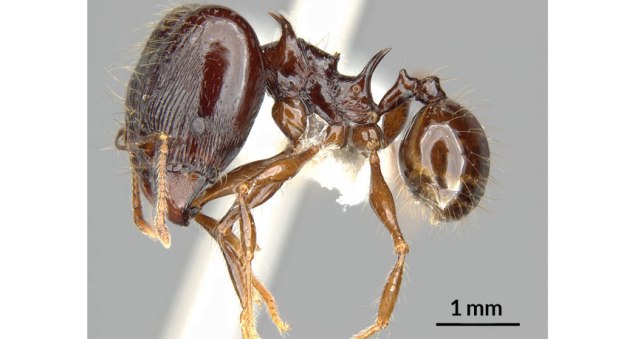
Source sciencenews.org

Whether it be inside or outside of our homes, ants are everywhere on land. The Pheidole drogon and Pheidole viserion worker ants, found in the rainforests of Papua New Guinea, are ones that have spines protruding from their thoraxes, an intimidating sight for anyone or anything trying to tangle with them. However, researchers suggest that the thorny-looking spine might instead be a muscular support for the ant’s over-sized head, which is used to crush seeds. Continue reading

Slothy Sloths

sloth_zpsz5rmsghb

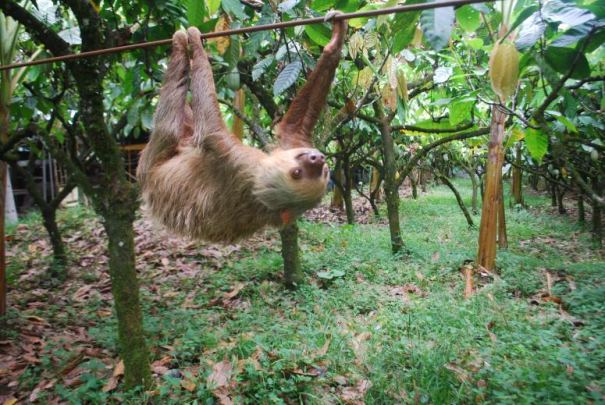
Source news.wisc.edu

Sloths are my favorite arboreal folivore, which is just the short, scientific way of saying an animal that lives in trees and feeds only on leaves. Observing this placid-looking creature was and still is quite a novelty for visitors (and locals, like me) to Costa Rica given that its sluggish nature is uncommon for a arboreal vertebrate…and its adorable fuzziness is simply too cute not to stare at. To understand the rarity of this type of animal (arboreal folivores) better, a group of researchers from the University of Wisconsin traveled to Costa Rica and began to investigate the sloth’s adaptation to a slow lifestyle. Continue reading

Expeditions In The Interest Of Science (Secondary Discovery, Nature’s Majesty)

p03xtfz4

The survey crew inventories the park for butterfly habitats (Credit: John McLaughlin)

This BBC article, featuring butterfly hunters in the very northwestern-most spot in the lower 48 of the USA, reminds us of an expedition we tracked not long ago:

Equal parts academic and mountain man, wildlife biologist John McLaughlin has scaled mountains and traversed snowbound passes to identify more than 40 butterfly species.

It’s best to bring an ice axe when counting butterflies in North Cascades National Park. Located on the Canadian border in the US state of Washington, the park is renowned for its jagged peaks, limited trails and annual snow pack.

“Before my census crew could learn to identify over 40 butterfly species,” John McLaughlin recalled, “they had to know how to safely traverse snowbound, steep passes and – if necessary – to self-arrest using an ice axe.” Continue reading

Tapping Other Types Of Rewards

060616_Duhaime_046_605.jpg

Jon Chase/Harvard Staff Photographer. Radcliffe fellow and HMS professor Ann-Christine Duhaime, whose new project explores how inherent brain drive and reward systems may influence behaviors affecting the environment and global warming.

One possible breakthrough approach to countering the causes of climate change is to frame the issue as an epic scale equivalent to what we do to improve our diets, or to address conspicuous consumption of other varieties. If a neurosurgeon has an idea that I can relate to, that gives some hope after an otherwise kind of gloomy week of news. Thanks to the Harvard Gazette for this one:

Turning the brain green

Neurosurgeon wants to unleash our anti-hoarding tendencies

By Colleen Walsh, Harvard Staff Writer

Could a better understanding of the brain’s reward system — a network fine-tuned over millions of years and laser-focused on survival — help mankind skirt environmental disaster? Continue reading

Bioluminescent Fungi

4608

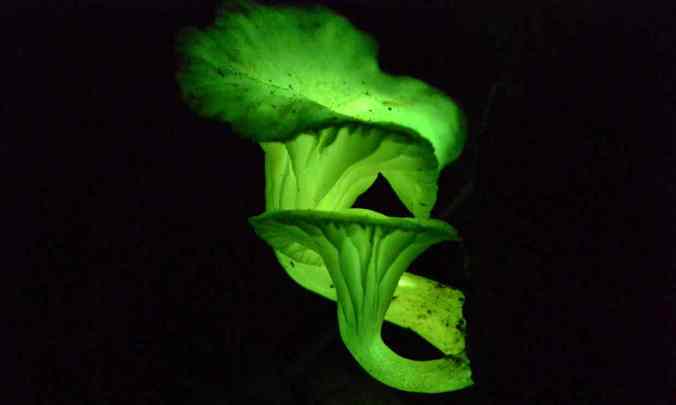
Fungal luciferin could eventually allow the creation of an autonomously luminescent plant. Photograph: Cassius Stevani at the San Paulo University in Brazil

Bioluminescence has appeared in these pages so many times that people probably wonder why. The answer would be because we have contributors who see its wonder of the world quality as directly relevant to our communications mission.

And there was a time when stories about fungi, mushrooms, etc. were the domain of one key contributor. We used to leave stories like this one to our resident mycoenthusiast  Milo, but he is no longer in residence with us; instead, busy now setting up a permaculture organic farm in the rolling hills to the west of Ithaca, NY (USA). So, for lack of a better post-person, this recommendation is from the team:

How research into glowing fungi could lead to trees lighting our streets

Bioluminescence, the peculiar ability of some organisms to behave like living night-lights, could be the key to some remarkable advances

On a moonless night deep in a Brazilian rainforest the only thing you are likely to see are the tiny smears of light from flitting fireflies or the ghostly glow of mushrooms scattered around the forest floor. Both effects are the result of bioluminescence, the peculiar ability of some organisms to behave like living night-lights. Continue reading

An Important Question From E.O. Wilson

4202

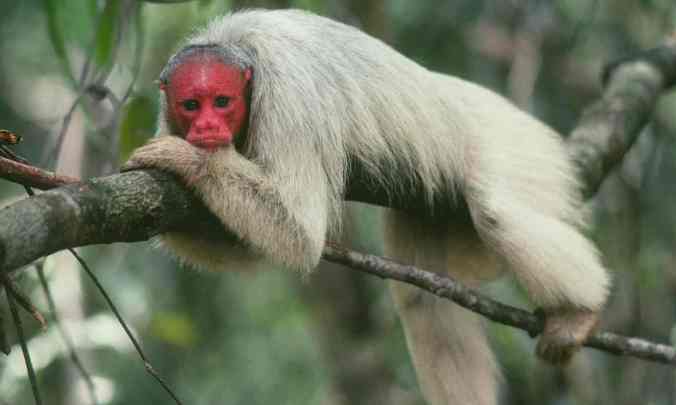
A bald uakari monkey (Cacajao calvus) in the flooded forest of the Amazon in Brazil. The IUCN Red List categorizes this species as vulnerable. Photograph: Alamy

Thanks to the Guardian for continuing to give a platform where it is most needed with respect to the natural environment:

Could we set aside half the Earth for nature?

Renowned biologist E.O. Wilson wants to set aside half of the planet as protected areas for nature. But is this possible? And, if so, how would it work?

by Jeremy Hance

As of today, the only place in the universe where we are certain life exists is on our little home, the third planet from the sun. But also as of today, species on Earth are winking out at rates likely not seen since the demise of the dinosaurs. If we don’t change our ways, we will witness a mass extinction event that will not only leave our world a far more boring and lonely place, but will undercut the very survival of our species.

So, what do we do?

E.O. Wilson, one of the world’s most respected biologists, has proposed a radical, wild and challenging idea to our species: set aside half of the planet as nature preserves.

Continue reading

Engineering Solutions to Disease

We haven’t feature lyme disease much here, although it’s a highly problematic pathogen that will become more common with a warming climate. The exact same goes for Zika, a much newer danger in the United States. This week in the New York Times, an article by Amy Harmon covers the idea of changing the gene pool in white-footed mice in Nantucket to fight Lyme disease, and a video explains how infecting the Aedes aegypti mosquito may help stop the spread of Zika. Below, the article:

Can genetically engineered mice save Nantucket from the scourge of Lyme disease?

If the 10,000 residents of the Massachusetts island did not have such a soft spot for deer, they might not be entertaining the prospect, which could provide the groundwork for an even more exotic approach to controlling tick-borne diseases on the mainland.

Continue reading

Bionic Botanic Alchemy

The device uses solar electricity from a photovoltaic panel to power the chemistry that splits water into oxygen and hydrogen, then adds pre-starved microbes to feed on the hydrogen and convert CO2 in the air into alcohol fuels. Credit: Des_Callaghan via Wikimedia Commons

The device uses solar electricity from a photovoltaic panel to power the chemistry that splits water into oxygen and hydrogen, then adds pre-starved microbes to feed on the hydrogen and convert CO2 in the air into alcohol fuels. Credit: Des_Callaghan via Wikimedia Commons

Renewable energy is manifested in multiple forms, utilizing all the classical elements. All the better when innovation brings things full circle in this form of biomimicry.

A tree’s leaf, a blade of grass, a single algal cell: all make fuel from the simple combination of water, sunlight and carbon dioxide through the miracle of photosynthesis. Now scientists say they have replicated—and improved—that trick by combining chemistry and biology in a “bionic” leaf.

Chemist Daniel Nocera of Harvard University and his team joined forces with synthetic biologist Pamela Silver of Harvard Medical School and her team to craft a kind of living battery, which they call a bionic leaf for its melding of biology and technology. The device uses solar electricity from a photovoltaic panel to power the chemistry that splits water into oxygen and hydrogen, then adds pre-starved microbes to feed on the hydrogen and convert CO2 in the air into alcohol fuels. The team’s first artificial photosynthesis device appeared in 2015—pumping out 216 milligrams of alcohol fuel per liter of water—but the nickel-molybdenum-zinc catalyst that made its water-splitting chemistry possible had the unfortunate side effect of poisoning the microbes… Continue reading

A Moth’s Dark Side Evolution

A mutation giving rise to the black form of peppered moths has been discovered and is estimated to have occurred around 1820. Photo by Ilik Saccheri

The story of moth populations turning from light grey to sooty black in England during the Industrial Revolution is a popular schoolbook lesson of evolution, but an explanation for the genes responsible for the change had not been clear until now. Ed Yong reports for Nat Geo’s Phenomena blog:

In the early 19th century, coal-fired power stations belched a miasma of soot over the English countryside, blackening trees between London and Manchester. The pollution was bad news for the peppered moth. This insect, whose pale speckled body blended perfectly against the barks of normal trees, suddenly became conspicuous—a white beacon against blackened bark, and an easy target for birds.

As the decades ticked by, black peppered moths started appearing. These mutants belonged to the same species, but they had traded in their typical colours for a dark look that once again concealed their bodies against the trees. By the end of the century, almost all the moths in Manchester were black.

Continue reading