Sloths’ and Armadillos’ Sight Stinks

Photo credit: Mwcolgan8. Via National Geographic.

Watching the pair of nine-banded armadillos in this video root around the forest floor looking for food, you’d think that in addition to their snuffling and sensitive noses, the armored mammals would also be using their eyes to spot scurrying insects or the white flash of a grub in the dirt. And a three-toed sloth like the one in this other video should definitely be able to scan the skies for predatory birds when it is taking care of its vulnerable young, right? Well actually, as NatGeo contributor Ed Yong reports, scientists at UC Riverside believe the genes that build color-detecting cone cells in eyes are broken in sloths, armadillos, and several other mammal species descended from the same burrowing ancestor:

Armadillos have terrible vision. In 1913, American zoologists Horatio H. Newman and J. Thomas Patterson wrote, “The eyes [of the nine-banded armadillo] are rudimentary and practically useless. If disturbed an armadillo will charge off in a straight line and is as apt to run into a tree trunk as to avoid it.”

The three-toed sloth isn’t much better. “If an infant sloth is placed five feet away from its mother on a horizontal branch at the same level, at once the young sloth begins to cry, the mother shows that she heard it calling and turns her head in all directions. Many times she looks straight in the direction of her offspring but neither sight, hearing nor smell apparently avail anything,” wrote Michel Goffart in 1971. And more comically: “Infuriated male [sloths] try to hit each other when they are still distant by more than a metre and a half.”

Continue reading

Bambi, or Rudolph?

Woodland caribou in the United States were decimated by overhunting and logging. Now they face additional challenges. Photo: Joseph N. Hall under a Creative Commons license. Via Cool Green Science.

Cool Green Science, The Nature Conservancy’s blog that we have started visiting to find more of our kind of news, has re-run their post from last year on the conflict between populations of caribou and white-tailed deer in North America. Matt Miller reports:

Rudolph-the-Red-Nosed Reindeer versus Bambi: yes, it sounds like a really bad holiday special. Maybe the worst ever.

Don’t worry; that’s not the case here. But along the Canada border in northern Idaho and eastern Washington, a struggle is playing out pitting the real-life counterparts of Rudolph (caribou) and Disney’s Bambi (white-tailed deer).

The quick version: woodland caribou, the rarest large mammal in the “lower 48” states have faced dramatic changes in forest habitat. White-tailed deer, drawn by the new habitat, have moved in and thrived.

The large numbers of deer have drawn more predators, notably mountain lions. And those mountain lions prey on the less wary, easier-to-kill caribou. An already beleaguered caribou population faces what may be its final straw.

In this case, Bambi wins. But there is nothing simple about this story, not really. For conservationists, it raises far more questions than answers.

Continue reading

Humans Have DNA For Making Feathers

Siberian Turkamanian Eagle Owl by Chris Paul. Via NatGeo.

We’ve always found feathers fascinating, both from an aesthetic and a biological perspective. Recently, the Cornell Lab of Ornithology’s bird guide website AllAboutBirds uploaded an interactive page solely focused on feathers, which is quite a wonderful mine of interesting information, cool animation, and amazing videography. But now, about a month late, we’ve learned that DNA researchers working on the genetic recipe for feathers have found that the sequences responsible for most of the steps involved in creating feathers are actually much, much older than feathers themselves. This indicates that we humans should have a sizable chunk of the feather-making genetic recipe as well! Carl Zimmer reports for the Phenomena section at National Geographic’s website:

Feathers are like eyes or or hands. They’re so complex, so impressive in their adaptations, so good at getting a job done, that it can be hard at first to believe they evolved. Feathers today are only found on birds, which use them to do things like fly, control their body temperature, and show off for potential mates. The closest living relatives of birds–alligators and crocodiles–are not exactly known for their plumage. At least among living things, the glory of feathers is an all-or-nothing affair.

Continue reading

Fruit Bats Can Echolocate With Wing-beats

Lesser short-nosed fruit bat. Photo by Anton Croos via National Geographic.

Bats represent an enormous amount of the mammal species alive today, but we still have a lot to learn about them. We have direct experience with a particularly large species of fruit bat called the Indian flying fox or Greater Indian Fruit Bat, and we’ve also learned earlier this year about insectivore bats in Thailand that can protect rice paddies from pests. Now we hear that fruit bats, contrary to prior scientific belief in much of the bat-biology community, can also use sonar echolocation to navigate the way insect-eating bats do. Whereas all insectivorous bats use vocal projections of sound to echolocate and find prey, most fructivorous bats have large eyes that they use to locate fruit or nectar. Three species of the fruit-eaters, however, have now been shown to use a very crude and relatively inaccurate form of echolocation using clicks created by their wingbeats. National Geographic writer Ed Yong reports:

Together with Sara Bumrungsri and Yossi Yovel, [Arjan Boonman] studied the cave nectar bat, as well as the lesser short-nosed fruit bat and the long-tongued fruit bat. He found that as the animals flew in a pitch-black tunnel, they all made audible clicks. The clicks aren’t accidents of flight. The team showed that the bats can adjust the rate of these sounds, and they click more furiously when flying in the dark than in dim light. Perhaps they actually use these noises to find their way around.

Continue reading

Electric Eels Can Paralyze Prey

Photo via National Geographic

We’ve seen eel art before, but actually don’t know much about these fish or their biology. Electric eels are even more fascinating for obvious reasons, but of course are also that much more mysterious to us. National Geographic science writer Ed Yong fills us in with the help of Vanderbilt University biologist Ken Catania below:

A fish swims in the Amazon, amid murky water and overgrown vegetation. It is concealed, but it’s not safe. Suddenly, two rapid bursts of electricity course through the water, activating the neurons that control the fish’s muscles. It twitches, giving away its position, and dooming itself. Now, it gets zapped by a continuous volley of electric pulses. All its muscles contract and its body stiffens. It can’t escape; it can’t even move. Its attacker—an electric eel—moves in for the kill.

Continue reading

First Witnessed Bonobo Birth

© BBC

Bonobos are the smaller and less researched species of chimpanzee, and just a few days ago the first birth witnessed in the wild by a human took place in the Democratic Republic of the Congo. The three main discoveries that primatologist Pamela Heidi Douglas made while observing the birth were: the mother bonobo gave birth in a tree, rather than on the ground; the mother had two other females present at the birth, who may have served as midwives or at least supporters; and the mother and her female friends all ate the placenta after the birth. Matt Walker reports for the BBC:

For almost two years, Douglas has followed and studied the bonobos at Luikotale, as part of her research towards her PhD.

“One component of my Ph.D. research is the study of reproductive endocrinology in female bonobos,” she told BBC Earth.

To do this, Douglas regularly collected urine samples from Luna and other females in the community on a regular basis.

These were tested with human pregnancy kits, which can detect pregnancy in bonobos as well as other non-human primates.

Continue reading

Predatory Selection

© BBC

Writing for the BBC Earth section, Colin Barras explores “how the ‘art of killing’ changed the world.” Did multicellular organisms arise because single-celled ones were too easily attacked? Did skeletons evolve primarily as protection against predators? And, maybe the hardest question to answer with certainty: did animals move from water to land because it would be easier to avoid getting eaten? Read the excerpted introduction below and follow the link to learn about these theories and others from Barras.

If you’ve ever seen a lion or a polar bear on the hunt, you know how powerful predators can be. Life may well have been troubled by these killer species since its very beginning, over 3.5 billion years ago, and they have wrought untold death and destruction. As a result they get a bad press: even the word “predator” stems from the Latin term to rob or plunder. Small wonder that, when people imagine paradise, it normally doesn’t have any predators in it.

Continue reading

Birds, Feathers, And Birds Of A Feather

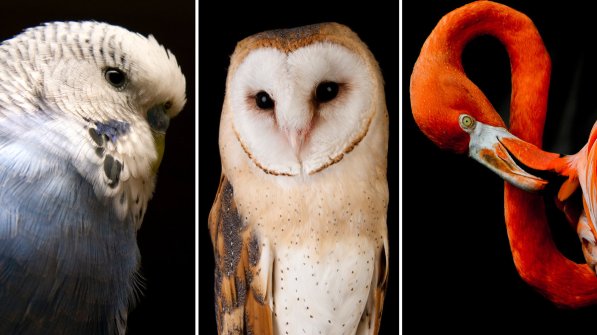
Recent research sequenced 48 bird species, including (from left) the budgerigar, the barn owl and the American flamingo. (Left and center)iStock; (Right) Chris Minerva/Ocean/Corbis

Recent research sequenced 48 bird species, including (from left) the budgerigar, the barn owl and the American flamingo. (Left and center)iStock; (Right) Chris Minerva/Ocean/Corbis

Thanks to National Public Radio (USA) for this podcast of a story we know our ornithologically-inclined readers will appreciate:

What do a pigeon and a flamingo have in common? Quite a bit, according to a reordering of the evolutionary tree of birds.

One of a series of studies published Thursday in Science is the latest step toward understanding the origins of the roughly 10,000 bird species that populate our planet. Continue reading

Ticking Clocks Of Botanical Gardens

shutterstock_192530375-copy

Image © KPG_Payless | Shutterstock

Thanks to Conservation for Roberta Kwok’s summary of scientific news we had not quite expected, nor wished for:

A relaxing stroll in a botanic garden sounds like a lovely way to spend an afternoon. These green oases can encourage people to appreciate nature and bring attention to conservation issues. But some botanic gardens might harbor an ecological threat: they could be prime sources for invasive species to spread into the wild. Continue reading

Sea Snakes, Rhinos, And The Close Observation Of Two Tragic Commons

rhino-snake-680x450

Thanks as always to Conservation, and in this case to Jason G. Goldman for the excellent summaries of scientific findings each week. There is not much happy news in this story, but nonetheless it is critical reading because of the detailed observation of the scientists:

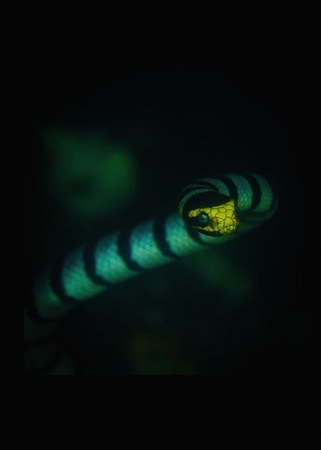
Each month, hundreds of squid fishing vessels return to port in Vietnam loaded not just with squid, but also with sea snakes harvested from the Gulf of Thailand. Each month, the seven major snake processing facilities move an average of 6,500 kilograms of sea snakes, which are sold for between $10 and $40 per kilogram, depending on species. By comparison, squid sell for between $7 and $20 per pound, making sea snakes the more lucrative catch.

In the most recent issue of the journal Conservation Biology, Vietnam Academy of Science and Technology researcher Nguyen Van Cao and colleagues argue that the harvest of sea snakes from the Gulf of Thailand is perhaps the world’s largest systematic exploitation of marine reptiles in the world, but it’s one that is woefully ignored or, at best, underscrutinized. Continue reading

Introduced Species in the Galápagos

Feral goats on Isabela Island. Photo by Galápagos National Park Service.

Yesterday I wrote about the case of the North American beaver being purposefully introduced to Argentinian Patagonia for a business venture and having severe unintended consequences on the environment in both Chile and Argentina. Most of us think of Patagonia as a pretty faraway and isolated place, and its location so far down the southern hemisphere merits that. The Galápagos Islands are another place geographically apart from most of us–that distance accounts for the specialized evolution that took place in the archipelago over millennia.

The isolation of the Galápagos from the rest of the world for so long, and the relatively small size of the islands, means that it is especially vulnerable to opportunistic species that can become invasive. In the same way that the Canadian beavers had no natural predators in Patagonia, common domesticated goats, when introduced to different islands in the Galápagos by sailors centuries ago, were able to roam and multiply, which was the travelers’ goal Continue reading

Introduced Species in Patagonia

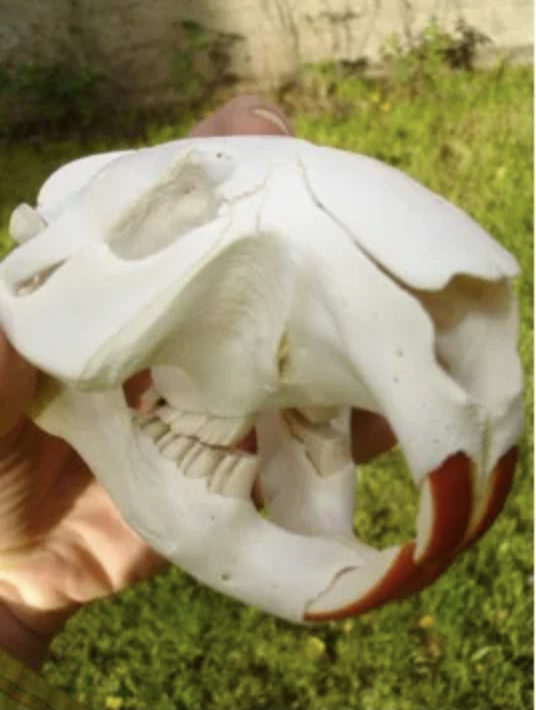
Yesterday, I wrote a bit about a book I once read and how it related to the case of the introduction of the small Indian mongoose to Jamaica to try and control a rat problem. The situation of accidentally transporting a species onto an island (or a separate continent, which often amounts the same thing), realizing the mistake when the species causes problems with the local flora or fauna, and introducing a second species to try to control the first, only to have the second species cause its own more serious issues, is a fairly common one around the planet, although Australia seems to be particularly vulnerable (look up rabbits and toads).

The case I wanted to write about today is an example of purposeful introduction of a species for human gain, but which was not properly researched beforehand and caused severe ecological damage that is still incompletely mitigated today.

Today I’ll cover the beavers in southern Chile and Argentina. The story I had originally heard, several years ago when I was Continue reading

“Tuf Voyaging” and Biological Controls

Book cover by David Willson for Baen Books.

Six or seven years ago, I read a relatively little known science fiction novel called Tuf Voyaging, written by an author extremely well known for his fantasy writing: George R.R. Martin. The book is actually a collection of short stories that had originally been published over the course of several years, and most of the stories follow the adventures of Haviland Tuf. That’s about as much as I can say without spoiling anything, except for the purposes of this post I do need to mention that quite a few of the stories in the novel are about ecological engineering and the introduction of biological controls to help solve different planets’ problems.

Even if you don’t like the more recently popular fiction by Martin (A Song of Ice and Fire), I would recommend Tuf Voyaging just for its humor and commentary on environmentalism. The stories focused on human (or at least humanoid) interaction with–and often mismanagement of–nature are thought-provoking and reminiscent of certain aspects of Frank Herbert’s Dune. And if you do enjoy Martin’s writing, then this will be a cool opportunity to Continue reading

A National Park Provides The Basis For A Unifying Theory Of Nature And Conservation

213442

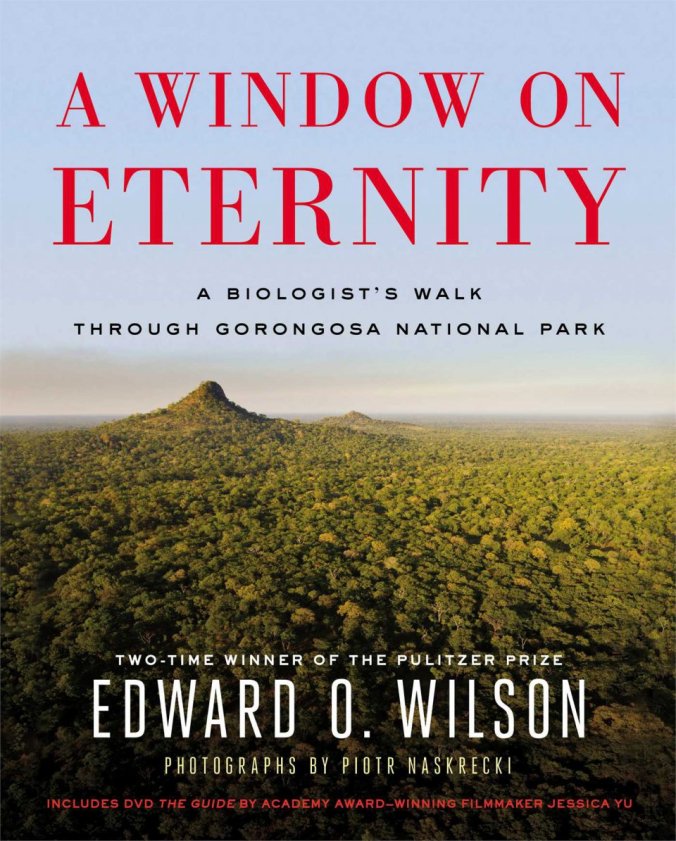
Screen Shot 2014-11-11 at 4.41.14 PMThe last time we mentioned him, it was upon discovering a new (to us) resource and today we realize we had not yet taken the opportunity to highlight this book which he published earlier this year. His interview in late May, seen here on the website of another foundation that bears his name, is worth watching to help decide whether this book is for you, or not.

The excellent NHBS, a UK-bsed website, has this to say:

A Window on Eternity is a stunning book of splendid prose and gorgeous photography about one of the biologically richest places in Africa and perhaps in the world. Gorongosa National Park in Mozambique was nearly destroyed in a brutal civil war, then was reborn and is now evolving back to its original state. Edward O. Wilson’s personal, luminous description of the wonders of Gorongosa is beautifully complemented by Piotr Naskrecki’s extraordinary photographs of the park’s exquisite natural beauty. A bonus DVD of Academy Award-winning director Jessica Yu’s documentary, The Guide, is also included with A Window on Eternity…(continued after the jump)

EOWilson

Continue reading

If You Happen to Be in Washington, DC

Photo by Wikipedia User “The High Fin Sperm Whale”

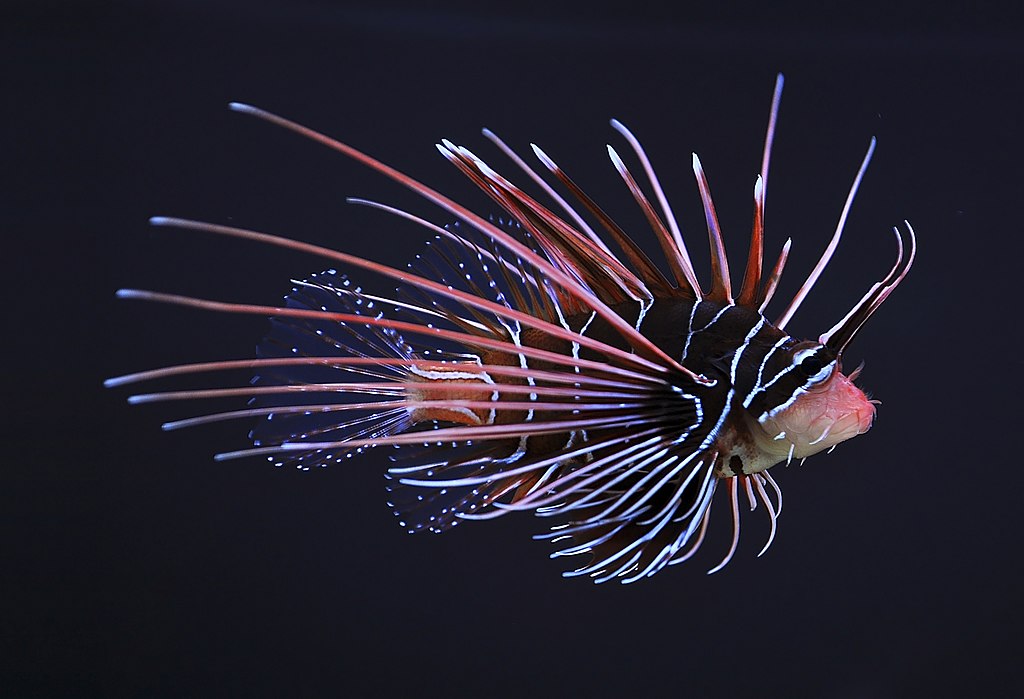
For over a year, we have been happy and fortunate to host Phil’s writings on the lionfish invasion and what entrepreneurial means might be taken to mitigate it. Next Tuesday, if you happen to be in the DC area and are looking for an educational way to spend your evening, consider going out for a happy hour lecture at Rosemary’s Thyme Bistro.  Continue reading

Field Ecology At University, Twin Of Our Daily Activities For Guests At Xandari, Cardamom County, And Soon At Zaina Lodge

Screen Shot 2014-10-27 at 6.56.03 AM

Cornell University’s social media outreach often includes topics we cover regularly on this site, this video being a standard example, so we share six minutes on a topic of relevance to several of Raxa Collective’s properties where immersion in learning about nature is our parallel universe equivalent of Professor Agrawal’s approach:

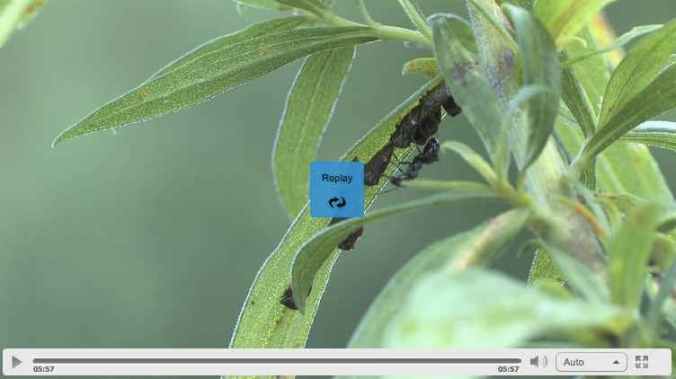
Nature as the Classroom: Goldenrod, Treehoppers and Ants

Classes in field biology are often very defined; go here, do that, measure this and come to this conclusion. Students in Anurag Agrawal’s field ecology course observe treehoppers in a field of goldenrod and devise their own study, then collect data to answer the questions. The approach comes much closer to how real field biology is actually done.

Bird Behavior at Xandari II

I recently accrued enough videos of birds doing interesting things at Xandari to make a new video to share here. By chance, all the footage I’ve gotten over the last few months has followed a common theme: pecking and pulling. In the video above, you’ll notice that all five species of bird — Rufous-naped Wren, Hoffmann’s and Lineated Woodpeckers, Lesser Greenlet, and Rufous-capped Warbler — were either pecking or pulling at something in an effort to get some food.  Continue reading

Licensed to Kill: A Look at Noble Rot

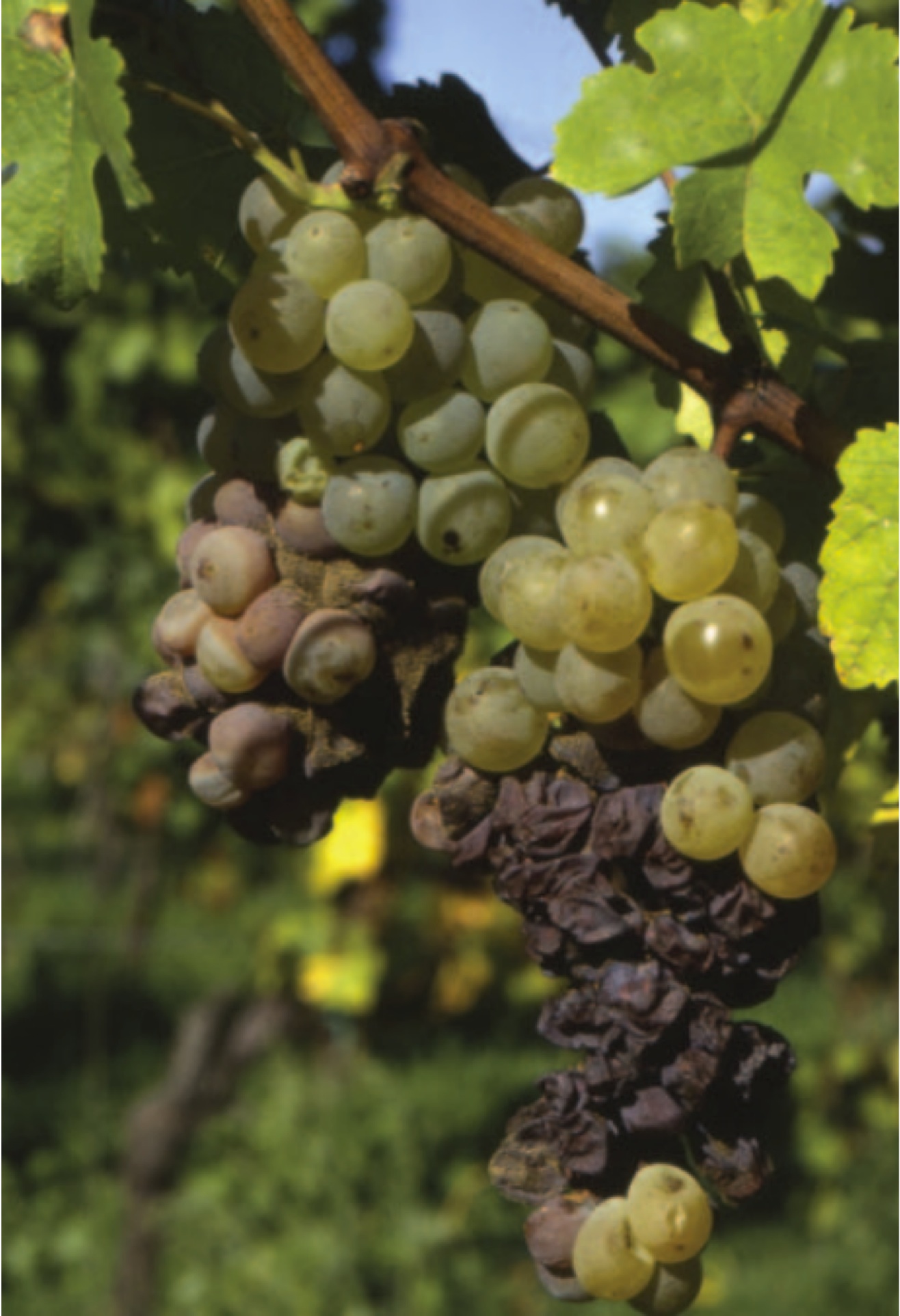
Jackson, Ron. Wine Science Principles and Applications Plate 9.1 - Cluster of grapes at different stages of rot.

Jackson, Ron. Wine Science Principles and Applications Plate 9.1 – Cluster of grapes at different stages of rot.

The fungus Botrytis cinerea — a type of gray mold — is the kind that grows on the old berries in your fridge, but in the vineyards of Europe (and more recently some other wine-producing regions artificially infected, but more on that later) B. cinerea doesn’t always turn valuable fruit into a furry mush. Also known as noble rot, B. cinerea has the potential to positively change wine grapes, in the right conditions. Depending on a vineyard’s microclimate, infection can result in either gray rot, which essentially ruins the grapes, or noble rot, which leads to unique dessert wines such as the Tokaji Aszú of Hungary, the higher Prädikat wines of Germany, and the Sauternes of France (the most prized of which can fetch $750 a bottle!).

In a single vineyard there can be completely healthy grapes, grapes with gray rot, and grapes with noble rot, all in close proximity to each other. The required conditions for noble rot formation are incredibly narrow. Like with most fungi, humid conditions favor formation. However, alternating dry and rainy periods, particularly frequent morning fogs, are necessary for the formation of asexual conidia (spores). Therefore, noble rot seldom occurs in hot and dry areas, since sunny and windy conditions allow more water evaporation. Continue reading

Some Animal Behavior Footage from Costa Rica

A dragonfly on a path at Xandari

Whenever I have the opportunity to visit a national park in Costa Rica, I obviously take my camera with me so I can try to get some good photos or videos of all the wildlife I hope to see. Looking back on my files of images from the past couple months, I realized that I happened to have some half-decent videos that represented what I’d consider the four most important classes of Kingdom Animalia/Metazoa from the point of view of a terrestrial biophile: Aves, Reptilia, Mammalia, and Insecta. In other words, when I’m walking through the rainforest, the animals I keep an eye out for will likely fall into the category of bird, reptile, mammal, or insect. If I’m out at night, then maybe Amphibia will get thrown in there too!

In the video above, you can  Continue reading

Bioluminescent Wonders

Stefan Siebert

Stefan Siebert. A young colony of Pyrosoma atlanticum.

Sure, science can explain alot of things. And yes, we definitely want to understand. But the wonder can remain a wonder even after we read about the technical details. Bioluminescence is one of those wonders. Better in person, of course, to see and experience the wonder. But for now, written explanation of this photographed wonder will have to do. We will likely never tire of the sightings, in the Times Science section or wherever, no matter how many times, of these creatures:

Continue reading