Marine Biologists & Earth’s Future

PlastiPod.jpg

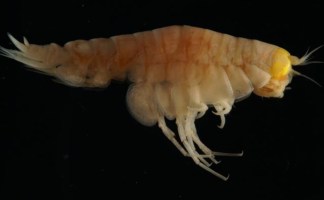
Hirondellea gigas, an amphipod collected from the Mariana Trench (ALAN JAMIESON / NEWCASTLE UNIVERSITY)

Ed Yong’s story will not make you happy. But it is a plastics must-read. Marine biologists are akin to climate scientists whose job requires sharing specific unsettling findings. To put it mildly. The scientist in this case says he does not like doing this work. But he continues in the interest of science and in the interest of the planet’s future. Thanks to him and people like him:

A Troubling Discovery in the Deepest Ocean Trenches

In the Mariana Trench, the lowest point in any ocean, every tiny animal tested had plastic pollution hiding in its gut.

Alan Jamieson remembers seeing it for the first time: a small, black fiber floating in a tube of liquid. It resembled a hair, but when Jamieson examined it under a microscope, he realized that the fiber was clearly synthetic—a piece of plastic. And worryingly, his student Lauren Brooks had pulled it from the gut of a small crustacean living in one of the deepest parts of the ocean. Continue reading

Whale Fall

Illustrated by Armando Veve

Whales and other charismatic marine megafauna are frequently in the news related to discoveries of their mysterious navigational or communication skills, or with bad news about the negative impacts of ocean acidification or other human interaction. It never occurred to us how the decomposing carcass of something that immense can be a biological gift to marine systems that could last centuries.

A Whale’s Afterlife

On the day before Thanksgiving, 2011, Greg Rouse, a trim marine biologist in his fifties, was tidying his lab at the Scripps Institution of Oceanography, in La Jolla, California. Rouse studies the worms and other small animals that inhabit the deep sea. He was organizing his microscopes, dissection supplies, and jars of deep-sea critters when he received a long-anticipated e-mail.

In the late two-thousands, Rouse and Eddie Kisfaludy, then an operations manager for Virgin Oceanic, had begun meeting with officials from the National Oceanic and Atmospheric Administration (NOAA) and the city of San Diego to pitch an alternative approach to the disposal of dead whales. Often, whales that wash up on shore are hauled to landfills or pushed back into the water. Rouse and Kisfaludy wanted to tow one out to sea, sink it to the seafloor, and watch what happened. Whale falls, as marine biologists call such events, create pop-up habitats that may serve as stepping stones for organisms migrating from methane seeps or hydrothermal vents to other parts of the ocean. Precisely how this works, and which species colonize the carcass as it degrades, were open questions that Rouse hoped to answer.

In the e-mail, a biologist from NOAA wrote that a large female fin whale had washed ashore four days previously, on the rocky beach at Point Loma, just west of downtown San Diego. The NOAA team had already moved the carcass to the protected beaches of Mission Bay and performed a necropsy, concluding that the whale had been hit by a ship. Now they were ready to hand it over to Rouse: if he could mobilize the necessary resources on short notice, the whale was his to sink.

Rouse quickly met up with Kisfaludy to strategize. They needed a boat big enough to tow a sixty-foot, twenty-three-ton whale, so Kisfaludy leaned on a Newport-based friend, Chris Welch, for the use of his large catamaran. To sink the carcass, they sourced five tons of rusty chains from Newport Harbor and another two tons of iron shackles from the Scripps scrap yard, in San Diego.

On Thanksgiving morning, Welch set out in his catamaran—rusty chains on board—and sailed south. The next day, he met up with Rouse, Kisfaludy, and a growing group of intrigued friends at the dead whale. It rested on the sand, immovable. At high tide, however, the carcass began to float, and the team made its move. They tied seven ropes around the whale’s tail and sailed west. Several hours passed. The weather was crisp and sunny, and there was little boat traffic. To Rouse’s surprise, the whale had attracted no scavengers, despite its exposed rolls of dark purple muscle draped in white, translucent fat. The team began to consider names for the whale. Someone suggested Rosebud, and it stuck. Continue reading

Warrior Gems

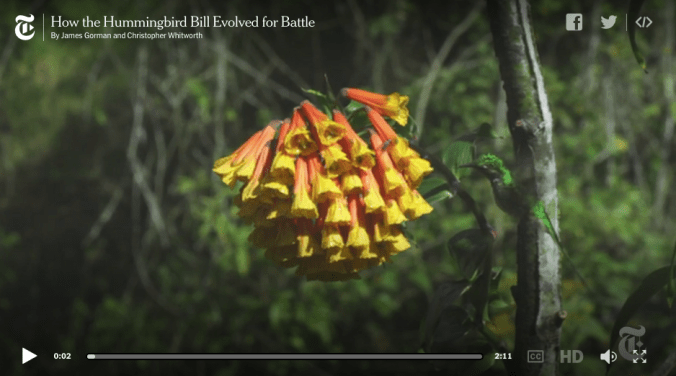
In the South American tropics, where hummingbirds must compete for food, evolution has drastically reshaped their bills. Credit Christian Irian

Hummingbirds are some of the most gemlike and visually striking birds in the “new world”, but those who have spent any time watching them know that striking can also be used as an apt verb to describe their behavior. Fiercely territorial, it’s not surprising that scientists are making more and more discoveries related to the evolution behind their development. (Click on image above to view the video)

The Hummingbird as Warrior: Evolution of a Fierce and Furious Beak

Winsomely captured in poems and song, the birds are yielding new secrets about their astounding beaks and penchant for violence.

If you want to know what makes hummingbirds tick, it’s best to avoid most poetry about them.

Bird-beam of the summer day,

— Whither on your sunny way?

Whither? Probably off to have a bloodcurdling fight, that’s whither.

John Vance Cheney wrote that verse, but let’s not point fingers. He has plenty of poetic company, all seduced by the color, beauty and teeny tininess of the hummingbird but failed to notice the ferocity burning in its rapidly beating heart.

The Aztecs weren’t fooled. Their god of war, Huitzilopochtli, was a hummingbird. The Aztecs loved war, and they loved the beauty of the birds as well. It seems they didn’t find any contradiction in the marriage of beauty and bloodthirsty aggression.

Scientists understood that aggression was a deep and pervasive part of hummingbird life. But they, too, have had their blind spots. The seemingly perfect match of nectar-bearing flowers to slender nectar-sipping beaks clearly showed that hummingbirds were shaped by co-evolution.

It seemed clear that, evolutionarily, plants were in charge. Their need for reliable pollinators produced flowers with a shape that demanded a long slender bill. Hummingbird evolution obliged.

But hummingbirds also heard the call of battle, which demanded a different evolutionary course. Some of those slender, delicate beaks have been reshaped into strong, sharp and dangerous weapons.

In a recent paper organizing and summing up 10 years of research, Alejandro Rico-Guevara and his colleagues at the University of California, Berkeley, shared evidence gathered by high-speed video about how the deadly beaks are deployed in male-to-male conflict.

Like the horns of bighorn sheep or the giant mandibles of stag beetles, hummingbird beaks are used to fight off rivals for mates. This is sexual selection, a narrow part of natural selection, in which the improvement of mating chances is the dominant force. Continue reading

Sloths, Cecropia & Cacao

merlin_149583099_9e8bfb16-91b4-467e-bb18-dc2a98fde90e-jumbo.jpg

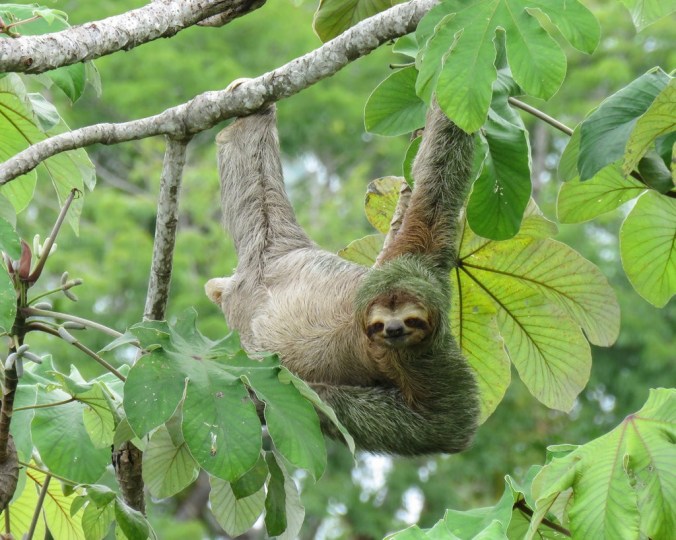
A sloth in Costa Rica.  Karen Reyes

I had never heard the name guarumo for this tree before. Cecropia is the name we have commonly heard for it in Costa Rica. Veronique Greenwood, who we have linked to twice until now, has contributed more than vocabulary to me through this article. I am particularly thankful for the realization that cacao can be more useful than I had been aware. Beyond the benefits of being grown organically it may play a key role in regenerative forest development. This, entrepreneurial conservation in mind, must become a variable by which Organikos sources chocolate in Costa Rica:

Where Sloths Find These Branches, Their Family Trees Expand

A study showed that when some animals find a crucial resource, they can survive in changing environments and even thrive.

Look closely up in the trees of a shade-grown cacao plantation in eastern Costa Rica, and you’ll see an array of small furry faces peering back at you. Those are three-toed sloths that make their homes there, clambering ever so slowly into the upper branches to bask in the morning sun. You might also spot them munching on leaves from the guarumo tree, which shades the cacao plants. Continue reading

Enigmatic Fungi

A nematode pierces the cell walls of a mushroom’s hyphae to feed on them.Credit By Markus Künzler

The mysteries of nature never cease to amaze, and fungi rank high in all aspects. Since the inception of this site we’ve highlighted this special branch of the animal kingdom.

When Fungi Fight Back

A mushroom species was found to sense predators and sent warning signals to other parts of its body, but how it does that remains a mystery.

It’s known as fight or flight — the message the brain sends your body when it detects something frightening. Something like it happens to plants when they are under attack, too. And then there are fungi — perhaps the most mysterious kingdom of multicellular life.

Fungi too can sense attackers and manufacture powerful weapons to combat them, including the toxins and poisons that can send you to the emergency room if you eat the wrong mushroom.

But little is known about the built-in threat detectors of these limbless, brainless beings. Humans send messages through their nervous systems. A plant’s vascular system is its relay apparatus. But fungi have neither. Continue reading

Outfitting For Wild Animals


Wolf.jpg

Teach a Wolf to Fish. By University Of Minnesota, Voyageurs National Park And Voyageurs Wolf Project. Nighttime footage of a wolf hunting freshwater fish in a river in Minnesota’s Voyageurs National Park. Dec. 14, 2018

I got to know Natural Habitat Adventures while our company was operating Chan Chich Lodge in Belize. I was impressed with their guides, and with the photographic and video skills of the guests who they brought to the lodge. And all of them were deeply concerned about conservation. But I never saw anything quite like the video above. When you have nine minutes to spare, it is as satisfying as any nature footage as I have seen in a long time.  I thank Jim Robbins again for this article, whose focal video about wolves fishing (to the left above) is definitely worth watching:

Watch This Wolf Go Fishing

Yes, researchers in Minnesota have recorded wolves diving into a stream to grab a meal.

Wolves are thought of as red-meat eaters, but a team of biologists in northern Minnesota, near Voyageurs National Park, has documented a pack that often enjoys a meal of fish. Continue reading

Defending Megafauna

Canby-Elephant-Path-Njaia-Njoku.jpg

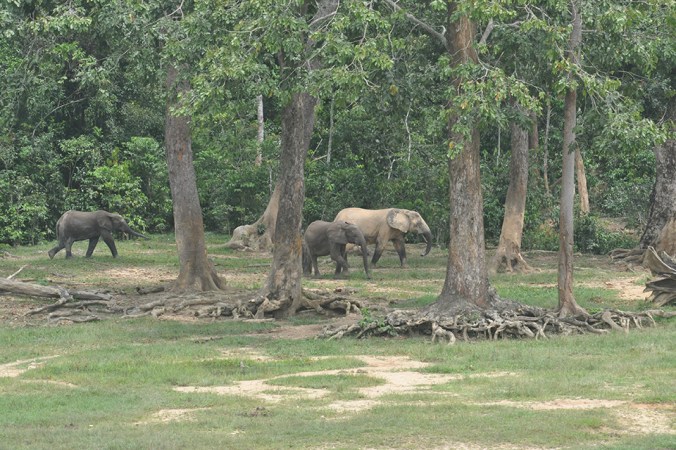
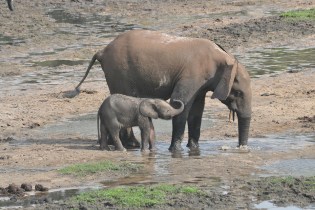
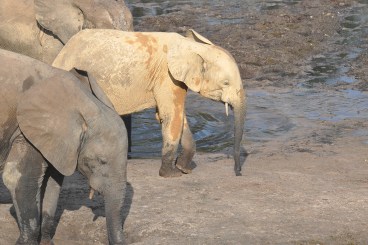
Perhaps as few as eighty thousand African forest elephants remain, and a new documentary explores the megafauna’s threats and defenders.Photograph Courtesy Elephant Path / Njaia Njoku

When we moved to Kerala in 2010 one of our motivations was that among the properties we would take responsibility for one was within a vast protected forest area in southern India. It was/is one of the great remaining habitats of elephants and tigers among other mammals, not to mention birds and all kinds of other life. Which is to say the ecosystem is intact enough to support apex predators and their megafauna prey, and everything around them and below them in the food chain. Which makes their viability as species possible. We networked as much as possible with scientists whose initiatives seemed relevant to our own.  Todd McGrain somehow escaped our attention until now, even though his work at the Lab of Ornithology should have caught it the way other artists’ did. Thanks to Peter Canby for pointing us here, and we have taken the liberty of inserting some of Tom’s other photos within the text below, which you can click on to go to one of his websites to learn more:

EP_0277.jpg

EP_0419.jpgIn Africa, there are two kinds of elephants: savanna and forest elephants. The species diverged somewhere between two and six million years ago, with the better-known savanna elephants spreading over the plains and open woodlands of Eastern, Southern, and Western Africa while forest elephants stayed behind in the dense forests at the center of the continent. Although the two occasionally hybridize, they are widely viewed as separate species. Forest elephants are smaller, with smaller and straighter tusks. The size of their tusks, however, has not protected them from rampant poaching, because the tusks have a distinctive hue, sometimes known as “pink ivory,” that has made them particularly valuable.
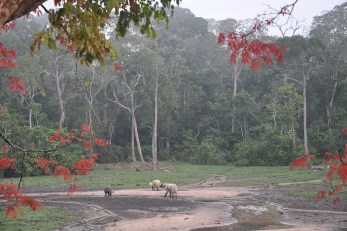
EP_0634.jpgSomething about the nobility of forest elephants regularly raises concern for their extinction. The tropical forests of the Congo Basin, once considered impenetrable, are now yielding to logging roads, mines, and even palm-oil plantations. In 2013, a widely respected study by Fiona Maisels, of the Wildlife Conservation Society, found that, between 2002 and 2011, the population of forest elephants had declined by sixty-two per cent. Perhaps as few as eighty thousand remain. The story of these declining numbers is also a story of habitat destruction. Where forest elephants exist in an undisturbed state, they build networks of trails through the deep forest. These trails connect mineral deposits, fruit groves, and other essentials of forest-elephant life. In Central Africa, there are dozens of fruit trees whose seeds are too large to pass through the guts of any other animal and for which forest elephants have evolved as the sole dispersers. These trees line the forest-elephant paths. Where elephant populations are disturbed, the paths disappear.
EP_0480.jpgMatt Davis, a researcher in ecoinformatics and biodiversity at Aarhus University, in Denmark, recently published a paper arguing that we are entering a period of extinction of large mammals akin to the scale of the extinction of the dinosaurs. “We are now living in a world without giants,” he told the Guardian, and went on to detail the many ecological consequences of the loss of megafauna. When I asked John Poulsen, an assistant professor of tropical ecology at Duke’s Nicholas School of the Environment, if this observation could apply to the role of forest elephants, he said, “Absolutely.”

The sculptor Todd McGrain has made a name for himself, over a thirty-year career, as the creator of sculptural monuments to birds that have been the victims of “human-caused extinction.” It’s not, therefore, entirely surprising that he has directed a documentary about forest elephants, “Elephant Path / Njaia Njoku,” showing at New York’s DOC NYC film festival this Wednesday and Thursday. McGrain’s subjects have included, among others, the passenger pigeon, the great auk, the Labrador duck, the heath hen, and the Carolina parakeet. When McGrain was the artist in residence at the Cornell Lab of Ornithology, Katy Payne, founder of the Elephant Listening Project at the Bioacoustics Research Program, introduced him to something she had discovered: forest-elephant infrasound, which is how elephants communicate inside the forest, at a frequency too low for human ears to register. She pitched up the recordings of elephant calls so that McGrain could listen to them. “I couldn’t help but hear them as bird calls,” he told me. “It was the complexity of their language that grabbed me.” Continue reading

For The Last Tigers, What Is Next?

merlin_145827315_a41e80a9-2f6c-49c8-ba24-ea8c7f20d280-superJumbo.jpg

A South China tiger, a subspecies that only survives in captivity. Credit Francois Savigny/Minden Pictures

Some of these photos we have featured in earlier stories. That is a testament to the seriousness of the subject. Thanks to Rachel Nuwer for this:

Divide and Preserve: Reclassifying Tigers to Help Save Them From Extinction

Are there many subspecies of tiger, or only two? A correct accounting is the only way to preserve what is left of the animal’s genetic diversity, some scientists say.

26TIGERS4-jumbo.jpg

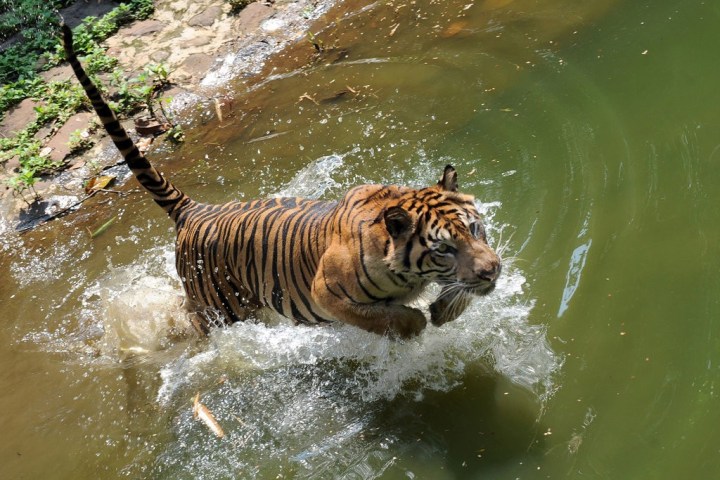
A Sumatran tiger at the Ragunan Zoo in Jakarta, Indonesia. Sumatran tigers were the first to evolve from all tigers’ common ancestor. Credit Romeo Gacad/Agence France-Presse — Getty Images

Fewer than 4,000 tigers remain in the wild. New research aims to give conservationists an improved understanding of their genetics in order to help save them.

After years of debate, scientists report in the journal Current Biology that tigers comprise six unique subspecies. One of those subspecies, the South China tiger, survives only in captivity.

“The results presented in this paper are important because they contradict the currently accepted international conservation classifications for tigers,” said Uma Ramakrishnan, a molecular ecologist at the National Center for Biological Sciences in Bangalore, India, who was not involved in the study. Continue reading

The Science Of Camouflage

This is more science-y than is our custom, but Nature magazine has been appreciated on this platform as a source of intriguing findings about creatures from time to time, so here goes:

Cuttlefish wear their thoughts on their skin

Elaborate video system tracks how pigment cells controlled by neurons generate complex patterns of camouflage.

d41586-018-07023-7_16205982

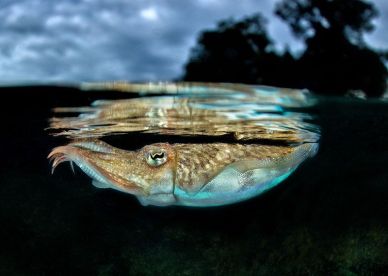
Cuttlefish are masters of quick-change camouflage, thanks to skin cells that act as coloured pixels. Credit: Pasquale Vassallo/Getty

Cuttlefish are masters at altering their appearance to blend into their surroundings. But the cephalopods can no longer hide their inner thoughts, thanks to a technique that infers a cuttlefish’s brain activity by tracking the ever-changing patterns on its skin. The findings, published in Nature on 17 October1, could help researchers to better understand how the brain controls behaviour.

The cuttlefish (Sepia officinalis) camouflages itself by contracting the muscles around tiny, coloured skin cells called chromatophores. The cells come in several colours and act as pixels across the cuttlefish’s body, changing their size to alter the pattern on the animal’s skin.

The cuttlefish doesn’t always conjure up an exact match for its background. It can also blanket itself in stripes, rings, mottles or other complex patterns to make itself less noticeable to predators. “On any background, especially a coral reef, it can’t look like a thousand things,” says Roger Hanlon, a cephalopod biologist at the Marine Biological Laboratory in Woods Hole, Massachusetts. “Camouflage is about deceiving the visual system.” Continue reading

Citizen Science, Children & Bees

11TB-BEES2-jumbo.jpg

Scientists expected bees to gradually cease buzzing as the sky darkened during an eclipse. Instead, they stopped altogether. Credit Rogelio V. Solis/Associated Press

After following the work of Nicholas St. Fleur for a couple years now–his beat includes archaeology, paleontology, and space among other of the things we care about on this platform, including conservation–his most recent story below is my favorite for one reason, namely citizen science. Specifically the participation of youth in such an important scientific investigation:

The Moon Eclipsed the Sun. Then the Bees Stopped Buzzing.

Researchers worked with a small army of elementary school children to collect audio recordings of bees as they visited flowers along the path of last summer’s total eclipse.

merlin_145121940_aa0e5867-a947-44eb-9851-f90f39f77723-jumbo

National Forest Service workers at the Bridger-Teton National Forest Office in Jackson, Wyo., took a break to watch the Great American Eclipse last year. Credit Celia Talbot Tobin for The New York Times

Last year’s Great American Eclipse drew hundreds of millions of eyes to the sky. But while people across the country “oohed” and “aahed” at the phenomenon, it appears the bees went silent.

So found a new study that monitored the acoustic activity of bees before, during and after totality — the moment when the moon completely blocked the sun — during the solar eclipse on Aug. 21, 2017. Researchers at the University of Missouri, along with a small army of elementary school children and other volunteers, collected audio recordings of honeybees, bumblebees and other types of bees as they visited flowers along the path of totality Continue reading

Unexpected Affection

21TB-OCTOPUS-jumbo.jpg

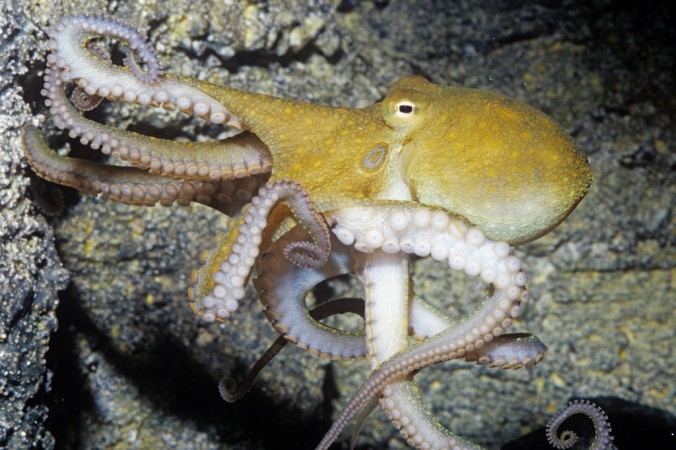
An octopus on its way to an underwater EDM festival. Credit Ken Lucas, via Getty Images

Thanks to JoAnna Klein a regular contributor for The New York Times Trilobites feature, for this:

On Ecstasy, Octopuses Reached Out for a Hug

By dosing the tentacled creatures with MDMA, researchers found they share parts of an ancient messaging system involved in social behaviors with humans.

Octopuses are smart. They open jars, steal fish and high-five each other.

Though interactive, they’re generally asocial, and temperamental, with unique behavior patterns, like those shown by Otto, who caused blackouts at a German aquarium and Inky, who famously escaped a tank in New Zealand.They learn through experience and observation, forming lasting memories with brain-like bundles of hundreds of millions of neurons in each arm and a centralized bundle in the middle.

A desire to understand the evolutionary underpinnings of this brain power led scientists to give octopuses ecstasy. Yes ecstasy — molly, E, MDMA, the party drug, which in humans reduces fear and inhibition, induces feelings of empathy, distorts time and helps people dance to electronic music all night. Continue reading

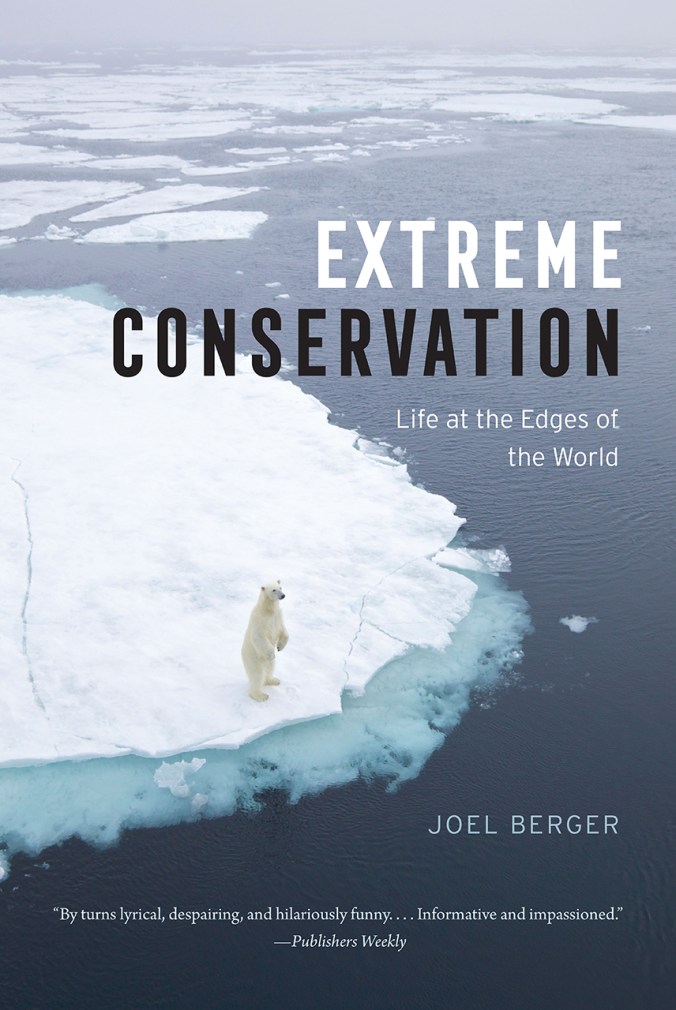
Author of Extreme Conservation, Interviewed

9780226366265.jpg

We recommend this interview in the Atlantic, with the author of the book above, a veteran conservationist reckoning with his career studying animals in the most extreme places on Earth:

In the winter of 2011, Joel Berger and his colleague Marci Johnson happened upon a ghostly Arctic death scene. Body parts and tufts of brown fur poked out of a frozen lagoon. This was all the biologists could find of a herd of 55 musk oxen they had been following.

The cause of mass mortality, they later determined, was an ice tsunami, the result of an unusual storm that slammed seawater and ice into the lagoon where the unfortunate musk oxen stood. Berger is a conservationist who works in some of the most hostile environments in the world, and he studies the enigmatic species, like musk oxen, that live there. His new book, Extreme Conservation, chronicles his career in Alaska, Siberia, Namibia, Tibet, Mongolia, and Bhutan. He is now a biologist at Colorado State University and a senior scientist at the Wildlife Conservation Society. Continue reading

The Tangled Tree, Noodling With Lucidity & Grace

08bookquammen1-jumbo.jpg

Sonny Figueroa/The New York Times

Thanks to the New York Times for Parul Sehgal’s review of the new book by one of science writing‘s greats, reminding us that we have not featured Quammen enough:

David Quammen Turns Tough Science Into Page-Turning Pleasure

08BOOKQUAMMEN2-jumbo.jpg

David QuammenCreditLynn Donaldson

Love a writer — read him carefully and closely — and you’ll pick up on his pet words, the ones he reaches for repeatedly, like a baseball player with a trusted bat.

Nabokov famously had “mauve.” Elizabeth Hardwick had “motive.” Edward St. Aubyn has “gasp.” The statistician Ben Blatt has called these “cinnamon words” (after Ray Bradbury’s fondness for the names of spices), and they’re often hilariously telling, revealing the essence of a writer, something idiosyncratic in his perception of the world and himself. Is it any wonder that Dickens, that cash-strapped father of 10, was so crazy about “pinch” as noun, verb — even name?

For the science writer David Quammen that word is — sublimely — “noodle.” The verb pops up all over his work — and could any word suit him better? He is our greatest living chronicler of the natural world yet was never formally trained in the sciences. He started out as a novelist, a protégé of Robert Penn Warren, and stumbled into nonfiction, his boyhood passion for rooting around in forests now taking him to the canopies of the Amazon and the cliff lines of Komodo island. (The root of “amateur,” remember, is Latin for “lover.”) Continue reading

Dairy & Health, Revisited

lead_720_405Diary.jpg

CIRO DE LUCA / REUTERS

We have plenty of reasons to celebrate the vegans among us. But we committed to think about this dairy’s future and in doing so I have avoided the cow-versus-other-milk health implications. Now I have reason to reconsider:

The Vindication of Cheese, Butter, and Full-Fat Milk

A new study exonerates dairy fats as a cause of early death, even as low-fat products continue to be misperceived as healthier.

As a young child I missed a question on a psychological test: “What comes in a bottle?”

The answer was supposed to be milk. Continue reading

Dairy, Feed & Food

BrealeyFarm.jpg

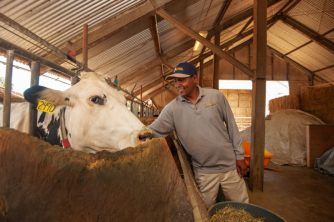
Yesterday, in our continued quest to consider the future of a family dairy farm, we visited what must be the largest such farm in central Costa Rica. At 7,545 feet above sea level overlooking the valley from the northern slope, it may also be the highest.

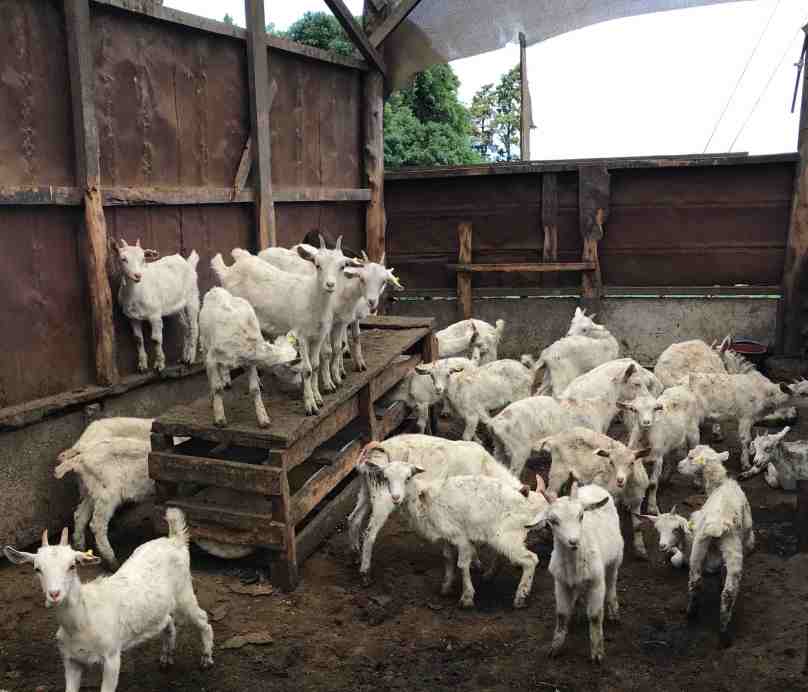
BrealeyGoats.jpgIt has eight times the land and double the cows compared to where we are based, 10 miles north and about 1,000 feet lower in altitude. That farm also has dairy goats. More on other implications of the visit later. Here, a quick note on feed. We had noticed on the dairy where we live that pineapple is part of the diet of the cows.

BrealeyCheese.jpgThe dairy manager had explained that this is an important part of the nutritional mix. Despite our surprise we had not asked more about it. Yesterday we did, and the answer was another surprise. Milk production rises 10% or more with the pineapple added to the feed. The animals are healthier because of the fiber content of the fruit, compared to cows eating grains such as corn or soy. Plus, the methane bi-product is significantly decreased. Food produced in a dairy making this dietary change represents one small step toward reducing greenhouse gas emissions.
In the type of coincidence I never expect, but always enjoy, this article was near the top of my news feed today. Thanks to Judith Lewis Mernit and colleagues at the Yale School of Forestry & Environmental Studies for take my yesterday’s lesson and adding some important detail:

How Eating Seaweed Can Help Cows to Belch Less Methane

Emissions from the nearly 1.5 billion cattle on earth are a major source of methane, a powerful greenhouse gas. Now, researchers in California and elsewhere are experimenting with seaweed as a dietary additive for cows that can dramatically cut their methane production.

HolsteinCowsMercedCalifornia_MarmadukeStJohnAlamy_web

Holstein cows feeding at a dairy farm in Merced, California. MARMADUKE ST. JOHN / ALAMY

The spring morning temperature in landlocked northern California warns of an incipient scorcher, but the small herd of piebald dairy cows that live here are too curious to care. Upon the approach of an unfamiliar human, they canter out of their barn into the already punishing sun, nosing each other aside to angle their heads over the fence. Some are black-and-white, others brown; all sport a pair of numbered yellow ear tags. Some are more assertive than others. One manages to stretch her long neck out far enough to lick the entire length of my forearm.

UCDavis_20180508-seaweed-cow-8157_web

Scientist Ermias Kebreab has studied how to reduce cow methane emissions for more than a decade. GREGORY URQUIAGA/UC DAVIS

“That’s Ginger,” explains their keeper, 27-year-old Breanna Roque. A graduate student in animal science at the University of California, Davis, Roque monitors everything from the animals’ food rations to the somatic cells in their milk — indicators of inflammation or stress. “The interns named her. She’s our superstar.” Continue reading

Insects, Underappreciated Often-Charismatic Fauna

4177.jpg

This article by Robin McKie, Observer science editor, will have you thinking differently about what are often called the pests of summer:

Where have all our insects gone?

There is a crisis in the countryside – and a massive decline in insect numbers could have significant consequences for the environment

4928 (1).jpg

A great yellow bumblebee. Its numbers have declined steeply in recent years. Photograph: Alamy

When Simon Leather was a student in the 1970s, he took a summer job as a postman and delivered mail to the villages of Kirk Hammerton and Green Hammerton in North Yorkshire. He recalls his early morning walks through its lanes, past the porches of houses on his round. At virtually every home, he saw the same picture: windows plastered with tiger moths that had been attracted by lights the previous night and were still clinging to the glass. “It was quite a sight,” says Leather, who is now a professor of entomology at Harper Adams University in Shropshire. Continue reading

Ornithology, Methods & Mystery

17Johnson-jumbo

Ping Zhu

Some contributors to our pages here would likely have much more clear views on this story than I do. I am certain that I favor scientific method, and this scientist followed protocol. And yet, the fallout from his scientific methods was intense. And it was not as simple as trolls gonna troll. I understand the fallout but instead of outrage I am full of questions about this story about The Ornithologist the Internet Called a Murderer by Kirk Wallace Johnson:

merlin_139634919_bab85c0d-98d8-41e1-a5ad-d910a49a3232-jumbo.jpg

The mustached kingfisher. Robert Moyle

For some time, I’d been searching for Christopher Filardi, a biologist with decades of field experience in the Solomon Islands. I wanted to interview him for a book I was writing, but the email system at the American Museum of Natural History, which once listed him as the director of Pacific programs at its Center for Biodiversity and Conservation, bounced back my message.

The auto-reply said that he’d moved to another organization, Conservation International. When I wrote him there, another auto-reply informed me that he had moved on. I couldn’t find him on Facebook or Twitter. The man seemed to have vanished.

When I finally found a working number for him, he was reluctant to talk. Three years ago, his life was overturned by an online mob that accused him of murder. The fact that the mob’s outrage was driven by ignorance didn’t make it any less frightening. Continue reading

Food For Thought & Thought For Food

27stager-jumbo

Enzo Pérès-Labourdette

The food for thought is by way of Curt Stager, a professor of natural sciences, who celebrates citizen science in a powerful ominously-titled op-ed:

Why care about this new silence of the bugs? An across-the-board decline in flying insects, if true, means that an entire sector of the animal kingdom is in trouble, representing an immense diversity of life-forms, from butterflies and beetles to hoverflies and damselflies. The eminent biologist Edward O. Wilson, who has spent much of his life studying ants, has warned: “If all mankind were to disappear, the world would regenerate back to the rich state of equilibrium that existed ten thousand years ago. If insects were to vanish, the environment would collapse into chaos.”

And the thought for food is also from an op-ed:

Why You Should Be Drinking Weird Wines

By Jason Wilson

merlin_138630777_bd5bc3fe-d84f-4de8-a999-7c0568353414-superJumbo

Alicia Adamerovich

…For years, the global wine industry had been devolving toward a monoculture, with local grape varieties ripped out in favor of more immediately profitable, mass-market types. There are 1,368 known wine grape varieties, but nearly 80 percent of the world’s wine is made from just 20 kinds of grapes. Many of the rest face extinction. Continue reading

Monday Morning, Time For Free Will

PRIMonkeys

Credit: AP Photo / Sebastian Scheiner

This is the second time in a year that the biology of free will is the story. Monday morning in mid-May 2018 nothing else seems more important. Thanks to Marc Sollinger and colleagues at WGBH and PRX (click the button to the left for the story):

Humanity is simultaneously incredibly kind and incredibly violent. We commit indescribable atrocities, but also acts of incomprehensible compassion. There is both horror and beauty in our history. Which leads to the question… how do we reconcile this inherent contradiction? It all goes back to our biology, according to Robert Sapolsky, a neurobiologist at Stanford and author of the book Behave: The Biology of Humans at Our Best and Worst. In fact, all questions about human behavior are, at their core, about biology.  Continue reading

Trees For Life In Scotland

4000m.jpg

Trees for Life have planted 1.5m native trees in Glenmoriston and nearby Glen Affric since being founded 30 years ago. Photograph: Desmond Dugan/RSPB/PA

Thanks to Damian Carrington, the Guardian’s Environment editor, for this:

‘Magical’ mushroom mix to boost regrowth of lost Scottish forests

Return of Great Caledonian forest speeded up with fungi spores to help saplings flourish

The return of the Great Caledonian forest that once covered much of Scotland’s highlands is being boosted with a special mix of mushroom spores that should help saplings survive better on the hills.

Fungi living on the roots of trees play a vital role in the ecology, helping to break down nutrients in the soil. But trees were lost in much of the Highlands many years ago so the fungi vanished too.

The new project, run by Trees for Life, is adding the spores when young trees are planted. Continue reading