Pines, Beetles & Grizzlies

15mcnamee-master768

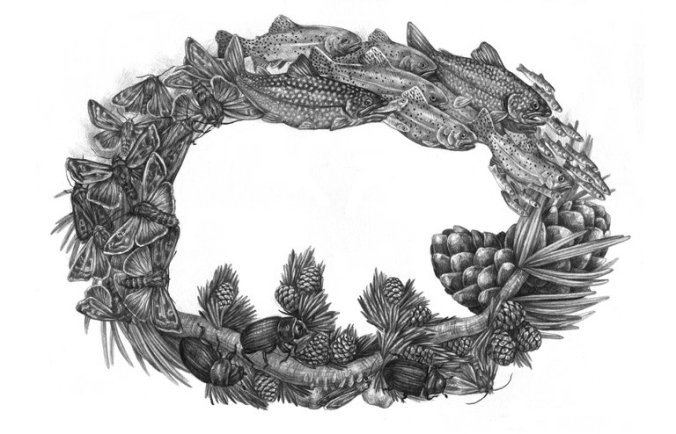
Zoe Keller

Thanks to Thomas McNamee for his opinion on these matters:

The Government Is Now the Yellowstone Grizzly’s Biggest Threat

In March 2016, the United States Fish and Wildlife Service proposed removing the Yellowstone grizzly bear population from the list of threatened species. The uproar was ferocious. Conservationists, scientists, 125 Indian tribes and some 650,000 citizens expressed concern about the move.

Now the government has gone and done it anyway. Continue reading

Maternal Instinct vs Species Survival

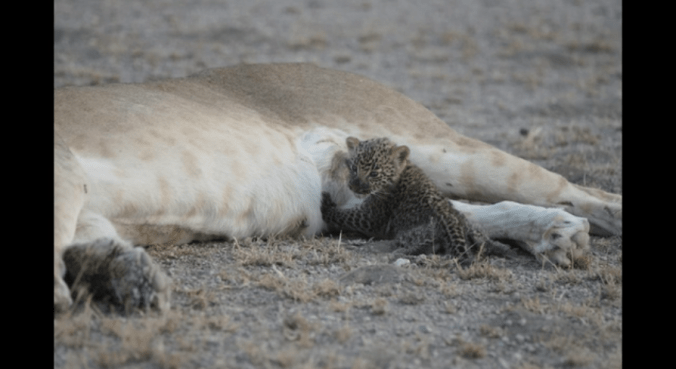
©JOOP VAN DER LINDE/NDUTU LODGE

The more time we spend at Chan Chich Lodge the more we see the seasonality of birth patterns in the wild. There clearly seems to be a “baby season”, that starts with the cats and moves down the food chain to their mammalian prey, as well as birds. Although no photo captures, several jaguar cubs were sighted earlier in the year, followed by dozens of fawns and baby collared peccary. Even the Gallon Jug Farm has welcomed 4 baby horses to the fold, with a fifth on the way…but we’ll talk about that another day.

This unusual news from Panthera.org, an important Big Cat Conservation NGO who uses our 30,000 acres as part of their Jaguar Corridor research, perhaps makes a little bit of sense within the context of those patterns.

We thank Susie Weller Sheppard for sharing these field notes.

Earlier this week, Panthera President and Chief Conservation Officer Dr. Luke Hunter received photos from our partners at KopeLion with some astonishing content: the first-ever evidence of a wild lioness nursing a leopard cub.

Taken on Tuesday by a Ndutu Lodge guest in Tanzania’s Ngorongoro Conservation Area, the images show a 5-year-old lioness, known locally as ‘Nosikitok,’ suckling a leopard cub estimated to be just 3 weeks old. Continue reading

Tapping The Largest Animal For Science

08tb-whales01-superJumbo.jpg

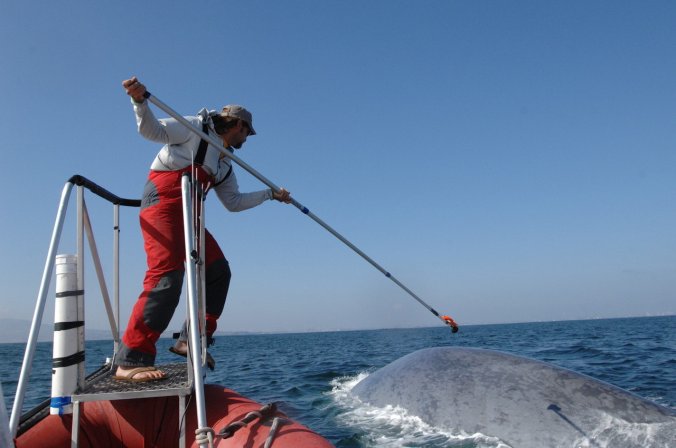
Ari Friedlaender, a marine ecologist at Oregon State University, deploying a multi-sensor tag on a blue whale off the California coast. Credit Jeremy Goldbogen

Camera traps, in the interest of science, and of conservation, are no longer a novelty. The story accompanying the photo above is new, for us. At first glance it looks like an act of aggression, which the history of whaling has taught us to expect. But this story has a much better outcome than the old obsessions:

How to Attach a Video Camera to a Humpback Whale

This is how you put a video camera on a whale.

Hop into an inflatable boat and head out to where they’re feeding. Stand in a pulpit with a 20-some-foot pole in your hands. Then watch and wait until you spot a whale. Plan your angle of approach with the driver of the boat. (Never approach directly from behind). Get close. Get closer. Get within 16 feet of this sea giant — which is more than twice the size of your boat if it’s a humpback — and as soon as it surfaces, tap the whale on its wet tire of a back with the pole. If you’re lucky, the detachable suction-cup on the end of the pole — which has a camera and sensors — will stick. Continue reading

The Fairest Of Fair Tigers

1103.jpg

A rare ‘pale tiger’ discovered in the wilds of Tamil Nadu state in India. Photograph: Nilanjan Ray

We have heard and read plenty about pale ale, which is often associated with India, but this is the first we are hearing of a pale tiger, in India or elsewhere:

Exceptionally rare ‘pale tiger’ photographed in the wild

Animal spotted by photographer in jungles of southern India may be the fairest known tiger living outside captivity

A rare “pale tiger”, whose fur conservationists say could be the fairest of any in the wild, has been photographed in southern India. Continue reading

Entrepreneurial Conservation Through Seaweed Farming

1600.jpg

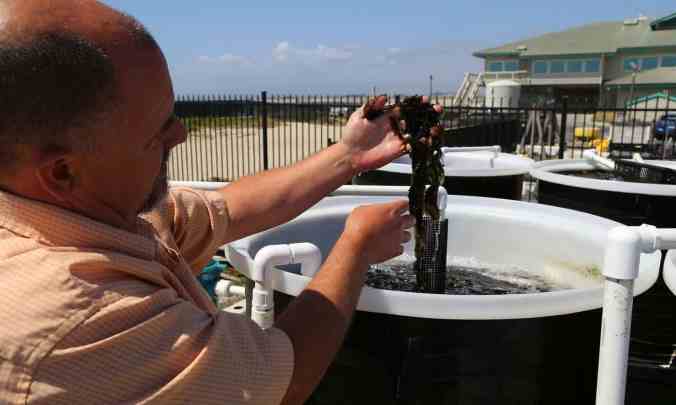
Michael Graham at his seaweed farm in Monterey Bay. ‘This is like a backyard farm where you can sell your goods at a farmer’s market.’ Photograph: Katie Fehrenbacher

Birds Banging On Drums

29tb-cockatoos01-superJumbo.jpg

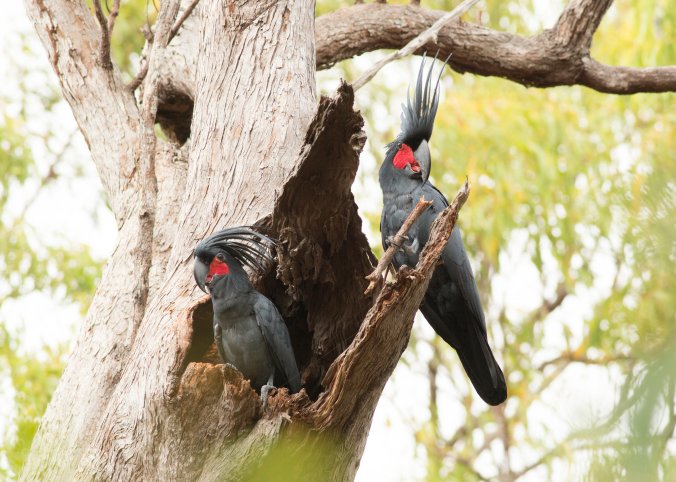
A male palm cockatoo, right, drumming with a stick for a female. Credit Christina Zdenek

Todd Rundgren, a musical talent better known to an earlier generation, had an oddball hit song about banging on drums. It came to mind immediately when reading this oddball story about cockatoos. If you do not already know the song, you might want to find it to accompany your reading of this story:

Whales and songbirds produce sounds resembling human music, and chimpanzees and crows use tools. But only one nonhuman animal is known to marry these two skills.

Palm cockatoos from northern Australia modify sticks and pods and use them to drum regular rhythms, according to new research published in Science Advances on Wednesday. In most cases, males drop beats in the presence of females, suggesting they perform the skill to show off to mates. The birds even have their own signature cadences, not unlike human musicians. Continue reading

Egg Evolution

lead_960 (9).jpg

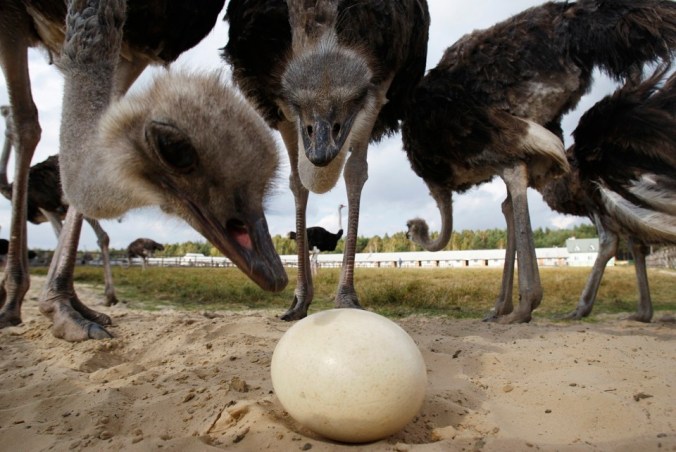
Egg-scuse me?

Thanks as always to Ed Yong:

Why Are Bird Eggs Egg-Shaped? An Eggsplainer

A new study points to a surprising reason for the varied shape of bird eggs—and shows that most eggs aren’t actually egg-shaped. Continue reading

Investigator Of The Abyss

csiro-blue-water-research-vessel-investigator_image-csiro-marine-national-facility-84122ca6688b9466b61bb23f977447c7262cdf3d-s1300-c85.jpg

Courtesy of Museums Victoria / CSIRO

Thanks to National Public Radio (USA) and Kat Lonsdorf for a brief look into the deep work of Tim O’Hara:

Explorers Probing Deep Sea Abyss Off Australia’s Coast Find Living Wonders

Far below the surface of the ocean, off the coast of eastern Australia is an area simply known as “the abyss.” The largest and deepest habitat on the planet, the abyssal zone stretches well beyond Australia’s waters and spans half the world’s oceans — but it remains largely unexplored. Continue reading

When Life Gives You Lionfish…

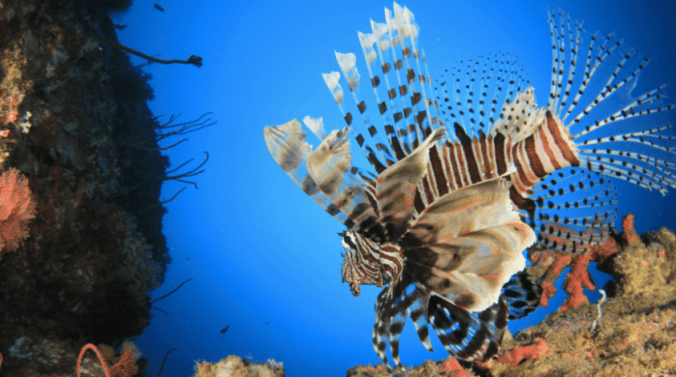
Market-based approaches to controlling invasive lionfish populations were highlighted at a recent GEF event in Grenada.

La Paz Group contributor Phil Karp has long been our guide into marine ecosystems, with both citizen science and social entrepreneurship posts on his work with groups in Belize and other parts of the Caribbean focused on these goals.

This collaboration with Sarah Wyatt,  a colleague from the Global Environment Facility, illustrates the on-going market-based approaches to managing the invasive species while creating new cottage industry opportunities.

Seeing a lionfish while diving in the Caribbean is a cause for mixed emotions.  On the one hand, one marvels at the exquisite beauty of the fishes’ flowery fins and its amazing adaptability to a range of habitats, from shallow estuaries with low salinity to deep reef environments. But then you remember that these fish don’t belong in the Caribbean, and that the very versatility noted above makes them an invasive menace. Indeed, if the fish you are looking at is a female, she may be carrying up to 30,000 eggs, and may have thirty or more native fish or crustaceans in her stomach.

One of the many impacts of the Anthropocene era on global biodiversity is the increased spread of invasive species, like the lionfish, due to rapid globalization. With the United Nations Ocean Conference taking place in New York next week, the conservation and sustainable use of the oceans and marine resources is high on the international agenda.  While long recognized as an environmental and biodiversity threat, invasive species also pose a threat to livelihoods, particularly in developing countries where incomes may be heavily dependent upon a single sector or product.

Traditionally, efforts to eradicate or control invasive species have been focused on public sector interventions.  But control efforts are often expensive and are either out of reach, or pose severe strains on limited budgets of developing countries.  Hence there has been growing attention to identification of market-based control approaches which create commercial incentives for removing the invaders, providing a financially sustainable means of control… Continue reading

Richard O. Prum’s Beauty Challenge

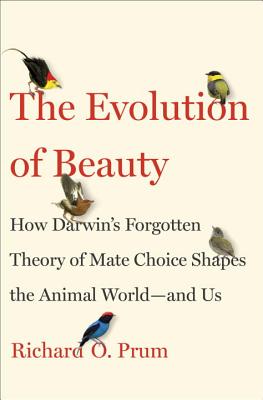
EvolutionBeautyFor evolutionary biology, on this platform we have favored E.O. Wilson because of his biophilia ideas (about which, plenty). For ornithology, we have leaned heavily on the Lab at Cornell and its many wonderful folks. Now, a scientist at Yale combines both of those fields and takes on the topic of beauty in a challenging manner–I am looking forward to this.

Click the book image at the left to go Indie Bound, a community of independent local bookstores, or if you need more convincing, read the beautifully illustrated Challenging Mainstream Thought About Beauty’s Big Hand in Evolution by James Gorman in the Science section of the New York Times. It is as much profile as review and asks:

Are aesthetic judgments about mates invariably tied to traits we see as adaptive and worth passing on Or, does beauty just ‘happen’?

Not long ago, a physicist at Stanford posed a rhetorical question that took me by surprise.

“Why is there so much beauty?” he asked.

Beauty was not what I was thinking the world was full of when he brought it up. The physicist, Manu Prakash, was captivated by the patterns in seawater made as starfish larvae swam about. But he did put his finger on quite a puzzle: Why is there beauty? Why is there any beauty at all? Continue reading

Naming For The Sake Of Conservation

Helmeted_Honeyeater_at_Healesville_Sanctuary_in_Healesville_Victoria_Australia._Birds_are_being_bred_under_a_captive_breeding_program_for_reintroduction_into_the_wild_over_time-1260x708

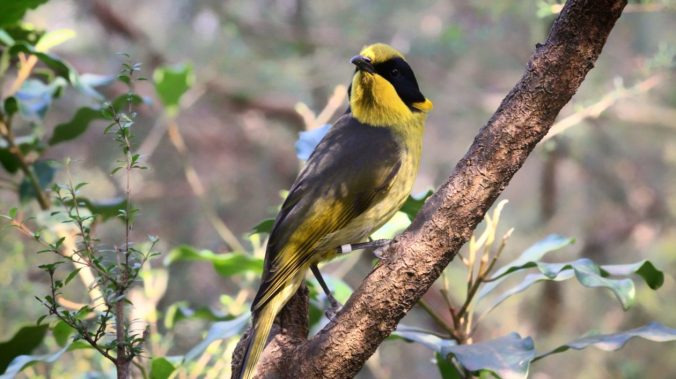
The Helmeted Honeyeater, a subspecies of the Yellow-tufted Honeyeater and the state bird of Victoria. Photo © Dylan Sanusi-Goh / Wikimedia Commons

Thanks to the Nature Conservancy for its conservation and scientific work in Australia, and for this finding shared on Cool Green Science:

…Recognizable common names are often critical for species protection, but subspecies miss out on this public perception benefit. A new paper argues that standardized English names are key to conservation success for Australia’s fantastic avifauna, and creates a definitive list for every subspecies on the continent. Continue reading

James Prosek, Come to Chan Chich Lodge!

ProsekSweden.jpg

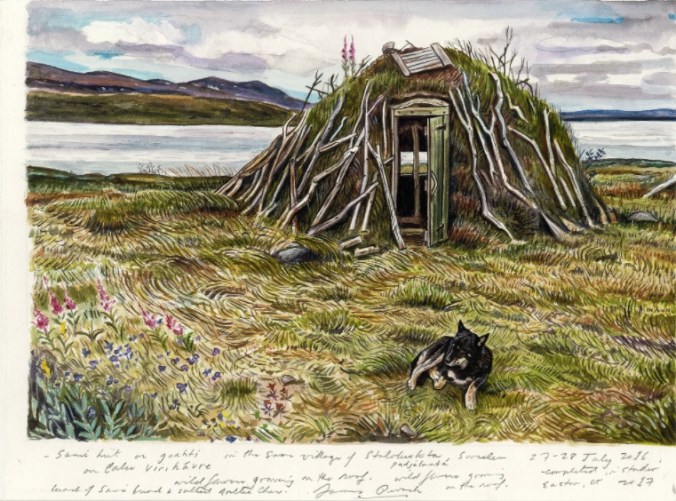
A Sami reindeer herders’ hut on Lake Virihaure in Padjelanta National Park. Credit Paintings by James Prosek, courtesy of the artist and Schwartz-Wajahat, New York

We had a tradition from the moment we arrived in Kerala, inviting some of our favorite people to come see what we were doing there. This one’s work at Cornell was a lovely coincidence because of Seth’s work at the Lab of Ornithology. But mainly, a conservation-oriented naturalist illustrator seemed a perfect fit for what we do. So, seeing what he has contributed to the Travel section of the New York Times today I realize we are due to extend another invitation, this time for him to join us at Chan Chich Lodge in Belize:

A Botanist in Swedish Lapland

By

The plan was to retrace part of a journey that Carl Linnaeus made in 1732 when he was 25, from Uppsala, just north of Stockholm, to the northernmost region of Sweden, known as Swedish Lapland. Linnaeus kept a detailed journal of his travels, often called his “Lapland Journal,” with maps of the mountains, rivers and lakes, drawings and his squiggly handwriting. Continue reading

Free Will, An Idea We Normally Do Not Question

Sapolsky.jpgThanks to WNYC, a radio station that has innovated the proliferation of the podcast with shows like Radiolab, for all that it brings to our attention on a regular basis. Seems strange to say it, but one reason we listen, related to the reasons why share on this platform and more broadly explaining (we think) why we do what we do: we choose to do all this because we care and our free will allows us the choice to do this rather than other things.

I cannot remember the last time I thought about free will, it is so obvious and taken for granted. So thanks also to WNYC for old school interviewers like Leonard Lopate, who also shine in the podcast ecosystem. His show is how I came to know of this new book, which led to my (surprised) thinking now about free will. Click the image above to go to the half-hour conversation. It motivated me to find out more. In addition to this 2009 TED Talk this brief interview in the newsfeed of his university is a compelling soundbite on a very  after listening to the broad-ranging topics of the WNYC conversation:

Stanford biologist Robert Sapolsky ponders the best and worst of us, plus free will

With the publication of his latest book, Robert Sapolsky tackles the best and worst of human behavior and the nature of justice in the absence of free will. Continue reading

Bioluminescence, Fungi, Science


27TRI-MUSHROOM1-superJumbo

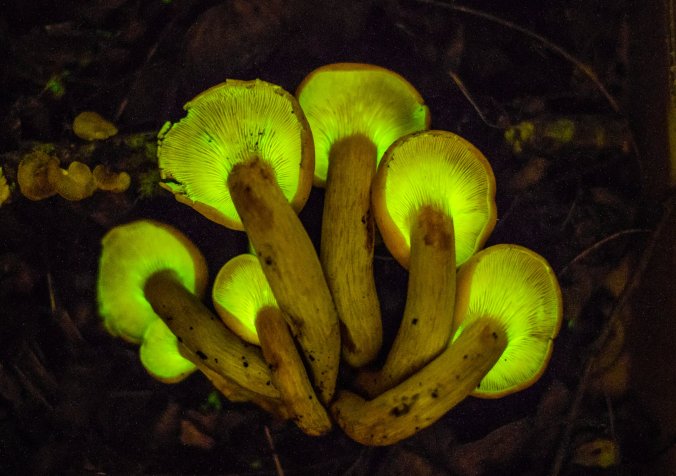
A bioluminescent jack-o’-lantern mushroom found in Pisgah National Forest, near Asheville, N.C. Credit Mike Belleme for The New York Times

Three of our favorite topics in one, thanks to Joanna Klein, the New York Times, and Science (the section of the paper and the thing itself):

PISGAH NATIONAL FOREST, N.C. — Here’s what I was told: Get away from the city, go during a new moon and keep my flashlight off. When the sky faded black enough to spot stars twinkling, I’d be able to see mushrooms glowing. Continue reading

Plants, Water & Sound

flower-and-earbuds.jpg

Thanks to Brandon Keim and Anthropocene for this summary of some recent science exploring the reactions of flora to sound in their search for water:

Plants can hear water. Could noise pollution interfere?

There’s a transformation underway in how people think about plants: not just as inanimate biological objects, but as capable of perceptions and actions that resemble the intelligent behaviors of animals. Continue reading

Lowly Creature May Represent Saving Grace

19051745004_4c6553e683_k_wide-1e3d66a2290ab61ffd5a504c2440c34d0aa5fde2-s1400-c85.jpg

Wayne Boo/USGS Bee Inventory and Monitoring Lab

Thanks to National Public Radio (USA) for this new appreciation for an otherwise underappreciated creature:

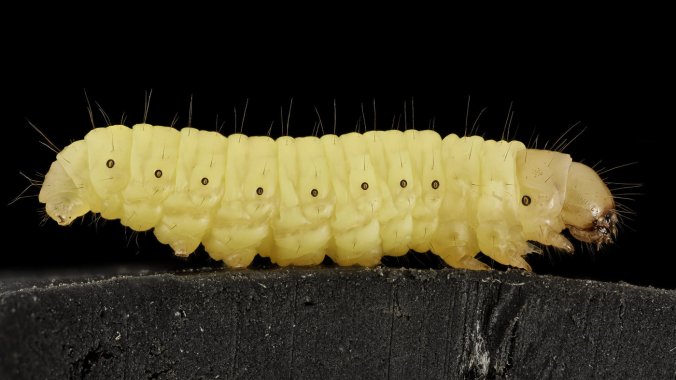
A Worm May Hold The Key To Biodegrading Plastic

MERRIT KENNEDY

People around the world use more than a trillion plastic bags every year. They’re made of a notoriously resilient kind of plastic called polyethylene that can take decades to break down.

But a humble worm may hold the key to biodegrading them. Continue reading

Paleo Diet – Served Up Straight

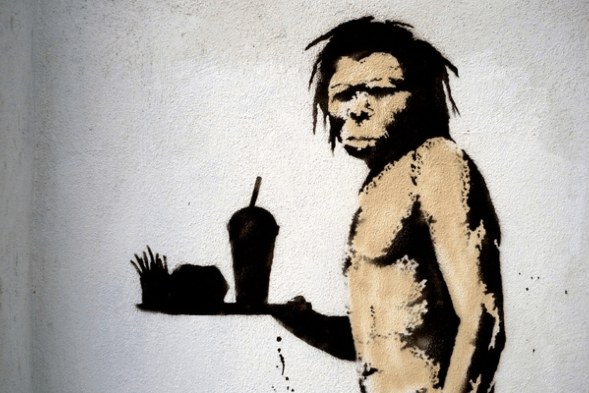
Banksy’s “Caveman”. Credit: Lord Jim Flickr (CC BY-SA 2.0)

Thanks to Scientific American‘s Guest Blog feature for this interesting fodder for thought.

The “True” Human Diet

From the standpoint of paleoecology, the so-called Paleo diet is a myth

People have been debating the natural human diet for thousands of years, often framed as a question of the morality of eating other animals. The lion has no choice, but we do. Take the ancient Greek philosopher Pythagoras, for example: “Oh, how wrong it is for flesh to be made from flesh!” The argument hasn’t changed much for ethical vegetarians in 2,500 years, but today we also have Sarah Palin, who wrote in Going Rogue: An American Life, Continue reading

From Ew To Wow, To OMG

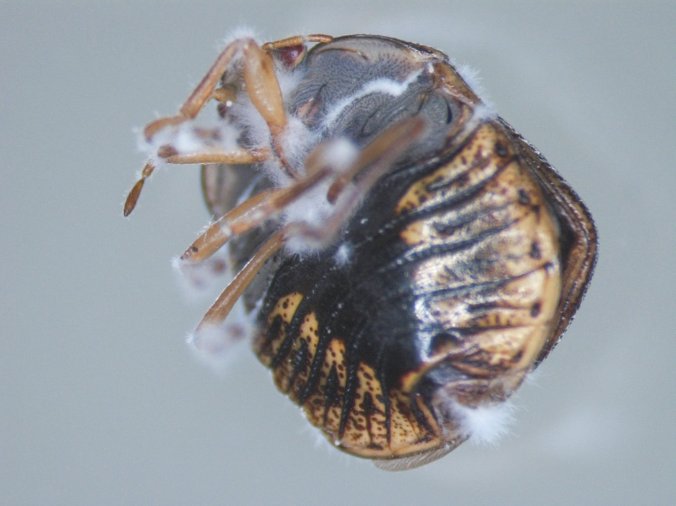
kudzu-mycosis-2_custom-2ee2a5c50549200b13075d6d13d1fb17f69936fd-s1400-c85.jpg

When it comes to biopesticides, one of the most widely used fungi is Beauveria bassiana. Above, a kudzu bug killed by Beauveria bassiana, seen growing out of the cadaver. Courtesy of Brian Lovett/University of Maryland Entomology

Thanks to the salt, at National Public Radio (USA) for their sharing the creepy- crawliest news from the realm of mycologists working on clean solutions to some massive, dirty challenges, and changing the rules of pest management along the way:

Fungal Pesticides Offer A Growing Alternative To Traditional Chemicals

When it comes to biopesticides, one of the most widely used fungi is Beauveria bassiana. Above, a kudzu bug killed by Beauveria bassiana, seen growing out of the cadaver. Continue reading

Cattle, Climate & Cataloguing


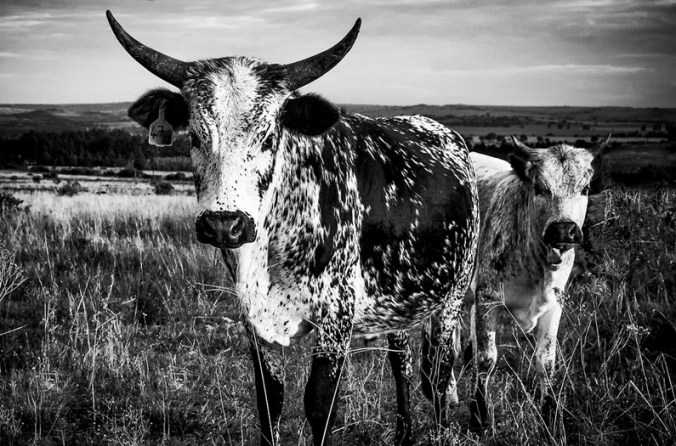
nguni-cattle.jpg

South Africa’s indigenous Nguni cattle via Flickr

Thanks to Emma Bryce at Anthropocene for this summary on how preserving climate-resilient cattle breeds can boost Africa’s food security: