Gallon Jug’s Bird Friendly Coffee

CoffeeConsvtn.jpg

I am back at Chan Chich, with one goal before I start focusing on my plan to go to graduate school. A recurring theme in my work for La Paz Group, especially at Xandari, has been the intersection of birds and coffee. And now I have some months to think about how this may relate to what I will study in graduate school. One of the programs I am considering applying to is the Masters in Environmental Management at the Yale School of Forestry. Can I link what I have learned while working to what I would study there? If so, maybe I could link that to what I do after grad school.

This other post today reminds me of the value of geeking out from time to time. Most of my attention to coral reef comes from Phil Karp’s posts on this platform and I admit to preferring stories featuring real people and their entrepreneurial approaches to conservation. But science is the other best friend of conservation. Today my attention is turning to coffee, in advance of the arrival this week of an intern coming from Cornell University’s College of Agriculture and Life Sciences.

Just one of the many topics for an intern, with science and research on her side, to help us tackle over the next ten weeks, bird-friendly coffee has been on been on my mind since last year but I have been waiting for the perfect moment to focus. Nothing like the arrival of an intern to focus your mind. And so today in my task-oriented wanderings I came across this website (click the banner above), which I loved immediately for sharing this news on capsules, but the rest of the site is a great resource for present purposes as well:

A short round-up of coffee news.

Longform Escape & Corrections

pigeonphoto-1436823945-85.jpg

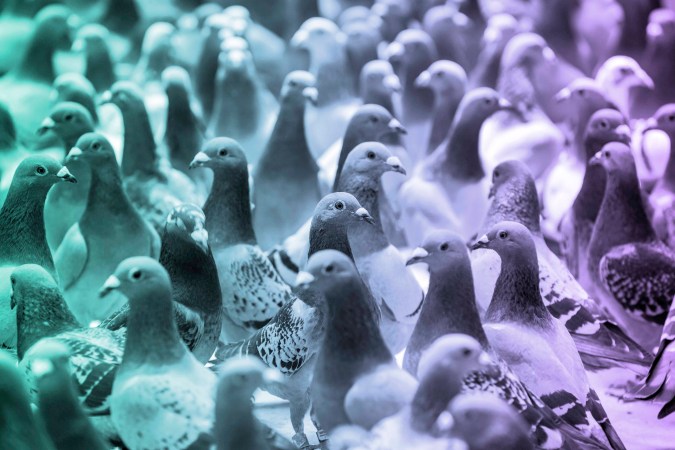
There are two dynamic illustrations in this piece by David Samuels that cannot be replicated here, but are worth visiting the website of The Atavist for, so the images above and below are placeholders. Anyway, the words are the thing so I take a paragraph from near the end as an example of why to read this:

…In the 1970s in Brooklyn, where I grew up, pigeons were everywhere, which is probably why I am here. Some of my earliest gray-scale memories include pigeons, which fluttered and occasionally nested on the windowsill of the first place I was aware enough of to call home, a housing project near the Brooklyn Bridge built for working families like mine. There was a bona fide pigeon coop on the roof of a building nearby, like in the famous scene from On the Waterfront. Sometimes I could see a man on the roof waving a flag, which in my imagination was red but in fact could have been any color. The pigeons he guided back to their loft every night were a promise of safety that New York City in the 1970s was obviously unable to keep, which is why my parents moved to the suburbs, where the birds in the trees outside my window twittered and cooed in foreign tongues that signified nothing…

I am not surprised that this is the article on their website that I gravitated to. The author wrote an item in the New Yorker at a time when I was just completing many years of work in Montenegro and Croatia, and I knew the landscape he was describing well, and still he brought the place alive for me in a way that living there had not. He does not need photos, gifs, or other illustrations to make his words dance better. And in this piece he does something even more magical, providing a correction for me.

Seven years in south India had at least one unexpected effect on me, and it is embarrassing. I developed a passionate dislike for pigeons. Pigeons caused continuous problems in one of the properties we developed and managed, an urban location pigeons loved as much as people. And pigeons express their love in messy ways, so they became my bane. At our home, pigeons would coo on the window sill and I remember that at the time I posted this, which was peak pigeon problem, my enthusiasm for conservation was red hot but I had an unwanted, guilty ability to imagine why passenger pigeons disappeared. Reading David Samuels just now, I have snapped out of that.

pigionssa-1436823680-87 Continue reading

Naming For The Sake Of Conservation

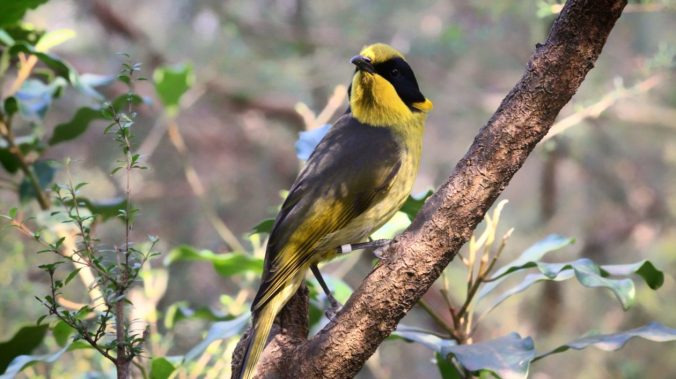
Helmeted_Honeyeater_at_Healesville_Sanctuary_in_Healesville_Victoria_Australia._Birds_are_being_bred_under_a_captive_breeding_program_for_reintroduction_into_the_wild_over_time-1260x708

The Helmeted Honeyeater, a subspecies of the Yellow-tufted Honeyeater and the state bird of Victoria. Photo © Dylan Sanusi-Goh / Wikimedia Commons

Thanks to the Nature Conservancy for its conservation and scientific work in Australia, and for this finding shared on Cool Green Science:

…Recognizable common names are often critical for species protection, but subspecies miss out on this public perception benefit. A new paper argues that standardized English names are key to conservation success for Australia’s fantastic avifauna, and creates a definitive list for every subspecies on the continent. Continue reading

Strengthening Our Birding With Citizen Science

team-belize-720x405.jpg

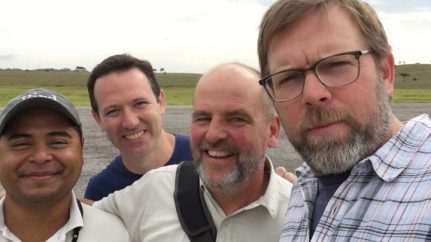
Team Belize finished with 242 species. From left: Roni Martinez, Andrew Farnsworth, Steve Kelling, Brian Sullivan.

Seth, since his time working for the Cornell Lab of Ornithology, and even after his time in Ithaca, has helped me to see how important the Lab’s work is to what our company has been doing since he was an infant. Citizen science is an essential component, and at Chan Chich Lodge guests have responded to the passion the guides have for eBird, which is why we put so much attention into this year’s Global Big Day. And it is why we are already planning the next collaboration with the Lab, a collaboration Seth will lead on our side. For now, a final roundup of stories from last weekend, starting with our favorite team:

…After pooling their lists, the teams ended the day with a whopping 327 species combined—reflecting not just great birding but the region’s importance to an immense diversity of birds. Team Belize topped the friendly group competition with 242 species (including 40 species the other teams didn’t find); Team Mexico found 224 species (with 43 unique to their list); and Team Guatemala tallied 213 (with 23 unique)…

58126301-520x611

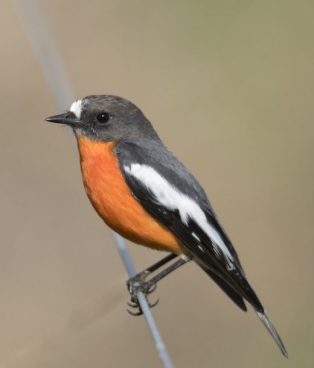
Flame Robin by John Cantwell/Macaulay Library, taken on Global Big Day

Also, the final numbers are in and news published late yesterday confirmed what I suspected as day was breaking in Belize, titled Global Big Day 2017: birding’s biggest day ever:

…On 13 May 2017, almost 20,000 birders from 150 countries around the world joined together as a global team, contributing more than 50,000 checklists containing 6,564 species—more than 60% of the world’s birds. This is a new record for the number of bird species reported in a single day, Continue reading

The Bells & Whistles Of The Forest At Daybreak

GBD2017ResultsWed.jpg

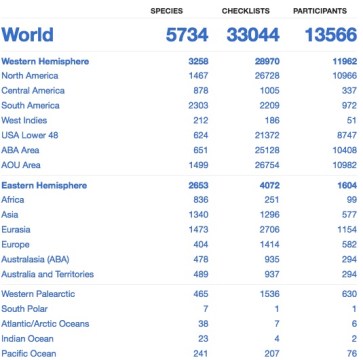
We post a few times a day, sharing information about initiatives in our own realm of work and frequently observations on news links that we find interesting. For the record, here is a bit of news worth celebrating. As I type this at 5:30a.m. Belize time, the Global Big Day page on eBird shows the latest tally of the species count as seen above. At the same time, on the eBird Facebook page I am looking now at the last post, dated May 15 midday, that says:

The #GlobalBigDay total is now 6,255, less than 100 away from a new record for a single day of birding!

Looks to me like a new record has been set. Where are all the bells and whistles? They are outside my door right now, where the wildlife is whirring, cling-clanging, whooping and shrieking as the forest lights up…

Sticking To Mission & Unintended Consequences

GBD2017Result1

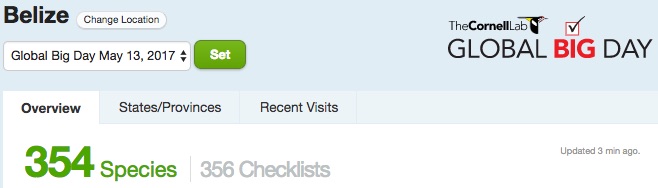
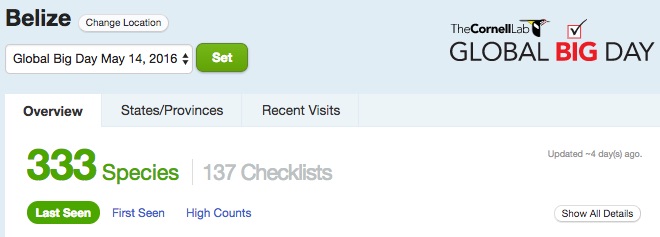
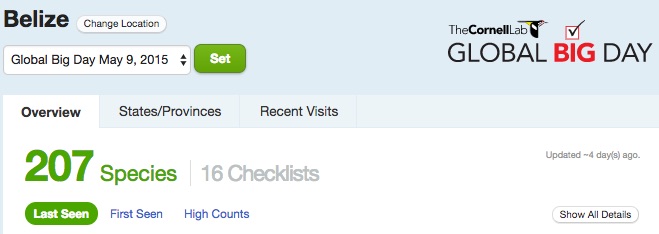
In recent months, as we prepared to host Team Sapsucker Belize at Chan Chich Lodge, our goals were focused on the citizen science mission. Using a couple simple metrics, the event was a clear success, comparing the number of species counted in Belize this year versus last year, and especially looking at the number of checklists submitted.

GBDResult16.jpg

If you look at this as the third iteration of an event that we hope to grow in future years, the progress from beginning to present is promising. As I type this there are still more than 40 hours of data entry remaining for this year’s event, so the increase in this year’s participation and species identification will likely grow larger by this time Wednesday.

GBDResult15.jpg Continue reading

Global Big Day 2017, Results

GBD2017b.jpg

When I left Team Sapsucker late last night it was pouring rain, a perfect punctuation to the day, telling them to stay under cover on Chan Chich’s deck since no bird would be out in the deluge. They were reviewing their lists, waiting to see if the rain would pass, allowing one final outing of the 24-hour period. I did not ask the final number, but I could tell they were happy with the day.GBD2017Result

As I type this at 5am the rain has long since stopped, the early birds are out in full sonic force, competing with the howler monkeys it seems, and results on eBird’s website look impressive. My eye is drawn to the Central America numbers. Partly because I moved to the region two decades ago and have worked in each country. Partly also because the region has embraced its ornithological importance, and yesterday provided one more metric for that embrace. But mainly, because I am here in Belize and the Lab team we had here was exactly as expected, not only as birders but as people.

The Chan Chich guide team had an amazing day with the Team Sapsucker on Friday, and over lunch that day they all celebrated several firsts, the details of which escape me now, but they involved two new species being added to Chan Chich’s list on eBird (a big deal) and our guide Ruben adding a life list bird that day to his nearly two decades of birding accomplishments at the Lodge.

GBD@CCL.jpg

The Lab team explained the rules of the game for the following day. No assistance of any kind would be possible after midnight. Continue reading

Winged Muses

13BIRDMUSIC-superJumbo.jpg

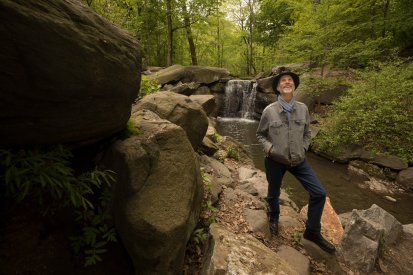
The composer John Luther Adams in Central Park, listening for his winged muses. Credit James Estrin/The New York Times

Occasionally we have reason to think of muses; every day we think of birds. Today birds are the muse. We have linked to this composer’s work once previously, and I am happy with the coincidence of reading again about this composer on Global Big Day in this review by Michael Cooper, Listen to ‘Ten Thousand Birds’ and Its Warbling, Chirping Inspirations:

New York is not usually considered a naturalist’s paradise. But John Luther Adams, the Pulitzer Prize-winning composer and former environmental activist, did not have to walk far from his Harlem apartment this week to be serenaded in Morningside Park and Central Park by choirs of robins, sparrows, flickers, catbirds and, finally, a wood thrush, with its poignant “ee-o-lay” song.

”That’s the one that started it all for me, 40-however-many years ago,” Mr. Adams, 64, said as he paused in a sun-dappled spot in Central Park’s North Woods to savor the wood thrush’s melody. Continue reading

Introducing The Team Prepping For Global Big Day At Chan Chich Lodge

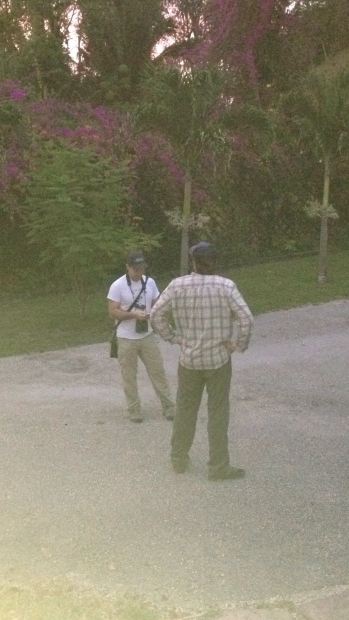
GBD1On day two in Belize with Team Sapsucker introductions are due. The photo to the left, taken at about 5am today in front of Chan Chich Lodge’s reception area, shows two of them. The best information I could find to share with you about Andrew Farnsworth is on Songbird SOS Productions, where he says:

“I like the challenge of trying to figure out how to go birding when there’s a traffic jam on first avenue. It’s cool to be able to study birds in a city… Some people have seen technology as the end of all things natural, but there’s a whole other side to it that gives us access to a world that we would otherwise not have seen.” Continue reading

Baja Desert Birds

As I approach my 100th checklist submitted to the Villa del Faro eBird hotspot, I’ve been putting together video compilations of footage taken over the last seven months here. The one in this post happens to be about birds, and most of them are, but I’ll also be sharing some whale breaches, ray jumps, and non-avian desert animal behavior. In the video below you can see two Greater Roadrunners (filmed months apart), a California Quail, and a Gray Thrasher (endemic to the Baja Peninsula) recorded at or ten minutes from Villa del Faro.

Make sure you have the volume up for the Greater Roadrunner section in particular, as the first individual engages in some interesting bill-clacks, and the second one was vocalizing in a low toot that I’ve only heard the one time so far, but seems to be a mating call.

Continue reading

Counting Down To Global Big Day

Global-Big-Day-map

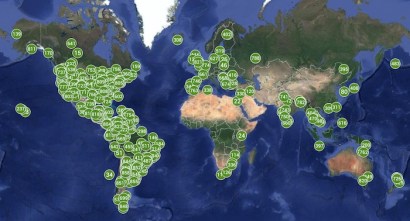
A world of birders has already marked out where they’ll be on 13 May. Where’s your place? Add it today!

Thanks to eBird for the one week marker until Global Big Day, which we look forward to supporting at Chan Chich Lodge. Click the map to the left to mark your territory, so to speak. This countdown notice uses one species to illustrate a conceptual premise of the annual event, and we are happy to report that this species is frequently seen at Chan Chich Lodge on birding walks, and excursions to Gallon Jug Farm, where the barns are accommodating:

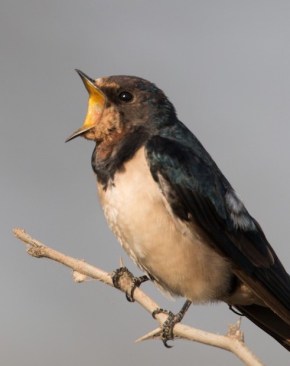
The familiar Barn Swallow (right) has been recorded in eBird from 222 countries. You can hope to spot a Barn Swallow almost anywhere on the planet, from Alaska to Argentina, Siberia to Australia, Iceland to South Africa. Barn Swallows criss-cross the equator and traverse the Eastern and Western Hemispheres. Their movements not only span an entire planet of birds, but connect a worldwide community of birders.

In the same way, Global Big Day and eBird connect all of your local birds with the rest of the world, making a real difference in the collective understanding of birds worldwide. On 13 May, every bird that you report contributes to the global team total for an unprecedented snapshot of our planet’s bird diversity. Every bird counts.

To join the Global Big Day team from more than 150 countries, all you have to do is go birding on 13 May!  Continue reading

Reminder Of Why Global Big Day Matters

CloudCrowd.pngNot every episode needs to be a crowd-pleaser, but this one catches the attention of our crowd more than the first three episodes had. It reminds us that while Global Big Day is intended to be fun, with a hint of competitive spirit, it is all in the interest of science and ultimately for the benefit of conservation of bird habitat (reminder to pledge). Thanks to The National Science Foundation for funding this! Thanks to PBS for making it available to watch online, even outside the USA (at least in Belize):

TheCrowdandTheCloud.jpg

Citizens4Earth, Ep. 4

Counting birds for more than 100 years generates data on a changing climate and there’s an app for that: eBird. Surfer science using smart tech tracks ocean acidification and coastal temperatures in the Smartfin project. Spend “A Year in the Life of Citizen Science” with California’s monarch butterflies and horseshoe crabs in Delaware. Continue reading

Big Day Pledge

clo_logo_2_351px

As we have in past years, in solidarity with our friends and colleagues at the Cornell Lab of Ornithology, we are sharing the pledge drive as far and wide as we can, and look forward to doing our part more specifically in a couple weeks:

BigDay_Email-banner_032817

On May 9th, the Cornell Lab of Ornithology’s top birding team will begin the long journey to the Yucatan Peninsula for Big Day 2017. Big Day is an all out midnight-to-midnight birding event to see who can identify the most species in a 24 hour period. Team Sapsucker hopes to find the most birds yet — by identifying 300 bird species. Continue reading

Team Sapsucker, Looking Forward To Global Big Day In The Yucatan Peninsula

We are looking forward to Andy’s arrival in Belize, with his team mates from the Lab and others from Belize. When I say “we” I am referring to the entire staff and community at Chan Chich Lodge.

As Global Big Day draws closer, it is time to introduce Andrew Farnsworth, Captain of Team Belize. We love the idea of the healthy competition among the 3 teams that will spend their Big Day birding the Yucatán –  and the Chan Chich guiding team especially looks forward to assisting the Lab team. Continue reading

Global Big Day, Coming Soon At Chan Chich Lodge

We have already extended the invitation, but we will continue reminding you just as the Lab keeps reminding us:

On May 13, 2017, the Cornell Lab of Ornithology’s birding Dream Team, the Sapsuckers, will reach for an audacious goal: finding 300 bird species in just 24 hours – and raising $475,000. Can they do it?! Continue reading

Keeping Those Scarlet Macaws Out Of Harm’s Way

web_camilla-cerea_au0117_sm_049

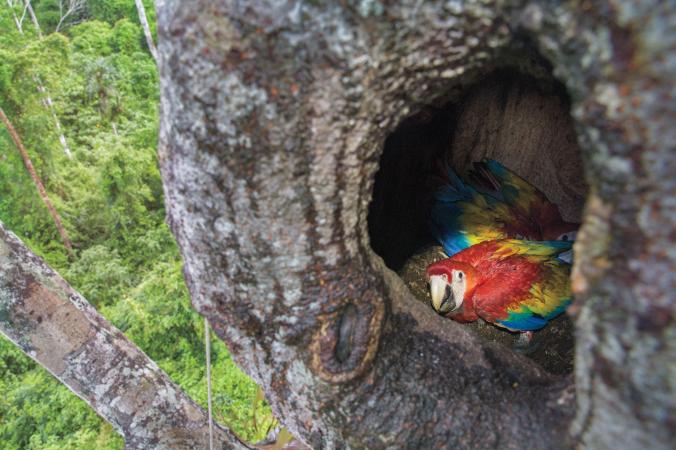
Two Scarlet Macaws chicks sit in their nest in the cavity of a quamwood tree in Belize’s Chiquibul Forest. Photo: Camilla Cerea/Audubon

Thanks to the neighbors of Chan Chich for bringing to my attention this article by Martha Harbison in the current issue of Audubon Magazine, which touches on the topic I referenced back here, not far from Chan Chich Lodge as the bird flies (so to speak):

…To keep macaw chicks safe, a team of rangers spends night and day watching over the birds’ nests and homes.

The Scarlet Macaw’s last, best defense against wildlife poachers doesn’t look like much: just a ramshackle collection of tarps, makeshift tables, plastic five-gallon buckets, jungle hammocks, and a cook fire, hidden in the dense understory of a tropical hardwood forest near the fraught and uncomfortably porous border between Belize and Guatemala. Continue reading

To Bait Or Not To Bait, A Debate

owl-baiting-9_custom-eff377db1531b3a9380239392d03516bf9b06f7f-s1400-c85

A great gray looks up after plunging into the snow, while hunting north of Two Harbors, Minn. The great gray is one of the world’s largest species of owl. Derek Montgomery for MPR News

We have never had, nor can I picture us having this debate at Chan Chich Lodge or any other wildlife setting we are responsible for managing; nonetheless, since we all live in glass houses of one sort or another, it is worth a moment to read this and ponder (thanks to Dan Kraker and Minnesota Public Radio, USA):

Earlier this winter, photographer Michael Furtman was driving along the North Shore of Lake Superior in search of great gray owls. Several of the giant, elusive birds had flown down from Canada looking for food.

He pulled off on a dirt road where he had seen an owl the night before. One was there, perched in a spruce tree, but so was a pair of videographers filming them.

“I backed off, I was going to just let them have their time with the bird,” Furtman says. “And then I saw them run out and put a mouse on the snow.” Continue reading

Birdwatching 101, Mid-May, Chan Chich Lodge

SibleyYou probably cannot do much better, if you are just getting interested in birdwatching, than to have a primer like this one. The author, in the pantheon of ornithology according to the birdwatchers I know, spends half an hour sharing some of the basics in this podcast:

This week’s Please Explain is all about birdwatching. We chat with ornithologist David Allen Sibley, a leading expert in the field. Sibley is the author of The Sibley Guide to Birds, a reference work and field guide for the birds found in the North American region. He offers details and illustrations of 810 species of birds, with information about identification, life history, vocalizations, and geographic distribution. According to the Audubon Society, “There are 47 million birdwatchers. But there is only one David Sibley.”

In the final minutes Mr. Sibley answers a question that has been of interest to the staff of Chan Chich Lodge in recent months. Do bird feeders have any adverse effect on the birds they attract? In short, no. So today we returned the hummingbird feeders to their longstanding perches on the dining room deck. Birds, staff, and guests are all happy with this decision.

This podcast serves as a good reminder of an opportunity we are inviting birdwatchers of all skill levels to join us for. We have already posted about it here, and earlier here as well. Come join the fun!

A Decade Since The Last Flight Of The Scarlet Macaw

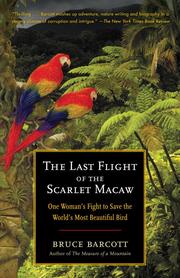
The+Last+Flight+of+the+Scarlet+Macaw.jpgWhen a book like this comes recommended, book reviews from a decade earlier are as fresh and relevant as ever:

…When McPhee wrote “Encounters With the Archdruid,” the American conservation movement was a religious and mystical force. It may still be so today, but the movement now employs nearly as many big-city lawyers and consultants as any corporation hoping to develop a mine, oil field or… dam. They’re out in force in Bruce Barcott’s new book, “The Last Flight of the Scarlet Macaw: One Woman’s Fight to Save the World’s Most Beautiful Bird,” the story of a bitter fight against a dam in western Belize. No, it doesn’t sound thrilling (which is doubtless why the publisher kept the word “dam” out of the title), but Barcott, a contributing editor at Outside magazine and the author of “The Measure of a Mountain: Beauty and Terror on Mount Rainier,” makes it so, mashing up adventure travel, biography and nature writing in a steamy climate of corruption and intrigue…

It is not the first time this book has been recommended to me, but yesterday a fellow hotelier in Belize mentioned it when describing his getting to know someone central to the book’s story, and this  reminded me that I still had not touched the book. It is, I am told, a must read.  Bruce Barcott provided an excerpt of his book back when it first came out, so I have just started.

Bird, Data, Love

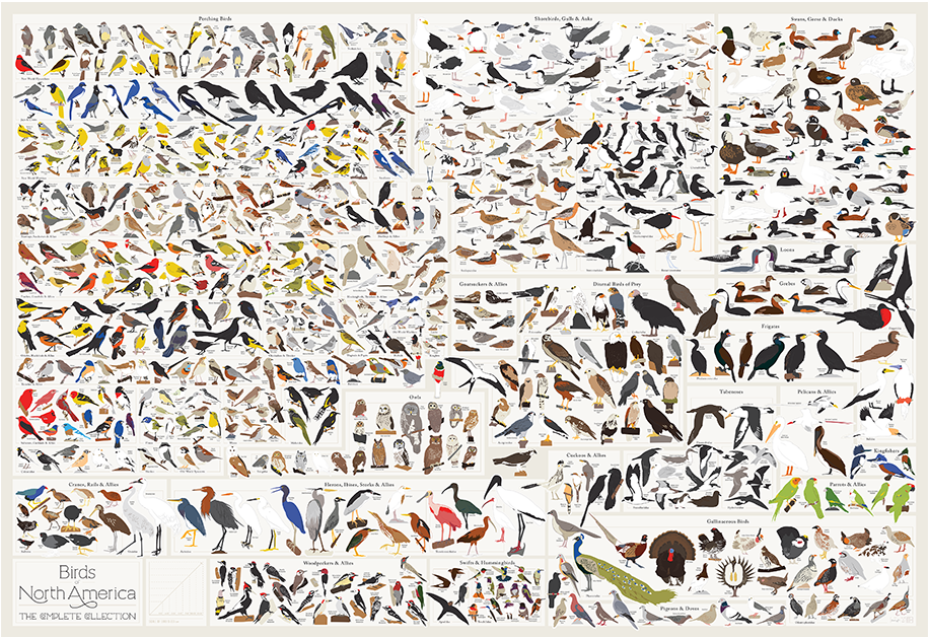
We love this amazing poster from Pop Chart Lab as much as the link to find it.  The site’s zoom function gets you closer to the fantastic detail.

Take a look!

Perhaps our most ambitious taxonomical undertaking yet, this is your field guide to the birds of North America! The product of over 400 hours of intricate illustration work by our talented team of artists, this unabridged aviary features over 740 fair-feathered friends drawn to scale and sorted by species, covering the continent’s avifauna (both native and introduced, as designated by the National Audubon Society and the Cornell Lab of Ornithology) from common sparrows, jays, and owls to rarer birds such as the Greater Sage-Grouse, the California Condor, and the Whooping Crane. An ornithological opus like no other, this classificatory treasure is perfect for amateur and eagle-eyed birdwatchers alike. Continue reading