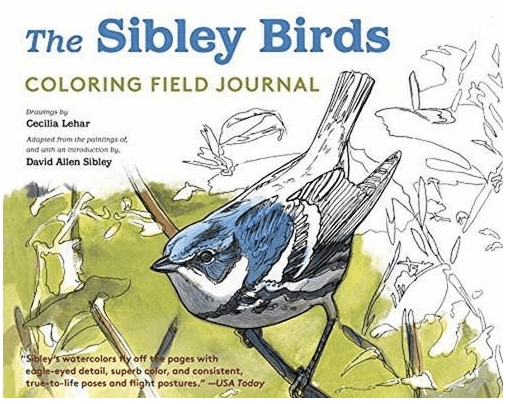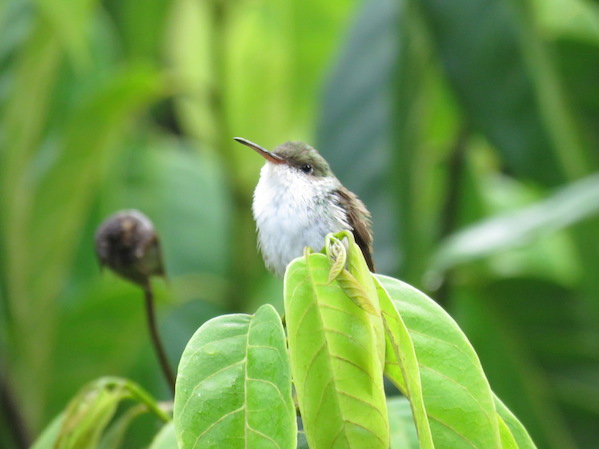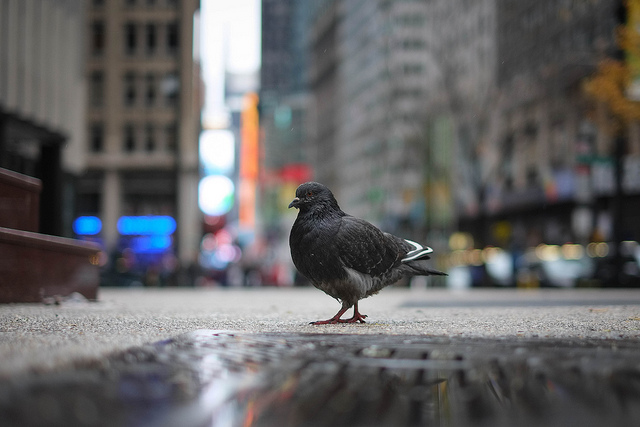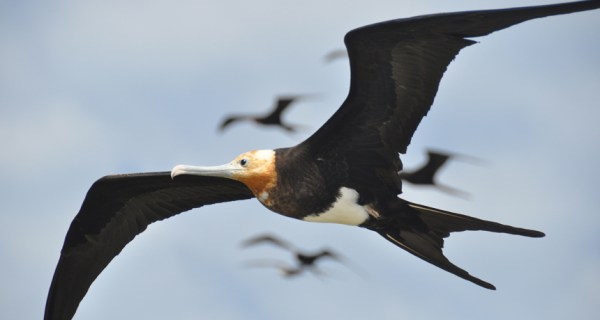
The fact that we’re rather “into birds” should come as no surprise to anyone giving even a quick perusal of this site. In addition to the birds themselves, we enjoy highlighting those who photograph them, those who paint them, those who study them, as well as those who craft them. Continue reading
Birds
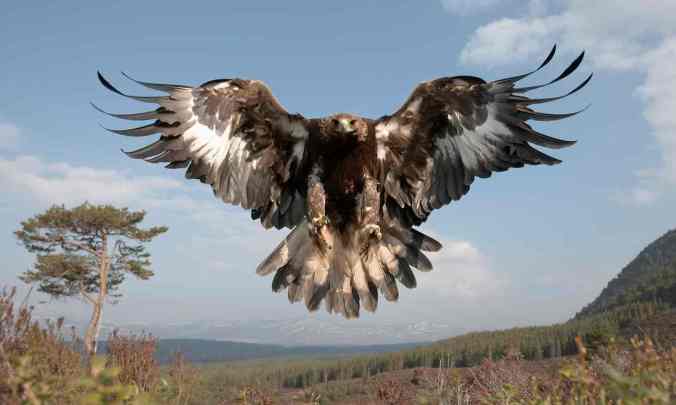
Golden Eagle Population On The Mend

There are now more than 500 breeding pairs of golden eagles in the UK, all in Scotland. Photograph: Peter Cairns/RSPB
Scotland, a hospitable environment for one of the majestic birds, deserves credit for this comeback:
UK golden eagle population soars to new heights
Numbers pass the level deemed viable for the raptor’s long-term survival but it remains missing from a third of its traditional territories
Britain’s golden eagle population has soared to new heights, according to a new survey released on Wednesday.
There are now more than 500 breeding pairs in the UK, up 15% and passing the threshold at which bird’s long-term future is thought viable. Continue reading
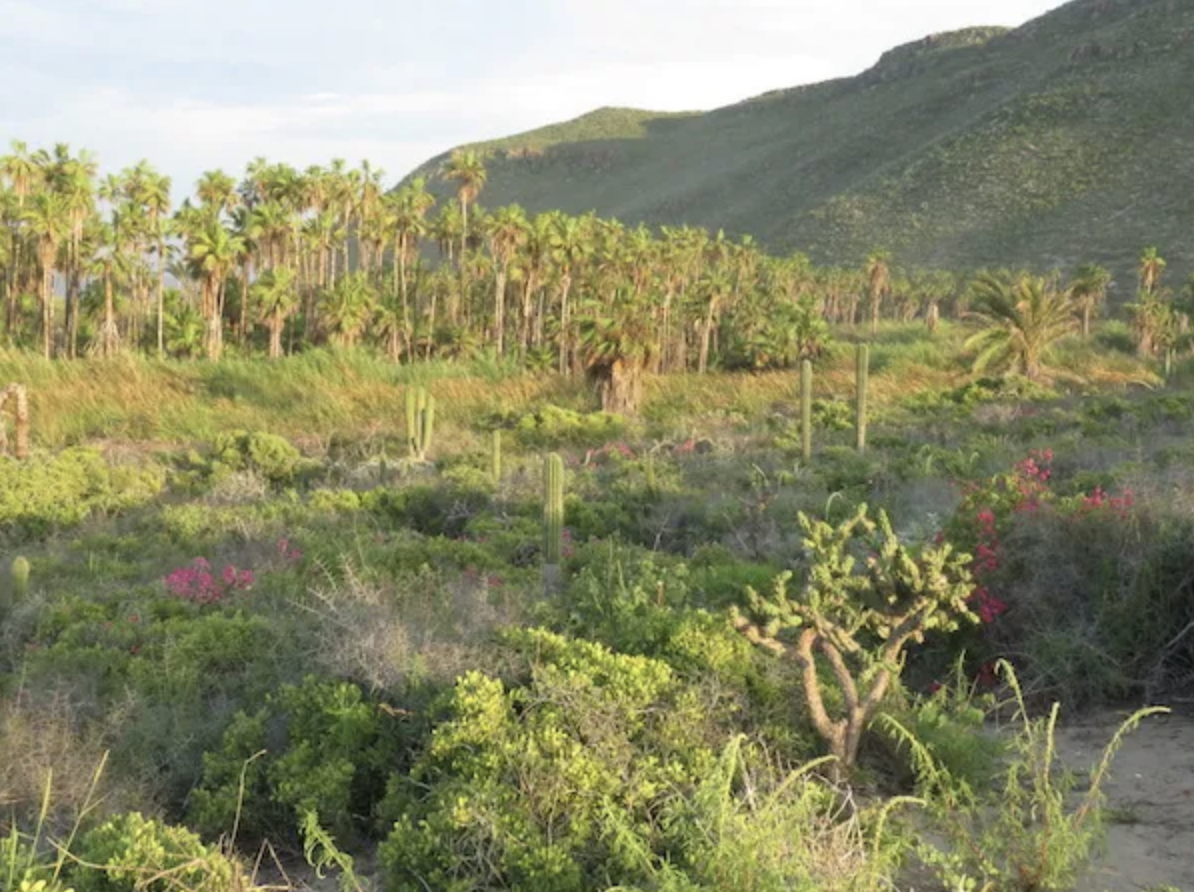
Birding from VdF: Todos Santos
Check out my last post for an introduction to this series and to read about the Sierra de la Laguna.
At three hours away from Villa del Faro, the town of Todos Santos is a bit of a stretch for a day trip, but could be accomplished by a determined driver or could be an addition to a stay here on the East Cape. Todos Santos is a very pleasant town on the Pacific coast of the southern Baja Peninsula, and two spots in particular are relatively well-visited by birders in the region: a little wetland area right by the beach at the southern edge of town called La Poza de Todos Santos (poza meaning “pool” or “puddle”) and a hotel associated with the spot called Hotel Posada la Poza (posada meaning “inn” or “lodge”).
Adorable, Luminous, and Rare

The rare patch of black feathers is evidence that the bird is leucistic, not albino. Photo: Brad R. Lewis
Hummingbirds are frequent visitors to this site, including the Anna’s hummingbird. All hummingbirds are known as tiny winged gems flitting from flower to flower or feeder to feeder, so the individual pictured above is especially startling. The term “leucistic” is new to us, and we thank Audubon.org for bringing this to our attention.
Rare White Hummingbird Steals the Spotlight at California Garden
In the Australian Gardens at the University of California, Santa Cruz Arboretum, a dozen Anna’s Hummingbirds dart between golden banksia flowers and various pink and white blooming shrubs. Their feathers are bright, iridescent shades of emerald, pink and gray. The grove is awash with color.
Except for one strange bird that’s sitting in a cypress tree, watching the flurry of feeding and fluttering. It’s an Anna’s Hummingbird—and it’s almost entirely white. Continue reading
Amboli’s Abundant Birdlife
We wouldn’t be true to one of our core interests if we didn’t take birding into account while doing our reconnaissance of the natural and cultural activities surrounding Aarvli.
Crist’s trip to the Amboli Reserve earlier in the week was one such visit. A quick search of eBird hotspots turned up Amboli Village (with a count of 116 species) and Amboli Forest (with a count of 65 species). The map above gives a brief sense of the multiple look out points that could prove to be excellent birding opportunities. Continue reading
Birding from VdF: San José Estuary

Since last week, I’ve been based back at Villa del Faro in Baja California Sur, Mexico, where I’ll be co-managing the property with Jocelyn for a good while. In addition to having the opportunity to see what kind of birds show up here in their winter migration, I’m also hoping to have time to check out the surrounding region for other birding hotspots. I’ll do this not only for my own interest, but also because we may get guests here in the future who are bird-watchers. I’d like to be able to recommend areas based on my own experience, so they don’t have to rely solely on eBird, which helps find certain spots but can’t give you any directions that Google Maps doesn’t have.
Nevertheless, eBird is one of the best ways to quickly figure out what locations within a region are popular for birding, whether because they have lots of species or because lots of birders pass through there (or both). Continue reading
Ornitographies – Making Visible the Invisible
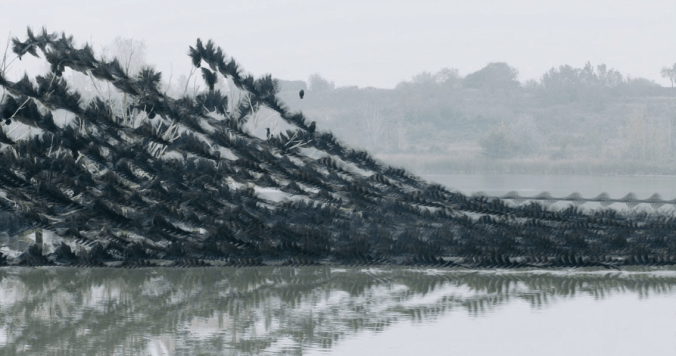
Birds are photogenic in their own right, but this creative capture of their flight by artist Xavi Bou is both innovative and etherial. A geologist and photographer by training, Xavi’s love of birds goes back to childhood.
Xavi Bou focuses on birds, his great passion, in order to capture in a single time frame, the shapes they generate when flying, making visible the invisible.
Unlike other motion analysis which preceded it, Ornitographies moves away from the scientific approach of chronophotography used by photographers like Eadweard Muybridge and Etienne-Jules Marey. Continue reading
Birding By The River
Friends and followers of this site already know of our fondness for birds, and we were happy to come across Will Rose‘s charming educational animation illustrating bird identification. Continue reading
Kiwis Were Diversified by Glaciers in NZ
The kiwis referred to here are cute, small, fluffy, brown birds, not to be confused with small fuzzy brown fruit nor with the people who live in New Zealand. These flightless and nocturnal birds used to be divided in three to five species, but new DNA evidence from extensive blood sampling conducted over the last couple decades in their island home is indicating that there is in fact much more genetic diversity – which is often separated geographically – than previously thought, perhaps even enough to declare new species, or at the very least certainly new subspecies. And this might affect conservation strategies for these birds, which are all either endangered or vulnerable to endangerment. Ed Yong reports:
Several million years ago, a small bird flew to New Zealand. Arriving there, it found few threats and plenty of opportunities. In the absence of mammals, its descendants gradually lost the ability to fly, as island birds are wont to do. They also evolved to fill those niches that mammals typically occupy, rootling around the leaf litter in search of worms and grubs. They transformed into that icon of New Zealand—the adorable, bumbling kiwi.
Or rather, they transformed into the kiwis.
eBird Workshops in Guatemala
First of all I would like to give to you a brief introduction of myself since it’s the very first time I have the great opportunity to write a post here – by the way thanks Amie, Crist and Seth Inman for the invitation.
I am a 20 year old birder from Guatemala and I have been in touch with nature and birds since I was a little kid. I remember being carried by my dad on his back and going out to the field to go birding. He needed to take care of me but he didn’t want to just stay at home wasting valuable hawk migration time, so he took me with him no matter what. I remember I enjoyed it A LOT, not only because I liked being carried, but the memories of the field guide open in my dad’s hands and his binoculars hanging by his neck and his trying to point out the bird and later showing it to me in the book are things I will never forget. Of course I was too young to actually spot the bird and appreciate it in the field but I do remember looking at the birds carefully in the field guide. A few years later I was so excited when he gave to me my first pair of binoculars as a Christmas present! I felt like a pro ornithologist (although I didn’t know that word yet). That same year he bought his first spotting scope so when I wasn’t able to see the bird and observe it through my binoculars myself he would find it on the scope so I could enjoy the beauty, behavior, different plumages – everything of the birds. I immediately fell in love with birding and all of what biding had to offer to me. Continue reading
Adjutant Storks and their Conservation Brigade

A rag picker looks for valuables among a group of Greater Adjutant Storks in a garbage dump site near Deepor Beel Wildlife Sanctuary in Assam. Photo by Ritu Raj Konwar, via The Hindu
Looking at the photo above, you may not see much to like in the Greater Adjutant, a type of stork found primarily in northern India and parts of Cambodia. But these big birds are important scavengers in their ecosystem, helping to break down dead animals. In this way they’re like vultures, a similarly-maligned group of relatively unattractive birds. As you’ll read below, many rural communities in India historically did not welcome the Greater Adjutant, which is classified as endangered by the IUCN. But storks, like other large avian families such as vulture and cranes, are not doing too well on a global scale: of the nineteen species of stork, the IUCN labels fifteen of their population trends as decreasing; four are endangered, while two are near-threatened and three are vulnerable. All of which makes the news from the state of Assam in India even more heartening:
DADARA, INDIA — On a cloudy day in July, in a remote village in northeastern India, Charu Das excitedly imitates the awkward movements of a stork with her hands.
In a few months, the greater adjutant stork—called hargilla, which means “swallower of bones” in Sanskrit—will descend on this hamlet, situated in Assam’s Brahmaputra Valley, to breed in large numbers.
Must-see Aerial Insectivores in the Greater Antilles: Part 5/5

Northern Potoo perched on a fence post near the Windsor Research Station, Trelawny Parish, Jamaica. (photo by Justin Proctor)
This post is part of a series; visit Part 4 here.
Let’s move now from the diurnal species to a nocturnal favorite, the Northern Potoo (Nyctibius jamaicensis), which has been featured here before a couple times. These birds actively hunt for insects at night by sallying out from low-lying perches where they remain camouflaged and motionless until prey is spotted. If you’ve got a little bit of energy left in you after the sun goes down, and you also remembered to pack a decent headlamp or flashlight, I can’t encourage you enough to just go for a little walk down a quiet road nearby.
Tropical Kingbirds Make Good Parents, Part Two
Yesterday I wrote and shared a video about this particular flycatcher’s protective nature, but it’s important to note that this behavior isn’t limited solely to the Tropical Kingbird. Neither is the rigorous feeding displayed in the video below. Most birds take good care of their young, whether by bringing meals every couple minutes or by picking up their poop and depositing it away from the nest – which you can see the parent kingbird do at 00:30 and 2:31. I apologize for publishing this in low resolution and pixelating the cuteness, but it’s the best one can do when off-grid in the middle of the Belizean jungle!
Tropical Kingbirds Make Good Parents, Part One
Just a few days ago, I was working from my laptop in one of the Chan Chich Lodge common areas when I saw an Ocellated Turkey on the road – not a peculiar sight at all – that walked a few steps before suddenly doing a swift yet panicked pirouette – a slightly less usual occurrence, in my brief experience with the scintillant species. I grabbed my camera, which doesn’t leave my side here at the Lodge, and recorded the following video, in which the turkey gave a new meaning to the chicken-dance, albeit as an unwilling partner:
Must-see Aerial Insectivores in the Greater Antilles: Part 4/5

White-collared Swifts in flight, Jamaica; top photo is a good depiction of the species viewed head-on from a mountain top. (with the observer positioned at the same elevation that the swifts are flying) as they come together to flock in the evening. (photos by Justin Proctor)
This post is part of a series; visit Part 3 here.
In Part 3 I introduced you to the smallest swift you’ll find in the Greater Antilles, so it seems appropriate to bring the largest swift of the region into the equation. An all-around phenomenal bird, the White-collared Swift (aerial insectivore 4) doesn’t get the attention it deserves, and I think I know why. Wetmore and Swales summarize the problem perfectly:
“…through its great speed in flight so annihilates distance that flocks may appear temporarily almost anywhere.” (1931)
A Fluttery Meal Companion

White-bellied Emerald by Seth Inman
You are always guaranteed to have a fluttery companion at every meal at Chan Chich Lodge. Whether you are sipping on an early morning cup of Gallon Jug coffee or munching on a hearty black bean burger for lunch, a variety of hummingbird species will perch on nearby branches, whiz by your ears, and fight one another for a precious sip of sugary liquid from the hummingbird feeder and nearby flowers. It is an entertaining and lively spectacle full of reproachful tweeting and muffled buzzing as the hummingbirds dive and zig-zag through the different obstacles (sedentary, observant humans included) that surround the dangling feeder.
The Most Avid Fans of Flying

Photo © AURÉLIAN PRUDOR/CEBC CNRS
Who enjoys flying? I do (on planes, of course) and birds certainly do as well (they better because they do a lot of it)! According to recent study, frigatebirds can drift in the skies for up to two months without landing (I think this makes them the biggest fans of flying, along with albatrosses, another ocean-faring flier). In order to do this, the seabird seeks out routes with strong and upward-moving currents to save energy on its flights across the ocean. By hitching a ride with favorable winds, frigates can fly more than 400 kilometers a day (which is the equivalent of a daily trip from Boston to Philadelphia) and avoid having to flap their wings as much.
For instance, the birds skirt the edge of the doldrums, windless regions near the equator. For this group of birds, that region was in the Indian Ocean. On either side of the region, the winds blow steadily. The winds come from cumulus clouds (the ones that look like fluffy cotton balls), which frequently form in the region. Riding upward-moving air currents underneath the clouds can help the birds soar to altitudes of 600 meters (about a third of a mile).
The birds don’t just stop there, though. Sometimes they fly higher into the [cumulus] clouds…[and] use the rising air inside the clouds to get an extra elevation boost. It can propel them up to nearly 4,000 meters (2.4 miles).
American Coots
The title may be reminiscent of recent movies like “American Sniper,” or “American Hustle,” or slightly older ones such as “American Psycho” and “American Beauty.” But as the video suggests, the American Coot is a type of bird, a wading species in a family called Rallidae, which most non-birders probably haven’t heard of because the birds are typically either near water or hiding in dense vegetation. Coots, along with rails, gallinules, and crakes, make up the Rallidae family, and all these types of birds like to stay on the ground, very rarely flying or venturing into trees unless it helps escape a predator. They’re more closely related to cranes than to ducks.
Pigeons Helping with Health Research
For most city dwellers, pigeons are just another speck in the hustle and bustle of urban life and are only truly noticed when they don’t move out of the way fast enough as you stride down the sidewalk. However, for environmental health scientist Rebecca Calisi from the University of California, Davis, pigeons are her primary focus and the basis of her research for potentially finding areas in cites with high level of contaminants dangerous to humans.
Must-see Aerial Insectivores in the Greater Antilles: Part 3/5

Antillean Palm-Swifts in flight as well as entering and exiting nests located within the hanging fronds of palm trees, Jamaica. (photos by Justin Proctor)
This post is part of a series; visit Part 2 here.
Antillean Palm-Swift (Tachornis phoenicobia)
This is going to be the most noticeable and easy to identify swift out there. However, that doesn’t mean you’re going to get a really good look at one right away. They are fast, and they are small. Luckily they are gregarious and colonial nesters, which means that you will usually come across them in large numbers as they forage or move into and out of their nests – which, amazingly, are a blend of saliva, plant fibers, and feathers attached to the undersides of dead, hanging palm fronds.