Must-see Aerial Insectivores in the Greater Antilles: Part 2/5

Cave Swallows in flight from multiple angles under different lighting conditions, Jamaica.

This post is part of a series; visit Part 1 here.

Cave Swallows (Petrochelidon fulva)

These little guys are a great species to start with because they are known to all of the Greater Antilles islands. One of the best contexts to find Cave Swallows in would be nearby to one of their communal roosts / nesting sites. Terrestrially, look around cave entrances or pocket-like formations in the sides of rocky cliffs. Coastally, look for limestone formations along the beach or just offshore. If they are there, you won’t miss them. Their nests are primarily made up of a mix of mud and plant fibers that have been attached to a vertical wall. If you can manage to get close, you might be lucky enough to see a pair of Cave Swallows sitting still in a nest giving you that famous 1000-yard stare.

Continue reading

A Birdy Kinda Film

compressed20wild20parrot20flock

Image from Evergreen.edu

Given the large amount of bird lovers on this blog, if you have not seen the documentary The Parrots of Telegraph Hill I recommend you watch it (list-keeping birders, on the other hand, might not like it as much). As any of our followers would know, every day on our blog we feature a bird, usually exotic to westerners, on our Bird of the Day post, and frequently have a bird-related post (as you can see below) regarding their habits, migration, population change, and more (I guess I’ll add another one to that list right now!). Continue reading

Must-see Aerial Insectivores in the Greater Antilles: Part 1/5

Illustration by Justin Proctor

Are you tired of really crisp, up-close views of beautiful Caribbean birds? Are you repulsed at the idea of having an extended period of time to view a bird, jot down detailed notes about its breath-taking plumage, and really connect with the moment? Well, I knew it; and I’m happy to say that here at Proctor & Proctor Inc., we can offer you something much more challenging! Let’s start by having a long, long look at the following Rorschach test (pictured left). And if at any time it becomes painful to keep your eyes on the image, just keep looking…

Alright, let’s reflect. Did you see a hamster? If you did, I’m gonna ask you to just kindly walk away now. If rather you saw some intriguing silhouettes of our feathered friends in front of our beloved Yellow Star, you’re sitting pretty. And if you took one quick glance and were able to immediately identify all the different species present, I think we can probably get you a movie deal.

Continue reading

A Dawn Excursion Continued

The main building in dawn light

My last post on this topic involved the ocean, but the bulk of that morning earlier this week was actually spent out in the chaparral: scrubby, thorny, and sparse vegetation in the desert just outside of Villa del Faro. Right before I exited the property I spotted a black-tailed jackrabbit warily watching me as I descended the hill–these hares are a common sight on the side of the dirt coastal road out here.

Continue reading

What Can Be Done with eBird Data?

Brighter colors indicate higher relative abundance. © Cornell University

The Western Tanager is a species I have yet to see, but which will be unmistakeable once I do, with the male’s red-and-orange head and bright yellow body contrasting with black wings striped with white bars. Based on the animated map above, I expect to spot some of them down in Baja California Sur by September or October, and I look forward to it. As I’ve written here before in the case of another moving map, citizen science makes this sort of illustrative prediction of a species’ moving presence possible, and it’s one of the reasons why I contribute to eBird as often as I can.

A paper titled “Using open access observational data for conservation action: A case study for birds” was published in the scientific journal Biological Conservation by a team of researchers at the Cornell Lab of Ornithology, several of whom I was just down the hallway from when I worked there. Although I haven’t gotten through their findings yet myself, Victoria Campbell chose nine interesting examples of how eBird data created tangible conservation in several countries.  Continue reading

2016 Audubon Photography Awards Winners

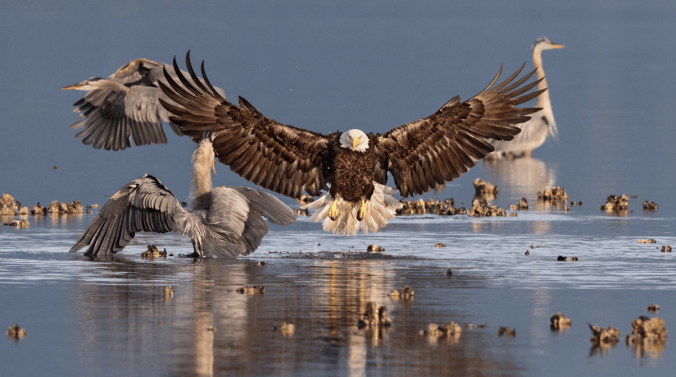
Bald Eagle and Great Blue Herons. Photo: Bonnie Block/Audubon Photography Awards

Bald Eagle and Great Blue Herons. Photo: Bonnie Block/Audubon Photography Awards

Readers of this site have come to expect an avian presence – daily in the form of our Bird of the Day posts, as well as frequently in our applause of many citizen science programs.

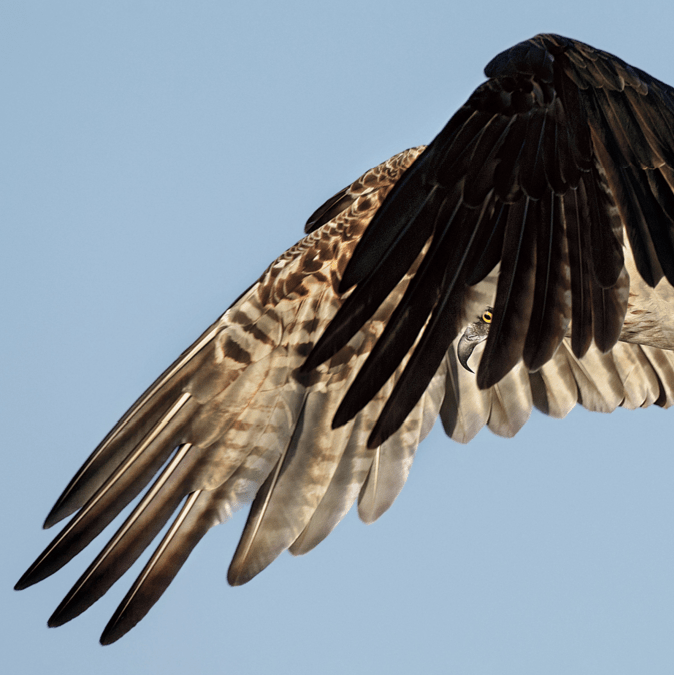
We send out a hearty applause to the 2016 Audubon Photography Award winners – especially the youth and amateur contributors. We’ve posted a few of the fabulous shots here, but be sure to follow this link for the entire set and the details and story behind each shot.

Osprey. Photo: Dick Dickinson/Audubon Photography Awards

Osprey. Photo: Dick Dickinson/Audubon Photography Awards

Quick Stats:

Participants: More than 1,700

Images entered: Nearly 7,000

Categories: Amateur, Professional, Fine Art, Youth

Entrants from: 50 states, 6 provinces, District of Columbia Continue reading

GreenBiz Interview with CEO of Audubon

We like the Audubon Society, the publications they produce, and of course, the artist himself. Over the last half decade, a new CEO for the Society has rewritten their strategic plan and seen overwhelming success in involvement of all sorts. Elsa Wenzel interviewed this CEO, David Yarnold, for GreenBiz:

The Audubon Society appears to be doing everything right in social media and marketing. It’s got apps, maps, a buzz on social media, an engaging website and a funny blog. It’s hip to crowdsourcing and citizen science: In just one weekend, 163,000 of its volunteers recorded on smartphones their sightings of more than 5,000 bird species. Audubon said its digital platforms reach a million people, a staggering climb from just 35,000 a couple of years ago.

Much credit for this goes to David Yarnold, CEO and president. He joined Audubon in 2010 after a long career in journalism at the Pulitzer-winning San Jose Mercury News, and a stint as president at the Environmental Defense Fund.

Continue reading

Birds Back From Beyond Brink

gettyimages-129031564_custom-0155a178bff9fc85b180038391dbdbe1bf478731-s1400-c85

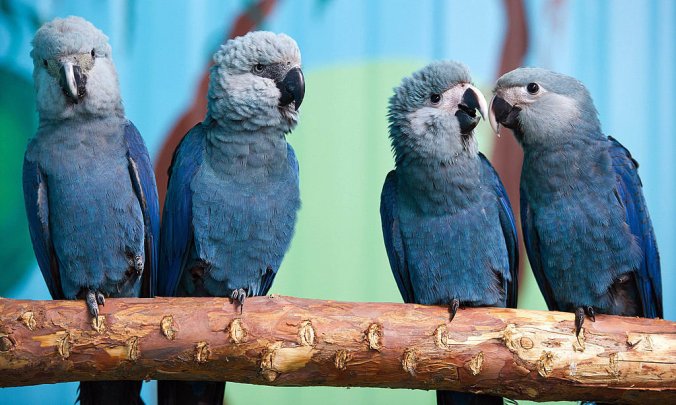
Spix’s macaws (L-R) Felicitas, Frieda, Paula and Paul sit on a branch in their aviary in Germany. The species has not been seen in the wild for 15 years until the recent sighting in Brazil. DPA/AFP/Getty Images

Thanks to National Public Radio (USA):

An Avian Mystery: Rare Parrot Spotted In Wild For First Time In 15 Years

For the last 15 years, Spix’s Macaw has been presumed extinct in the wild. That’s until one of the blue-feathered parrots was spotted and caught on video flying near the town of Curaca, Brazil.

Conservators say the appearance of the mysterious rare bird represents “a new hope” for the area.

The bird was first spotted by a local farmer named Nauto Sergio Oliveira, a government conservation institute said in a statement. Oliviera told his neighbors, and the next day his wife Lourdes Oliveira and daughter Damilys trekked out at dawn in search for the bird.

The rare parrot appeared in a nearby riparian forest and Damilys managed to catch it on video: Continue reading

A Bird’s Journey Tracked, Mapped & Shared

Screen Shot 2016-05-25 at 5.20.45 AM.jpg

From National Public Radio (USA) today, this should have your attention even if you are not a birder:

We Followed A Snowy Owl From Maryland To Ontario

At the end of 2013, snowy owls started showing up far south of their usual winter range. The big white birds were reported in South Carolina, Georgia, even Florida.

Dave Brinker, an ecologist with the Maryland Department of Natural Resources, had never seen anything like it. Continue reading

More than 1/3 of North American Bird Species at Risk of Future Extinction

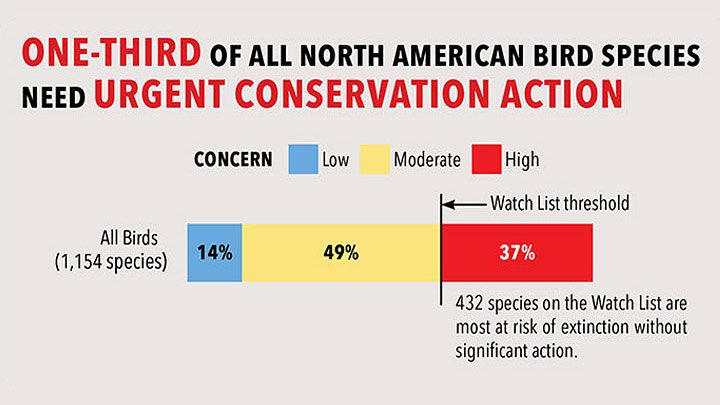
The analysis of all 1,154 bird species in Canada, the U.S., and Mexico identified 432 species that meet the criteria for the Watch List © NABCI

Climate change, habitat loss, and predation are all threats to birds in Canada, the United States, and Mexico, among other challenges facing the species throughout North America, with migratory shore birds being classified as particularly vulnerable. Scientific American reports with Reuters reporting, but make sure to check out the North American Bird Conservation Initiative information page too:

OTTAWA, May 18 (Reuters) – More than a third of all North American bird species are at risk of becoming extinct unless significant action is taken, scientists who are part of a tri-nation initiative said on Wednesday, adding that ocean and tropical birds were in particular danger.

The study, compiled by the North American Bird Conservation Initiative and the first of its kind to look at the vulnerability of bird populations in Canada, the United States and Mexico, said 37 percent of all 1,154 species on the continent needed urgent conservation action.

Continue reading

Xandari’s 2016 Big Day

A male Red-legged Honeycreeper, the highlight of my 2016 big day

Last year, we shared some details about the Global Big Day, an event that I participated in very casually from Chicago back then, and contributed to more seriously this year, as did the rest of the global birding community, as the data from eBird published today shows. In 2015, 6,158 species were reported on 38,923 complete checklists from 14,787 participants across 140 countries. This year, 6,263 species were reported on 43,848 checklists from 15,953 participants across 145 countries. Every point of comparison displays an increase in participation and effort this time around!

Continue reading

Adaptation’s Last Chances

lead_960 (1)

Thanks to the Atlantic‘s excellent science writer, Ed Yong, for this:

Climate Change Is Shrinking Earth’s Far-Flying Birds

In which the red knot is the canary, and the planet is the coalmine.

ED YONG

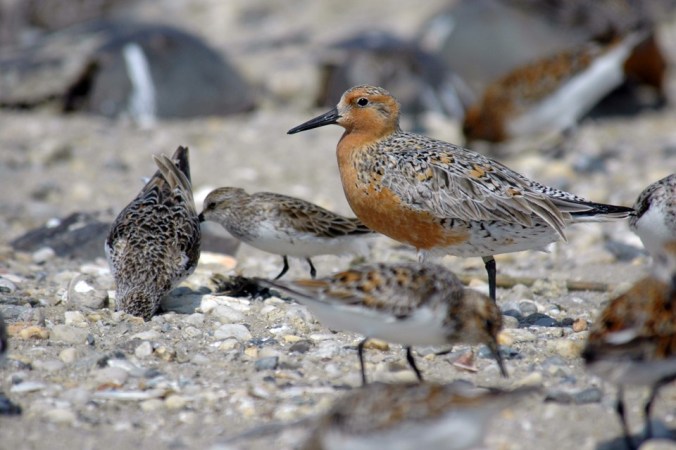
Every year, flocks of red knots criss-cross the globe. In the summer, these shorebirds breed in the Arctic circle, making the most of the exposed vegetation and constant daylight. Then, anticipating the returning ice and continuous night, they fly to the opposite end of the world. Different populations have their own itineraries, but all are epically long: Alaska to Venezuela; Canada to Patagonia; Siberia to Australia.

These migratory marathons mean that the red knot’s fate in one continent can be decided by conditions half a world away. And that makes it a global indicator, a sentinel for a changing world. It is the proverbial canary in the coalmine, except the mine is the planet.

And the canary is shrinking. Continue reading

Bad News for European Vultures

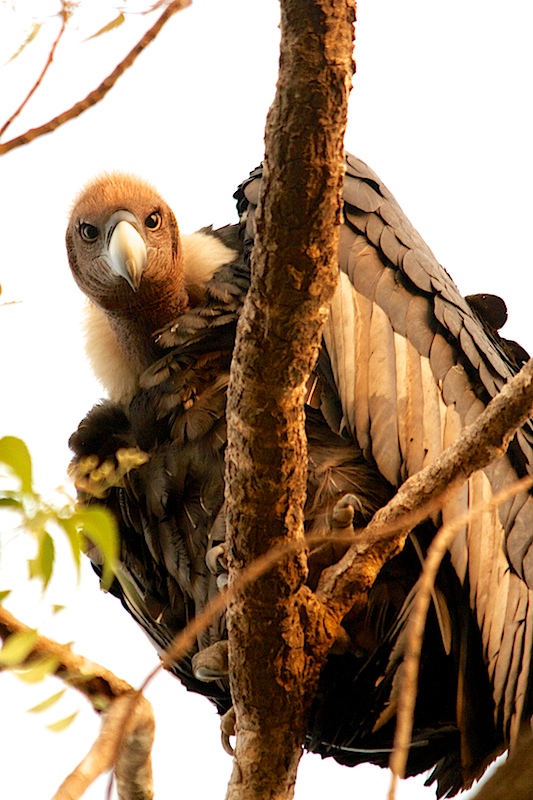
Bird of the Day August 13, 2013: White-rumped Vulture in Ahmedabad, India photographed by Srinivasa Addepalli

Vultures are very important members of many ecosystems in the world as members of a waste-management team, but their role as carrion-feeders is putting them at risk, and has been since the California Condor was endangered in the US (though it’s recovering now). We’ve featured these birds in our daily photo posts quite a bit, even just a week ago, and now there’s news from Scientific American, covering research published in the Journal of Applied Ecology, that European vultures are more threatened than ever, this time by a veterinary drug given to cattle:

A veterinary drug blamed for driving vultures to the brink of extinction on the Indian subcontinent could cause thousands of bird deaths now that it is being used in Spain.

Researchers have expressed concern over use of the anti-inflammatory drug diclofenac in cattle since it was approved for veterinary use in Spain in 2013, as the drug is toxic to vultures who may consume it via dead cows. Now, modelling by Rhys Green, a conservation scientist at the University of Cambridge, UK, and his colleagues suggests that the drug could cause populations of that country’s Eurasian griffon vultures (Gyps fulvus) to decline by between 1–8% each year.

Continue reading

Swallow-tailed Kite Conservation

Bird of the Day 9/19/15: Swallow-tailed Kite (Reserva El Copal, Costa Rica)

I’ve had the fortune of seeing this long-rumped raptor outside of the United States, where they are now considered rare despite their wide range throughout the Caribbean and Central and South America. And although the population did decrease in the last several decades, the IUCN does now list the species as having an “increasing” population trend. This interesting article in The Nature Conservancy, however, does raise concern over habitat loss and the species’ vulnerability. Ginger Strand reports:

Maria Whitehead yanks her feet out of the water as something crashes into Bull Creek next to the boat. Seconds later, a 10-foot-long alligator surfaces a few yards away. As the prehistoric reptile glides off, leaving a sinuous wake in the tannin-brown river, Whitehead casually retrieves her binoculars and goes back to watching a nest of swallow-tailed kites near the top of a soaring pine.

A project director for The Nature Conservancy in the South Carolina Lowcountry, Whitehead seems unfazed by nearly losing a toe on the job. So does Craig Sasser, manager of the Waccamaw National Wildlife Refuge. Wading into primeval cypress swamps, scaling 100-foot pine trees, paddling up tidal rivers through clouds of insects in triple digit heat: These are all part of researching swallow-tailed kites, a spectacular but poorly understood raptor.

Continue reading

Audubon Focuses on Corvids in Latest Issue

Corvid Behaviors poster by the Cornell Lab of Ornithology

“Meet the Bird Braniacs,” reads the header for three stories in the March-April issue of Audubon Magazine, highlighting the American Crow, Eurasian Jay, and Common Raven as especially smart species of bird (the three of them are Corvids, or members of the Corvidae family). In the different research projects covered in the Audubon pieces, the idea of empathy in birds is explored by Nicky Clayton at Cambridge University with Eurasian Jays; the problem of deterring Common Ravens from predating upon desert tortoises is a challenge for Tim Shields in the Mojave desert; and the general intelligence of the American Crow is studied by John Marzluff at the University of Washington. All the articles are quite interesting and worth a read online if you have the time. Below, a brief excerpt from the three essays, by Michael Balter, Alisa Opar, and Kat McGowan, respectively:

“I love you!” says Nicky. “I love you!”
“I love you!” says Lisbon
.

Nicky Clayton has shoulder-length blonde hair and a posture that reflects her background in dancing.  She is a scientist. She is very smart. Lisbon is a bird, a Eurasian Jay. He’s pretty smart, too. Like most Eurasian Jays, especially the males, Lisbon is also a good mimic. So it’s not clear whether he really loves Nicky, although he certainly likes it when she gives him a worm.

If he loves anyone, it’s probably Rome, his longtime mate. Lisbon and Rome, both eight years old, have been together since they were just two. They share a wired enclosure out here at the edge of Madingley, a peaceful, manicured English village a few miles west of Cambridge.

Clayton, 53, moved to Cambridge University about 16 years ago, around the time when she was becoming an international science superstar for her investigations into avian intelligence. As part of the deal, the university agreed to construct several aviaries at its Madingley annex according to Clayton’s specifications. They’re not fancy, but the birdcages include plenty of space for the captives to fly around, play, and mate, as well as special compartments where they collaborate with Clayton in state-of-the-art bird cognition experiments. Today the aviaries house about 70 birds, including Eurasian Jays, Western Scrub-Jays, and Rooks, all members of the corvid family. At night, the caws and kuks can be heard over much of the village.

Continue reading

Digiscoping in the Tropics

IMG_20160328_161007193_zpsc015qsss

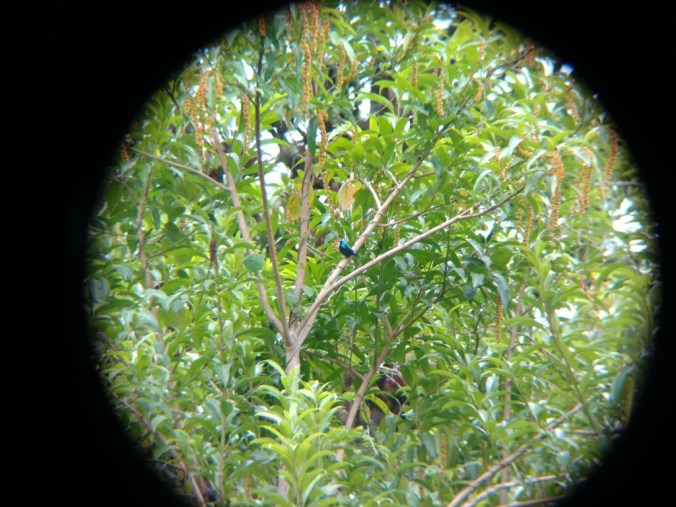
A male Scarlet-thighed Dacnis before zooming in with the camera in the digiscope setup

The first time I digiscoped, I wasn’t aware of the term, and I was using a small, borrowed point-and-shoot camera with a guide’s spotting scope. The results ended up here on the blog, though the images are, in retrospect, fairly low quality. In certain cases, however, digiscoping–basically the pairing of a scope with a camera for photography–can yield quite good shots of wildlife, and is arguably more versatile than having a big camera with a telephoto lens attached. Just check out Sharon Stiteler’s photos in her digiscoping article on Audubon’s webpage last year, or simply look up “digiscoping birds” to find some stunning images. Note, however, that digiscoping almost always refers to using a scope, or, in other words, a high-end piece of optic technology that costs anywhere between $400 and $3000–and that’s without the tripod.

This slideshow requires JavaScript.

Continue reading

Birding Apps Re-reviewed by Boucher

I visit Tim Boucher’s blog on The Nature Conservancy’s website every week or so to see what’s new, and this last check-up I noticed an old post from 2013 that’s been edited to include observations on fresh updates for phone apps that help identify birds, like Merlin, which I’ve covered in the past.

So far I haven’t purchased any bird identification application for my phone, mostly because there are good ones like Merlin and Audubon available for free in the US, but I’ve been considering a $9.99 app for the birds of Costa Rica, made by bird-watching guides both in CR and Panama.

Boucher doesn’t rank the apps in his order of preference, but it looks like from his reviews that he prefers the Audubon and Merlin apps for the fact that they’re free and utilitarian, though Merlin is geared more towards beginners. He’s also pretty positive about the Sibley and Peterson apps, both of which started with physical book versions of their guides.  Continue reading

The Nechisar Nightjar

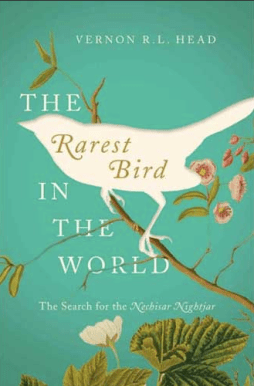
Cover Art © Pegasus Books

Although I haven’t read this book yet, I do know what it’s like to be on an expedition to find a bird that hasn’t been seen in several decades, which is the subject of Vernon Head’s book, freshly published in the US this month. “The Rarest Bird in the World” tells the story of the search for a bird related to potoos called the Nechisar Nightjar, which had been identified as a new species in the 1990s by Cambridge scientists who found a single wing of the bird in a remote area of Ethiopia.

The publisher blurb makes it sound pretty engaging:

Part detective story, part love affair, and pure adventure storytelling at its best, a celebration of the thrill of exploration and the lure of wild places during the search for the elusive Nechisar Nightjar. In 1990 an expedition of Cambridge scientists arrived at the Plains of Nechisar, tucked between the hills of the Great Rift Valley in the Gamo Gofa province in the country of Ethiopia. On that expedition they found three hundred and fifteen species of birds; sixty one species of mammal and sixty nine species of butterfly were identified; twenty species of dragonflies and damselflies; seventeen reptile species were recorded; three frog species were filed; plants were listed. And the wing of a road-killed bird was packed into a brown paper bag. It was to become the most famous wing in the world.

Continue reading