Great Backyard Bird Count at Xandari

Patricia works at Reception, with the Great Backyard Bird Count sign behind her

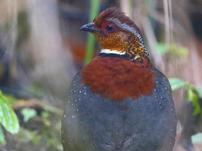
Xandari Resort & Spa’s Great Backyard Bird Count started off with the piercing whistle of a Common Pauraque, followed by some wren vocalizations and a Great Kiskadee‘s eponymous (“great kis-ka-dee!”) call. While drinking my morning coffee before the scheduled birdwatching tour I listened to the sounds from the forest and recorded my first GBBC checklist of the day at 5:30.

Then, some guests and I watched birds from the restaurant terrace for almost half an hour before walking through the gardens as well, leading to two more checklists. The most exciting sightings this time were a small group of White-crowned Parrots and a Zone-tailed Hawk soaring alongside a Short-tailed Hawk.
Continue reading

Concurrent and Coinciding Thoughts on 5000+ Birds

img_7608_zpsgfofu0lt

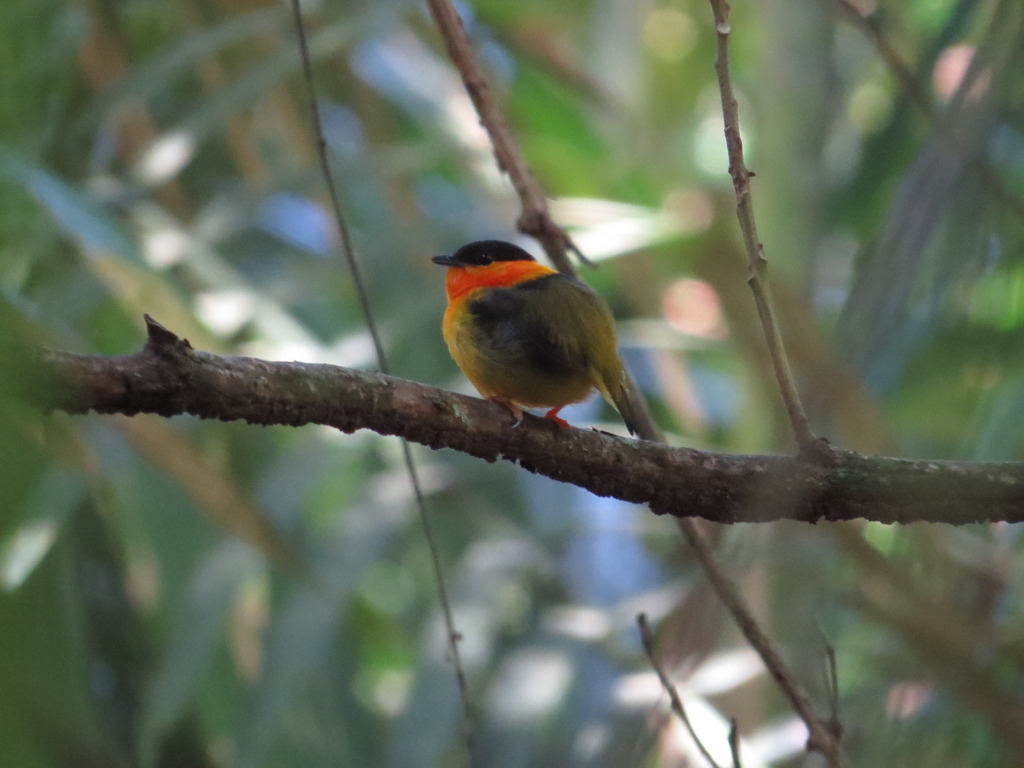
male Orange-collared Manakin seen at Carara National Park, Costa Rica

This week, two birders (one of whom we’ve featured on the blog before, and the other who we should have), Noah Strycker and Tim Boucher, wrote some thoughts on birding and life lists that had much in common, partially because I suspect Boucher’s post on The Nature Conservancy’s blog was inspired by Strycker’s summary of his 2015 Big Year, even though he made no explicit mention of the new world record (6,042 species of bird seen or heard in a calendar year).

Boucher, who saw his 5000th bird at the very end of 2015 (and those 5000 birds are ones he’s actually seen, not only heard), reflects on thirty-four years of birding to achieve his goal. Strycker, on the other hand, summarizes 365 days of straight birding to end up with the biggest big year ever recorded.

Continue reading

Clap Hands for Kerala Birders!

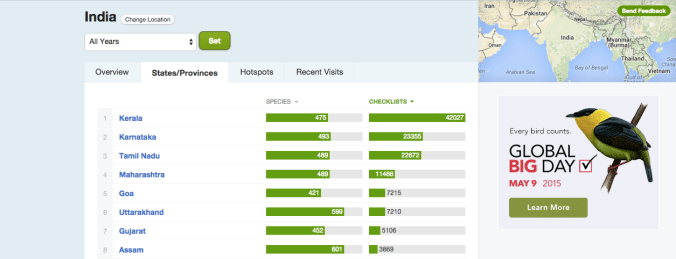
Between the on-going Bird of the Day series and many ornithologically focused posts, our interest in birds can’t be breaking news to any La Paz Group reader. We’re constantly hearing more about the importance of citizen science in all sorts of ecosystems, but with both birding and Kerala so close to our hearts we’re thrilled to applaud the enthusiasm of the Bird Count India community. Continue reading

Potoos in the Tropics

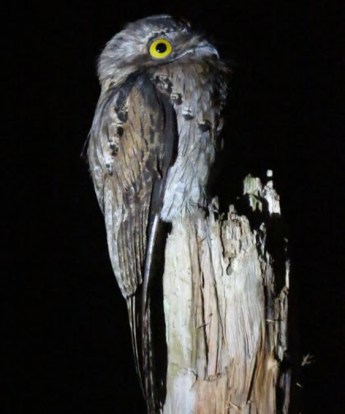
Northern PotooA few days ago, Timothy Boucher, a senior conservation geographer at The Nature Conservancy, shared his choice for his personal “Bird of the Year,” the Rufous Potoo, which he saw in Ecuador and was apparently the 5,000th bird to be checked off on his life list. Potoos, related to the frogmouths of southeast Asia and nightjars elsewhere around the world, are members of a highly cryptic, or camouflaged, family that primarily hunts at crepuscular hours and/or throughout the night.

In his blog post, Boucher describes his trip to Ecuador’s Amazon region, which yielded many exotic bird species, as well as the challenges of travel in the tropics. His excitement at hearing–and the next morning, Continue reading

A Bird Prized for its Ivory

The illegal trade in elephant tusks is well reported, but there's a type of "ivory" that's even more valuable. It comes from the helmeted hornbill - a bird that lives in the rainforests of East Asia and is now under threat. PHOTO: Science Photo Library

The illegal trade in elephant tusks is well reported, but there’s a type of “ivory” that’s even more valuable. It comes from the helmeted hornbill – a bird that lives in the rainforests of East Asia and is now under threat. PHOTO: Science Photo Library

Throughout history, the human desire for ivory—used in products from jewelry to piano keys to priceless religious art objects—has far outmatched efforts to stop the killing of elephants for their tusks. A smaller, feathered species, too, feels threatened thanks to the ‘prized’ casque it wears on its head: the Helmeted Hornbill.

Helmeted hornbills live in Malaysia and Indonesia. On the islands of Sumatra and Borneo their maniacal calls and hoots resonate through the rainforest. They have a reputation for being secretive and wary, though, and you’re more likely to hear them than see them.They have good reason to be shy – thousands are killed each year for their casques, shot by hunters who sell the heads to China. Between 2012 and 2014, 1,111 were confiscated from smugglers in Indonesia’s West Kalimantan province alone. Hornbill researcher, Yokyok Hadiprakarsa, estimates that about 6,000 of the birds are killed each year in East Asia.The casque, for which hunters are willing to risk arrest and imprisonment, is sometimes referred to as “ivory”. It’s a beautiful material to carve, smooth and silky to the touch, with a golden-yellow hue, coloured by secretions from the preen gland – most birds use their heads to rub protective oils from this gland over their feathers, legs and feet.

Continue reading

A Conversation of Whistles

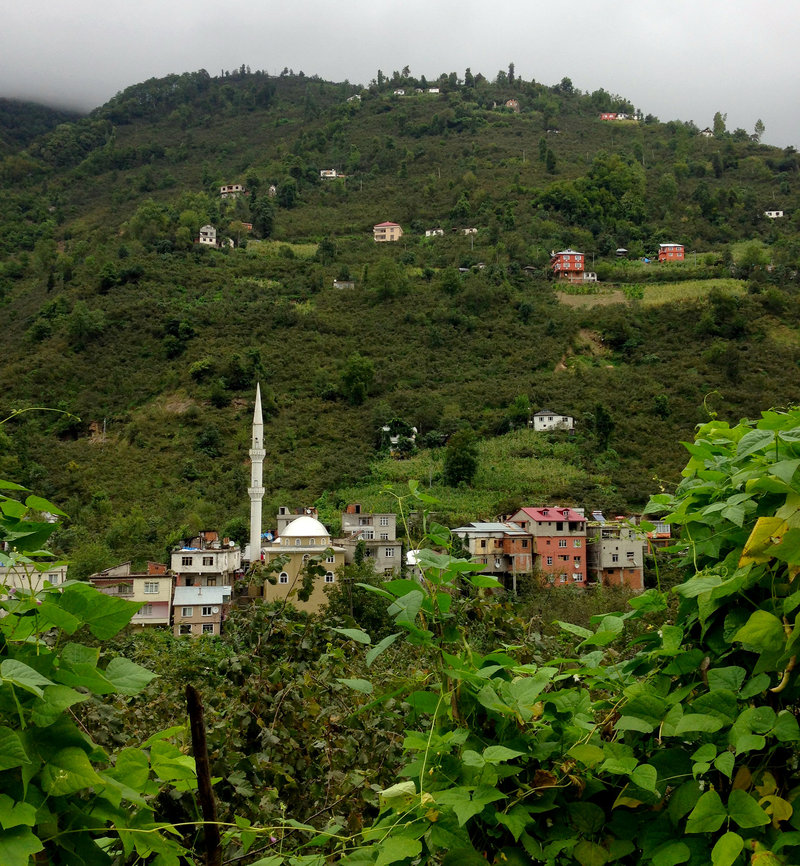
Steep hills surround the village of Kuskoy, high in the mountains above Turkey's Black Sea coast. Some villagers here can still understand the old "bird language," a form of whistled Turkish used to communicate across these deep valleys. Peter Kenyon/NPR

Steep hills surround the village of Kuskoy. Some villagers here can still understand the old “bird language,” a form of whistled Turkish used to communicate across these deep valleys. PHOTO: Peter Kenyon/NPR

Is it always necessary to use words to communicate? Theoretically, there’s verbal communication and its non-verbal counterpart of body language, gestures, and the like. What if the communication is to pass over valleys and hills – spontaneously? Then, a whistled language – with its origin in bird calls – is the answer. Ask the “bird whistlers”.

In a remote mountain village high above Turkey’s Black Sea coast, there are villagers who still communicate across valleys by whistling. Not just whistling as in a non-verbal, “Hey, you!” But actually using what they call their “bird language,” Turkish words expressed as a series of piercing whistles.

The village is Kuskoy, and it’s inhabited by farmers who raise tea, corn, beets and other crops, and also keep livestock. The landscape is unusual by Turkish standards, and the residents are also considered a bit eccentric by other Turks.

Continue reading

Waking the Dead

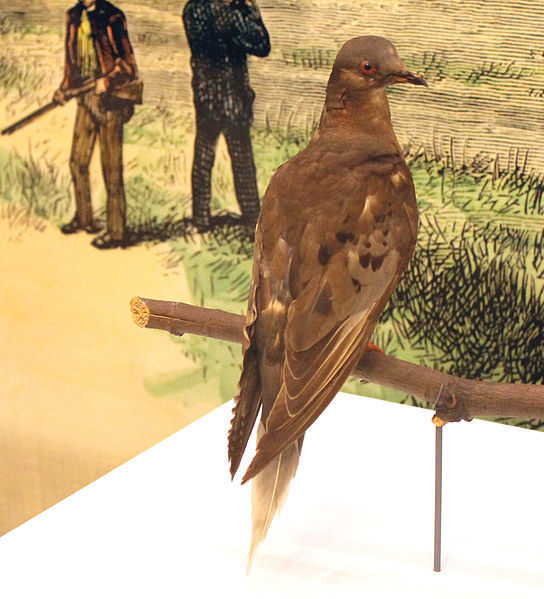
Martha in a display case in the National Museum of Natural History, 2015. (Photo: Ph0705/WikiCommons CC BY-SA 4.0)

Martha in a display case in the National Museum of Natural History, 2015. (Photo: Ph0705/WikiCommons CC BY-SA 4.0)

If you happen to visit the National Museum of Natural History in Washington D.C, don’t just walk by this innocuous stuffed pigeon. Take a good look at Martha, because she’s the last of the world’s flock of passenger pigeons. And now the subject of the ambitious  The Great Passenger Pigeon Comeback, a “de-extinction” project aimed at reviving the species. Using the genomes of the rock pigeon and the band-tailed pigeon as a reference, project scientists aim to assemble a complete passenger pigeon genome and transfer it into the germ cells of band-tailed pigeons in order to generate live passenger pigeons. The target date for the passenger pigeons’ triumphant return is 2022.

Continue reading

What Does That Song Mean?

The chickadee makes at least 15 different calls to communicate with its flock-mates and offspring. PHOTO: Nature Mapping Foundation

The chickadee makes at least 15 different calls to communicate with its flock-mates and offspring. PHOTO: Nature Mapping Foundation

Chickadees have one of the most unique and varied vocal repertoires. Few backyard birds are as beloved as the Black-capped Chickadee. The boldly patterned chickadee is perky, trusting – and it seems to introduce itself by calling its name – chick-a-dee. But when a chickadee voices its namesake call – using a host of variations – it’s most likely maintaining contact with its mate, scolding a predator, or announcing a food source. These chickadee calls, distinct from songs, are uttered by both sexes and may be voiced year-round. What do they communicate?

Continue reading

Mother’s Day Redux: Bluebird and her Babies

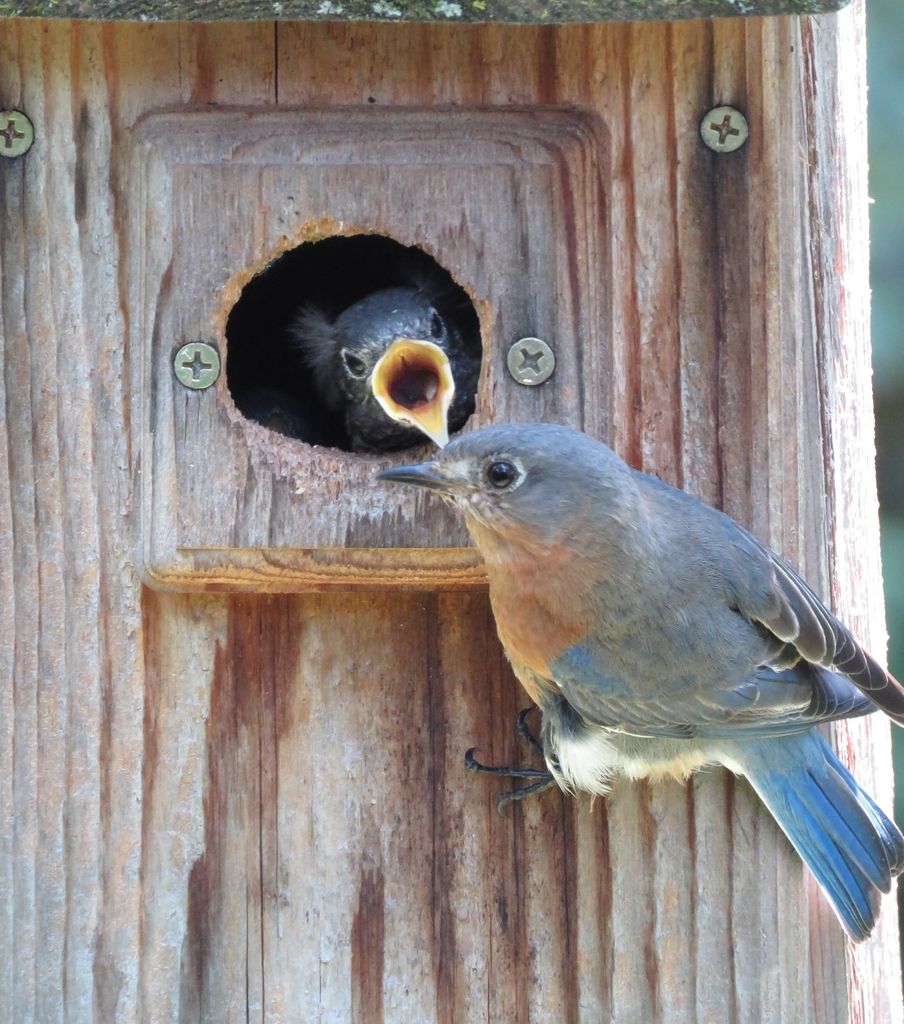
Mother bluebird feeding babies on Mother’s Day

A little less than a month before mother’s day (May 10th), a pair of bluebirds made their nest in one of the bluebird houses in our backyard in Atlanta. I was away studying at the university at the time, but my parents described to me in phone conversations the process familiar to anyone who has seen birds build a nest in their yard: first the birds made tentative visits to the site, then they began to carry in straw, twigs, and grass, finally the mother Continue reading

One for the Bird

Poaching and destruction of grasslands has brought down the bustard's population to 150 in the world. PHOTO: Kiran Poonacha

Poaching and destruction of grasslands has brought down the bustard’s population to 150 in the world. PHOTO: Kiran Poonacha

If there’s one certain takeaway from this blog, it’s the enduring and growing love for the feathered friends. In India, the conservation debate often touches on the Great Indian Bustard (GIB), which has an ostrich-like appearance and is labelled as “critically endangered.” In fact, the world population of the GIB is pegged at 150, with India, particularly Rajasthan, being home to 70 per cent of this number. Loss of the Bustard’s dry grasslands and scrub habitat, increased hunting and changes in land use have been blamed but Dr Pramod Patil refused to let things settle at that. Precisely why his pioneering work in protecting the Bustard population in Thar desert of Rajasthan won him the Whitley Award this year. Popularly known as the ‘Green Oscar’ and also won by compatriot Dr Ananda Kumar for his system to reduce man-elephant conflicts in India, the award carries a grant of £35,000. More importantly, it puts the focus back on the Great bird.

Continue reading

If You Happen To Be In Georgia…

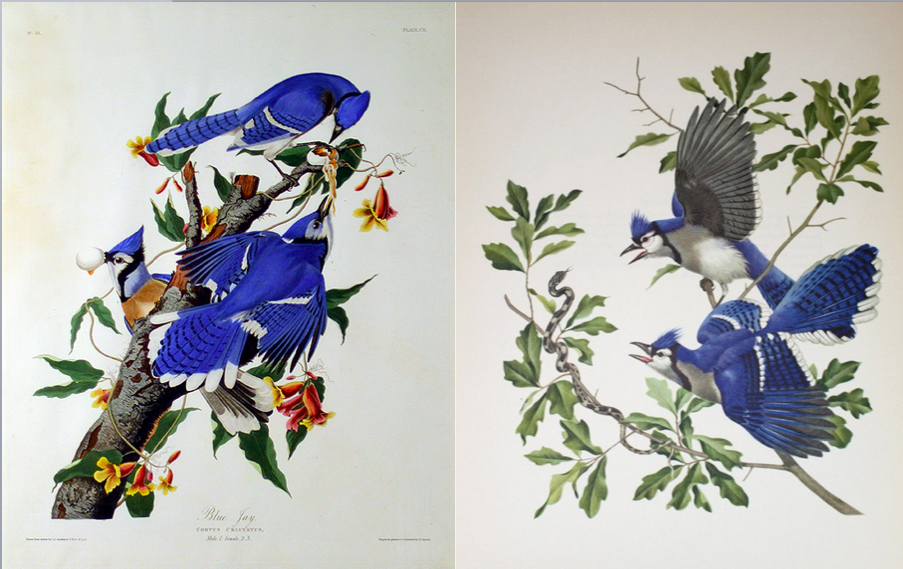
Blue Jays. Left: John James Audubon; Right: Athos Menaboni

Blue Jays. Left: John James Audubon; Right: Athos Menaboni

It should come as no surprise to visitors to this site that a significant amount of our attention is taken up by birds. Their importance is manifold, not just environmentally, but artistically. We’re also fans of the Liberal Arts, so we’re particularly excited to see these interests come together this month at two Liberal Arts colleges in Georgia.

One does not have to be a birder or an art aficionado to have heard of John James Audubon. Much of the world knows the name due to the Audubon Society, but fewer have heard of Athos Menaboni, who Times Magazine once called “Audubon’s heir”, despite the fact that the two men never met. Continue reading

A Brief Global Big Day Summary

Bush Thick-Knee, Brisbane, AU. Photo by Brian Sullivan, via eBird.

On Saturday, while visiting Chicago, I was only able to get a very short amount of time birding for a total of seven species. In the meantime, over twelve-thousand people around the world, across about 110 countries, saw 5,892 species (reported so far, and including the paltry seven I saw).

The photo on the left is of a Bush Thick-Knee, an Australian species that was the first seen during the Global Big Day. In Panama, the Lab’s Team Sapsucker got 320 species, and in New Jersey, at the World Series of Birding, the Cornell Redheads defended their championship title from last year.

One of the species I saw on Saturday was the Chimney Swift, a bird I hadn’t seen before, so that was exciting! If you want to follow more about the Global Big Day, check out eBird’s page!

Global Big Day

Word bird map artwork by Team Redhead member Luke Seitz, a Bartels Science Illustration Intern at the Cornell Lab.

Team Sapsucker, the Cornell Lab of Ornithology’s competitive birding team, has participated in the World Series of Birding for quite some time. We’ve even had a couple of the Lab’s student participants, Team Redhead, as contributors to the blog. Over the last several years, Team Sapsucker has been breaking or coming very close to the US record for a Big Day — the most bird species seen or heard in 24 hours — but this year, ten days from now in fact, the team will be in Panama instead of staying in the southwestern US! Here’s what Chris Wood, captain of Team Sapsucker and eBird’s project leader, has to say:

The time of year has come when migratory birds cross continents and even hemispheres to return home to their nesting grounds. Because long-distance migrants face many hazards during their journeys, Team Sapsucker, the Cornell Lab of Ornithology’s top birding team, has chosen to spend 24 hours of non-stop birding in Panama, a region critical to the travels of migratory birds in the Western Hemisphere.

Continue reading

Birding in the American Southeast

I recently wrote an article for the Saporta Report, a metropolitan Atlanta newspaper, on the joys and possibilities of birding in Georgia. It might have some useful information if you’re ever in the area and want to identify the birds that are flying by overhead, so check it out:

…While the awesome wilderness of, say, the mountains of north Georgia guarantee an incredible experience for birders and other naturalists, local parks and preserves like Lullwater have much to offer as well. Just recently, for example, I stopped in at the Clyde Shepherd Nature Preserve (also in Decatur) and the Dunwoody Nature Center (in Dunwoody) and managed to get a few glimpses of some of the metro area’s more interesting avian visitors, including the pileated woodpecker, red-shouldered hawk, yellow-bellied sapsucker, and winter wren. A vigorous hike in Sweetwater Creek State Park (in Douglas County), also not far from downtown Atlanta, turned up a young Cooper’s hawk in addition to more common birds of the forest, such as titmice, nuthatches, woodpeckers, and so forth — a good day, considering that I was also treated to incredible vistas and the historic mill ruins on the Sweetwater’s banks. Continue reading

Skyfall

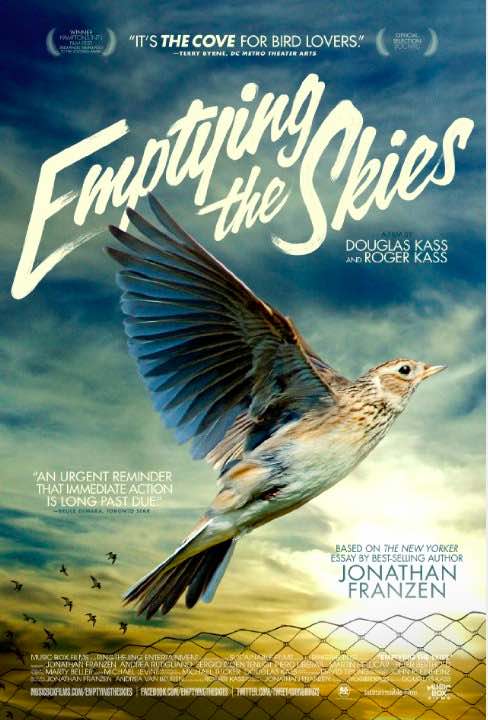
Screen Shot 2015-04-26 at 7.22.04 AMOur literary bird-loving activist took it to another level, as the film (click above) testifies well.  Really, this must stop. Thanks to the Cornell Lab of Ornithology for bringing this to our attention with this interview:

Cornell Lab: Where are you from, how did you find out about this issue—and what made you want to make this film?

Roger Kass: Born and raised in Bedford, New York, I have a background in law and movie production.  I first learned of the issues presented in Emptying the Skies by reading Jonathan Franzen’s story in the New Yorker magazine and wanted to make a film about it to bring these terrible truths to a larger audience.

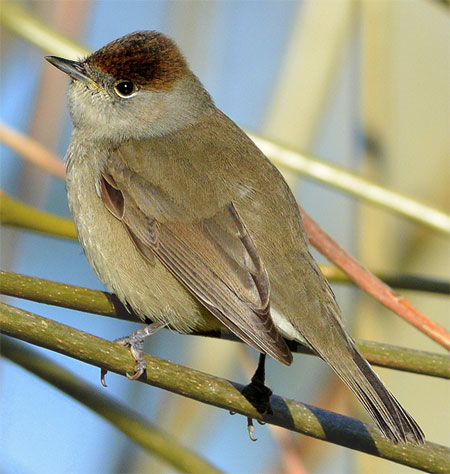
The Blackcap (Sylvia atricapilla) is a commonly hunted species in the Mediterranean. This female safely returned to her northern breeding grounds in England. Photo by jefflack Wildlife & Nature via Birdshare.

The Blackcap (Sylvia atricapilla) is a commonly hunted species in the Mediterranean. This female safely returned to her northern breeding grounds in England. Photo by jefflack Wildlife & Nature via Birdshare.

The main characters in the movie are environmentalists and people who love animals, but they don’t seem like bird watchers exactly. What motivates them to take this interest in tiny songbirds? Follow-up question: they are all men. Why do you think there were no women?

Doug Kass: As is often the case, there were a lot of things we weren’t able to put into the final film. Most CABS members we met were very passionate bird watchers and had extensive lists of sightings, as well as favorite locations, and bucket lists. You could describe them as “extreme bird-watchers,” because unlike most birders, they come into physical contact with the birds.

If you are podcast-oriented, give Leonard Lopate a listen on this topic: Continue reading

Dear Citizens Of Malta, Please Embrace The Ban

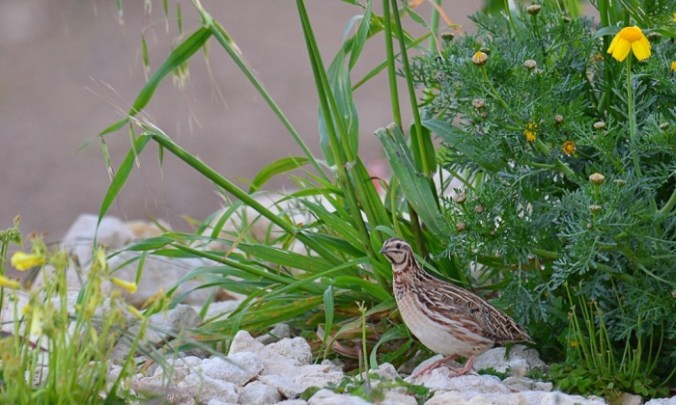
Activists say hunters use the currently legitimate spring season for hunting quails (above) to illegally hunt other birds. Photograph: Natalino Fenech

Activists say hunters use the currently legitimate spring season for hunting quails (above) to illegally hunt other birds. Photograph: Natalino Fenech

We have noted previously the odd (to us) behaviors that can be easily interpreted (not only by us) as abominable treatment of birds. It is not only a regional thing in the Mediterranean, this incomprehensible desire to decimate bird populations. From the Guardian, this news on the efforts of a dedicated group of activists:

Vote could see the spring hunting of birds such as quail and turtle doves, which is outlawed in the rest of the EU, banned in Malta

in Malta

Fiona Burrows is the kind of activist that hunters in Malta love to hate.

The Nottingham 30-year-old has been threatened, cursed at, and pushed around while doing the job she says she lives for: stealthily filming the illegal hunting of protected migratory birds and reporting perpetrators to the police.

Burrows takes precautions – she always parks her car facing an exit route and has even bought wigs to avoid detection by hunters – but she thinks these are probably not enough.

“Something bad is going to happen to me sooner or later,” she says. “It’s inevitable.” Continue reading

The Rare Bird That Makes The News

CHESTNUT-BREASTED__2365682r

RARE FIND: Chestnut-breasted Partridge. Photo: Gururaj Moorching.

We most love the online edition of the national Indian newspaper, The Hindu, for its occasional willingness to put news like this on the same footing with the “noise” of the more typical “real” news:

Bengaluru shutterbug captures rare Partridge

Mohit M. Rao

Immense patience and a stroke of luck granted wildlife photographer Gururaj Moorching a two-minute encounter with the rare bird.

Continue reading

Environmentalism, Puritanism and a Binocular View

To slow global warming, we could blight every landscape with biofuel crops and wind turbines. But what about wildlife today? CREDIT ILLUSTRATION BY OLIVER MUNDAY

Jonathan Franzen, a writer who we have chosen to link to numerous times mainly because he is also clearly a bird guy, has a small masterpiece in this week’s New Yorker. Please, read it:

Last September, as someone who cares more about birds than the next man, I was following the story of the new stadium that the Twin Cities are building for their football Vikings. The stadium’s glass walls were expected to kill thousands of birds every year, and local bird-lovers had asked its sponsors to use a specially patterned glass to reduce collisions; the glass would have raised the stadium’s cost by one tenth of one per cent, and the sponsors had balked. Around the same time, the National Audubon Society issued a press release declaring climate change “the greatest threat” to American birds and warning that “nearly half ” of North America’s bird species were at risk of losing their habitats by 2080. Audubon’s announcement was credulously retransmitted by national and local media, including the Minneapolis Star Tribune, whose blogger on bird-related subjects, Jim Williams, drew the inevitable inference: Why argue about stadium glass when the real threat to birds was climate change? In comparison, Williams said, a few thousand bird deaths would be “nothing.” Continue reading

H Is For Hawk, Reviewed

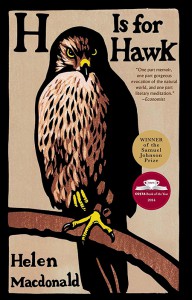
We already posted on this book earlier this month, but there is no question it deserves more attention. This time the attention comes in the form of a book review at the Cornell Lab of Ornithology’s blog, All About Birds from an “insider” (at two levels, including lifelong falconer and someone who edits one of the leading magazine’s for bird-oriented readers):

H_is_for_Hawk_cover450-192x300By Tim Gallagher, editor of Living Bird magazine

Last fall, a remarkable memoir called H is for Hawk, by Helen Macdonald, took the United Kingdom by storm, winning two prestigious awards and rising to the top of the bestseller list. It’s just been released in the U.S. and promises to do the same here. Last fall, our own Living Birdmagazine published a review that highlighted Macdonald’s lyrical writing —but as a lifelong falconer I also give her high marks for providing a window into the minds of falconers and their birds.

Continue reading

Another Reason To Flock to Ranganathittu Bird Sanctuary

It’s not surprising that for the 3rd year running India has been among the top 3 participating countries in the Audobon Society’s Great Backyard Bird Count. According to GBBC statistics, India nearly doubled the number of checklists submitted to more than 6,800 and reported the greatest number of species with 717.

Many of those lists have come from the south Indian states of Karnataka and Kerala, so we’re excited to help promote this additional forum for Celebrating Birds.

Karnataka’s first Bird Festival aims to put focus on birds and bird watching in Karnataka. To provide a platform for well-known naturalists, experts, forest officers, bird photographers to share their insights & thoughts. This festival also focusses on putting bird conservation on the center-stage and raise the attention of nature enthusiasts and general public towards the significance of birds and the important role they play in the ecosystem.

Continue reading