Birding in Ecuador: Trogons, Toucans, and Tanagers!

Until I catch up on my school-posts, I won’t be writing much about Mindo. I do, however, have videos and photos that I took on Mari’s camera, so check them out! The round glare you often see is the lens of the camera reflecting against the scope that provided most of the zoom to capture the images—I discovered the annoying way how difficult it is to perfectly align the two device’s lenses. Thus, some of my footage has required heavy splicing to edit out the seconds spent trying to focus the scope (which in addition had a bad leg) in one hand while keeping the lenses in line with the other hand. Unfortunately, the most evasive bird, the Golden-winged Manakin, was the subject of the most troublesome equipment management.


Continue reading

990…991…The Road to 1,000 World Birds

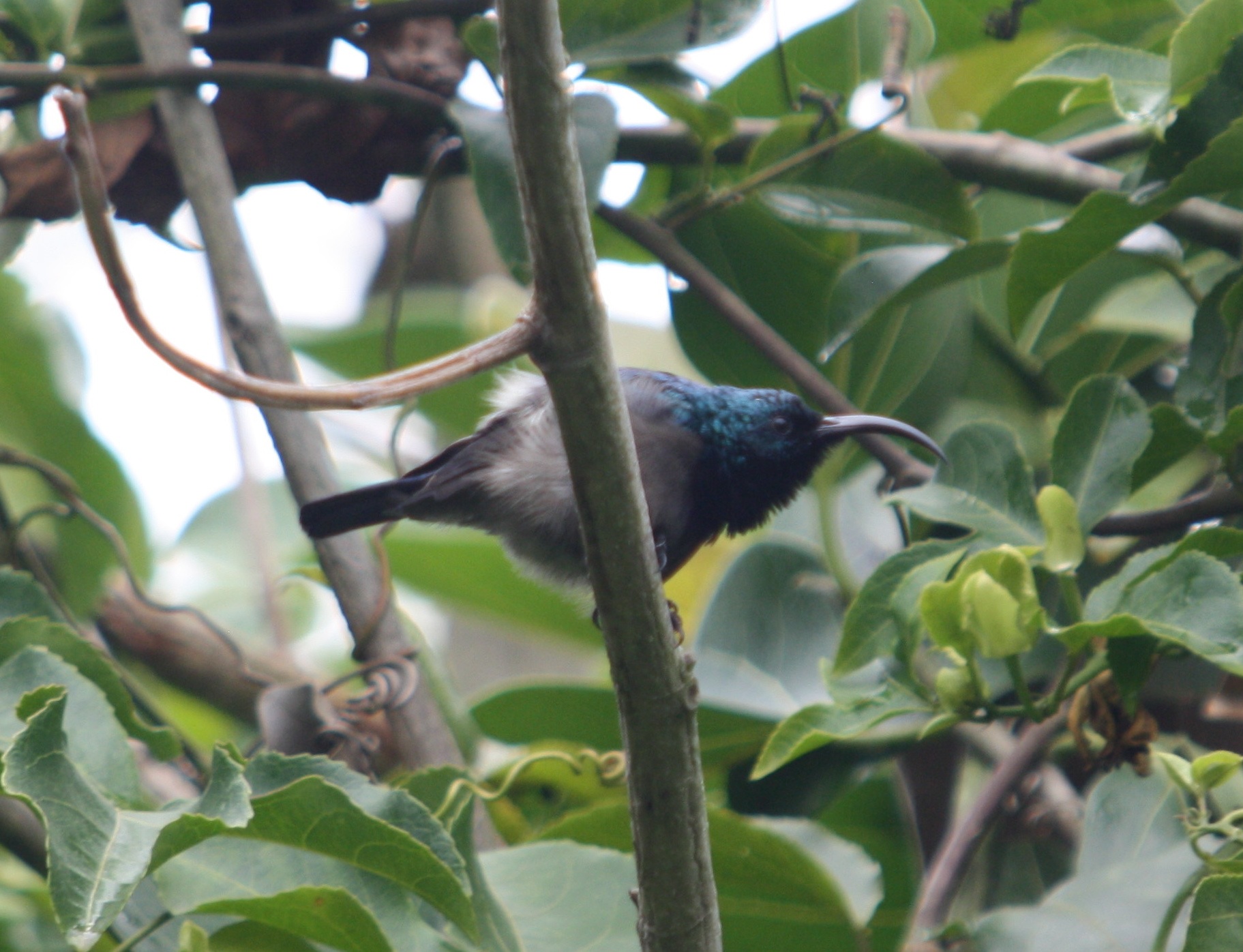
Long-billed Sunbird

I now have a better understanding of what baseball players mean when they talk about reaching an important milestone and how happy they will be when it’s over.  The nerves and anticipation that go along with these symbolic but meaningful round numbers have always captivated people, myself included.  I remember being in the stands when Alex Rodriguez of the New York Yankees hit his 500th home run; the relief and joy on his face were exciting to see.  Now, my circumstance is nowhere near as significant, and the media is certainly not following me, but I myself am on the brink of a major milestone here at Cardamom County.

Continue reading

Birding in Ecuador: Mindo Manakins

As I had a spare couple days on mainland Ecuador before flying to the Galápagos, I took a very brief trip to Mindo for a day and a half, where Mari Gray, a pre-kindergarten teacher at the Tomás de Berlanga school in Santa Cruz, told me I should be able to see lots of cool birds. Perhaps not too coincidentally, my host in Quito had asked me if I’d heard of Mindo just a few hours after Mari emailed me about the town, similarly informing me that the biodiversity was incredible, particularly for birding.
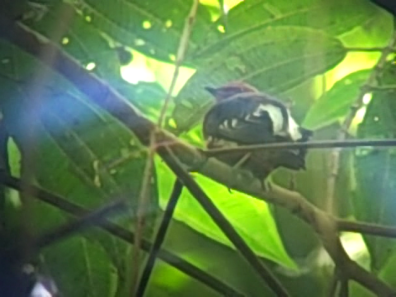
club

male Club-winged Manakin photographed by the author through binoculars

Even after taking a pretty intense ornithology class at Cornell University and working for the Lab of Ornithology, I don’t really consider myself a birder. When I went on a number of field trips for the class it was the first time I’d really used binoculars with the intent of just spotting birds, and I don’t even know the difference in calls of an American Robin from an Eastern Bluebird, though I can tell you their species, genus, family, and order, as well as those of 149 other common North American birds. Still, when I read that over three hundred bird species reside in the Mindo area, I knew it was an opportunity that nobody should pass up, and this was confirmed by one of my ornithology classmates who knew beforehand over half the bird families we learned. Then I read that the Club-winged Manakin, a bird I’d learned about in class, was fairly easily seen performing its lek courtship display, I knew it was an opportunity I could not pass up.

A lek, although the basic monetary unit of Albania, in this case is the Swedish-based term for a small area where males of a species communally display for females in the hopes of attracting one or more as a mate (the Manakin family, Pipridae, is polygynous, i.e. males have several female mates). Continue reading

Gotta Love a Good Reserve

The Periyar Tiger Reserve is one of those places that gets your adrenaline flowing just a little more than usual, because you’re always on the verge or the high of an interesting sighting or sensation. A good reserve does that. It fosters enough of a preserved environment that exploring it brings you back to a pre-industrial state of awareness.

Today I visited the Newport Bay Conservancy in Newport Beach, California. It’s not quite as wildly invigorating as Wild Periyar, but it was a beautiful day and the birds were hungry.

Continue reading

Creating a Species List for CUBs-Galápagos

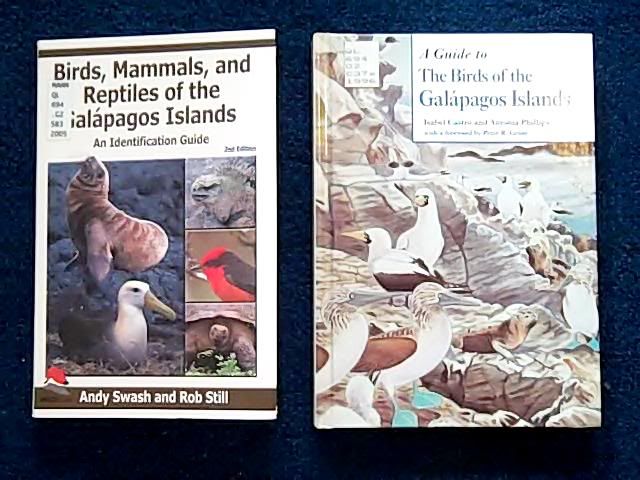
Screen Shot 2020-08-14 at 10.57.16 AMI think Puerto Ayora will be a perfect place to celebrate “(sub)urban” birds, as it is the largest urban center in an archipelago that boasts almost thirty endemic bird species—including two flightless ones (the Galápagos Penguin and the Flightless Cormorant, both seen mostly on the island of Isabella). Santa Cruz in particular hosts quite a few of the Galápagos’ fifty eight resident bird species.

Looking through several bird guidebooks from Cornell University’s Mann Library, I have created my list of around twenty birds that should be seen on Santa Cruz and its shores. The list is biased towards land birds for now, because until I reach the island I won’t be able to determine what shorebirds are common enough migrants at this time of year.

Screen Shot 2020-08-14 at 10.58.43 AM

When creating a finalized list of birds to parallel the North American CUBs list, I’ll be trying to include species that will be frequently feasible for Santa Cruz’s youth to identify. Putting only the most common or most exciting birds in the list might lead to frustration or boredom, depending on how widely distributed certain species and the children that I have contact with are.

Once the list is finalized and I have spent more time in the Galápagos, I will also be able to write about each species in a focused, individual post, sharing where participants and I have seen the birds so far on Santa Cruz, and what unique behavior they may have exhibited around us. Continue reading

Preparing for CUBs in the Galápagos

Over the summer, I’ll be working with youth in the community of the second largest island of the Galápagos archipelago, Santa Cruz. This central island is the touristic center of the archipelago, and Puerto Ayora, its capital, is the most populated (and thus, urban) area in the islands. In particular, my goal is to engage students of the Unidad Educativa Modelo Tomás de Berlanga, a bilingual non-profit school five minutes from the center of Puerto Ayora, and create a youth-led project that focuses on habitat awareness and improvement, participatory science, and the arts, specifically through birds.

I will try to apply the framework of the Celebrate Urban Birds program to the Galápagos, using a list of around 16-20 focal species to teach those I can reach on Santa Cruz about citizen science as a tool for conservation and research while hopefully deepening an appreciation of their surroundings. I aim Continue reading

Celebrate Urban Birds

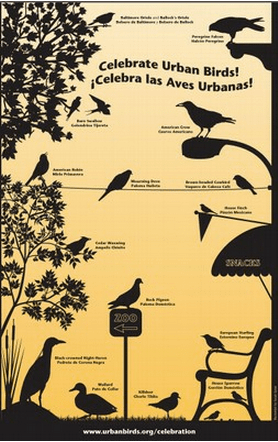
Screen Shot 2012-12-22 at 8.01.16 AMFor the past year, I have been working at the Cornell Lab of Ornithology for the project Celebrate Urban Birds. Distinct from other citizen science projects the Lab of O. is involved with, such as eBird or FeederWatch, Celebrate Urban Birds (CUBs) stays true to its name and hones in on the celebratory aspect of studying birds: artwork, festivals, education, and other activities promoting community. Of course, there is still data involved. Thousands of forms have been filed—both electronically and physically—containing information on sightings of the sixteen focal species within 10-minute observation periods. These observations, along with notes about sighting location, are the source of data for the project. Participants include the address from which they are looking for birds in the ten minutes, describe the general amount of greenery and pavement in the area (as well as the size of the area itself), and list whether they saw, did not see, or were not sure about each of the sixteen species. This information constitutes a checklist that can be compiled into a larger repository of sightings in various types of green spaces around the country; the CUBs website contains species maps according to the number of observations in the last 90 days, marking where, say, a Brown-headed Cowbird has and has not been seen.
Continue reading

Team Redhead represents Cornell Lab of Ornithology at World Series of Birding

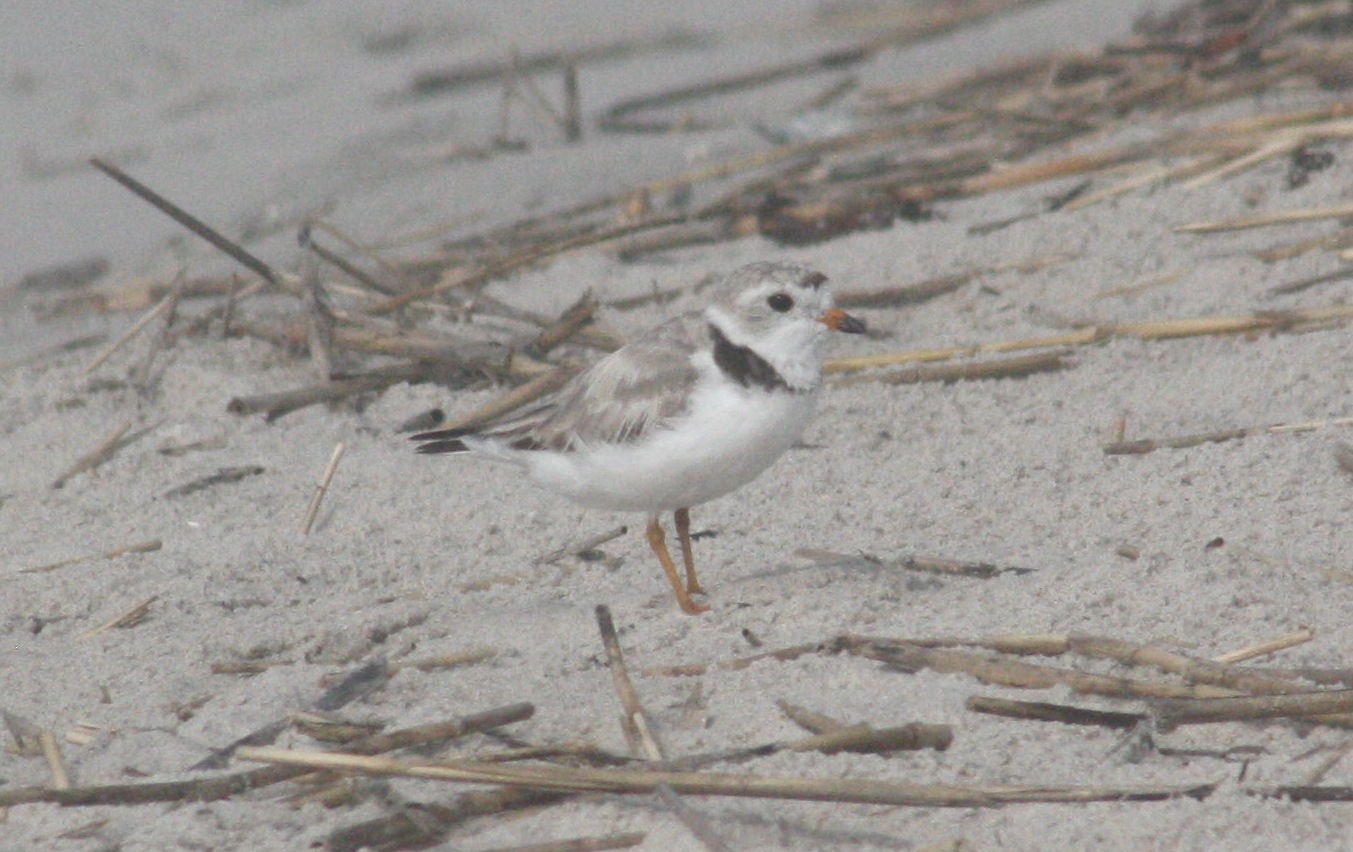
Piping Plovers are regular around Cape May, but they can be difficult to spot hiding on the beach

The clock read 11:59 pm and my team and I were counting down the final seconds until the start of the World Series of Birding.  Our captain, Hope Batcheller, stood to my left along with fellow teammates Brendan Fogarty, Eric Gulson, and Jack Hruska as Team Redhead was ready to compete again in the Cape May County division of the 29th World Series.  Hope quietly called out,  “Midnight!” and our big day finally started.  Little did we know what an amazing day it was going to be!  At 12:05 a Yellow-billed Cuckoo called from the distant woods and as the night progressed we were able to tally some great species, giving us an excellent start.  At Tuckahoe WMA in the northern part of the county we heard Least Bittern and Eastern-screech Owl, and then we were excited to hear a Long-eared Owl hooting from the tree line (a possible first for Cape May during the World Series).  We spent the rest of the night in and around Cape May Point where we located American Woodcock, Yellow-breasted Chat, and several other important species.  Then morning hit.

Continue reading

Tuning In

I went birding yesterday. For a rookie like me, that means taking a walk somewhere scenic with my camera, aiming and shooting (the lens) at birds, hoping my amateur work churns out something recognizable, then researching and identifying the species.

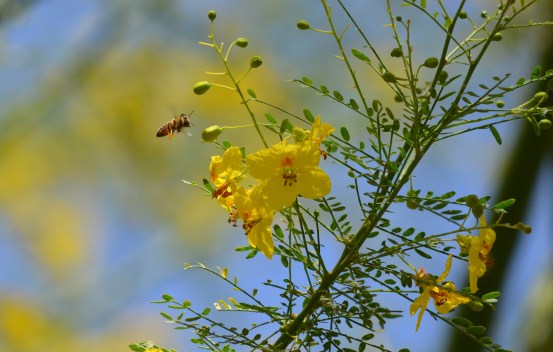
Bee in action on Palo Verde tree

As I moved along from tree to tree and bush to bush, detecting movements and sounds, I felt myself identifying a couple of birds by their calls, and hunting them out in that way. Suddenly it felt as if the volume was turned up – I tuned into the busy conversation that was going on above my head. Continue reading

Scherman-Hoffman Audubon Sanctuary

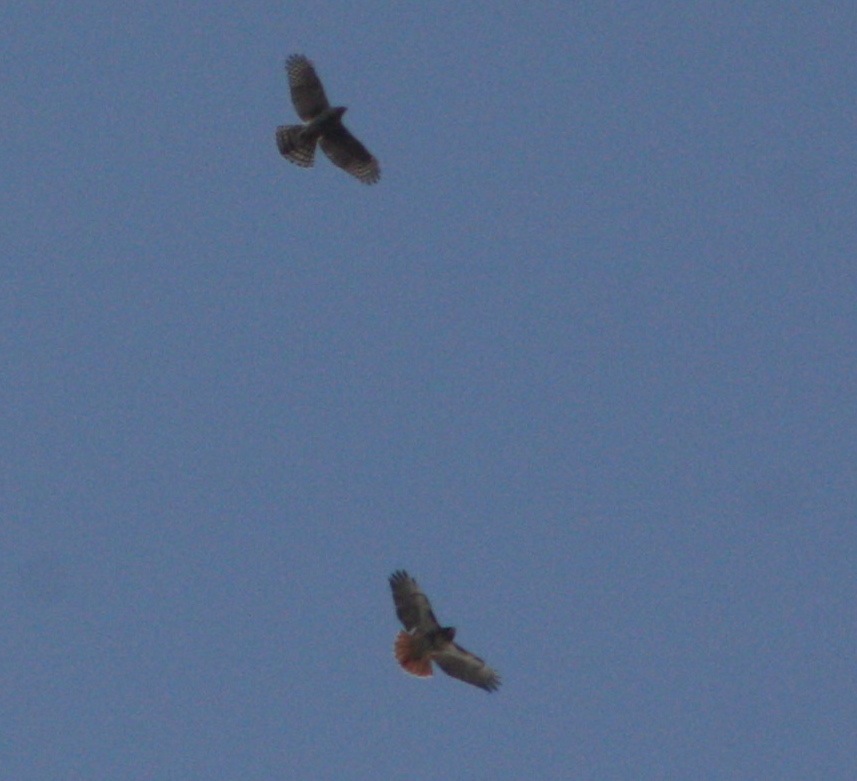
Northern Goshawk (Above) and Red-tailed Hawk (below) from Scherman-Hoffman

I would be surprised if any of you had heard of the small birding spot in Bernardsville, New Jersey.  However, Scherman-Hoffman Audubon Sanctuary is my favorite place to bird in the world.  This location is not very widely birded, but it was my avian home for the past four years.  From hawk watching, to spring migration counting, to leading bird walks I had a tremendous number of opportunities to bird there and I have a special place in my heart for the staff and the birds that can be seen from season to season and year to year.

Continue reading

Baby Red-Tailed Hawks Hatching at Cornell University

Today, baby red-tailed hawks hatched out of their eggs. According to my friend who works at the Cornell Lab of Ornithology, the mom hawk “Big Red” was covered in snow and couldn’t move around because she had to protect her baby from the cold weather (it snows in Ithaca in late April).

Image

Here is a link to the Livestream video of the hawk nest. Enjoy!

Team Sapsucker

Green Jay

Last year, the Cornell Lab of Ornithology’s Team Sapsucker traveled to Texas hoping to break the national record for birds seen in a day.  For several years the Sapsuckers competed in the World Series of Birding, an all day birding competition that takes place in New Jersey every May.  Recently, however, they have turned their attention to Texas and the national record.  Led by captain Chris Wood, the Sapsuckers saw a record 264 birds last year in eastern Texas.

Continue reading

Places to Bird: Part 6*, Point Pelee

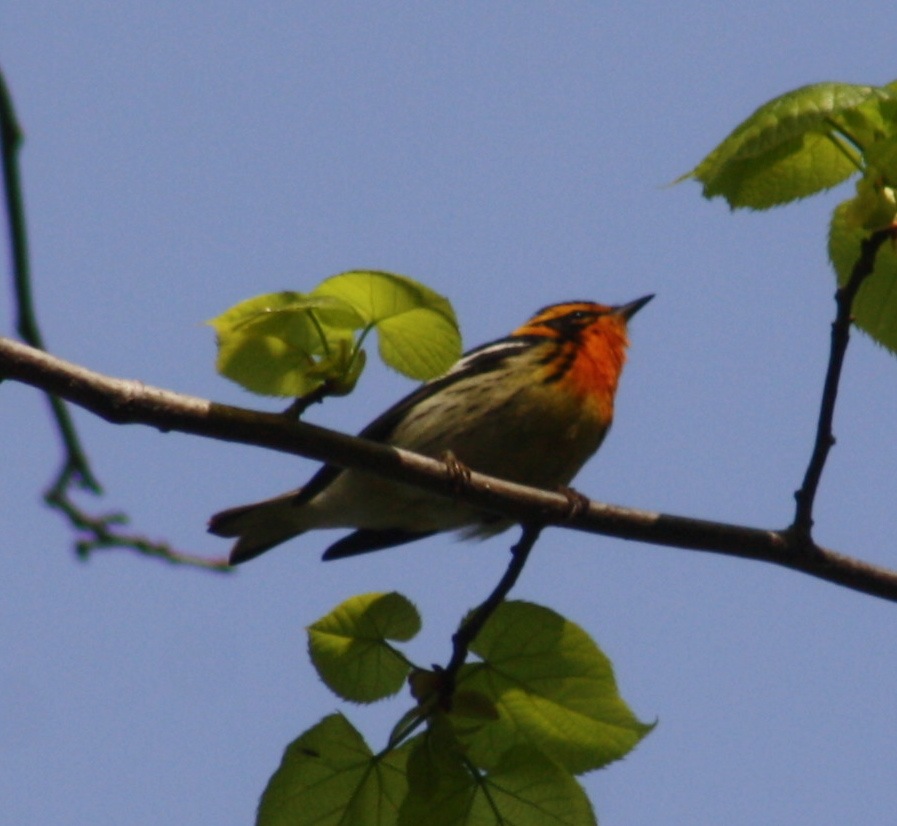
Blackburnian Warbler

When I was just starting out as a birder, I bought a small book to help me learn about the warblers that were migrating through my home state of New Jersey.  The booklet was called “The Warblers of Point Pelee.”  Filled with great pictures and useful identification tips, it became my constant companion that spring.  However, I had no idea where Point Pelee was or what made it so special.  Only later did I discover that Point Pelee is probably one of the best and possibly the most famous spring migration birding location in North America.

Continue reading

Hypothetical Biology: In Conclusion

This post concludes the hypothetical discussion of my previous three posts, the first of which you can find here.
By the end of this long thought-exercise it would seem that the most feasible explanation for the barring and display is that the male turacos developed the barring to signal their quality—both to females and other males—not because the barring is expensive to produce, but because the standardized bars allow for close comparison of individuals. By relating directly with growth, bars should allow females to assess the males’ age and relative fitness; they also probably accentuate indicators such as body symmetry, foraging ability, and health. If snake and raptor predators do in fact rely on the ultraviolet pigments to hunt the male turacos, then the barring is probably not only an indicator of (or proxy for) fitness but also an honest handicap that allows males to demonstrate their higher quality (e.g. their low feather wear despite increased need for predator avoidance).

Continue reading

Places to Bird: Part 5*, Magee Marsh

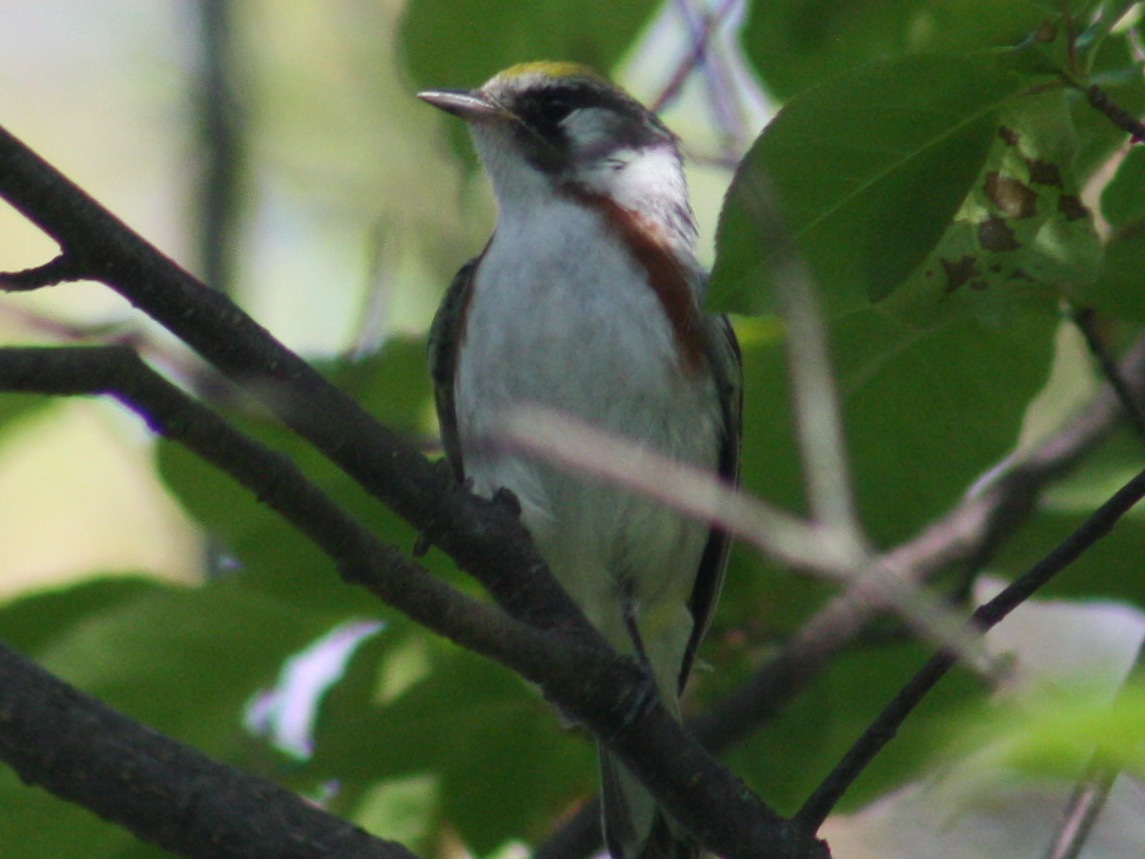
Chestnut-sided Warbler

On our spring trip to Point Pelee in Ontario we visited some amazing birding locations, and the birds we saw were absolutely incredible.  We had 12+ species of sparrow and 10 species of Flycatcher, but the real kickers were the warblers.  On our way back from Pelee, we decided to stop at a place I had only heard of in passing…Magee Marsh.  After only one day there, I understand why this site is becoming so famous.

Continue reading

Hypothetical Biology: Part Three

This post continues the hypothetical situation described in my previous posts, the first of which you can find here.

What if the turaco barring and display were a different sort of quality indicator? They could be amplifiers that emphasize a trait perceived by other turacos as directly related to high fitness. For example, some birds’ feathers, such as those of the European jay, are colored in stripes that develop similarly to, or perhaps accentuate, growth bars. As the turaco’s barring correlates directly to its age, the bars must have typical widths at certain ages. These widths, along with the display, probably serve as a standard by which females can compare males, and males assess competitors. The bars are likely indicators similar to the stripes on jays and other birds—that is, they may portray the bird’s growth regularity, or accentuate flight behavior, body size, feather wear, symmetry, and other potential quality indicators. Should the turaco barring amplify any of these possible traits, then displaying the bars is not a deceptive signal, because it genuinely reflects quality. For instance, if a three-year-old male turaco has successfully avoided predators and found the best food throughout his life, his barring should reflect such facts, and portray his success through low feather wear, larger body size, or more regular bars; a one-year-old male with similar traits but different barring would presumably be less preferable to females. Continue reading

Hypothetical Biology: Part Two

This post continues the hypothetical situation described in my previous post, which you can find here. I left off claiming that the most likely explanation for the barring and display of the male turacos was sexual selection; below I try to support this hypothesis in greater detail:

We know that the male turacos limit themselves to intraspecific displays, so the pigmentation and display must be signals for other turacos. It also seems likely that some element of the barring is, or is at least perceived as, evidence of quality. Depending on how elaborate and visible the display is, it may create a handicap for male turacos. The handicap theory posits that sexually attractive traits are frequently impediments to an organism’s ability to survive, and thus that an organism’s continued survival despite such a hindrance portrays its higher quality. For example, some male birds, peacocks being an immediate example, have displays of quality reflected by an honest handicap: their conspicuous and unwieldy tail feathers. Although the turaco’s ultraviolet pigment is inexpensive to produce and invisible to mammalian predators, it may be noticeable to some reptilian predators and is probably visible to avian predators, making it possible that the turaco barring display is an honest handicap signal.

Continue reading

Places to Bird: Part 4*, Algonquin Provincial Park

Gray Jay

The thermometer read six degrees below zero Fahrenheit.  Within five minutes of stepping outside I had lost all feeling in my face.  We were three hours north of Toronto in the middle of nowhere in the middle of February.  We had arrived at Algonquin Provincial Park with high expectations and would not be disappointed.  Algonquin is thus far my favorite winter birding destination.  The species are incredible and the scenery might be even more impressive.

Continue reading

Hypothetical Biology

Let’s say you’ve just found out something new about a species of bird, a certain turaco that is a very dark cryptic green, in the forests of the Congo. The species hasn’t been studied much, and you’ve discovered that the male birds have a special pigmentation only visible in the ultraviolet spectrum, and this pigment is found in a barred pattern across their undersides, which they display to females and other males in their dense colonies. Based on certain test results, you can positively claim that the pigment is easy and inexpensive to produce, and you’ve also ascertained that the bars of ultravioletly-pigmented feathers are closely correlated with the bird’s growth—that is, older birds have wider bars. But apart from these few facts, you know very little about the turaco species, and your job is to wonder how and why the ultraviolet barring and its display evolved.

Continue reading

Places to Bird: Part 3*, Edwin B. Forsythe National Wildlife Refuge

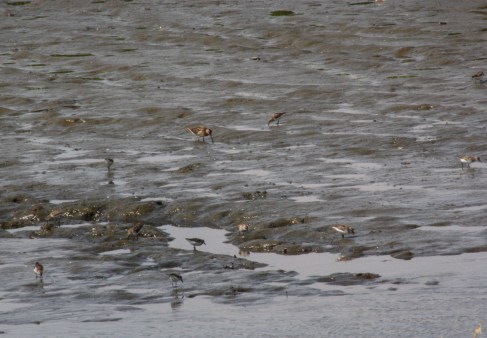
Shorebirds feeding on the Mudflats at Edwin B. Forsythe NWR

A mid-summer early morning drive down the Garden State Parkway generally equates to a weekend at the Jersey shore.  For me, though, it means birding in one of New Jersey’s top birding locations. Edwin B. Forsythe National Wildlife Refuge, commonly known as Brigantine, is located in Oceanville, NJ near Atlantic City.  There are many factors that give “Brig” its reputation:  the flies, the smell, the heat, but also, most importantly, the birds. Continue reading