Fly Versus Fly

tumblr_m4wecmybj01qg8e5ko1_1280-900x600_1

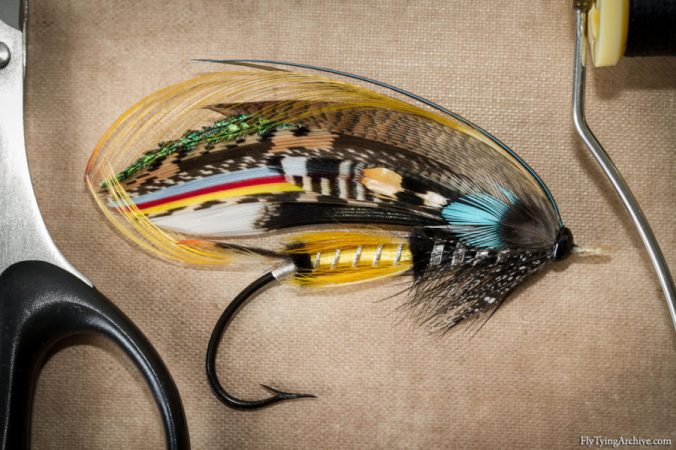
A Jock Scott salmon fly, tied according to the original T.E. Pryce-Tannatt recipe.Timo Kontio

Having friends who fish using this technique, this is a tricky post to write. I knew little about the history of the lures used in fly fishing until yesterday. I learned a little something about this history that is as disturbing as the lures are admittedly beautiful. I have tried fly fishing and found it more difficult than any other outdoor activity I ever tried. I respect anyone with the talent required to catch fish this way. But now I wonder about the lures. Above is an extra feature from the episode of a podcast which, if you are a regular viewer of our daily bird feature, you will want to listen to. Click the image to go to that photo gallery for more, either before or after you listen to the podcast:

Victorian salmon flies are tied according to recipes that are up to 150 years old and call for some of the rarest feathers in the world. Our show this week is the story of what may be the greatest feather robbery of all time, a million dollars in rare birds, stolen from a British museum.

The community of people devoted to tying these kinds of flies doesn’t fish with them—they’re just for show. Many try to use feathers from the same species listed in the classic manuals. But because so many birds have been killed for so many reasons over the years, a lot of the most coveted species are now endangered or protected.

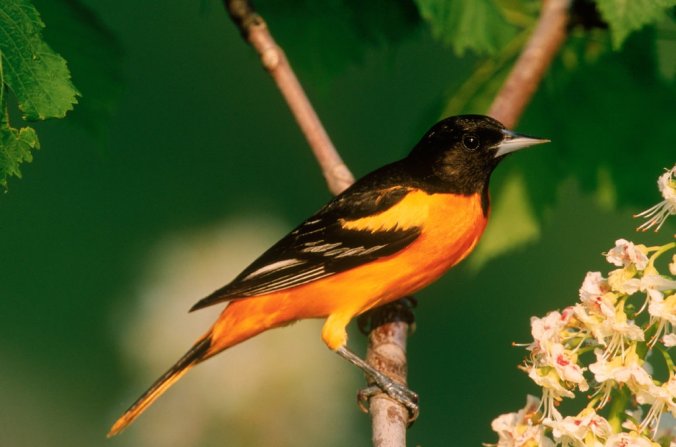
Below are some photos of salmon flies—the Durham Ranger, the Jock Scott, and the Sherbrook—and some of the birds referenced in the recipes used to make them.

The episode those photos support offers as well told a story as This American Life is known for, but for bird nerds it is especially rich. And for those who are yet to become bird nerds, it may be just the stimulus you need. To tie the most prized fishing fly, the most prized birds lose the ability to fly. :
654

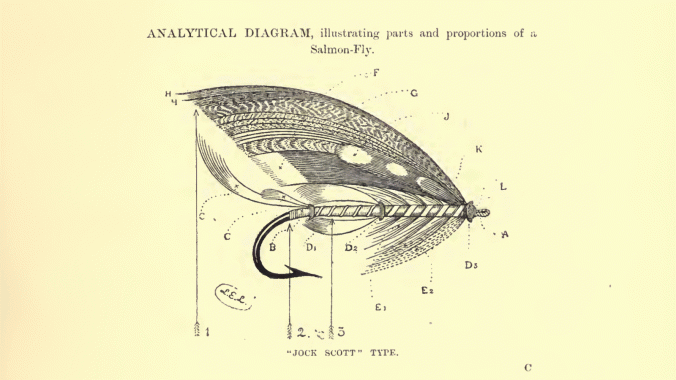
An “analytical diagram” illustrating the various parts of a Jock Scott salmon fly. 
George M. Kelson’s The Salmon Fly: How to Dress It and How to Use It (1895)

A flute player breaks into a British museum and makes off with a million dollars worth of dead birds.

Prologue

By Sean Cole

After hearing about the heist, Kirk Wallace Johnson gets sucked into the feather underground. He ends up discovering things that the people in charge of the theft investigation didn’t. Kirk’s book about the heist is called “The Feather Thief.” (7 minutes)

Albatrosses Tracking Fishing Vessels

merlin_167922471_f481217a-ad3b-4c91-82b0-06bba600e648-jumbo

Albatrosses tracking fishing vessels found that 28 percent of ships had turned off their equipment, possibly fishing without a license or transferring illegal catches onto cargo vessels. Alexandre Corbeau

Thanks to Katherine Kornei, who we are linking to for the first time, for some great science writing:

They’re Stealthy at Sea, but They Can’t Hide From the Albatross

Researchers outfitted 169 seabirds with radar detectors to pinpoint vessels that had turned off their transponders.

merlin_167922456_2ca15e06-a6b7-4573-bcfd-d4a45c100b7d-jumbo

Researchers tagged an adult wandering albatross. Julien Collet

There’s a lot of ocean out there, and boats engaging in illegal fishing or human trafficking have good reason to hide.

But even the stealthiest vessels — the ones that turn off their transponders — aren’t completely invisible: Albatrosses, outfitted with radar detectors, can spot them, new research has shown. And a lot of ships may be trying to disappear. Roughly a third of vessels in the Southern Indian Ocean were not broadcasting their whereabouts, the bird patrol revealed. Continue reading

Ugly, Not Deadly

t8awet

Photo: Vangelis Aragiannis/Alamy

We do not like looking at them. They disrupt many otherwise pristine views of nature, in the most surprising places. And so the thought of them being dangerous to birds would be an easy stretch of the imagination. Thanks to Audubon for the clarification, that their danger to birds is just an act of imagination:

No, 5G Radio Waves Do Not Kill Birds

Here’s the truth behind a Facebook falsehood spreading across the internet.

On the internet, there is often a fine line between a healthy skepticism of new technologies and blatant misinformation. The recent claim that the radio waves from 5G cellular communication towers are causing mass bird die-offs is a perfect example of just how thin that line can be—and how quickly falsehoods can spread across Facebook, Twitter, YouTube, and even in the comments of Audubon magazine’s stories.

The origin of this claim is as head-spinning as it is instructive, so let’s untangle the knot: Does 5G really kill birds, and if not, why are so many people shouting about it online? Continue reading

What’s New In Taliabu?

09TB-NEWBIRDS3-jumbo.jpg

James Eaton/Birdtour Asia

Thanks to Karen Weintraub for sharing the rare story that our bird-oriented readers will appreciate as breaking news:

Trove of New Bird Species Found on Remote Indonesian Islands

Researchers found 10 new species and subspecies of songbirds off the coast of Sulawesi, with distinct songs and genetics from known birds.

09TB-NEWBIRDS1-jumbo.jpg

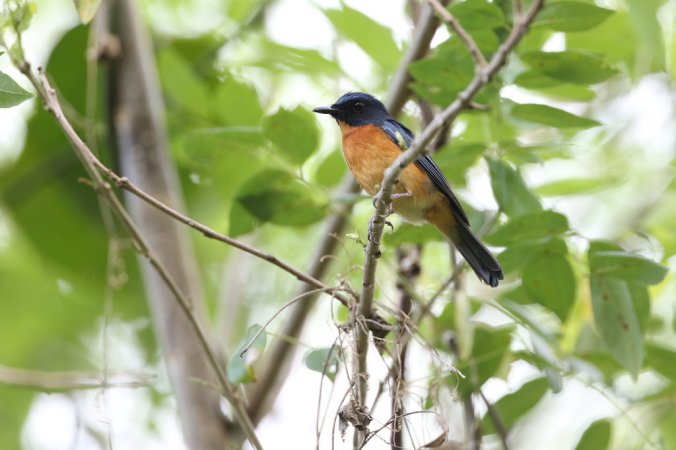
A Togian jungle-flycatcher, one of several new bird species found in the Wallacean islands off Indonesia’s east coast. James Eaton/Birdtour Asia

One day in 2009, Frank Rheindt was wandering up a forested mountainside on an Indonesian island when the skies opened up. He had spent months planning this trip, days finding a charter boat that would carry him to this remote place, and hours plodding uphill, but the local tour guides insisted that the rain would make the search impossible. Continue reading

Acts Of Kindness, Random & Otherwise

african-greys_custom-406e3bbc76cdd928262d52f3d2b51d18110460c5-s1700-c85

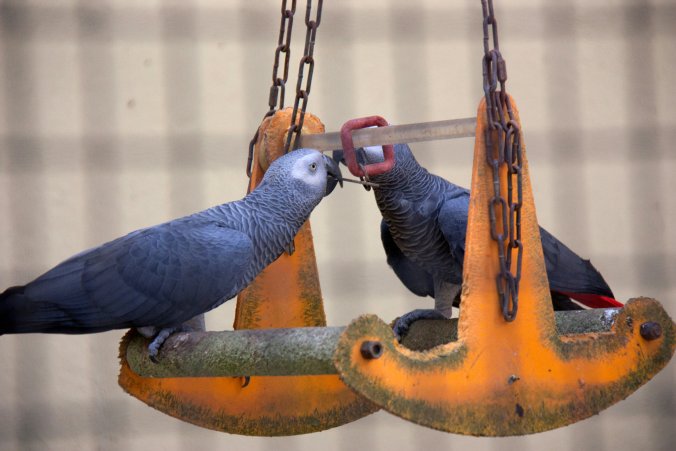
Recent research has explored “helping” behavior in species ranging from nonhuman primates to rats and bats. To see whether intelligent birds might help out a feathered pal, scientists did an experiment using African grey parrots like these. Henry Lok/EyeEm/Getty Images

Thanks to Nell Greenfieldboyce, science correspondent at National Public Radio (USA), for summarizing findings about how some animals help one another. We are on the lookout for more stories of how, why, when acts of kindness happen, and if we need to turn to parrots for inspiration, no problem:

Polly Share A Cracker? Parrots Can Practice Acts Of Kindness, Study Finds

Parrots can perform impressive feats of intelligence, and a new study suggests that some of these “feathered apes” may also practice acts of kindness.

African grey parrots voluntarily helped a partner get a food reward by giving the other bird a valuable metal token that could be exchanged for a walnut, according to a newly published report in the journal Current Biology. Continue reading

117 of 314 Bird Species, As Urban Murals

boorujy_4_mikefernandez_0.jpg

Photo: Mike Fernandez/Audubon

A couple years ago we linked to a story about urban murals and now, progress:

Where Birds Meet Art . . . After Dark

Greater Sage-Grouse by George Boorujy

Greater Sage-Grouse by George Boorujy
Location: 3920 Broadway, New York, NY 10032

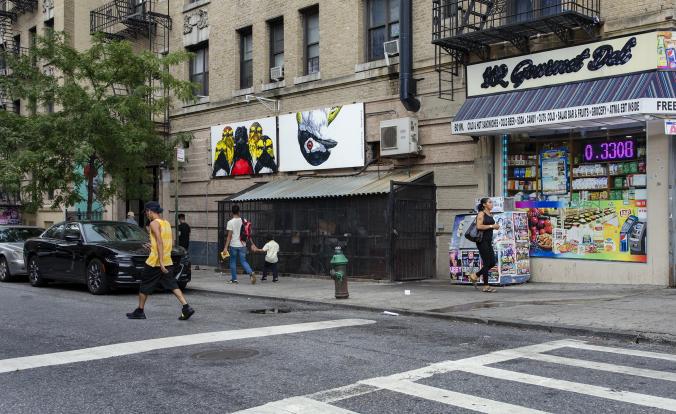
The Audubon Mural Project is a collaboration between the National Audubon Society and Gitler &_____ Gallery to create murals of climate-threatened birds throughout John James Audubon’s old Harlem‐based neighborhood in New York City.

Pinyon Jay by Mary Lacy

Pinyon Jay by Mary Lacy
Location: 3668 Broadway, New York, NY 10032

The project is inspired by the legacy of the great American bird artist and pioneering ornithologist and is energized by Audubon’s groundbreaking report “Survival By Degrees.” Audubon’s scientists have found that climate change will threaten at least half of all North American birds with extinction, and that no bird will escape the impacts of climate-change-related hazards like increased wildfire and sea-level rise. The project commissions artists to paint murals to call attention to this problem, and it has been widely covered in the media, including The New York Times.

On the website where Audubon features these murals you can click through to see the individual stories of each, including lots of interesting species information:

gaia_mikefernandez.jpg

Clockwise from top left: Black-and-white Warbler, Scarlet Tanager, John James Audubon, depiction of Russell Lee’s 1941 photo of Chicago, Magnolia Warbler, James Lancaster’s hand, and Tree Swallow. Photo: Mike Fernandez/Audubon

Endangered Harlem by Gaia

Location: 1883, 1885, and 1887 Amsterdam, New York, NY 10032 Continue reading

Charisma Catalyzes

OwlinBag-720x609

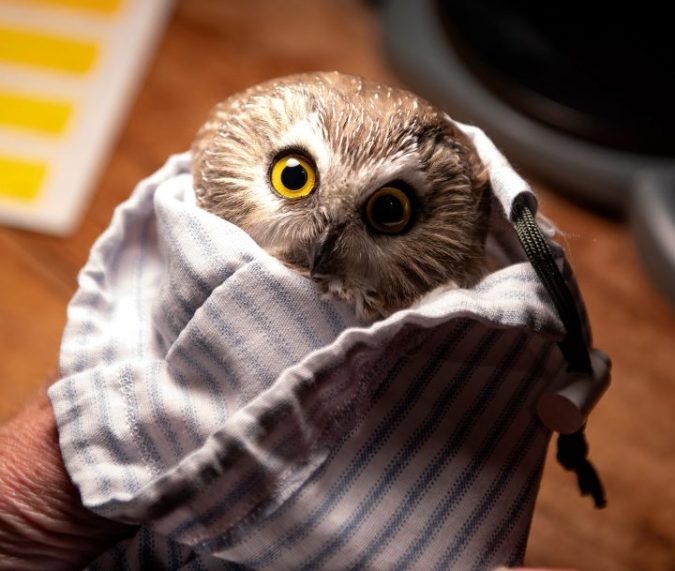
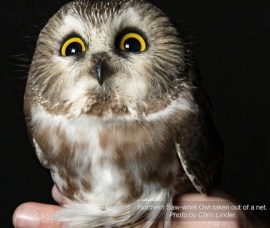
A saw-whet is ready for a quick exam when researchers will collect data and affix an identifying leg band.

No one is immune to the charisma of small owls, as far as we know. And that charisma would explain how the volunteers working to band this bird got catalyzed. Thanks to the Lab of Ornithology and this article from the current issue of Living Bird magazine:

A Grassroots Banding Project Reveals How Amazing Northern Saw-whet Owls Are

Story By Scott Weidensaul; Photography By Chris Linder

Owl1There is something wonderful about an autumn night; the sharp bite to the air, the rustle of a north wind in the last leaves clinging to the tops of the oaks, Orion shining in a moonless sky over the central Appalachian ridges of Pennsylvania—and echoing over it all, a repetitive, me­chanical beep that reminds most people of the warning alarm when a garbage truck is backing up. Continue reading

Unsubtle Love Song

21tb-loudbird-02-jumbo.jpg

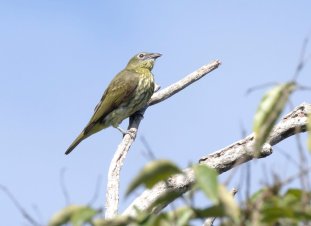
Female bellbirds lack a wattle and sing no songs. Anselmo d’Affonseca

Cara Giaimo provides additional perspective, perhaps the key question in the New York Times coverage of this story, which is about the female in this species, along with a great recording of the male’s call:

…One big mystery remains. The white bellbird sings its pile driver tune when a potential mate is nearby. It starts facing away from her, and then whips around to blast the loudest, record-setting note right into her face. Continue reading

The Little Things We Can Do

tnc_87148027_preview_cropped-1260x708.jpg

A hairstreak butterflies in a Florida backyard. Photo © Bill Spitzer / TNC Photo Contest 2019

If you are fortunate enough to have a yard of your own, consider this suggestion by Charles Fergus:

Create Wildlife Habitat Around Your House

By itself, a plain grass lawn is stark and visually unappealing—which is why most homeowners add shrubs, flower beds, and specimen trees. Today, there’s a new movement afoot known as natural landscaping: using native trees, shrubs, and low plants to add textural diversity to a yard while attracting and benefiting wildlife.

Research has shown that seeing wildlife around your home—hearing birds sing, glimpsing brightly colored butterflies and dragonflies, seeing a garter snake slither into a stone wall— makes life more enjoyable.

tnc_56914004_preview_cropped-1260x708.jpg

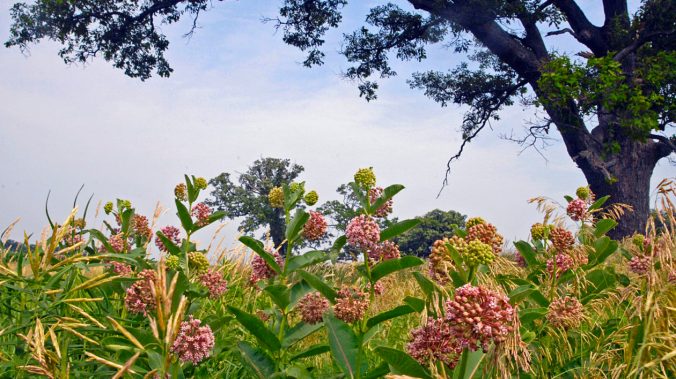
Common milkweed growing in Illinois. Photo © Timothy T. Lindenbaum / TNC

Many of us have a visceral need to be in touch with wild creatures and to acknowledge that we ourselves are part of nature, even if we live in suburbs and other settings where housing is dense. Continue reading

A Different Kind Of Getting Clear

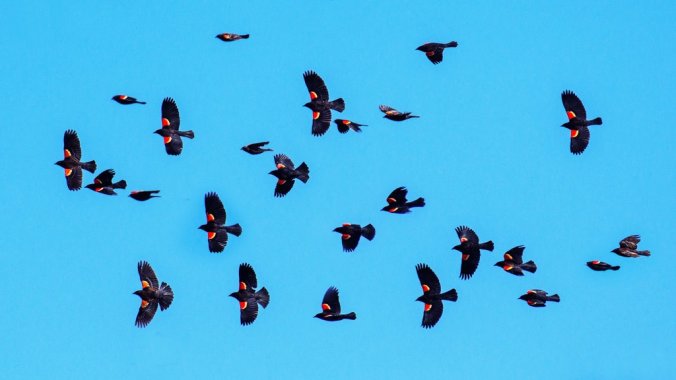
A flock of red-winged blackbirds over Long Island, N.Y.CreditCreditVicki Jauron, Babylon and Beyond Photography/Moment, via Getty Images

Thanks to the authors of this op-ed for a bit of clear thinking:

The Crisis for Birds Is a Crisis for Us All

The mass disappearance of North American birds is a dire warning about the planet’s well-being.

By John W. Fitzpatrick and 

Dr. Fitzpatrick is the director of the Cornell Lab of Ornithology. Dr. Marra is the director of the Georgetown Environment Initiative.

19Fitzpatrick2-jumbo.jpg

Steve Maslowski/Science Source, via Getty Images Plus

Nearly one-third of the wild birds in the United States and Canada have vanished since 1970, a staggering loss that suggests the very fabric of North America’s ecosystem is unraveling.

The disappearance of 2.9 billion birds over the past nearly 50 years was reported today in the journal Science, a result of a comprehensive study by a team of scientists from seven research institutions in the United States and Canada.

As ornithologists and the directors of two major research institutes that directed this study, even we were shocked by the results. We knew of well-documented losses among shorebirds and songbirds. But the magnitude of losses among 300 bird species was much larger than we had expected and alarmingly widespread across the continent. Continue reading

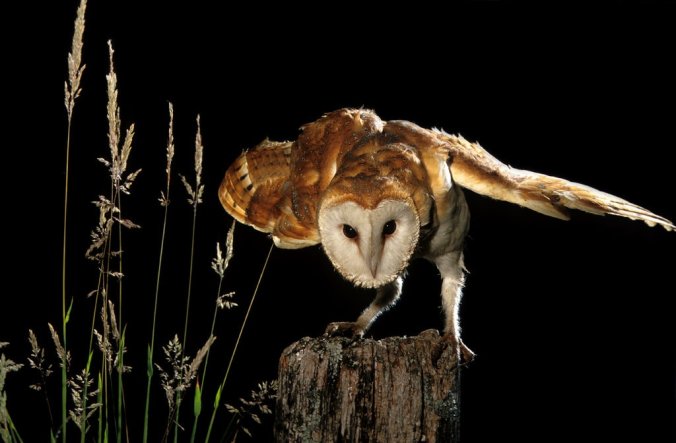
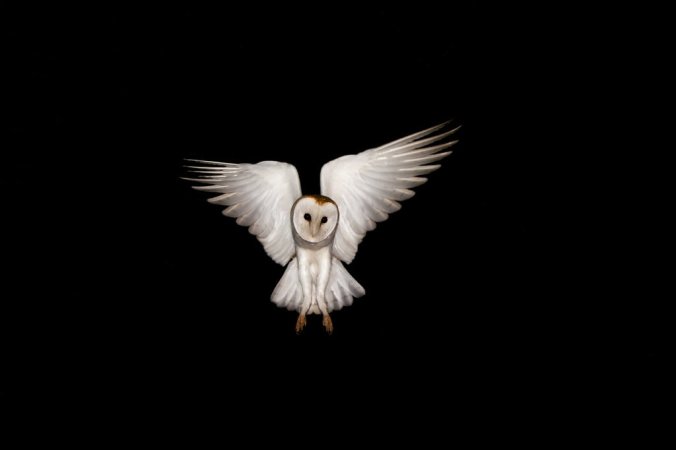
Barn Owls Throw Shade

merlin_159945324_2f097416-2cc6-4128-9773-b37c448e7324-jumbo.jpg

Arterra/Universal Images Group, via Getty Images

Thank you, as always, Mr. Gorman:

White Barn Owls Thrive When Hunting in Bright Moonlight

Something about the light from a full moon shining on the frightening face of a barn owl makes voles freeze a bit too long.

When the moon hits your eye like a big pizza pie, it may not be amore at all, but a ghostly white barn owl about to kill and eat you.

If you’re a vole, that is.

Voles are a favorite meal for barn owls, which come in two shades, reddish brown and white. When the moon is new, both have equal success hunting for their young, snagging about five voles in a night. But when the moon is full and bright, the reddish owls do poorly, dropping to three a night.

02TB-OWLS2-jumbo.jpg

Education Images/Universal Images Group, via Getty Images

Barn owls with white faces and breasts do as well as ever, however, even though they should be more easily spotted than their reddish relatives when the lunar light reflects off their feathers. Continue reading

Urban Avian Satisficing

web_kma9100.jpg

These owls have adoring human neighbors. Their burrow is dug on the lawn of a couple who, along with their grandson, delight in seeing the birds nest year after year on the property; they even intentionally leave one of their cars parked outside the garage, to offer the tiny owls shade. This year the owl pair had six chicks, five of which survived to fledge. Photo: Karine Aigner

Thanks to Audubon’s great team for this story of urban adaptation:

Burrowing Owls Are the Family Next Door in this Florida Boom Town

Locals and researchers are working to keep Marco Island hospitable to the birds, which are declining across the state, as development devours the vacant lots where they make their homes.

web_kma9100q

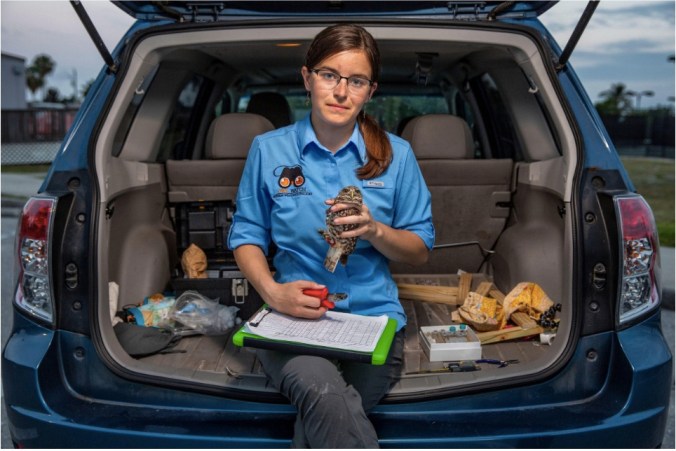
Biologist Allison Smith’s car serves as a mobile workspace for monitoring owls on Marco. She temporarily transfers birds she captures to the back, where she weighs, measures, and bands them before returning them to their burrows. Photo: Karine Aigner

Fate would not smile kindly on the six feathered inches of furious resignation splayed belly up in the left hand of Allison Smith. Wings slightly spread, the young Florida Burrowing Owl’s penny-wide green eyes remained unblinking at the indignity of such a position. Intent on banding and measuring the chick before taking a blood sample from an under-wing vein, Smith couldn’t foresee its future.

Neither could volunteer Jean Hall. She was helping Smith, a graduate student in wildlife ecology at the University of Florida, band several offspring from the same family as part of Owl Watch, a community-scientist research collaboration funded by Audubon of the Western Everglades.

The Gulf Coast barrier island of Marco, a 7,700-acre dry-land dollop of one-time mangroves lying in turquoise and azure waters south of Naples, is now thick with houses, condominiums, strip malls, resort hotels, marinas, and golf courses, along with 18,000 year-round residents. The population swells to some 40,000 each winter. Continue reading

Therapeutic Noise

a1_4025_2_sedge-wren_ben_cvengros_kk.jpg

Sedge Wren. Photo: Ben Cvengros/Audubon Photography Awards

Thanks to Audubon for pointing us in this direction:

Around the World, the Soothing Sounds of Birdsong Are Used as Therapy

The natural tunes decrease stress while possibly invigorating the mind.

This audio story is brought to you by BirdNote, a partner of The National Audubon Society. BirdNote episodes air daily on public radio stations nationwide.

Transcript:

This is BirdNote.

In a children’s hospital in Liverpool, England, the sweet sounds of birdsong carry along the hallways. It’s a recording of the dawn chorus from a nearby park, and the intent is to calm the anxious young patients…

A morning at the beach

Playa Herradura, Costa Rica

On Friday I traveled to Los Sueños to view one of the Marriott properties that will be getting a more sustainable gift shop. While I was there I decided to go down to the beach and do some birdwatching. At first I was disappointed because I only saw black vultures and grackles. Then as I was walking down the beach I saw a bird soaring over the water with a very interesting wing shape. I moved closer to where it was flying and it turned out to be a magnificent frigate bird. Here is the closest photo I was able to get of it. You can just make out the distinct wing shape.

Continue reading

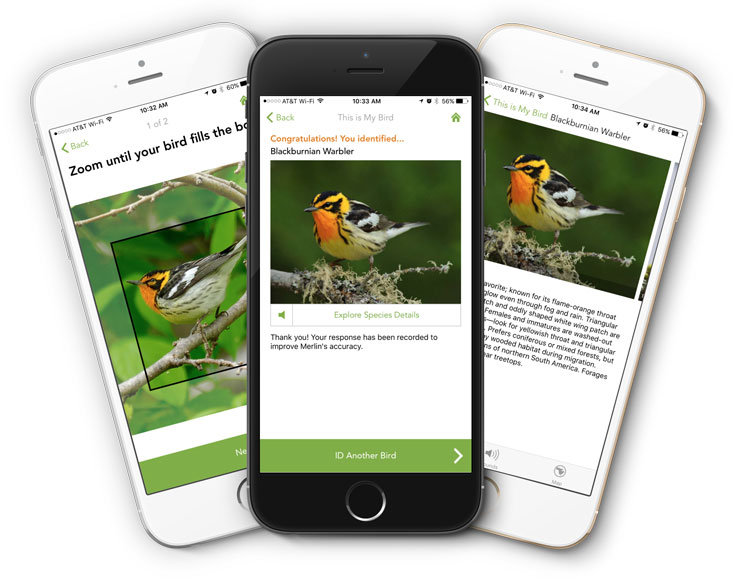
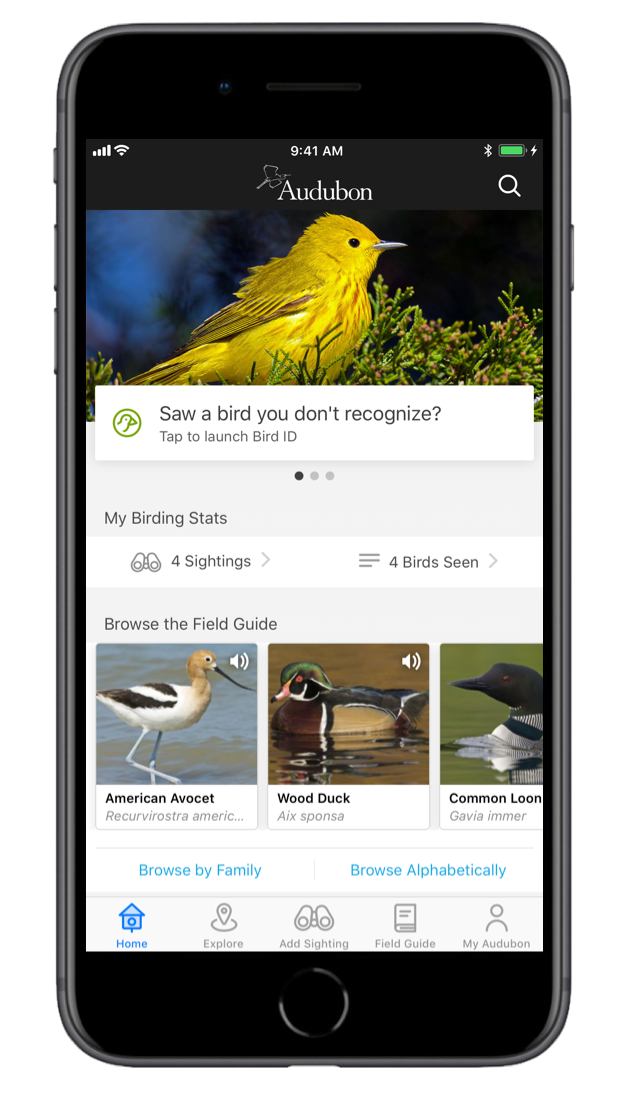
A Comparison of Audubon and Merlin Bird

Merlin Bird and Audubon Bird Guide are both amazing resources and are well maintained and updated. They are both free and have a lot of the same features. At first, these apps might seem very similar. However, there are some big differences. I’ll start off with Merlin Bird. The Cornell Lab of Ornithology’s birding app has a couple of standout features. The app has a much cleaner interface with a simpler bird ID feature. You’ll answer five basic questions and it gives you a list of possible birds. It is very easy to use and is perfect for novices that do not have a lot prior knowledge about birds.

Another point for Merlin Bird is the variety of regions covered from all over the globe. They also let you download these regions individually, so you don’t have to fill up your device with information you don’t need. Merlin bird has a unique feature that allows you to take a photo of a bird and it will attempt to identify it. While it isn’t always accurate (or easy to get a good photo of a bird!) I am impressed by how often it gets it right. Even with photos I’ve taken at a distance the app has managed to identity the bird correctly.

Another nice feature is that the app integrates with Cornell’s other app, eBird. If you have a bird in eBird that you’ve identified it will display that in the Merlin app. It also has a nice ability that shows you a list of birds based on how likely it is that you’ll see them in your area.

Continue reading

New Zealand’s Minister of Conservation Shares Surprising Good News

When the Minister of Conservation speaks, we listen:

orange-fronted-parakeet-chick.jpg

We came to this news through the story below by National Public Radio (USA):

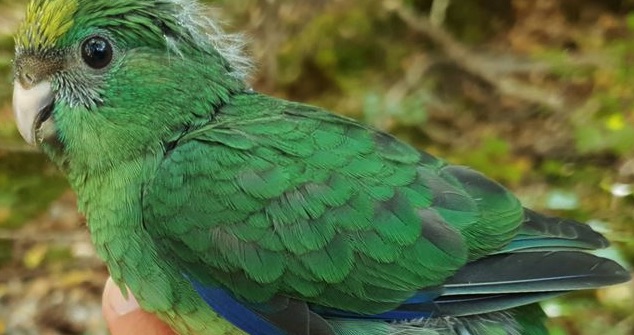
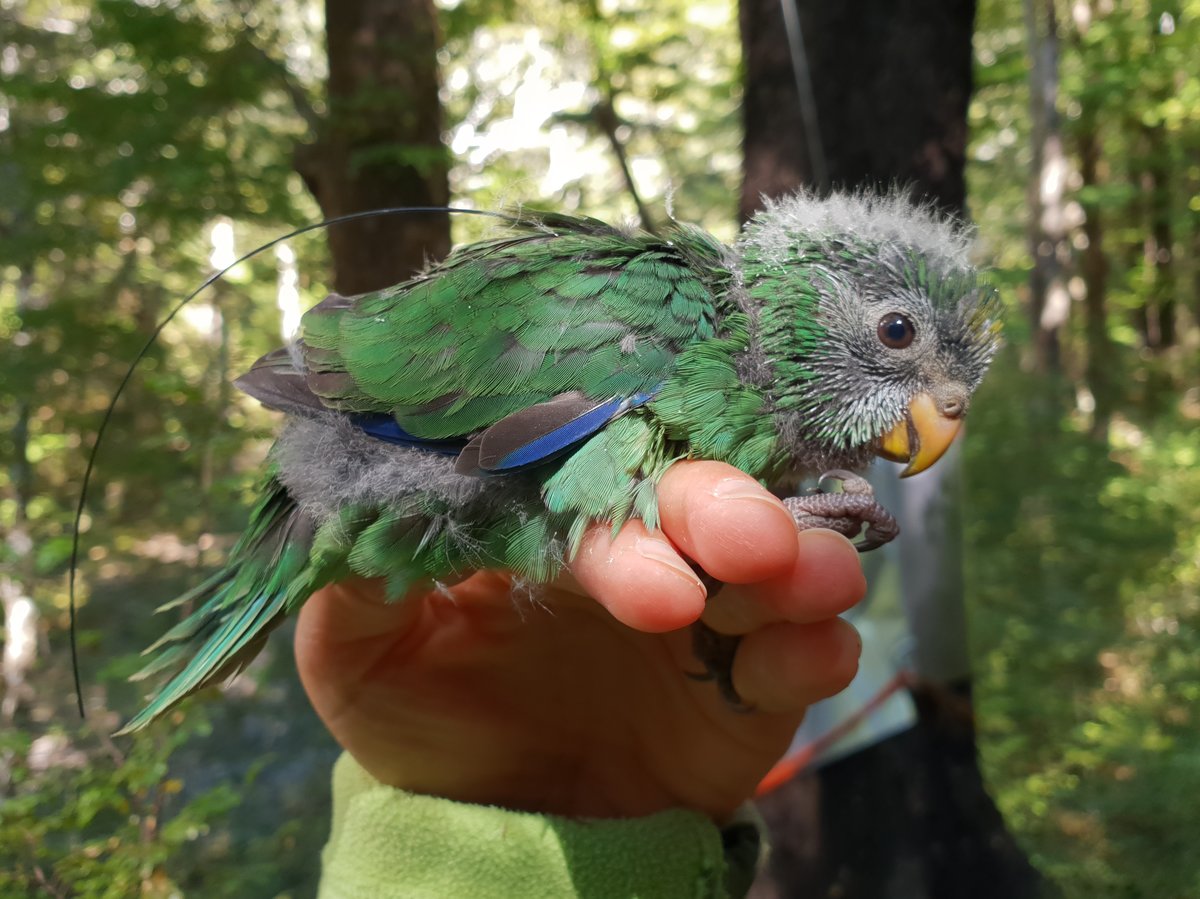
Rare New Zealand Parakeet Population Doubles After ‘Epic’ Breeding Season

orange-fronted-parakeet-chick-with-transmitter-doc-c9811c0f185647851facaa77fc88d87cd8614f8f-s1200-c85.jpg

The small bird was believed to have gone extinct but after a bumper crop of beech seeds this year, conservationists estimate the orange-fronted parakeet population has likely doubled.
Department of Conservation

One of the rarest birds in New Zealand is having its best breeding season in decades, potentially doubling the population.

The orange-fronted parakeet, known locally as the kākāriki karaka, is in the midst of a prolonged mating season due to a beech seed bonanza, Conservation Minister Eugenie Sage said in a statement on Wednesday.

“It is great news that this year there are more than three times the number of nests compared to previous years,” Sage said.

She added that at least 150 wild-born chicks have been born so far this season…

Read the whole story here.

Audubon’s 2019 Photography Awards Winners

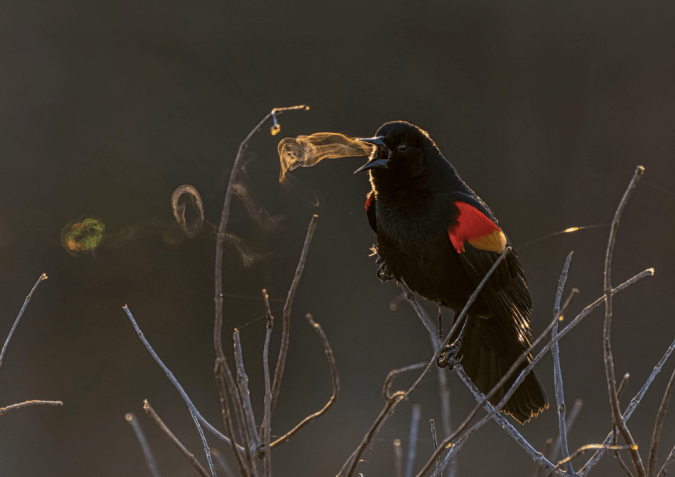
Red-winged Blackbird. Photo: Kathrin Swoboda/Audubon Photography Awards

Thanks to the judges who chose the Grand Prize Winner (above) in this year’s contest, among an impossibly great selection. (Not to mention an extra applause to Audubon for adding the Citizen Science centric Plants for Birds category.

Birds make fascinating subjects, as the winners and honorable mentions of this year’s contest, our 10th, make clear. They’re at once beautiful and resilient, complex and comical. It’s no wonder why we love them so.

The images that won the 2019 Audubon Photography Awards, presented in association with Nature’s Best Photography, are as impressive as ever, but attentive readers might notice a few more images than usual. That’s because we’ve added two awards. The Plants for Birds category is inspired by Audubon’s Plants for Birds program, supported by Coleman and Susan Burke, which provides resources for choosing and finding plants native to zip codes in the United States. This category poses a new challenge to photographers: Don’t just capture an incredible moment—make sure it also features a bird and plant native to the location in which the photo was taken in order to highlight the critical role native habitat plays in supporting bird life. And in the spirit of Kevin Fisher, Audubon’s longtime creative director who recently retired, the Fisher Prize recognizes a creative approach to photographing birds that blends originality with technical expertise. The winning image, which Kevin himself selected from among the finalists, pushes the bounds of traditional bird photography.

We want to extend a heartfelt thank you to all 2,253 entrants, hailing from all 50 U.S. states, Washington, D.C., and 10 Canadian provinces and territories. Your dedication to appreciating, celebrating, and sharing the wonder of birds and the landscapes they inhabit inspires us now and throughout the year.

The 2019 APA Judges

Steve Freligh, publisher, Nature’s Best Photography

Melissa Groo, wildlife photographer and winner of the 2015 contest’s Grand Prize

Kenn Kaufman, bird expert and Audubon magazine field editor

Sabine Meyer, photography director, National Audubon Society

Allen Murabayashi, chairman and co-founder, PhotoShelter

John Rowden, director of community conservation, National Audubon Society

Judging criteria: technical quality, originality, artistic merit

Continue reading

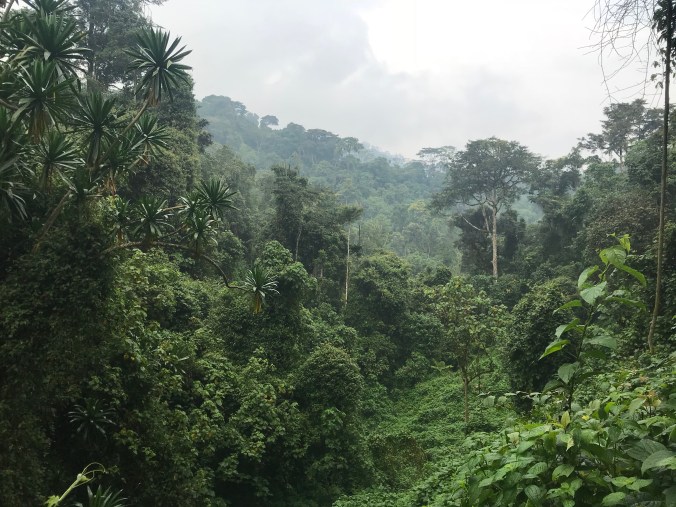
My Summer Research Project: Bird Diversity in Gishwati Forest, Rwanda

Gishwati Forest of Gishwati-Mukura National Park

Two weeks ago I promised an update from the field, and after completing the necessary government permits and preparing for work in the forest, I’m finally ready to write about the summer project that the Yale School of Forestry and Environmental Studies requires of its Master of Environmental Management candidates. We can choose between completing an internship or independent research, and I opted for the latter, since I wanted the experience of designing my own field season and collecting data for scientific analysis for peer-reviewed publication, pursuing a subject that I’m both personally and academically interested in: tropical bird conservation. Now, with the generous support I’m grateful to receive as a fellow of the Yale Institute for Biospheric Studies (YIBS), Yale’s Tropical Resources Institute (TRI), and the University of Rwanda’s Center for Excellence in Biodiversity and Natural Resource Management (CoEB), I’ve started my project exploring a subset of montane avifauna distribution in the Albertine Rift.

Continue reading

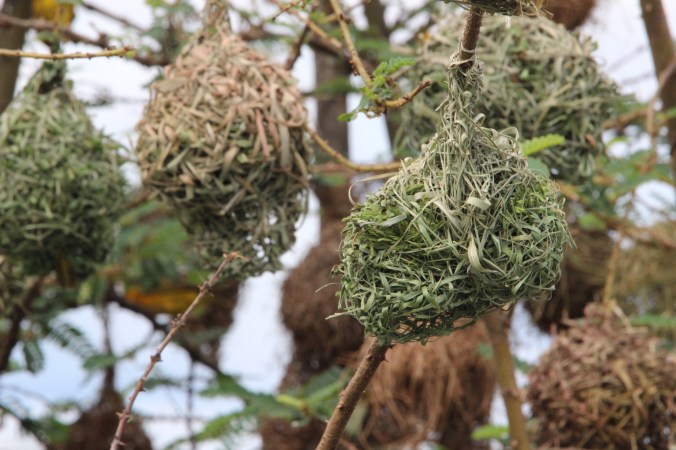
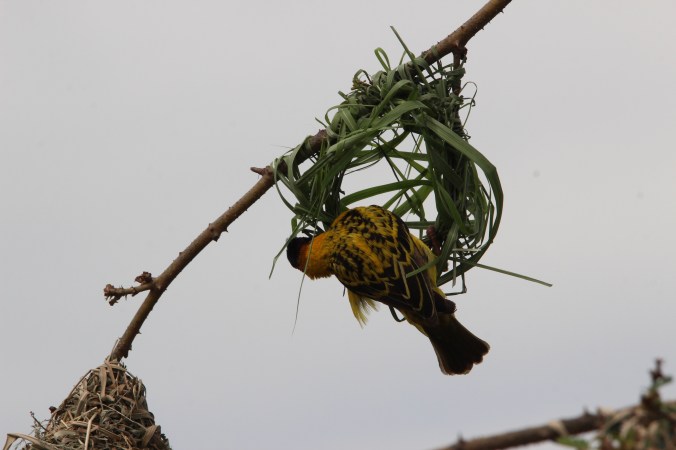
Village Weavers at Lake Ihema, Akagera National Park

On the shore of almost any body of water in Akagera National Park in the east of Rwanda, trees festooned with balls of dried grass are a common sight, although what will often draw your attention to these trees first is not the strange vegetation, but the cacophony of a dozen or more weaver birds chattering away as they bring strands of grass to build these nests, display to potential mates, or warn of possible predators. The species featured here, the Village Weaver Ploceus cucullatus, is a fairly common bird in this region, and entertained us with their craft on the day that we visited Lake Ihema, the second largest lake in Rwanda after Lake Kivu to the west.

Continue reading

Racing to Save Earth’s Rarest Eagle

Our long history with the Cornell Lab of Ornithology keeps their initiatives on our radar, and their films hold a very special place.

Sales from this award-winning documentary will benefit bird conservation.

World-renowned wildlife cinematographer, Neil Rettig, embarks on the most challenging assignment of his career: to find and film the rarest eagle on the planet.  An expertly woven tale with stunning cinematography, Bird of Prey journeys deep into the vanishing world of the Great Philippine Eagle and reveals an inspiring group of people that are determined to save the world’s most critically endangered eagle species from extinction.

Click here for more information on streaming options.