The Undoing Project, Reviewed

9780393254594_198.jpegWe are happy to see that the book mentioned last month is now available and has been reviewed in the New York Times, among other places, in addition to author interviews that are worth a look:

In the fall of 1969, behind the closed door of an otherwise empty seminar room at Hebrew University, two psychologists began a collaboration that would upend the understanding of human behavior. Those first conversations were filled with uproarious laughter and occasional shouting, in a jumble of Hebrew and English, which could sometimes be heard from the hallway. Continue reading

New York City Food Heritage

04qa2-master768

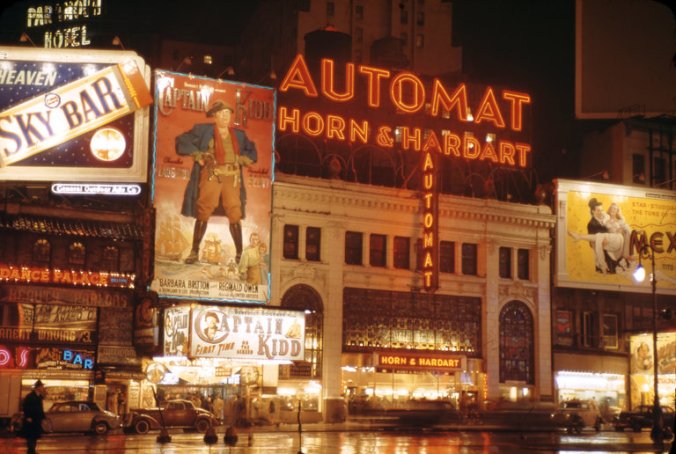
In a photo from 1945, Broadway and 42nd Street in Manhattan in front of the Horn & Hardart Automat. Credit Andreas Feininger/The LIFE Picture Collection/Getty Images

This Travel section interview–Best Eating in New York? A Food Historian Has Some Advice By JOHN L. DORMAN–in the New York Times catches our attention:

9780199397020 When the food writer Andrew F. Smith had an idea for a new book on New York City, he went for an intriguing angle. “We preserve the homes of people who were born here and later became famous, and we preserve all sorts of artwork,” he said, “but people don’t think about preserving a city’s food heritage, which was something that was missing in New York.”

His idea resulted in the book “Savoring Gotham: A Food Lover’s Companion to New York City,” which he edited. The topics range from the culinary history of the Lower East Side to the emergence of Automats, Continue reading

Getting Our Thinking Right, When It Matters Most

9780399184123An editorial that I read yesterday– Does Decision-Making Matter?–was a welcome “moving on” from all the other kinds of recent editorializing. Welcome because it tells us there is a new Michael Lewis book, and especially welcome because it shows that five years after we first heard him credit two scientists for their influential work he has now gone the last mile in documenting their greatness for a mass audience. We have had a couple nods to that same work in our pages in recent years.

This morning’s walk was accompanied by a podcast I had neglected for some months, with an interview that Chuck Klosterman–not mentioned in our pages before–gave to promote his new book. It is time to finally correct that oversight. I cannot explain why that is important as well as the interview can, so I suggest listening to it. If you do not have the 90 minutes required for that, a short synopsis version of his promotional interview can be heard and read on this NPR interview given at about the same time:

‘But What If We’re Wrong:’ A Look At How We Will Remember The Now, Later

…KELLY MCEVERS, HOST:

What if everything we think that’s important or interesting or relevant right now will be totally insignificant in the future? Or what if something we don’t really appreciate today will be considered great in 200 years, like how people didn’t think much of “Moby Dick” when it was written, but now we think it’s pretty great? These are the questions that critic Chuck Klosterman asks in his new book. In it, he tries to predict how we will remember the present when it is the past. And he’s not too worried about whether he’s right or not. Continue reading

People At Play

1127-bks-heffernancook-master768-v2

Brandon Celi

This book review puts our work, with would be categorized as providing recreation services, in an interesting context:

Steven Johnson on How Play Shaped the World

By

WONDERLAND
How Play Made the Modern World
By Steven Johnson
322 pp. Riverhead Books. $30.

Steven Johnson’s “Wonderland” makes a swashbuckling argument for the centrality of recreation to all of human history. The book is a house of wonders itself. Marvelous circuits of prose inductors, resistors and switches simulate ordinary history so nearly as to make readers forget the real thing. Red wires connect haphazardly to blue, and sparks fly. Who needs a footnoted analysis of “the ludic,” as play is known to the terminally unplayful? Barnumism of the Johnson kind is much, much more fun. Continue reading

Dr. Seuss, Champion Of The Unusual

drawing5_smWe were led to this by a news/feature story, but the background material is even more interesting than the feature in the news. Here is a note worth a moment of your time:

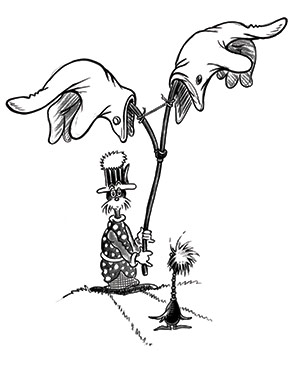
Dr. Seuss was a storyteller in the grandest sense of the word. Not only did he tell fantastical tales of far-away places but he also gave us a unique visual language that carried his stories to new heights of artistic expression. Surrealism provided the foundation from which he built his career, but like a launch pad sitting idle just before liftoff, surrealism was soon to be engulfed in the flames of ridiculous fun and its launch tower thrown to the ground with each new editorial cartoon, magazine cover, painting, or children’s bookContinue reading

Birds of a Feather

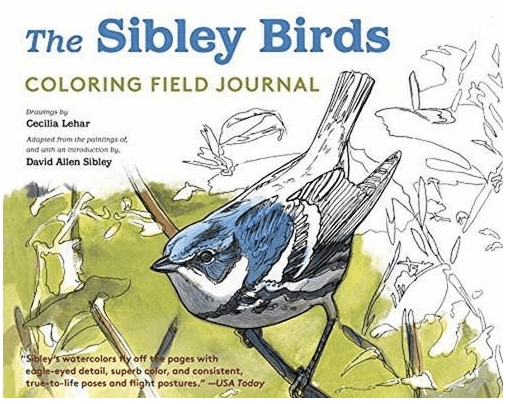
The fact that we’re rather “into birds” should come as no surprise to anyone giving even a quick perusal of this site. In addition to the birds themselves, we enjoy highlighting those who photograph them, those who paint them, those who study them, as well as those who craft them.  Continue reading

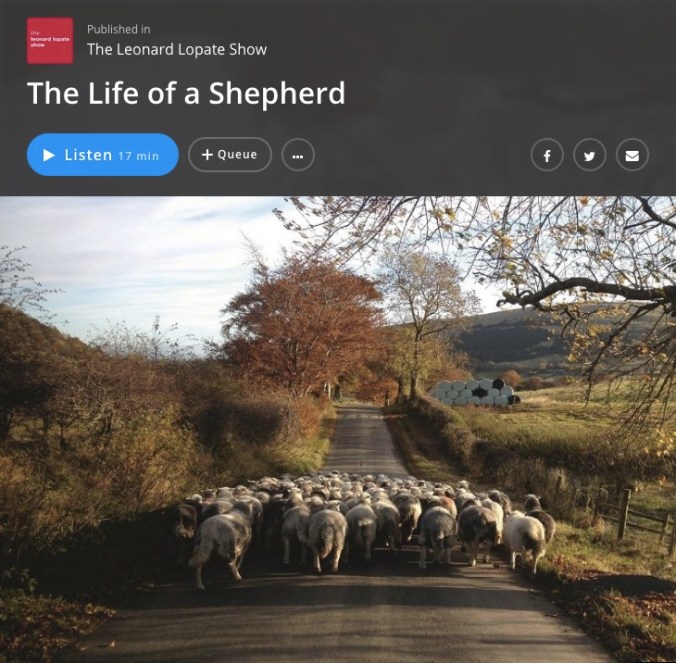
Shepherds, Preserving Many Fine Forms Of Life

ShepherdLopate.jpg

Ignore the irony of our recommendation that you click the image above in the interest of remembering a world without ubiquitous connectivity. Listen. Imagine. Digital detox might make more sense after that. Continue reading

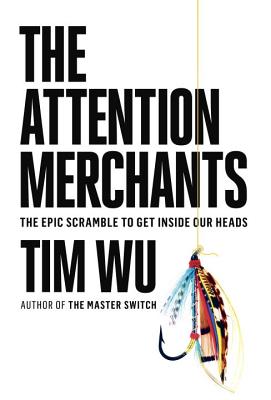
The Attention Merchants, Reviewed & Author Interviews

9780385352017Everyone seems to be in agreement that this year has been exceptional in terms of attention overloading from all directions–political, commercial, “friends,” and so on. Unfortunately, the forecast is for more, and increasingly effective, attention-getting from technology-aided corporations. We have two words for you: Digital. Detox. And in the New York Times review of Tim Wu’s new book, a compelling set of evidence why those two words matter more and more:

…The history of the slow, steady annexation and exploitation of our consciousness — whether by television commercials, war propaganda or tweets — is the subject of Tim Wu’s new book, “The Attention Merchants: The Epic Scramble to Get Inside Our Heads.” He starts with the penny press newspapers of New York City, moves on to the heyday of radio and television, and concludes with the chaotic online bazaar of the present, surely better suited to bugs with eyes all over their heads than to ordinary human beings. En route, he covers snake oil, commercial psychology, Timothy Leary, AOL chat room Gomorrahs. His bandwidth is broad. Continue reading

Bookstores Are Just A Small Notch Below The Library In Our Pantheon Of Cultural Institutions, But They Are There

eckstein-bodhi-1200

Bodhi Tree—Los Angeles, California

We liked it the first time around, and appreciate his extension:

DRAWING THE WORLD’S GREATEST BOOKSTORES

By

It was a little more than two years ago that I walked around New York, drawing pictures of the city’s endangered landmark bookstores.  Continue reading

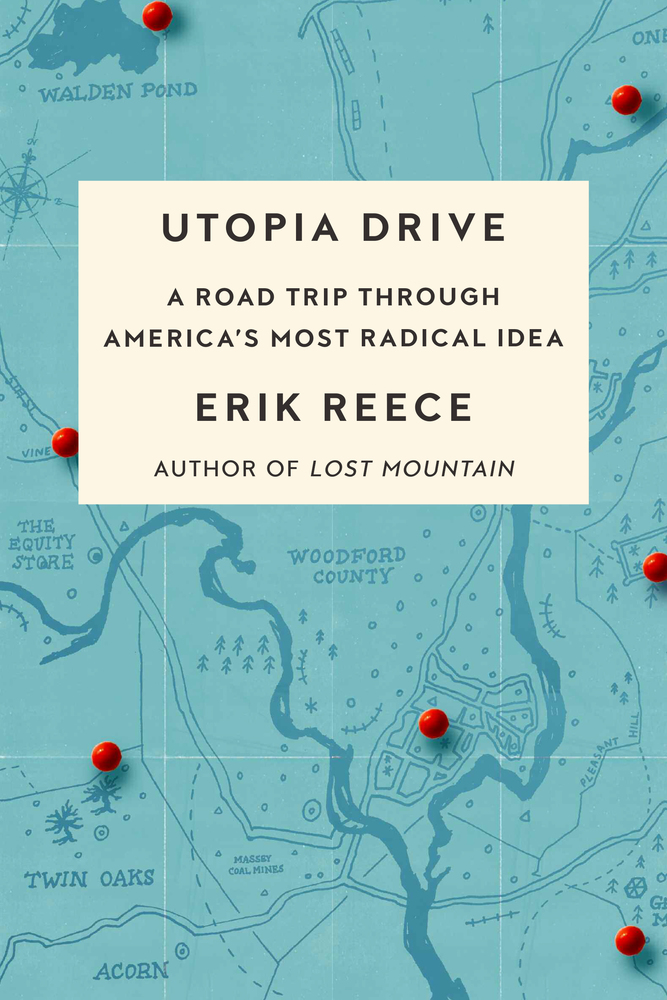
An Unusual Travelogue

9780374710750.jpg

Publishers’ blurbs are sometimes much better than the sound of the word blurb would imply, and anyway I always trust them more than I could possibly trust Amazon’s tricky sales methods. Reviews in trusted publications are best, but they take much longer to read; this blurb has my attention, especially after pondering two decades of life online:

For Erik Reece, life, at last, was good: he was newly married, gainfully employed, living in a creekside cabin in his beloved Kentucky woods. It sounded, as he describes it, “like a country song with a happy ending.” And yet he was still haunted by a sense that the world–or, more specifically, his country–could be better. He couldn’t ignore his conviction that, in fact, the good ol’ USA was in the midst of great social, environmental, and political crises–that for the first time in our history, we were being swept into a future that had no future. Where did we–here, in the land of Jeffersonian optimism and better tomorrows–go wrong? Continue reading

If You Happen To Be In The Boston Area

so16_image_page_036_image_0001

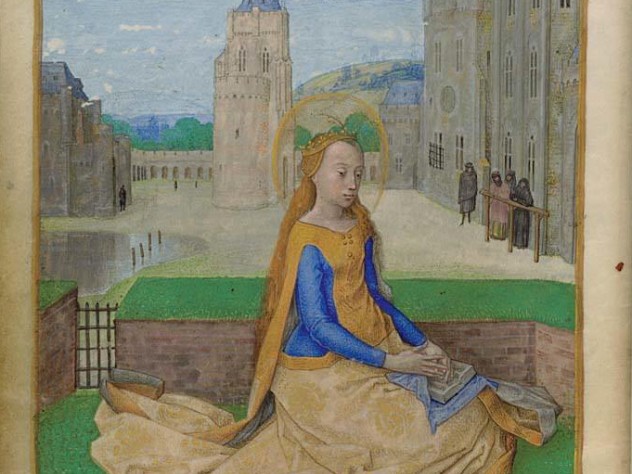
Saint Barbara, attributed to the “Ghent Associates” of the Master of Mary of Burgundy, from a book of hours-missal, c. 1485-1490. Courtesy of Houghton Library/Harvard University

We check in from time to time at magazines published by universities where we have recruited. This article, which we appreciate topically because of the conservation of cultural heritage described, makes us wish we could visit the venues described in “Illuminations.”  Lily Scherlis provides a good example of why we keep coming back to this magazine–crisp, clear writing and a compelling argument in favor of looking back into history for an enriching perspective on crowdsourcing versus individual authorship (read to the end of the quoted section):

…These works were born into a world where literacy was scarce and almost universally affiliated with religion: the exhibition description refers to monasticism as, at its heart, a “cult of the book.” I imagine how compelling written religious text would have been to early readers: the words echo off the page, as if read by an invisible voice heard only by you, but are available to other readers as well. Continue reading

Get Jolted By Understanding Fish Better

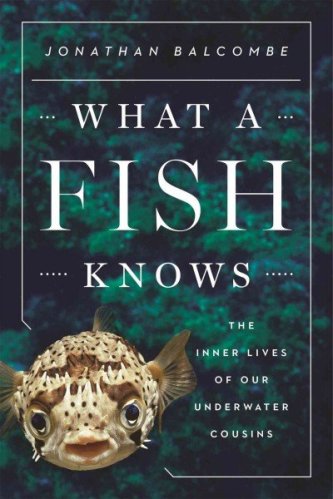
9780374288211_custom-a8005fb568cedbbcdfa556084e27717de66bba19-s400-c85The morning walk’s provided a different sensation from the learning component of the morning walk a few days back, giving me a jolt of new appreciation for all that I have no clue about related to life underwater; the jolter was an ethologist, of all things:

…The knifefishes of South America and the elephant-nose fishes … [are] both electric-producing, so they have EODs, which are electric organ discharges, and they use those as communication signals, and they communicate in some pretty cool ways. They will change their own frequency if they’re swimming by another fish with a similar frequency, so they don’t jam and confuse each other. They also show deference by shutting off their EODs when they’re passing by a territory holder…

Continue reading

Museums, Things, Epiphanies

Reading the review, and the museum’s description of this show, I immediately thought of a museum that Amie and I had the chance to visit in Istanbul, which had been on our to-do list for some time; and the next click through the museum’s website led me to this:

THURSDAY 09/29 /16 7PM 

Orhan Pamuk in Conversation with Massimiliano Gioni

Which just seemed right because the museum in Istanbul was create by Orhan Pamuk. I will do my best to find a recording of this conversation, if they make a recording or transcript available and but for now the best I can do is direct you to the website of the museum in Istanbul which, hopefully, will lead you to the actual museum, easily the most moving museum experience of my life:
slider-1

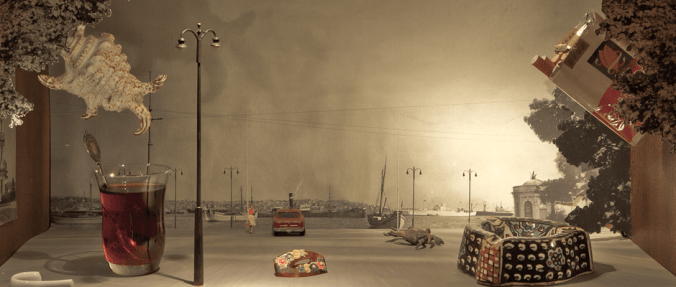
The Museum of Innocence is both a novel by Orhan Pamuk and a museum he has set up. From the very beginnings of the project, since the 1990s, Pamuk has conceived of novel and museum together. The novel, which is about love, is set between 1974 and the early ’00s, and describes life in Istanbul between 1950 and 2000 through memories and flashbacks centred around two families – one wealthy, the other lower middle class. The museum presents what the novel’s characters used, wore, heard, saw, collected and dreamed of, all meticulously arranged in boxes and display cabinets. It is not essential to have read the book in order to enjoy the museum, just as it is not necessary to have visited the museum in order to fully enjoy the book. But those who have read the novel will better grasp the many connotations of the museum, and those who have visited the museum will discover many nuances they had missed when reading the book. The novel was published in 2008, the museum opened in Spring 2012.

Be sure that you read the explanation for this floor motif.
All the Ducks in a Row…

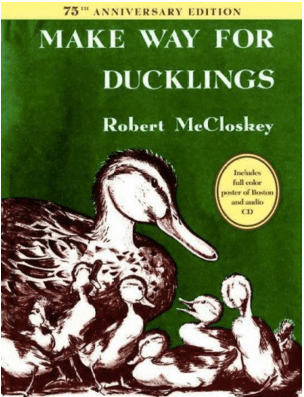
Of the many volumes in our family bookcase, Robert McCloskey’s Make Way for Ducklings and Blueberries for Sal always held pride of place. The stories, the charm and personality of the illustrations, made them family favorites to be read over and over at story time.

It’s not surprising to read that the artist took his work so seriously as to fill his Greenwich Village apartment with a clutch of ducklings for inspiration.  Continue reading

Journeys That Set Our Lives In Motion

9780544706262_custom-197e5387589323c99cfd561caf58b83ba52e68bb-s500-c85

You do not need to be an admirer of the works of this author to appreciate the value of the story told in this book review (thanks to National Public Radio, USA):

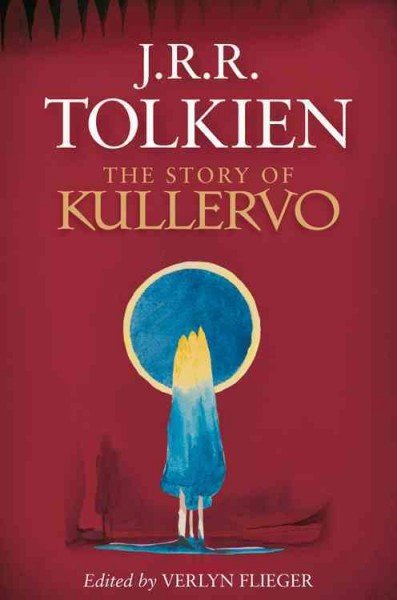
In 1913, the 21-year-old Ronald Tolkien should have been studying for his exams. He was halfway through his Classics degree — the subject all the best students did at Oxford in those days. Getting admitted to Oxford on a scholarship was a great opportunity for young Ronald, an orphan who had always struggled to stay out of poverty. A Classics degree would have set him up for almost any career he chose. But he wasn’t studying. Instead, he was trying to teach himself Finnish.

Why would a brilliant student with so much at stake let himself go astray at such a crucial time? There were two reasons: love and the Kalevala.

Tolkien’s twin obsessions at the time were his future wife, Edith Bratt, and the Kalevala, the national epic of Finland. This collection of poems, myths, spells and hero-tales had been collected and published in the early 19th century, but the poems themselves are thought to be far older. Its unique voice, resembling no other European mythology, thoroughly captured the mind and heart of young Tolkien. “The almost indefinable sense of newness and strangeness … will either perturb you or delight you,” he wrote at the time. Continue reading

Flying Between Pages

birdsong

“There is no such thing as a stooped or a graceless bird”, writes Krishnan. PHOTO: Scroll


“Chugging out of New Delhi Railway Station on an early morning train, I’ve often amused myself by looking out for the “telefauna,” or birds perched on telegraph wires.” Bird lovers on here, there’s a new word for you right there. Of Birds and Birdsong, penned by Indian writer Krishna, is all at once a journal and a tribute. To him, it’s a record of winged creatures sighted around, while to his reader the names of these beauties bring to heart a familiar nostalgia.

Continue reading

Ponder The Journey

BookWe are aware of how fortunate we are, across the ranks of Raxa Collective, to be doing what we want, where we want, how we want. That is an exceptional privilege. Not everyone gets to the opportunity to choose their work. Not everyone has the luck to pursue a mission. But our privilege does not stop us from promoting some basic tenets that drive us. One of them is: if you can, when you can, chase the higher calling.

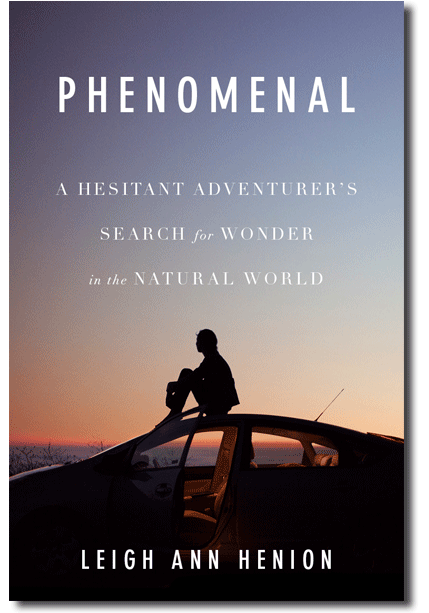
The author of “Phenomenal: A Hesitant Adventurer’s Search for Wonder in the Natural World” (Penguin Press, click above to go to the author’s website) provides an op-ed short essay that provides useful bearings for the first Monday of a new year:

A Job That Nourishes the Soul, if Not the Wallet

By

The lawyer was in his mid-20s. He narrowed his eyes, peered at me from behind his cluttered desk and said, “So, why are you quitting?”

Continue reading

Understanding India

i187-darjeeling-west-bengal-1983

Darjeeling, India, 1983.

In short, you cannot. India is too diverse to explain, or even describe, in any meaningful way. So understanding it is a journey, at least lifelong if not eternal. But you should try. And we are dedicated to all kinds of attempts, including via journey; this book, published recently by Phaidon, may help with visual clues prior to such a journey, whether it will be your first or 80th:

The brilliant American Magnum photographer Steve McCurry has travelled so widely, he could have produced a great monograph on almost any continent. Yet, in his latest Phaidon publication, he has chosen to focus on the country that he first visited as a 28-year-old photojournalist in 1978, and has since returned to over eighty times.

Continue reading

Leaving the Map Behind

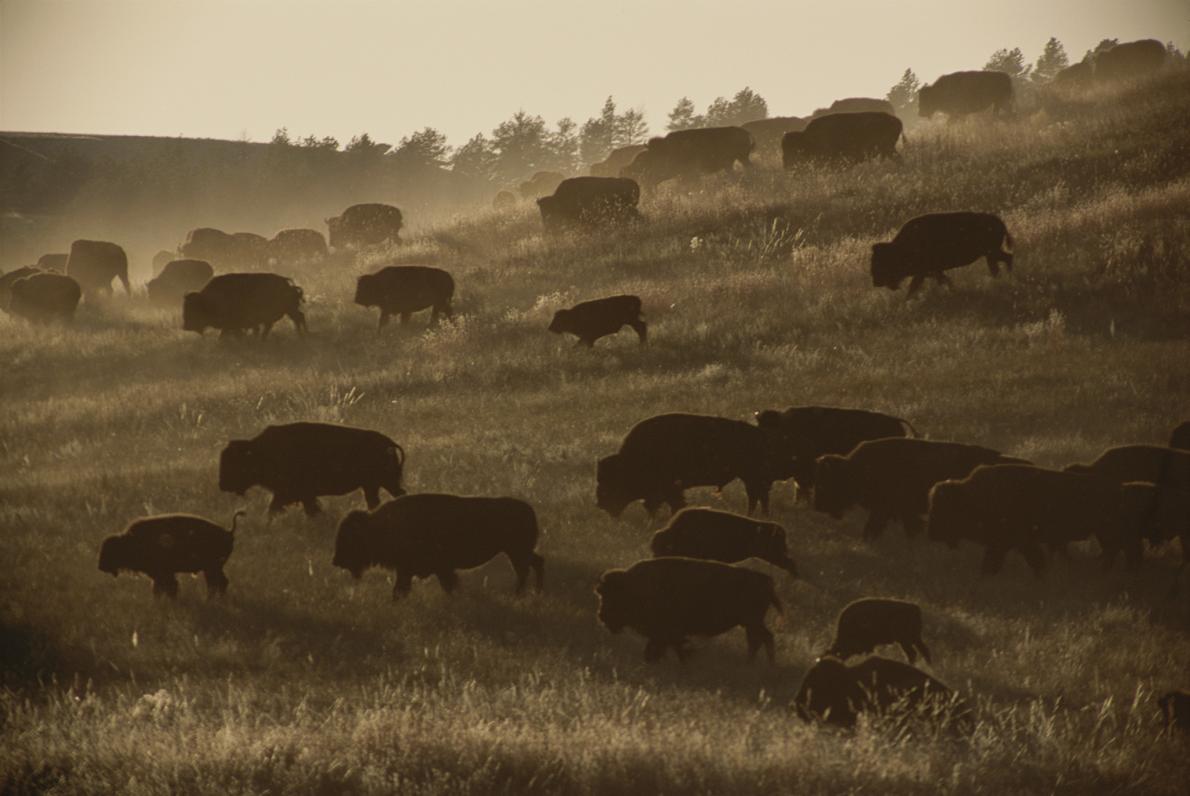
Bison, like these at Custer State Park, in South Dakota, were central to the Plains Indians. But when the U.S. National Parks Service tried to reintroduce them to Lakota lands, it tore the community apart.  PHOTO: SARAH LEEN, NATIONAL GEOGRAPHIC CREATIVE

Bison, like these at Custer State Park, in South Dakota, were central to the Plains Indians. But when the U.S. National Parks Service tried to reintroduce them to Lakota lands, it tore the community apart. PHOTO: SARAH LEEN, NATIONAL GEOGRAPHIC CREATIVE

Rewilding is the idea that, having extirpated many species, by returning large animals and birds like the California condor to the landscape, we can restore key ecosystem functions. The most famous example is probably the reintroduction of grey wolves to the northern Rockies and the Mexican grey wolf to the desert Southwest in the mid-late’90s. There’s a phenomenon called trophic cascade, which means that a large predator like a wolf has a regulatory effect on the entire food chain. In Yellowstone, the return of wolves has meant that the elk can’t be fat and lazy and start to browse in a different fashion, which in turn allows aspen and beavers to come back.
If 20th-century conservation was about drawing lines on a map and saying, this is a park or preserve, 21st-century conservation is about filling in those lines, bringing back animals that have been extirpated.

Rewilding, the need and benefits of having places that are off the map, modern day cave woman Lynx Vildern make for some pages of Satellites In The High Country: Searching For The Wild In The Age Of Man, by Jason Mark, cofounder of the largest urban farm in San Francisco.

Continue reading

Winnie-the-Pooh Wants to Save the Bees

Planting a bee-friendly tree beneath Warwick Castle. Via The Telegraph.

Last month, I shared a story from Cornell’s orchards, where apple blossoms were pollinated this year solely by local wild bee species rather than commercial honeybees. Funnily enough, the same day I posted that story, the science editor for The Telegraph wrote a piece concerning bees across the Atlantic, where the British Beekeepers Association has partnered with one of the original Winnie-the-Pooh illustrators to make a new story encouraging children to care for these productive insects. As Pooh tells Piglet in the new story when they realize there is a shortage of honey, “you can only be careful for so long before you run out altogether.” Sarah Knapton reports:

Beekeepers are also hoping to engage children by encouraging them to bake with local honey, become beekeepers, visit nearby apiaries and throw seed-bombs to help the spread of wildflowers.

New illustrations show AA Milne’s characters Christopher Robin, Piglet, Tigger, Eeyore and Pooh making a vegetable patch in the Yorkshire Dales, building a bee box in the shadow of the Angel of the North in Gateshead, and planting a flowering tree in the shadow of Warwick Castle.

The friends are also pictured dropping bee-balls in Birmingham, painting in Sherwood Forest, Nottinghamshire and visiting a honey show in Glastonbury.

Continue reading