Happy Birthday, Douglas

Amie, she-er than she, was a bit late on noting the birthday of one favored writer, and I, me-er than me, will be a bit early noting another.  Click on the image to the left and you will find a fun opportunity to celebrate this birthday and at the same time support conservation for these creatures, which I still have not seen in the wild but hope to one day do so, or at least participate in something like this; anyway, take a look:

11 March 2012 would have been Douglas Adams’ 60th Birthday. To celebrate this event, Douglas’ family and friends, in association with ‘Save The Rhino’ (one of Douglas’ favourite charities) are holding a very special birthday celebration in his honour at the Hammersmith Apollo in London. An evening’s entertainment from some of the finest names in the world of science, comedy, entertainment and music, with a very special premiere performance of Douglas’ material, this is one event that is definitely not to be missed. Continue reading

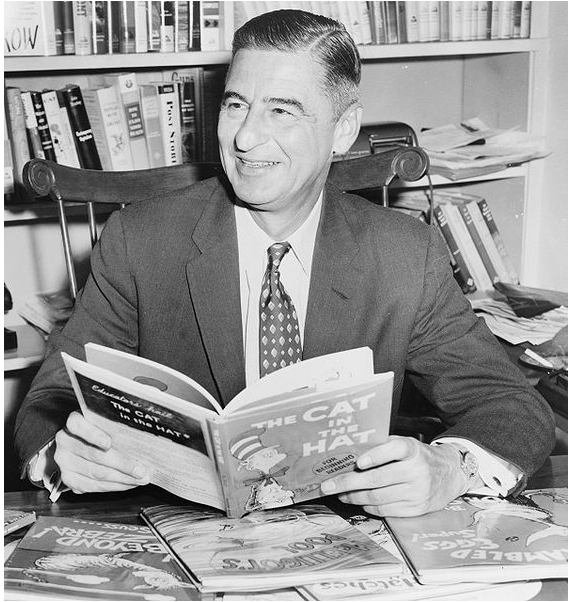
“You-er Than You!”

Photo: Library of Congress Prints and Photographs Division

A Dr. Seuss centennial had come upon me a few days ago in an “almost missed it moment”. In many ways the consumate “ad man” who became one of the most beloved children’s book authors never actually changed careers.  Nearly each and every one of his books continues to reach the pinacle of salesmanship, but not for a product. With joy, wit and often irony, they sold the love of reading, imagination and exploration.

Continue reading

Lucretian Illumination

In a post some months ago I described the unexpected, but seemingly preordained, encounter with the concept of “swerve” in an article this man had written. Then today, this reference to Moby Dick and in particular the words “high time” triggered an interest in hearing The Swerve‘s author speak about those ideas.  The five minute wonder above hit the spot. Continue reading

High Time

…Some years ago — never mind how long precisely — having little or no money in my purse, and nothing particular to interest me on shore, I thought I would sail about a little and see the watery part of the world. It is a way I have of driving off the spleen, and regulating the circulation. Whenever I find myself growing grim about the mouth; whenever it is a damp, drizzly November in my soul; whenever I find myself involuntarily pausing before coffin warehouses, and bringing up the rear of every funeral I meet; and especially whenever my hypos get such an upper hand of me, that it requires a strong moral principle to prevent me from deliberately stepping into the street, and methodically knocking people’s hats off — then, I account it high time to get to sea as soon as I can… Continue reading

Credit Where Due

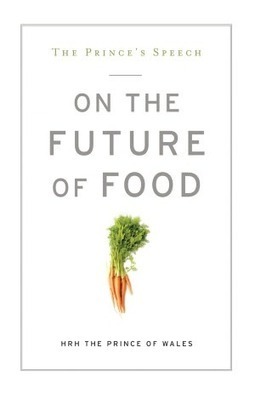
The Atlantic Monthly‘s website has had a link to the text of a speech from last year (click the image to the left to go to the source), with some notable observations:

Genuinely sustainable farming maintains the resilience of the entire ecosystem by encouraging a rich level of biodiversity in the soil, in its water supply, and in the wildlife — the birds, insects, and bees that maintain the health of the whole system. Sustainable farming also recognizes the importance to the soil of planting trees; of protecting and enhancing water-catchment systems; of mitigating, rather than adding to, climate change.

Continue reading

Photographic Parlor Games

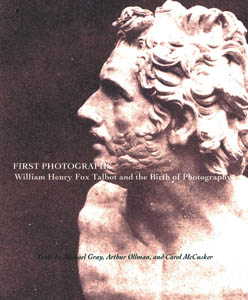
Perhaps to close a recent string of links to interesting items on photography, which began here, continued here and here, and then extended just a bit here, there is an item in the Photo Booth feature on The New Yorker‘s website that:

asked Lyle Rexer which five photography books he would want to be stranded on a desert island with. Lyle is a photo critic, curator, teacher, and author of numerous books about photography, so I had a feeling he would take the challenge seriously. My suspicions were confirmed when, after three hours in our library, he was still deliberating. Knowing Lyle’s selections and his reasons for making them, I would gladly trade one of my five desert island photo books for a volume of Lyle’s photo criticism.

Click the image to above to go to the International Center of Photography’s website; they carry one of the choices mentioned in Rexer’s response. Continue reading

Rock, Paper, Scissors

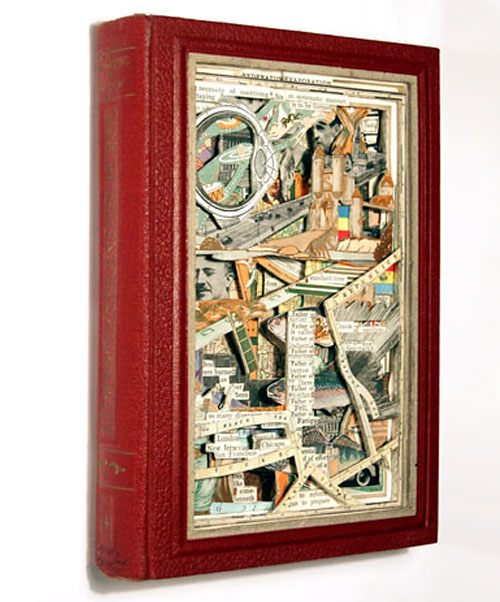
I grew up being taught that books are precious.  Whether due to text, illustration or both, the best of them possess a piece of our living memories, passed down through generations, becoming dog-eared with loving use.  In the age of eBooks and threatened libraries, the intangible qualities of a bound book are becoming even more precious.

But for many of the same factors (growth of internet research and eBooks) as well as due to progress itself, there are specific books that become obsolete almost as soon as they are moved from press to shelves.  Encyclopedias, Road Atlases and Medical Journals are good examples.  So what, then, is to become of those weighty tomes that a generation or two ago held pride of place in every household? Continue reading

Melville’s Muse

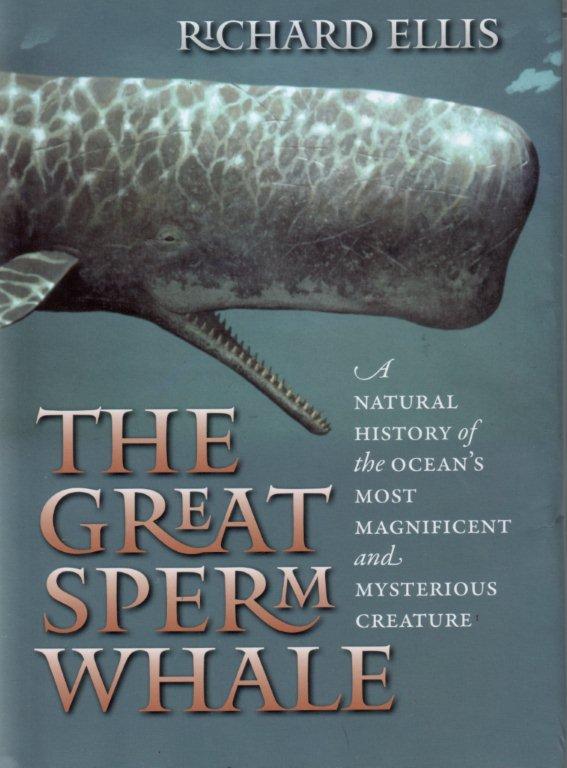
Click the image above to go to the publisher’s website (which also sells the book directly).  If your only knowledge of the title creature comes from a high school literature class, the blurb on the book’s promotional page might make you think this book belonged in the syllabus of the last biology course you took:

Ranging far and wide, Ellis covers the sperm whale’s evolution, ecology, biology, anatomy, behavior, social organization, intelligence, communications, migrations, diet, and breeding. He also devotes considerable space to the whale’s hunting prowess, including its clashes with the giant squid, and to the history of the whaling industry that decimated its numbers during the last two centuries.

According to the review provided in the Times Literary Supplement, the book deserves more attention than that blurb would imply. Continue reading

Consumption Matters

Either take 63 seconds to view Mr. Clay’s ideas in video form, or read this summary:

Healthy information consumption habits are about more than productivity and efficiency. They’re about your personal health, and the health of society. Just as junk food can lead to obesity, junk information can lead to new forms of ignorance. The Information Diet provides a framework for consuming information in a healthy way, by showing you what to look for, what to avoid, and how to be selective. In the process, author Clay Johnson explains the role information has played throughout history, and why following his prescribed diet is essential in today’s information age.

Continue reading

While The Sun Shines

The festival has the kind of illustrious history that makes it interesting enough on its home turf in Wales; its more recent evolution is a sign of creativity in motion.  Take a look at this story from the most recent iteration of the festival in Kerala, and then after the jump see more on one of the festival’s participants in Colombia last week. Continue reading

Margin Calls

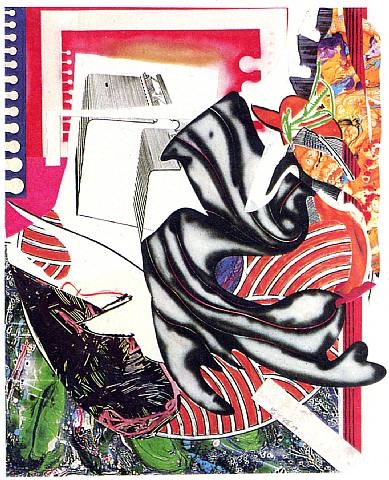
Click the image to the right for an explanation of what that image has to do with the remarkable world of marginalia, which begins:

“In getting my books,” Edgar Allan Poe wrote in 1844, “I have always been solicitous of an ample margin; this is not so much through any love of the thing in itself, however agreeable, as for the facility it affords me of penciling in suggested thoughts, agreements, and differences of opinion, or brief critical comments in general.”

A certain Mr. Wallace, of literary fame, apparently had reason to write in the spaces of whatever was at hand.  But that is a matter of quite trivial pursuit compared to Kerouac’s marginalia while reading Thoreau.

Continue reading

You Value The Books You Turn To In Need

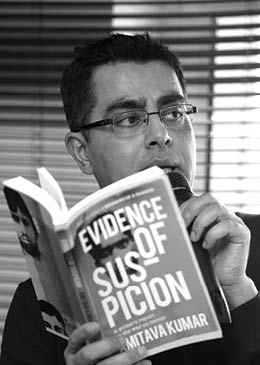
Click the image to the left for a trip to Jaipur via The Guardian and the fertile mind of Amitava Kumar:

When I was younger books were fetish objects. They sat in a small group on a bare shelf or a window sill, depending on whether I was at home or staying in my room at the college hostel. Now, with more money, I’m able to acquire the books more easily, and they have lost their ancient magic as objects. Now, they are treasured as friends. Or, more likely, as guilty reminders of money wasted — because I hardly have the time to read one-tenth of the books I buy.

Mr. Kumar is quoted here in a series called “Of Writers & Reading” in honor of the Jaipur Literature Fest. Continue reading

…And Back Again

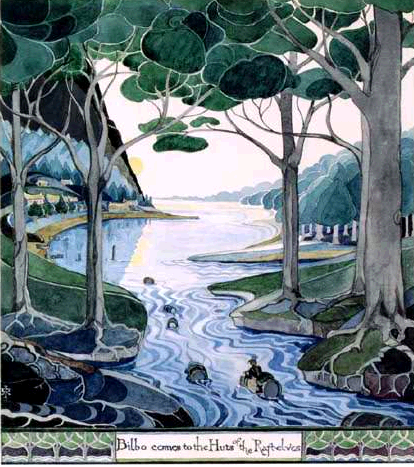
This small book has followed a long and lively trail since its publication seventy-four years ago today. Tolkien himself recollected that the book began with a mere doodle –“In a hole in the ground, there lived a hobbit”–in the late 1920s, yet the tale itself didn’t actually get written until about 10 years later. But Tolkien was a master scribbler, so those doodles included maps and genealogies that essentially outline the geography of the adventure. He used his keen knowledge as a professor of Anglo-Saxon to populate “Middle Earth” with creatures and languages, making an alphabet of “runes” and painting cover and plate art for the book’s first edition.
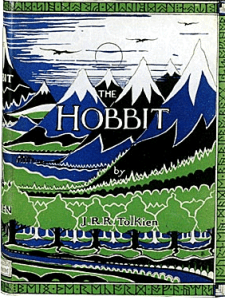
J.R.R. Tolkien painted Dust cover from 1937 first edition

“Good morning!” said Bilbo, and he meant it. The sun was shining, and the grass was very green. But Gandalf looked at him from under long bushy eyebrows that stuck out farther than the brim of his shady hat.

“What do you mean?” he said. “Do you wish me a good morning, or mean that it is a good morning whether I want it or not; or that you feel good this morning; or that it is a morning to be good on?”

“All of them at once,” said Bilbo…then Bilbo sat down on a seat by his door, crossed his legs, and blew out a beautiful grey ring of smoke that sailed up into the air without breaking and floated away over The Hill.

“Very pretty!” said Gandalf.  “But I have no time to blow smoke-rings this morning.  I am looking for someone to share in an adventure that I am arranging, and it’s very difficult to find anyone.”

“I should think so–in these parts!”

And even before the adventure truly began my then small sons would sit enthralled as we read chapter after chapter.

J.R.R. Tolkien painted picture plate from 1937 edition

Before The Hobbit there was Homer, before Homer there was Doyle and Swift and Aesop… Our peripatetic lifestyle always included books, no matter what continent we lived on.

The Hobbit has played an important role in the lives of generations, mine and my sons’ counted among them. Before there were computers and video games there were books, and before books there were stories. I can only pray that the latter two will outlive the former.