Magnificent Ecological Services From Modest Parcels Of Trees

27FOREST1-superJumbo.jpg

Eve Lonnquist examining trees on her property with Logan Sander, a consulting forester. Credit Leah Nash for The New York Times

An excellent article, whose title says it all, in the Science section of the New York Times this week:

How Small Forests Can Help Save the Planet

By

BIRKENFELD, Ore. — Eve Lonnquist’s family has owned a forest in the mountains of northwest Oregon since her grandmother bought the land in 1919. Her 95-year-old father still lives on the 157-acre property. And she and her wife often drive up from their home just outside Portland.

But lately, Ms. Lonnquist, 59 and recently retired, has been thinking about the future of her family’s land. Like many small-forest owners, they draw some income from logging and would like to keep doing so. But they would also like to see the forest, with its stands of Douglas fir, alder and cherry, protected from clear-cutting or being sold off to developers. Continue reading
Carbon-Calculated Menu Planning

co2emmissionsmeal

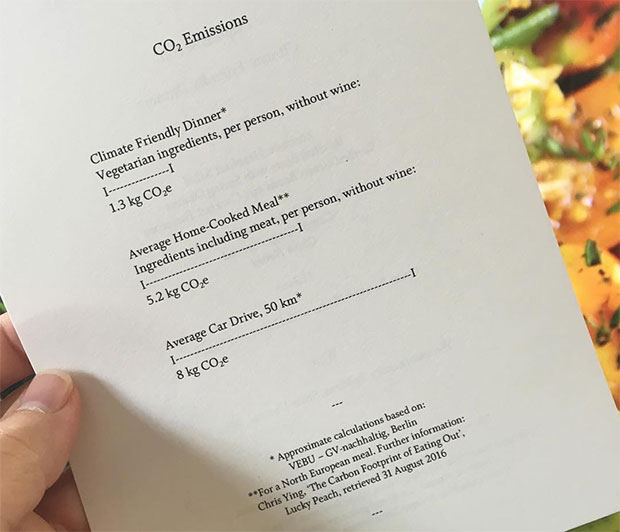
The menu from Studio Olafur Eliasson’s dinner for the Climate Museum’s Miranda Massie. Image courtesy of the artist’s Instagram

From the folks at Phaidon, news of a top artist’s contribution to the climate change conversation, in a manner we can kind of relate to:

Olafur Eliasson puts carbon on the menu

When Eliasson’s studio cooked a meal for NYC’s Climate Museum director it listed one additional ingredient.

The artist Olafur Eliasson is on the board of the Climate Museum, a US institution which endeavours to use the sciences, art, and design to inspire dialogue and innovation that address the challenges of climate change. The museum hasn’t been built, yet Eliasson has submitted a few concept sketches, picturing a globular structure that should, someday soon hopefully stand in New York City. Continue reading

Biofuels: Worse than Petroleum-based?

Image via thehindubusinessline.com

Image via thehindubusinessline.com

A few years ago, I wrote about two cases of industrialized biofuel production, based on corn and sugarcane in the US and Brazil, respectively. Both of these sources are first-generation biofuels, and there is no doubt that second- and third-generation sources, which often don’t require land conversion or threaten food security, are better alternatives to petroleum-based fuels. A new study funded by the American Petroleum Institute and carried out by the University of Michigan Energy Institute has created headlines declaring biofuels to be non-carbon neutral, but many find the research to be too limited. Prachi Patel reports:

Biofuels have for years divided energy experts and environmentalists. Critics say that they displace farmland and cause deforestation. Proponents argue they are a green, low-carbon alternative to petroleum-based fuels.

A new analysis adds fuel to the incendiary topic. Researchers report in the journal Climatic Change that biofuels might harm the climate more than petroleum. Substituting petroleum fuels with biofuels in American vehicles has led to an increase in net carbon dioxide emissions over the eight years covered by their study, they calculate.

Continue reading

An Object Lesson on Tote Bags

We discovered the “essay and book series about the hidden lives of ordinary things” called Object Lessons through The Atlantic a few months ago, when we shared an article on real cheese. Today, I learned an unsettling – and to borrow a phrase – inconvenient truth about tote bags. Pretty much any time I go grocery shopping I use a couple reusable totes, unless I need some plastic shopping bags to replenish my trash-can liner supply, so what the folks at Object Lessons have to say about the issue is very informative about how we need to change the way we look at certain everyday objects:

For at least a few decades, Americans have been drilled in the superiority of tote bags. Reusable bags are good, we’re told, because they’re friendly for the environment. Disposable bags, on the other hand, are dangerous. Municipalities across the country have moved to restrict the consumption of plastic shopping bags to avoid waste. Many businesses have stopped offering plastic sacks, or provide them for a modest but punitive price. Bag-recycling programs have been introduced nationwide.

Continue reading

Growing Number of Trees on Farmland

tree-on-farm

Source: Conservation Magazine

The number of tree coverage on farms is on the rise, and a recent study published in the journal Scientific Reports has added this hidden cache of carbon storage to the global carbon count. Researchers found out that farms sequester four times as much carbon as current estimates indicate, using remote sensing and a land cover database.

Researchers found that 43 percent of farmland across the globe had at least ten percent tree cover in 2010. Including the carbon sequestering capacity of this tree cover increased storage capacity estimates for farmland from 11.1 gigatonnes of carbon to 45.3 GtC. At least 34 GtCs of this storage capacity is from trees. They also found that between 2000 and 2010, tree cover on farms increased by two percent. This resulted in a 2GtC, or 4.6 percent, increase in biomass carbon.

Continue reading

Car-sharing Greatly Reduces Carbon-Output

Image via car2go.com

I’ve never owned a car myself, because friends and family have always had one. While a student at Cornell, a couple of my friends used the Zipcar service, and that’s something I’d have used if I didn’t have the opportunity to borrow a car or share a ride with housemates for grocery shopping every other week (when I didn’t bike or bus to the store instead). But you don’t need to do any math to realize that a car-sharing service is almost certainly going to result in a reduction of carbon dioxide output, even if it’s not as environmentally friendly as biking or taking public transportation. Conservation Magazine reports on a new study quantifying the use of the Car2go service in five cities over three years:

Car-sharing is quickly gaining popularity in cities around the world. Proponents say that it’s a green way to get around town. In a report published in July, researchers calculated car-sharing’s precise impact by analyzing the car-share service car2go in five North American cities. Each car2go eliminated up to 11 privately-owned vehicles from the roads and prevented 10 to 14 metric tons of carbon dioxide emissions per year, they found.

Continue reading

Cool Chemistry

120556_web

Source eurekalert.org

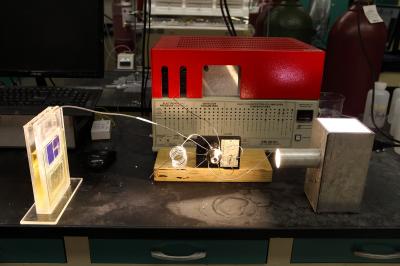
Increasing levels of CO₂ are the principle cause of the alarming climate changes that we have observed in the past several decades, so why not use the same chemical compound that is causing all our woes to generate fuel, or electricity, as we saw here a few days ago? The scientific community is well aware of the common and “conventional” renewable energies, so researchers at the University of Illinois at Chicago have engineered a solar cell that converts atmospheric carbon dioxide directly into usable hydrocarbon fuel, using only the sunlight for energy.  This new invention removes the necessity of batteries and solves two crucial problems: Continue reading

Can the Cement Industry Reduce CO2 Emissions?

Photo of Blue Circle Southern Cement factory near New Berrima, New South Wales, Australia, by WikiMedia Common contributor AYArktos

Portland cement is named for the area in England where it was first made almost three-hundred years ago, and is the standard ingredient used to create concrete around the world. Despite being a very useful building material that can be applied in a variety of ways without expensive technology, cement production is associated with carbon dioxide emissions, primarily from when the original limestone is decarbonized and from the massive amounts of fuel needed to fire up the kilns to make cement. Robert Hutchinson of the Rocky Mountain Institute writes an informative piece for GreenBiz on how the industry might change, and why:

The toughest climate challenges involve large global industries, with no good substitutes. One of these produces the material literally under our feet — concrete. Every year, each of us in the U.S. uses about one-third of a ton. Fast-growing developing countries use far more. Globally we produce over 4 billion metric tons of Portland cement per year — the key ingredient in concrete and responsible for the majority of its CO2 footprint — driving over 5 percent of total anthropomorphic CO2.

Continue reading

Biomass Reconsidered

biomass-b235a828247f79eff9f6f0d3846599d44ae6b453-s1400-c85

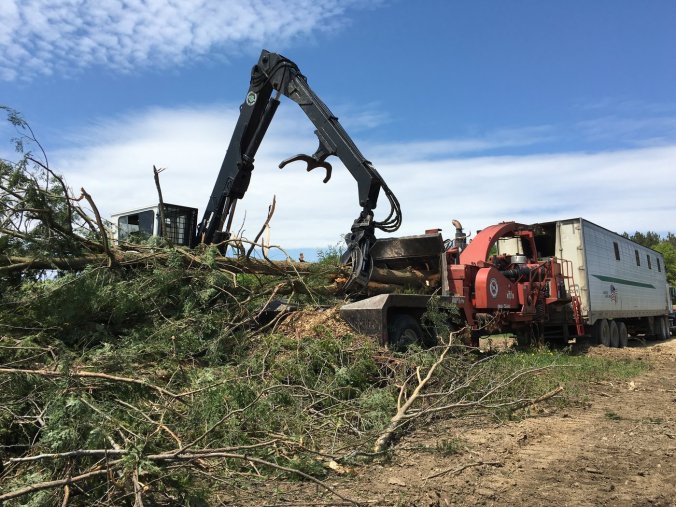
Logger Greg Hemmerich and his crew feed low-value trees into a wood chipper, before bringing the chips to ReEnergy Holdings’ biomass plant in Lyonsdale, N.Y. David Sommerstein/NCPR

Thanks to National Public Radio (USA) for this:

Is Burning Trees Still Green? Some Experts Now Question Biomass

by DAVID SOMMERSTEIN

In northern New York state, logger Greg Hemmerich and his crew are clearing out an old pasture at the edge of a forest.

“There’s a lot of balsam, lot of spruce, thorn apple trees,” Hemmerich says. “Ninety percent of this lot is low-grade wood.”

In other words, it’s no good for furniture or paper or sawmills. But he’ll make $80,000 to run the wood through a chipper and truck the chips to a nearby biomass plant.

“Everybody said that green power was supposed to be the wave of the future,” Hemmerich says. “So I went full in.” Continue reading

Paris Bans Pre-1997 Cars from Roads

Good news comes from the French capital in an effort to reduce smog and carbon emissions on the streets in the city of light, but the United States is stuck trying to discourage driving in much weaker fashion, Camille von Kaenel reports for Scientific American:

Cities around the world are driving vehicles off the streets by imposing strict anti-pollution measures, but the car still rules in the United States.

This week, the city of Paris launched a ban on vehicles built before 1997 during weekday daylight hours. Mayor Anne Hidalgo has been candid about her desire to expand the ban to cut back on smog from diesel cars and to “reclaim” the city for pedestrians and bikers.

Continue reading

Using Soil to Capture Carbon

© NSW Gov, Australia

A few weeks ago several news outlets publicized a new carbon-capture method tested in Iceland, but there’s also a low-tech way of storing carbon in the ground that people can consider, which is restoring degraded lands that once held large amounts of carbon and could become fertile again if we follow certain practices. Stephen Wood reports for Cool Green Science:

Soils have twice as much carbon as the atmosphere. Which means there’s a lot of interest in figuring out if soil can hold even more carbon—to help fight climate change.

Sequestering carbon in soil is like saving money in your bank account—simple in theory, but challenging in practice. If you’re frugal enough you may end up fighting climate change. Spend too much and you could make the situation worse.

Continue reading

New Carbon Capture Method in Iceland

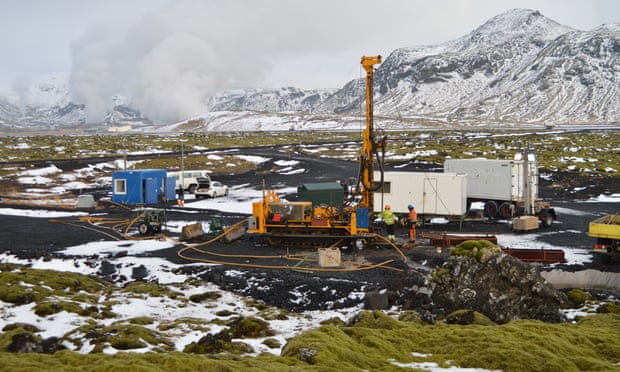
Site close to the Hellisheidi geothermal power plant, where CO2 was injected into volcanic rock. In two years it was almost completely mineralised. Photograph: Juerg Matter/Science via The Guardian

We’ve discussed carbon capture before, in the chemical sense with scrubbers at coal-plants and regarding the history of coal, but most of our posts have been concerned with lowering carbon emissions rather than sequestering it. Today we learned that a new technique tested in Iceland turned CO2 released from a geothermal plant into a limestone of sorts, where it appears to no longer contribute to global greenhouse gases. Damian Carrington reports for The Guardian:

Carbon dioxide has been pumped underground and turned rapidly into stone, demonstrating a radical new way to tackle climate change.

The unique project promises a cheaper and more secure way of burying CO2 from fossil fuel burning underground, where it cannot warm the planet. Such carbon capture and storage (CCS) is thought to be essential to halting global warming, but existing projects store the CO2 as a gas and concerns about costs and potential leakage have halted some plans.

Continue reading

A Call to Cut Truck Emissions in EU

Image © prweb.com

The Guardian just keeps the good environmental news coming. Any initiative to reduce carbon emissions is helpful, and to have big companies with clout promote such a goal is admirable and a good sign of cooperation to come. Arthur Nelsen reports:

An alliance of companies including Ikea, Nestle and Heathrow airport have called on the EU to pass new laws cutting truck emissions within two years, to meet promises made at the Paris climate conference.

Heavy duty vehicles make up less than 5% of Europe’s road traffic but chug out a quarter of the sector’s carbon emissions – more than airplanes – and their fuel efficiency has hardly changed in two decades.

Continue reading

Tar Sands Impact Air Pollution via Aerosols

Tar sandstone from the Monterey Formation of Miocene age; southern California, USA. Photo © Wikimedia contributor James St. John

Obviously we never thought that extracting oil from tar sands was ecologically friendly, but a new study published in Nature has found that, in Canada (but presumably everywhere else too), the process releases much more fine particle air pollution than previously believed. Bobby Magill reports for Scientific American:

In one of the first studies of its kind, scientists have found that tar sands production in Canada is one of North America’s largest sources of secondary organic aerosols—air pollutants that affect the climate, cloud formation and public health.

The study, published Wednesday in the journal Nature, showed that the production of tar sands and other heavy oil—thick, highly viscous crude oil that is difficult to produce—are a major source of aerosols, a component of fine particle air pollution, which can affect regional weather patterns and increase the risk of lung and heart disease.

Continue reading

Diesel’s Downsides

4096

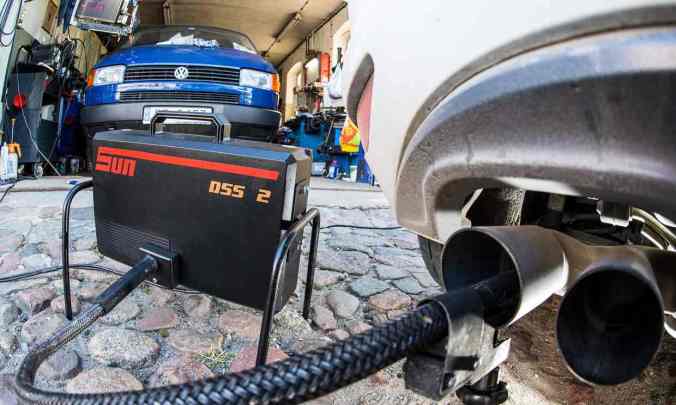
Exhaust from a diesel engine is tested for nitrogen oxides. Photograph: Patrick Pleul/EPA

Thanks to the Guardian’s Environment section:

Europe’s problem with diesel cars

By 

New UK government tests confirm that diesel cars produce a lot more air pollution in real-world driving when compared with the legal tests. Those sold since 2009 emitted six times more nitrogen oxides, on average.

Compared with the stricter standards applied to petrol cars, the average diesel sold between 2009 and 2015 emitted 19 times more nitrogen oxides.

In 2014, more than half of new cars in Europe were diesel, so solving our air pollution problems will not be easy. The Airuse project highlighted the role of taxation in car buying choice. All European countries, except the UK, have lower tax on diesel fuel compared with petrol. Continue reading

Good News in Plastics

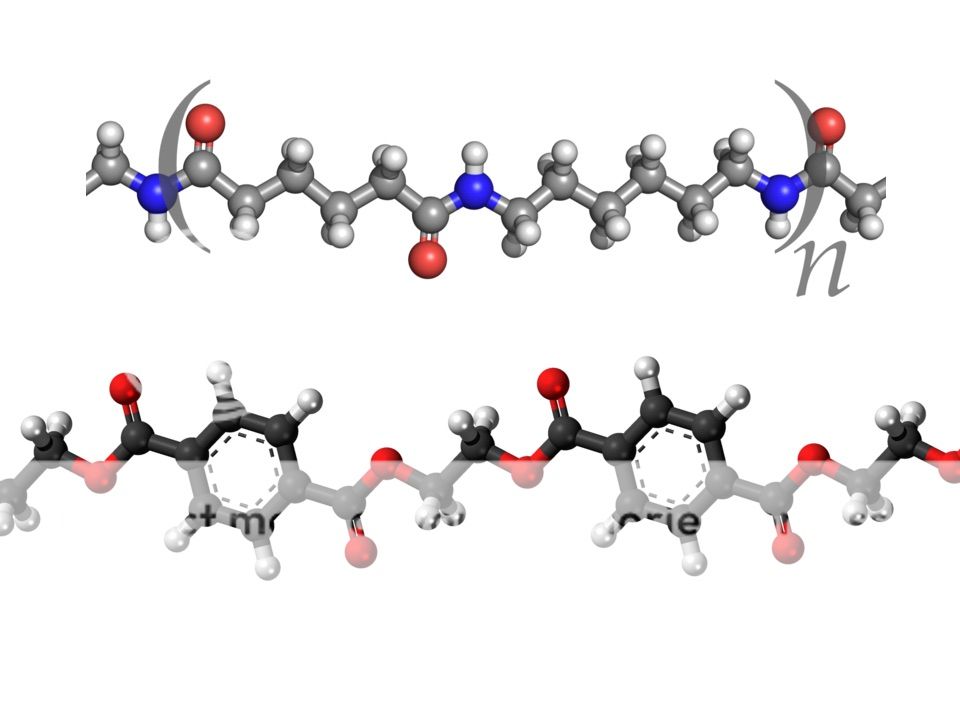
Compiled illustrations of a nylon chain above and PET chain below, both thermoplastic polymers, or simply put, types of plastic. Via WikiMedia, created by users YassineMrabet and Jynto, respectively.

There’s some cause to celebrate from a couple findings published recently in two journals, Nature and Animal Conservation, related to plastics, though of very different sorts. The first paper deals with a new method of plastic production using carbon dioxide and agricultural waste rather than petroleum as the raw input for PET plastic, and the second article studies the feasibility of introducing biodegradable fishing nets to replace nylon ones.

Continue reading

Trees Are More Remarkable Than We Thought

17TB-PLANTS-master675

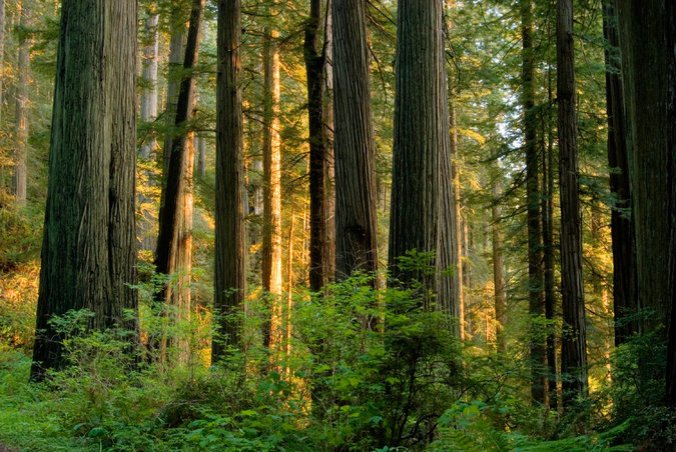
Trees in temperate forests, like these redwoods in Northern California, may adapt to climate change by releasing less carbon dioxide than previously predicted by scientists. Getty Images

And in other “kind of good news”:

Trees Deal With Climate Change Better Than Expected

The bend-don’t-break adaptability of trees extends to handling climate change, according to a new study that says forests may be able to deal with hotter temperatures and contribute less carbon dioxide to the atmosphere than scientists previously thought. Continue reading

Urban Forest


Urban forests play an important role. Not only continuing to act as the Earth’s lungs, but they perform other valuable services – least of all providing the sense of peace and refuge for both humans and wildlife.

Our urban trees in the James River Park System and City of Richmond perform valuable services for us. They anchor the soil on hills and along river and stream edges, which reduces runoff into the river. They provide habitat and food for animals, and moderate the temperatures and rainfall with their canopies. Continue reading

Breathe Deep

Photograph by Robert Dash

Regular visitors to this site already know we love hearing what Robert Krulwich has to say: always fascinating, informative and funny.

Kudos to NatGeo for giving Curiously Krulwich a platform!

We have 3.1 trillion trees on our planet—that’s 422 trees per person. If we count all the leaves on all those trees and take a look at what they do collectively to the air around us, the effect—and I do not exaggerate—is stunning. I’ve got a video from NASA. When you see it, I think your jaw is going to drop—just a little. Continue reading

Understanding Coal

20160123_STP501_3.jpg

From the current issue of Economist, a bit of readable geological science to help make sense of the splashier headlines:

The origin of coal

The rock that rocked the world

More than any other substance, coal created modern society. But what created coal?

FOR 60m years of Earth’s history, a period known to geologists as the Carboniferous, dead plants seemed unwilling to rot. When trees expired and fell to the ground, much of which was swampy in those days, instead of being consumed by agents of decay they remained more or less intact. In due course, more trees fell on them. And more, and yet more. The buried wood, pressed by layers of overburden and heated from below by the Earth’s interior, gradually lost its volatile components and was transformed into a substance closer and closer to pure carbon. Continue reading