Cool Green Science Celebrates The Celebrate Urban Birds Initiative

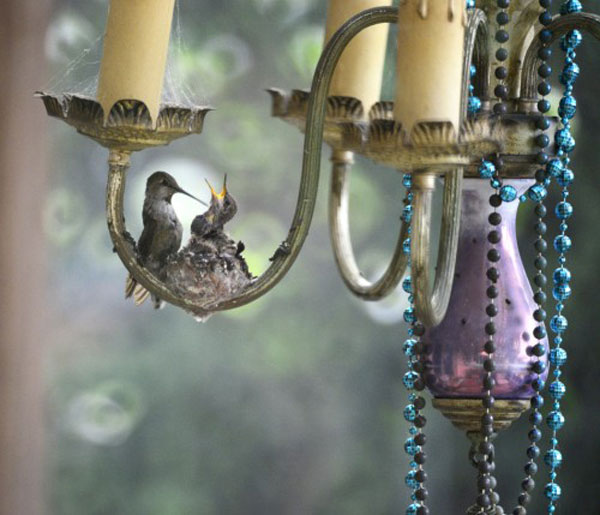
Hummingbirds nesting in a patio chandelier. Photo by Lydia D’moch for the CUBs Funky Nests in Funky Places 2014 competition.

Hummingbirds nesting in a patio chandelier. Photo by Lydia D’moch for the CUBs Funky Nests in Funky Places 2014 competition.

The Nature Conservancy is currently promoting their blog called Cool Green Science, which we expect to be a new source for us to regularly share links to on topics we particularly care about.  We like the blog’s stated purpose:

noun 1. Blog where Nature Conservancy scientists, science writers and external experts discuss and debate how conservation can meet the challenges of a 9 billion + planet.

2. Blog with astonishing photos, videos and dispatches of Nature Conservancy science in the field.

3. Home of Weird Nature, The Cooler, Quick Study, Traveling Naturalist and other amazing features.

Cool Green Science is managed by Matt Miller, the Conservancy’s deputy director for science communications, and edited by Bob Lalasz, its director of science communications.

Of course we would like you to consider visiting Xandari for this purpose, but we appreciate Lisa Feldkamp’s point. She is the senior coordinator for new science audiences at The Nature Conservancy and earlier this week she posted on a topic that is near and dear to us:

What is Celebrate Urban Birds?

You don’t need to book a trip to Costa Rica or the Amazon to enjoy great birding. Continue reading

And the Winners Are…

Employees and guests at Xandari have voted over the last two weeks, and now we have our final fourteen: two winners from each grade, and four from 6th grade. Thank you to those of our readers who took the time to vote in our selection process as well!

Today the students had a Continue reading

An Impromptu Tacacorí CUBs Art Contest

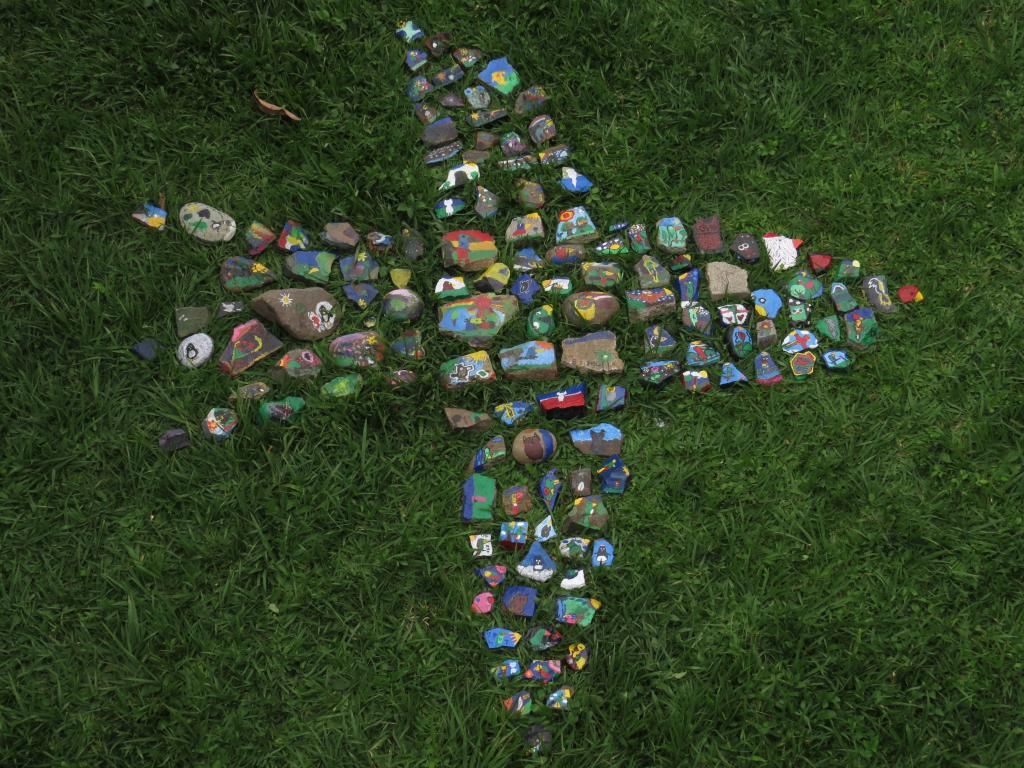
A crudely-formed bird (airplane?) mosaic, photographed from the school roof

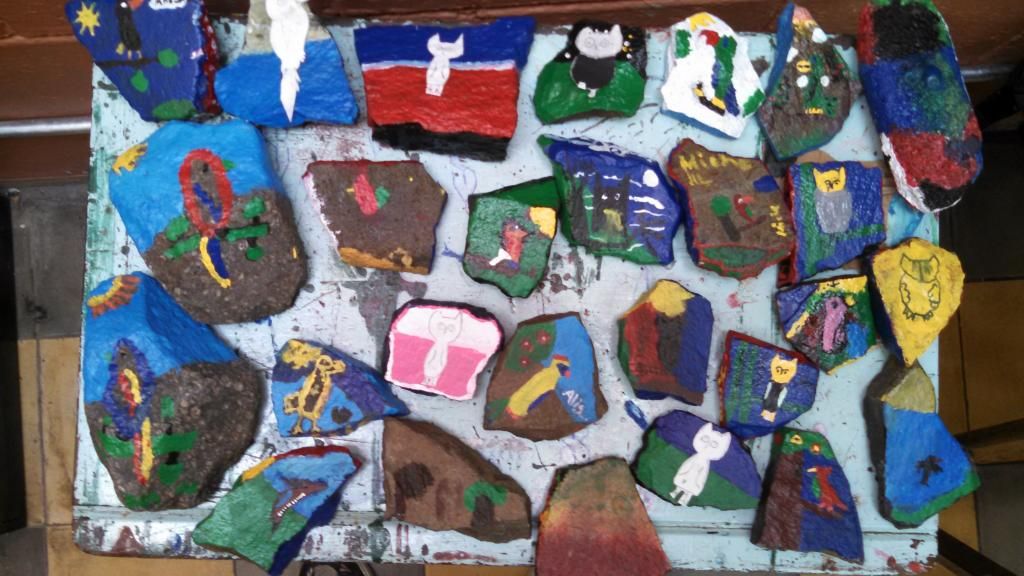
Last week, after many delays, I was able to get down to the school in Tacacorí and take photos of all the CUBs rocks that the students had painted. I used my camera (rather than my phone) and a borrowed tripod so that the pictures would be better quality and also more standardized. The result was 146 photos of rocks. I don’t know the exact number of students at the school, but I know that fifth-graders in particular were impatient to take their rocks home before I photographed them, because there were only a handful of specimens left last week.

Unfortunately for those students who didn’t wait until I told them they could  Continue reading

Migration Celebration

When I graduated from Cornell not too long ago, I drew a bird on my graduation hat. It was a stylized yellow-bellied sapsucker, a symbol I encountered almost every day in my four years as an undergraduate as I studied, worked and conducted research at the Cornell Lab of Ornithology. The Lab shaped my undergraduate experience and inspired my love of science and multimedia. This past weekend I had the gratifying opportunity to give back a little and pass on the inspiration.

As the Autumn chill set in – which in Ithaca means grey skies and a constant drizzle of rain – the Lab opened its doors to the community for a day of Migration Celebration. It was a day to celebrate birds: their fascinating behaviors, plumages, songs, migrations, habitats and ability to bring together people from all walks of life. The event was mainly geared towards children, with innovative educational activities organized by all Lab departments:

“What’s your favorite bird? A sandpiper? Can you draw it? Cool! Now let’s put it on a map and look up where it spends the winter.” Continue reading

Celebrate Urban Rock Birds

With over a week of working with other grades at the elementary school in Tacacorí, I’ve seen lots of really great paintings of birds on locally-found stones, and even one or two chunks of cement. After finding around seventy-odd rocks around Xandari that were mostly usable for this art project and scrubbing them all of mud and moss, I Continue reading

Tacacorí Rocks Birds

A sixth-grade creation

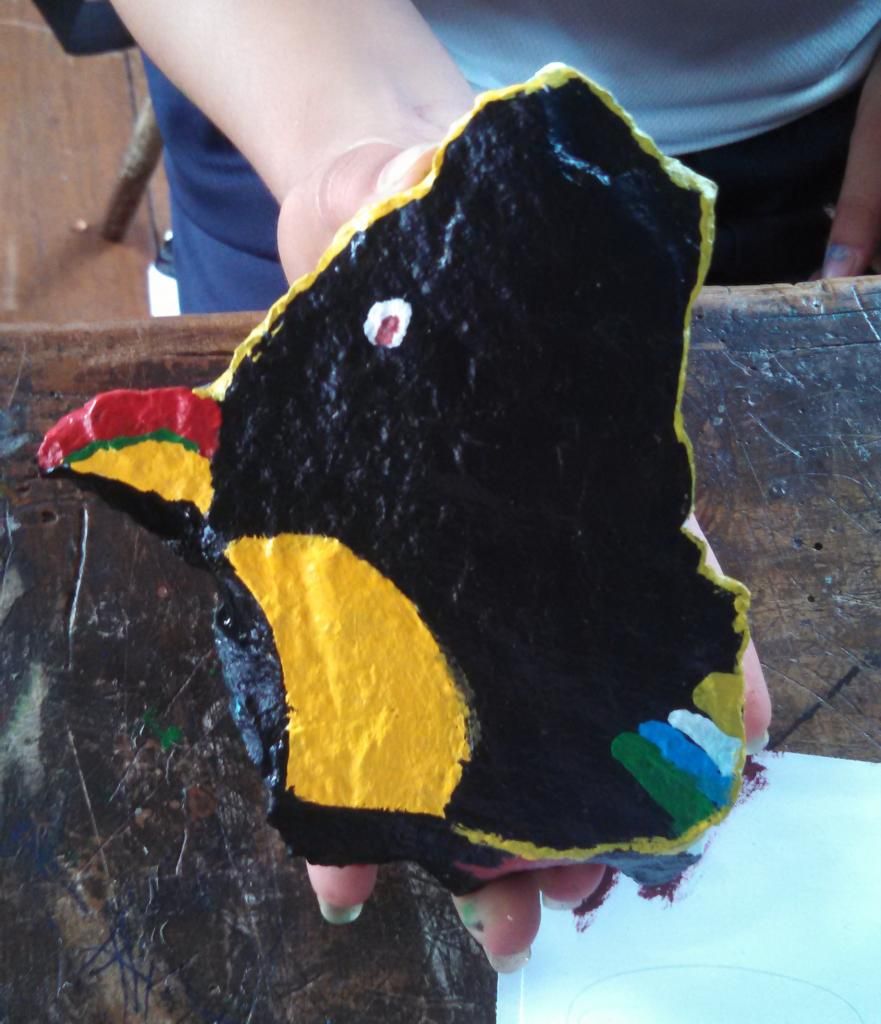
Starting last week, I began the next art project at the elementary school in Tacacorí. After learning that over time the papier-mâché creations succumbed to the Central Valley’s relative humidity and became difficult to preserve, I decided to find a more solid medium. I liked the idea of recycled plastic bottles from the hotel but I worried about the extensive use of scissors they’d require and all the sharp plastic edges that would be created in the process. Instead, I went with the option that, although not exactly recycled, at least doesn’t require industrially-created materials and is fairly abundant: rocks. And the best part is that stone is impervious to humidity (on the scale of time that we’re thinking about).

Fifth-grade creations — some kids pasted paper versions of their bird on the rock.

In the slideshow below, you can see some of the fifth- and sixth-graders’ works of art Continue reading

Birds Are Barometers, Among Other Things

12348-v1-490x

A recent study projects that the summer range of the Allen’s hummingbird will shrink by 90 percent by 2080. Photo by Loi Nguyen/Audubon Photography Awards

One more story related to the centenary mentioned here, this time with a podcast interview with  to accompany our previous post linking to his editorial in the New York Times:

It’s been 100 years since the last passenger pigeon died. Would we have been able to save the bird today? What is the state of bird conservation in North America? Gary Langham of the National Audubon Society and Ken Rosenberg from the Cornell Lab of Ornithology discuss which species are under threat and how climate change might affect birds in the future.

24/7 Birdwatch

Ezra, a red-tailed hawk, perches outside Schoellkopf Stadium. Photo credit, Christine Bogdanowicz.

Ezra, a red-tailed hawk, perches outside Schoellkopf Stadium. Photo credit, Christine Bogdanowicz.

In the interest of what we consider essential news about environmental or conservation issues we occasionally share an article in its entirety here, with the encouragement to give the source its due. The nature of blogging is to be quick but not sloppy, brief but clear, and missionary but unorthodox.

The link to this article is deeply missionary, in that our blog has more bird-related content than any other type of content; birds are both a metric for and icon of our conservation mission; quoting the article in entirety is our unorthodox way of getting the writer’s attention (and if he or the publication prefers we will be happy to reduce our republishing of this article to the normal “fair use” excerpt standard) because his article is about the topic Seth has been working on for the last several years at the Cornell Lab of Ornithology and its far reaches.  We think he might find the work Seth and James are doing at Xandari an interesting extension of this article’s focus:

Thanks to Cornell Lab of Ornithology webcams and local bird enthusiasts, anyone in the world can see into the lives of a family of red-tailed hawks that resides on a light-pole about 80 feet above an athletic field on campus.

More than five million viewers across 200 countries have been following the exploits of Ezra (father) and Big Red (mother) and their offspring since in 2012. This year three nestlings hatched.

Continue reading

Celebrating Birds with Tacacori Students

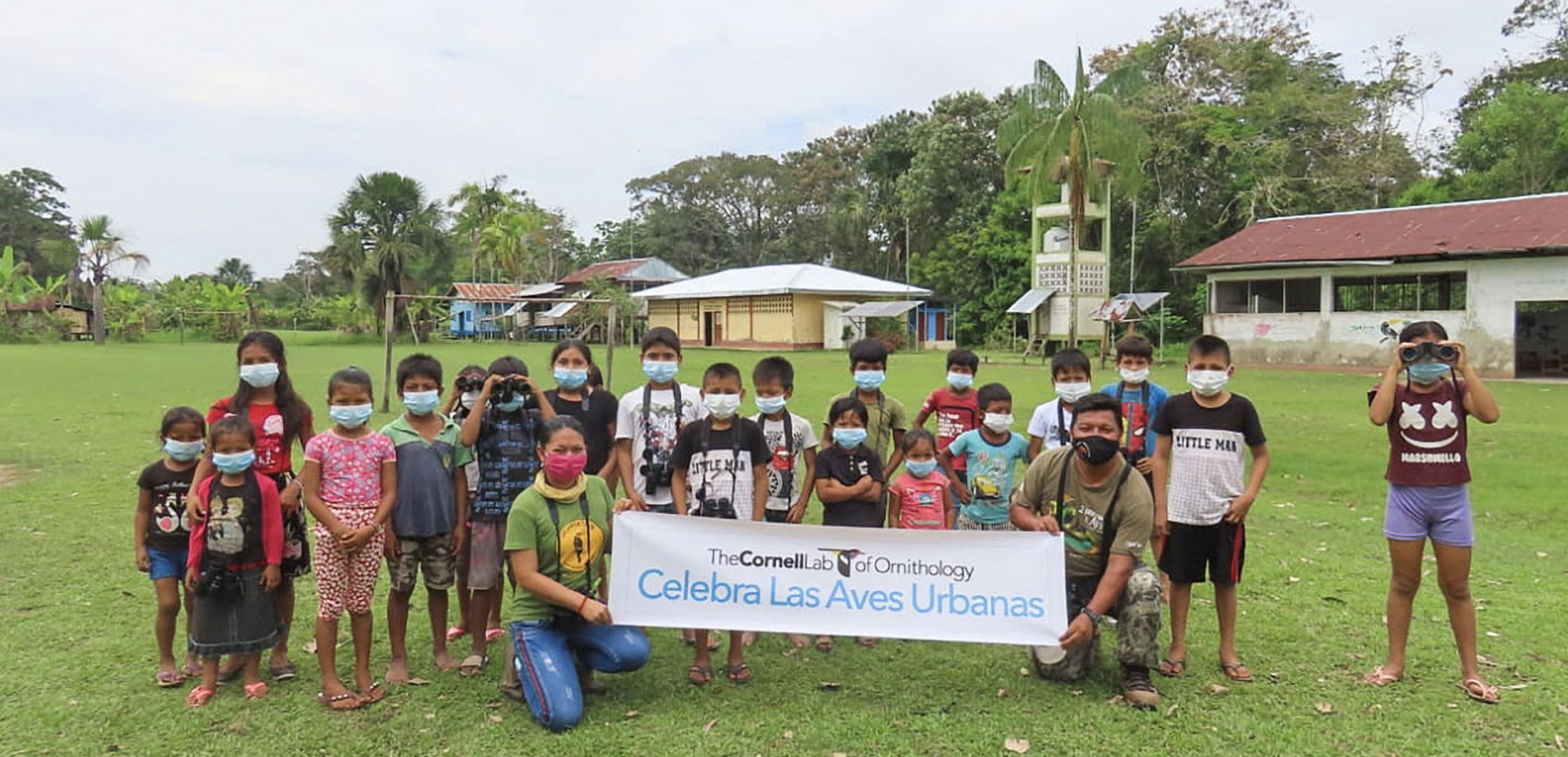
About fifteen minutes downhill from Xandari by foot, the primary school at Tacacori serves first through sixth graders from the local community. Xandari has collaborated with the school on multiple occasions in the past, and also regularly cares for their grounds (mowing the lawn, etc.). This semester, third and fourth graders don’t have an art class in their normal schedule, so it seemed a perfect opportunity for James and me to go over and do a week-long art project with the kids.

Of course, I stuck with what I know best for art projects with young children, and decided upon papier-mâché and painting on little cardboard canvases, just like I had done in the Galápagos a couple years ago. James and I went to the third and fourth grade classes during their Spanish classes and for about an hour and twenty minutes each a day we showed them how to use newspaper, glue, and a balloon to create the body of a bird. Then, with recycled cardboard from Xandari, we gave them canvases to paint on as well as the materials to make beaks, wings, tails, and feet for the birds.  Continue reading

As Birds Start Nesting, Things Start Getting Funky

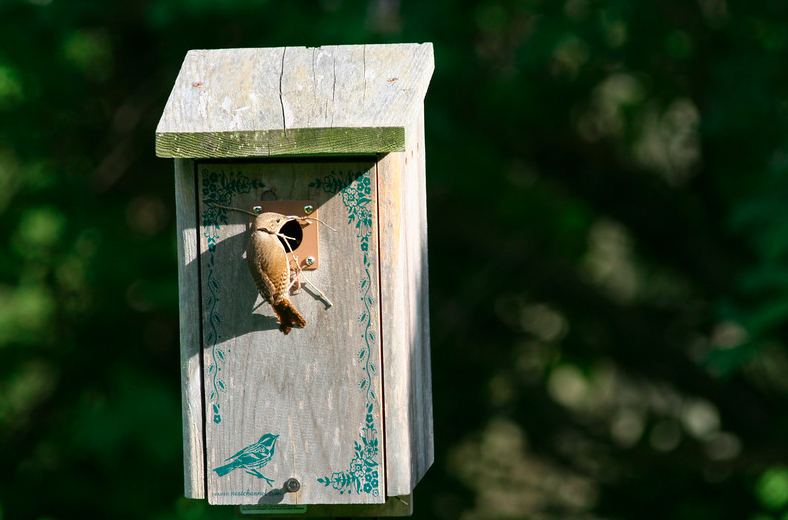
Maybe it’s already happened to you in years past: you walk into your garage, ready to take your first bike ride of the year now that it’s finally warm enough, but you lift your old helmet only to find that it is full of moss, leaves, and twigs. What?! You may think it’s a late April Fool’s joke, but actually it is the product of a lot of hard work by a small cavity-nesting bird that has found a safe place to put their home. Depending on where you live, it could be any number of species, but the most common by far are the Carolina Wren and House Wren.

Clockwise from top left, submissions are by Joe Hoelscher, David Hutchinson, Mike Smith, and Sophie Lyon.

Continue reading

Fascinating Feathers

Starting in late November, 2013 and ending in mid-January, 2014, the CUBs Fascinating Feathers Challenge received six hundred submissions, and we selected around fifty of those entries as award-winners in their distinct categories.

Best Dressed was the most popular category for participants, leading us to believe that people find birds beautiful! And rightly so. Out of the stunning array of well-dressed bird photos and pieces of art that are shared in the category, we saw both common and less-known birds, with colorful and monochromatic plumage patterns, but all with a great sense of style and a pleasure to look at!

Much harder to see were the entries in our Best Camouflaged category — these inconspicuous fellows were often feathered to perfection when it came to blending in with their surroundings and fooling us into thinking they were just another rock, or a pile of leaves, or a stump on a tree! Just as the Best Dressed birds are emblematic of the sexual selection that takes place throughout much of the animal kingdom, the Best Camouflaged appropriately illustrate the importance of adapting to the environment over the course of evolution and becoming better predators or luckier prey as a species. Continue reading

Urban Owlets

Recently I had meetings at the Tata Management Training Center in Pune. It’s an amazing place, almost like a national park in the heart of the city. Fortunately, I had my camera bag with me, so I went walking around with my 17-55mm and 70-200mm lenses. Unfortunately, I didn’t have the Sigma 150-500mm nor was I carrying an extender. So 200mm was going to be my max zoom.

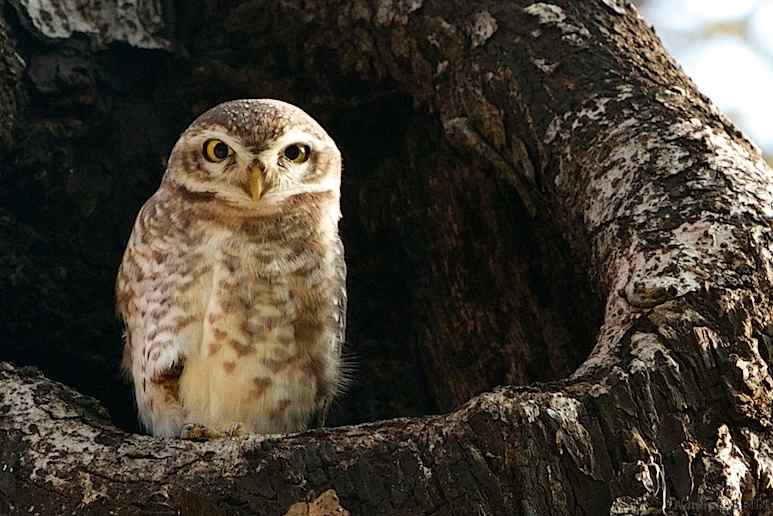
While I was walking around, hearing various bird calls and taking aim at some kites that were hovering above, I was told about some resident owls. I went looking for them and was fortunate to spot one of them almost immediately. This Spotted Owlet stared at me for a while and finding no interest (or threat) in me, closed its eyes and looked away. Continue reading
New CUBs Challenge: Fascinating Feathers

As of this week, the latest Celebrate Urban Birds challenge is up and running! Called Fascinating Feathers, this multi-media competition is designed to get you thinking about the most defining feature of birds — their plumage.

Whether you’re out shooting video of a Herring Gull at the beach getting disheveled by a buffeting wind, taking a photo of puffed-up chickadees at the bird-feeder from your porch, writing/recording a poem or story about the down that keeps you warm in the winter, or painting plumes floating in the ether, we want to see what you can say about feathers from the world around you!
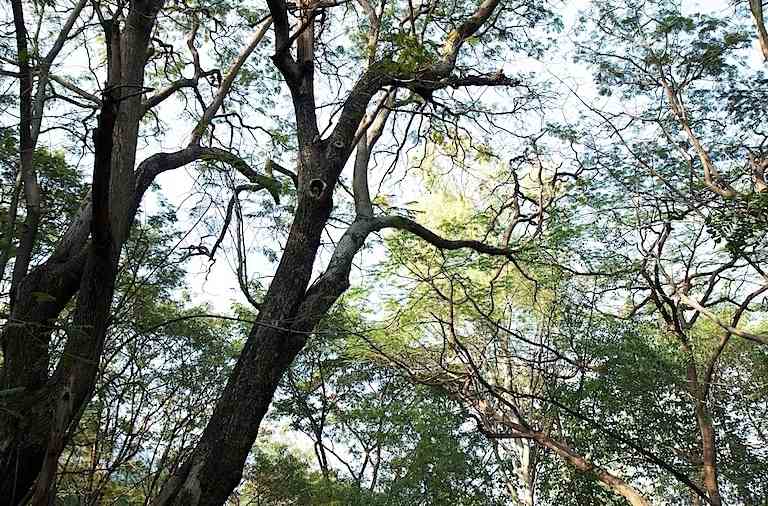
With categories for Best Camouflaged, Best Dressed, Most Bizarre, and Most Functional, you’ll have different ways to frame your work and share it with us and other participants; on January 15, 2014 we’ll close the contest  and begin reviewing submissions to select award-winners. Prizes include Opticron binoculars, Pennington bird feeders, bird sound CDs, waterproof bird foldout guides, and more!
Check out the challenge homepage

or

Read the Lab of Ornithology’s press release on the challenge