
Bird of the Day: Indian Cormorants (Lalbagh Botonical Garden, Bangalore)

Ithaca, NY


Painting by: Jane Pompilio George
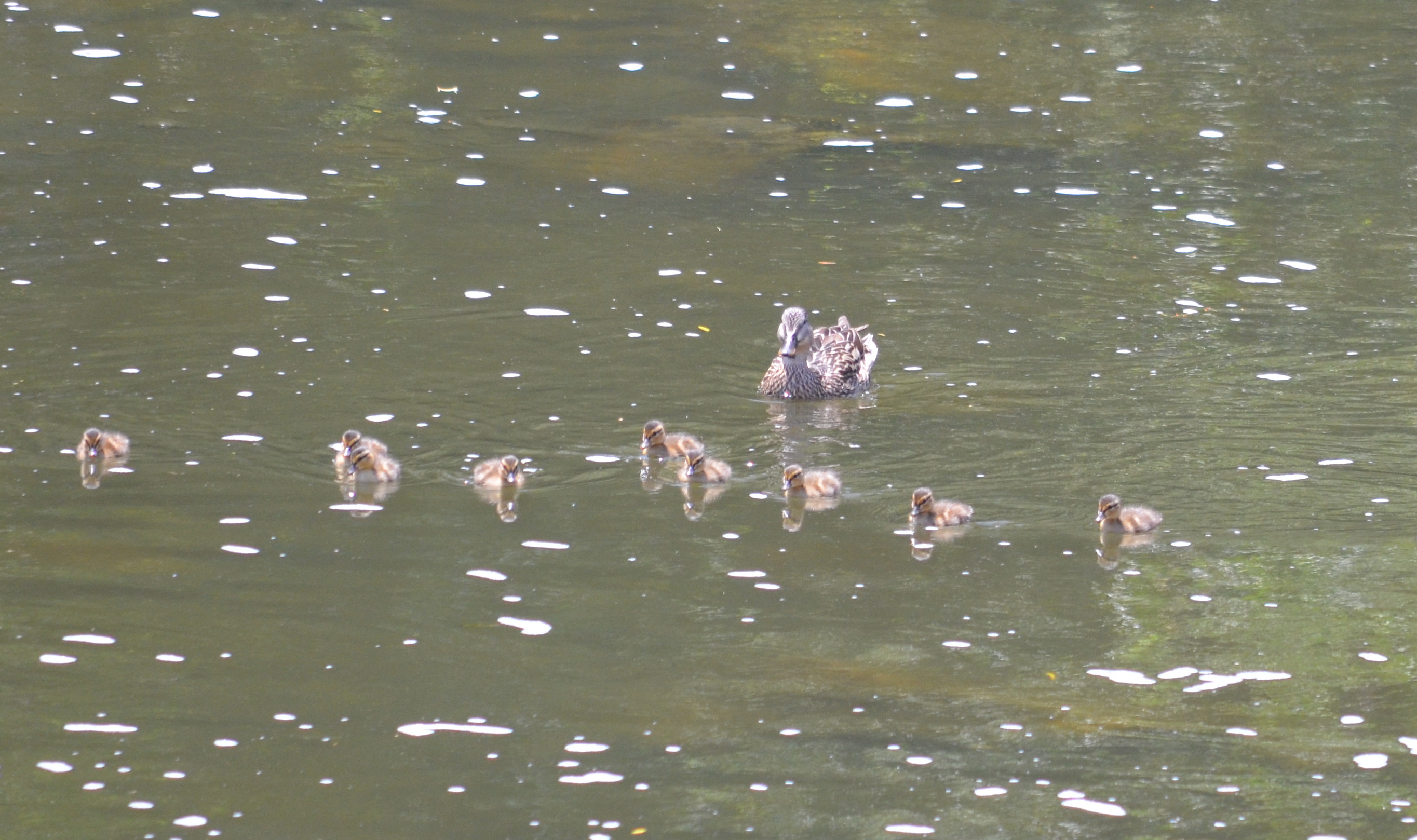
It was with pleasure that I recently discovered a Cornell “neighbor” who happens to be both an artist and bird lover, who takes inspiration from the Cornell Lab of Ornithology’s round-the-clock “bird cam” nest images. (Click on the painting above to go directly to her blog.)
People all over the world have been able to experience (and be inspired by) the nesting of great blue herons and red-tailed hawks near the Cornell campus, as well as Osprey nests in other parts of the United States.
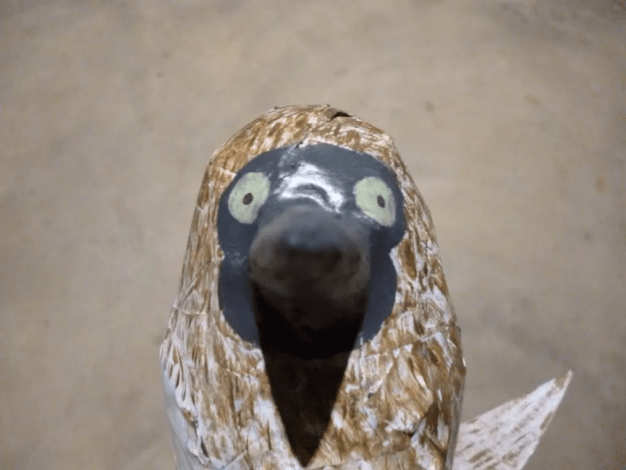
Last Wednesday was the final day the Union Educativa Modelo Tomás de Berlanga Bird Club would be gathering under my supervision. In the end, I was never able to get the papier-mâché project off the ground for most of the kids – two students did end up making penguins, but forgot to bring them to this last day to attach body parts and spray the final product with a protective varnish, and my hosts’ son painted a bird I made (looks like a male frigatebird). The photo above is of the Blue-footed Booby I made for my host family.

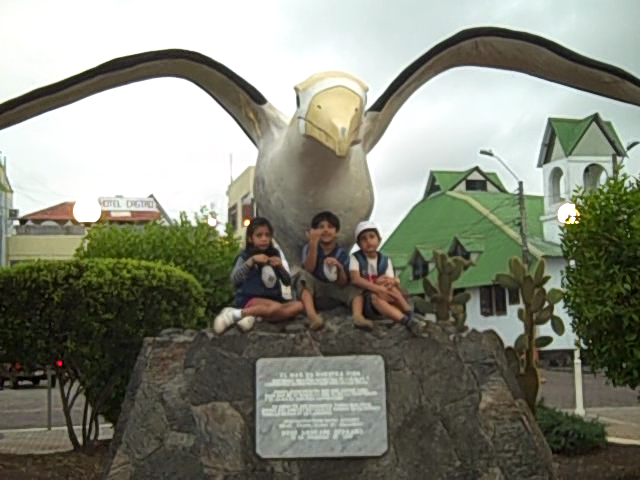 Last week’s Bird Club sessions saw eight, nine, and one participant(s) in the Wednesday 2th-4th grade group, Thursday 5-6th grade group, and Friday 7th-12th grade group, respectively. My goal had been to start a papier-mâché project, but after forty-five minutes the youngest group was eager to walk through town, so we left the balloons to dry and reviewed the usual crowd at the Fisherman’s Wharf with the addition of a Great Blue Heron and an Elliot’s Storm Petrel. Since some of the eight kids hadn’t come to the first week, it was still a pretty good day, except that most of the students didn’t take their balloons home with them. This week, only three students arrived on Wednesday (it is final examination week), so we made papier-mâché again and this time everyone took their birds home to dry for next week’s wing and beak addition, and perhaps even painting.
Given the younger students’ response to the papier-mâché, I came to the Thursday group last week prepared to put the issue to a vote. Quite a few kids came half an hour late, so we ended up walking to Tortuga Bay, a 45-minute trip through the Park on a path surrounded by cacti and trees that always yields Galápagos Flycatchers, Galápagos Mockingbirds, and a couple species of finch. When we reached the shore a small group of Ruddy Turnstones flew away, and after a couple minutes we had to turn back towards Puerto Ayora. This Thursday, almost the same group of nine students made their balloons and drew their wing-plans on cereal boxes.
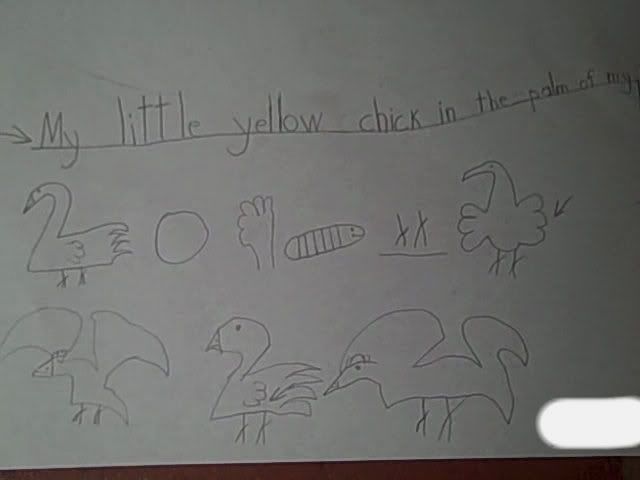
This past week, apart from being the second session of the Bird Club, I was teaching 1st and 2nd graders English, Science, and Art (e.g. bird names, bird biology, bird crafts). I wasn’t quite prepared for the radical change in behavior between 7th-12th graders and 1st-2nd graders in the classroom, though obviously I expected there would be significant differences.
But when on your first day a group of nineteen 6-year-olds spontaneously and simultaneously burst into a song about a little yellow chick in the palm of their hand while you’re trying to teach the basic body parts of a duck you’ve drawn on the whiteboard, you have a good sign that things might get tough. If this song includes mention of a hawk, which scares the chicks into hiding under their desks while the chosen bird of prey stalks the room to catch any straying chick-children, then things are already tough and you have to act accordingly.
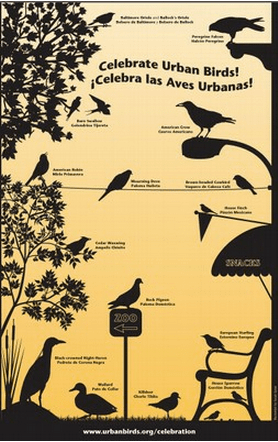 For the past year, I have been working at the Cornell Lab of Ornithology for the project Celebrate Urban Birds. Distinct from other citizen science projects the Lab of O. is involved with, such as eBird or FeederWatch, Celebrate Urban Birds (CUBs) stays true to its name and hones in on the celebratory aspect of studying birds: artwork, festivals, education, and other activities promoting community. Of course, there is still data involved. Thousands of forms have been filed—both electronically and physically—containing information on sightings of the sixteen focal species within 10-minute observation periods. These observations, along with notes about sighting location, are the source of data for the project. Participants include the address from which they are looking for birds in the ten minutes, describe the general amount of greenery and pavement in the area (as well as the size of the area itself), and list whether they saw, did not see, or were not sure about each of the sixteen species. This information constitutes a checklist that can be compiled into a larger repository of sightings in various types of green spaces around the country; the CUBs website contains species maps according to the number of observations in the last 90 days, marking where, say, a Brown-headed Cowbird has and has not been seen.
 Organikos