Natural Surprises

20SCI-EARTHWORM1-jumbo.jpg

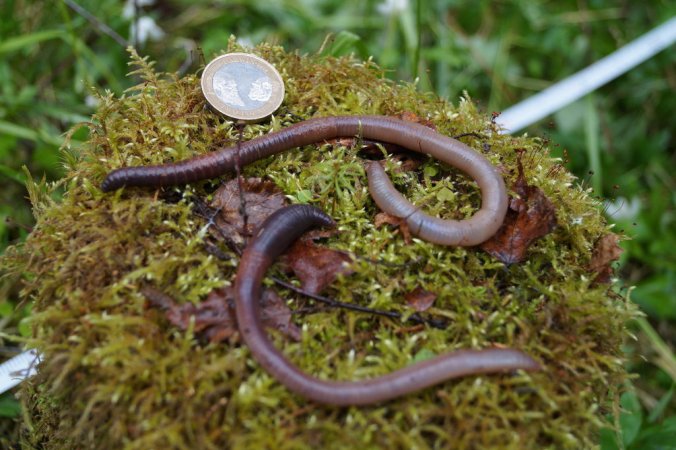
The world’s boreal forests have been largely earthworm-free since the last Ice Age. But as invaders arrive and burrow into the leaf litter, they free up carbon and may accelerate climate change. Cristina Gonzalez Sevilleja

In my daily scan for information related to the environment, I invariably learn something that surprises me. Like the fact that the earthworm, which provide valuable ecosystem services, can also represent danger on a global scale:

‘Earthworm Dilemma’ Has Climate Scientists Racing to Keep Up

Worms are wriggling into Earth’s northernmost forests, creating major unknowns for climate-change models.

merlin_154955766_b6ceb970-f27b-490d-af92-e524cd55451b-jumbo.jpg

Earthworms recently have spread to Alaska’s boreal forest. In some areas, the biomass of earthworms is 500 times greater than that of moose, a keystone species. Lance King/Getty Images

Cindy Shaw, a carbon-research scientist with the Canadian Forest Service, studies the boreal forest — the world’s most northerly forest, which circles the top of the globe like a ring of hair around a balding head.

A few years ago, while conducting a study in northern Alberta to see how the forest floor was recovering after oil and gas activity, she saw something she had never seen there before: earthworms.

“I was amazed,” she said. “At the very first plot, there was a lot of evidence of earthworm activity.”

Native earthworms disappeared from most of northern North America 10,000 years ago, during the ice age. Now invasive earthworm species from southern Europe — survivors of that frozen epoch, and introduced to this continent by European settlers centuries ago — are making their way through northern forests, their spread hastened by roads, timber and petroleum activity, tire treads, boats, anglers and even gardeners. Continue reading

Biodiversity Public Service Announcement

We’ve written a great deal about the sobering truth of human created climate change lately; highlighting the difficult science of the increasingly limited options on how to avert worst case scenarios.

There’s something calming about this piece of animation by Sebastian Ramn that addressed climate change as nature’s  SOS, reaching out to creative communities and NGOs who may be in search of ways to get involved in any way possible.

More information at natureneeds.help


What Is The Cost Of Extinction To You?

merlin_85350212_d2257703-c289-4df0-8998-7ed3b621f2ad-jumbo.jpg

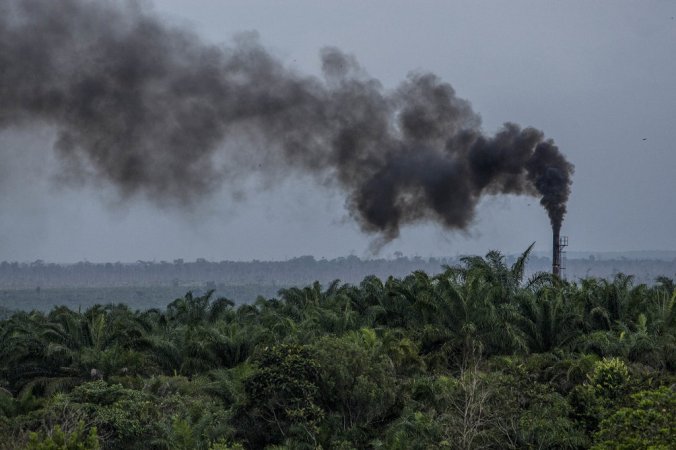
A palm oil plantation in Riau province, Sumatra, Indonesia. Ulet Ifansasti/Getty Images

One more on the same topic of recent days, last for a while I promise:

To Tell the Story of Biodiversity Loss, Make It About Humans

The authors of a sweeping United Nations report on species in danger of extinction faced the same question I often do in reporting: Why should anyone care about the loss of nature?

On Monday, I wrote about a sweeping new United Nations report warning that humans were destroying Earth’s natural ecosystems at an “unprecedented” pace.

The findings were sobering: Millions of acres of wetlands and rain forests are being cleared away. As many as one million plant and animal species are now threatened with extinction because of farming, poaching, pollution, the transport of invasive species and, increasingly, global warming. Almost everywhere you look, nature is vanishing before our eyes.

But the report, which was written for world leaders and policymakers, also wrestled with some big questions: Why should anyone care about the loss of nature? Why should countries take drastic steps, as the report urges, to halt the decline in biodiversity? Continue reading

Reminders Of Fragility Are Welcome

190520_r34350web.jpg

Illustration by João Fazenda

I really meant it, I do not tire of the constant bracing reminders:

Climate Change and the New Age of Extinction

People easily forget “last of” stories about individual species, but the loss of nature also threatens our existence.

The first documented extinction of 2019 occurred on New Year’s Day, with the death of a Hawaiian tree snail named George. George, who was about an inch long, had a grayish body, grayish tentacles, and a conical shell striped in beige and brown. He was born in captivity, in Honolulu, and had spent his unassuming life oozing around his terrarium, consuming fungi. Researchers with Hawaii’s forestry department had tried to find a partner for him—George was a hermaphrodite, but he needed a mate in order to reproduce—and when they couldn’t they concluded that he was the last of his kind, Achatinella apexfulva. A few days after he went, presumably gently, into that good night, the department posted a eulogy under the heading “farewell to a beloved snail . . . and a species.” “Unfortunately, he is survived by none,” it observed. Continue reading

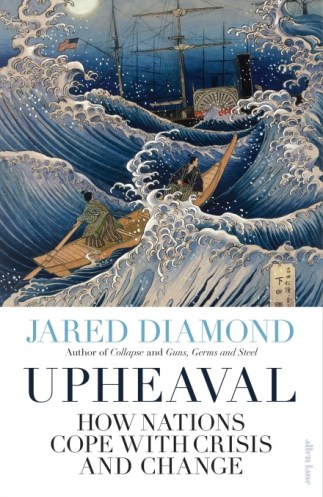
Upheaval, Another Heavy Book For The Reading List

First I had read the Guardian interview with the author, which was good, and made watching the above worthwhile. But when David Wallace-Wells conducts such an interview, it is something altogether more compelling. He knows how to word a title alarmingly. My reading list just got 320 pages longer:

Jared Diamond: There’s a 49 Percent Chance the World As We Know It Will End by 2050

Upheaval.jpgJared Diamond’s new book, Upheaval, addresses itself to a world very obviously in crisis, and tries to lift some lessons for what do about it from the distant past. In that way, it’s not so different from all the other books that have made the UCLA geographer a sort of don of “big think” history and a perennial favorite of people like Steven Pinker and Bill Gates.

Diamond’s life as a public intellectual began with his 1991 book The Third Chimpanzee, a work of evolutionary psychology, but really took off with Guns, Germs, and Steel, published in 1997, which offered a three-word explanation for the rise of the West to the status of global empire in the modern era — and, even published right at the “end of history,” got no little flak from critics who saw in it both geographic determinism and what they might today call a whiff of Western supremacy. In 2005, he published Collapse, a series of case studies about what made ancient civilizations fall into disarray in the face of environmental challenges — a doorstopper that has become a kind of touchstone work for understanding the crisis of climate change today. In The World Until Yesterday, published in 2012, he asked what we can learn from traditional societies; and in his new book, he asks what we can learn from ones more like our own that have faced upheaval but nevertheless endured.

I obviously want to talk about your new book, but I thought it might be useful to start by asking you how you saw it in the context of your life’s work.
Sure. Here’s my answer, and I think you’ll find it banal and more disappointing than what you might have hoped for. Continue reading

How Do You Define Too Late?

TNY-McKibbenKolbertUNReport.jpg

“The problem with climate change is that it’s a timed test,” the writer Bill McKibben says. “If you don’t solve it fast, then you don’t solve it.” Photograph by S. E. Arndt / Picture Press / Redux

I have been reading the reviews, and interviews with the authors of this and two other important recent books covering similar territory. I have stopped worrying about overkill, because this is overkill territory. You cannot get too much perspective on this; the worry is too little, too late:

McKibKolbert.jpg

Bill McKibben and Elizabeth Kolbert on the U.N. Extinction Report

While the political tide could be turning on climate change, both writers worry that it is too late.

After years of languishing far down the list of voters’ priorities—for Democrats and even more so for Republicans—the desire for action on climate change has brought this issue to the top of many voters’ concerns, according to a CNN poll. Now Presidential candidates are competing to establish themselves as leaders on the issue, while children are making headlines for striking from school.

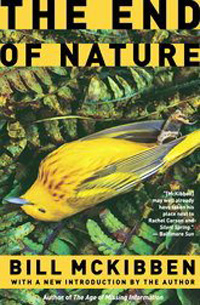
Bill McKibben, whose book “The End of Nature” brought the idea of global warming to public consciousness thirty years ago, tells David Remnick that the accumulation of weather catastrophes—droughts, wildfires, floods—may have finally made an impact. McKibben joined Elizabeth Kolbert in a conversation about the U.N.’s new report on species extinction. It finds that a million species could become extinct within a few decades, and that human life itself may be imperilled. While the political tide could be turning, both worry that it is too late. Continue reading

Better Fruit For Harsher Realities

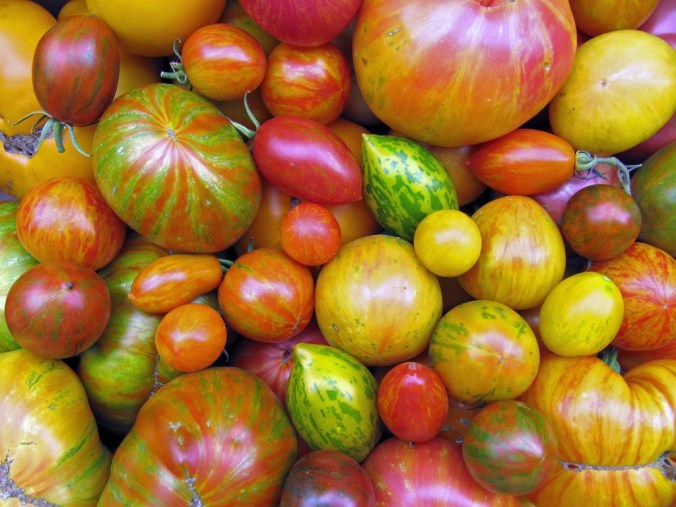
Mr. Gates sells about 60 of his own open-pollinated varieties, many with especially bright colors and unusual shapes, and shares growing tips online. Credit Wild Boar Farms

From our perspective, many agricultural “developments” deserve quotations. The Agricultural Industrial Complex of Monsanto and their ilk more frequently serve to further their own economic gain rather than preserve species or better the health and livelihoods of the farmer or consumer.

Preserving the genetics of fruit and vegetable species down to their paleo-botanical ancestry is an entirely different story, and may be our best chance to overcome the obstacles of harsher and harsher weather conditions.

Reinventing the Tomato for Survival in a Changing World

Like other small farmers and researchers, Brad Gates is trying to ensure a future for the tomato by breeding hardier varieties and persuading more Americans to grow their own.

NAPA, Calif. — In a borrowed van, Brad Gates of Wild Boar Farms sped south on Interstate 680 with hundreds of fuzzy tomato seedlings bumping around in the back, their trembling leaves, warmed by the sun, filling the cab with the smell of summer. It was one of a half-dozen deliveries on his to-do list.

Born and raised in Northern California, Mr. Gates has been organically farming tomatoes in the region for 25 years, working on small leased plots and introducing new varieties with cult followings, like the dark, meaty Black Beauty and the striped, rosy-pink Dragon’s Eye.

For most of that time, he sold his tomatoes to top restaurants, including Chez Panisse in Berkeley. But a few years ago he completely rethought his work. Galvanized by climate change, he joined a growing number of farmers who are trying to find a future for their threatened crops — in his case, the queen of the farmers’ market.

As Mr. Gates bred tomatoes, he noticed that many of his orange and yellow varieties were unusually heat-tolerant. Credit Wild Boar Farms

Mr. Gates now grows thousands of tomato plants each year, selling the young ones to local shops and the seeds all over the country through his website and catalogs, encouraging people to grow their own at home. He believes that the tomato’s survival and continued deliciousness depend on the plant’s diversity, and he considers breeding hardy, cold-tolerant and heat-tolerant varieties an essential part of his work — not just to provide food, but also to expand the number of places where the plant can flourish. Continue reading

David Wallace-Wells Explains Himself

Wallace-WellsI have recommended episodes of the Longform Podcast plenty of times, because its guests invariably help us appreciate clear explanation, especially for the better understanding of danger. Today’s recommendation is in the spirit of that last consideration, to put it mildly. But it is also a very personal explanation of how he came to this task, and how it sits with him.

Melissa Clark’s Kelp Call

merlin_153017235_49fd1266-e0bc-4084-b2a0-463f574844dd-jumbo.jpg

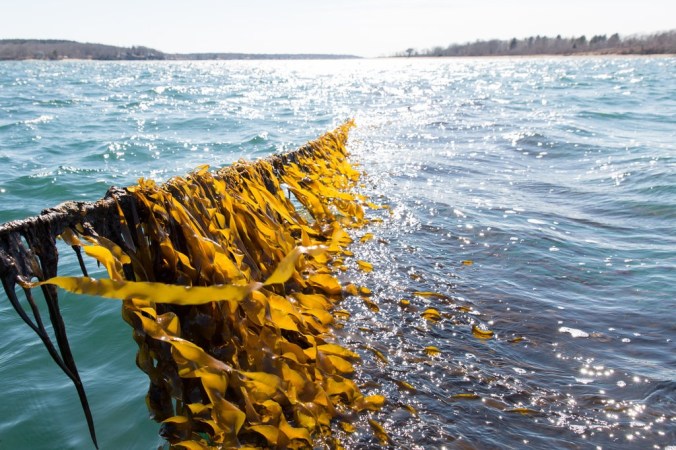
Kelp, a variety of edible seaweed farmed near Portland, Me., is harvested in spring. It’s delectable and nutritious, it’s easy to cook with, and it actively benefits the ocean’s health. Matt Cosby for The New York Times

Melissa Clark has appeared in our pages plenty of times, starting in 2014 when we were launching a restaurant whose menu featured tasty, nutritious and environmentally friendly dishes–i.e. the types of foods she promotes. Today’s pitch is right in line with those we have featured before:

The Climate-Friendly Vegetable You Ought to Eat

Kelp is delicious and versatile, and farming it is actively good for the ocean. Melissa Clark wants you to just try a bite.

merlin_153017220_60147ae8-0be8-4022-9809-771478c35d7a-jumbo.jpg

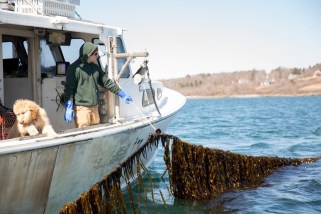
Justin Papkee, kept company by his dog, Seguin, pulling up a line of kelp. Harvesting wild kelp is ancient, but farming it is a relatively new practice in the United States. Matt Cosby for The New York Times

PORTLAND, Me. — It was a sharp, windy March day, but the gray water of Casco Bay glimmered green in the sun. On his lobster boat, the Pull N’ Pray, Justin Papkee scanned the surface of the ocean, searching for his buoys. But he wasn’t looking for lobster traps.

Mr. Papkee was farming, not fishing: His crop, clinging to ropes beneath the cold waves, was seaweed, thousands of pounds of brownish kelp undulating under the surface. Growing at a rate of 4 to 6 inches per day for the past six months, it was nearly ready to be harvested and sent to restaurants like Blue Hill at Stone Barns, Estela, Houseman, Saint Julivert Fisherie and Luke’s Lobster in New York, and Honey Paw, Chaval and the Purple House here in Maine.

merlin_153563010_afbf47f7-c23c-4309-8485-d213349da62d-jumbo.jpg

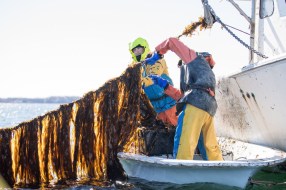
Justin’s father, Chris Papkee, at left, and Jimmy Ranaghan removing the kelp from the long ropes on which it grows. Matt Cosby for The New York Times

He pulled a blade of kelp from his line and handed me a long, translucent strip. I took a bite, and then another, seawater running down my chin.

I’d eaten plenty of seaweed salads at Japanese and vegan restaurants, but this was not that. A variety called skinny kelp, it was lightly salty and profoundly savory, with a flavor like ice-cold oyster liquor, and a crisp, snappy texture somewhere between stewed collard greens and al dente fettuccine. The chef Brooks Headley, who adds it in slippery slivers to the barbecued carrots he serves at Superiority Burger in New York, described it in an email as “insanely delicious and texturally incredible.” Continue reading

When Bill McKibben Speaks to Elizabeth Kolbert, Listen

RebellionDay4_OxfordCircus_VladimirMorozov-akxmedia_180419_6_web_web2.jpg

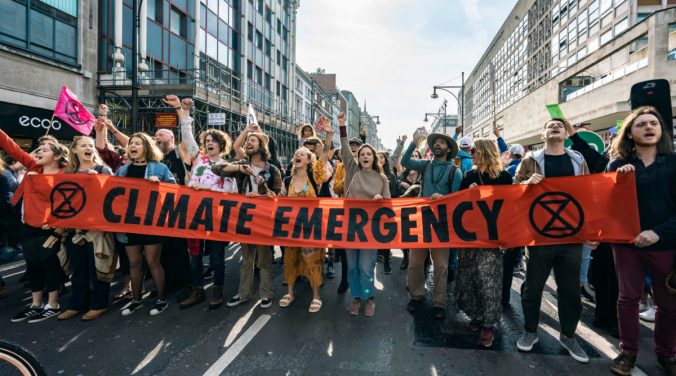
Climate activists block traffic in London’s Oxford Circus on April 19, part of a string of protests organized by Extinction Rebellion. COURTESY OF VLADIMIR MOROZOV/AKX MEDIA

Two luminaries on climate, in conversation:

Why Bill McKibben Sees Rays of Hope in a Grim Climate Picture

end-of-nature.jpgThe world has done little to tackle global warming since Bill McKibben’s landmark book on the subject was published in 1989. In ane360 interview, McKibben talks about the critical time lost and what can be done now to avoid the worst impacts of climate change.

Three decades ago, Bill McKibben published The End of Nature, the first book on climate change aimed at a general audience. McKibben went on to found the international environmental group 350.org, help launch the fossil fuel divestment movement, and write a dozen more non-fiction books, as well as a novel. In 2014, McKibben received the Right Livelihood Award, sometimes referred to as the “alternative Nobel,” for mobilizing popular support for “strong action to counter the threat of global climate change.”

falterbookpage.jpgMcKibben’s latest book, Falter: Has the Human Game Begun to Play Itself Out?, was published this month and debuted last week on the New York Times bestseller list. In an interview with Yale Environment 360 , McKibben talks about why the critical time for action on climate was missed, where he still finds hope, and what the world will look like three decades from now.

“Thirty or 50 years out, the world’s going to run on sun and wind, because they’re free,” McKibben says. “The question is… what kind of world will it be?”

Yale Environment 360: It’s almost exactly 30 years since you published The End of Nature. One way to read that book is as a warning. How you would characterize Falter? Is it also a warning, or are we beyond that?

Bill McKibben: Look, 30 years ago this was all still prospective. You couldn’t really take a picture of climate change yet. Now, having wasted 30 years, we’re at the point where it’s a dominant fact of everyday life for hundreds of millions of people and promising to be the overwhelming fact of our time in the years ahead. It’s too late, obviously, to stop climate change. I hope that the book gets across that it may not be too late to keep it from getting absolutely out of control. It’s not a warning. It’s some combination of a report and a chronicle and a plea, I think. Continue reading

History As Told By Trees

merlin_153311571_b3fdf7b9-c200-4890-9b82-9f12f185d579-superJumbo.jpg

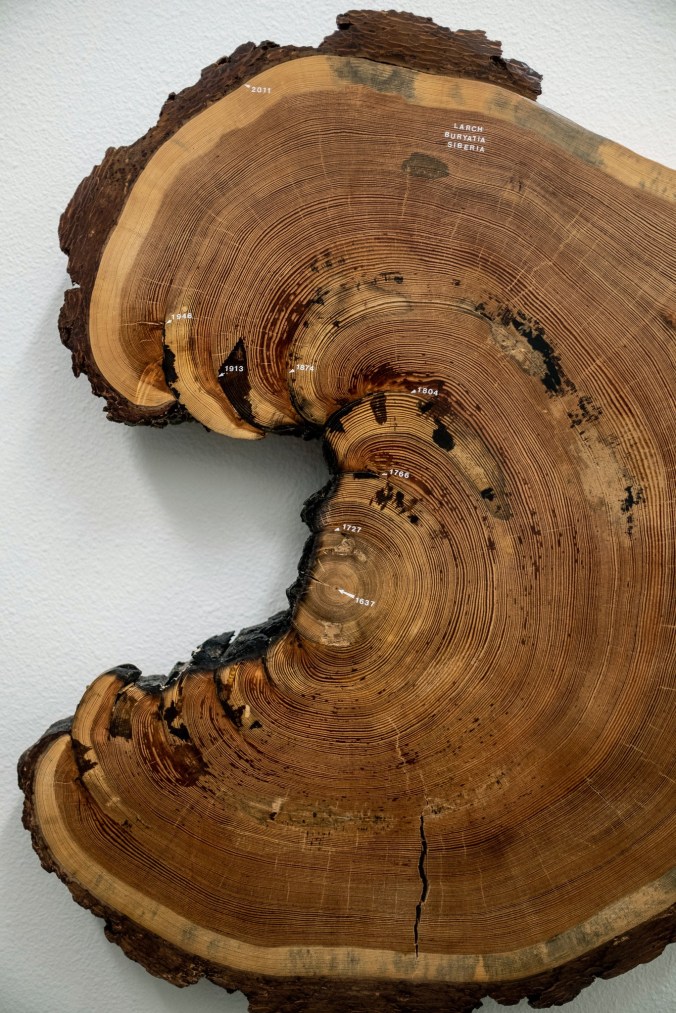
A sample from Siberia, with the core dating from 1637 and the outer ring from 2011, hangs on a wall at the research lab on the University of Arizona campus in Tucson. Adriana Zehbrauskas for The New York Times

Thanks to Jim Robbins, as always:

Chronicles of the Rings: What Trees Tell Us

Studying the historical data stored in centuries-old trees is a burgeoning field, with labs around the world learning more about historical patterns of weather and climate and the effects on humans.

merlin_153309360_fa758574-8314-483b-9ea2-4f56a77fbef9-jumbo

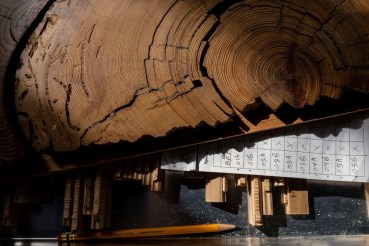
Wood samples for research at the Laboratory of Tree Ring Research at the University of Arizona. Adriana Zehbrauskas for The New York Times

TUCSON — From the early 1700s until the 1960s, the fast moving river of wind known as the North Atlantic Jet Stream, which drives weather extremes over Europe, was pretty steady on its course.

Then it became less predictable. But instrument data alone can’t tell the jet stream’s movements for comparison over the centuries, given that scientists began keeping records of weather events via instruments only in the late 19th century. Continue reading

A Game of Arboreal Chess Against Climate Change

Illustrations by Andrew Khosravani

Those familiar with this site know that climate change denial would find difficult footing; no leap of faith is required to take it as scientific fact. We appreciate the following examples of learning from recent history of forest collapse and planning for environmental changes accordingly.

Can Humans Help Trees Outrun Climate Change?

SCITUATE, R. I. — Foresters began noticing the patches of dying pines and denuded oaks, and grew concerned. Warmer winters and drier summers had sent invasive insects and diseases marching northward, killing the trees.

If the dieback continued, some woodlands could become shrub land.

Most trees can migrate only as fast as their seeds disperse — and if current warming trends hold, the climate this century will change 10 times faster than many tree species can move, according to one estimate. Rhode Island is already seeing more heat and drought, shifting precipitation and the intensification of plagues such as the red pine scale, a nearly invisible insect carried by wind that can kill a tree in just a few years.

The dark synergy of extreme weather and emboldened pests could imperil vast stretches of woodland.

So foresters in Rhode Island and elsewhere have launched ambitious experiments to test how people can help forests adapt, something that might take decades to occur naturally. One controversial idea, known as assisted migration, involves deliberately moving trees northward. But trees can live centuries, and environments are changing so fast in some places that species planted today may be ill-suited to conditions in 50 years, let alone 100. No one knows the best way to make forests more resilient to climatic upheaval.

These great uncertainties can prompt “analysis paralysis,” said Maria Janowiak, deputy director of the Forest Service’s Northern Institute of Applied Climate Science, or N.I.A.C.S. But, she added, “We can’t keep waiting until we know everything.” Continue reading

Know Your Numbers

Credit Tyler Varsell; Shutterstock

Coinciding with Earth Day  the NYTimes Environment team recently initiated the Climate FWD newsletter, emailing readers weekly with stories and insights about climate change.

We’ve been writing about plastics since the inception of this site; it’s alternatives, environmental impacts, and even creative applications with it’s existence.

Studies are clear that reducing plastic use and production is multiple steps better than recycling, yet considering the ubiquity of the material, the latter has it’s place.

One Thing You Can Do: Know Your Plastics

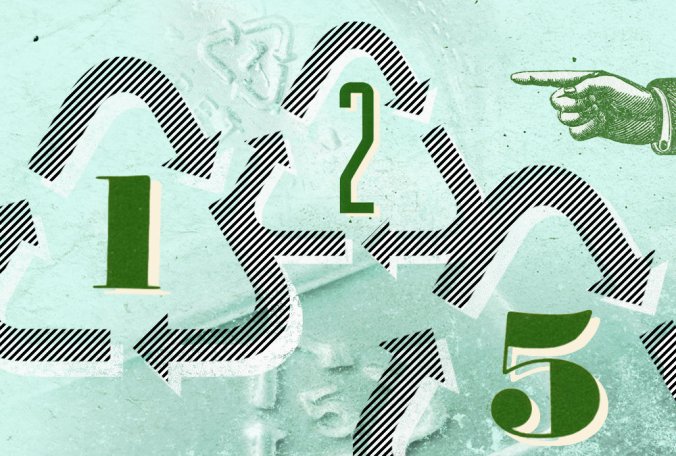
Ever notice those recycling symbols, the triangles with the numbers inside, on plastic packaging and containers? I always assumed they meant the plastic was recyclable. But that’s not necessarily the case.

Those numbers are resin identification codes, and they tell what kind of plastic the item is made from. And not all plastic is created equal.

Identifying what types of plastics are recyclable can be challenging because plastics do not always carry a resin code and because not all recycling programs are equal, either. Generally speaking, though, some categories of plastic are more widely recyclable in the United States.

“We always encourage people to focus on Nos. 1, 2 and 5 because we have great markets for them in the U.S.,” said Brent Bell, vice president of recycling at Waste Management, a major garbage collection and recycling company.

Water and soda bottles, milk jugs, laundry detergent bottles, yogurt cups and butter tubs are mostly made of these plastics. You could lend a helping hand by rinsing these kinds of containers and removing labels.

Continue reading

Floating Solar

When we think of Holland, we think of its engineering contributions to the world’s lower elevation places that have water management issues. Such as Kerala historically, and soon to be many more places due to climate change-related water levels rising. Here is a novel twist on using their expertise with water, for which we give thanks to the Guardian:

1030.jpg

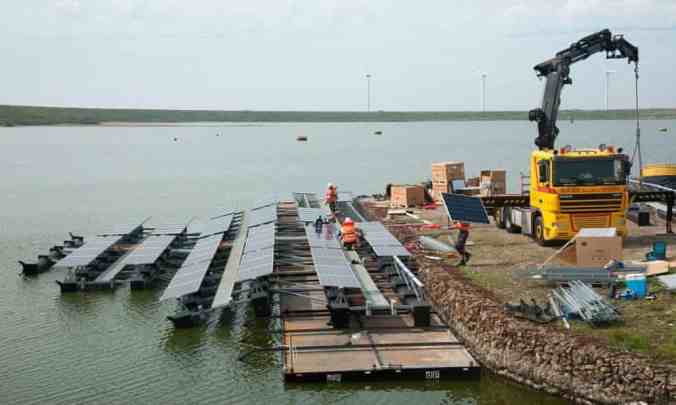
 The islands will contain 73,500 panels. Photograph: Floating Solar

Dutch engineers build world’s biggest sun-seeking solar farm

The 15 floating solar islands will possess sunflower-like ability to turn to face the sun

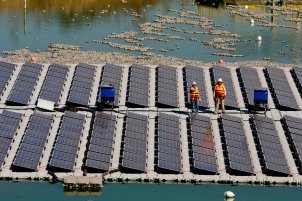
Dutch engineers are building what will be the world’s largest archipelago of islands made up of sun-tracking solar panels.

Growing resistance to the construction of wind turbines or fields of solar panels on land has led the renewable energy industry to look for alternative options. Large islands of solar panels are under construction or already in place in reservoirs and lakes across the Netherlands, China, the UK and Japan. Continue reading

Falter, Bill McKibben’s Latest Book

merlin_153059301_1c87fe8a-f33f-4586-a999-f1699b5569e6-jumbo

Mikel Jaso

My morning hike yesterday was accompanied by Bill McKibben. We have featured him so frequently in these pages that I was surprised that I had not already known he had a new book. So I found what I could read about the book, starting with Jared Diamond’s review (snippet below), and a book talk by the author himself (above).

merlin_152123523_a034032d-0d87-4c6a-a74d-4f49c938ba5c-jumbo

A floating island of solar panels in Santiago, Chile.CreditEsteban Felix/Associated Press

Solar panels and nonviolent movements are the two of the causes for hope that McKibben mentions in his podcast interview, and in the book talk in Philadelphia, and according to Diamond’s review those are substantive but not sufficient. Hope and fear are both motivators and getting the balance right is the most important task in perhaps the entire history of mankind. I highlight only this part of the review because it is an echo of what Nathaniel Rich says in an interview about his own book:


falterbookpage.jpg

…McKibben’s book is much more about grounds for fear, which take up some 18 chapters, than about grounds for hope, which take up five. Fear will motivate some people who are currently undecided, and increase the motivation of others already convinced. But in my experience most people need a strong dose of hope to be spurred to action. Why waste effort on a hopeless cause? One group that has learned this lesson is the cancer lobby, which succeeds at raising funds for research by stressing cures that may be just around the corner more than the grim statistics of the disease’s ongoing toll.

In fact, there are reasons for hope besides those McKibben discusses. One is the change in policies of some powerful multinational corporations. I can already hear the horrified screams of many of my environmentalist friends as I say this. Continue reading

The Wind Calls For Attention

03lovins-jumbo.jpg

A wind farm in Pomeroy, Iowa. Credit Jim Watson/Agence France-Presse — Getty Images

In the current political climate it may sound like howling in the wind, at first, but read on:

A Case for a Market-Driven Green New Deal

Any serious energy transformation will need to harness America’s powerful and creative economic engine.

By Amory B. Lovins and Rushad R. Nanavatty

Mr. Lovins and Mr. Nanavatty work at Rocky Mountain Institute, which is focused on creating a clean, low-carbon energy future.

The best thing to come from the Senate’s floor debate on the Green New Deal late last month may have been these eminently sane remarks, calling on lawmakers of both parties to “move together” in order “to lower emissions, to address the reality of climate change, recognizing that we’ve got an economy we need to keep strong, that we have vulnerable people we need to protect, that we have an environment that we all care about — Republicans and Democrats.”

Who said it? A Republican, Senator Lisa Murkowski of Alaska, who leads the Energy and Natural Resources Committee. “My hope is we get beyond the high-fired rhetoric to practical, pragmatic, bipartisan solutions,” she said on the chamber floor.

The path is there, if our leaders will only choose to take it. In 2011, Reinventing Firean energy study by Rocky Mountain Institute, where we work, showed how a business-led transition could triple energy efficiency, quintuple renewables and sustain an American economy 2.6 times larger in 2050 than it was in 2010 with no oil, coal or nuclear energy, and one-third less natural gas. The net cost was $5 trillion less than business-as-usual — or even more valuable if a price was put on carbon emissions.

Continue reading

Bird Habitat One Yard At A Time

web_audubon_image4.jpg

Photo: Illustration: Marina Muun

Sometimes the planning is as fulfilling as the outcome. Thanks to Janet Marinelli and Audubon Magazine:

Plant Trees that Turn Your Yard Into a Bird Oasis—and Carbon Sponge

Trees create habitat and store CO2 for decades to come. Just be sure to pick carefully.

One of the best ways to combat climate change is to fill your garden with as many trees, shrubs, and other plants as possible. Whether a tiny orchid or towering oak, all plants have the amazing ability to remove carbon dioxide from the atmosphere during photosynthesis and store it in their wood, shoots, and roots.

Because they’re the giants of the plant kingdom, trees are also powerhouses of carbon storage. In one year, a mature tree can absorb 48 pounds of CO2—about the amount emitted by driving 150 miles in a hybrid plug-in car. Collectively, according to the U.S. Forest Service, trees offset 10 to 20 percent of U.S. emissions from burning fossil fuels each year. The carbon benefits really begin to add up when you consider that trees fight global warming in other ways. For example, carefully placed trees can reduce the energy required to heat and cool a home by 25 percent (see tips here on how to place trees). Because they cool the air by casting shade and releasing water vapor when they breathe, trees also alleviate one of the most underestimated health threats of climate change—heat wavesContinue reading

Betting On Planet Earth

14mag-exxon-image1-superJumbo.jpg

Illustration by Dadu Shin

Last week we pointed to this article, and today we point to another of equal value from the same issue of the same magazine.

How Big Business Is Hedging Against the Apocalypse

Investors are finally paying attention to climate change — though not in the way you might hope.

The New York Times Magazine is on to something. More than most magazines, it is offering stark, long form accounts of the stakes being wagered against our planet.

9780374191337.jpgNathaniel Rich has become one of the most potent writers on the fate of our planet in relation to human actions and inactions. Last year the New York Times Magazine devoted an entire issue to one article he authored. And now he has a book, which you can listen to him talk about here. The publisher’s blurb:

By 1979, we knew nearly everything we understand today about climate change—including how to stop it. Over the next decade, a handful of scientists, politicians, and strategists, led by two unlikely heroes, risked their careers in a desperate, escalating campaign to convince the world to act before it was too late. Losing Earth is their story, and ours. Continue reading

Faith-Based Green Resistance

Griswold-PAPipelineFight.jpg

In 2015, the Adorers of the Blood of Christ, a congregation of nuns, learned that an energy company planned to build a pipeline on their land. So they started a resistance movement. Photograph by Dave Parry

Thanks to Eliza Griswold, who writes about religion (which does not feature often in our pages) and occasionally finds an overlap with environmental causes:

The Renegade Nuns Who Took On a Pipeline

On a crisp October morning in 2017, Sister Sara Dwyer, a sixty-eight-year-old nun wearing a red T-shirt that read “you will not spoil our land,” led three elderly nuns and seventy other protesters onto an industrial work site in Lancaster County, Pennsylvania. Many carried red banners stencilled with wheat sheaves. They were there to protest Williams, an Oklahoma-based pipeline company that was trying to build the Atlantic Sunrise Pipeline, a two-hundred-mile natural gas pipeline that would carry shale gas from fields in northeastern Pennsylvania to the coast, where the fuel could be shipped abroad. The company was trying to lay the line under a cornfield belonging to the nuns, and the sisters had decided to fight back, hoping that they might draw attention to the issue of climate change. “Just being in resistance is not the goal,” Dwyer told me. “The goal is spiritual conversion.” As the protesters entered the work site, Malinda Clatterbuck, who had helped plan the event with the sisters, reminded the participants, “This is a nonviolent protest in all ways. We’re not going to yell or speak to the workers.” She walked around asking each person to nod in agreement. “If you’re angry today, go home and come back to an action once you’re in a better place,” she said. Continue reading

Climate Change May Be Illegal

14mag-Peru-image1-superJumbo-v2.jpg

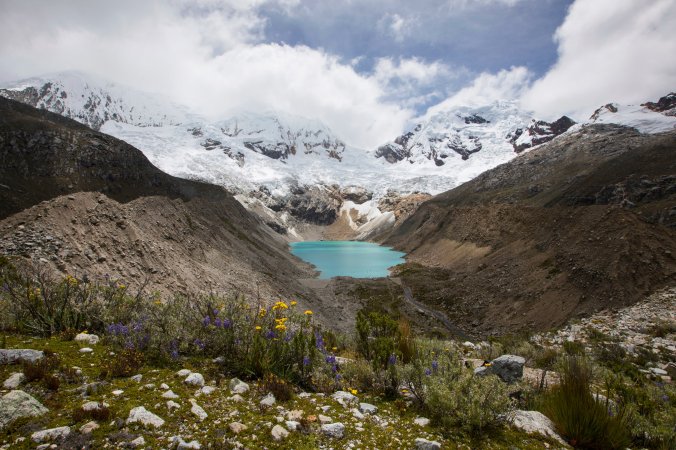
Lake Palcacocha in the Peruvian Andes. Felipe Fittipaldi for The New York Times

Brooke Jarvis, whose mastery of the complex environmental story we have pointed to a couple times already, shares the story below about a novel legal approach to fighting climate change. It is long, detailed and even more complex than the other stories we have seen by her. But if her subject prevails, the result may be even more profound as well. These two photos alone should draw you in. Thanks to the New York Times Magazine:

14mag-Peru-image9-superJumbo.jpg

The city of Huaraz in the Peruvian Andes. Felipe Fittipaldi for The New York Times

In the mountains far above the red-brick city, behind a locked gate, there is a great, green valley. Its high stone walls are streaked by waterfalls; its floor dotted with flowers and grazed by horses and cows. Six boulder-strewn miles beyond the gate, the valley ends abruptly at an enormous wall of rock and ice. Beneath it lies a stretch of calm, bright water in milky turquoise — Lake Palcacocha. Though few of its residents have ever seen this lake, the city below lives in fear of it. Continue reading