Congrats On Fellowship, Shannon

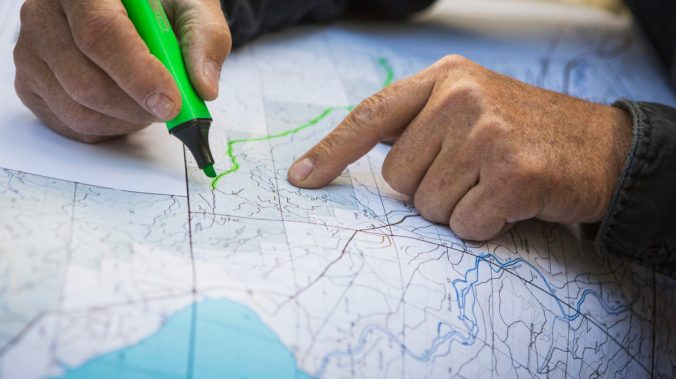
Plum Creek forester Steve Griswold examines a map of the Checkerboard forest.

Good maps and models show us how things are shifting – and are likely to shift in the future — under climate change © Benjamin Drummond

I am happy to meet Shannan this way:

Meet the NatureNet Science Fellows: Shannan Sweet (Cornell)

Conservancy NatureNet Science Fellow Shannan Sweet spends most of her time these days thinking about climate change, agriculture and, well, maps. But the maps that interest her most are not about road trips, or hiking adventures. They’re not even as much about a place as they are about a destination.

Her destination of choice? A world that can feed 10 billion people without exhausting its resources or exacerbating climate change. Continue reading

Deforestation & Big Food

gettyimages-452167592_wide-221276b6658805805386b947e8af444bdba8424e-s1100-c85.jpg

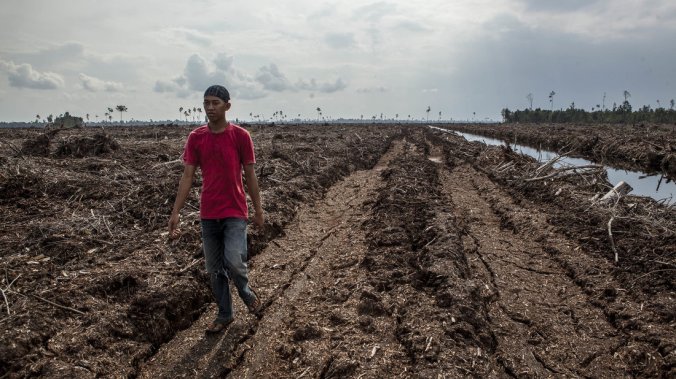
This peat soil in Sumatra, Indonesia, was formerly a forest. Clearing and draining such land releases huge amounts of greenhouse gases. Ulet Ifansasti/Getty Images

The solutions are never easy with regard to climate change; for every bit of good news there is a dose of bad news in the form of realism:

Climate Revolution

31stoneweb-master768

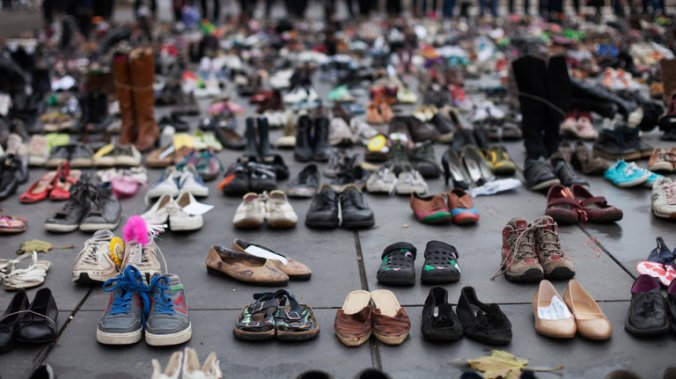
Shoes representing protesters at the climate talks summit in Paris last year. Credit Andre Larsson/NurPhoto, via Getty Images

Thanks to Mr. Godoy and Mr. Jaffe for this strong, clear and compelling statement:

We Don’t Need a ‘War’ on Climate Change, We Need a Revolution

Eric S. Godoy and

This year is on track to become the hottest ever recorded, and a growing number of environmentalists are using a particular type of language in response. Some are calling for a huge “mobilization” to “combat” climate change. In an article in the New Republic in August, Bill McKibben, the unofficial spokesperson of the climate movement in the United States, insisted in very literal terms that, we are at war with climate change. Continue reading

Preparing For Cleaner Air

tnc_86027894-1260x708.jpg

Photo © Kevin Arnold

Thanks to Cool Green Science for this:

Planting Healthy Air: Can Urban Trees Help Clean Up Pollution?

BY ROB MCDONALD

Every report has a genesis, an initial conversation that sprouts an idea that grows into a research study. For me, one of those moments was a phone interview I had with a professor at King’s College in London, about the somewhat goofy idea of gluing pollution to roads. Continue reading

Lessons In Urban Water Conservation From Down Under

01fixes1web-master768.jpg

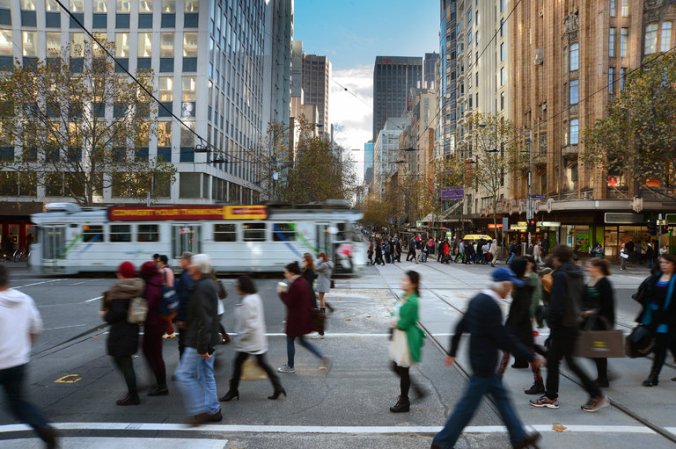
Residents of Melbourne, Australia, reduced their water consumption during the long drought and effectively saved the city from running dry. Credit Carla Gottgens/Bloomberg

Thanks to the New York Times for this tutorial, provided at city scale, on more sensible management of natural resources:

Australia’s Lesson for a Thirsty California

Sylvia Rowley

MELBOURNE, Australia — On his first visit to Melbourne in 2009, Stanley Grant, a drought expert and professor of civil and environmental engineering at the University of California, Irvine, had a question for his taxi driver.

“How’s the drought?” he asked.

“It’s about 28 percent,” came the reply.

Grant was puzzled. But shortly afterward, they drove past an electronic road sign announcing that the city’s reservoirs were indeed at just 28 percent of capacity. Continue reading

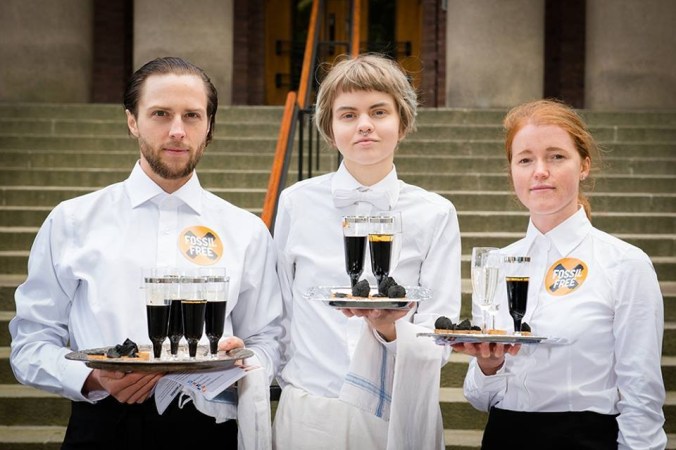
Divest, Nobel

980x-10

Thanks to 350.org for this one, via EcoWatch:

Nobel Prize, It’s Time to Divest From Fossil Fuels

350.org

Last Tuesday, Fossil Free Sweden finally received confirmation from the Nobel Foundation that it does not intend to adopt rigid sustainable investment guidelines which entirely exclude investments in the least sustainable companies on the planet—those driving climate change through the exploitation of fossil fuels.. Continue reading

Tree Elders & Drought

sequoias-1_custom-9d831bf09949d38d3d16746b895b30fc2bfa786a-s1100-c85.jpg

Giant sequoias in the Sierra Nevada range can grow to be 250 feet tall — or more. John Buie/Flickr

Thanks to National Public Radio (USA):

How Is A 1,600-Year-Old Tree Weathering California’s Drought?

It’s been a brutal forest fire season in California. But there’s actually a greater threat to California’s trees — the state’s record-setting drought. The lack of water has killed at least 60 million trees in the past four years.

Scientists are struggling to understand which trees are most vulnerable to drought and how to keep the survivors alive. To that end, they’re sending human climbers and flying drones into the treetops, in a novel biological experiment. Continue reading

More Before The Flood

Flood.jpg

We have been there, we have seen it, we have breathed it, we have witnessed enough. We are grateful to the film makers for bearing witness to a wider audience. Click above to go to the preview of the film:

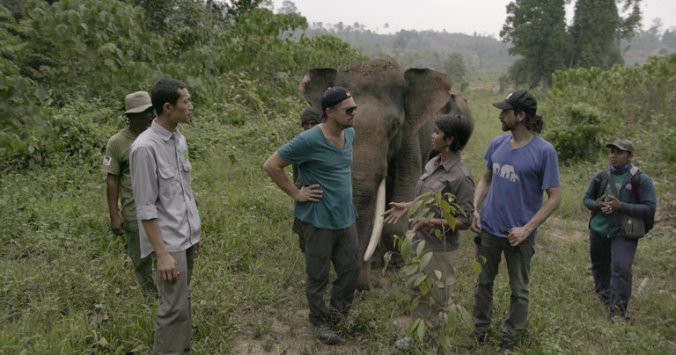
Exclusive Clip: DiCaprio’s Climate Doc Exposes Destruction of Rainforest for Palm Oil as Huge Driver of Global Carbon Emissions

Rainforest Action Network

A new documentary produced and starring actor and activist Leonardo DiCaprio premieres in Los Angeles today and will be broadcast globally in 45 languages in 171 countries on the National Geographic Channel starting Oct. 30, timed to air in advance of the November elections. Continue reading

Carbon Capture’s Unintended Consequences

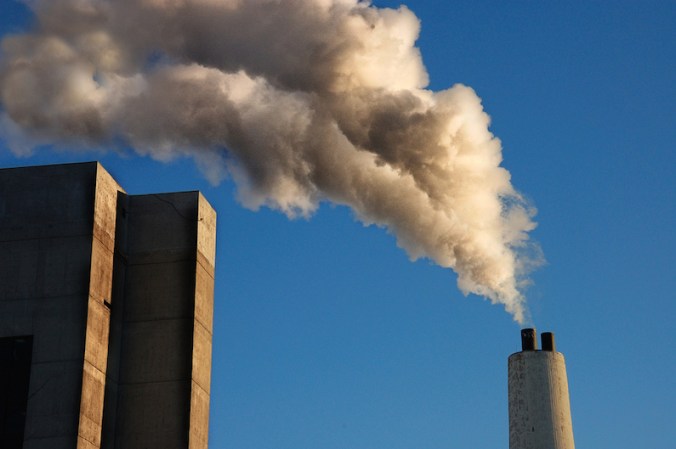
smokestack.jpg

Photo: Ryan T. Flickr Creative Commons.

Be careful what you wish for as this summary of a new scientific study reminds us:

Could carbon capture fuel our carbon addiction?

Solar Rising

4000

A road divides solar panels at the Ivanpah Solar Electric Generating System in the Mojave Desert, Nevada. Photograph: Bloomberg/Bloomberg via Getty Images

Those of us who live near the Kochi Airport in Kerala, India feel pretty proud of our 100% solar-powered access to the outside world; but this story tells us to expect even more in the USA soon:

US energy shakeup continues as solar capacity set to triple

Solar expected to almost triple in less than three years by 2017 as coal continues to fall, solidifying gas as country’s chief electricity source, reports Climate Central

Bobby Magill for Climate Central, part of the Guardian Environment Network

Solar power capacity in the US will have nearly tripled in size in less than three years by 2017 amid an energy shakeup that has seen natural gas solidify its position as the country’s chief source of electricity and coal power continue to fade, according to monthly data published by the US Department of Energy. Continue reading

Before the Flood

21BEFOREFLOOD-master768-v2.jpg

Leonardo DiCaprio in a scene from the global-warming documentary “Before the Flood.” Credit National Geographic

Have you seen it? Let us know if the reviewer got it right:

Review: In ‘Before the Flood,’ Leonardo DiCaprio Sounds the Climate-Change Alarm

Even if you subscribe to the view that a problem isn’t a problem until a Hollywood celebrity tells you it is, “Before the Flood” feels out of phase. It’s a documentary in which Leonardo DiCaprio sounds the alarm about global warming, something that could not possibly have escaped anyone’s attention in recent years and is at this point probably beyond discussion: Either you think climate change is real or you don’t, and the battle lines aren’t likely to be shifted by an earnest movie star. Continue reading

Big Data & Environmental Activism

3702

Kate Brandt speaking at the 2016 SXSW Eco conference in Austin, Texas. Photograph: Diego Donamaria

We do not see enough of this type of story:

How Google is using big data to protect the environment

Google’s sustainability officer Kate Brandt outlines the company’s wide-range interest in sustainable fishing, green buildings and renewable energy

by Ucilia Wang

For many people, Google is simply the gateway to a vast archive of facts and memories. For those who pay closer attention to its business dealings, the company also invests billions to find new ways to use the power of computers: it’s developing robots, virtual reality gear and self-driving cars. Remember all the hubbub about Google Glass?

Google has been using the same approach in sustainability – spreading its wealth in a variety of projects to cut its waste and carbon footprint, initiatives which may one day generate profits. During the SXSW Eco conference this week, I caught up with Google’s sustainability officer, Kate Brandt, to find out more. Brandt joined the company in July last year after serving as the nation’s chief sustainability officer in the Obama administration. Continue reading

Ice Melt, Harbinger Of Accelerated Melting

161024_r28885-690x448-1476393905

When water accumulates on the surface of an ice sheet, more sunlight gets absorbed, which results in more melt, in a cycle that builds on itself. This year’s melt season began so early that many scientists couldn’t believe the data they were seeing. PHOTOGRAPH BY DANIEL BELTRÁ

Elizabeth Kolbert has appeared in these pages about as frequently as any other individual we admire (McKibben, an activist and a writer, wins the race with a few more posts pointing his way), or any other topic (take your pick between libraries, entrepreneurial conservation or a few others that nudge past EK in the same race) we care deeply about. She is an activist through her writing, advocating on behalf of our better understanding of the challenges facing the next generations. Epochal challenges that we have some ability to influence the outcome of. So, when she delivers biblical proportions of reporting, we read every word and pass it on:

GREENLAND IS MELTING

The shrinking of the country’s ice sheet is triggering feedback loops that accelerate the global crisis. The floodgates may already be open.

Not long ago, I attended a memorial service on top of the Greenland ice sheet for a man I did not know. The service was an intimate affair, with only four people present. I worried that I might be regarded as an interloper and thought about stepping away. But I was clipped onto a rope, and, in any case, I wanted to be there. Continue reading

Air Conditioning In The Tropics

refridge

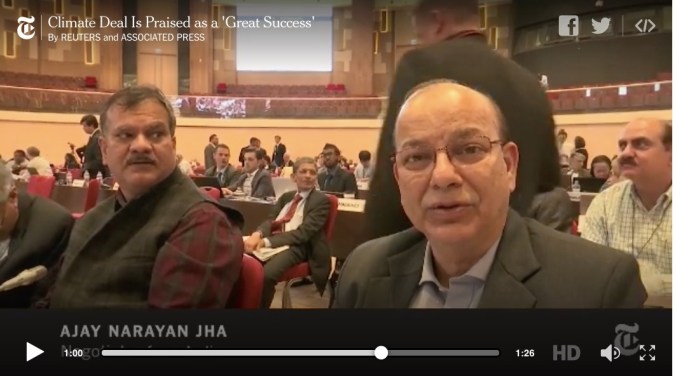
Negotiators from more than 170 countries celebrated in Rwanda on Saturday after reaching a legally binding accord to cut the worldwide use of a powerful planet-warming chemical used in air-conditioners. By REUTERS and ASSOCIATED PRESS on Publish DateOctober 15, 2016. Photo by Cyril Ndegeya/Agence France-Presse — Getty Images. Watch in Times Video »

Just to be extra clear on how problematic, and precarious our position is (jets and sharks are not the least of it) doing what we do for a living, today’s excellent news–complicated and full of ifs and buts–is excellent, full stop. But most of us contributing on this site live in the tropics, with air conditioning. Can we live under the new rules? (Accord Could Push A/C Out of Sweltering India’s Reach makes us wonder.) We will. Do we know what that means? Not yet. But we are paying attention:

Nations, Fighting Powerful Refrigerant That Warms Planet, Reach Landmark Deal

By

Negotiators from more than 170 countries on Saturday reached a legally binding accord to counter climate change by cutting the worldwide use of a powerful planet-warming chemical used in air-conditioners and refrigerators.

The talks in Kigali, the capital of Rwanda, did not draw the same spotlight as the climate change accord forged in Paris last year. But the outcome could have an equal or even greater impact on efforts to slow the heating of the planet.

President Obama called the deal “an ambitious and far-reaching solution to this looming crisis.” Continue reading

Make A Difference When You Can

980x-7

“What can we do to make a difference?”The Thinker

Thanks to EcoWatch for passing this along:

The Question I Get Asked the Most

Bill McKibben

The questions come after talks, on twitter, in the days’ incoming tide of email—sometimes even in old-fashioned letters that arrive in envelopes. The most common one by far is also the simplest: What can I do? I bet I’ve been asked it 10,000 times by now and—like a climate scientist predicting the temperature—I’m pretty sure I’m erring on the low side. Continue reading

Solar’s Silicon Future

p04bw5z3

Thanks to the BBC for this story:

Why Apple And Google Are Moving Into Solar Energy

Silicon Valley’s biggest companies are investing in renewable energy in a serious way – a sign, perhaps, of rapid changes in the energy market.

By Chris Baraniuk 14 October 2016

Most people think of Apple as a company that makes phones, computers and smart watches – not an energy provider. But in August all of that changed when the firm was given permission to sell energy from a Californian solar farm that it acquired last year. Continue reading

Brazil, Climate & Coffee

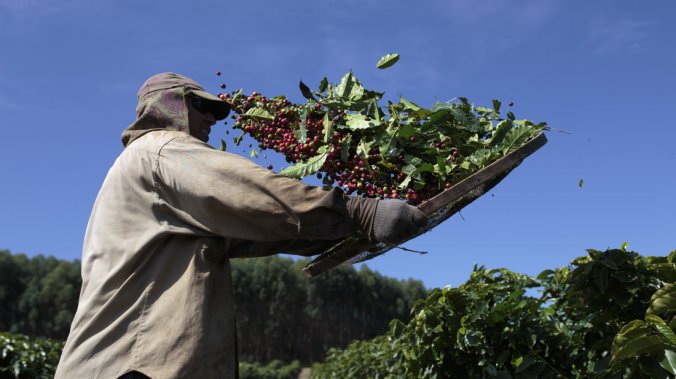
gettyimages-480677832_wide-1b83ea26628e08d9cd240003d21c9c8653357d0c-s1100-c85

A worker separates coffee cherries during harvest at a plantation in Brazil’s Minas Gerais state. Brazil’s coffee exports fell to 2.6 million bags in June, a 12 percent drop from a year ago, according to a report last week by Cecafe, the country’s coffee export council. Patricia Monteiro/Bloomberg via Getty Images

Brazil is not a frequent focus of posts on this platform, primarily because we have not had a project there since before this platform began. But we almost certainly will before too long. And the country’s history in leadership, and in retreat, with regard to the environmental vanguard, are always of interest to us. Coffee and climate change are constant topics here, so this item at National Public Radio (USA) has our attention, with Brazil’s approach to saving its coffee from the ravages of climate change as a hook we are intrigued by:

Coffee And Climate Change: In Brazil, A Disaster Is Brewing

Coffee lovers, alert! A new report says that the world’s coffee supply may be in danger owing to climate change. In the world’s biggest coffee-producing nation, Brazil, the effects of warming temperatures are already being felt in some communities. Continue reading

Paris Gardens

980x-6

By the year 2020, the City of Paris wants to add 100 hectares of vertical gardens and roofs, with a third dedicated to urban agriculture.The Vertical Gardens by Patric Blanc / Flickr

Greening La Ville Lumière is as good a new objective as we can think of for a city that already has alot going for it (thanks to EcoWatch for the story):

Paris Becomes One of the Most Garden-Friendly Cities in the World

Earlier this summer, Paris quietly passed a new law encouraging residents to help green the City of Light by planting their own urban gardens. Continue reading

Conservation, Nature & Culture

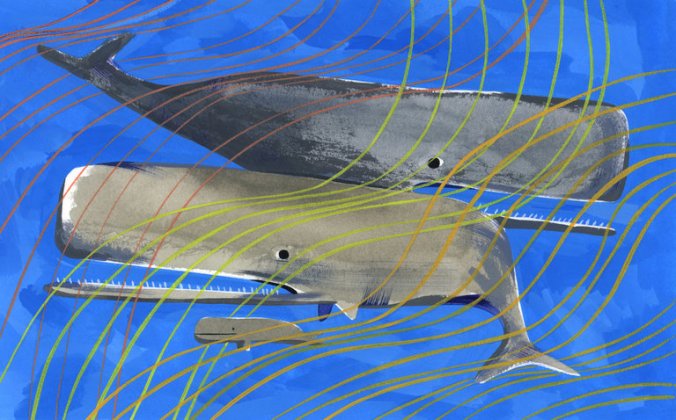
09gero-master768

Credit Ping Zhu

A writer who captures the nuanced relationship between conservation of nature and culture has our attention:

The Lost Cultures of Whales

By

Aboard the Balaena, Caribbean — I am alone on deck, my headphones filled with the sounds of the deep ocean. I have been tracking the sperm whales since 4 a.m. Now the island of Dominica imposes its dark shape in front of the rising sun.

“We have whales!” I shout down to Hal Whitehead, who founded the Dominica Sperm Whale Project with me a decade ago. He puts the kettle on and asks who it is as he comes on deck. Continue reading

Arctic Bumblebees

bees-test-topper-jumbo.jpg

Superb science journalism:

Six Scientists, 1,000 Miles, One
Prize: The Arctic Bumblebee

A team of researchers scours the wilds of northern Alaska for Bombus polaris, a big bee that has adapted to the cold and that can teach them more about the effects of climate change.

By

DALTON HIGHWAY, Alaska — “To bees, time is honey.

— Bernd Heinrich, “Bumblebee Economics

Hollis and Bren Woodard capturing bees next to the Alaskan pipeline. Katie Orlinsky for The New York Times

One hundred miles north of the Arctic Circle, by the side of a dusty road, two women in anti-mosquito head nets peer at a queen bumblebee buzzing furiously in a plastic tube.

“I think it’s the biggest bumblebee I’ve caught in my life!” Kristal Watrous says. Continue reading