Risky Business, Catchy Name For Catchy Idea

RiskyB

Catchy name means, perhaps, we first think of teenaged Tom Cruise playing the air guitar, until we realize it (the organization whose name is Risky Business) is about something serious. Catchy idea means serious (respected) businessmen funding research on a serious (not respected enough, if you consider the volume of deniers out there) looming crisis:

The U.S. economy faces significant risks from unabated climate change. Every year of inaction serves to broaden and deepen those risks. Founded by co-chairs Michael R. Bloomberg, Henry Paulson, and Tom Steyer, the Risky Business Project examines the economic risks presented by climate change and opportunities to reduce them.

Continue reading

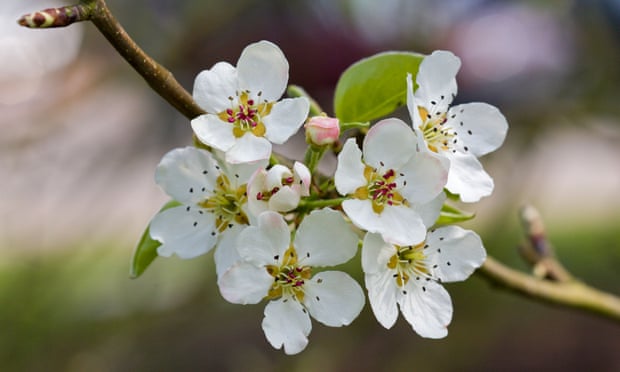
Phenology Disrupted by Climate Change in the UK

The UK has a rich history of biological recording by scientists and ‘citizen scientists’ who document the first signs of spring. Photograph: Alamy/Guardian

We first heard of the word phenology on this site back in 2012, from writings on a citizen science workshop in the Galápagos. Since then, the term has been linked to citizen science in the context of forest life cycles in England, coffee farming in Costa Rica, and orchids in the United Kingdom. It’s a good thing that there’s a history of normal people collecting information on nature’s timelines in Britain, because that provides rich and deep data on changing phenology with a warming climate. Jessica Aldred reports for the Guardian on a new study published in Nature:

Climate change is disrupting the seasonal behaviour of Britain’s plants and animals, with rising temperatures having an impact on species at different levels of the food chain, new research shows.

The result could be widespread “desynchronisation” between species and their phenological events – seasonal biological cycles such as breeding and migration – that could affect the functioning of entire ecosystems, according to the large-scale study published this week in the journal Nature.

Continue reading

Methane from Livestock Has Yet to Decrease

via GreenBiz

A few weeks ago we posted bad news about the higher release of methane gas from cows treated with antibiotics. Data published relatively recently by the U.N. is showing that greenhouse gases produced by livestock and crops are still increasing, unfortunately. John Upton reports for GreenBiz:

As signs emerge that the global energy sector is beginning to rein in what once had been unbridled levels of climate-changing pollution, new United Nations figures show pollution from farming is continuing to get worse.

Greenhouse gases released from the growing of crops and livestock directly increased by a little more than 1 percent in 2014, compared with a year prior, the newly updated data shows.

Continue reading

Bionic Botanic Alchemy

The device uses solar electricity from a photovoltaic panel to power the chemistry that splits water into oxygen and hydrogen, then adds pre-starved microbes to feed on the hydrogen and convert CO2 in the air into alcohol fuels. Credit: Des_Callaghan via Wikimedia Commons

The device uses solar electricity from a photovoltaic panel to power the chemistry that splits water into oxygen and hydrogen, then adds pre-starved microbes to feed on the hydrogen and convert CO2 in the air into alcohol fuels. Credit: Des_Callaghan via Wikimedia Commons

Renewable energy is manifested in multiple forms, utilizing all the classical elements. All the better when innovation brings things full circle in this form of biomimicry.

A tree’s leaf, a blade of grass, a single algal cell: all make fuel from the simple combination of water, sunlight and carbon dioxide through the miracle of photosynthesis. Now scientists say they have replicated—and improved—that trick by combining chemistry and biology in a “bionic” leaf.

Chemist Daniel Nocera of Harvard University and his team joined forces with synthetic biologist Pamela Silver of Harvard Medical School and her team to craft a kind of living battery, which they call a bionic leaf for its melding of biology and technology. The device uses solar electricity from a photovoltaic panel to power the chemistry that splits water into oxygen and hydrogen, then adds pre-starved microbes to feed on the hydrogen and convert CO2 in the air into alcohol fuels. The team’s first artificial photosynthesis device appeared in 2015—pumping out 216 milligrams of alcohol fuel per liter of water—but the nickel-molybdenum-zinc catalyst that made its water-splitting chemistry possible had the unfortunate side effect of poisoning the microbes… Continue reading

Antibiotics, Even Worse than Anticipated

© Conservation Magazine

We disagree with having cows filled with antibiotics, primarily because of the problems created by bacterial resistance to drugs given without cause. But now we’re learning that there’s even more wrong with antibiotics in cattle: their dung releases more methane. Catherine Elton reports for Conservation Magazine:

Antibiotic use and overuse in livestock has long been controversial, as it has been linked to antibiotic resistance in humans. Livestock are regularly given antibiotics to keep them healthy in overcrowded or unsanitary conditions, or even to boost their growth.

Now, a study published recently in the Proceedings of the Royal Society B has documented for the first time that antibiotics given to cows also increase the emissions of the greenhouse gas methane from cow dung.

Continue reading

Palm Oil Problems

By now not many people who are literate and connected to global news can say they did not know that palm oil is problematic; they can only say either that they care, or do not. Knowing where your biodiesel comes from may influence what you can do about this problem:

Leaked figures show spike in palm oil use for biodiesel in Europe

Steep rise between 2010 and 2014 shows link between EU’s renewable energy mandate and deforestation in south-east Asia, say campaigners

3000 (2)

A forest activist inspects land clearing and drainage of peat natural forest Sumatra, Indonesia. Photograph: Ulet Ifansasti/Getty Images

Leaked trade industry figures show a five-fold increase in the use of palm oil for biodiesel in Europe between 2010 and 2014, providing new evidence of links between deforestation in southeast Asia and the EU’s renewable energy mandate. Continue reading

Ecosystem Services in Paris Agreement

We’ve reviewed ecosystem services several times over the years, including payment for them, the potential for ecotourism as a service, and we’re glad to read that the idea is becoming popular again with the new Paris Agreement. Kelly Barnett reports for GreenBiz, starting with coverage on the Adaptation Futures conference in Rotterdam:

In just three days here, roughly 40 presentations focused on the subject of “ecosystems and ecosystem based-adaptation,” and they focused on everything from the restoration of salt marshes that protect coastal communities from rising tides to the protection of Brazil’s Atlantic Forest, which supports a massive agricultural economy.

The event comes just two weeks after Earth Day, when 175 countries signed the Paris Agreement to combat climate change   in part by “ensuring the integrity of all ecosystems, including oceans, and the protection of biodiversity, recognized by some cultures as Mother Earth.”

Continue reading

Read Roger

26cohen-master675

Bleached coral in the Great Barrier Reef. Credit Agence France-Presse/XL Catlin Seaview Survey

Today’s editorial, from his current perch in Australia, is typical of the most reasoned editorialist currently writing for an English language major daily that we know of; so, worth a read:

Coral vs. Coal

Roger Cohen

MELBOURNE, Australia — Tim Flannery, a scientist and environmentalist who was named Australian of the Year in 2007, lost his job in 2013. The right-wing government of then-Prime Minister Tony Abbott shut down the Climate Commission that Flannery headed in a peremptory move designed to demonstrate its contempt for climate change. The commission had been established two years earlier to provide “authoritative information” to the Australian public. Continue reading

A Call to Cut Truck Emissions in EU

Image © prweb.com

The Guardian just keeps the good environmental news coming. Any initiative to reduce carbon emissions is helpful, and to have big companies with clout promote such a goal is admirable and a good sign of cooperation to come. Arthur Nelsen reports:

An alliance of companies including Ikea, Nestle and Heathrow airport have called on the EU to pass new laws cutting truck emissions within two years, to meet promises made at the Paris climate conference.

Heavy duty vehicles make up less than 5% of Europe’s road traffic but chug out a quarter of the sector’s carbon emissions – more than airplanes – and their fuel efficiency has hardly changed in two decades.

Continue reading

A Bird’s Journey Tracked, Mapped & Shared

Screen Shot 2016-05-25 at 5.20.45 AM.jpg

From National Public Radio (USA) today, this should have your attention even if you are not a birder:

We Followed A Snowy Owl From Maryland To Ontario

At the end of 2013, snowy owls started showing up far south of their usual winter range. The big white birds were reported in South Carolina, Georgia, even Florida.

Dave Brinker, an ecologist with the Maryland Department of Natural Resources, had never seen anything like it. Continue reading

Well Done, Portugal!

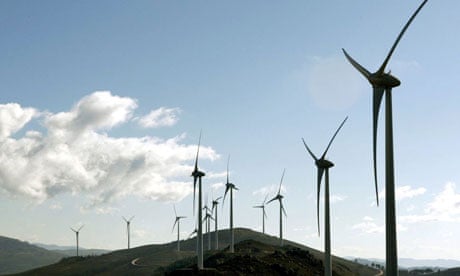
Europe’s biggest wind energy park [in 2008] in the northern region of Viana do Castelo, Portugal. Photograph: Estela Silva/EPA

Always on the look for good news in the sphere of renewable energy, we found out this week that Portugal, a country with a population of over 10 million, operated for 107 hours solely on the alternative energy sources from wind-, solar-, and hydro-powered electricity. Arthur Nelsen reports for The Guardian:

Portugal kept its lights on with renewable energy alone for four consecutive days last week in a clean energy milestone revealed by data analysis of national energy network figures.

Electricity consumption in the country was fully covered by solar, wind and hydro power in an extraordinary 107-hour run that lasted from 6.45am on Saturday 7 May until 5.45pm the following Wednesday, the analysis says.

Continue reading

Adaptation’s Last Chances

lead_960 (1)

Thanks to the Atlantic‘s excellent science writer, Ed Yong, for this:

Climate Change Is Shrinking Earth’s Far-Flying Birds

In which the red knot is the canary, and the planet is the coalmine.

ED YONG

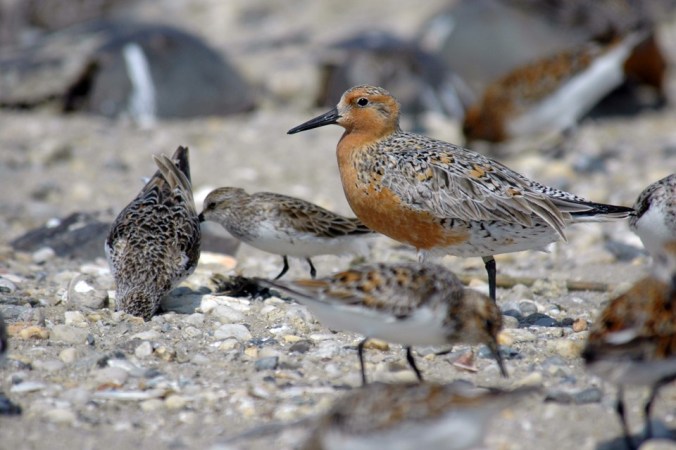
Every year, flocks of red knots criss-cross the globe. In the summer, these shorebirds breed in the Arctic circle, making the most of the exposed vegetation and constant daylight. Then, anticipating the returning ice and continuous night, they fly to the opposite end of the world. Different populations have their own itineraries, but all are epically long: Alaska to Venezuela; Canada to Patagonia; Siberia to Australia.

These migratory marathons mean that the red knot’s fate in one continent can be decided by conditions half a world away. And that makes it a global indicator, a sentinel for a changing world. It is the proverbial canary in the coalmine, except the mine is the planet.

And the canary is shrinking. Continue reading

Balancing Conservation With Use

Bill-Clark_605

Photo courtesy of William Clark. William Clark, Harvey Brooks Professor of International Science, Public Policy, and Human Development at Harvard Kennedy School, has co-authored a new book on sustainability. “Achieving more equitable and sustainable use of the Earth requires a great deal of working together,” he said.

Thanks to the Harvard Gazette for this interview with William Clark:

Pursuing sustainability

A Q&A on connecting science and practice, balancing conservation with use

By Amanda Pearson, Weatherhead Center Communications

United Nations Secretary-General Ban Ki-moon on Friday will welcome 130 heads of state who have pledged to sign the Paris Agreement, the global agreement on managing climate change. For William Clark, Harvey Brooks Professor of International Science, Public Policy, and Human Development at Harvard Kennedy School (HKS), sustainability is a global imperative and a scientific challenge like no other.

Clark sees the Paris Agreement as just one step, though an important one, in this urgent pursuit, as officials wrestle with how to meet the needs of a growing human population without jeopardizing the planet for future generations. He and co-authors Pam Matson of Stanford University and Krister Andersson of the University of Colorado at Boulder tackle that issue in a new book, “Pursuing Sustainability: A Guide to the Science and Practice.” By looking at sustainability as a means of alleviating poverty and enhancing well-being, the book highlights the complex dynamics of social-environmental systems, and suggests how successful strategies can be shaped through collaborations among researchers and practitioners.

Clark, who trained as an ecologist, said that while exhausting Earth’s natural resources would jeopardize future generations, sustainability could counter that. The goal is to find a healthy equilibrium between human adaptation and natural evolution. Clark, the co-director of the Sustainability Science Program at HKS, spoke with the Weatherhead Center for International Affairs about building a more sustainable future. Continue reading

Diesel’s Downsides

4096

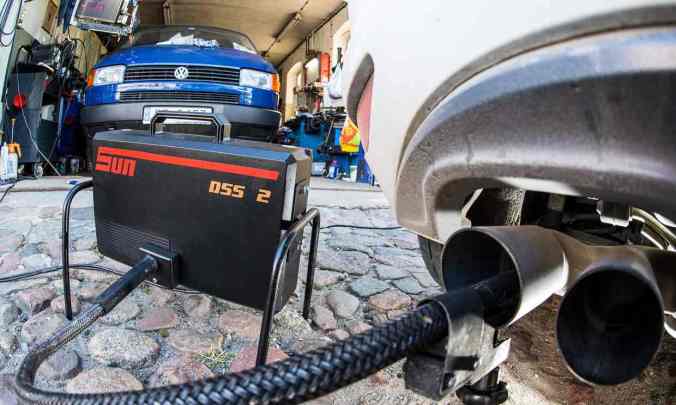
Exhaust from a diesel engine is tested for nitrogen oxides. Photograph: Patrick Pleul/EPA

Thanks to the Guardian’s Environment section:

Europe’s problem with diesel cars

By 

New UK government tests confirm that diesel cars produce a lot more air pollution in real-world driving when compared with the legal tests. Those sold since 2009 emitted six times more nitrogen oxides, on average.

Compared with the stricter standards applied to petrol cars, the average diesel sold between 2009 and 2015 emitted 19 times more nitrogen oxides.

In 2014, more than half of new cars in Europe were diesel, so solving our air pollution problems will not be easy. The Airuse project highlighted the role of taxation in car buying choice. All European countries, except the UK, have lower tax on diesel fuel compared with petrol. Continue reading

Scientists Speak On Behalf Of Yellowstone Grizzly Bears

Thank you, EcoWatch, for keeping us posted on Jane Goodall’s never-ending advocacy on behalf of various members of the animal kingdom we co-inhabit the earth with:

Dr. Jane Goodall is one of 58 prominent scientists and experts who have signed a letter asking the U.S. Fish and Wildlife Service (USFWS) to retain Endangered Species Act protections for Yellowstone-area grizzly bears. Continue reading

McKibben In The Guardian

3840

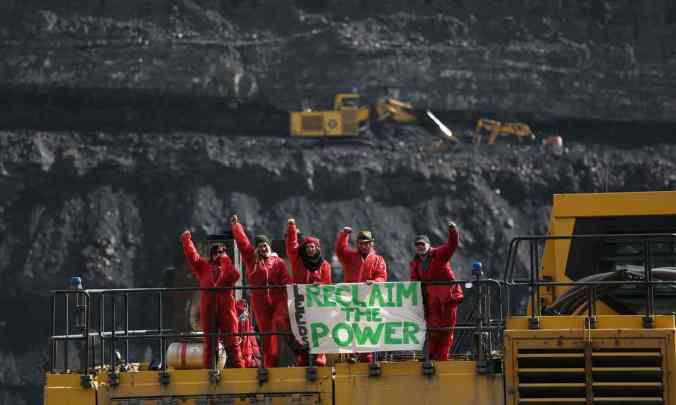
Global direct action began with hundreds of environmental activists invading the UK’s largest opencast coal mine in south Wales on Tuesday. Photograph: Kristian Buus for the Guardian

More McKibben, who we believe we will never tire of sharing here:

The time has come to turn up the heat on those who are wrecking planet Earth

An interesting question is, what are you waiting for?

Global warming is the biggest problem we’ve ever faced as a civilisation — certainly you want to act to slow it down, but perhaps you’ve been waiting for just the right moment. Continue reading

Another Call to Action from McKibben

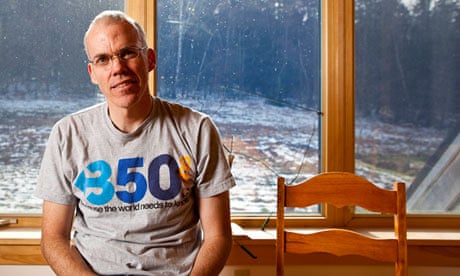
Photo of Bill McKibben by Corey Hendrickson/Polaris via The Guardian

We’ve been sharing pieces about or by Bill McKibben for many years now, like this interview from 2012, the news that he was stepping down from leading 350.org, a piece he wrote for the Guardian last year, and the story of his direct activism in New York a couple months ago. He’s now published an article, once again in the Guardian, about the need to take action around the world against fossil fuel companies. “The time has come to turn up the heat on those who are wrecking planet Earth,” McKibben writes, the question being, what are we all waiting for?

Global warming is the biggest problem we’ve ever faced as a civilisation — certainly you want to act to slow it down, but perhaps you’ve been waiting for just the right moment.

The moment when, oh, marine biologists across the Pacific begin weeping in their scuba masks as they dive on reefs bleached of life in a matter of days. The moment when drought in India gets deep enough that there are armed guards on dams to prevent the theft of water. The moment when we record the hottest month ever measured on the planet, and then smash that record the next month,and then smash that record the next month? The moment when scientists reassessing the stability of the Antarctic ice sheet have what one calls an ‘OMG moment’ and start talking about massive sea level rise in the next 30 years?

Continue reading

Must-Read Editorial

01fagin-blog427

Thanks to the New York Times for carrying this in prominent placement:

A Mine vs. a Million Monarchs

In recent years, Angangueo’s 5,000 inhabitants have been cursed by calamities natural and manufactured. Snowstorms, mudslides and flash floods have terrorized the town. Hulking piles of mine tailings line the main road, barren reminders of the silver, gold and copper mining that petered out a quarter-century ago after defining the community for 200 years.

Even the monarch butterflies that are the focus of the “magic town” tourism campaign are suffering. Millions still roost on nearby mountains, a wintertime spectacle that attracts the visitors from “El Norte” who are the town’s economic lifeline. But the overwintering population of monarchs has fallen by almost two-thirds over the past dozen years, and this year’s better-than-usual aggregation was abruptly devastated in March by another freak snowstorm, the worst in years. Continue reading

Get Ready For New Foods

4167

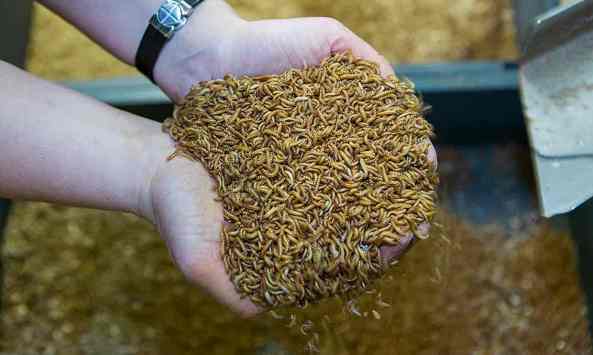
Edible insects are currently expensive, but bug farmers believe economies of scale will bring lower prices. Photograph: Proti-Farm

We cannot help but wonder which type of salt may be considered most appropriate for the new menu items coming soon to a table near you; but seriously, get ready:

The worm has turned: how British insect farms could spawn a food revolution

With meat prices expected to soar, agricultural entrepreneurs believe invertebrate livestock can provide the protein we need. But will the mainstream ever be ready to eat mealworms?

It could be the tumbledown, moss-covered drystone walls marking the boundaries of land that has been farmed since the arrival of the Norse settlers. Or the gentle meanderings of the river Eden through the shadows of the Cumbrian fells. Or the proximity of the Settle-Carlisle railway line. All in all, Thringill Farm seems an unlikely setting for a 21st-century food revolution. Continue reading

Ornithological Climate Change Indicators

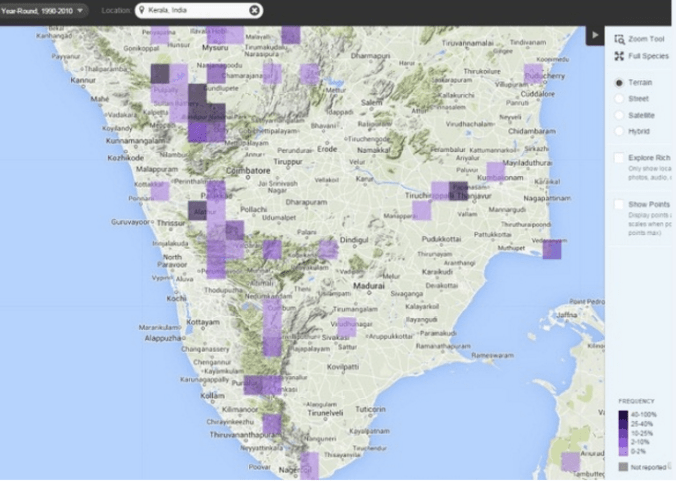
Map showing peafowl-sightings between 1990-2010 (Source: Cornell Lab of Ornithology and the National Audubon Society)

Map showing peafowl-sightings between 1990-2010 (Source: Cornell Lab of Ornithology and the National Audubon Society)

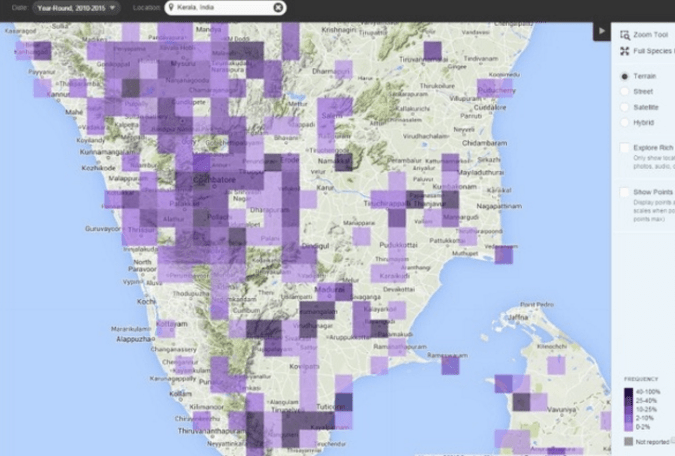
Map showing peafowl-sightings in Kerala between 2010-2015 (Source: Cornell Lab of Ornithology and the National Audubon Society)

Map showing peafowl-sightings in Kerala between 2010-2015 (Source: Cornell Lab of Ornithology and the National Audubon Society)

Few of our readers will fail to notice that eBird and Citizen Science are important elements of the RAXA Collective DNA. Stories related to Kerala and the state’s healthy birding population are equally on our radar.

The folks at India Climate Dialogue recently turned to eBird observations to document changes in climate patterns in Kerala, an important watershed state for the Indian subcontinent using peafowl population as one of the indicators. Especially during mating season, the birds find it difficult to move their trailing feathers in areas of dense foliage, so they’re attracted to drier climactic areas. The eBird data above illustrates their movement into Kerala, meaning more areas are opening up.

High heat in February-March is not unusual in Kerala, and in reality it is this heat trough that pulls the monsoon from Indian Ocean into the Indian subcontinent. The heat epicentre heralds the monsoon and runs like a pilot car through the peninsula, taking the same path that the southwest monsoon will follow a few months later. Since the southwest monsoon starts from the coast of Kerala, it is the state that has to feel the heat first, so that pre-monsoon showers start in May and the monsoon arrives in June. Continue reading