To The Forest, Once Again

Screen Shot 2015-03-28 at 7.05.16 AM

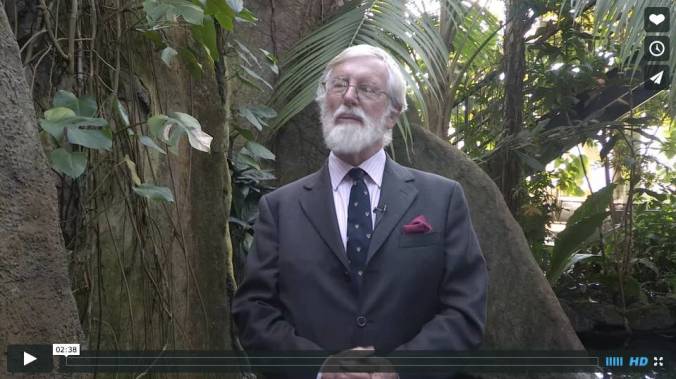
Oliver Sacks, this week, shares a very brief, but powerful reverie that also brings our attention to the man above and the book below.  All seem worthy of your time:

Driving down Ninth Avenue, choking on diesel fumes from a truck just ahead of us, I say to my friend Billy (he is exactly two-thirds my age), “I wonder whether you will see the end of internal-combustion engines, the end of oil, a cleaner world.”

Screen Shot 2015-03-28 at 7.14.40 AMA cleaner world. The thought zooms me away from Ninth Avenue to a forest world—in particular, to the one described in “That Glorious Forest,” Sir Ghillean Prance’s book about his thirty-nine visits to the Amazon in the past fifty years. Prance, one of our greatest tropical botanists, is very much in the tradition of Henry Walter Bates and Alfred Russel Wallace and Richard Spruce, who charted the region in the eighteen-fifties. But Prance’s is not just a botanical eye: he sees what we are doing to the Amazon and its many peoples; he speaks for conservation Continue reading

Bummer Of A Finding

Another day, another news cycle. Another week, another wave of stories on topics we care about, some fun, some inspirational, some downright scary. In science news, a story we find not particularly surprising, but we must share it:

24RAINFOREST-thumbStandardAmazon Forest Becoming Less of a Climate Change Safety Net

By JUSTIN GILLIS

The ability of the Amazon basin to soak up excess carbon dioxide is weakening over time, researchers reported last week.

Anthropocene Perspective

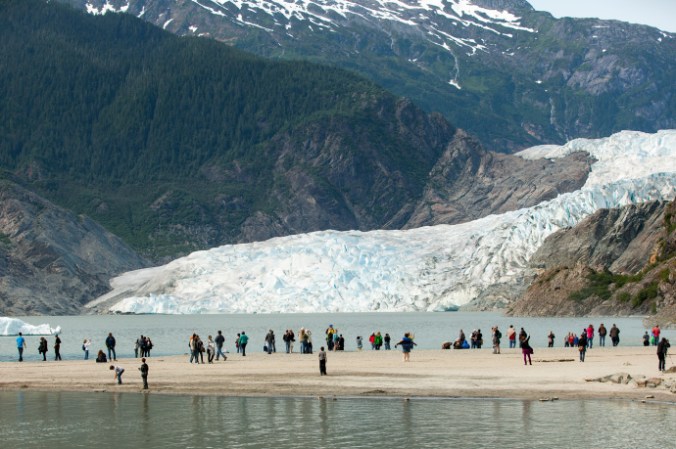
Tourists visit the the Mendenhall Glacier, in Alaska. Geologists are considering whether humans’ impact on the planet has been significant enough to merit the naming of a new epoch. CREDIT PHOTOGRAPH BY MATTHEW RYAN WILLIAMS/THE NEW YORK TIMES/REDUX

Tourists visit the the Mendenhall Glacier, in Alaska. Geologists are considering whether humans’ impact on the planet has been significant enough to merit the naming of a new epoch. CREDIT PHOTOGRAPH BY MATTHEW RYAN WILLIAMS/THE NEW YORK TIMES/REDUX

Thanks to, Michelle Nijhuis in general, for her science writing and environmental journalism–making these topics simultaneously fun and fascinating, if also sometimes depressing; and to the New Yorker for making space for this note in which she briefly explains the naming of the epoch we live in:

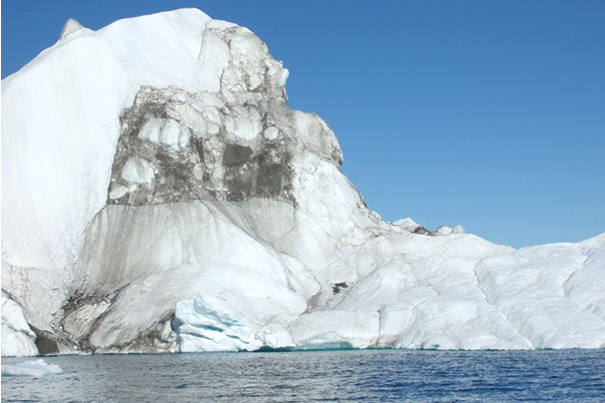
The duties of the Anthropocene Working Group—a thirty-nine-member branch of a subcommission of a commission of the International Union of Geological Sciences—are both tedious and heady. As the group’s chairman, Jan Zalasiewicz, whom Elizabeth Kolbert wrote about, in 2013, says wryly, “People do not understand the very slow geological time scale on which we work.” Yet the A.W.G.’s forthcoming recommendations may bring an end to the only epoch that any of us have ever known—the Holocene, which began after the last ice age, about twelve thousand years ago, and lasts to this day. The group’s members are pondering whether the human imprint on this planet is large and clear enough to warrant the christening of a new epoch, one named for us: the Anthropocene. If it is, they and their fellow-geologists must decide when the old epoch ends and the new begins.

In a paper published today in the journal Nature, Continue reading

Florida, Marbles Lost

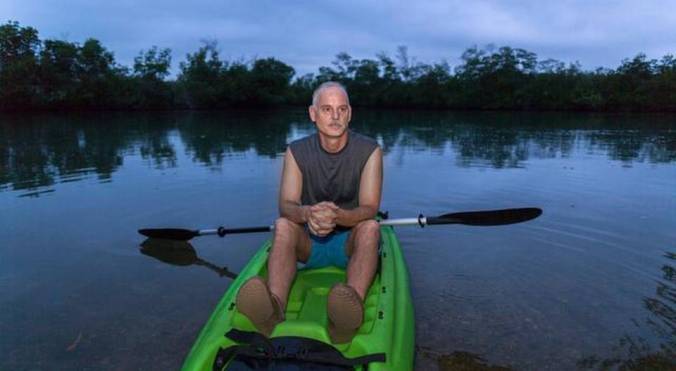
In 2013, Jim Harper, a nature writer in Miami, had a contract to write a series of educational fact sheets about how to protect the coral reefs north of Miami. ‘We were told not to use the term climate change,’ he said. ‘The employees were so skittish they wouldn’t even talk about it.’ JOHN VAN BEEKUM FOR THE MIAMI HERALD

In 2013, Jim Harper, a nature writer in Miami, had a contract to write a series of educational fact sheets about how to protect the coral reefs north of Miami. ‘We were told not to use the term climate change,’ he said. ‘The employees were so skittish they wouldn’t even talk about it.’ JOHN VAN BEEKUM FOR THE MIAMI HERALD

Knowing the Miami Herald has been recognized as a newspaper of reasonably high standards, we cannot chalk this up to careless reporting. We wish there was something intelligent to say about the news they report on this article, but are left without words, so we can only say read it for yourself:

The state of Florida is the region most susceptible to the effects of global warming in this country, according to scientists. Sea-level rise alone threatens 30 percent of the state’s beaches over the next 85 years.

But you would not know that by talking to officials at the Florida Department of Environmental Protection, the state agency on the front lines of studying and planning for these changes.

DEP officials have been ordered not to use the term “climate change” or “global warming” in any official communications, emails, or reports, according to former DEP employees, consultants, volunteers and records obtained by the Florida Center for Investigative Reporting. Continue reading

Resistance Is Not Futile

Pisonia with acidification graph 2009, Judy Watson, acrylic and chinagraph pencil on canvas, 214.5 x 191.5 cm

Pisonia with acidification graph 2009, Judy Watson, acrylic and chinagraph pencil on canvas, 214.5 x 191.5 cm

We have not seen him for a noticeable stretch of time, but glad to read the words of one of the singular voices of our generation, leading the charge, again:

In the third piece in the Guardian’s major series on climate change, Bill McKibben describes how relentless climate movements have shifted the advantage towards fossil fuel resistance for the first time in 25 years. But he argues triumph is not certain – we must not rest till the industry is forced to keep the carbon in the ground.

You can read previous pieces here

The official view: all eyes are on Paris, where negotiators will meet in December for a climate conference that will be described as “the most important diplomatic gathering ever” and “a last chance for humanity.” Heads of state will jet in, tense closed-door meetings will be held, newspapers will report that negotiations are near a breaking point, and at the last minute some kind of agreement will emerge, hailed as “a start for serious action”. Continue reading

Sugar Beets, Wherefore Art Thou?

shutterstock_79736593

A Dutch scientist has created a process for turning sugar beet leaves into protein. Photo credit: Shutterstock

Thanks to Ecowatch, we can consider the long lost love of our better, healthier selves, found:

Sugar Beet Leaves Create Vegan Protein Alternative

Katie Levans

A scientist in the Netherlands is turning plant waste into a potential substitute for environmentally unsustainable proteins like meat, dairy and soy. The Dutch government commissioned Peter Geerdink, a food scientist at TNO, to identify a use for the 3 million tons of beet sugar leaves produced each year and left to rot after the beets themselves are harvested. The result of his work is a vegan gluten-free plant-based protein extracted from the pressed green juice of sugar beet leaves that, according to Geedink, is as versatile as a chicken egg.

Continue reading

Understanding Climate Change Through Craters

The jury is no longer out on how climate change has been influenced by man, since the dawn of the Industrial Revolution and especially in the last 70 years. But the jury has not even convened yet on many phenomena in the natural world, including some geological oddities. Thanks to National Geographic‘s news service for this story from the far reaches of Siberia:

New Theory Behind Dozens of Craters Found in Siberia

Scientists narrow down the cause and think it is related to warming.

When a massive and mysterious hole was discovered in Siberia last July (see pictures), social media users pointed to everything from a meteorite to a stray missile to aliens to the Bermuda Triangle as possible causes. But the most plausible explanation seemed to be the explosive release of melting methane hydrate—an ice-like material frozen in the Arctic ground—thanks to global warming.

yamal-craters-siberia-new-explanation_89023_990x742

A Russian scientist prepares to descend into a mystery crater in Siberia in November. More holes have since been found. PHOTOGRAPH BY VLADIMIR PUSHKAREV, THE SIBERIAN TIMES

Continue reading

Geothermal Engineering, Radical Solutions

NAS_Clouds_courtesy-Flickr-user-Janne-Morem

Photo by Janne Morem/Flickr. Could global warming be overcome by releasing light-reflecting chemicals into the atmosphere? With safety and efficacy at the forefront of debate, David Keith discusses the moral and political quandaries surrounding the science of geoengineering.

We have mentioned geothermal engineering on and related topics on than one occasion, but there is a more radical branch of engineering the thermal options at our disposal, with special regard to the climate change “solutions” debate. Thanks to Harvard Gazette for this informative interview on the topic:

Climate engineering: In from the cold

Keith says new reports will likely boost deeper look at geoengineering concepts

When the National Academy of Sciences (NAS) released a pair of reports this month on geoengineering, which involves deliberately intervening in the climate system to counter global warming, discussion of the controversial topic moved into the mainstream science community. The reports concluded that geoengineering is no silver bullet, and that further research is needed. Continue reading

Coral Manipulation

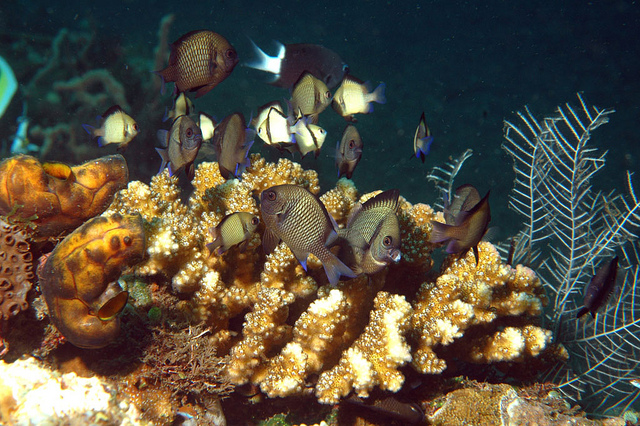
Coral garden in Indonesia. Credit: Global Environment Facility via Flickr (Creative Commons License)

Coral garden in Indonesia. Credit: Global Environment Facility via Flickr (Creative Commons License)

We’re keeping an eye on the health of coral reefs in the Caribbean with the help of RAXA contributor Phil Karp, who has been writing specifically about the impact of invasive lionfish on the marine ecosystem.  In this piece for Conservation Magazine, Sarah DeWeerdt discusses the option of taking a more active role in improving the health of corals through acclimatization:

The past several decades have been tough on the world’s coral reefs. Warming waters, ocean acidification, invasive predators, and toxic runoff have hammered these iconic hotspots of underwater biodiversity.

In response, conservationists have developed coral ‘gardens’ where young corals are reared to help rebuild damaged reefs. But some scientists worry that existing restoration strategies won’t match the pace and magnitude of the threats these animals face.

In a paper published February 2 in the Proceedings of the National Academy of Sciences, biologists from the Australian Institute of Marine Science and the Hawaii Institute of Marine biology propose a more radical approach, which they call assisted evolution.

Continue reading

21st Century Alchemy

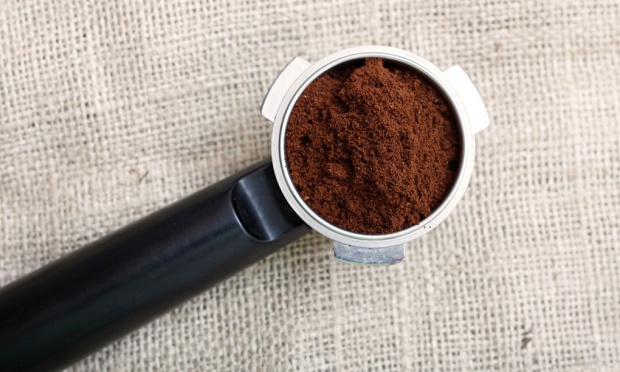
Scientists at the City University of Hong Kong can turn coffee grounds and stale bakery goods into a sugary solution that can be applied to manufacture plastic. Photograph: Alamy

Scientists at the City University of Hong Kong can turn coffee grounds and stale bakery goods into a sugary solution that can be applied to manufacture plastic. Photograph: Alamy

We frequently talk about the recycling on these pages, with an eye toward the developing awareness that the concept is no longer limited to inorganic, static materials. This recent article in the Guardian indicates that plant cellulose based plastic is just the tip of the iceberg in the possible ways to convert the mountains of food waste in many parts of the world into materials with environmental benifits.

Scientists at the City University of Hong Kong have found that they can turn coffee grounds and stale bakery goods – collected from a local Starbucks – into a sugary solution that can be used to manufacture plastic. The food waste was mixed with bacteria and fermented to produce succinic acid, a substance usually made from petrochemicals, that can be found in a range of fibres, fabrics and plastics. Continue reading

Heroic Termites

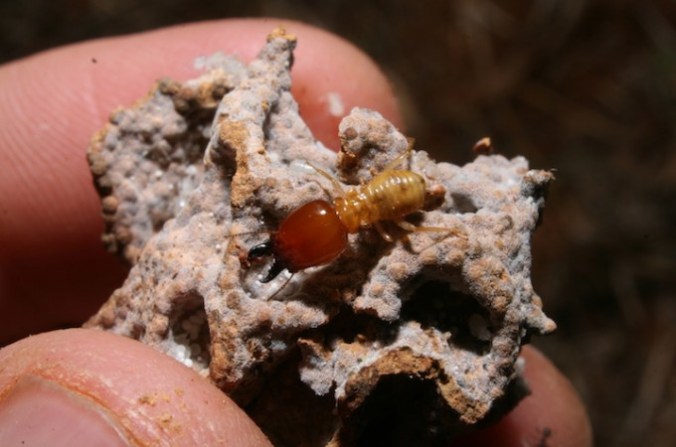
Termite on a fragment of its nest. Credit: Photo by Robert Pringle, Princeton University Department of Ecology and Evolutionary Biology.

Termite on a fragment of its nest. Credit: Photo by Robert Pringle, Princeton University Department of Ecology and Evolutionary Biology.

Conservation, on hiatus while they rethink their approach to a constantly rapid-fire changing media landscape, still provides the daily summaries of important environmental news to which we have become accustomed:

TERMITES EMERGE AS UNLIKELY CLIMATE HEROES

In the past several years, designers have looked to termite nests, earthen mounds that dot grasslands throughout the tropics, as a model for energy-efficient dwellings. Now, a study suggests that these mounds may also make their own landscapes more resilient to climate change, preventing savannas from turning into deserts during periods of drought. Continue reading

Fixed-Dome Bio Gas

Bio-

Bio-Gas Plant

In my opinion sustainable tourism/practices, if done correctly and efficiently, will both benefit the environment and a company or individual. Although today, we are still trying to accomplish the previous with as much at hand as possible. Ideally, sustainability will come hand in hand with positive environmental outcomes and social and economic benefits.
However, some practices are more beneficial (in both instances) than others. Take recycling paper for example: the margin in producing new paper vs. recycling is much lower so incentives are likely lower. Aluminum cans on the other hand are much more cost effective to recycle, bringing higher benefits to both the producer (by reusing material) and for the environment (aluminum has a longer decomposition time). Continue reading

Urban Homesteading, Inspiration For Kayal Villa & 51

This urban homestead produces 6,000 pounds of food a year.

This urban homestead produces 6,000 pounds of food a year.

When Kayleigh completed her internship, she left in place a great banana genome initiative as part of the edible gardens landscape at Marari Pearl; ditto for the farm-to-table initiative at Kayal Villa, supplying organic produce and dairy to 51, the restaurant at Spice Harbour. Reading the article below, as always with such stories, we are glad to be part of this particular corner of the green revolution with goals akin to those of a family in Pasadena, California, USA:

Think you can’t grow much food in an urban area? Think again. One family’s 4,000 square foot farm in Pasadena, California “not only feeds a family but revolutionizes the idea of what can be done in a very unlikely place—the middle of a city.” KCET reporter Val Zavala gives us a glimpse into the Dervaes family’s Path to Freedom Urban Homestead. “I brought the country to the city rather than having to go out to the country,” said Jules Dervaes, who created the farm with his three adult children, Justin, Anais and Jordanne.

Continue reading

Please Do The Needful

An Indian girl stands near a kite with portraits of India’s Prime Minister Narendra Modi and US President Barack Obama, displayed for sale at a shop ahead of the Hindu festival of Makar Sankranti, also knowns as kite festival, in Hyderabad, India, 12 January 2015. Photograph: Mahesh Kumar A./AP

An Indian girl stands near a kite with portraits of India’s Prime Minister Narendra Modi and US President Barack Obama, displayed for sale at a shop ahead of the Hindu festival of Makar Sankranti, also knowns as kite festival, in Hyderabad, India, 12 January 2015. Photograph: Mahesh Kumar A./AP

Down here in Kerala the air is perfectly clean, and the biodiversity hotspot of the Western Ghats may spoil us into thinking all is well with the environment; but it is not. And the meeting of these two heads of state could do something substantive about it. We hope they do (the needful, as they say in India):

…“The co-operation on clean energy and climate change is critically important,” Ben Rhodes, the deputy national security adviser, told a conference call with reporters.

America is hoping to persuade India, one of the world’s biggest emitters, to commit to an ambitious post-2020 plan for reining in its greenhouse gas emissions ahead of the international climate change meeting in Paris this December. Continue reading

More Less Than Good News Related To The Effects Of Climate Change

Sea level correction. Increase has been more intense than previously understood, study says

Photo by Robert Kopp. “What this paper shows is that sea-level acceleration over the past century has been greater than had been estimated by others,” said Eric Morrow, a recent Ph.D. graduate. “It’s a larger problem than we initially thought.”

We were not looking for more bad news today, really; but science has that unrelenting need to march forward, and this news from the latest finding is not so good (thanks to Harvard Gazette):

Sea level correction

Increase has been more intense than previously understood, study says

By Peter Reuell, Harvard Staff Writer

The acceleration of global sea level change from the end of the 20th century through the last two decades has been significantly swifter than scientists thought, according to a new Harvard study. Continue reading

Sometimes The Truth Is Hard To Believe

Photo by Christopher Halloran/Shutterstock.com, modified by Phil Plait

Photo by Christopher Halloran/Shutterstock.com, modified by Phil Plait

We try to minimize the doom and gloom and accentuate the solutions; but sometimes our eyebrows rise to new heights and we must share:

Yup, a Climate Change Denier Will Oversee NASA. What Could Possibly Go Wrong?

By Phil Plait

So, Sen. Ted Cruz (R-Texas) was just named to be the chairman of the Subcommittee on Space, Science, and Competitiveness as Republicans take over the Senate. This subcommittee (which used to be just Space and Science but was recently renamed) is in charge of oversight of, among other things, NASA.

This is not a good thing. Just how bad it is will be determined. Continue reading

Particulate Matter Pollution

A view of the Eiffel Tower through smog in March. Several regions of France experienced high levels of particulate pollution that month. Credit Patrick Kovarik/Agence France-Presse — Getty Images. Via The New York Times.

We’re always interested in learning about pollution and ways to counter it, no matter what kind of pollution it is. Roughly a week ago Michael Greenstone, the Milton Friedman professor of economics at the University of Chicago, wrote a piece for the New York Times about particulate matter pollution, which we have limited knowledge of. Some of the data Greenstone explained was fairly surprising, and we learned more about this serious form of air pollution. Here he is on the topic:

The World Health Organization considers fine particulate matter pollution levels higher than 10 micrograms per cubic meter to be unsafe. The majority of American cities are in the safe zone, with the average pollution level at 9.6. Thirty-three percent of cities are above the W.H.O. standard. Those cities tend to be geographically dispersed throughout the United States, but are predictably cities with heavy industry and driving, like Cleveland, Chicago, Los Angeles and Philadelphia. Outside of the W.H.O., the United States has its own particulate matter standard of 12 micrograms per cubic meter. The pollution in 13 percent of American cities is higher than that.

Continue reading

Canadian Outdoor Hockey – Threatened by Climate Change?

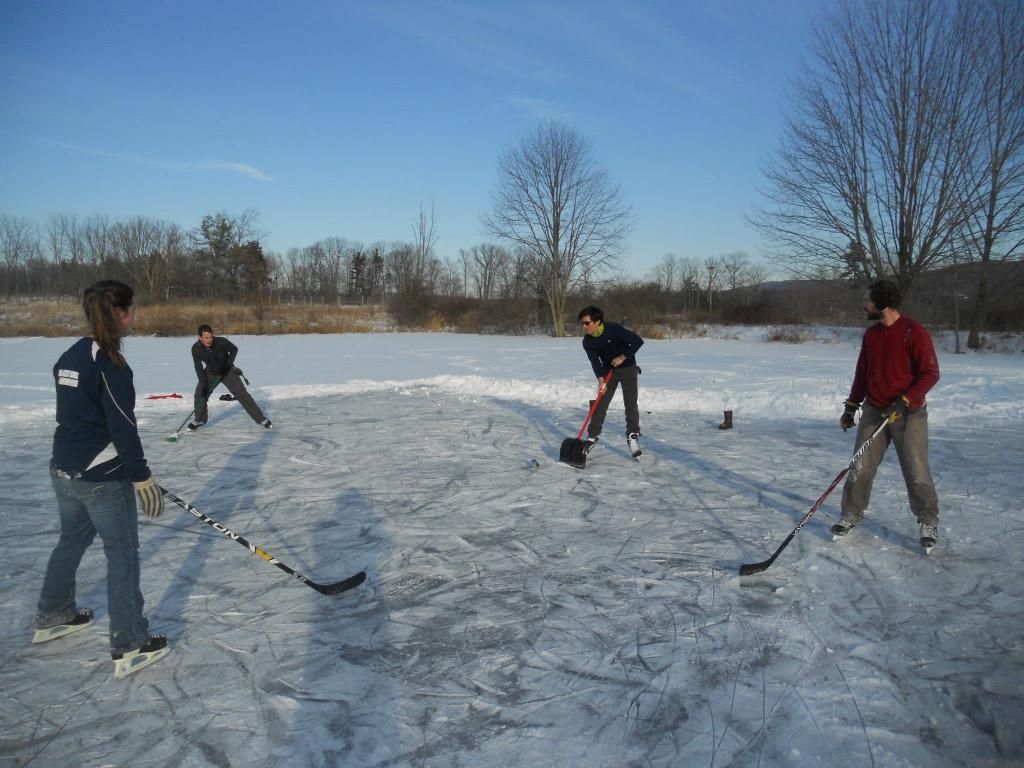
Photo of Cornell students playing outdoor hockey somewhere in NY, by Miles Luo

While a student at Cornell University, I played hockey out on a pond multiple times, and always had fun even on the occasions when several of us needed to use brooms or shovels as hockey sticks, and a crushed pineapple juice can as a puck. In recent years, it’s been a little tougher to find a good time to play since temperatures have fluctuated so wildly sometimes. Since my friends and I like to stay very conservative with our estimates on the ice’s thickness, an unusually warm day after a series of extremely cold — and typical Ithaca — ones can set us back a bit as we wait for a safer time to get on a pond.

So I at least partly understand the angst of all outdoor hockey-loving Canadians as described by Dave Levitan for Conservation Magazine:

Take anything from Canadians, anything at all—anything except hockey.

Few countries have such a relationship with an individual sport; cricket in India, soccer (football) in Brazil or various others, hockey in Canada. And while the Maple Leafs and the Canadiens aren’t going anywhere, the sport as it is played by millions of others in Canada is in serious danger thanks to climate change.

Continue reading

Forests Are Life

23FOREST-slide-O45T-mediumFlexible177We are happy, for the sake of the next generation(s), to read this news:

Restored Forests Aid Climate Change Efforts

Driven by a growing environmental movement, corporate and government leaders are making a fresh push to slow the cutting of rain forests — and eventually to halt it.

Horseshoe Crab, An Awesome Creature Facing Awesome Challenges, Creating Awesome Challenges

imrs

This is not the first time we have read about the various reasons to appreciate the horseshoe crab, though apparently we have only posted on small feature on them before. However, they play a critical role in the livelihood of another creature from a different part of the animal kingdom, as this story in the Washington Post describes:

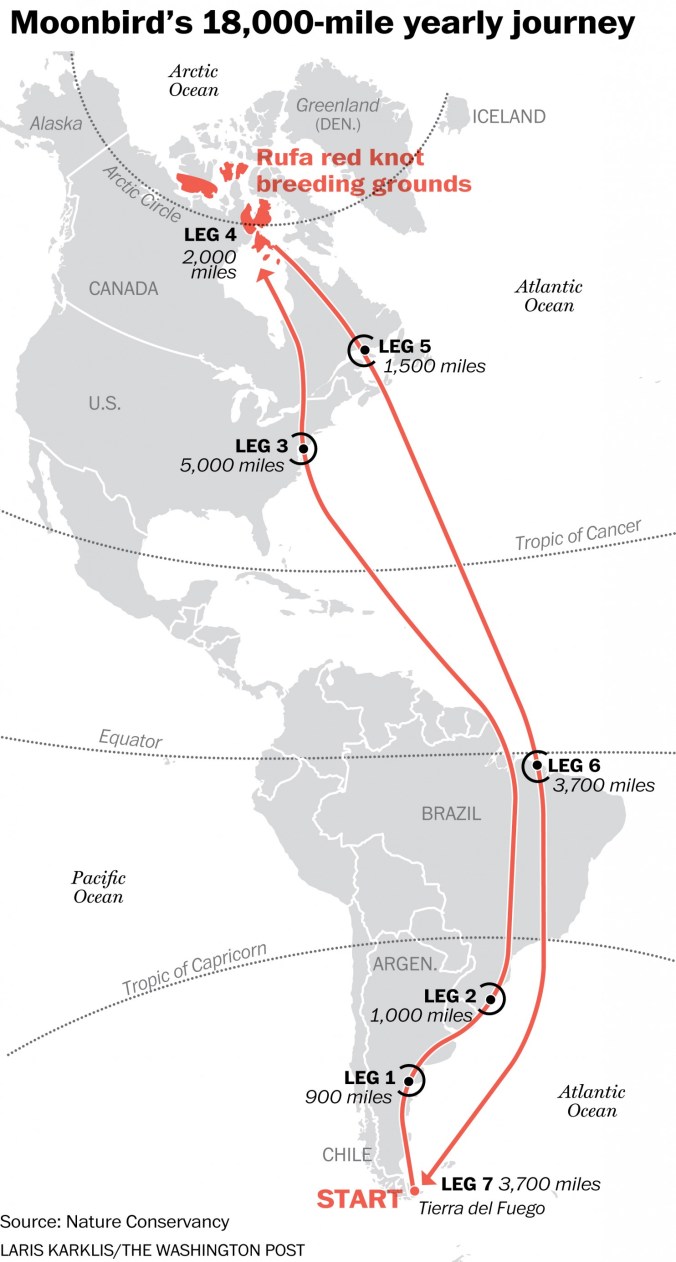
“We had actually attached small devices that tracked their migrations,” explains Niles, “and they made 6 day flights without stopping to get to the Delaware Bay. So they would arrive completely bereft of energy, their weight would be sometimes far lower than their fat free weight, which meant they were burning muscle to get to the Delaware Bay. And the horseshoe crabs were laying eggs in such density that there was no work involved.” Continue reading