Pop-up Lake At Badwater Basin Salt Flats, Death Valley

Visitors gather at the sprawling temporary lake in the Badwater Basin salt flats of Death Valley national park, California. Photograph: Mario Tama/Getty Images

We had been wondering what the place might look like after Burning Man brought the rare weather to our attention:

Death Valley visitors delight in rare ephemeral lakes left behind by storm

Shimmering bodies of water have appeared in the sand dunes of the recently reopened national park after a summer deluge

After months of closure, visitors to Death Valley national park are being greeted by stunning new features, including lakes left behind by a ferocious summer deluge. Continue reading

Pricing Flights Realistically

United Airlines wants to zero out its greenhouse gas emissions by 2050, but without using conventional carbon offsets. Nicolas Economou/NurPhoto via Getty Images

If airlines can quantify what it would cost to become carbon neutral within a relevant timeframe, it implies that we know by how much they are currently fudging their investment model. If it is going to require an investment of X number of dollars over Y number of years to achieve carbon neutrality then they should invest, and price their flights accordingly. Then we will all know the real cost of flying, including the environmental cost. Thanks to Umair Irfan (long time since we last saw his work) and to Vox for this:

Emirates demonstrated a Boeing 777 flight fueled with SAF earlier this year. Giuseppe Cacace/AFP via Getty Images

Airlines say they’ve found a route to climate-friendly flying

Cleaner, faster, cheaper — the aviation industry’s plan to decarbonize air travel, explained.

If you’ve caught an ad for an airline lately on TV, a podcast, or the entertainment display on your flight, you’ve probably heard the company brag about what it wants to do about climate change.

Major airlines like AmericanDeltaSouthwest, and United have all set targets of achieving net-zero greenhouse gas emissions by 2050. They’re using a suite of tactics including buying more fuel-efficient aircraft, electrifying their ground vehicles, and increasing the efficiency of their operations. They’re also testing the winds on battery- and hydrogen-powered planes, as well as some radically different aircraft designs. Continue reading

Preferred Pet Practices

Pet owners can reduce the carbon footprint of their furry loved ones without affecting their health, experts say. Photograph: Getty Images

Pets have featured in exactly one prior post in our pages. Now, thanks to Dwayne Grant and the Guardian, we see there is a topic related to pets quite relevant to our interests:

Throw a dog a bean: how to reduce the carbon footprint of your pets

Thinking about what your dog or cat eats and the products you buy for them can lessen the impact they have on the planet

Did you hear the one about the luxury aviation CEO who claims pets cause as much carbon pollution as private jets? Continue reading

Rishi Doubles Down On Awful

Prime Minister Rishi Sunak announcing last month that the U.K. will delay the phaseout of gasoline and diesel cars. JUSTIN TALLIS / POOL VIA AP

When leadership is most needed, the special relationship between the UK and the USA should count for something, but so far no sign of the USA pressing back on the UK’s awful reversal on their already tepid recent leadership on climate. We knew that leadershsip was lacking in the UK. The Orwell-worthy podium messaging in the photo to the left says all you need to know about efforts to obfuscate, but read Fred Pearce‘s account in Yale e360 anyway:

Demonstrators in Edinburgh protest the government’s recent approval of drilling in the Rosebank North Sea oil field. PRESS ASSOCIATION VIA AP IMAGES

Why Is Britain Retreating from Global Leadership on Climate Action?

While Britain has long been a leader in cutting emissions, Prime Minister Rishi Sunak is now implementing a stunning reversal of climate-friendly policies, with new plans to “max out” oil production. Business leaders have joined environmentalists in condemning the moves.

In 1988, British Prime Minister Margaret Thatcher became the first world leader to take a stand on fighting climate change. Continue reading

Climate Leadership Lacking In Too Many Places

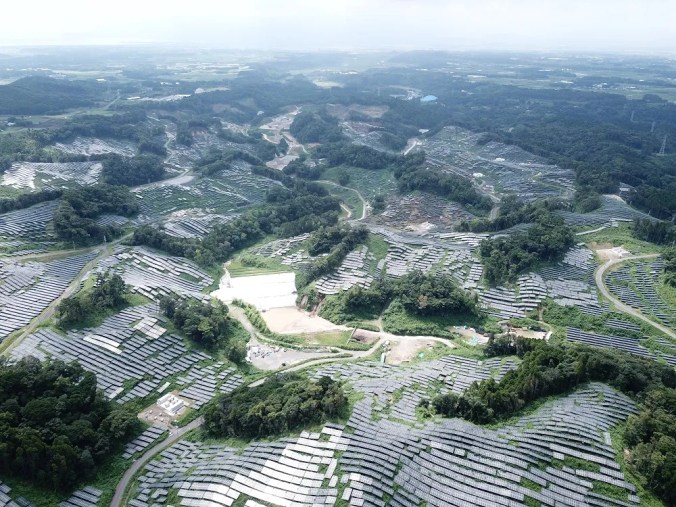
Once a golf course, now a solar farm supplying tens of thousands of homes in Japan

If you know a bit about Japan’s love of golf, the photo above says alot about leadership there in moving away from fossil fuels in the direction of alternative energy. But it is too little too late compared to what is happening elsewhere. Thanks as always to Bill McKibben for his newsletter:

Energy from Heaven

and not from Hell/Exxon.

Amid the torrent of hideous news last week, one item might have skipped your notice: Exxon announced the acquisition—its biggest since picking up Mobil a quarter century ago—of one of the largest fracking operators in the world. As the AP reported, “including debt, Exxon is committing about $64.5 billion to the acquisition, leaving no doubt of the Texas energy company’s commitment to fossil fuels.” In fact, it’s the declaration of conviction that they think they have enough political juice to keep us hooked on oil and gas for a few more decades, even in the face of the highest temperatures in 125,000 years. Continue reading

Fossil Fuel-free Ammonia

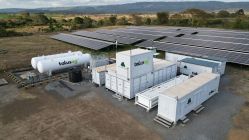
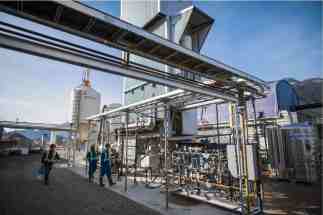
A fossil fuel-free ammonia plant at the Kenya Nut Company, near Nairobi. TALUS RENEWABLES

Alternative fertilizer has been something of an environmental holy grail, and this technology looks to be large step in the right direction. Have a look at the two companies mentioned in this Yale e360 news short:

Farm in Kenya First to Produce Fossil-Free Fertilizer On Site

The Kenya Nut Company, near Nairobi, will be the first farm in the world to produce fertilizer, on site, that’s free of fossil fuels.

small fertilizer plant, built by U.S. startup Talus Renewables, will use solar power to strip hydrogen from water. Continue reading

Climate Change As Understood By Helen Czerski’s Macro Physics

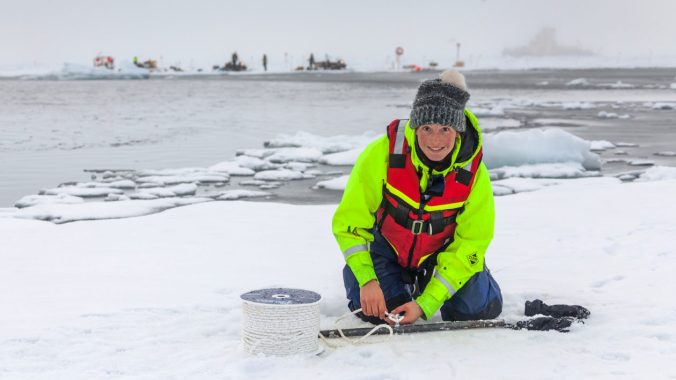
Helen Czerski on a 2018 ocean research expedition to the North Pole. MARIO HOPPMANN

We non-scientists have learned much from the scientists who study climate change, and surprises keep coming, this one from physicist Helen Czerski:

The Pacific Ocean, as seen from space. NASA

The Planet’s Big Blue Machine: Why the Ocean Engine Matters

The ocean is an enormous engine, turning heat energy into motion, says physicist Helen Czerski. But human activity is threatening that machine — depriving the seas of oxygen, increasing stratification, and potentially changing the currents that influence global weather.

Photographs of Earth taken by astronauts in space more than half a century ago revealed a blue planet dominated by oceans and billowing with clouds. Continue reading

Really, Cargill?

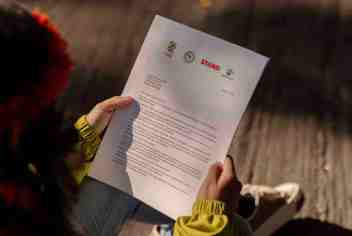
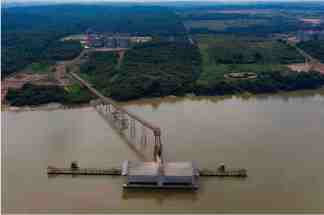
Beka will hand-deliver a letter to the Cargill-MacMillian dynasty in Minneapolis on Thursday, calling on the billionaire owners of America’s biggest private company to stop destroying the Amazon rainforest and its people. Photograph: Thalia Juarez/The Guardian

Cargill has appeared a few times in our pages over the years, not always showing poor stewardship. But today, we have to ask whether they really are trying as diligently as possible to do the right thing. We applaud Beka and her community for this letter, and hope the recipients respond with the sense of responsibility that comes with their wealth:

A Cargill transshipment port for soy and corn projects on the Tapajos River in Itaituba, Para state, Brazil, in 2019. Photograph: Léo Corrêa/AP

‘Our world hangs by a thread’: Indigenous activist asks US agri giant to stop destroying Amazon rainforest

Beka Saw Munduruku , 21, traveled 4,000 miles to deliver letter and confront family behind Cargill empire over what she says amounts to a litany of broken promises

A 21-year-old Indigenous activist from a remote Amazonian village will hand deliver a letter to the Cargill-MacMillan dynasty in Minneapolis on Thursday, calling on the billionaire owners of the US’s biggest private company to stop destroying the Amazon rainforest and its people. Continue reading

Really, Kiel?

We are surprised that his employer cannot appreciate his decision:

Dr Gianluca Grimalda. Photograph: Institute for World Economy – Kiel

Climate scientist faces sack for refusing to fly to Germany from Solomon Islands archipelago

Dr Gianluca Grimalda told by Kiel Institute for World Economy he must be at his desk on Monday after finishing fieldwork

A climate researcher has been threatened with the sack by his employer after refusing to fly back to Germany at short notice after finishing fieldwork on Bougainvillein the Solomon Islands archipelago. Continue reading

What’s New With Wind Propelled Ships

Thank you as always, Cara Buckley. The topic today is wind power, again, this time more on its use propelling ships:

More ships are running on wind power, as the global industry tries to fight climate change. One concept has backing from Abba, the Swedish pop stars.

The Pyxis Ocean began its first wind-assisted voyage in August. Cargill and BAR Technologies

One ship was pulled across the sea with the help of an enormous sail that looked as if it belonged to a kite-surfing giant. Another navigated the oceans between China and Brazil this summer with steel and composite-glass sails as high as three telephone poles. Continue reading

Green Capitalism Reconsidered

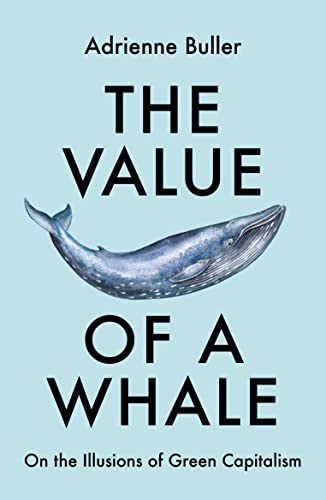
We shared an interview with the author of this book a few months ago, but missed the numerous reviews when her book was published last year. Thanks again to a Dutch biologist named Leon at the Inquisitive Biologist for this book review now:

BOOK REVIEW – THE VALUE OF A WHALE: ON THE ILLUSIONS OF GREEN CAPITALISM

In an attempt to address climate change and other environmental problems, governments are increasingly turning to economic solutions. The underlying message is clear: capitalism might have created the problem, but capitalism can solve it. Adrienne Buller, a Senior Fellow with progressive think tank Common Wealth, is, to put it mildly, sceptical of this. From carbon credits to biodiversity offsets, she unmasks these policies for the greenwashing that they are. The Value of a Whale is a necessary corrective that is as eye-opening as it is shocking. Continue reading

Future Fruits & Vegetables

The Cheery line of cherries has been developed to do well even if temperatures rise. BLOOM FRESH

Agricultural adaptation to a changing climate has caught our attention frequently with regard to wine grapes. Thanks to Kim Severson for this look at other fruits and vegetables:

Hot-weather cherries, drought-resistant melons and six other crops in the works that could change how we eat in a fast-warming world.

The Cosmic Crisp was bred at the University of Washington with a changing climate in mind. Credit…Ines Hanrahan/Washington Tree Fruit Research Commission

Plant breeders, by nature, are patient people. It can take them years or even decades to perfect a new variety of fruit or vegetable that tastes better, grows faster or stays fresh longer.

But their work has taken on a new urgency in the face of an increasingly erratic climate. Recent floods left more than a third of California’s table grapes rotting on the vine. Too much sunlight is burning apple crops. Pests that farmers never used to worry about are marching through lettuce fields.

Breeding new crops that can thrive under these assaults is a long game. Continue reading

Really, Rishi?

image: reuters

As a non-Brit, I spared the world my opinion on the own-goalness of Brexit, and the follow-up own-goal of electing Boris Johnson. Not my circus, not my monkey. But as a speaker of the English language, among other reasons, I have always cared about and paid attention to the civic affairs of the UK more than I do those of many other countries. I was reflexively optimistic with the baton passing to Rishi Sunak. He could not possibly be as terrible as his two immediate predecessors, right? In some ways right, but in the way that matters most to the entire world, shame on him. The Economist weighs in heavily, as does the New Yorker’s correspondent in the UK, the great Sam Knight:

Photograph by Justin Tallis / Getty

Rishi Sunak’s Self-Serving Climate Retreat

The British Prime Minister has rolled back the country’s policies on reducing emissions. To what end?

Since Rishi Sunak became Britain’s Prime Minister, almost a year ago, in the middle of a national financial breakdown, his premiership has been defined by trying to make things go away. Continue reading

Reminder Primer On Meat & Dairy

Raul Arboleda / AFP via Getty Images

We have been preaching, and practicing, reduction in the consumption of meat and dairy for as long as we have been sharing on this platform. Reminders of why are always welcome. Our thanks to Max Graham, a Food and Agriculture Fellow at Grist for this reminder-primer:

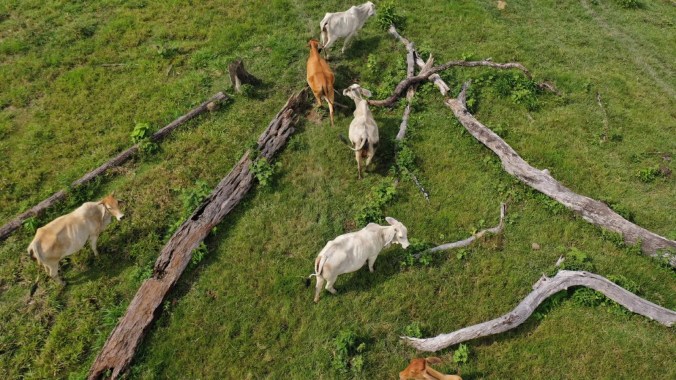
What would happen if the world cut meat and milk consumption in half?

Agricultural emissions would fall by almost a third. But getting there wouldn’t be easy.

Cows are often described as climate change criminals because of how much planet-warming methane they burp. Continue reading

Species-Specific Safe Spaces

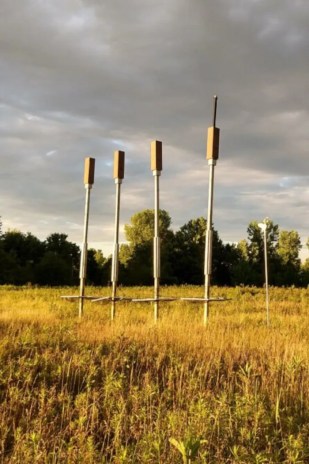
O’Keefe’s team designed bat boxes that offer a wide range of interior temperatures. Joy O’Keefe

We have pointed to stories about activism and entrepreneurship in the interest of protecting animal habitat plenty of times, but not so much on the science of the field work. As part of its Climate Desk collaboration Mother Jones shares this article originally published by Undark, written by Marta Zaraska, that addresses some of the science of species-specific safe spaces:

Inside Scientists’ Race to Create Safe Refuges for Animals

Climate crisis is destroying habitats. Can technology help create new ones?

Conservation ecologist Ox Lennon simulated stacks of rocks that would create crevices big enough for skinks, but too small for mice. Courtesy Ox Lennon

In 2016, Ox Lennon was trying to peek in the crevices inside a pile of rocks. They considered everything from injecting builders’ foam into the tiny spaces to create a mold to dumping a heap of stones into a CT scanner. Still, they couldn’t get the data they were after: how to stack rocks so that a mouse wouldn’t squeeze through, but a small lizard could hide safely inside. Continue reading

Subsidy Absurdity

Sprinklers water a field on Sept. 28, 2022 near Yuma, Arizona. Photo by David McNew/Getty Images.

This article by Stephen Robert Miller in the New Republic tells a story that is simultaneously inconceivable and yet perfectly explanatory of humanity’s contribution to climate change:

Why are we paying for crop failures in the desert?

Taxpayers are on the hook for heat-related crop losses in parched states like Arizona. That needs to change.

In mid-July in Phoenix, a man demonstrated to a local news station how to cook steak on the dashboard of his car. The city sweltered through a nearly monthlong streak of 110-degree temperatures this summer, while heat records are tumbling across the Southwest. Continue reading

Carbon Capture, Scaled To Texas

A direct air capture system at the Carbon Engineering pilot facility in Squamish, British Columbia, Canada. Photograph: Bloomberg/Getty Images

Carbon capture technology has its skeptics, but it has steadily improved and is closer to proof of concept. Next step, scaling to Texas:

The world’s biggest carbon capture facility is being built in Texas. Will it work?

The plant will inject 500,000 tons of carbon dioxide into the ground each year – but is it just greenwashing from big oil?

Plastic membrane used in the direct air capture system. Photograph: Bloomberg/Getty Images

Rising out of the arid scrubland of western Texas is the world’s largest project yet to remove excess carbon dioxide (CO2) from the atmosphere, a quest that has been lauded as essential to help avert climate catastrophe. The project has now been awarded funding from the Biden administration, even as critics attack it as a fossil fuel industry-backed distraction. Continue reading

Heat Pumps Questioned

image: michael haddad

The technology of heat pumps was made understandable in an earlier article. While remarkable, questions have arisen. Read the following in full at The Economist to hear about it in more detail:

Heat pumps show how hard decarbonisation will be

The row over them portends more backlashes against greenery

They hang from the walls of utility rooms, nestle inside kitchen cupboards and hunker down in cellars. Continue reading

Insect Respect

Agronomist Caterina Luppa watches black soldier flies reproduce at Bugslife, a firm in Perugia, Italy, that is turning fly larvae into animal feed. LUIGI AVANTAGGIATO

We have featured this subject a few times over the years, especially once we started showcasing one such product. I acknowledge I am still not a total convert to an insect-centric diet, but every story like this draws me in, however slowly:

Edible Insects: In Europe, a Growing Push for Bug-Based Food

Marco Meneguz, an entomologist with BEF Biosystems in Casalnoceto, monitors black soldier flies as they mate. During mating, “the males gather in a courtship ritual characterized by fights and competitive displays,” he says. The blue light helps the flies see each other better. LUIGI AVANTAGGIATO

To rein in emissions, the E.U. is looking to insects as an alternate source of protein for livestock and people and is easing regulations and subsidizing makers of insect-derived food. In a photo essay, Luigi Avantaggiato explores the emerging bug food industry in northern Italy.

The European Union recognizes it has a meat problem. The bloc has no easy way to curb the climate impact of its livestock, which eat soybeans grown on deforested lands and belch heat-trapping gas. According to one estimate, Europe’s farm animals have a bigger carbon footprint than its cars.

Trent Barber, a technician at BEF Biosystems, vacuums up 200 pounds of fly larvae that are plump after two weeks of feeding on food scraps. The remaining food waste, now rich in excrement, will be sold as compost to farms. LUIGI AVANTAGGIATO

In this photo essay, Luigi Avantaggiato explores an unusual solution to this dilemma that is now gaining traction — feeding insects to livestock and, potentially, people. The European Commission says that insects could replace soy-based animal feed, helping to slow deforestation, or even supply an alternate source of protein for humans. Studies show that insects can furnish the same amount of protein as livestock while using as little as 10 percent of the land and producing as little as 1 percent of the emissions. Continue reading

Not Just Not A Good Look

By identifying the malpractice of a group of businesses, this report highlights the concept of perverse incentives. It looks bad, and it seems fair to say that it is bad:

PRIVATE EQUITY PROFITS FROM DISASTER at the Expense of Workers, Communities, and Climate

Executive Summary

As climate change accelerates and impacts more communities around the world, the need for skilled labor in the disaster restoration industry grows. Increasingly, private equity firms seeking high returns for themselves have come to dominate the disaster recovery sector, reducing workplace standards, overcharging communities and exploiting disasters to extract fees and profits without regard to the workers and communities harmed by their practices. Continue reading