Coffee’s Contentments

In the mid-1990s I moved with Amie and our two sons Seth and Milo from Ithaca, NY in the USA to Costa Rica for my first post-Ph.D. venture, working with the governments and business leaders in each country of Central America.  The project combined a few then-young strategic and economic development models–competitiveness, economic clustering, and sustainable development–with several of their luminary proponents from Harvard Business School and at the Harvard Institute of International Development.  My job was to take those ideas and apply them to my area of expertise as a newly minted Ph.D. from Cornell University.

Sustainable Tourism Development was the terminology applied to this hybrid. In 1996, the third country in my regional rotation was El Salvador, after Costa Rica and Nicaragua. I have not had reason to think of El Salvador lately, but a nearly-lost article in my to-read-later folio popped out today:

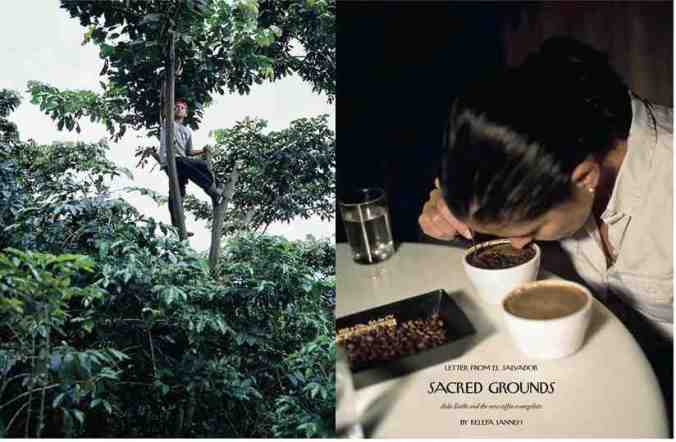
Aida Batlle is a fifth-generation coffee farmer and a first-generation coffee celebrity. On the steep hillsides of the Santa Ana Volcano, in western El Salvador, she produces beans that trade on the extreme end of the coffee market, where a twelve-ounce bag may cost twenty dollars or more and comes accompanied by a lyrical essay on provenance and flavor. These beans have made Batlle an object of obsession among coffee connoisseurs and professionals–the coffee equivalent of a European vigneron–and she is willing to play the role, if it helps raise coffee’s status. Continue reading
Coffee Rust

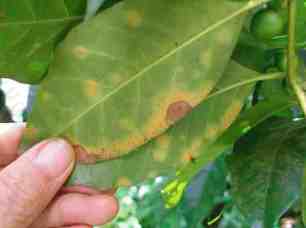
John Vandermeer.  A mild infection of coffee rust on a tree in Mexico.

John Vandermeer. A mild infection of coffee rust on a tree in Mexico.

Several contributors to this blog live(d) and work(ed) in Central America and know exactly what you mean. Those of us based in south India–where there is high quality arabica growing in the Coorg-Chikmagalur corridor–are hopeful that this “rust” is contained quickly.  So, Dear John, please succeed:

Until this year, John Vandermeer, an ecologist and coffee researcher at the University of Michigan in Ann Arbor, had never lost a tree to fungus. Continue reading

Another Good Reason To Reduce Your Carbon Footprint

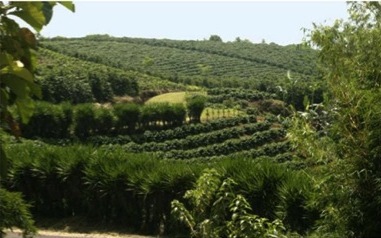
Coffee plantations surrounding Xandari, Costa Rica.
Photo: Emilia Ferreira

It is not a journal we regularly read, but the topics in this particular study–coffee and climate change–we follow closely.  Click the banner above to read the (accessible to non-scientists) article:

Coffee (Coffea L.) is the world’s favourite beverage and the second-most traded commodity Continue reading

Of Birds and Beans: Part 1 (Birds)

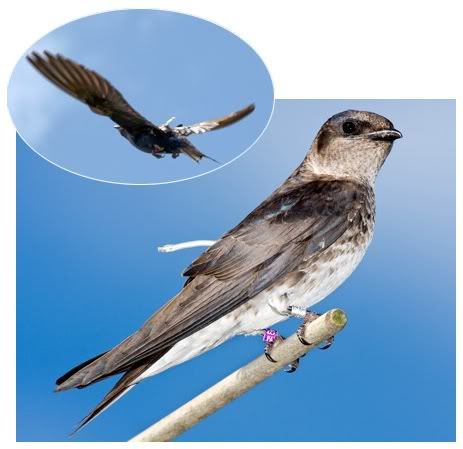
A banded adult purple martin wearing a light logger geolocator. Source: Patrick Kramer and Tim Morton, ScienceMag.

In the time it takes each of us to drink a cup of coffee, acres of tropical forest are cut down. Over the past thirty years, more than half the traditional coffee farms in Latin America have been converted to a newer growing method for higher production. Since the 1960s dozens of migratory bird species from northeastern United States have experienced long-term chronic declines in population size, with few signs of leveling off.

All these events are connected. Deforestation is occurring around the world faster than ever for plenty of reasons, but one of the most widespread and impactful ones is agriculture, and sun coffee (that is, coffee not grown under shade but in huge fields with pesticide, herbicide, and fertilizer assistance) is becoming more common to increase yields in the very same countries where North American migratory birds stay for their winters. But more about sun coffee and its negative ecological impacts later.

Continue reading

Coffee House-Hunting

This slideshow requires JavaScript.

From the Atlantic‘s blogs, an excellent tour around the world of cafes and coffee houses:

We’ve rounded up some of the most beautiful purveyors of coffee around the world in virtual guide form, meaning not only have we included the eye candy you know and love, but we’ve also added addresses and handy links to Google Maps. Continue reading

Where Your Espresso Might Come From

Pierre and I went on a tour around La Cumplida’s coffee plantation with Wilfredo. La Cumplida is a huge finca of over 1,600 hectares (this includes 700 ha. for coffee and 600 ha. for protected reserve) situated in the region of Matagalpa, which is very well known for its coffee production. First we went to the processing plant, which is under repair because some of the machines were being too rough on the coffee beans. Despite the fact that none of the machines were currently working, he walked us through the bean process: loading, skinning, washing, and reloading the beans. The drying and roasting takes place at another location. If we had been here any time from October through February, the machines would have been whirring and red beans would come by the truckload to be processed, since over 2000 coffee pickers would be hard at work in the hills, collecting beans.

Below is a video of some of the coffee work we watched. Wilfredo’s explanation of the deshijo is translated in brief three paragraphs below.


Continue reading