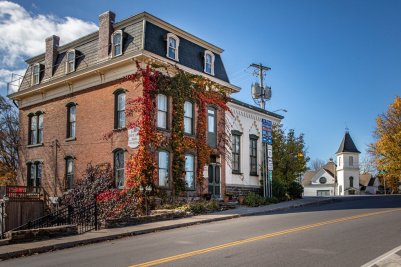
Maya Nut @ Authentica

BZ MayaNut

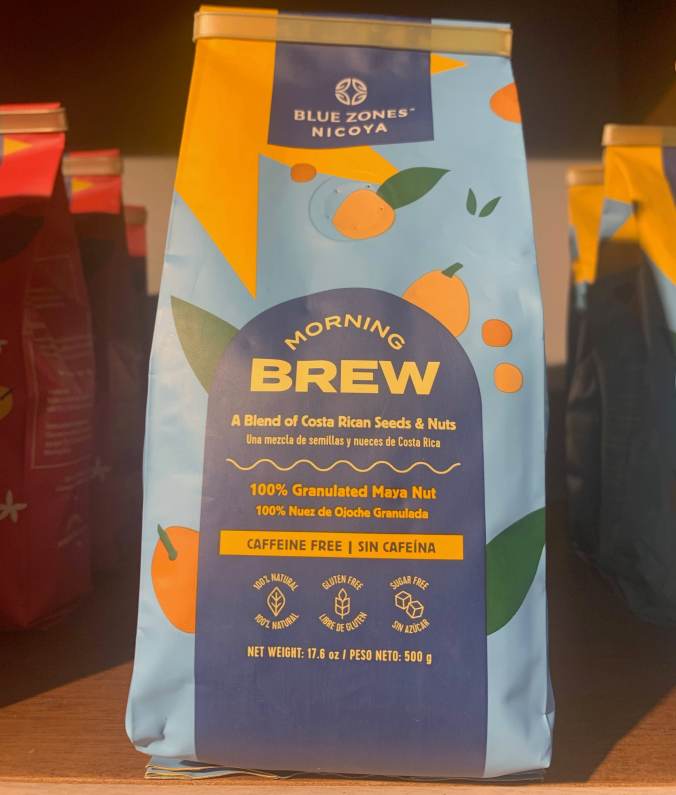
Authentica was conceived as a shop that would constantly be renewed by the creative forces surrounding us in Costa Rica. Artisans who shape wood in a way that we consider to be quintessentially Costa Rica, or sourced  in a way we consider to be more virtuous. Ceramic pieces that evoke Costa Rica. Foods and beverages that offer a taste of place like nothing else. Today we have a new set of products to talk about, starting with the one in the photo above. Known here as ojoche, but in other places as ramon, or especially as Maya nut; known in Latin by its botanical name as brosimum alicastrum. There is a story to tell, too long for one post but it started for me in Belize. A new plot line…

Invasive Python Hunting Season

3000 (8)

A Florida Wildlife Commission employee captures a Burmese python during the kickoff event for the Florida Python Challenge in Sunrise, Florida, on 10 January. Photograph: Joe Cavaretta/AP

We first started paying attention to invasive species here. Since then, every year, we pay more and more attention, especially to the pythons in the Everglades. It is that time of year:

Florida hunters capture more than 80 giant snakes in Python Bowl

Annual challenge encourages the public to catch as many of the invasive giant snakes that decimate native wildlife as possible

Most visitors to the mosquito-infested swamps of the Florida Everglades are happy to leave again quickly: a half-hour airboat ride and photograph of a basking alligator is usually enough to satisfy the curiosity of any tourist keen to return to the theme parks and beaches – or sports events – of the sunshine state’s more traditional attractions. Continue reading

Listen To Workers, Especially On This Topic

3600

Amazon workers lead a walk out to demand that leaders take action on climate change in September. Photograph: Jason Redmond/AFP via Getty Images

We hope someone in the upper ranks of Amazon is listening:

Hundreds of workers defy Amazon rules to protest company’s climate failures

Employees ‘needed to stand up for what’s right’ despite policy barring workers from speaking about business

Hundreds of Amazon employees defied corporate policy to publicly criticize the company for failing to meet its “moral responsibility” in the climate crisis.

More than 340 tech workers at Amazon used the hashtag #AMZNSpeakOut in public statements that condemn the company for not taking sufficient action on the climate crisis. Continue reading

Albatrosses Tracking Fishing Vessels

merlin_167922471_f481217a-ad3b-4c91-82b0-06bba600e648-jumbo

Albatrosses tracking fishing vessels found that 28 percent of ships had turned off their equipment, possibly fishing without a license or transferring illegal catches onto cargo vessels. Alexandre Corbeau

Thanks to Katherine Kornei, who we are linking to for the first time, for some great science writing:

They’re Stealthy at Sea, but They Can’t Hide From the Albatross

Researchers outfitted 169 seabirds with radar detectors to pinpoint vessels that had turned off their transponders.

merlin_167922456_2ca15e06-a6b7-4573-bcfd-d4a45c100b7d-jumbo

Researchers tagged an adult wandering albatross. Julien Collet

There’s a lot of ocean out there, and boats engaging in illegal fishing or human trafficking have good reason to hide.

But even the stealthiest vessels — the ones that turn off their transponders — aren’t completely invisible: Albatrosses, outfitted with radar detectors, can spot them, new research has shown. And a lot of ships may be trying to disappear. Roughly a third of vessels in the Southern Indian Ocean were not broadcasting their whereabouts, the bird patrol revealed. Continue reading

Alternative Glitter In The Amazon

3271

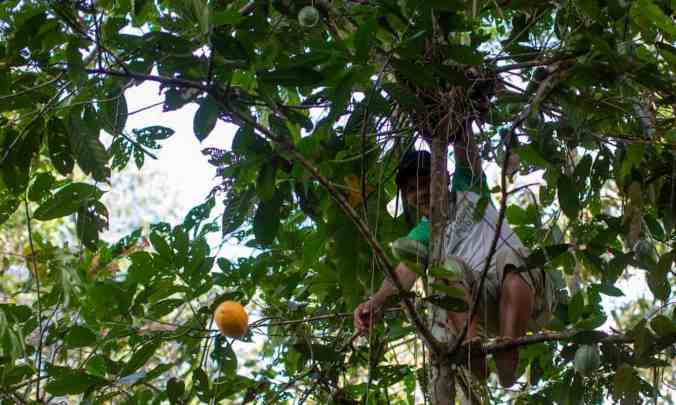
Edmilson Estevão climbs a mature cacao tree to pick the fruit. Photograph: João Laet/The Guardian

In the Authentica shops our featured chocolates are artisanal in terms of production, and both companies are leaders in their own ways–sourcing, packaging, etc.–in terms of sustainability. We are just now tasting chocolates from a third possible supplier, one that farms the cacao organically and is in control of all stages of production and packaging–from farm to bar as they say. When we have their product on our shelves, you will be the first to know, right here. Since our thoughts are already on this topic, special thanks to the Guardian for this story that helps better understand the many ways in which cacao can create a brighter future:

Cacao not gold: ‘chocolate trees’ offer future to Amazon tribes

In Brazil’s largest indigenous reserve thousands of saplings have been planted as an alternative to profits from illegal gold mining

The villagers walk down the grassy landing strip, past the wooden hut housing the health post and into the thick forest, pointing out the seedlings they planted along the way. For these Ye’kwana indigenous men, the skinny saplings, less than a metre high, aren’t just baby cacao trees but green shoots of hope in a land scarred by the violence, pollution and destruction wrought by illegal gold prospecting. That hope is chocolate.

4200

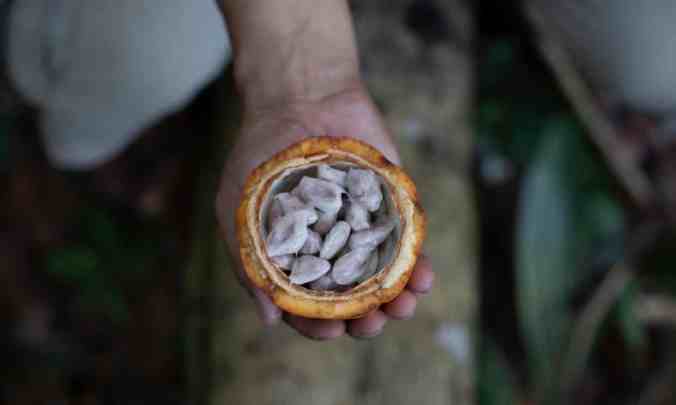
Cacao seeds, which are dried and roasted to make chocolate. Photograph: João Laet/The Guardian

“We want to plant and develop income for the community,” says Júlio Ye’kwana, 39, president of the Ye’kwana people’s Wanasseduume association, which came up with the idea. “And it is not destructive for the forest.” Continue reading

Do The Right Thing, As Best You Can

3794

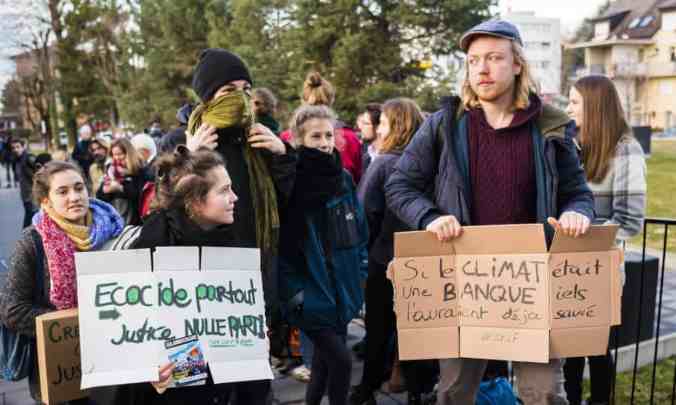
People demonstrate in support outside the trial of 12 activists who stormed and played tennis inside a Credit Suisse office in November 2018. Photograph: Jean-Christophe Bott/AP

We love Greta. We love Roger. We love a strenuous challenge between two strong contenders, as long as the climate may be the beneficiary:

  • Credit Suisse closely linked with fossil fuel industry
  • #RogerWakeUpNow has been trending on Twitter

Roger Federer has issued a cautiously worded response to mounting criticism, including from climate activist Greta Thunberg, over his sponsorship deal with Credit Suisse. Continue reading

It’s Not Easy Being Green In 2020

Cobalt Mining in Congo

Thanks to

Building climate-saving tech digs up new problems

Solving the climate crisis is going to take a lot of mining

The solar power and electric vehicles we need to stop the climate crisis pose a different threat to people and the environment: a boom in mining. Moving away from fossil fuels depends on tech like batteries and solar panels that can provide alternative forms of energy. But digging up the raw materials can undermine human rights and destroy fragile ecosystems. As governments and industries try to tackle climate change by building up renewable energy, they’ll need to consider other problems unearthed in the process. Continue reading

Another Look At Svalbard

merlin_166333806_dce78ff7-be42-423a-aeb4-74189e43cb3f-jumbo.jpg

Melissa Schäfer

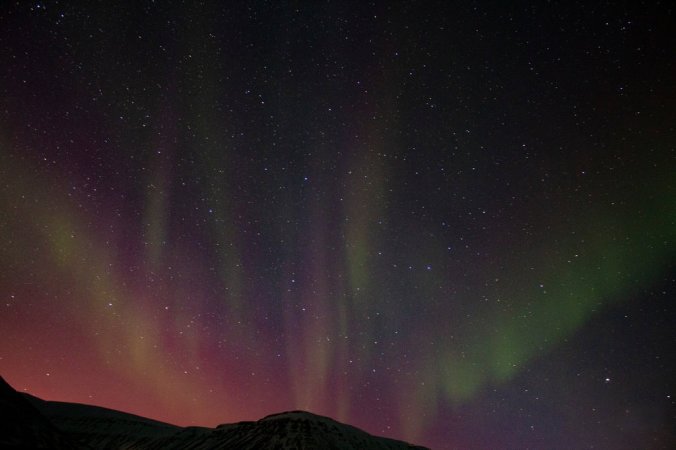
The seed vault has been covered in our pages so many times, that I thought I knew enough, and that plentitude made me almost skip this travel story. Having seen the Northern lights in my teen years, while working at a summer camp in Maine, with 40+ years perspective I can say with certainty that no travel experience comes close to that. I am a travel junky, and have had some profound travel experiences. Kelly McMasters makes me want to chase down that visual wonder that, try as I may, I cannot explain to anyone, and to combine it with some serious winter adventuring:

merlin_166333770_e846fa66-d76b-4a68-b658-f7eca0a4132e-jumbo.jpg

Greeting the New Year In Earth’s Northernmost Settlement

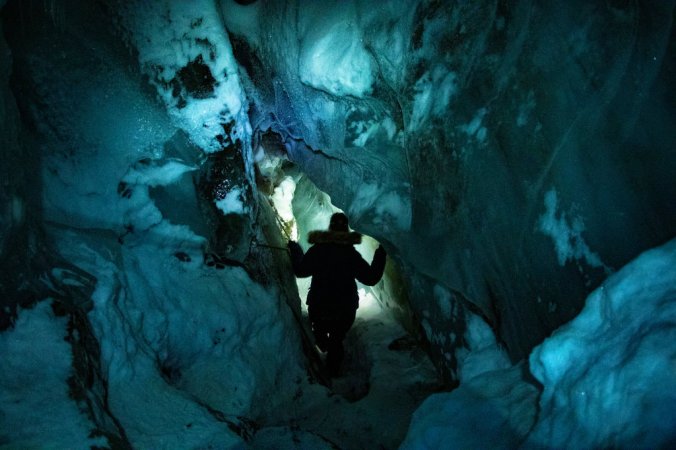
In Svalbard, above the Arctic Circle, you can’t be born and you can’t be buried, but you can find renewal in the dark of winter.

merlin_166333812_bb245b5b-e53a-42db-b2ab-93701fedb3fc-jumbo

Melissa Schäfer

Few people have heard of Svalbard and even fewer have seen it. The isolated group of islands is an old mining settlement turned glacial adventuring outpost located 1,200 miles north of mainland Norway, one of the closest landmasses to the North Pole, along with Greenland and Nunavut. The approximately 2,200 inhabitants dotting the desolate tundra are itinerant, a mix of climate scientists, miners and globe-trotting explorers mostly from Russia, Scandinavia and Canada. There are more polar bears than people.

merlin_166333803_b98fc460-2767-469b-97e9-a3043886660a-jumbo (1).jpg

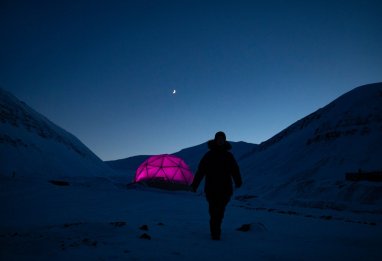
The northern-most greenhouse dome in the world provides microgreens to a local restaurant. Melissa Schäfer

Historically, this archipelago was the isolated purview of turn-of-the-century airship explorers obsessed with finding the Northwest Passage; more recently Svalbard served as the fantastical setting for Phillip Pullman’s “His Dark Materials” trilogy. Today, it is poised to be the next extreme vacation destination for tourists obsessed with climate change, wilderness and chasing the Northern Lights. Continue reading

When Life Gives You Lemons

Ceiba’s juicer at Authentica, as seen in front of the Costa Rica Marriott Hotel Hacienda Belen

To make the best use of the citrus in your life, visit Authentica and find this item. You may already have a fancy electric gadget that can perform the same function as this juicer, and it may seem self-evidently superior.

I beg to differ. First, on the experience: the mix of metal, plastic and/or glass of the electric juicer, designed for speed, eliminates any inherent satisfaction that either the fruit or the tool might provide. Holding this wooden juicer made by our friends at Ceiba Design Collective is a form of time travel. It resembles one I first saw in 1969. And that one likely resembled juicers in use in that village for hundreds of years, typically made of olive wood.

Secondly, I beg to differ on utility. Electric juicers may get the job done quicker, but this juicer gets another, more important job done. Its carbon footprint is a tiny fraction of the electric one, starting with construction and finishing with the use of electricity. And this is made by a group of craftsmen in Costa Rica who work with wood that has been recycled from previous use–timbers or railings from old homes–or wood from trees felled by storms. Experience + utility + sustainability = an authentic Costa Rica takeaway.

117 of 314 Bird Species, As Urban Murals

boorujy_4_mikefernandez_0.jpg

Photo: Mike Fernandez/Audubon

A couple years ago we linked to a story about urban murals and now, progress:

Where Birds Meet Art . . . After Dark

Greater Sage-Grouse by George Boorujy

Greater Sage-Grouse by George Boorujy
Location: 3920 Broadway, New York, NY 10032

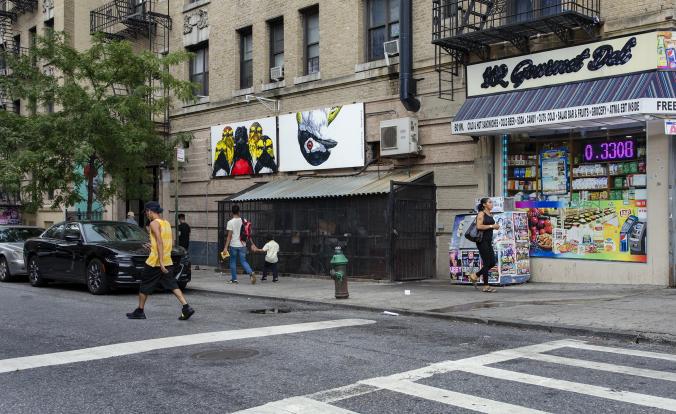
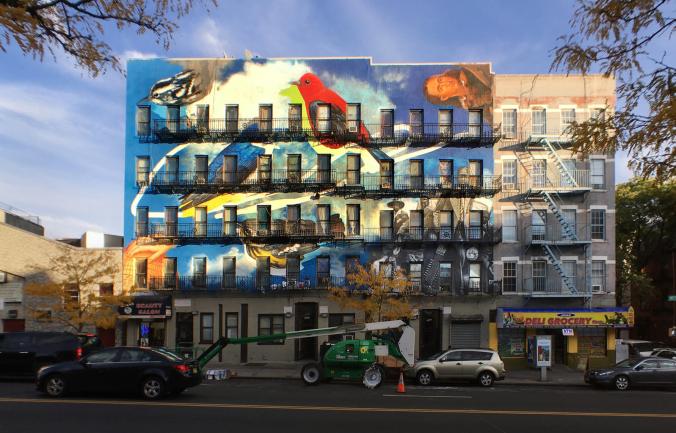
The Audubon Mural Project is a collaboration between the National Audubon Society and Gitler &_____ Gallery to create murals of climate-threatened birds throughout John James Audubon’s old Harlem‐based neighborhood in New York City.

Pinyon Jay by Mary Lacy

Pinyon Jay by Mary Lacy
Location: 3668 Broadway, New York, NY 10032

The project is inspired by the legacy of the great American bird artist and pioneering ornithologist and is energized by Audubon’s groundbreaking report “Survival By Degrees.” Audubon’s scientists have found that climate change will threaten at least half of all North American birds with extinction, and that no bird will escape the impacts of climate-change-related hazards like increased wildfire and sea-level rise. The project commissions artists to paint murals to call attention to this problem, and it has been widely covered in the media, including The New York Times.

On the website where Audubon features these murals you can click through to see the individual stories of each, including lots of interesting species information:

gaia_mikefernandez.jpg

Clockwise from top left: Black-and-white Warbler, Scarlet Tanager, John James Audubon, depiction of Russell Lee’s 1941 photo of Chicago, Magnolia Warbler, James Lancaster’s hand, and Tree Swallow. Photo: Mike Fernandez/Audubon

Endangered Harlem by Gaia

Location: 1883, 1885, and 1887 Amsterdam, New York, NY 10032 Continue reading

Foodrunners

Foodrunners may have the unusual problem of overabundance, in the form of waste and generous people donating their time. Thanks to Marisa Endicott (again) and Mother Jones for bringing this organization to our attention.

FoodRunners.jpg

Alleviating hunger, one volunteer and donor at a time:

Tech Company Free Meals Beget a Lot of Leftovers. Meet the Man on a Mission to Rescue Them.

Food Runners saves extra grub before it’s wasted, and delivers it to hungry mouths.

saladtoppingsMSTR

Marisa Endicott

carpacked.jpg

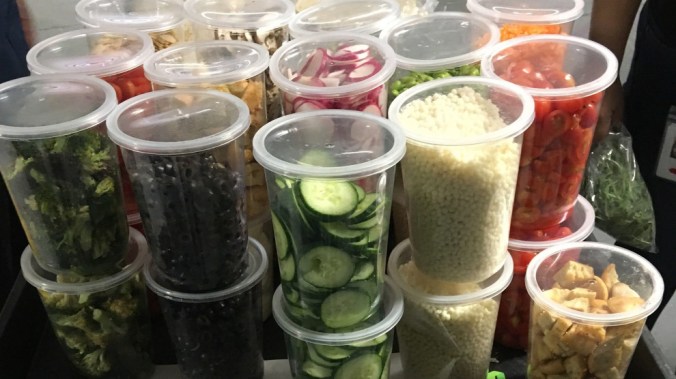
Tso loads his car with Tetris-like precision. Marisa Endicott

I meet Les Tso on a corner in San Francisco’s SoMa district on a wet Thursday afternoon. He pulls his silver Isuzu SUV into an alley. “Today because it’s the first rain, people are going to be driving cluelessly—there are a lot of Uber and Lyft drivers that come from out of the area,” Tso warns me. “Makes it more exciting, I guess.”

list.jpg

Tso picks up donations from an average 16 places a day. Marisa Endicott

Tso works as a driver for Food Runners, a nonprofit that picks up leftover food from grocery stores, companies, events, and restaurants and brings it to organizations working to feed the hungry. For four hours every weekday, Tso braves the worst of Bay Area traffic to makes his 80 to 90 pickups (an average of 16 a day), primarily from tech companies—including Google, Juul, and LinkedIn—that have become an omnipresent force in the city. Continue reading

Big Money, Big Park, Big Questions

MontanaPark.jpg

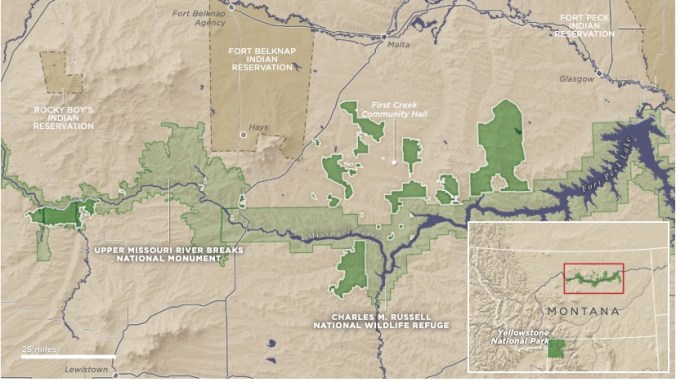
American Prairie Reserve’s Patchwork Of Properties
American Prairie Reserve’s purchased and leased land is shown in green with white borders adjacent to Upper Missouri Breaks National Monument and Charles M. Russell National Wildlife Refuge. Together, these parcels complete a network of land larger than Yellowstone National Park, the second-largest national park in the Lower 48 states. Source: American Prairie Reserve, Montana State Library, U.S. Geological Survey 1 Arc-Second SRTM, Natural Earth, Montana Department of Transportation, U.S. Census Bureau, National Park Service
Credit: Daniel Wood/NPR

Hats off to Sean Gerrity, as well as to the farmers and ranchers who have kept the native prairie grasses intact in recent generation, and to the native communities who stewarded these lands long before all this became a story. Our thanks to National Public Radio (USA) for sharing the story:
Big Money Is Building A New Kind Of National Park In The Great Plains

2019-montanaapr-charbage-73_custom-1adbd128a6bbea6e6ee03a2dd1a143db97998700-s1200-c85

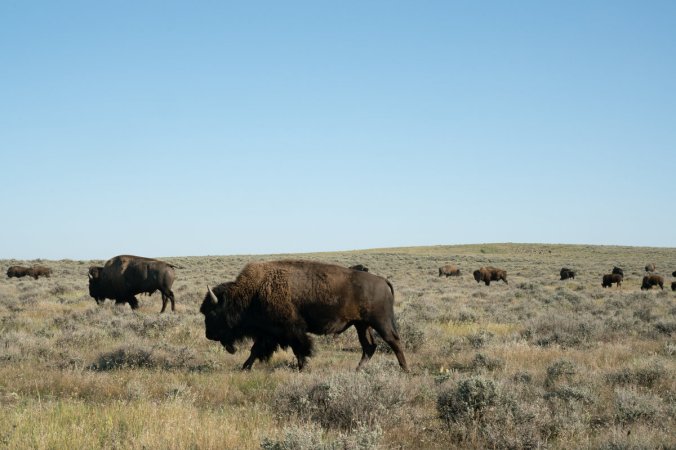
Bison walk on American Prairie Reserve land. The organization is slowly purchasing ranches from willing sellers, phasing out the cows and replacing them with wild bison. Claire Harbage/NPR

This story was supported by the Pulitzer Center on Crisis Reporting.

A privately funded, nonprofit organization is creating a 3.2 million-acre wildlife sanctuary — American Prairie Reserve — in northeastern Montana, an area long known as cattle country.

_dsc3711_custom-6d09ed4fc7375584ea76e1d2c3a28936e9917ac5-s500-c85.jpg

Sean Gerrity founded the American Prairie Reserve more than 18 years ago after he moved back home to Montana from Silicon Valley, where he ran a firm that consulted for companies such as AT&T and Apple.
Claire Harbage/NPR

But the reserve is facing fierce opposition from many locals because to build it, the organization is slowly purchasing ranches from willing sellers, phasing out the cows and replacing them with wild bison. Those private properties are then stitched together with vast tracts of neighboring public lands to create one giant, rewilded prairie. The organization has purchased close to 30 properties so far, but it needs at least 50 more.

“I see them coming in with big money, buying up ranches and walking over the top of the people who are already here,” says ranch owner Conni French. “For them to be successful in their goals, we can’t be here, and that’s not OK with us.”

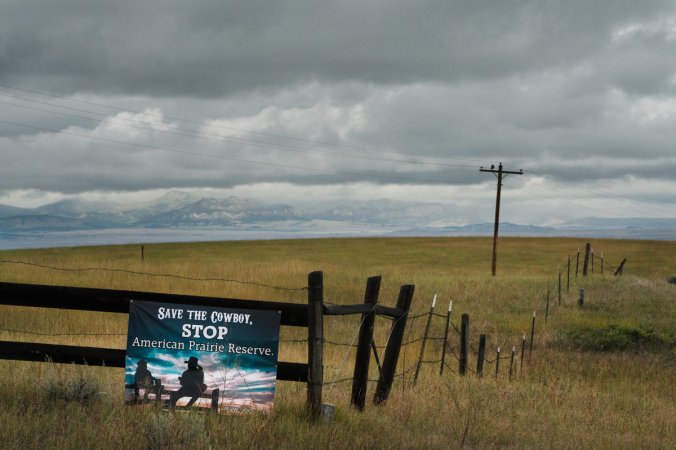
She isn’t alone. Driving around, you see signs everywhere that say, “Save The Cowboy, Stop The American Prairie Reserve.”
_dsc2741_slide-7e313d6d5430d4b9c6d7606875580af1dc204866-s1200-c85

A “Save the Cowboy” sign is posted along a fence. The “Little Rockies” on the Fort Belknap Indian Reservation are seen in the distance. Claire Harbage/NPR

But the project’s efforts have garnered a lot of positive attention from those living outside northeastern Montana because, once it’s complete, it will be the largest wildlife sanctuary in the Lower 48 states — about 5,000 square miles, nearly the size of the Serengeti National Park in Tanzania. Continue reading

Public Libraries Adapt

TCPL logo.jpgDuring this time in Ithaca, we made a couple visits with Fern to the Tompkins County Public Library, which I last visited in the first half of the 1990s when Seth and Milo began developing their bibliophilic tendencies. Each time we entered the library last week we were greeted by signs heralding the elimination of late return fines. As a budget conscious grad student at the time we first started using that library 25+ years ago, this policy change caught my attention, so I looked it up.

TCPLF logo.jpgIthaca has always been an inclusivity-centric community. So I am not surprised to see the wheelchair logo as prominent part of the library’s logo. But I was surprised to learn that there is a foundation that supports this adaptive mission. Given the dozens of stories about libraries that we have featured on this platform since 2011 it still surprises me to learn something new about them. How interesting that just a few days after returning from Ithaca, Emma Bowman fills me in on the bigger picture of this policy innovation:

‘We Wanted Our Patrons Back’ — Public Libraries Scrap Late Fines To Alleviate Inequity

For nearly a decade, Diana Ramirez hadn’t been able to take a book home from the San Diego Public Library. Her borrowing privileges were suspended, she was told, because of a mere $10 in late fees, an amount that had grown to $30 over the years. Continue reading

Are We Willing To Do What It Takes?

Thanks to John R. Platt, by way of EcoWatch, for this:

Could inventing a better air conditioner help to save species from extinction?

It’s an idea so crazy it just might work — and it’s just one of many new and innovative conservation initiatives in development around the world to help stem the tide of biodiversity loss. Continue reading

Joyful Artisan Ethos

At the same time Crist has been writing multiple teaser posts about our upcoming Authentica shops we continually search for both classic and innovative artisanally crafted items to highlight there. Each discovery feels like stumbling upon a gem while sifting through stones.

Those discoveries have even more personal impact when they have an upcycled or recycled element. Wagát Upcycling Lab is just one of those exciting discoveries. Continue reading

Creative Conservation, All For Artisans

AuthenticaMLS.jpeg

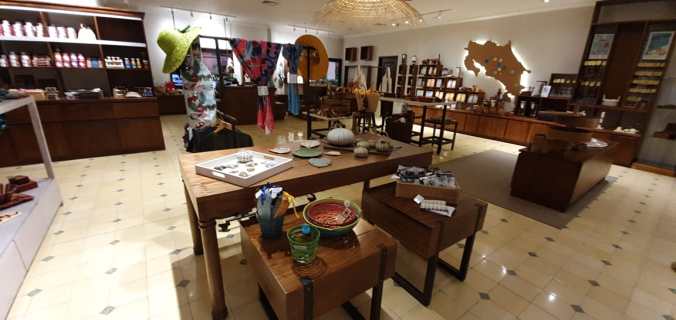
Authentica opened the first of its two shops last week, and this post is a quick statement of what occurred to me while looking across the shop once all the displays were set up. Back in early June I thought that two words simultaneously riffing off the concept of creative destruction, and our two decades of practicing entrepreneurial conservation, was enough of a tag line for saying what we are doing.

But now three more words seem worthy of adding to the mix. Because across this room it is clear that the pursuit of creative conservation is contextual and very specific; we are doing this all for artisans. I do not mean that just in the sense that we are completely motivated to do what Authentica is doing, for the sake of artisans, though that is true. The variety of items on display–colorful totems of Costa Rica’s culture, design-forward textiles, sensuous ceramics and turned wood objects, specialty coffees and artisanal chocolates–made clear now that Authentica should be more explicit. Say clearly that all proceeds from every sale in Authentica get reinvested back into building a better economy for artisans.  Maybe it can be said in fewer than five words, the way 100% Forward says all that Organikos needs to say. Brevity is the soul of wit, and wit is a powerful currency. I will work on it in the days to come.

Recipe From Another Time

10-02_cookbooks_kw_custom-7590cdc484b3905fc6f8b4d410b078f30cf1598a-s800-c85.jpg

The Yale Babylonian Collection houses four unique tablets that contain various recipes for stews, soups and pies. Three of these tablets date back to the Old Babylonian period, no later than 1730 B.C. Klaus Wagensonner/Yale Babylonian Collection

A meal from ancient history, decoded, and the scholar who sleuthed the recipe discusses it in a brief interview:

Eat Like The Ancient Babylonians: Researchers Cook Up Nearly 4,000-Year-Old Recipes

What did a meal taste like nearly 4,000 years ago in ancient Babylonia? Pretty good, according to a team of international scholars who have deciphered and are re-creating what are considered to be the world’s oldest-known culinary recipes.

The recipes were inscribed on ancient Babylonian tablets that researchers have known about since early in the 20th century but that were not properly translated until the end of the century.

The tablets are part of the Yale Babylonian Collection at the Yale Peabody Museum. Three of the tablets date back to the Old Babylonian period, no later than 1730 B.C., according to Harvard University Assyriologist and cuneiform scholar Gojko Barjamovic, who put together the interdisciplinary team that is reviving these ancient recipes in the kitchen. A fourth tablet was produced about 1,000 years later. All four tablets are from the Mesopotamian region, in what is today Turkey, Syria, Iran and Iraq. Continue reading

Crowd-Sourced Data from the Deep

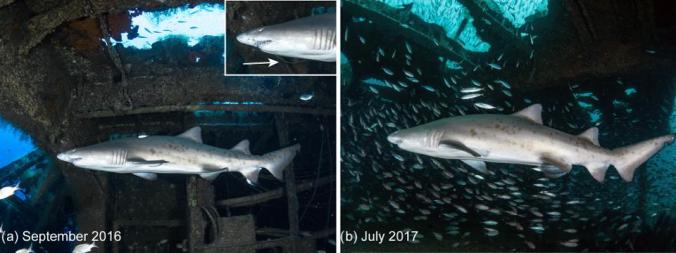
Female sand tiger shark observed on the wreck Aeolus in (a) September 2016 and (b) 10 months later in July 2017. In the older photograph (a), fishing gear is visible in the mouth of the shark (inset). SPOT A SHARK USA BY TANYA HOUPPERMANS.

A great example of how data crowd-sourced from Citizen Scientists is helping to improve understanding of shark populations and behavior.

Female Sand Tiger Sharks Love Shipwrecks… Really.

Site fidelity – the tendency to return to a particular area – isn’t exactly new in a species of shark (e.g. reef sharkslemon sharks, even great white sharks). But that place is usually some sort of habitat… not a over 100-feet (34 meter) deep shipwreck. However, that is exactly the case for female sand tiger sharks (Carcharias taurus) off the coast of North Carolina!

Sand tiger sharks, also known as grey nurse sharks or spotted ragged-tooth sharks, are found globally in subtropical and temperate waters. Despite looking quite scary due to their tooth grins that never quite close, they are a slow-moving shark that are listed as Vulnerable by the International Union for Conservation of Nature (IUCN). A grey colored shark with reddish-brown spots throughout its body, they feast on a variety of animals such as a fish, crustaceans, squid, skates and even other sharks!

In September 2016, a citizen scientist wasn’t surprised to see an individual female sand tiger shark while scuba diving on the Aeolus shipwreck. Continue reading

Big Cats Of The South, Present & Future

960.jpg

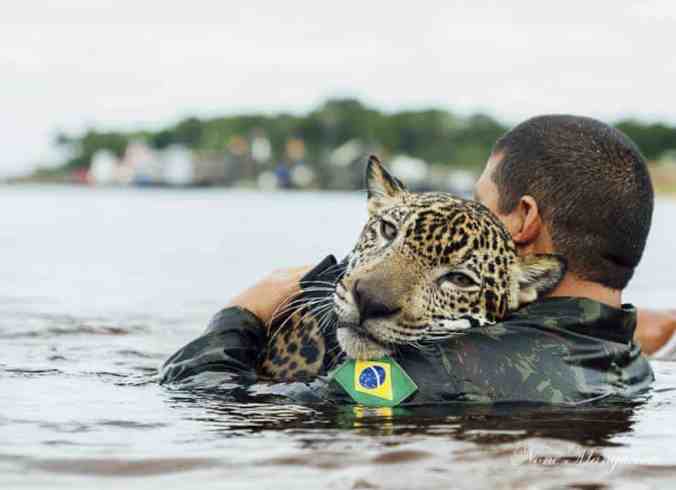
 A Brazilian soldier swims in the Negro river holding Jiquitaia, a two-year-old jaguar that was adopted by the military command of the Amazon. Jiquitaia was rescued as a cub after hunters killed his mother. Photograph: None Mangueira/AP

5472 (3).jpg

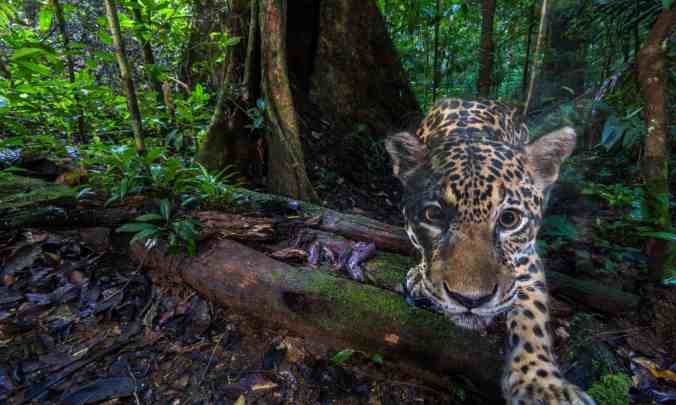
A jaguar in the Yasuni national park, Orellana, Ecuador. Photograph: Lucas Bustamante/NPL

Ecuador is mentioned in the title but is not the only country where deforestation is putting at risk the survival of one of the big predator species in the hemisphere. Thanks to Kimberley Brown, writing in the Guardian, for her reporting from our neighborhood to the south on one of the animals we have featured the most in our pages over the years:

Ecuador’s vanishing jaguars: the big cat vital to rainforest survival

Industries such as coffee and cacao have devastated the jaguar’s habitat, but its dwindling numbers leave a delicate ecosystem hanging in the balance

5184 (3).jpg

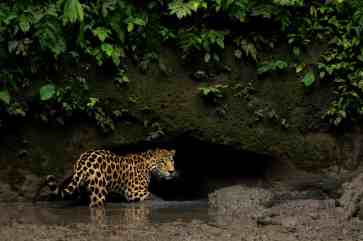
Jaguars are found across South America. This one was photographed deep inside the Nouragues Natural Reserve, in French Guiana. Photograph: Emmanuel Rondeau/WWF France

Across the American continent, from the north of Mexico to Argentina, the jaguar has long been revered for its strength and power. But in some parts of Ecuador, the largest cat in South America is increasingly at risk as roads, mining and agriculture take over the rainforests.

The loss of habitat is the biggest threat to jaguars in Ecuador, particularly along the coast, where more than 70% of the original forest cover has been lost. The vast majority of this destruction has taken place over the last 50 years with the expansion of the logging and agriculture industries, including coffee, cacao, palm oil and bananas, one of the country’s largest agriculture exports. Continue reading

Northeastern Waterways Where Salmon Thrive

merlin_163524339_8883181f-c3c5-4dab-9bcd-9fb2a4fda9e0-jumbo.jpg

Tony Cenicola/The New York Times

My connection to fly-fishing is practically nil, except for leisure reading. I tried it once or twice, found it enjoyable but beyond my coordination abilities, and promptly gave up.

merlin_163524153_9b0178d5-e9e2-424e-b8e2-0db12dfb7901-jumbo.jpg

Tony Cenicola/The New York Times

Thanks to Ali Watkins for this pointing out this inn, where the angling culture is alive and well, in her story Daughter and Dad, Chasing Salmon in Upstate New York:

A family of anglers travel to Oswego County — not the American West — to find the catch they’ve only dreamed of landing.

merlin_163524072_54088a1b-b73a-4a3c-8b60-e2668070546e-jumbo.jpg

Credit…Tony Cenicola/The New York Times

My dad and I were on the rocky bank of Sandy Creek when I saw the first salmon close enough to catch. Like a phantom, it glided against the current, its rhythm just a beat slower than the water around it. Two decades of fishing experience vanished the moment its body — three feet long, at least — swam in front of me.

08salmon9-jumbo-v2.jpg

Credit…Tony Cenicola/The New York Times

I was as anxious and clumsy as a child. I was also not in Alaska, the assumed home of this prized fish; I was an hour north of Syracuse, N.Y.

Every fisherman or woman has a catch they dream of landing. King salmon, with its signature pink streak and hooked jaw, is almost certainly on any angler’s list. Its very mention brings fantasies of deep woods and roaring streams, dammed by hordes of slick green backs begging to be hooked.

That fishermen wish for salmon is no surprise. The twist in that fantasy is that such visions are not pipe dreams restricted to the West. Thousands of coho and king salmon swim inland every autumn just five hours northwest of New York City, pouring out of Lake Ontario and into dozens of tributaries across Oswego County to spawn and die upstream. Continue reading