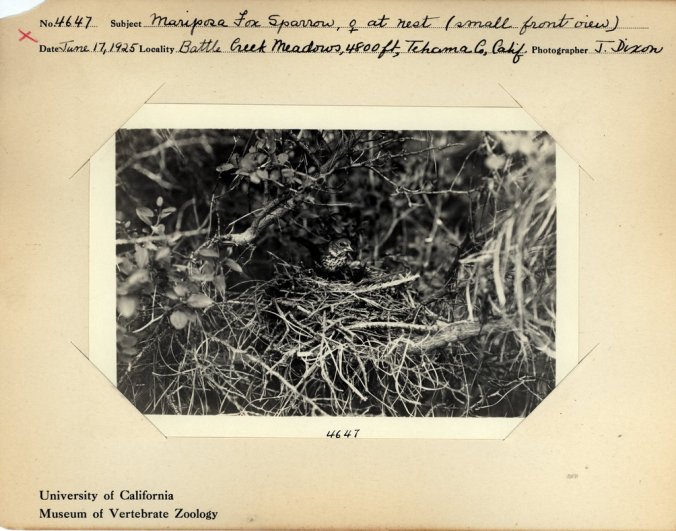
A Mariposa fox sparrow in its nest in 1925, observed during Dr. Joseph Grinnell’s surveys of California fauna. Credit Museum of Vertebrate Zoology, University of California, Berkeley
Retracing the steps of a century-old wildlife survey, ecologists find that birds are making remarkable adaptations to climate change.
More than a century ago, zoologist Joseph Grinnell launched a pioneering survey of animal life in California, a decades-long quest — at first by Model T or, failing that, mule — to all corners and habitats of the state, from Death Valley to the High Sierra.
Ultimately Grinnell, founding director of the Museum of Vertebrate Zoology at the University of California, Berkeley, and his colleagues produced one of the richest ecological records in the world: 74,000 pages of meticulously detailed field notes, recording the numbers, habits and habitats of all vertebrate species that the team encountered.
In 2003, museum scientists decided to retrace Grinnell’s steps throughout the state to learn what changes a century had wrought. And that’s why Morgan Tingley, then an ecology graduate student at the university, found himself trekking through the Sierra for four summers.
Dr. Tingley wanted to know how birds had fared since Grinnell last took a census. Years later, the answer turned out to be a bit of a shock. Continue reading →
Thanks to Blake and Jen for all their awesome work. Also thanks to Sara Ventiera (a new food and travel writer for us to follow!) and her colleagues at National Public Radio (USA) for keeping us connected to such heroics:
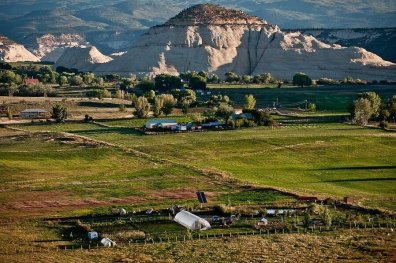
Hell’s Backbone Grill is located in Boulder, Utah, about 250 miles south of Salt Lake City. The restaurant’s owners are fighting Trump’s plans to slash the size of nearby Grand Staircase-Escalante National Monument by more than half. Ace Kvale
Standing between peach and cherry trees on her 6.5-acre Utah farm, Blake Spalding points to the Kaiparowits Plateau. The looming bluff is dotted with thousand-year-old pinyon pine and juniper trees.
“That is one of the areas they’re hoping to mine,” she tells a group of visiting chefs from Salt Lake City. “It’s full of dinosaur fossils and more than 650 documented species of wild bees.”
The remote and sustainable restaurant has become a destination for travelers seeking a taste of its terroir-driven fare. Ace Kvale
Nearly 20 years ago, Spalding and her business partner, Jen Castle, founded Hell’s Backbone Grill in Boulder, Utah, on the edge of the then-newly designated Grand Staircase-Escalante National Monument, about 250 miles south of Salt Lake City. The remote and sustainable restaurant has become a destination for culinary travelers seeking a taste of its terroir-driven fare. It’s an amalgam of Mormon pioneer, Western range cowboy and traditional Southwest flavors, like juniper lamb posole or grilled pork chops with Boulder crabapple barbecue sauce. Continue reading →
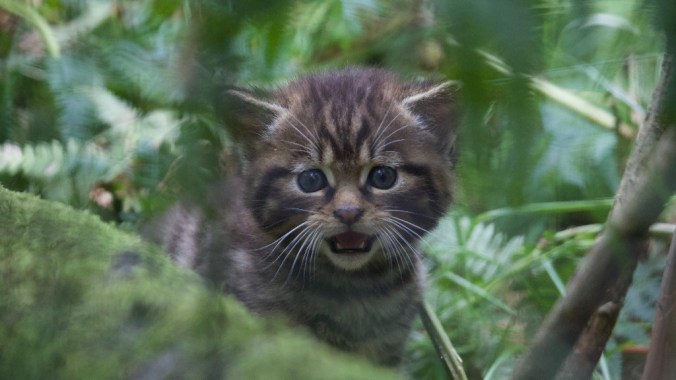
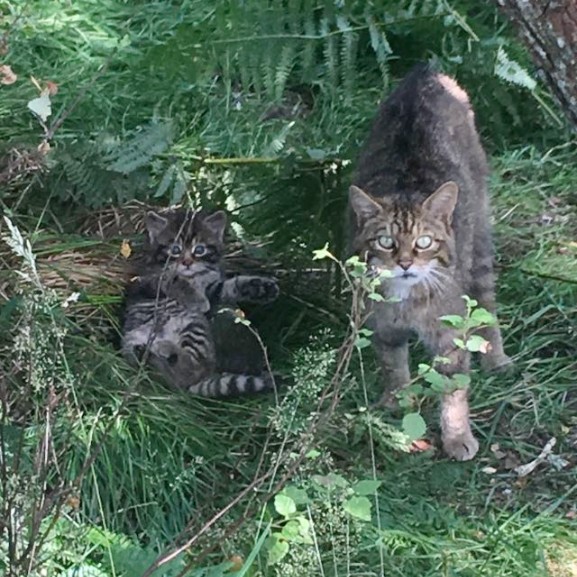
Thanks to our friends at Alladale for sharing this with us yesterday. (to not disturb the kittens at this time, these photos by Innes MacNeill are from an earlier litter and further content will follow will about the new ones, so we recommend you subscribe here to their newsletter):
Conservation efforts for the critically endangered Scottish wildcat have had another boost as Alladale Wilderness Reserve welcomes the arrival of two kittens. These kittens, who are part of the captive breeding programme and whose parents were given the go-ahead for breeding following genetic testing by the Royal Zoological Society of Scotland (RZSS), have the potential to play a key role in the long-term conservation of this near-extinct native species.
Working together with RZSS, Scottish Wildcat Action and other wildlife conservation organisations across Scotland, Alladale Wilderness Reserve and The European Nature Trust (TENT) are supporting the development of effective, long term plans focused on wildcat recovery through reintroductions. This work follows other successful models of endangered cat conservation, like that of the Iberian lynx in Spain and Portugal whose population has been saved in recent years following numerous reintroductions. Continue reading →
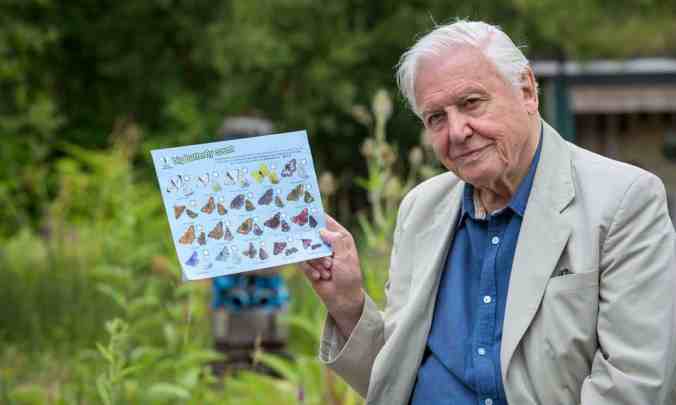
Veteran broadcaster encourages people to take part in Big Butterfly Count and highlights mental health benefits of wildlife
Watching nature provides “precious breathing space” from the stress of modern life, Sir David Attenborough has said, as he urges people to take part in the world’s biggest butterfly count.
While the UK’s butterflies are basking in the best summer conditions in more than a decade, if the hot weather becomes a drought it could be catastrophic for the insects as plants wither and caterpillars starve.
The public are being encouraged to take part in the Big Butterfly Count over the next three weeks to help experts see how butterflies are faring and to enjoy the mental health benefits of watching wildlife. Continue reading →
Marriott International became the latest company to announce it will stop using plastic straws, saying it would remove them from its more than 6,500 properties by next July. Justin Sullivan/Getty Images
Marriott International on Wednesday became the latest big company to announce it will stop using plastic straws, saying it would remove them from its more than 6,500 properties by next July. The giant hotel chain said it will stop offering plastic stirrers, too.
It said the environmentally friendly move could eliminate the use of more than 1 billion plastic straws and about 250 million stirrers per year. Marriott said its hotels will “offer alternative straws upon request.” Continue reading →
In addition to dairy, which is a shorter term initiative, we have been working with coffee for some years. All those years have been beta, which has worked well as a complement to our hospitality projects. Now we are preparing to go from beta to live. And that description of a sandwich in Aleppo, and the obsessional hunt to ensure that its very particular culinary heritage is not lost, is a motivational tipping point to get that coffee to your kitchen sooner.
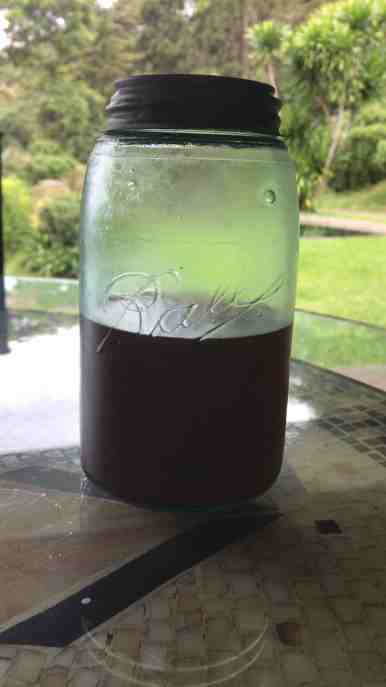
We have tasted coffee from one of the regions of Costa Rica that gets less attention than others. And we have tasted the “natural” form of this coffee, which has very little in common with the monsooning accidental innovation in India but gives us a new way to enjoy coffee. And we have tried chilling it. Wow. We’re calling it Uptown Funk. Hopefully you can try it soon.
Intelligence Squared has an app that allows you to listen to their debates and lectures at your own convenience, on your phone or wherever, whenever you choose. If, like us, you have found the rewilding debate interesting, this is one you will want to listen to:
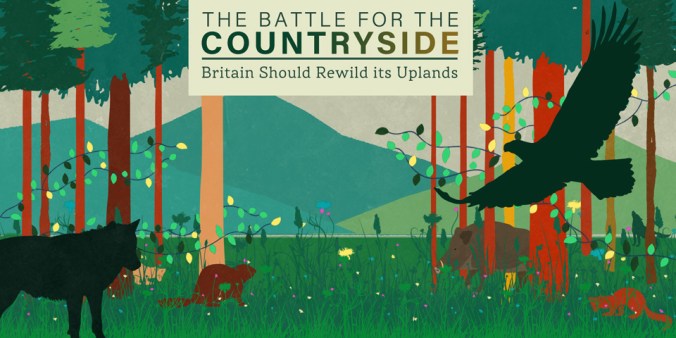
Imagine if swathes of the British countryside were allowed to be wild once again, if trees and rare plants could flourish and beavers, boars and white-tailed eagles could retake their place in the ecosystem. That’s the goal of the growing numbers of nature-lovers who support the idea of rewilding Britain’s uplands. We tend to think of these uplands as ‘wild’ and ‘natural’. But in fact, as the rewilders point out, they are entirely man-made, the result of clearances by man to make way for millions of sheep whose grazing over the last 200 years has rendered the land bare. Continue reading →
Cybil Preston, chief apiary inspector for the Maryland Department of Agriculture, is expanding her canine detection program, training dogs to find traces of American foulbrood, a bacteria that can decimate beehives. Credit Andrew Mangum for The New York Times
There’s plenty of news about bees being under environmental threat, so we thank NYTimes contributor Tejal Rao for this story of harnessing a natural strength of one species to help save another.
Ms. Preston seals dog toys in a plastic bag with foulbrood to saturate them with the scent. Credit Andrew Mangum for The New York Times
JARRETTSVILLE, Md. — Cybil Preston stretched her bare hands into a noisy beehive and pulled out a frame of honeycomb, its waxy cells filled with nectar, its surface alive with bees.
“This girl right here was just born,” she said, pointing out a bee with a silvery thorax. “See how her hair is still matted down like a teddy bear?”
Ms. Preston, the chief apiary inspector for the Maryland Department of Agriculture, was on a routine survey of registered colonies northeast of Baltimore. “I’m always looking for signs and signals,” she said, as she examined a worker bee with a misshapen wing. “It’s like ‘CSI.’” Continue reading →
Workers in a paddy field in the state of Andhra Pradesh, India. Credit Noah Seelam/Agence France-Presse — Getty Images
Farming the land as if nature doesn’t matter has been the model for much of the Western world’s food production system for at least the past 75 years. The results haven’t been pretty: depleted soil, chemically fouled waters, true family farms all but eliminated, a worsening of public health and more. But an approach that combines innovation and tradition has emerged, one that could transform the way we grow food. It’s called agroecology, and it places ecological science at the center of agriculture. It’s a scrappy movement that’s taking off globally. Continue reading →
Who knew you could do such a thing? When did that become a thing? Nevermind, just read the graphs that accompany this story:
Danish-Canadian urban designer Mikael Colville-Andersen busts some common myths and shows how the bicycle has the potential to transform cities around the world (All images: Copenhagenize Design Company/ Mikael Colville-Andersen)
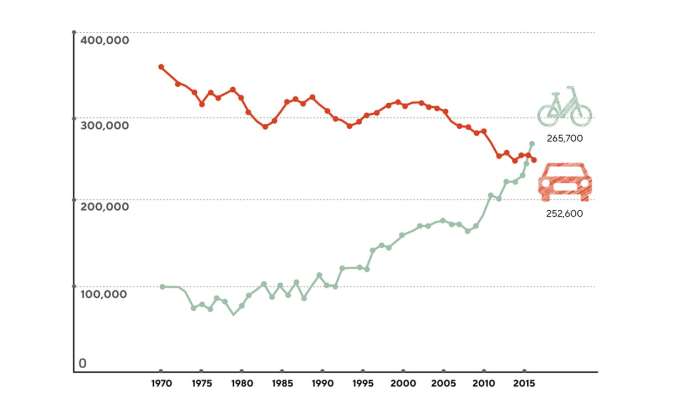
Bikes v cars
In 2016, the number of bicycles entering Copenhagen’s city centre exceeded the number of cars.Continue reading →
NEW YORK — “Audubon is committed to protecting birds and the places they need — and the greatest threat to birds and people is climate change,” said David Yarnold (@david_yarnold), president and CEO of National Audubon Society.
“While some may be holding out for a perfect solution to climate change, we know that it will take an array of approaches to reduce planet-warming pollution.
“The Carbon Capture Coalition is pursuing many avenues—including a market-driven approach that has deep bipartisan support. Audubon is excited to be at the table with a range of voices exploring policy options that accelerate a reduction in carbon pollution,” Yarnold added.
The Carbon Capture Coalition is led by the Center for Climate and Energy Solutions and the Great Plains Institute. With over 50 members ranging from the energy industry, agriculture, labor unions and conservation leaders, the coalition is non-partisan and solutions-oriented. Recently, the coalition successfully advocated for improving and extending the carbon capture tax credit, known as the 45Q tax credit, led by Senators Heidi Heitkamp (D-ND), John Barrasso (R-WY), Sheldon Whitehouse (D-RI) and Shelley Moore Capito (R-WV). Continue reading →
Low light imaging data being used to expose unregulated and unreported fishing on the high seas
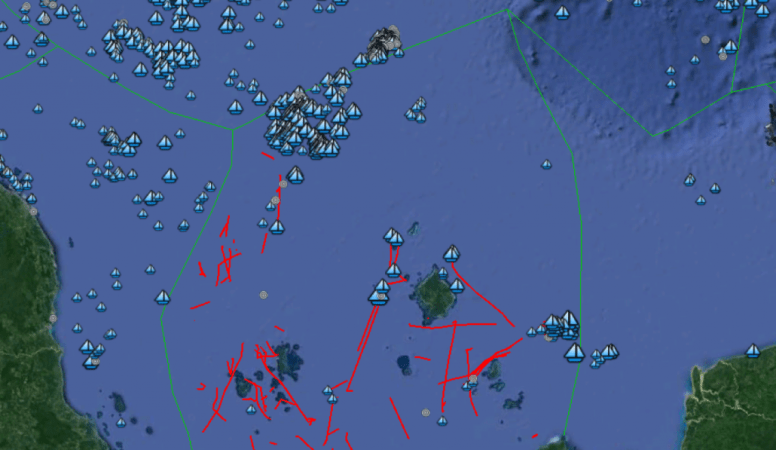
These vessels (indicated with blue boat icons) in the Natuna Sea off Indonesia were detected by VIIRS, and are suspected to not be using VMS. The red lines indicate VMS tracks from the same day.
New data is being used to expose fleets of previously unmonitored fishing vessels on the high seas, in what campaigners hope will lead to the eradication of illegal, unregulated and unreported fishing.
Global Fishing Watch (GFW) has turned low light imaging data collected by the US National Oceanic and Atmospheric Administration (NOAA) into the first publicly available real-time map showing the location and identity of thousands of vessels operating at night in waters that lie beyond national jurisdiction. Continue reading →
Charismatic megafauna are impossible to resist caring about. Charismatic microfauna, or flora, less so. Yet more than two decades of experience in Costa Rica have taught us to appreciate the latter more than we did before. That is a function of science leading the way in conservation efforts in this small country, followed by a new form of tourism that we have been working in since the mid-1990s. That new form leveraged the skills of biologists as guides who provide interpretive experiences in the rainforest and other ecosystems, making a walk in the woods that much more interesting. So this story below catches my attention. It focuses on another small pioneering country that I have long studied from afar, admired, but not yet visited. Thanks to Brandon Keim and his colleagues at Yale Environment 360, for this story that motivates me to make that visit:
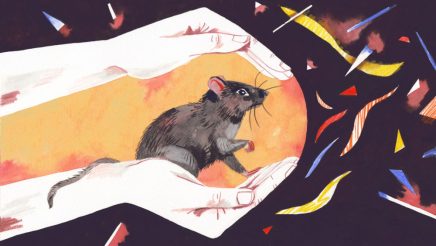
Some scientists and ethicists are criticizing traditional conservation strategies, which they say focus on saving valued species while discounting the lives of less charismatic animals. Will these advocates of “compassionate conservation” point the way to new approaches, or are they simply being naïve?
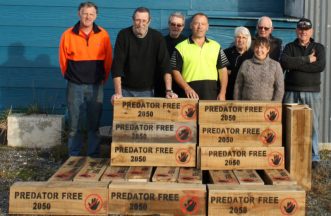
Volunteers for New Zealand’s Predator Free by 2050 campaign in front of predator traps, which are available for the public to borrow. NEW ZEALAND DEPARTMENT OF CONSERVATION
At a moment of best-selling animal intelligence books and headlines about songbird language and grieving elephants, it’s easy to forget that nonhuman minds were until recently considered — by most serious-minded scientists, anyway — to be quite simple.
Well into this millennium, animal consciousness was regularly dismissed as either nonexistent or profoundly dissimilar to our own. Animals were considered “conscious in the sense of being under stimulus control,” as the famed psychologist B.F. Skinner opined so neatly in 1974, expressing a conventional wisdom that dated to the zoological musings of Aristotle. The notion of animals as thinking, feeling beings was relegated to the edges of serious discourse.
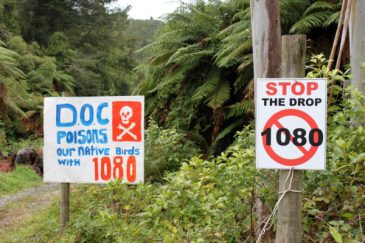
Signs opposing New Zealand’s use of landscape-scale poisoning campaigns to eradicate non-native predators, such as rats and weasels.ELI DUKE/FLICKR
Those days are past, buried by an avalanche of scientific findings and history-of-science critiques. More people than ever worry about the welfare of farmed animals; pets are practically citizens; and wild animals too are increasingly regarded as beings with whom people share fundamental aspects of inner life. Yet in some places, that mind-denying legacy survives — including, say a small but vocal number of scientists, ethicists, and animal welfare activists, in conservation. In their eyes, the discipline devoted to protecting Earth’s life has a certain blind spot to the animals themselves. Continue reading →
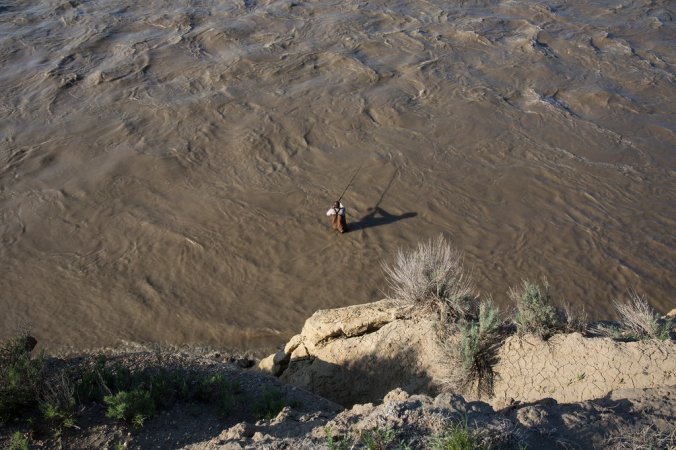
It’s paddlefish season in Montana. Programs to harvest the giant’s caviar and sell it have helped to create a model for sustainable fishing.
Janie Osborne for The New York Times
GLENDIVE, Mont. — Fishing here conjures images of waders and featherweight flies landing softly on lazy rivers, an irresistible lure for the one- or two-pound trout swimming beneath.
Catching a giant paddlefish weighing 50 or 100 pounds is an altogether different pursuit. And in an unusual twist, the end result is a bounty of an unusual delicacy: roe sold around the country as caviar.
“It winds up on cruise ships, it winds up in restaurants, it winds up everywhere,” said Dennis Scarnecchia, a professor of fisheries at the University of Idaho. Continue reading →
When the journalist Douglas Preston shared this story, I was in the process of closing up shop in India, where we had been in residence since 2010. Kipling-induced daydreaming notwithstanding, Amie and Milo (whose photos may be the most tangible representations of the dreaminess of those years) and I never had the illusion that there were lost civilizations or any such thing in India.
We did have the nonstop motivation of feline-fueled conservation initiatives, and some close encounters. Those provided us a perfect counterpoint to the seemingly irresistible catchphrase that described progress in the form of disruptive technology. Haste really does make waste when it comes to ecology, anthropology, and realms of life other than economic forward-marching.
When I read Mr. Preston’s story on the first day of last year I realized that our relocation to Central America, oddly enough since it is in the hemisphere called the New World, was full of potential for all kinds of discovery of “lost” things. And my own discoveries further sensitized me to the importance of moving slowly and avoiding breakage. My posts on this platform from February through July, 2017 are evidence of the richest ecological and anthropological observations of my lifetime (so far), and that makes Mr. Preston’s update post yesterday all the more wonderful to read:
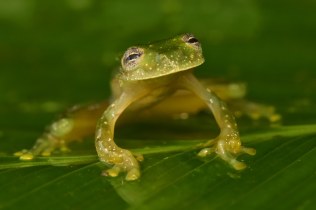
Sachatamia albomaculata. The inner organs of glass frogs are visible through their translucent bodies. Photograph by Trond Larsen / Conservation International
A little more than three years ago, I joined a team of archeologists on an expedition to La Mosquitia, a remote mountain wilderness in eastern Honduras. For centuries, the region had been rumored to contain a lost city, known as the City of the Monkey God or the White City, and now, thanks to a combination of luck and modern technology, an ancient settlement had been found. Although it was probably not the lost city of legend, it was a very real place, built by a mysterious civilization that flourished long before Columbus arrived in the Americas. Hidden in a densely forested valley, it had never been explored. Continue reading →
Tom and Katrin Helmick live in New York’s Hudson Valley region with their 2-year-old son. They cook and grow vegetables in their backyard during the summer months, bring reusable totes to the grocery store or farmers’ market, and never buy plastic bottled water. Although they try to avoid buying foods that come in non-recyclable packaging, their landfill waste bin still receives a hearty diet of disposable baby food pouches and “lots of thin plastic,” says Tom.
“When we do buy grocery store meat, I hate that it still comes wrapped in Styrofoam. That’s why I love going directly to the source for our meat from a farm nearby that is simply vacuumed-packed,” says Tom. “We find it ridiculous that three people can create so much waste,” adds Katrin. Continue reading →
Jane Tansell, one of the two handlers responsible for the rodent detection dogs, looks on from the background as a seal stares down the camera on South Georgia Island earlier this year. Oliver Prince/Courtesy of South Georgia Heritage Trust
These three pairs of words in the post title, placed together in this order in a search engine, produce some interesting results from around the world. And today we find one more to add to the database. Thanks to National Public Radio (USA)’s Colin Dwyer for sharing this story:
The South Georgia pipit, seen posing for a glamour shot earlier this year, had been among the species hardest hit by the island’s invasive rodents. Ingo Arndt/Courtesy of South Georgia Heritage Trust
There are no other birds quite like them in the world. The South Georgia pipit and pintail are so distinctive in the grand pantheon of ornithology, in fact, they draw their names from the one place they’ve made their home: South Georgia Island, sitting lonely in the forbidding South Atlantic not far from Antarctica.
Yet even in such a remote location, surrounded by penguins, fur seals and seemingly endless ocean, the birds have long been besieged by tiny alien invaders: rodents. Since the first European ships arrived in the late 18th century bearing rodents as stowaways, the voracious predators have devastated the South Georgia birds — which, with no trees to nest in, must make their vulnerable homes on the ground or in burrows.
Now, after more than two centuries, those invaders have been rebuffed. Continue reading →
The mayflies are hatching, river levels are dropping and the evenings are getting longer. It’s the most wonderful time of year for those of us in North America who love to fish.
And if you can’t be out fishing? Well, you can always read a fish book. Here are three great new reads: a biography of an obsessed angler turned conservationist, a how-to book about overlooked species that need some attention, and an invaluable reference guide.
I have no interest in competitive fishing, and even less in books by and about celebrity anglers. I find most of them to be self-congratulatory and poorly written. So I’d normally have little inclination to read a book about a record-breaking striped bass angler, one who gained fame by appearing on the show Shark Tank. Such a book would also appear to be a poor fit for a conservation blog. Continue reading →
Yvon Chouinard, the founder of Patagonia, with its chief executive, Rose Marcario, in the tin shed where he once forged and hammered metal. The outdoor-clothing company has mixed commerce and activism since the early 1970s.Credit Laure Joliet for The New York Times
Patagonia employees at the Ventura, Calif., headquarters, where there are picnic tables in the parking lot, on-site day care and easy access to the beach.CreditLaure Joliet for The New York Times
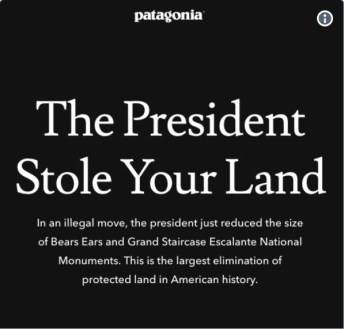
VENTURA, Calif. — The offices of Patagonia occupy a low-slung complex of stucco buildings in this sleepy beachside town in Southern California. There are solar panels and picnic tables in the parking lot, day care with a jungle gym by the main lobby and easy access to the beach, where employees surf during lunch break. It is a corporate Eden of sorts, where idealistic Californians run a privately held company that sells about $1 billion of puffy down jackets and organic cotton jeans each year.
But on an unseasonably hot and windy Monday morning in early December, Patagonia headquarters were transformed into something that quickly resembled a war room. There were emergency conference calls with Washington lawyers. Court filings were prepared. Web designers remade the company’s home page.
It wasn’t a business crisis that had mobilized the company, however. It was politics. Continue reading →
Thomas E. Lovejoy a pioneer in the use of economics to conserve forests and other ecosystems globally is joined by John Reid, who has worked in the Amazon since 1965, in presenting a case for:
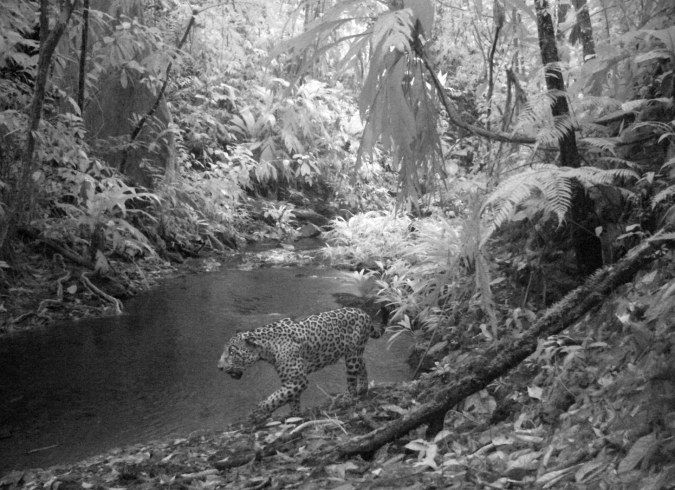
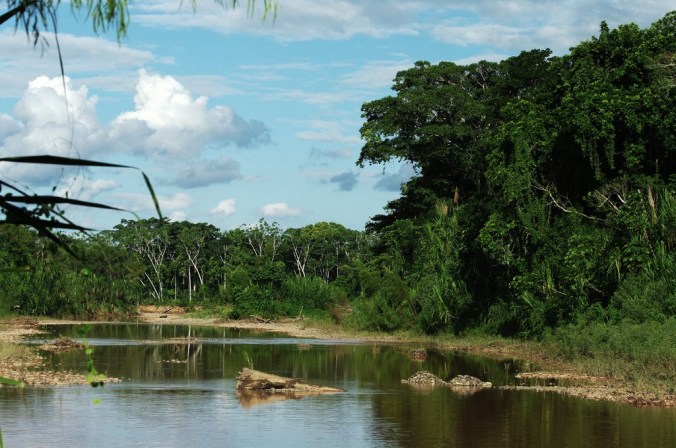
Sit on a log by the Madidi River in Bolivia at dusk and you can hear what an Amazon forest should sound like. The music includes red howler monkeys, breathy thumps from the mutum jungle fowl, droning cicadas, eerie calls locals attribute to deadly bushmaster vipers and the unhinged excitement of elusive titi monkeys. Around your feet, the beach is crisscrossed by jaguar tracks and those of the pony-size tapir, a shy beast that, if you keep quiet, will saunter out of the forest and swim across the river.
This is what scientists call an “intact forest landscape.” It’s a swath of at least 500 square kilometers (about 193 square miles, equal to 70,000 soccer fields) of unbroken forest. Because of their size, these areas have maintained all their native plant and animal life and biophysical processes. These forests still adorn parts of our planet’s tropical midsection, notably the Amazon, Congo Basin and the island of New Guinea. And they form a northern belt, the boreal forests of Canada, Russia, Alaska and Scandinavia. Continue reading →




 Intelligence Squared has an app that allows you to listen to their debates and lectures at your own convenience, on your phone or wherever, whenever you choose. If, like us, you have found the rewilding debate interesting, this is one you will want to listen to:












 Organikos