Cornell’s Climate Friendly Construction

oakImage-1495980544830-jumbo

A view of Manhattan from the roof of the Bridge building on the Cornell Tech campus on Roosevelt Island. Photo VINCENT TULLO

When Cornell University competed in 2011 to develop an applied science and engineering campus in New York City, part of its pitch was that it would construct an academic building that would at least approach making as much energy as it used in a year, a concept known as net zero. It won. Then came the hard work of making that vision happen at the campus, known as Cornell Tech. Continue reading

Gallon Jug’s Bird Friendly Coffee

CoffeeConsvtn.jpg

I am back at Chan Chich, with one goal before I start focusing on my plan to go to graduate school. A recurring theme in my work for La Paz Group, especially at Xandari, has been the intersection of birds and coffee. And now I have some months to think about how this may relate to what I will study in graduate school. One of the programs I am considering applying to is the Masters in Environmental Management at the Yale School of Forestry. Can I link what I have learned while working to what I would study there? If so, maybe I could link that to what I do after grad school.

This other post today reminds me of the value of geeking out from time to time. Most of my attention to coral reef comes from Phil Karp’s posts on this platform and I admit to preferring stories featuring real people and their entrepreneurial approaches to conservation. But science is the other best friend of conservation. Today my attention is turning to coffee, in advance of the arrival this week of an intern coming from Cornell University’s College of Agriculture and Life Sciences.

Just one of the many topics for an intern, with science and research on her side, to help us tackle over the next ten weeks, bird-friendly coffee has been on been on my mind since last year but I have been waiting for the perfect moment to focus. Nothing like the arrival of an intern to focus your mind. And so today in my task-oriented wanderings I came across this website (click the banner above), which I loved immediately for sharing this news on capsules, but the rest of the site is a great resource for present purposes as well:

A short round-up of coffee news.

The Value Of Coral Reef

ReefEcon.jpg

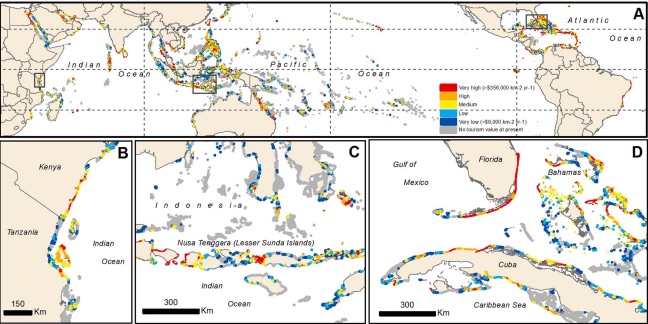
Economic value of coral reefs for tourism (A). This figure summarises the combined dollar values of expenditures for on-reef and reef-adjacent tourism. Reefs without assigned tourism value are grey; all other reefs present values binned into quintiles. Lower panels show Kenya and Tanzania (B), South-central Indonesia (C), and Northern Caribbean, with part of Florida, Cuba and the Bahamas (D). (Further maps can be seen in Appendix A and online at maps.oceanwealth.org

A country that depends on its coral reef to attract visitors, as Belize does, has every reason to pay attention to the various sciences paying attention to those reefs. Mostly marine biologists, perhaps, but also economists. Geeks and wonks are heroically gathering information, processing it, publishing it and if not for The Nature Conservancy’s efforts some of us might not ever see it.

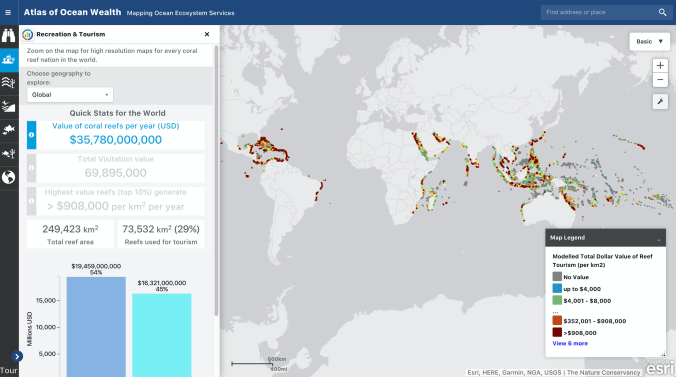
The August, 2017 issue of Marine Policy, an academic journal, carries the article “Mapping the global value and distribution of coral reef tourism” by the scientists Mark Spalding, Lauretta Burke, Spencer A. Wood, Joscelyne Ashpole, James Hutchison, and Philine zu Ermgassen and TNC’s Cool Green Science has a summary in common language. Also they complement the academic illustration above with one of their own:

Screen-Shot-2017-05-26-at-12.09.02-PM.png

Screen shot from the Atlas of Ocean Wealth showing global reef value to tourism. © The Nature Conservancy

If it’s true that people reveal their true values by how they spend their money, coral reefs are very valuable indeed. In fact, according to a new study in the Journal Marine Policy coral reef tourism generates $36 billion (U.S) in global value every year. Continue reading

Svalbard Improvements

4186766563_7bab19f5c2_b.jpg

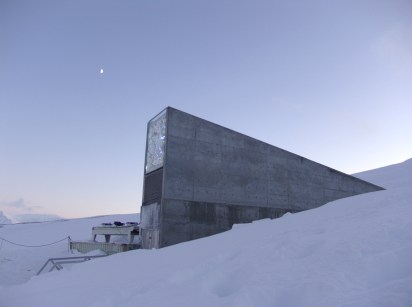
The Svalbard Global Seed Vault in Norway. (Credit: Mari Tefre/Svalbard Globale frøhvelv)

Our favorite doomsday machine, which we never tire of hearing about and sharing on this platform each time it has demonstrated its visionary worthiness, is back in the news. Discover Magazine brought this to our attention today: Continue reading

Crop Type & Pesticides

bunch-of-grapes (1)

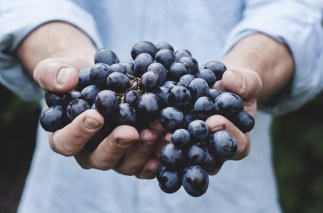
Image: Pixabay

Thanks to Emma Bryce for A more nuanced approach to reducing insecticides on our food, shared via Anthropocene:

Chan Chich Archeology Season, When Skygazing Is Also At A Premium

Death-Valley-2-Skyglow-Desktop-Wallpapers-e1492808806156.jpg

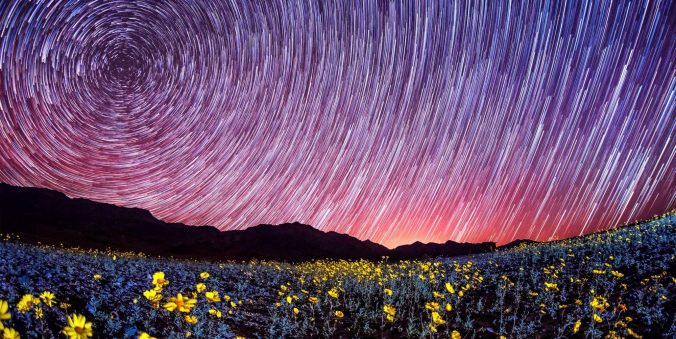
Today and tomorrow we are finalizing preparation for receiving a nearly full house of archeologists, who will be at Chan Chich Lodge for the next couple months. I came across the photo above at the same time I was looking at the to-do list related to their arrival, and am remembering that in May 2016 I was struck by the quality of night sky at Chan Chich for stargazing.

So this is a shout out to all those people who are intrigued by Mayan archeology, are stargazers, and have not yet made vacation plans for the next couple months. We have a few rooms available, so come on over!  The photo above is paid content from Intel, and while usually we avoid passing along commercials, this is on a topic we care about. It is worthy of a read. Also, after the text the Skyglow short on Vimeo is worth a look:

Timelapse photographers zigzagged 150,000 miles across the U.S. to capture the wonders of the dark skies and raise awareness about the growing threat of light pollution.

Their family and friends think they’re crazy for devoting so many nights to create Skyglow, a book and video born from Gavin Heffernan and Harun Mehmedinovic’s passion for nature and photography. Just how Carl Sagan and Stephen Hawking brought deeper understanding of the cosmos, Heffernan and Mehmedinovic are raising awareness about the damage caused by ever increasing light pollution. Their magical timelapse photography just might do the trick. Continue reading

Thank You Nebraska!

Nebraska

We have refused to give up hope because there continue to be a trickle of stories like this, thanks to the Guardian. Bruce Springsteen dedicated a whole album to Nebraska, and this short news via video reminds us of that state’s great people:

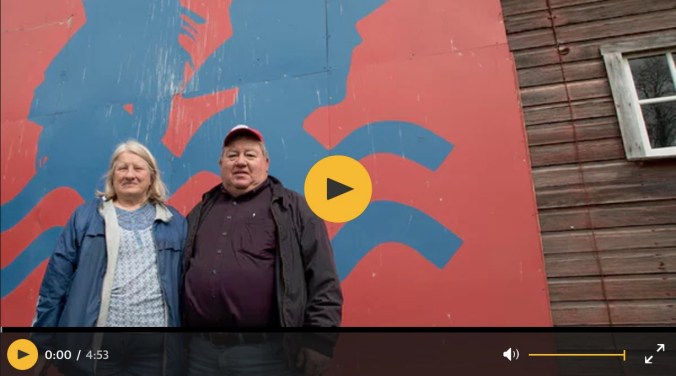
After Trump’s revival of the Keystone XL pipeline project, some communities along its route are getting ready to fight back. Others see the US president keeping his promise to ‘make America great again’. The Guardian drove along the proposed route of the pipeline, through three red states – Montana, South Dakota and Nebraska – to hear what those who will be affected have to say about it

Strengthening Our Birding With Citizen Science

team-belize-720x405.jpg

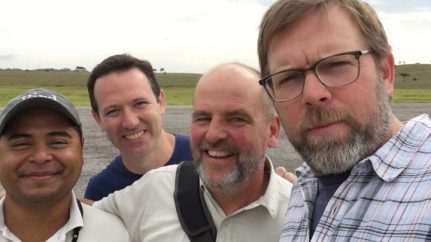
Team Belize finished with 242 species. From left: Roni Martinez, Andrew Farnsworth, Steve Kelling, Brian Sullivan.

Seth, since his time working for the Cornell Lab of Ornithology, and even after his time in Ithaca, has helped me to see how important the Lab’s work is to what our company has been doing since he was an infant. Citizen science is an essential component, and at Chan Chich Lodge guests have responded to the passion the guides have for eBird, which is why we put so much attention into this year’s Global Big Day. And it is why we are already planning the next collaboration with the Lab, a collaboration Seth will lead on our side. For now, a final roundup of stories from last weekend, starting with our favorite team:

…After pooling their lists, the teams ended the day with a whopping 327 species combined—reflecting not just great birding but the region’s importance to an immense diversity of birds. Team Belize topped the friendly group competition with 242 species (including 40 species the other teams didn’t find); Team Mexico found 224 species (with 43 unique to their list); and Team Guatemala tallied 213 (with 23 unique)…

58126301-520x611

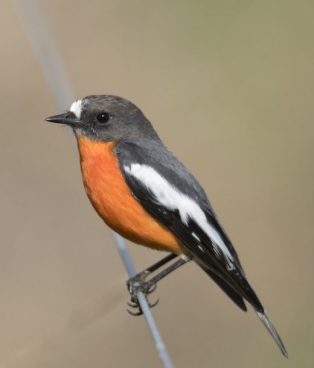
Flame Robin by John Cantwell/Macaulay Library, taken on Global Big Day

Also, the final numbers are in and news published late yesterday confirmed what I suspected as day was breaking in Belize, titled Global Big Day 2017: birding’s biggest day ever:

…On 13 May 2017, almost 20,000 birders from 150 countries around the world joined together as a global team, contributing more than 50,000 checklists containing 6,564 species—more than 60% of the world’s birds. This is a new record for the number of bird species reported in a single day, Continue reading

The Bells & Whistles Of The Forest At Daybreak

GBD2017ResultsWed.jpg

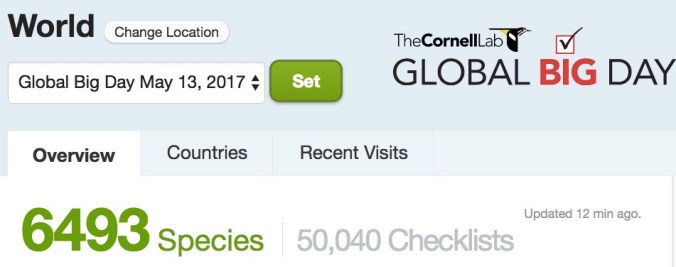
We post a few times a day, sharing information about initiatives in our own realm of work and frequently observations on news links that we find interesting. For the record, here is a bit of news worth celebrating. As I type this at 5:30a.m. Belize time, the Global Big Day page on eBird shows the latest tally of the species count as seen above. At the same time, on the eBird Facebook page I am looking now at the last post, dated May 15 midday, that says:

The #GlobalBigDay total is now 6,255, less than 100 away from a new record for a single day of birding!

Looks to me like a new record has been set. Where are all the bells and whistles? They are outside my door right now, where the wildlife is whirring, cling-clanging, whooping and shrieking as the forest lights up…

Sticking To Mission & Unintended Consequences

GBD2017Result1

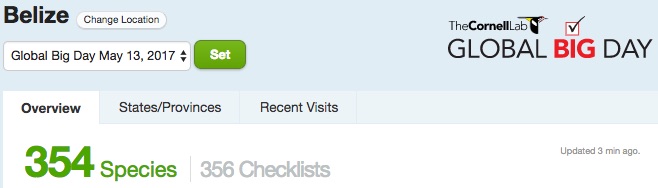
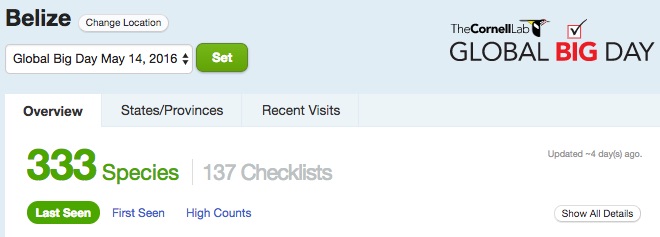
In recent months, as we prepared to host Team Sapsucker Belize at Chan Chich Lodge, our goals were focused on the citizen science mission. Using a couple simple metrics, the event was a clear success, comparing the number of species counted in Belize this year versus last year, and especially looking at the number of checklists submitted.

GBDResult16.jpg

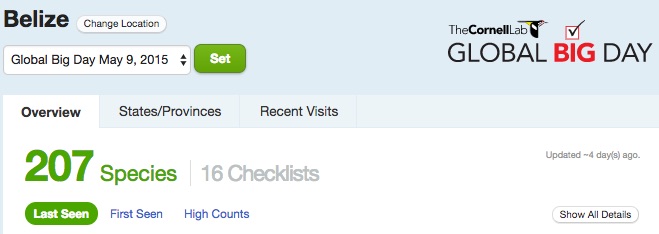
If you look at this as the third iteration of an event that we hope to grow in future years, the progress from beginning to present is promising. As I type this there are still more than 40 hours of data entry remaining for this year’s event, so the increase in this year’s participation and species identification will likely grow larger by this time Wednesday.

GBDResult15.jpg Continue reading

Agripreneurship On The Rise

This exciting project came to our attention a little over a year ago, and we’re excited to see that it’s going full steam ahead!

This is an Embark Fellowship campaign. If we raise our target, Brown University will donate $25,000 to our project!

What’s up with fish?

The world’s population is growing rapidly, and the global demand for animal protein—from fish to poultry, beef, and pork— is growing with it. But there’s a problem: animal feeds are made from wild-caught fish like anchovies and sardines. These fish are caught using highly destructive fishing methods that result in unintentional by-catch and the destruction of coral reefs. One third of global fish catch doesn’t go towards direct human consumption; it goes to feeding animals. As a result, more than 85% of the world’s fisheries are exploited. We are feeding fish to other animals, and it doesn’t make sense.

Meanwhile, the world’s population is increasing rapidly and is projected to hit 9.7 billion by 2050. We desperately need a new way to feed a growing population that is not at odds with the health of our oceans.

Meet the black soldier fly.

Continue reading

Global Big Day 2017, Results

GBD2017b.jpg

When I left Team Sapsucker late last night it was pouring rain, a perfect punctuation to the day, telling them to stay under cover on Chan Chich’s deck since no bird would be out in the deluge. They were reviewing their lists, waiting to see if the rain would pass, allowing one final outing of the 24-hour period. I did not ask the final number, but I could tell they were happy with the day.GBD2017Result
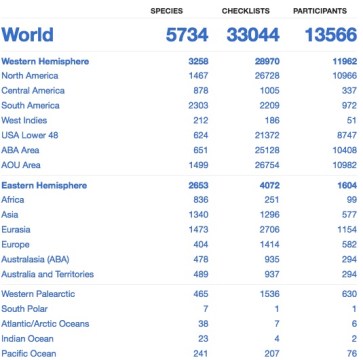
As I type this at 5am the rain has long since stopped, the early birds are out in full sonic force, competing with the howler monkeys it seems, and results on eBird’s website look impressive. My eye is drawn to the Central America numbers. Partly because I moved to the region two decades ago and have worked in each country. Partly also because the region has embraced its ornithological importance, and yesterday provided one more metric for that embrace. But mainly, because I am here in Belize and the Lab team we had here was exactly as expected, not only as birders but as people.

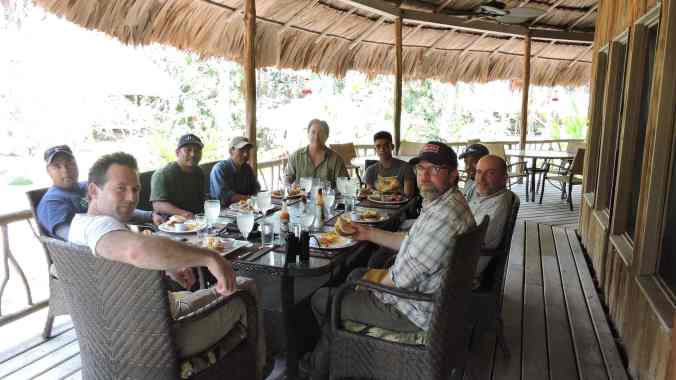
The Chan Chich guide team had an amazing day with the Team Sapsucker on Friday, and over lunch that day they all celebrated several firsts, the details of which escape me now, but they involved two new species being added to Chan Chich’s list on eBird (a big deal) and our guide Ruben adding a life list bird that day to his nearly two decades of birding accomplishments at the Lodge.
GBD@CCL.jpg

The Lab team explained the rules of the game for the following day. No assistance of any kind would be possible after midnight. Continue reading

GrowFood Carolina

how-growfood-works.png

I am always on the lookout for simple but effective graphics illustrating ideas that we attempt to put into action in our various projects–why reinvent the wheel? By rabbit hole good fortune, after I was referred to the Coastal Conservation League as a regional leader in entrepreneurial conservation for the southeastern USA, one of their programs, as illustrated above and described in words below, came to my attention:

The Conservation League started its Food and Agriculture program in 2007 with the goal of protecting South Carolina’s small, family farms. Between 1992 and 1997, more than 200 acres of rural land were converted every day to urban uses, placing South Carolina in the top ten states in the nation for rural land loss. We quickly realized that small farmers lacked access to the infrastructure available to industrial farms, and were therefore unable to say “no” when a developer offered to buy their land. The League saw a food hub as critical to our work protecting rural landscapes and improving quality of life across the coastal plain. Continue reading

Winged Muses

13BIRDMUSIC-superJumbo.jpg

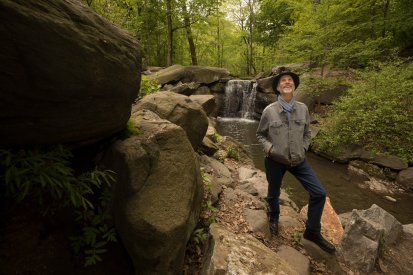
The composer John Luther Adams in Central Park, listening for his winged muses. Credit James Estrin/The New York Times

Occasionally we have reason to think of muses; every day we think of birds. Today birds are the muse. We have linked to this composer’s work once previously, and I am happy with the coincidence of reading again about this composer on Global Big Day in this review by Michael Cooper, Listen to ‘Ten Thousand Birds’ and Its Warbling, Chirping Inspirations:

New York is not usually considered a naturalist’s paradise. But John Luther Adams, the Pulitzer Prize-winning composer and former environmental activist, did not have to walk far from his Harlem apartment this week to be serenaded in Morningside Park and Central Park by choirs of robins, sparrows, flickers, catbirds and, finally, a wood thrush, with its poignant “ee-o-lay” song.

”That’s the one that started it all for me, 40-however-many years ago,” Mr. Adams, 64, said as he paused in a sun-dappled spot in Central Park’s North Woods to savor the wood thrush’s melody. Continue reading

Introducing The Team Prepping For Global Big Day At Chan Chich Lodge

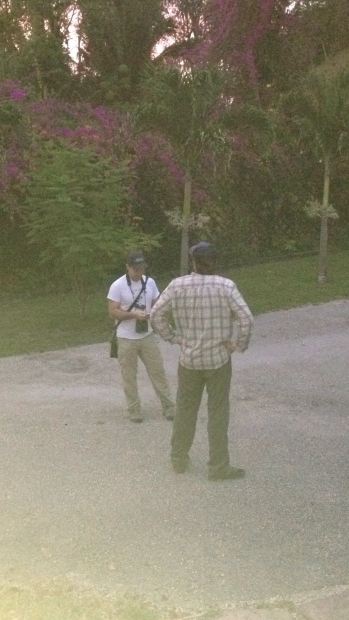
GBD1On day two in Belize with Team Sapsucker introductions are due. The photo to the left, taken at about 5am today in front of Chan Chich Lodge’s reception area, shows two of them. The best information I could find to share with you about Andrew Farnsworth is on Songbird SOS Productions, where he says:

“I like the challenge of trying to figure out how to go birding when there’s a traffic jam on first avenue. It’s cool to be able to study birds in a city… Some people have seen technology as the end of all things natural, but there’s a whole other side to it that gives us access to a world that we would otherwise not have seen.” Continue reading

Model Mad, Down Under

John Church in Hobart in September 2010. He is known internationally for helping to bring statistical and analytical rigor to longstanding questions about sea level rise. Credit Peter Boyer

We continue to keep our eyes open for stories that offer inspiration even in the face of apparent adversity.

A Parable From Down Under for U.S. Climate Scientists

HOBART, TASMANIA — John A. Church, a climate scientist, did not look or sound like a man who had recently been shoved out of a job.

Speaking softly and downing coffee at an outdoor cafe in this old port city, he sounded more like a fellow fresh off a jousting match. “I think we had a win — a bigger win than I ever anticipated,” Dr. Church said in an interview last month.

Australian climate science went through an upheaval last year, one that engaged the press and the public in defending the importance of basic research. In the end, Dr. Church did indeed lose his job, but scores of his colleagues who had been marked for layoffs did not. Some of them view him as having sacrificed his career to save theirs.

What happened in Australia shows the power of an informed citizenry keeping watch on its government. And it may turn out to be a precursor to an attack on fundamental climate research in the United States.

Continue reading

Counting Down To Global Big Day

Global-Big-Day-map

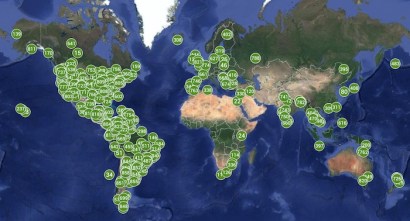
A world of birders has already marked out where they’ll be on 13 May. Where’s your place? Add it today!

Thanks to eBird for the one week marker until Global Big Day, which we look forward to supporting at Chan Chich Lodge. Click the map to the left to mark your territory, so to speak. This countdown notice uses one species to illustrate a conceptual premise of the annual event, and we are happy to report that this species is frequently seen at Chan Chich Lodge on birding walks, and excursions to Gallon Jug Farm, where the barns are accommodating:

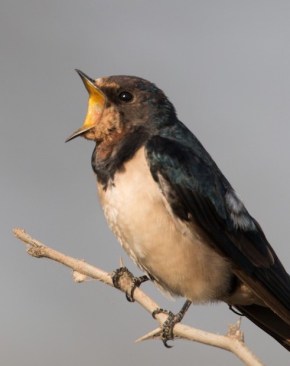
The familiar Barn Swallow (right) has been recorded in eBird from 222 countries. You can hope to spot a Barn Swallow almost anywhere on the planet, from Alaska to Argentina, Siberia to Australia, Iceland to South Africa. Barn Swallows criss-cross the equator and traverse the Eastern and Western Hemispheres. Their movements not only span an entire planet of birds, but connect a worldwide community of birders.

In the same way, Global Big Day and eBird connect all of your local birds with the rest of the world, making a real difference in the collective understanding of birds worldwide. On 13 May, every bird that you report contributes to the global team total for an unprecedented snapshot of our planet’s bird diversity. Every bird counts.

To join the Global Big Day team from more than 150 countries, all you have to do is go birding on 13 May!  Continue reading

Ranching, Recovery & Reason

MasterSceneofSilverCreek-GuiseppeSiata-1260x708.jpg

If you missed this post, it is worth a read for perspective either before or after the story below, and even if you do not read the story below that one should not be missed. Thanks to Cool Green Science:

Ridding the West of cattle remains a priority for some organizations and individuals. “Ranching,” the director of one prominent group told High Country News, is among “the most nihilistic lifestyles this planet has ever seen. Ranching should end. Good riddance.” Another group charges that ranching causes “desertification.” Another proclaims that “grazing spreads weeds.” Still another cites as a “myth” that “profitable livestock production and ecological preservation can coexist.” Continue reading

Keystone Continues Calling

3733.jpg

Thanks to the Guardian for keeping attention where it is due:

Life on the Keystone XL route: where opponents fear the ‘black snake’

Part one: In Montana, Native Americans fear a leak could destroy their way of life, but local politicians worry about the threat of protesters above all else

Words by Oliver Laughland, photos and video by Laurence Mathieu-Léger

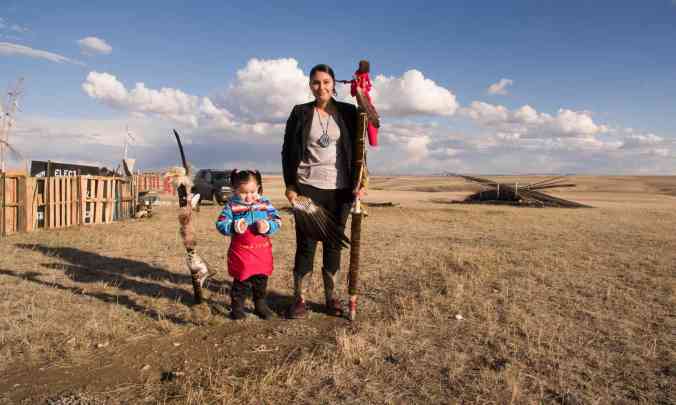
“)ur people call it the black snake because it is evil,” says Tressa Welch, as thunder clouds steamroll the blue sky over the plains of Wolf Point. “And like snakes they come out of nowhere, they slither and strike unknown.” Continue reading

Historians Do Not Get Mad, They Give Perspective

ian-frazierNormally we clip short excerpts and link to full articles, or whatever it is we think worth sharing from a third party source. The exception is, on rare occasions, with important news that should be read in full at once, such as a public service announcement. Here is one of those, in our estimation. We suggest you read it to the end, now. Ian Frazier, a staff writer at The New Yorker, has avoided the sap, but treads close to the heartwarming notion that folks in a divided, tense situation might be able to listen to one another, with the help of a mission-driven historian:

Patricia Limerick, well-known historian of the American West, gave a talk at the community center in the town of Burns, Oregon, one evening not long ago with her heart slightly in her throat. Limerick belongs to the small category of historians who are occasionally recognized on the street, and she gives talks all the time. What made this one different was that Burns is the county seat of Harney County, home of the Malheur National Wildlife Refuge, the site, last year, of a six-week takeover by armed protesters, who demanded that the federal government return the land—though to whom was not exactly clear. One of the occupiers was killed in the standoff. Limerick knew that her audience, about seventy-five county residents, included both supporters and opponents of the protest. The mood in the room seemed congenial, not tense, but she couldn’t be sure. A local man had told her about a past confrontation between the two sides in which many had likely carried firearms. He said he thought that if someone had dropped a book people might have started shooting. Continue reading