Be Careful What You Wish For

You can’t always get what you want. Sometimes you can, but the law of unintended consequences never ceases to surprise us. Thanks to this week’s Science section of the New York Times for a marine/culinary example:
A New Bounty of Oysters in Maryland, but There Is a Snag

Recent changes to state policy and a growing national affection for the shellfish have led to an oyster farming boom that is hampering the traditional fishing ways of the watermen.

Profits, Privileges, Environmental Destruction

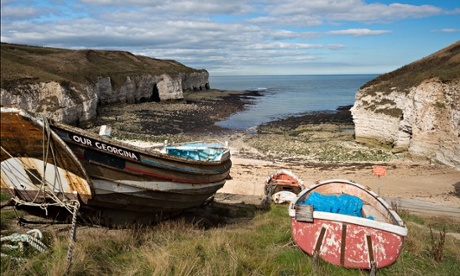
Mombiot blog on sea protection : Fishing boats near the beach at Flamborough head Yorkshire

Fishing boats near the beach at North Landing, Flamborough Head, on the Yorkshire coast. Falmborough Head is home to one of the UK’s three ‘no take’ zones – that in total cover just 5 sq km. Photograph: Paul Richardson/Alamy

The excellent Guardian editorialist, whom we have linked to more than once, strikes again:

Ripping up the sea floor on behalf of royal profits

George Monbiot: Even the pathetic laws protecting marine life in this country are instantly swept aside in response to lobbying by Prince Charles’s tenants

A few days ago, I visited the Flamborough Head “no take zone”, one of the UK’s three areas in which commercial fishing is prohibited.

Here marine life is allowed to proliferate, without being menaced by trawlers, scallop dredgers, drift nets, pots and all the other devices for rounding it up, some of which also rip the seabed to shreds. A reef of soft corals, mussels, razorfish and other species has begun to form, in which plaice and cod, crabs and lobsters can shelter, unmolested by exploitation. Fantastic, isn’t it?

Well curb your enthusiasm. Continue reading

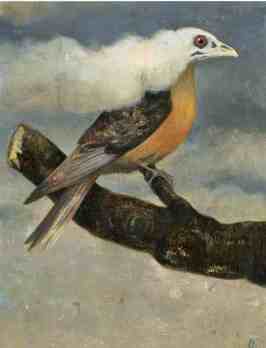
Conservation, Passenger Pigeons, History Of Extinction

Gérard DuBois

Gérard DuBois

My favorite doomsday journalist (and I mean that as the highest compliment) posted over the weekend an unamusing memo to remind us that this is an important centenary anniversary. It ups the ante on our commitment to the community of birdwatchers, casual and serious alike, who support important conservation of wildlife habitat all over the world.

It is not amusing to be reminded about various tragic commons, especially ones for which collective action would seem to have been achievable. We link to these stories in the hope that doomsday outcomes will become less likely if we remind ourselves often enough.

Yesterday the ever-better New York Times, newspaper of record that pays more and better attention to environmental issues than most other publications, saw fit to print this piece by the Executive Director of the Cornell Lab of Ornithology, for which we give our thanks and share with you in whole due to its value as a public service:

ITHACA, N.Y. — THE passenger pigeon is among the most famous of American birds, but not because of its beauty, or its 60-mile-an-hour flight speed. Nor is it a cherished symbol of our great country. No, we remember the passenger pigeon because of the largest-scale human-caused extinction in history.

Continue reading

Why We Walk

Photo Courtesy of digitaldeconstruction.com

Photo Courtesy of digitaldeconstruction.com

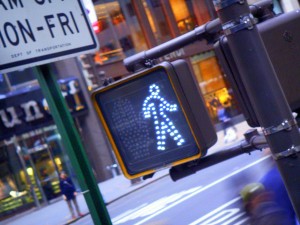
I have been endlessly fascinated by walking. I asked myself Why We Walk while I walked 400 km on the Camino de Santiago. A recent article by Adam Gopnik in the New Yorker has brought me to this question again in a new context. The article talks about what it means to be a pedestrian in the modern world and how the role of walking has changed as it’s become less necessary. The sad thing about walking for pleasure instead of necessity means that it occurs less. Many of us spend our lives in the sitting position: sitting in cars to then go sit at work and then sitting at home after a long day of sitting. I’m generalizing here as I call myself out on my sedentary life. Our bodies are made to walk, so I must ask myself, Why Don’t We Walk?

Roads are not enjoyable to walk in an increasingly auto dependent world. When living in a residential area there isn’t much activity to make walking around something that invites ‘randomness’. Adam Gopnik writes in the New Yorker about Why We Walk. He says,”We start walking outdoors to randomize our experience of the city, and then life comes in to randomize us.” The sidewalks are public space. In the suburbs we have a lot of private space and little public space. I have to wonder how it could affect our psyche to not brush up against the world. I wonder what we take away when we lose the opportunity to have chance interactions in indeterminate public spaces.  I wonder how creative we could be as a culture if the majority of our interactions with strangers didn’t occur over money exchanges. Adam Gopnik talks about the vague excitement and pure chance of walking in New York City.

You could walk anywhere. Saturday all day, Sunday all day, I’d tramp through the lower-Manhattan neighborhoods. The differences, architectural and social, among Tribeca and SoHo and the East Village, to name only contiguous areas, were distinct and vivid and nameable then: cast-iron buildings shading off into old egg- and paper-carton factories sweetly interrupted by small triangular parks, and edging over, as you walked east, into poor-law tenements that were just being reclaimed by painters. I would set off on a Saturday morning and walk all day, and achieve Kazin’s feeling of vague excitement, of unearned release, in a way that I have never felt before or since.

I like this description because it shows the way he was able to interact with the environment around him as a walker. Suburbs that are designed for cars make walking an outdated form of transportation. It’s inefficient and time consuming if you live in a city that’s designed for cars rather than pedestrians. In the suburbs, there aren’t many people dancing in the ‘sidewalk ballet’ as Jane Jacobs puts it. So, I just wonder what a healthier culture there would be if there were more public space for people to live outward facing lives that brushed up against each other.

The article brings up a quote from Frédéric Gros’s book A Philosophy of Walking, “The purpose of walking, is not to find friends but to share solitude, for solitude too can be shared, like bread and daylight.” This quote to me highlights the sort of communion we can have with each other while walking. While I was walking the Camino, I felt that communion with fellow walkers as well as with the landscape. I was sharing solitude with the landscape. I think taking away that walking aspect of communion in our lives further isolates us from nature. Continue reading

Seed Vault, Conservation For The Long Run

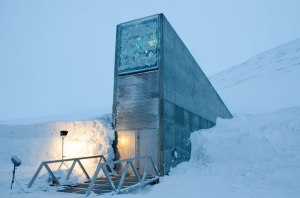
Travels to the seed vault on top of the world

Travels to the seed vault on top of the world

In advance of a story of our own, albeit set in the tropics at our upcoming beach resort, on this same topic, we thank Conservation for the story  they offered in an earlier issue of their magazine about this seed vault way way north:

…One day in Svalbard lasts four months, and the sun never sets; one night lasts four months, and the sun never rises. The other four months consist mainly of either long days with short nights or long nights with short days. Here the equinoxes—the two days annually with 12 hours each of daylight and darkness—really mean something. But what does “a day” mean here, and how many are there in a year? Continue reading

Community, Control, Conservation

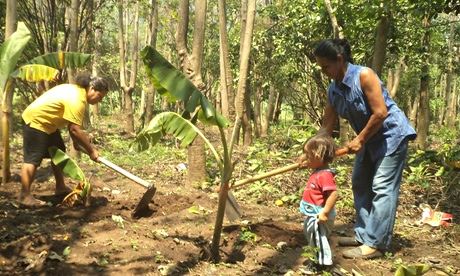
Salvadorans Elsy Álvarez and Maria Menjivar, with her young daughter, plant plantain seedlings in a clearing in the forest. Photograph: Claudia Ávalos/IPS

Salvadorans Elsy Álvarez and Maria Menjivar, with her young daughter, plant plantain seedlings in a clearing in the forest. Photograph: Claudia Ávalos/IPS

We have normally emphasized the word collaboration in conjunction with the conservation initiatives carried out by communities. This article in the Guardian points to research findings that indicates that another c-word, control, is sometimes key to understanding how communities reduce deforestation:

…Analysis suggests that in areas formally overseen by local communities, deforestation rates are dozens to hundreds of times lower than in areas overseen by governments or private entities. About 10-20% of global greenhouse gas emissions are attributed to deforestation each year.

The findings were released by the World Resources Institute (WRI), a thinktank, and the Rights and Resources Initiative (RRI), a global network that focuses on forest tenure. Continue reading

Bison, A European Species Almost Lost

Bison

Thanks, prince (and New York Times for the video record of a noteworthy collaborative act of conservation, with a dash of altruism, and creative definition of commons):

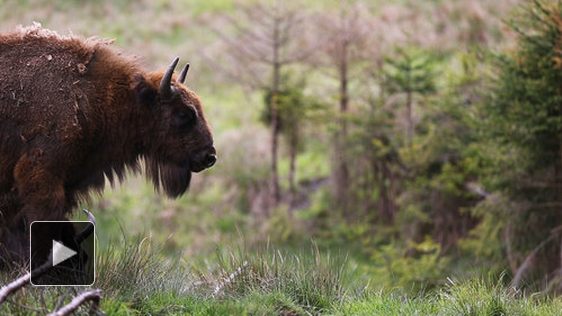
Bringing Back Europe’s Bison

A German prince is leading an effort to bring back the European bison, Europe’s largest land mammal, in Bad Berleburg. The animal almost went extinct in the early 20th century.

Seasteading, Self-Reliance Utopia, And Our Shared Future

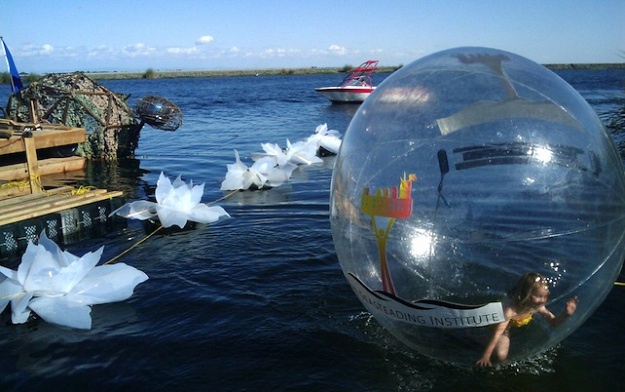
An article recently published in n+1 examines a utopian futurist form of an idea that seems oddly symmetric with Seth’s posts about the history of exploration using Iceland as a case study. Looking back, we see much in common with explorers, pioneerspilgrims and adventurous thinkers of all sorts.  Looking forward, we are inclined to embrace smart, creative, enthusiastic group efforts to resolve seemingly intractable challenges. Especially when they involve living on boats. We recommend reading the following all the way through:

To get to Ephemerisle, the floating festival of radical self-reliance, I left San Francisco in a rental car and drove east through Oakland, along the California Delta Highway, and onto Route 4. I passed windmill farms, trailer parks, and fields of produce dotted with multicolored Porta Potties. I took an accidental detour around Stockton, a municipality that would soon declare bankruptcy, citing generous public pensions as a main reason for its economic collapse. After rumbling along the gravely path, I reached the edge of the Sacramento–San Joaquin River Delta. The delta is one of the most dredged, dammed, and government subsidized bodies of water in the region. It’s estimated that it provides two-thirds of Californians with their water supply.  Continue reading

The Gift, A Gift

Recent guests of Raxa Collective, mentioned here, handed Amie and me this book prior to our parting ways. Upon reading this blurb, we expected to find it enriching if and when we could find the time to read the gift, The Gift, which:

“actually deserves the hyperbolic praise that in most blurbs is so empty. It is the sort of book that you remember where you were and even what you were wearing when you first picked it up. The sort that you hector friends about until they read it too. This is not just formulaic blurbspeak; it is the truth. No one who is invested in any kind of art, in questions of what real art does and doesn’t have to do with money, spirituality, ego, love, ugliness, sales, politics, morality, marketing, and whatever you call ‘value,’ can read The Gift and remain unchanged.”—David Foster Wallace

Continue reading

We’re No Angels

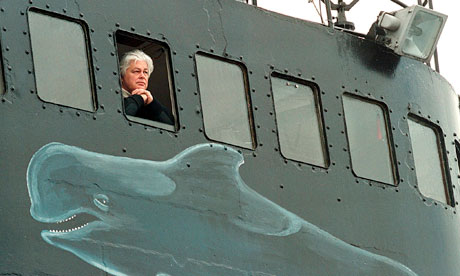
Captain Paul Watson says that the alleged incident in 2002 did not occur in Costa Rican waters. Photograph: Corbis

He’s no angel.  That would be the view of whaling and fishing interests, which include countries and big companies (plus plenty of soulless mercenaries, poachers and thugs).  Whales might think otherwise. 800 large endangered bluefin tuna, saved from poachers by this man and his organization, might too.  He counts plenty of our contributors as admiring, angel-cheering, distant observers.  Our observations are tempered by acknowledgement of the conundrums wrapped up in his in-your-face, semi-legal tactics (not our style).  But we care about fisheries and related topics as much (while trying to keep our wits about us) as those complexities.  And those forces Paul Watson is battling are certainly not always angelic themselves. Nor are we, always, for that matter.  Click the image above for the story in The Guardian:

California-based marine conservation organisation Sea Shepherd suspects that Costa Rica may have made a deal with Japan to have him extradited. Continue reading

Back To The Commons

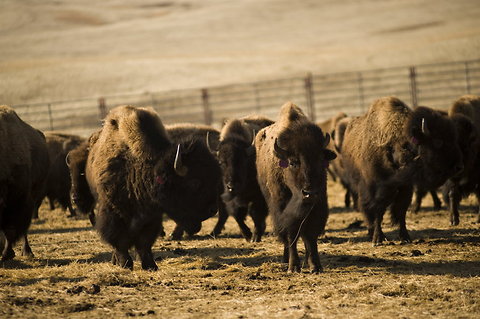
Cattle graze on public lands under federal permits, and the fee is heavily subsidized — $1.35 per head of cattle, in contrast with the $22 per head that ranchers pay for their cattle to graze on private land.

Most days we find stories that bring us back to one of the common themes affecting, and affected by, the one or more of the three “c” words in our site’s banner.  Just this last week, in two very different contexts–the Mediterranean fisheries and the great plains of the western USA–we see the potential for the tragedy so commonly affecting unrestricted and accessible open spaces.

Click the image above to go to the second of these stories.  While we do not believe markets solve all problems, and certainly do not solve the most complex problems easily, this one seems to be the definition of a no-brainer.  Or at least, the questions seem obvious: why do citizens in the USA, who contribute to ranchers abundantly at the supermarket each week, also contribute so generously on April 15 each year?  If they reduced the latter would they reduce the former? And would that not be a good thing, in terms of health and environmental considerations?