Nature’s Soothing Songs

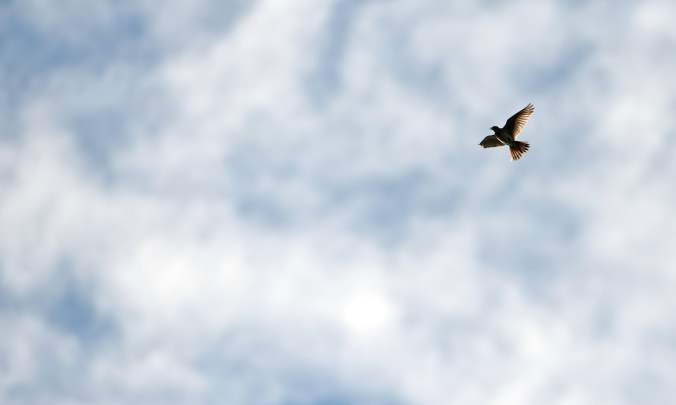
‘Hearing birdsong with such clarity has become for many a small joy and a valuable mental health boost during lockdown.’ Photograph: Alamy

Although not an experienced birder, I would call myself a proponent of ornitherapy; it makes me happy and relaxed to see and hear birds around me. I also have the good fortune to live in a country with not only a great number of birds (both species and individuals), but also an area that’s remote enough to have fairly little noise pollution. So bottom line, I hear birds all the time. In fact, at the times when they’re quiet for some reason, it feels eerily strange.

So, despite the unprecedented challenges people are currently facing around the world, I hope that occasionally there’s a moment to at least open the window and listen for the birds.

The Guardian view on birdsong: a fragile joy

The chance to put biodiversity and the environment at the heart of recovery from the pandemic should not be squandered

One night in April, birdwatchers from around Britain stepped outside their doors and listened intently to something most of them had never experienced before: the fluting, mysterious, melancholy cry of the common scoter on the wing.

Flocks of these dusky sea ducks were beating their way over Britain on their long migratory journey towards their Arctic breeding grounds, easily audible to the naked ear. The first great wave was heard on the Wirral before being picked up in the Peak District, and at last by the Humber. A second wave was made out as flocks made their way along the line of Hadrian’s wall, from the Solway Firth in the west to Northumberland in the east. A third wave flew above listeners from the Severn estuary to the Wash. The birds were heard in urban Blackburn, Stalybridge, Bristol and London. It was thanks to social media that so many listeners were alert to the birds’ progress – and thanks to the silence of lockdown that they could be heard.

With few planes in the sky and vehicles on the roads to muffle its sound, birdsong has been ringing out loud and clear. It was a decade ago that the skies were anything like this quiet, when flights were grounded after the Icelandic volcano Eyjafjallajökull erupted. The last time traffic levels were so low was the early 1970s.

Hearing birdsong with such clarity has become for many a small joy and a valuable mental health boost during lockdown.
Continue reading

Spoonbills Dream Team @ Macaw Lodge, Global Big Day 2020

DeckJan2020

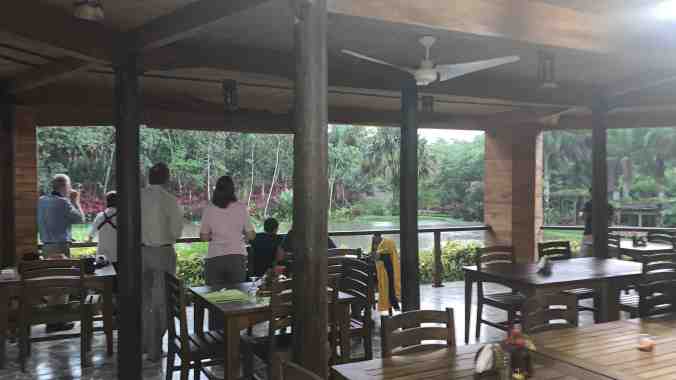
Macaw Lodge dining room observation deck, January 29, 2020

Three years ago today, a few countries north of where I type this, Team Sapsucker had excellent results on Global Big Day 2017. Today I am reporting on the efforts of one part of the Spoonbills Dream Team.

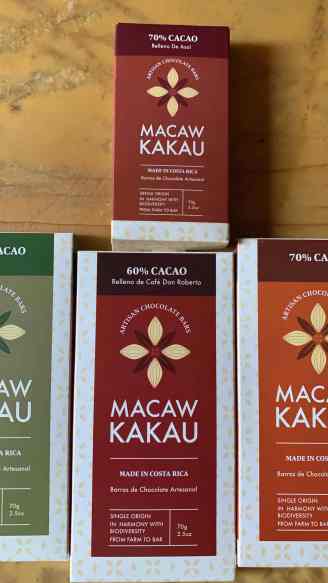
MacawChocThis team’s dream is spread across multiple geographies and results will be shared later. I will share what I know from Costa Rica. A few months ago, in a world that now seems far, far away Amie and I visited the farm where the cacao is grown for the farm-to-bar chocolate we offer in our shops. The farm has a lodge (or vice versa depending on your perspective), and before our visit to the cacao plantation and chocolate-making facilities we started, at dawn, on the deck of the lodge. That is what you see in the photo above. The lodge is closed at present but the deck that you see in that photo normally has birders from all over the world because of the forest conservation surrounding the cacao and the neighboring Carara National Park.
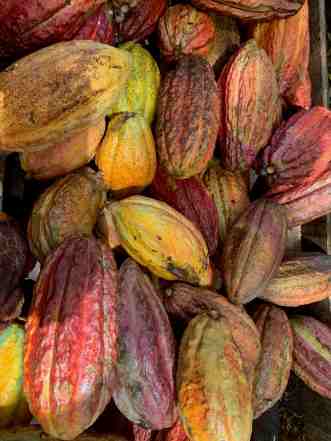
CacaoMore on the cacao-growing and the chocolate-making later. Plus, this is where I first saw a melipona bee hotel and I have photos and video from the recent harvest, so more on that later also. For now, birds. Seth, in New Haven, CT USA joined this team, then asked Amie to join the team, and she asked some birding guides who work at the lodge in the cacao plantation to join the team. I am the scribe for that Costa Rica part of the team. I do not even know who else is on the team in other countries, so will leave that for Seth or Amie to report later.
For now, some photos from the location where the bird experts have spent much of their time in recent years. Continue reading

If You Happen To Be On Line

There are themes we’ve returned to frequently since the beginning of this site, in the different ways we’ve posted about collective action conservation or cultural events. The titles of those posts began with the words, “If You Happen to be in…” – followed by the location of our conservation public service announcement.

The internet has obviously played an enormous role in people’s lives for decades now, but even more so in the time of Covid-19, when so many of life’s gatherings, from education to business meetings and conferences, has shifted to the virtual realm.

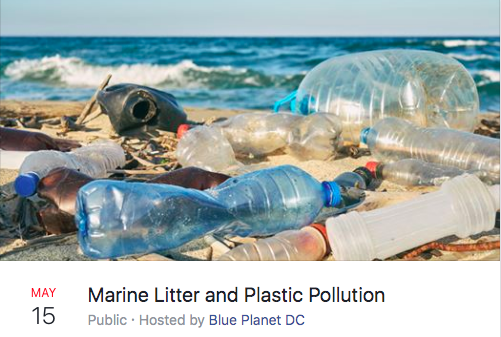
So, here’s a PSA for the Oceans. Hosted by Blue Planet, DC, with guest speaker Phil Karp (a frequent contributor to this site on themes of citizen science and marine conservation) this virtual seminar will discuss both the serious problem of marine pollution, but also some emerging solutions.

If you have an hour to spare on May 15th, join the conversation!

Details

Did you know that between 8 million and 13.5 million metric tons of plastic enter the ocean every year, equivalent to a garbage truck full of plastic EVERY MINUTE?!

Plastic entering the ocean can cause harm to marine organisms and ecosystems, coastal economies and human health. This virtual seminar by guest speaker Phil Karp will examine the magnitude and dynamics of marine litter and ocean plastic along with emerging solutions. In addition, it will discuss what governments and consumers can do to address the problem.Phil Karp recently retired from the World Bank where he was Lead Knowledge Management Specialist in the Urban Development Global Practice. He is longtime diver, citizen scientist and ocean advocate focusing on the interface between marine ecosystem conservation and livelihoods of coastal communities.

Sign up today! Join below on May 15.
https://us02web.zoom.us/j/89825590123


Actions Speak Louder With Words

4256bc

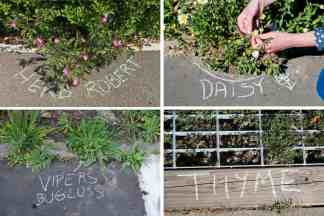
Sophie Leguil, founder of More Than Weeds, stands over chalk names of plants on the pavement.
Photograph: Jill Mead/The Guardian

Thanks to Alex Morss for this story in the Guardian about actions in the interest of botanical awareness:

‘Not just weeds’: how rebel botanists are using graffiti to name forgotten flora

Pavement chalking to draw attention to wild flowers and plants in urban areas has gone viral across Europe – but UK chalkers could face legal action

A rising international force of rebel botanists armed with chalk has taken up street graffiti to highlight the names and importance of the diverse but downtrodden flora growing in the cracks of paths and walls in towns and cities across Europe.

4592

Boris Presseq and fellow botanists write chalk plant names on the pavement in Toulouse, France. Photograph: Claire Van Beek/Handout

The idea of naming wild plants wherever they go – which began in France – has gone viral, with people chalking and sharing their images on social media. More than 127,000 people have liked a photo of chalked-up tree names in a London suburb, while a video of botanist Boris Presseq of Toulouse Museum of Natural History chalking up names to highlight street flowers in the French city has had 7m views.

4040

Chalkers say their work encourages connection with the natural world around us. Photograph: Jill Mead/The Guardian and Handout

Presseq told the Guardian: “I wanted to raise awareness of the presence, knowledge and respect of these wild plants on sidewalks. People who had never taken the time to observe these plants now tell me their view has changed. Schools have contacted me since to work with students on nature in the city.” Continue reading

How Sweet Is Your City?

2437

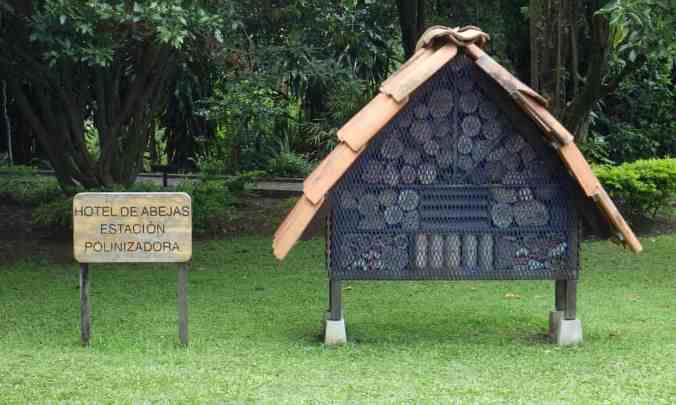
A bee hotel, part of Curridabat’s drive to welcome and protect pollinators. Photograph: Courtesy of Curridabat Municipality

Costa Rica is full of inspirational stories, some big picture and some more granular. Bee hotels are an example of the latter, and first came to my attention only this year. On a farm north of San Jose growing edible flowers, and then again on a cacao plantation in the Central Pacific zone where we source our line of Macaw Kakau chocolates–in both cases the “hotels” were specifically for melipona bees.  Thanks to the Guardian for putting some due attention on this forward-thinking municipality across the city from where I live and work, and especially for the reminder that I have not posted yet on the apicultural wonders I learned about at those two melipona bee hotels:

‘Sweet City’: the Costa Rica suburb that gave citizenship to bees, plants and trees

A suburb of the country’s capital is showing how urban planning can be harnessed to benefit both humans and wildlife

960 (1)

 ‘Biocorridors improve air quality, water quality and give people spaces to relax, have fun and improve their health,’ says Magalli Castro Álvarez. Photograph: Melissa Alvarez/Courtesy of GIZ/Biodiver_City Project

“Pollinators were the key,” says Edgar Mora, reflecting on the decision to recognise every bee, bat, hummingbird and butterfly as a citizen of Curridabat during his 12-year spell as mayor.

“Pollinators are the consultants of the natural world, supreme reproducers and they don’t charge for it. The plan to convert every street into a biocorridor and every neighbourhood into an ecosystem required a relationship with them.”

The move to extend citizenship to pollinators, trees and native plants in Curridabat has been crucial to the municipality’s transformation from an unremarkable suburb of the Costa Rican capital, San José, into a pioneering haven for urban wildlife. Continue reading

Immunity Boost Pep Shot

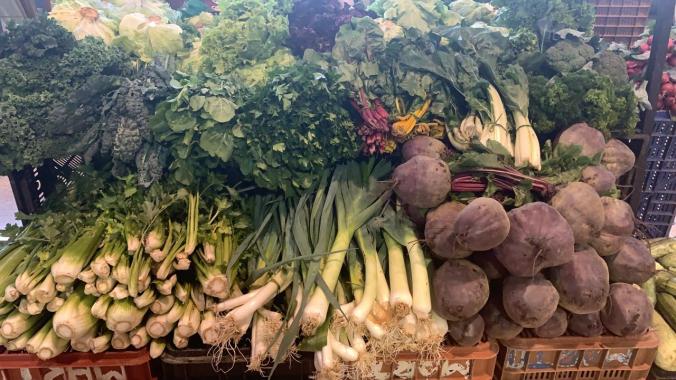
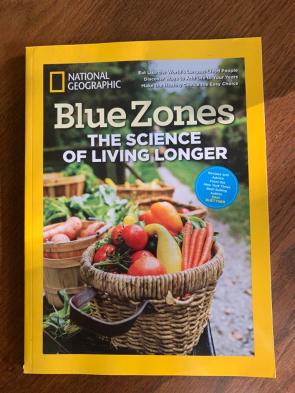
5084bce2c484b_170546bWhen Amie and I visited the Greek island of Ikaria in the autumn of 2013, it was years after we had first read about Blue Zones. We were there for work reasons, looking to identify a new location for Xandari. We learned plenty, though Xandari Ikaria never happened. Hortopita, for one. Not only spinach, but all kinds of greens, both cultivated and wild, can make a dish both healthier and more interesting than the spanakopita I had grown up with. For several weeks now, while investigating ways in which the ferias of Costa Rica might adapt to the new health protocols, and whether we might assist family farms in any way, we took a hiatus from attending the one in our town. I am happy to report that our municipality has made adjustments, and so we attended a new, smaller gathering of family farms this last week. Now that the feria is twice a week, the number of people shopping at either one is effectively halved.

4ae28a27-003e-45c4-9a4c-ed63067f9c2d

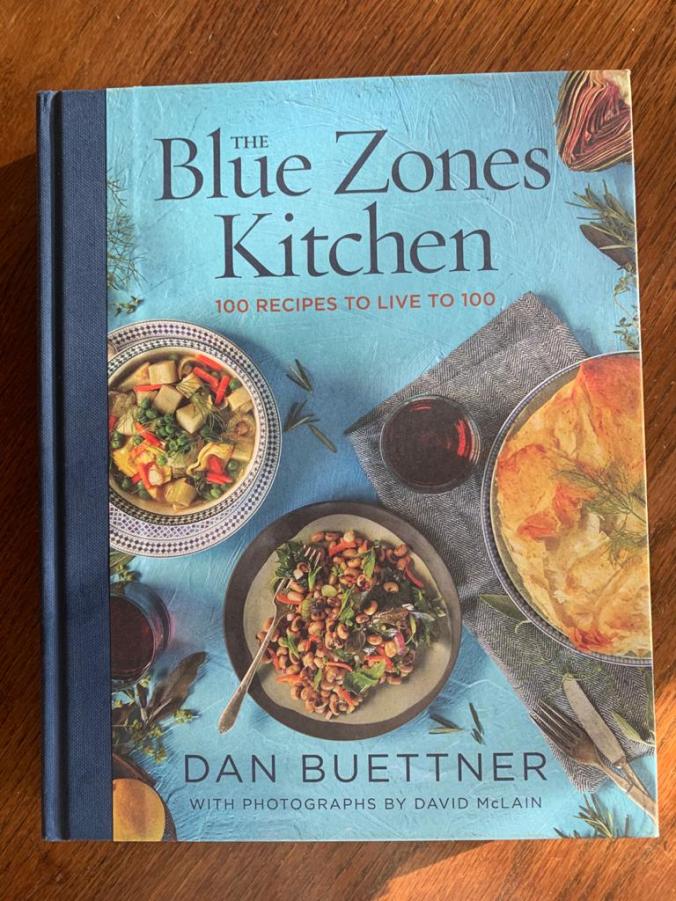
b6cbd244-7cad-4258-bd6a-7293eb55a5b4I bought beets and broccoli and various greens from the stall above a few days ago with no other shopper in close proximity. Good start. And plenty of other distancing measures in place, plus an abundance of soap and sinks and disinfectant sprays at every place where you can enter or exit the feria. Also good. But we remain convinced that a new social enterprise might help these farmers, and shoppers, more. And for that, our kitchen has been a laboratory for generating ideas, with various reading materials to assist. The Blue Zones Kitchen has been especially helpful.
c49f854e-24a9-4859-8432-58321c878bf3

While the “it” social enterprise is elusive, the meals have been nutritious and tasty. This experimentation has converged with my coffee tests, and my 3-year near-obsession with how to bring Maya nut to a wider audience, so this is what I will report on today.

9e3815f9-9c67-4b44-9c7f-8e8917fefeaf

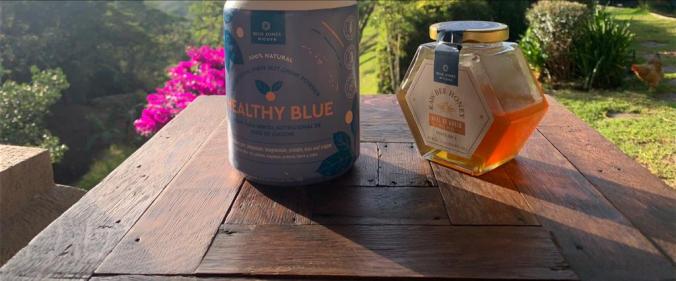
I have been combining a couple Blue Zones products with slow brew coffee, thinking of a drink that can add pep to the day and at the same time add other value, nutritional and otherwise. Honey is part of the recipe for its antioxidant properties as much as its sweetness. And the ojoche (aka Maya nut) to the left in the image above is there for its own nutritional reasons, which will require a post of its own.

d99afbe5-7706-4663-9112-3e501b121fb6

But to get this drink just right, sweetly combining pep + immunity, the ingredient that comes from our feria is the magic touch.

e86c32dd-186b-4ee8-b23e-4a10180a410d

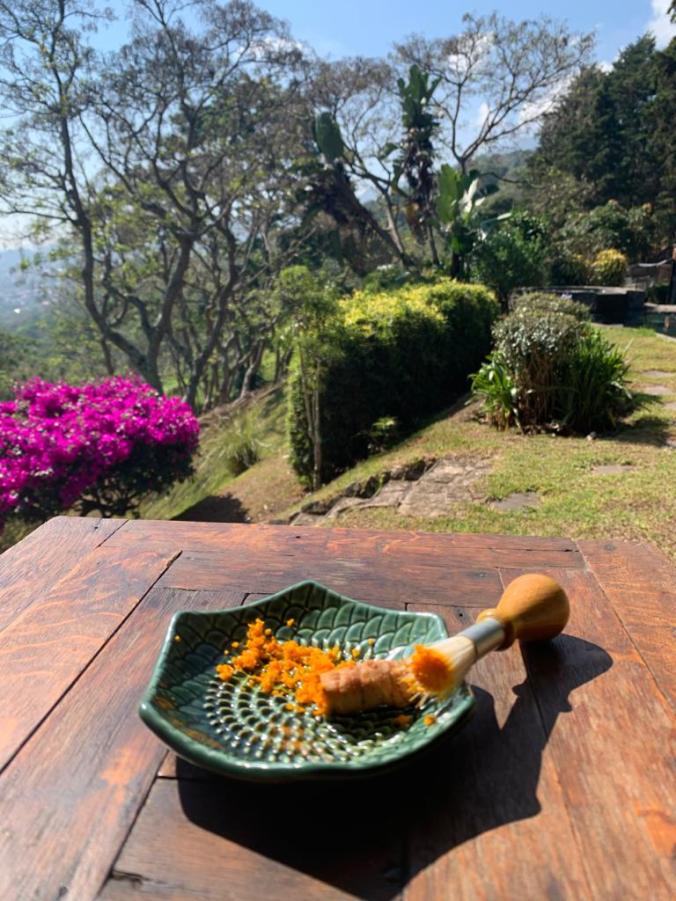
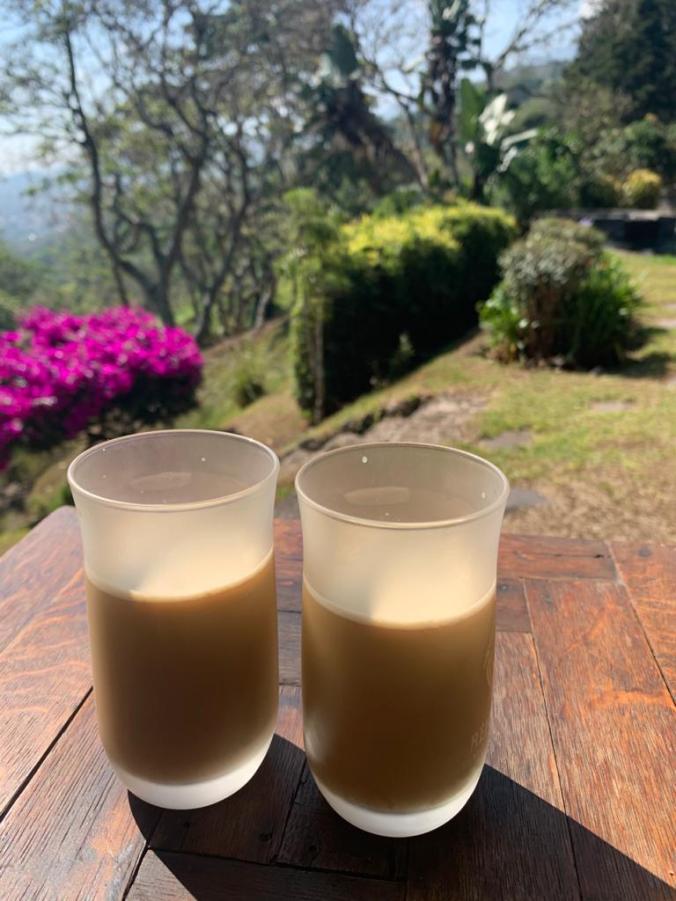
Turmeric became an important part of our diet while living in India. And so it came to be again last month when, just prior to the closure of Costa Rica’s borders, a friend from India visited us. He is a medical doctor, not prone to folk remedies, but under the circumstances we all found ourselves suddenly in, looking for ways to boost our bodies’ immunities–he recommended something simple to us: have some turmeric every day. He specifically recommended combining it with milk, honey and freshly ground black peppercorn. Which we started doing, immediately. And day after day, one thing led to another. So now we have a slow brew coffee with these ingredients, plus some ojoche for good measure.

Mark Kurlansky (Again) On The Importance Of Salmon

KurlSalmon

A spawning salmon is shown through a viewing window near a fish ladder, Thursday, Oct. 17, 2019, during the fall spawning season at the Issaquah Fish Hatchery in Issaquah, Wash.
( AP Photo/Ted S. Warren )

We linked out once previously to this author discussing this book, but it is worth doing again (click the image to the right to go to the podcast); and here is what a bookseller has to say about it:

“Henry David Thoreau wrote, ‘Who hears the fishes when they cry?’ Maybe we need to go down to the river bank and try to listen.”

In what he says is the most important piece of environmental writing in his long and award-winning career, Mark Kurlansky, best-selling author of Salt and CodThe Big Oyster, 1968, and Milk, among many others, employs his signature multi-century storytelling and compelling attention to detail to chronicle the harrowing yet awe-inspiring life cycle of salmon. Continue reading

A Win for the Water

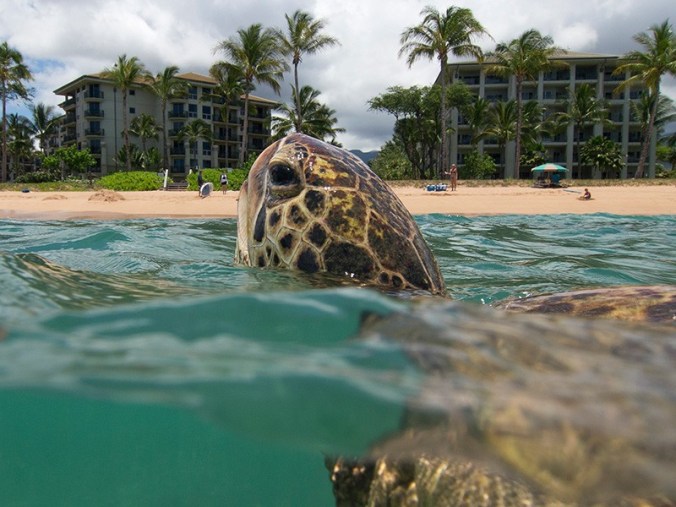
A turtle surfaces offshore of Kahekili Beach Park, Maui, Hawaii. COURTESY OF DON MCLEISH

It seems like a fitting Earth Day celebration that the U.S. Supreme Court voted to block the Trump Administration’s attempts to roll back the EPA Clean Water Act.

SUPREME COURT LEAVES THE CLEAN WATER ACT INTACT

Today the Supreme Court issued its opinion in County of Maui v. Hawaiʻi Wildlife Fund siding with clean water advocates that point source discharges to navigable waters through groundwater are regulated under the Clean Water Act.

The following is a statement from David Henkin, Earthjustice attorney who argued the case defending clean water:

“This decision is a huge victory for clean water. The Supreme Court has rejected the Trump administration’s effort to blow a big hole in the Clean Water Act’s protections for rivers, lakes, and oceans.

“We will have to return to the lower court to confirm this, but we fully expect that Maui County’s sewage plant will be required to get a Clean Water Act permit as a result of the Court’s decision today. That permit will require the County to protect the ocean from sewage discharges in a way it has refused to do to date.

“We are glad the Court has recognized the importance of protecting clean water for all Americans.”

The court held that the Clean Water Act “require[s] a permit if the addition of the pollutants through groundwater is the functional equivalent of a direct discharge from the point source into navigable waters.” In other words, the Clean Water Act prohibits unpermitted discharge of pollution “into navigable waters, or when the discharge reaches the same result through roughly similar means.” In doing so, the Court rejected the Trump administration’s polluter-friendly position in the clearest of terms: “We do not see how Congress could have intended to create such a large and obvious loophole in one of the key regulatory innovations of the Clean Water Act.” Continue reading

Earth Day @ 50

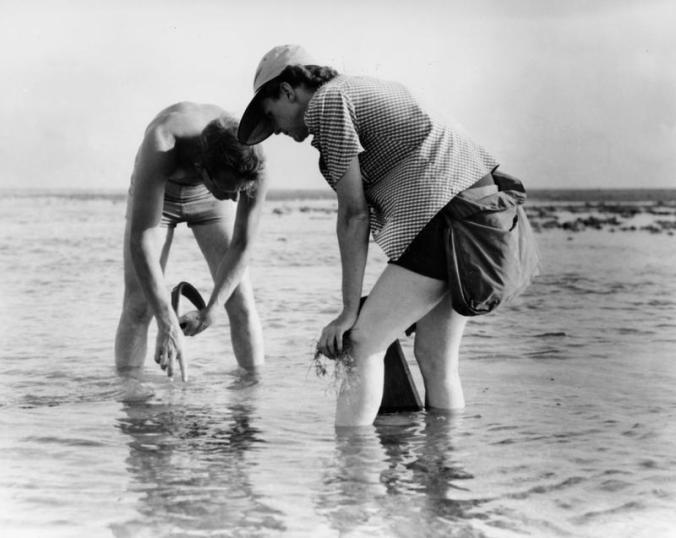
Rachel_Carson_Conducts_Marine_Biology_Research_with_Bob_Hines

( wikipedia/commons/4/48 )

CarsonDreamSeaThis week’s podcast rebroadcasts an episode we first heard a couple years ago, but Rachel Carson Dreams of the Sea is as good a tribute to Earth Day’s 50th anniversary as you will find:

Before she published “Silent Spring,” one of the most influential books of the last century, Rachel Carson was a young aspiring poet and then a graduate student in marine biology. Although she couldn’t swim and disliked boats, Carson fell in love with the ocean. Her early books—including “The Sea Around Us,” “The Edge of the Sea” and “Under the Sea Wind”—were like no other nature writing of their time, Jill Lepore says: Carson made you feel you were right there with her, gazing into the depths of a tide pool or lying in a cave lined with sea sponges. Lepore notes that Carson was wondering about a warming trend in the ocean as early as the 1940s, and was planning to explore it after the publication of “Silent Spring.” If she had not died early, of cancer, could Carson have brought climate change to national attention well before it was too late?

Excerpts from Carson’s work were read by Charlayne Woodard, and used with permission of Carson’s estate.

Mutation as a Positive

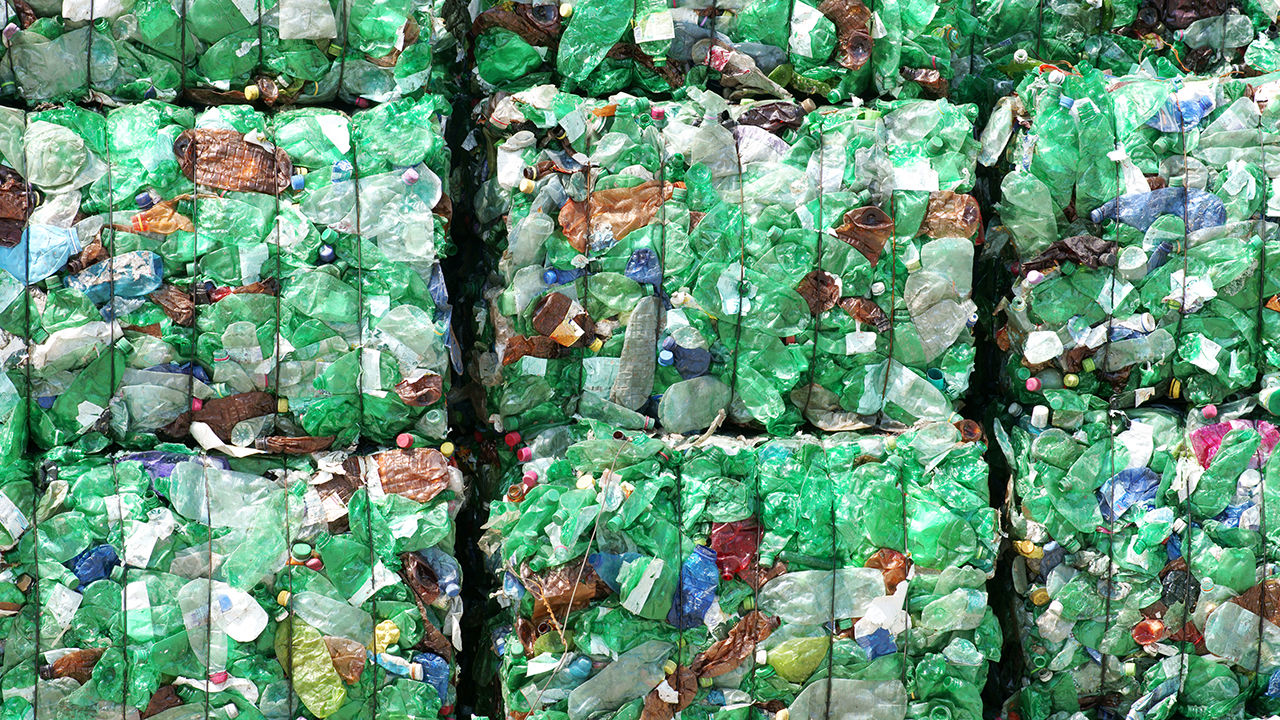
Green plastic bottles ready for recycling

In addition to all the creative ways that people recycle and upcycle plastics, we appreciate when scientific collaboration is brought to the forefront, as in the example here. We thank Science Magazine for highlighting the story.

‘A huge step forward.’ Mutant enzyme could vastly improve recycling of plastic bottles

Recycling isn’t as guilt-free as it seems. Only about 30% of the plastic that goes into soda bottles gets turned into new plastic, and it often ends up as a lower strength version. Now, researchers report they’ve engineered an enzyme that can convert 90% of that same plastic back to its pristine starting materials. Work is underway to scale up the technology and open a demonstration plant next year.

“This is a huge step forward,” says John McGeehan, who directs the center for enzyme innovation at the University of Portsmouth and who was not involved with the work.

Polyethylene terephthalate (PET) is one of the world’s most commonly used plastics, with some 70 million tons produced annually. PET bottles are already recycled in many places. But the current approach has problems. For starters, recycling companies typically end up with a broad mix of different colors of the plastic. They then use high temperatures to melt those down, producing a gray or black plastic starting material that few companies want to use to package their products.

Instead, the material is typically turned into carpets or other low-grade plastic fibers that eventually end up in a landfill or get incinerated. “It’s not really recycling at all,” McGeehan says.

To get around this concern, scientists have searched for enzymes in microbes that break down PET and other plastics. In 2012, researchers at Osaka University found one such enzyme in a compost heap. Continue reading

Here Is Where We Are, With Birds & Coffee

BOTDCrist

Of all the gin joints in all the towns, in all the world…here is where we are.

BOTD2CristAmie and I are following local rules in place over the Semana Santa holiday week, which ends today. Starting tomorrow there will be more freedom of movement. Most of our friends in Costa Rica feel confident in their country’s leadership during this time, and we have respected the rules and appreciated the clarity of their communication.
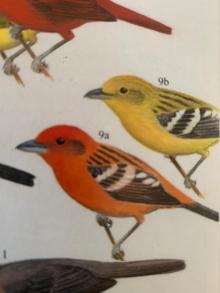
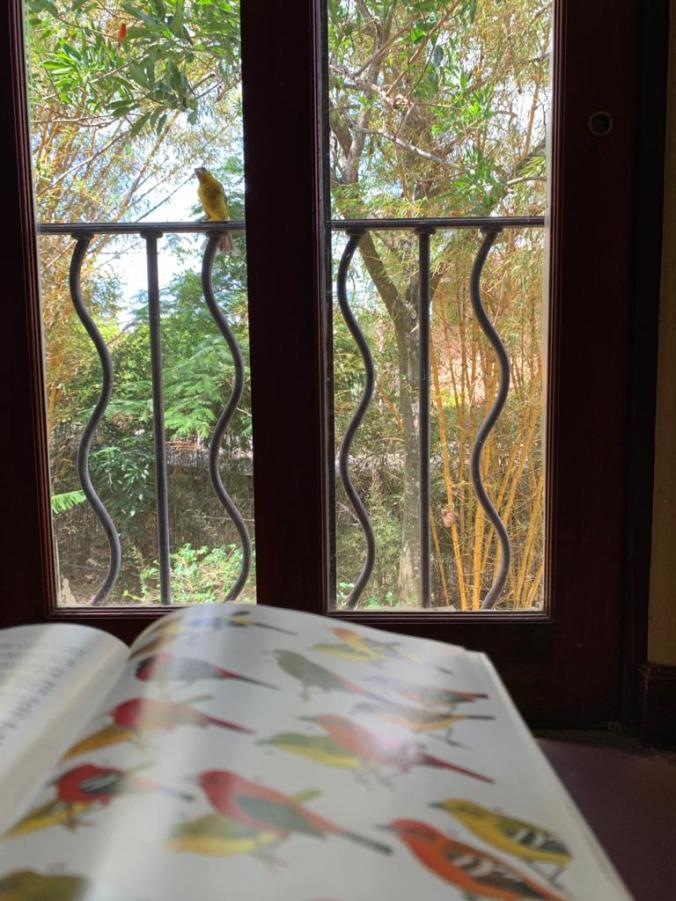
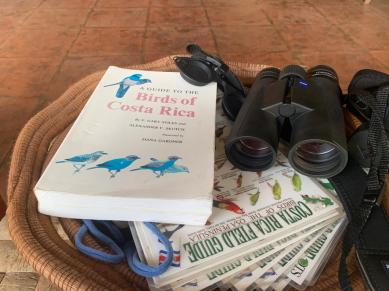
BOTD3CristWe are at home, and I took the photo at the top yesterday with a book we keep next to the binoculars. We have been seeing two different species of bird coming to that window, and I did my best to capture the more colorful pair. I was hoping to get the male and female at the same time on the rail, with their entry in the book clearly in view in the lower right of the frame. I took what I could get. The entry for this pair is on a page with the header Plate 47: Larger Red or Yellow Tanagers which then specifies:
Flame-colored Tanager (Piranga bidentata), p433. Streaked back and wing-bars. (a) [male] orange-red. (b) [female]: yellowish-olive.

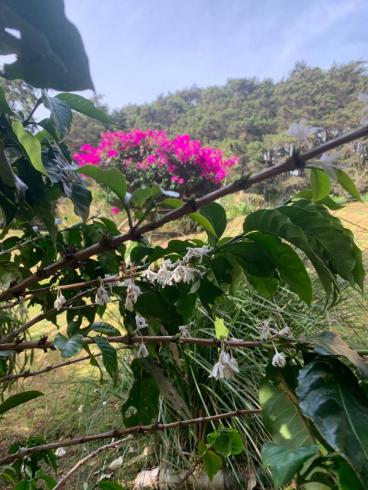
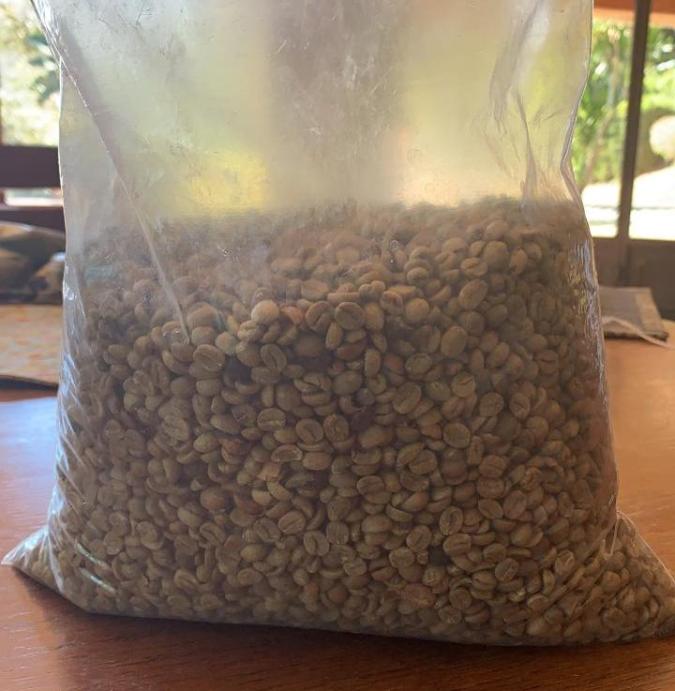
BOTD4CristPositive id. During the setup for that shot, looking out our family room window Amie noticed that one of our coffee trees still has blossoms on it. The white flowers to the right, slightly droopy, signal the beginning of the fruit production cycle that will culminate in December with the ripe red cherries we have been harvesting for 20 years now. Just a few days ago the beans from the most recent harvest were ready, and I placed them in a sack after they had been sundried and the husks removed. We call them beans but they are really seeds, and unlike the previous 20 years when this coffee has been roasted and consumed, this year I will germinate them to fulfill the commitment made one year ago. There is plenty to be concerned about today versus 363 days ago, but there is also, still, inspiration.
BOTD5Crist


Butterfly Farming’s Limits

merlin_171378282_a6460ac2-c217-40f4-b8a0-00d58c272766-jumbo

Sylvain Cordier/Gamma-Rapho, via Getty Images

Costa Rica pioneered butterfly farming in the 1990s, and it has been an important export ever since. It is an export oriented to botanical gardens and other natural attractions where butterflies can be released by the thousands in enclosures; it is also an export that feeds the hunger of collectors. It is not a cure-all as Elizabeth Preston, on our radar again after five years, notes:

What’s Wrong With Butterflies Raised in Captivity?

A study suggests that monarchs bred by enthusiasts were less fit than those that started as caterpillars in the wild.

Monarch butterflies look delicate, but they need to be super-tough to survive their annual migrations. The monarchs of eastern North America may travel thousands of miles to their winter home in Mexico’s Sierra Madre mountains. And, increasingly, they’re not making it, a problem that has been blamed on habitat loss, climate change and pesticides.

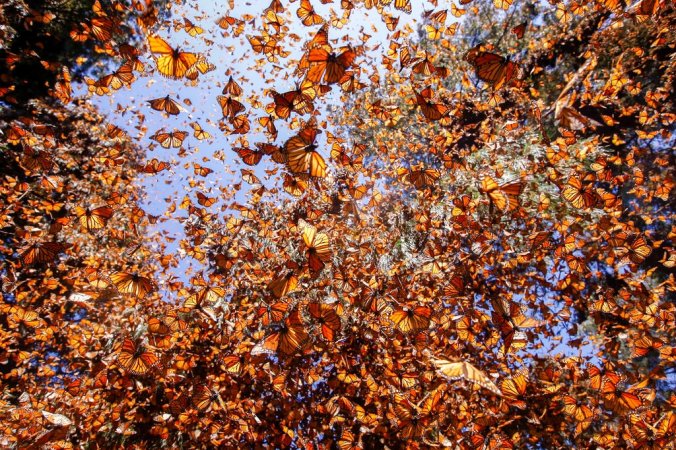
In an effort to boost the struggling insect’s numbers, some butterfly enthusiasts buy monarchs raised in captivity or breed their own, then set them free. But research published Wednesday in Biology Letters shows that captive-born monarchs are weaker than wild ones — adding evidence to the arguments of those who warn that releasing them does more harm than good. Continue reading

Biodiversity via Rwanda’s Resiliency

While the actual events of the Environmental Film Festival had been canceled, the wonder and value of each entry remains intact. In fact, the DCEFF is offering hundreds of the films for streaming on line.

So many of these amazing projects strike home, but the one featured above has even more so, as Claver Ntoyinkima was Seth’s field assistant during his work doing bird surveys in Rwanda’s Nyungwe National Park.

A Walk Through The Land of a Thousand Hills

Claver Ntoyinkima, a native park ranger, shares the secrets of Nyungwe National Park in Rwanda as he guides us through the forest. With almost 300 bird species, over 1,000 plant species, and dozens of large and small mammals, Nyungwe is one of the most biodiverse places in the world. Twenty-five years after the devastation of the Rwandan Civil War, the park is now one of the best-conserved montane rainforests in Central Africa. As Claver walks through the forest we uncover the origins of his conservation values and the history of an ecosystem that survived one of Rwanda’s darkest periods.

Find this and more films here.

Lyon, Bread & Costa Rica

200413_r36217

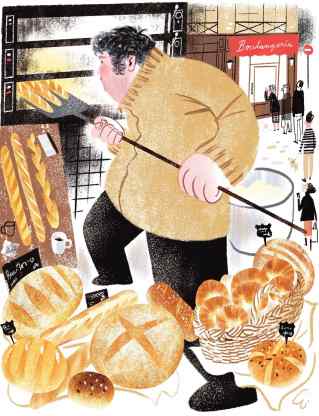
The bread from Bob’s boulangerie united a neighborhood of food fanatics. Illustration by Leo Espinosa

My first mention of Bill Buford was so brief, you might have missed it–just a link to an event he was moderating. The second was a link to his writing. And then another link to his writing. I am glad to see that he is still harvesting from his experience living in Lyon. It is a city that I have been to twice, with exceptional food memories which I will save for another time. For now I will just mention that one baker in Costa Rica has recently mastered the art of world-class bread-making, including baguette and chiabbata. During these challenging times for this country’s family farms it occurs to me, thanks to Bill Buford’s story, that ensuring the survival of this bakery is worthy of attention as well:

Baking Bread in Lyon

For a newcomer to the city, a boulangerie apprenticeship reveals a way of life.

In Lyon, an ancient but benevolent law compels bakers to take one day off a week, and so most don’t work Sundays. An exception was the one in the quartier where I lived with my family for five years, until 2013. On Sundays, the baker, Bob, worked without sleep. Late-night carousers started appearing at three in the morning to ask for a hot baguette, swaying on tiptoe at a high ventilation window by the oven room, a hand outstretched with a euro coin. By nine, a line extended down the street, and the shop, when you finally got inside, was loud from people and from music being played at high volume. Everyone shouted to be heard—the cacophonous hustle, oven doors banging, people waving and trying to get noticed, too-hot-to-touch baguettes arriving in baskets, money changing hands. Everyone left with an armful and with the same look, suspended between appetite and the prospect of an appetite satisfied. It was a lesson in the appeal of good bread—handmade, aromatically yeasty, with a just-out-of-the-oven texture of crunchy air. This was their breakfast. It completed the week. This was Sunday in Lyon. Continue reading

Birds’ Influence On My Appreciation Of Nature

03TB-KINGFISHER2-jumbo

Credit…Miguel David De Leon/Robert S. Kennedy Bird Conservancy

My first love of birds took shape in the Osa Peninsula of Costa Rica in the late 1990s. Toucans first, on the Drakes Bay side of the peninsula in 1997 when we had a family getaway at a lodge run by a bird-loving eco-couple. Then starting in 1999 when our company started managing lodges, on the other side of the Osa I had extended exposure to scarlet macaws, almost invariably in pairs. The love was real, and meaningful but not yet as serious as it would become. It was not until moving to India in 2010 that I seriously understood the power of birds to shape our appreciation of nature.

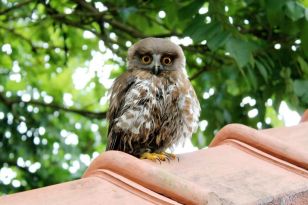
I can pinpoint the day, because it was at the intersection of when Milo took this photo of an owl, and when we started the bird of the day feature, which has been a daily contribution of this platform ever since. That is about the same time that my appreciation of nature, which I had thought to be quite strong already, became as strong as it is today. And this article below reminds me of that day, not least because of the number of medical doctors who are contributors to our daily feature. My profound thanks to Cara Giaimo (again) and especially to the doctor of whose story she shares:

03TB-KINGFISHER1-jumbo

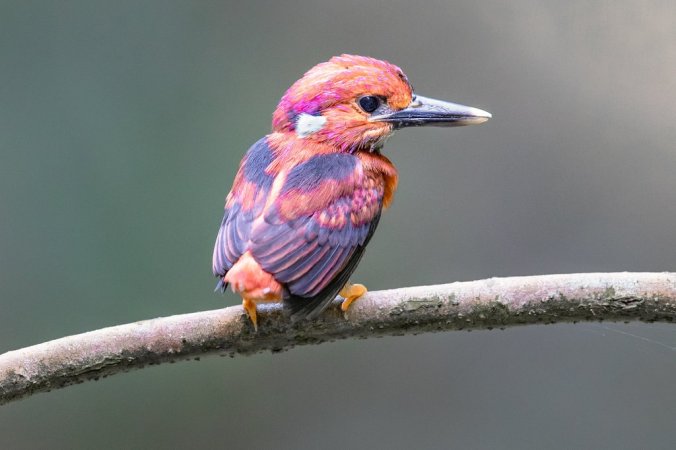
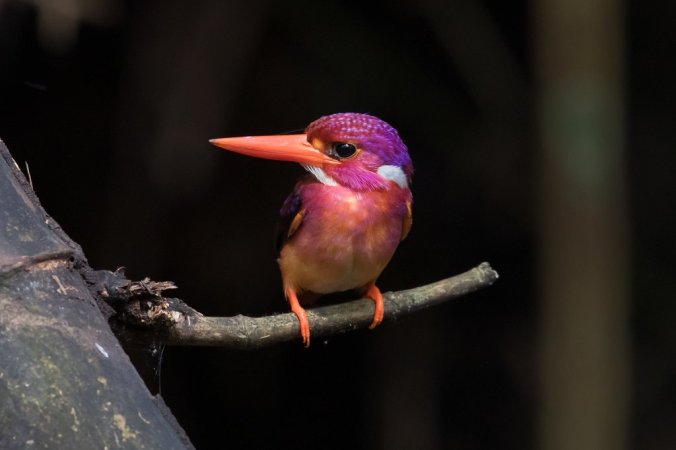
A juvenile kingfisher, with its distinctive black bill.Credit…Miguel David De Leon/Robert S. Kennedy Bird Conservancy

How an Eye Surgeon Got a Picture of This Rare Pastel Bird

The elusive South Philippine dwarf kingfisher is difficult to photograph, and there were no known photographs of its fledglings.

On March 11, Dr. Miguel David De Leon — a vitreoretinal surgeon in Mindanao, the southern island of the Philippines — worked a full morning at the medical center.When he got home, “I was exhausted,” he said.But he pulled it together, lugged his camera an hour uphill and clambered into his bird hide. Continue reading

Another Victory Favoring Earth, We Hope

25CLI-DAKOTAPIPELINE1-jumbo

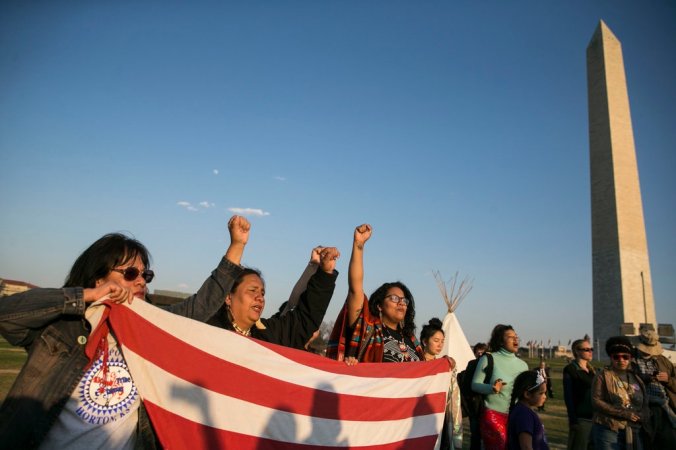
Demonstrators protested against the Dakota Access Pipeline on the National Mall in Washington in 2017.Credit…Al Drago/The New York Times

In 2017 two separate stories by Lisa Friedman were featured in the same post we titled Victory Favoring Earth, We Hope. The title fits the article she has published today, which gives a bit more hope:

Standing Rock Sioux Tribe Wins a Victory in Dakota Access Pipeline Case

WASHINGTON — In a significant victory for the Standing Rock Sioux Tribe, a federal judge on Wednesday ordered a sweeping new environmental review of the Dakota Access Pipeline.

The pipeline, which runs from North Dakota to Illinois, has been carrying oil for nearly three years and has been contested by environmental groups and Native American tribes who live near it. President Trump sought to keep the project alive.

The ruling by United States District Judge James E. Boasberg found that the pipeline’s “effects on the quality of the human environment are likely to be highly controversial” and that the federal government had not done an adequate job of studying the risks of a major spill or whether the pipeline’s leak detection system was adequate. Continue reading

Next, Clean Ocean Sailing

25travel-cleanocean-05-jumbo

Simon Myers, who volunteered on a recent Clean Ocean Sailing expedition with his son, Milo.

The smoke has not cleared, but it is not too early to share thoughts of what will need our attention next:

The Plastic-Hunting Pirates of the Cornish Coast

The Clean Ocean Sailing initiative removes plastic waste from areas of England’s coastline that are inaccessible by foot.

25travel-cleanocean-06-jumbo

The Clean Ocean Sailing crew aboard the 112-year-old Annette.

The Cornish coast — with its high cliffs and inlets, lining the peninsula that juts out from England’s southwest corner — has a long association with pirates. Its rocky coves, secret anchorages and long winding creeks have historically been a haunting ground for seafaring scoundrels and salty sea dogs. Continue reading

Small But Important Triumphs Can Make Your Day

ntw_doughmorebeach_banner

STW__Artboard-5In 2006, our family moved to a small island in the Adriatic, one of the Elafiti islands near Dubrovnik. We were there working on one of my favorite of all our projects. There was a young man who did sea kayaking guiding for our guests; he was from the USA for one year doing this work and learning Croatian because of family heritage. Years later we reconnected and I learned that he had become the leader of this amazing conservation organization, so I follow their work. And today I was rewarded with some news that made me smile (video from an earlier Save The Waves post from 1+ year ago is worth another watch):

International campaign succeeds against Trump International Golf Links

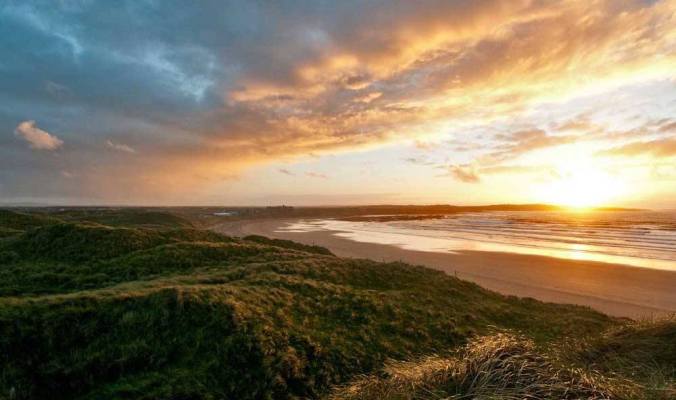
(March 18th, 2020) After more than four years of campaigning and fighting to save beloved Doughmore Beach in Ireland, the #NatureTrumpsWalls campaign and coalition has succeeded in stopping the construction of major seawalls that would have led to catastrophic impacts to the coast.

Trump International Golf Links (TIGL) had submitted a plan to place hard armoring on the natural coastal dunes of Doonbeg that provide sediment for the surf ecosystem and breaking waves, as well as natural coastal protection from climate change. 

On March 12th, Ireland’s national planning appeal board, An Bord Pleanála, formally rejected the plan, citing the concerns submitted by the coalition about the adverse impacts to the dune ecosystem. Continue reading

From The Lab Of Ornithology

Continuing the theme, our thanks to our friends at the Cornell Lab of Ornithology, and especially its director, for this message. It came in an email, but click the image above to go to the Lab’s website where the message continues with the resources you will also find below:

Birds Can Be Beacons of Hope

A Message from Our Director

Dear Friend,

March is normally the month when my wife Molly and I head to central Florida where, every year since 1972, I have studied Florida Scrub-Jays. Things are quite different this year, with the entire world hunkering down for an extended fight against the spread of COVID-19.

Even though I’m sticking close to home for now, I am comforted to know the scrub-jays are there, pairing up under the bright Florida sun, lining new nests with palmetto fibers, unperturbed by the tremendous human ordeal around them.

I often talk about the power of birds, but this year they take on an even more powerful meaning. They enliven our days, brighten the trees, serenade in our backyards and city parks, and bestow us with so much joy and hope, all bundled together in feathers and lively personalities.

Like everyone around the world, we at the Cornell Lab are adjusting to new routines. We’ve also spent recent days scouring our brains and our servers for ways to help—in some small way—people who find their daily lives upended.

If you’re a teacher prepping for a new kind of remote class, we’ll send you ideas. A parent or grandparent whose kids are on an unexpected “spring vacation”? They can play our games and learn. Are you a bird watcher with extra time on your hands—or an inveterate traveler now homebound? We can bring birds and bird song into your home—or let you explore the farthest reaches of the world in sounds and images.

A core part of our mission is to help people celebrate the wonder of birds. We do it because you (and we) love birds, are amazed by their powers, and even gain solace from them and a deep, clean breath of hope.

Together we’ll all get through this. In the meantime, whenever you may need a moment of respite, we invite you to explore, enjoy, wonder, replenish, and spark hope with the resources we have to share.

With my best wishes

John W. Fitzpatrick, Director
Cornell Lab of Ornithology Continue reading

Bag Snaggers, Inc., We Hardly Knew Thee

Fazier-PlasticBag

Photograph from Alamy

You can count on these pages continuing to feature these kinds of stories, that remind us of what still can and must be done, or simply provide a daily dose of charm:

My Old Nemesis: Plastic Bags

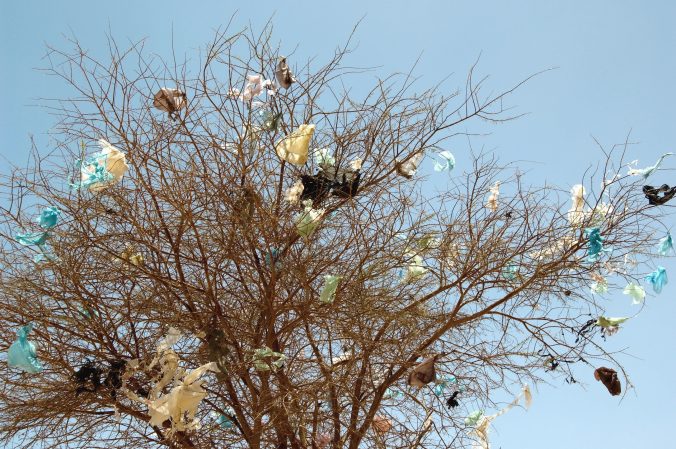
On Earth Day, 2019, when New York’s Governor, Andrew Cuomo, signed a bill banning single-use plastic bags, he said, “You see plastic bags hanging in trees, blowing down the streets, in landfills, and in our waterways, and there is no doubt they are doing tremendous damage.” It is true that nowadays people do see plastic bags in trees. But they didn’t used to—not because the bags weren’t there but because the people didn’t see them. I believe I am the first person who actually saw bags in trees—that is, noticed them in any official way. Twenty-seven years ago, I wrote a short article for this magazine about plastic bags and other debris in the trees of New York City. Once I started noticing the bags, I couldn’t stop, and I soon passed the affliction on to my friends Bill McClelland and Tim McClelland. Noticing bags in trees changed our lives. Continue reading