Solar Canoe As Protest

3610

Sunkirum, one of the solar-powered canoes, sails on the Pastaza river. Photograph: Pablo Albarenga

Thanks to the Guardian, and specifically to Francesc Badia i Dalmases in Kapawi, Ecuador, for this story:

Here comes the sun canoe, as Amazonians take on Big Oil

Ecuadorian indigenous groups hope innovation will reduce amount of oil taken from forest only to be brought back as pollution
6000 (3)

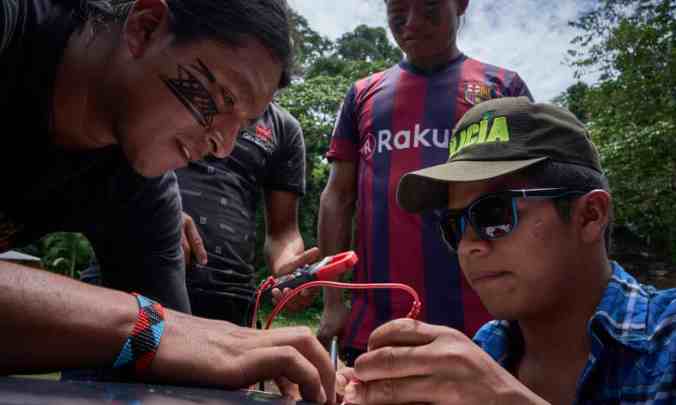
Nantu and his colleagues check the state of a canoe’s solar panels. Photograph: Pablo Albarenga

A canoe slides noiselessly upstream through a landscape of luminous bright clouds reflected in the water. A team of young indigenous people are onboard.

Such vessels are an essential and ubiquitous part of life in the Ecuadorian Amazon, but this one boasts a hugely symbolic difference from its predecessors. It is powered by the sun.

The nine members of the Achuar indigenous group on board are returning home after learning about solar power and installation. It is a technological development they hope to use in their battle with a more traditional power source that threatens their very existence. Oil. Continue reading
Leadership, Prepping For Change

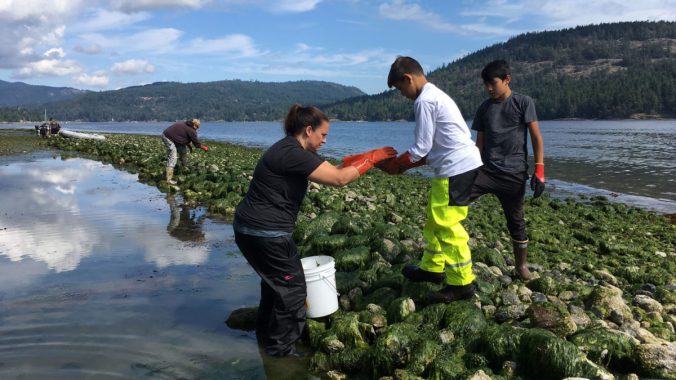
IMG_3276_Swinomish_clam-garden_web

Swinomish tribal members from Washington state participate in a clam garden restoration in British Columbia. PHOTO COURTESY OF SWINOMISH INDIAN TRIBAL COMMUNITY

Thanks to Nicola Jones for this:

How Native Tribes Are Taking the Lead on Planning for Climate Change

With their deep ties to the land and reliance on fishing, hunting, and gathering, indigenous tribes are especially vulnerable to the impacts of climate change. Now, native communities across North America are stepping up to adopt climate action plans to protect their way of life.

GettyImages-1175044784_whiteback-montana_web

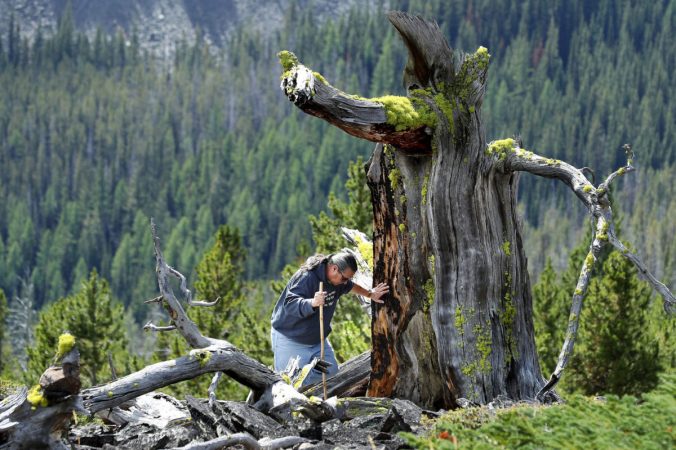
Tribal program manager Mike Durglo Jr. examines what remains of a 2,000-year-old whitebark pine on the Flathead Indian Reservation in Montana, where trees are dying from warming-related diseases. CHIP SOMODEVILLA/GETTY IMAGES

On a hot summer’s day, marine ecologist Courtney Greiner walks the shore of a rocky Washington beach at low tide with a handful of staff and interns. They stake out the ground and hunch down, digging up the top two inches of mud, silt, and gravel looking for baby clams.

For thousands of years, the indigenous peoples of the West Coast would build rock walls at the low tide line, allowing sand to pile up behind them, making the slope of the beach gentler, and expanding the area of the intertidal zone that clams like to call home. These simple clam gardens are effective at boosting shellfish numbers, and have long been used to improve food security for traditional peoples. Continue reading

Eyes On Prize, Do Not Get Numbed

GettyImages-1091137346_elephants_web

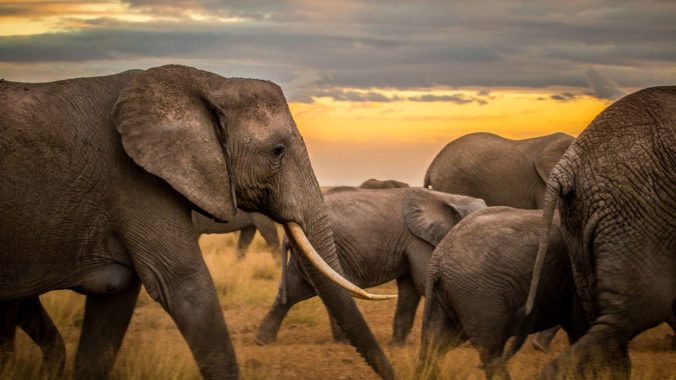
An elephant herd in Kenya. PIETER RAS / 500PX / GETTY IMAGES

Thanks to Yale e360 for the reminder that, as trouble rumbles, there is more need than ever for keeping our eyes on the prize:

Psychic Numbing: Keeping Hope Alive in a World of Extinctions

The litany of lost species can be overwhelming, leading to what has been called “psychic numbing.” But as the recovery of species from bald eagles to humpback whales shows, our actions do matter in saving species and the aliveness and beauty they bring to the world. Continue reading

Field Expeditions, Panama, Ferns

200126PanamaExp10-1

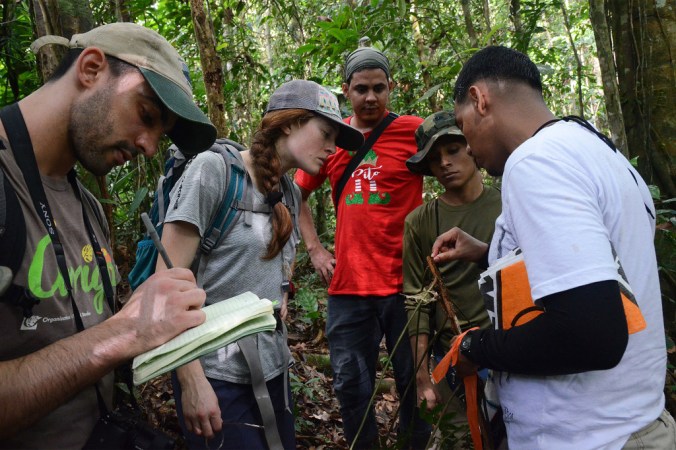
Student members of the Mamoní Valley Preserve Natural History Project, Jacob Suissa (left), Sylvia Kinosian, Brian Vergara, Jose Palacios, and Christian López examine the rhizome vasculature of a fern species during their first collection trip in the rainforest.

While most of our work between 1999 and 2019 was field work, once this platform started we distinguished field expeditions from our “regular work,” and Seth’s posts have dominated the expedition realm here. Today, with Seth in wintry New Haven in desk mode, my expeditionary imagination is instead fueled by the field expedition described below, on a topic not featured in these pages for seven years, so I am correcting the neglect:

Going where the diversity is

200126PanamaExp8

Student researchers Ben Goulet-Scott (left), Sylvia Kinosian, and Jacob Suissa, reach the crest of a hill overlooking the Mamoní Valley Preserve while carrying 90 species of ferns on their backs.
Photos by Ben Goulet-Scott/Harvard University Department of Organismic and Evolutionary Biology

Last month, two graduate students from the Arnold Arboretum of Harvard University traveled to one of the most species-rich landscapes in the world: a remote strip of tropical rainforest at the narrowest point in the Central American country of Panama.

Ben Goulet-Scott, a Ph.D. candidate in the Graduate School of Arts and Sciences’ Department of Organismic and Evolutionary Biology (OEB) and a fellow in the Arboretum’s Hopkins Lab, and Jacob Suissa, OEB Ph.D. candidate in the Friedman Lab at the Arboretum, hope their research in the Mamoní Valley Preserve in Panama will increase our understanding of how biodiversity can persevere in the face of climate change, deforestation, and human disturbance.

200126PanamaExp26The 20-square-mile land conservancy on the isthmus separating Central and South America teems with life, making the condensed rainforest habitat a perfect location for their research project because of the vast number of known and potentially undiscovered species living there, Goulet-Scott said. Continue reading

Getting a Bigger Bang Out of Plastic

Plastic has been on our radar for years, both as an environmental scourge and a raw material for the rising recycle and “upcycle” economy.  Finding these creative uses for an ubiquitous waste material around the world has been inspiring, to say the least.

We hadn’t been familiar with the Precious Plastic model until we met the wonderful women from the Wagát Upcycling Lab. We applaud the community ethos of open source plans to address a global crisis.

Big Bang, Indeed!

Chocolate Made Clearer

merlin_168444540_dc3d82ca-323f-428e-9a3f-deccbc6b33db-mobileMasterAt3x

Erin Lubin for The New York Times

I had planned to follow up on yesterday’s post today, but there is a better option. Even after years of learning, fun as well as more serious facts than I knew previously about chocolate, so that we would source excellent quality, and ethical, chocolate, there is always more to learn. Thanks to Melissa Clark, as always, for the enlightenment:

Everything You Need to Know About Chocolate

The beloved bar has come a long way in quality and complexity. Here’s a primer on how it’s made, and how to choose the best and most ethically produced.

merlin_168444732_854c1092-d8eb-41db-9a17-1bfbe786f01a-mobileMasterAt3x

Erin Lubin for The New York Times

You probably think you already know everything you need to know about chocolate.

For instance: The higher the percentage of cacao, the more bitter the chocolate, right? The term “single origin” on the label indicates that the chocolate expresses a particular terroir. And wasn’t the whole bean-to-bar movement started by a couple of bearded guys in Brooklyn?

Wrong; not necessarily; and definitely not. Continue reading

Functioning Ecosystems Are Key To Our Future

200217_r35849

“How do we feed the nine billion?” Fiennes said. “Through functioning ecosystems.” Photograph by Siân Davey for The New Yorker

The title of this post, paraphrasing the subject of the profile below, states the obvious. Sometimes, that must be. Thank you, Sam Knight:

CAN FARMING MAKE SPACE FOR NATURE?

After Brexit, the obsessions of Jake Fiennes could change how Britain uses its land.

One day last summer, Jake Fiennes was lost in a cloud of butterflies. He was on a woodland path near Holkham Beach, on the north coast of Norfolk. Every decade or so, ten million painted-lady butterflies, which are orange, black, and white, migrate to Britain from tropical Africa. The hot summer meant that it was a bumper year for native species, too, and the painted ladies mingled with red admirals, peacocks, and common blues, feeding on bushes set back a few yards from the path. “Just sat in a haze of flittering, fluttering butterflies,” Fiennes told me later. “I was in awe. These flowers were just exploding.” Continue reading

Conformity & Climate

0320_DIS_Frank_LeadClimate [Print]_12983983.indd

PHOTO RENDERING BY PATRICK WHITE

The essay below addresses some of the themes in essays and books we pointed to in the last year. Robert H. Frank, Economics professor at Cornell University, has not appeared in our pages before, which is just plain wrong, as Thy Neighbor’s Solar Panels makes clear:

When our peers take actions to preserve the planet, we’re more likely to follow suit. How the human instinct to conform could help us address the climate crisis.

It is worse, much worse, than you think,” reads the frightening first sentence of The Uninhabitable Earth, David Wallace-Wells’s comprehensive account of what researchers have discovered about our planet’s climate trajectory. The severity of the crisis, he goes on to note, has made some climatologists reluctant to describe its full extent, fearing that such candor might make the challenge we face seem hopeless. The concern is understandable: Previous warnings of impending peril have done little to alter either individual behavior or public policy. Continue reading

Please Let Your Dandelions Bolt

2142

Each dandelion head has up to 100 individual flowers. Photograph: Janek Skarzynski/AFP/Getty Images

So many challenges, so many unanswered questions about why bee colonies are collapsing. In the realm of how to help, the UK has a new notion:

Help bees by not mowing dandelions, gardeners told

Plants provide key food source for pollinators as they come out of hibernation

Gardeners should avoid mowing over dandelions on their lawn if they want to help bees, according to the new president of the British Ecological Society.

Dandelions – which will start flowering in the UK this month – provide a valuable food source for early pollinators coming out of hibernation, including solitary bees, honey bees and hoverflies.

Each dandelion head contains up to 100 individual flowers, known as florets, which contain nectar and pollen. There are 240 species of dandelion in the UK. Continue reading

Alternative Glitter In The Amazon

3271

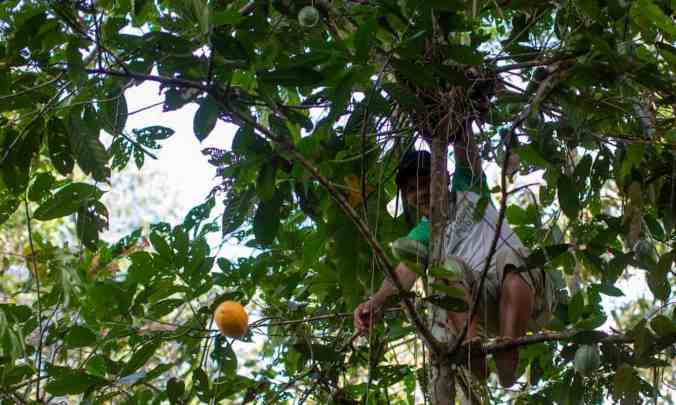
Edmilson Estevão climbs a mature cacao tree to pick the fruit. Photograph: João Laet/The Guardian

In the Authentica shops our featured chocolates are artisanal in terms of production, and both companies are leaders in their own ways–sourcing, packaging, etc.–in terms of sustainability. We are just now tasting chocolates from a third possible supplier, one that farms the cacao organically and is in control of all stages of production and packaging–from farm to bar as they say. When we have their product on our shelves, you will be the first to know, right here. Since our thoughts are already on this topic, special thanks to the Guardian for this story that helps better understand the many ways in which cacao can create a brighter future:

Cacao not gold: ‘chocolate trees’ offer future to Amazon tribes

In Brazil’s largest indigenous reserve thousands of saplings have been planted as an alternative to profits from illegal gold mining

The villagers walk down the grassy landing strip, past the wooden hut housing the health post and into the thick forest, pointing out the seedlings they planted along the way. For these Ye’kwana indigenous men, the skinny saplings, less than a metre high, aren’t just baby cacao trees but green shoots of hope in a land scarred by the violence, pollution and destruction wrought by illegal gold prospecting. That hope is chocolate.

4200

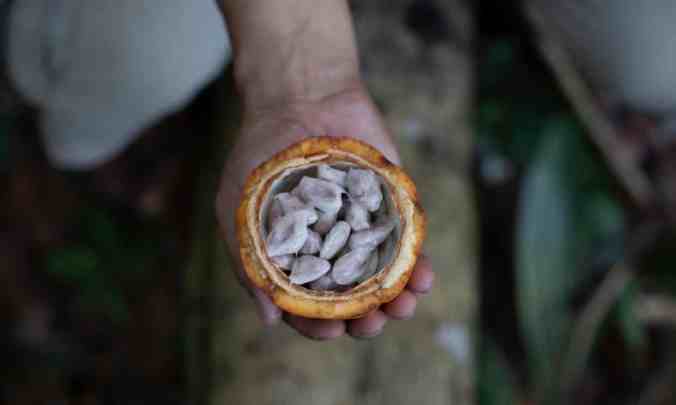
Cacao seeds, which are dried and roasted to make chocolate. Photograph: João Laet/The Guardian

“We want to plant and develop income for the community,” says Júlio Ye’kwana, 39, president of the Ye’kwana people’s Wanasseduume association, which came up with the idea. “And it is not destructive for the forest.” Continue reading

The Tragedy Of The Commons, Rhino Edition

4af4e1a24

Martin Saavedra

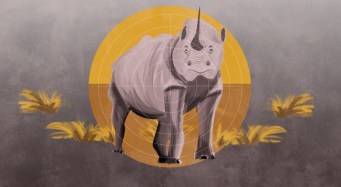
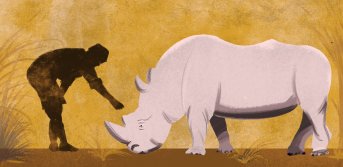
It is a brutal story, and we thank Cathleen O’Grady for telling us about The Price of Protecting Rhinos in the long form narrative such a complex topic deserves:

Conservation has become a war, and park rangers and poachers are the soldiers.

1920 (3)

Martin Saavedra

Hsst!” hisses Charles Myeni. “Leave space!” Silently, the men in his anti-poaching unit spread out as they move through the bush in single file, leaving a few feet between them.

Myeni explains his command to me: If a rhinoceros poacher attacks us and we’re all neatly squished together in a line, he whispers, they “can take us all out, one-one-one-one. We’re all gonna die.”

Is he serious? His sardonic half smile is difficult to read. He may just be trying to scare me, the city-dwelling white girl tagging along on his morning patrol through South Africa’s Somkhanda Game Reserve. But I still stick as closely as I can to him and his automatic rifle. Continue reading

Investing With Climate Change In Mind Is The Right Thing To Do

14db-sorkin1-mobileMasterAt3x.jpg

Damon Winter/The New York Times

He may be late, but better that versus never. Investing with consideration for the environment seemed obvious long ago to some, but not to the decision-makers who most count–those whose investment decisions impact generations to come. Presumably, from the size of fund he manages, one of the most respected investors has decided to do the right thing as best he can, and that may be huge:

BlackRock Will Put Climate Change at Center of Investment Strategy

In his influential annual letter to chief executives, Larry Fink said his firm would avoid investments in companies that “present a high sustainability-related risk.”

merlin_141384975_0a2a99c4-97e1-4079-8442-2ece65836229-jumbo.jpg

Lucas Jackson/Reuters

Laurence D. Fink, the founder and chief executive of BlackRock, plans to announce Tuesday that his firm will make investment decisions with environmental sustainability as a core goal.

BlackRock is the largest in its field, with nearly $7 trillion under management, and this move will fundamentally shift its investing policy — and could reshape how corporate America does business and put pressure on other large money managers to follow suit. Continue reading

Bees, Almonds & Futures

5760b.jpg

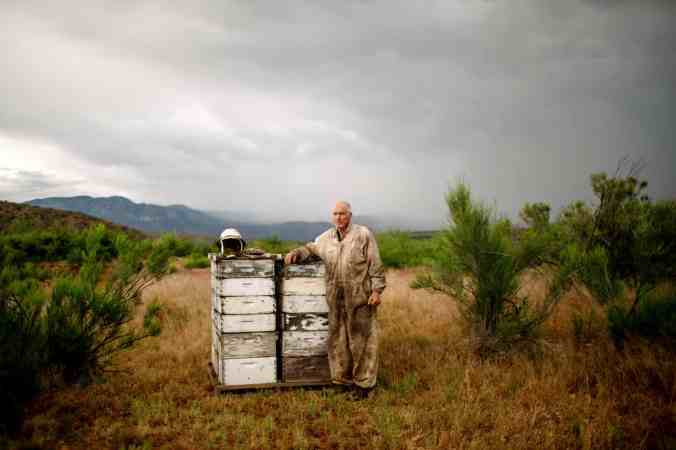
Dennis Arp stands for a portrait near a colony of honeybees outside Rye, Arizona. Photograph: Caitlin O’Hara/The Guardian

Bees are not finding the near future any brighter than the recent past. Thanks, as always, to the Guardian for keeping us apprised on this topic:

‘Like sending bees to war’: the deadly truth behind your almond-milk obsession

Bees are essential to the functioning of America’s titanic almond industry – and billions are dying in the process

5760 (4).jpg

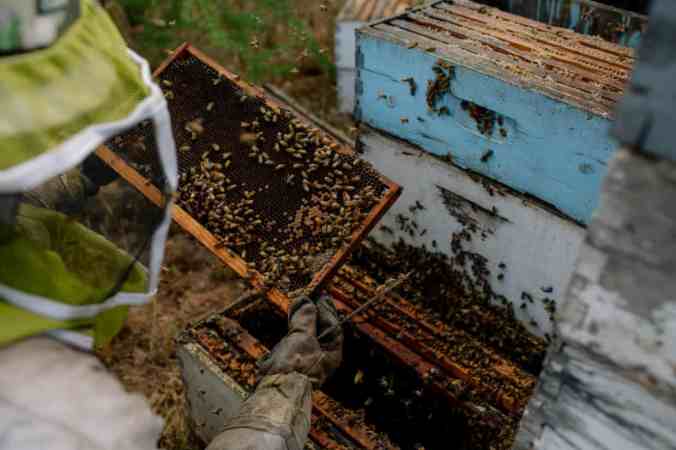
Adam Arp, Dennis’s son, works outside Rye on 8 May 2019. Photograph: Caitlin O’Hara/The Guardian

Dennis Arp was feeling optimistic last summer, which is unusual for a beekeeper these days.

Thanks to a record wet spring, his hundreds of hives, scattered across the central Arizona desert, produced a bounty of honey. Arp would have plenty to sell in stores, but more importantly, the bumper harvest would strengthen his bees for their biggest task of the coming year.

3504.jpg

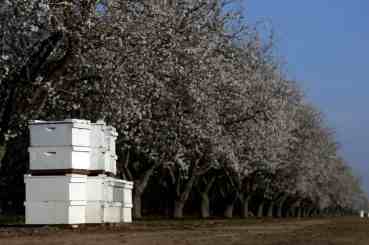
Beehives stand stacked along a blooming almond orchard near Shafter, California. The bees pollinate many crops, including almond trees in February, and are essential to the food chain. Photograph: Ann Johansson/Corbis via Getty Images

Like most commercial beekeepers in the US, at least half of Arp’s revenue now comes from pollinating almonds. Selling honey is far less lucrative then renting out his colonies to mega-farms in California’s fertile Central Valley, home to 80% of the world’s almond supply. Continue reading

Concise Primer On Carbon Sequestration’s Latest, Greatest Options

Economist2020We always look for the latest on how to fight climate change and in this podcast episode there is a concise and clear explanation:

It is increasingly clear that putting less carbon dioxide in the atmosphere will not be enough to combat climate change; we take a look at the effort to actively remove the stuff from the air. Our correspondent takes a ride on Chicago’s Red Line, whose length represents a shocking level of inequality. And why a push to go organic in Turkey isn’t everyone’s cup of tea.

It’s Not Easy Being Green In 2020

Cobalt Mining in Congo

Thanks to

Building climate-saving tech digs up new problems

Solving the climate crisis is going to take a lot of mining

The solar power and electric vehicles we need to stop the climate crisis pose a different threat to people and the environment: a boom in mining. Moving away from fossil fuels depends on tech like batteries and solar panels that can provide alternative forms of energy. But digging up the raw materials can undermine human rights and destroy fragile ecosystems. As governments and industries try to tackle climate change by building up renewable energy, they’ll need to consider other problems unearthed in the process. Continue reading

Prepping For Less Food Waste

fridge-guy-_custom-2da5185f9372fc1aa92a1c55cffedfeb4544f8f4-s1600-c85.jpg

Clare Schneider/NPR

End of year stories about what to do differently in the new year may seem overdone, but we find them worth sharing when they touch on a theme we cover regularly. This column has the added value of some funny, some even bizarre suggestions:

Food waste is a big problem in the United States, where a typical household of four tosses out about $1,600 worth of food annually. So, Life Kit did a deep dive on how how to reduce food waste.

In planning that episode, the office was abuzz with conversations about our own tricks and tips to save food — from recipes to compost tips. This made us wonder what other wisdom was out there. So we asked you!

We were overwhelmed by your collective knowledge and thriftiness. Our roundup is by no means an exhaustive list, but below are a few tips we felt inspired by. (If you want to join the conversations, you can find them here on Instagram and Facebook.)

Your tips from Instagram

1. Used coffee grounds can be dried and used in a steak rub or mixed with coconut oil and sugar and used as a body scrub. — @Chefanniecarroll Continue reading

Big Cats, WWF & The Guardian’s Coverage

3264 (2).jpg

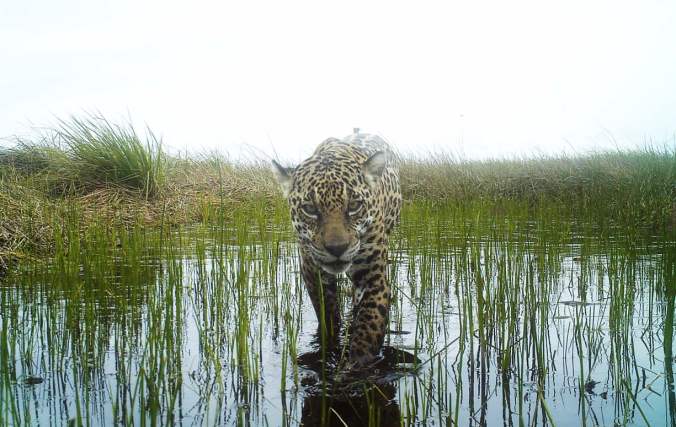
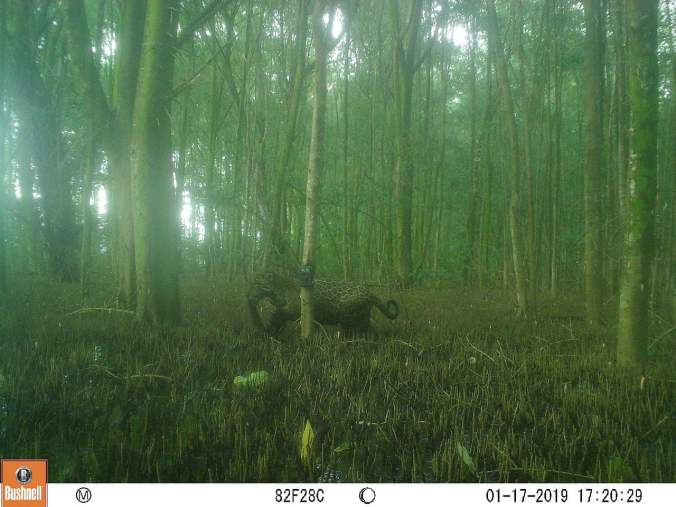
A jaguar captured by a camera trap on the island. The WWF researchers plan to set more traps in 2020. Photograph: WWF Brazil

Jaguar and other wild cats, big and small, have been a topic of interest on this platform since we began back in 2011. We have also featured many stories where WWF is the hero, carrying out important work that needs support. Phoebe Weston somehow escaped our attention until now, so special thanks to the Guardian for maintaining their commitment to quality coverage of nature and environmental issues, which I depend on for my daily exercise in awareness:

4320.jpg

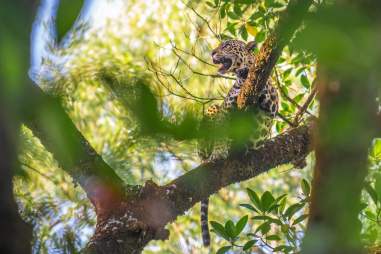
A jaguar resting on a tree on Maracá-Jipioca. The WWF hopes to collar two more cats next year.
Photograph: André Dib/WWF Brazil

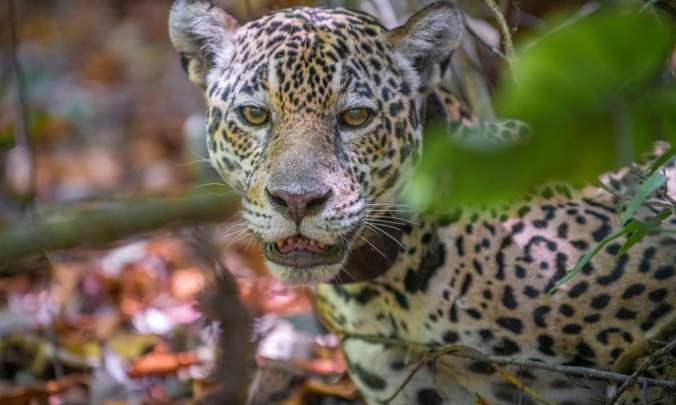
A thriving population of jaguars living on a small, unspoilt island off the coast of the Brazilian Amazon has learned to catch fish in the sea to survive, conservationists have found.

The Maracá-Jipioca Ecological Station island reserve, three miles off the northern state of Amapá, acts as a nursery for jaguars, according to WWF researchers who have collared three cats and set up 70 camera traps on the remote jungle island.

1280.jpg

A jaguar caught on camera with a fish in its mouth. Photograph: WWF Brazil

Although jaguars have previously been spotted catching fish in Brazil’s Pantanal wetlands, this is believed to be the first evidence the elusive creatures have been jumping in the sea to catch prey.

12060.jpg

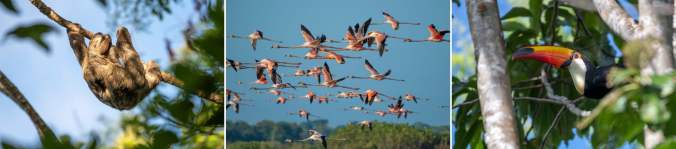
A three-toed sloth, a flock of flamingos, and a toco toucan, all inhabitants of the Maracá-Jipioca Ecological Station reserve. Photograph: André Dib/WWF Brazil

“This is the first time that behaviour has been spotted in the Amazon,” said Marcelo Oliveira, senior programme officer at WWF Brazil, who is leading the NGO’s first jaguar-collaring research. Continue reading

It Bears Repeating

JMJT3T_Tongass-Bald-Eagle_web.jpg

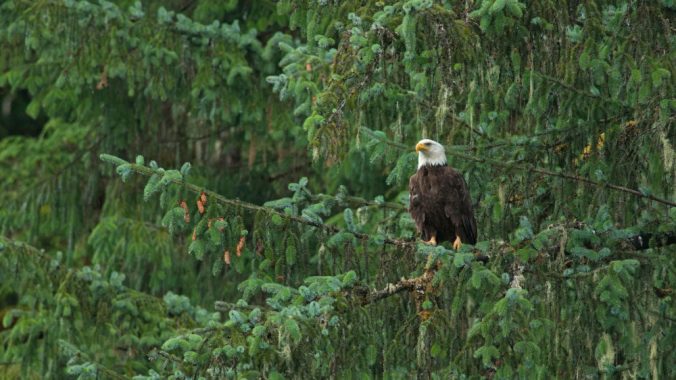
A bald eagle in Tongass National Forest, Alaska. MAURO TOCCACELI/ALAMY

These are times that test our patience. Obvious, right? So is the subject of this essay. And yet, it bears saying, and repeating, precisely because of the times we find ourselves in. So thanks to Mr. Heacox for saying so and to Yale e360 for publishing it:

Let It Be: Why We Must Save Alaska’s Pristine Tongass Forest

At 17 million acres, Alaska’s Tongass is the largest U.S. national forest and the world’s largest remaining temperate rainforest. Now, the Trump administration wants to resume large-scale logging in the Tongass, one of several initiatives threatening some of Alaska’s wildest lands.

GettyImages-460444348_Tongass_web.jpg

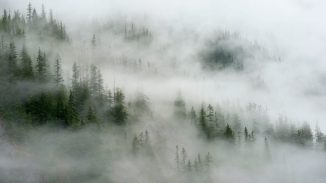
Fog rises from forest near Ford’s Terror, a narrow fjord in the Tongass. WOLFGANG KAEHLER / LIGHTROCKET VIA GETTY IMAGES

When the railroad tycoon Edward H. Harriman fell ill from stress and too much work, his doctors recommended that he take a sea cruise. Unable to do anything in a small way, Harriman filled a ship with America’s foremost scientists, artists, and writers, and sailed the coast of Alaska for two months in the summer of 1899.

GettyImages-1176549046_Tongass-Forest_web

A forest view in the Tongass, the world’s largest remaining temperate rainforest. WOLFGANG KAEHLER / LIGHTROCKET VIA GETTY IMAGES

The expedition, which also included the renowned preservationists John Muir and George Bird Grinnell, found two Alaskas wherever they went, one for the taking, one for the saving. Each at odds with the other. Foremost among the places for saving was the great coastal rainforest of the Southeast Alaska panhandle, a wondrous world of mountains, ice fields, tidewater glaciers, rock-ribbed fjords, coastal brown bears, bald eagles, and 11,000 miles of shoreline.

Eight years later, in 1907, President Theodore Roosevelt took a bold step in that direction by creating the 17-million-acre Tongass National Forest, the largest national forest in the United States. Today, the Tongass contains two national monuments and 19 designated wilderness areas. It also has countless undammed rivers and streams, and some of the world’s last great runs of wild Pacific salmon. Continue reading

117 of 314 Bird Species, As Urban Murals

boorujy_4_mikefernandez_0.jpg

Photo: Mike Fernandez/Audubon

A couple years ago we linked to a story about urban murals and now, progress:

Where Birds Meet Art . . . After Dark

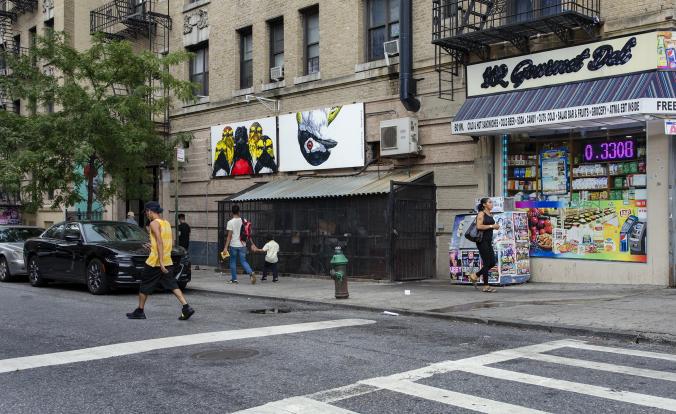
Greater Sage-Grouse by George Boorujy

Greater Sage-Grouse by George Boorujy
Location: 3920 Broadway, New York, NY 10032

The Audubon Mural Project is a collaboration between the National Audubon Society and Gitler &_____ Gallery to create murals of climate-threatened birds throughout John James Audubon’s old Harlem‐based neighborhood in New York City.

Pinyon Jay by Mary Lacy

Pinyon Jay by Mary Lacy
Location: 3668 Broadway, New York, NY 10032

The project is inspired by the legacy of the great American bird artist and pioneering ornithologist and is energized by Audubon’s groundbreaking report “Survival By Degrees.” Audubon’s scientists have found that climate change will threaten at least half of all North American birds with extinction, and that no bird will escape the impacts of climate-change-related hazards like increased wildfire and sea-level rise. The project commissions artists to paint murals to call attention to this problem, and it has been widely covered in the media, including The New York Times.

On the website where Audubon features these murals you can click through to see the individual stories of each, including lots of interesting species information:

gaia_mikefernandez.jpg

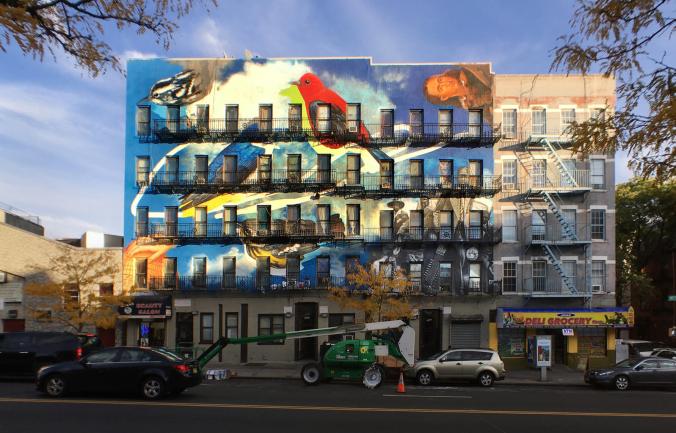
Clockwise from top left: Black-and-white Warbler, Scarlet Tanager, John James Audubon, depiction of Russell Lee’s 1941 photo of Chicago, Magnolia Warbler, James Lancaster’s hand, and Tree Swallow. Photo: Mike Fernandez/Audubon

Endangered Harlem by Gaia

Location: 1883, 1885, and 1887 Amsterdam, New York, NY 10032 Continue reading

Foodrunners

Foodrunners may have the unusual problem of overabundance, in the form of waste and generous people donating their time. Thanks to Marisa Endicott (again) and Mother Jones for bringing this organization to our attention.

FoodRunners.jpg

Alleviating hunger, one volunteer and donor at a time:

Tech Company Free Meals Beget a Lot of Leftovers. Meet the Man on a Mission to Rescue Them.

Food Runners saves extra grub before it’s wasted, and delivers it to hungry mouths.

saladtoppingsMSTR

Marisa Endicott

carpacked.jpg

Tso loads his car with Tetris-like precision. Marisa Endicott

I meet Les Tso on a corner in San Francisco’s SoMa district on a wet Thursday afternoon. He pulls his silver Isuzu SUV into an alley. “Today because it’s the first rain, people are going to be driving cluelessly—there are a lot of Uber and Lyft drivers that come from out of the area,” Tso warns me. “Makes it more exciting, I guess.”

list.jpg

Tso picks up donations from an average 16 places a day. Marisa Endicott

Tso works as a driver for Food Runners, a nonprofit that picks up leftover food from grocery stores, companies, events, and restaurants and brings it to organizations working to feed the hungry. For four hours every weekday, Tso braves the worst of Bay Area traffic to makes his 80 to 90 pickups (an average of 16 a day), primarily from tech companies—including Google, Juul, and LinkedIn—that have become an omnipresent force in the city. Continue reading