 I have recommended episodes of the Longform Podcast plenty of times, because its guests invariably help us appreciate clear explanation, especially for the better understanding of danger. Today’s recommendation is in the spirit of that last consideration, to put it mildly. But it is also a very personal explanation of how he came to this task, and how it sits with him.
Conservation
Global Big Day 2019
 When we first became aware of Global Big Day it was just a week in advance of the first such event, and we scrambled to have the properties we managed in India do their part. A total of 253 countries participated that first year and at first glance it would seem dispiriting to realize that many fewer countries have participated since then: in 2016 the count dropped to 159; then in 2017 there were 163; last year there were 171; and this year 168 (recorded so far).
However, by other metrics spirits are easily lifted. I have focused only on one such metric, which is how many checklists were completed. This year’s totals are not in yet, but if you tally each prior year, the number of participants in this event has increased dramatically year on year. Last year there were nearly 30,000 more checklists than there were in 2015. Of course having more countries participate would be better. But having more people participating in all those other countries is a very good sign indeed.
Audubon Honors Women Of Birding World
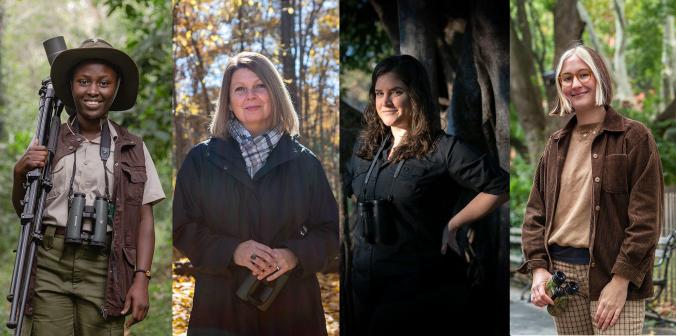
From left: Judith Mirembe, Kimberly Kaufman, Leticia de Mello Bueno, Molly Adams. Photos, from left: Esther Ruth Mbabazi, Camilla Cerea/Audubon, Jayme Gershen, Eva Deitch
It would never have occurred to me to think about this, but I am fine with the surprise:
When Women Run the Bird World
For decades female birders have been the silent majority. Now they’re starting their own movements to transform a privileged culture.
On the surface, birding might seem like neutral ground—an activity that any curious, nature-loving person can enjoy, regardless of age or gender. Go on a hike with your local ornithological club and at least half the attendees will be women. Circle the marsh with your binoculars and you’ll probably see a woman doing the same.
But female birders don’t always feel comfortable in the field, even with the rising awareness around #MeToo. Many of us keep on despite frequent put-downs and hostility, enduring dismissive comments about our knowledge and in the worst cases, sexual harassment. I’ve had men touch my hips to correct my perfectly fine birding stance. A ranger at a national wildlife refuge winked and told me about his “big, loaded gun.” My friends have been propositioned in parks and stalked by drivers along country roads. Not even a 16-year-old can bird in peace without commenters attacking her abilities and life list.
Like most matters of importance, women have been integral to birding from the get-go. Female ornithologists drew attention to avifauna in the late 1800s, and suffragists helped the movement take off in the early 1900s. Today, 42 percent of U.S. birders identify as women. Personally, female birders have run my world ever since I picked up a field guide in college. My ornithology professor was a woman. My boss at Audubon is a woman, as are most of my colleagues throughout the office. My birding circle is mainly members of the Feminist Bird Club.
And yet men have the loudest voices and the most power in the industry. The closer you get to the top of the birding, conservation, and academic ranks, the more the gender balance tips. At Audubon, for instance, the executive staff is 75 percent male, and the organization has never had a female president in its 114 years. This pattern persists industry wide. Men hold the highest positions at the American Birding Association, the Cornell Lab of Ornithology, and the American Bird Conservancy. They dominate bookshelves, festivals, competitions, and gear and travel ads. They build their reputations and livelihoods around the practice and reap the greatest profits…
And the feature immediately after continues the theme with the first of five substories:
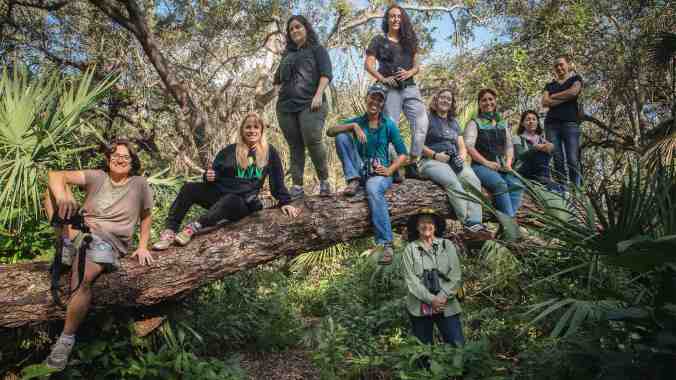
The Phoebes, a female-centric birding group formed by members of the Tropical Audubon Society. Photo: Jayme Gershen
Birding for Solidarity: The Phoebes
Eight women decided they had enough of the sport’s competitiveness, so they created a community to lift their sisters up. Continue reading
Melissa Clark’s Kelp Call
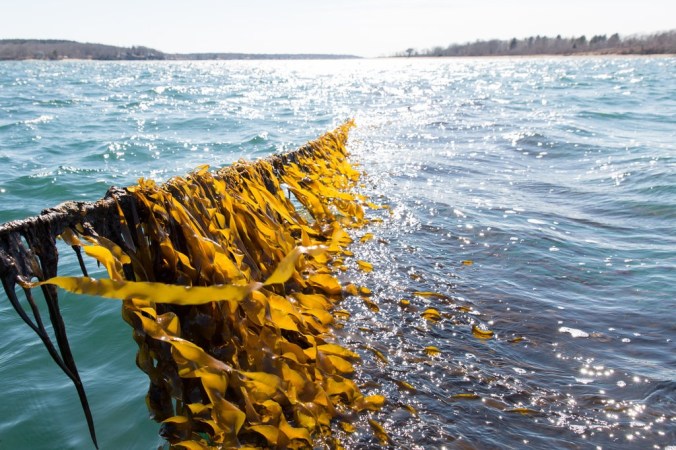
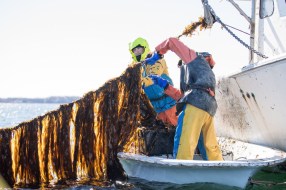
Kelp, a variety of edible seaweed farmed near Portland, Me., is harvested in spring. It’s delectable and nutritious, it’s easy to cook with, and it actively benefits the ocean’s health. Matt Cosby for The New York Times
Melissa Clark has appeared in our pages plenty of times, starting in 2014 when we were launching a restaurant whose menu featured tasty, nutritious and environmentally friendly dishes–i.e. the types of foods she promotes. Today’s pitch is right in line with those we have featured before:
The Climate-Friendly Vegetable You Ought to Eat
Kelp is delicious and versatile, and farming it is actively good for the ocean. Melissa Clark wants you to just try a bite.
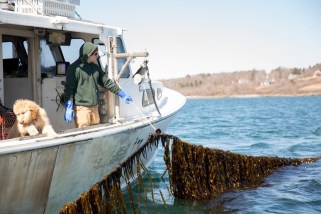
Justin Papkee, kept company by his dog, Seguin, pulling up a line of kelp. Harvesting wild kelp is ancient, but farming it is a relatively new practice in the United States. Matt Cosby for The New York Times
PORTLAND, Me. — It was a sharp, windy March day, but the gray water of Casco Bay glimmered green in the sun. On his lobster boat, the Pull N’ Pray, Justin Papkee scanned the surface of the ocean, searching for his buoys. But he wasn’t looking for lobster traps.
Mr. Papkee was farming, not fishing: His crop, clinging to ropes beneath the cold waves, was seaweed, thousands of pounds of brownish kelp undulating under the surface. Growing at a rate of 4 to 6 inches per day for the past six months, it was nearly ready to be harvested and sent to restaurants like Blue Hill at Stone Barns, Estela, Houseman, Saint Julivert Fisherie and Luke’s Lobster in New York, and Honey Paw, Chaval and the Purple House here in Maine.
Justin’s father, Chris Papkee, at left, and Jimmy Ranaghan removing the kelp from the long ropes on which it grows. Matt Cosby for The New York Times
He pulled a blade of kelp from his line and handed me a long, translucent strip. I took a bite, and then another, seawater running down my chin.
I’d eaten plenty of seaweed salads at Japanese and vegan restaurants, but this was not that. A variety called skinny kelp, it was lightly salty and profoundly savory, with a flavor like ice-cold oyster liquor, and a crisp, snappy texture somewhere between stewed collard greens and al dente fettuccine. The chef Brooks Headley, who adds it in slippery slivers to the barbecued carrots he serves at Superiority Burger in New York, described it in an email as “insanely delicious and texturally incredible.” Continue reading
When Bill McKibben Speaks to Elizabeth Kolbert, Listen
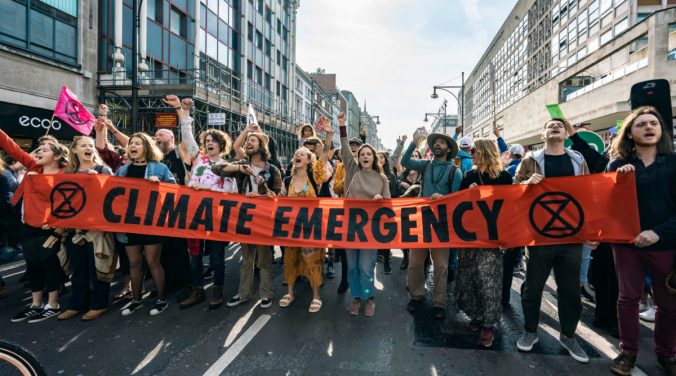
Climate activists block traffic in London’s Oxford Circus on April 19, part of a string of protests organized by Extinction Rebellion. COURTESY OF VLADIMIR MOROZOV/AKX MEDIA
Two luminaries on climate, in conversation:
Why Bill McKibben Sees Rays of Hope in a Grim Climate Picture
The world has done little to tackle global warming since Bill McKibben’s landmark book on the subject was published in 1989. In ane360 interview, McKibben talks about the critical time lost and what can be done now to avoid the worst impacts of climate change.
Three decades ago, Bill McKibben published The End of Nature, the first book on climate change aimed at a general audience. McKibben went on to found the international environmental group 350.org, help launch the fossil fuel divestment movement, and write a dozen more non-fiction books, as well as a novel. In 2014, McKibben received the Right Livelihood Award, sometimes referred to as the “alternative Nobel,” for mobilizing popular support for “strong action to counter the threat of global climate change.”
McKibben’s latest book, Falter: Has the Human Game Begun to Play Itself Out?, was published this month and debuted last week on the New York Times bestseller list. In an interview with Yale Environment 360 , McKibben talks about why the critical time for action on climate was missed, where he still finds hope, and what the world will look like three decades from now.
“Thirty or 50 years out, the world’s going to run on sun and wind, because they’re free,” McKibben says. “The question is… what kind of world will it be?”
Yale Environment 360: It’s almost exactly 30 years since you published The End of Nature. One way to read that book is as a warning. How you would characterize Falter? Is it also a warning, or are we beyond that?
Bill McKibben: Look, 30 years ago this was all still prospective. You couldn’t really take a picture of climate change yet. Now, having wasted 30 years, we’re at the point where it’s a dominant fact of everyday life for hundreds of millions of people and promising to be the overwhelming fact of our time in the years ahead. It’s too late, obviously, to stop climate change. I hope that the book gets across that it may not be too late to keep it from getting absolutely out of control. It’s not a warning. It’s some combination of a report and a chronicle and a plea, I think. Continue reading
History As Told By Trees
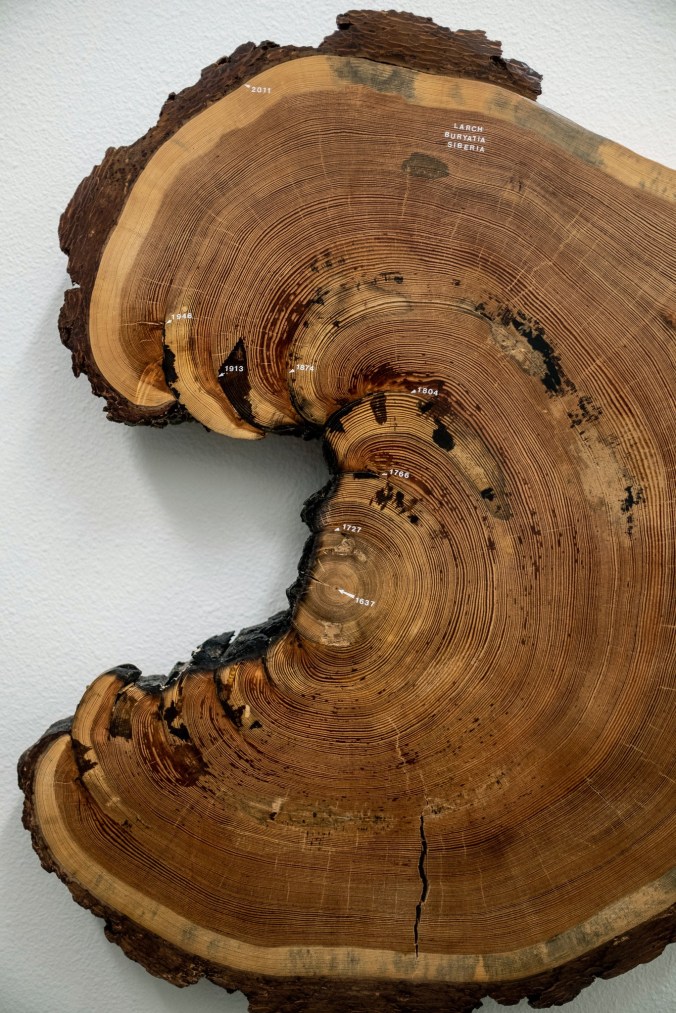
A sample from Siberia, with the core dating from 1637 and the outer ring from 2011, hangs on a wall at the research lab on the University of Arizona campus in Tucson. Adriana Zehbrauskas for The New York Times
Thanks to Jim Robbins, as always:
Chronicles of the Rings: What Trees Tell Us
Studying the historical data stored in centuries-old trees is a burgeoning field, with labs around the world learning more about historical patterns of weather and climate and the effects on humans.
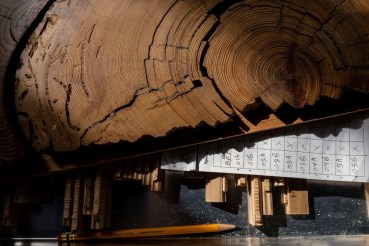
Wood samples for research at the Laboratory of Tree Ring Research at the University of Arizona. Adriana Zehbrauskas for The New York Times
TUCSON — From the early 1700s until the 1960s, the fast moving river of wind known as the North Atlantic Jet Stream, which drives weather extremes over Europe, was pretty steady on its course.
Then it became less predictable. But instrument data alone can’t tell the jet stream’s movements for comparison over the centuries, given that scientists began keeping records of weather events via instruments only in the late 19th century. Continue reading
Aana Art Equaling Life-Sized Conservation
Elephants have held highest honors in our family for decades, as symbols for the importance of Nature Conservation, and later infused with the power of Ganesh when we lived in India.
Elephant conservation has taken many forms over the years. When writing about the recent Real Elephant Collective collaboration exhibit that took place in Cochin a few months ago, I realized that art installations using elephants as symbols for big picture conservation have existed for some time.
Having been unable to attend the exhibit personally, Anoodha and the Curiouser team make me feel that I was there.
Plastic Soup & Creative Re-Use With A Critical Purpose
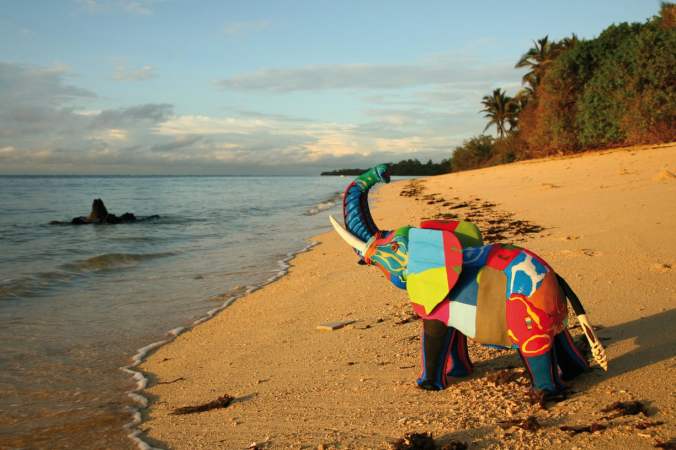
Ocean Sole turns reclaimed flip-flops into colourful, hand-made animal toys and sculptures. Tonnes of flip-flops wash up on the east African coast every year.
Photograph: Courtesy of Ocean Sole/Plastic Soup
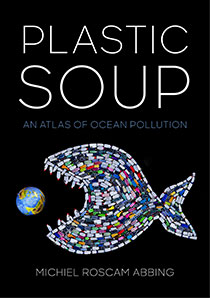 And speaking of plastics, a new book has come to our attention thanks to the Guardian, and thanks to Island Books for the explanation of the book:
Plastics have transformed every aspect of our lives. Yet the very properties that make them attractive—they are cheap to make, light, and durable—spell disaster when trash makes its way into the environment. Plastic Soup: An Atlas of Ocean Pollution is a beautifully-illustrated survey of the plastics clogging our seas, their impacts on wildlife and people around the world, and inspirational initiatives designed to tackle the problem.
Peter Smith made this floating work, World of Litter, in 2012.
Photograph: Courtesy of Jos van Zetten/Plastic SoupIn Plastic Soup, Michiel Roscam Abbing of the Plastic Soup Foundation reveals the scope of the issue: plastic trash now lurks on every corner of the planet. With striking photography and graphics, Plastic Soup brings this challenge to brilliant life for readers. Yet it also sends a message of hope; although the scale of the problem is massive, so is the dedication of activists working to check it. Plastic Soup highlights a diverse array of projects to curb plastic waste and raise awareness, from plastic-free grocery stores to innovative laws and art installations.
According to some estimates, if we continue on our current path, the oceans will contain more plastic than fish by the year 2050. Created to inform and inspire readers, Plastic Soup is a critical tool in the fight to reverse this trend.

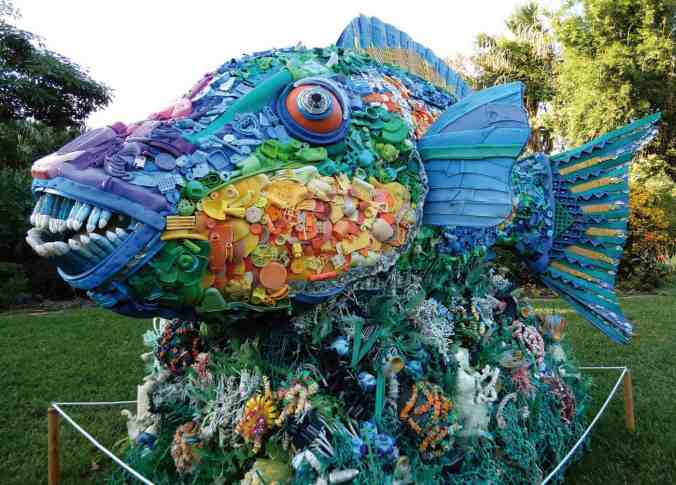
Washed Ashore makes larger-than-life sculptures of marine animals, like this parrotfish, to make people aware of plastic pollution.
Photograph: WashedAshore.org/Plastic Soup
A Game of Arboreal Chess Against Climate Change
Illustrations by Andrew Khosravani
Those familiar with this site know that climate change denial would find difficult footing; no leap of faith is required to take it as scientific fact. We appreciate the following examples of learning from recent history of forest collapse and planning for environmental changes accordingly.
Can Humans Help Trees Outrun Climate Change?
SCITUATE, R. I. — Foresters began noticing the patches of dying pines and denuded oaks, and grew concerned. Warmer winters and drier summers had sent invasive insects and diseases marching northward, killing the trees.
If the dieback continued, some woodlands could become shrub land.
Most trees can migrate only as fast as their seeds disperse — and if current warming trends hold, the climate this century will change 10 times faster than many tree species can move, according to one estimate. Rhode Island is already seeing more heat and drought, shifting precipitation and the intensification of plagues such as the red pine scale, a nearly invisible insect carried by wind that can kill a tree in just a few years.
The dark synergy of extreme weather and emboldened pests could imperil vast stretches of woodland.
So foresters in Rhode Island and elsewhere have launched ambitious experiments to test how people can help forests adapt, something that might take decades to occur naturally. One controversial idea, known as assisted migration, involves deliberately moving trees northward. But trees can live centuries, and environments are changing so fast in some places that species planted today may be ill-suited to conditions in 50 years, let alone 100. No one knows the best way to make forests more resilient to climatic upheaval.
These great uncertainties can prompt “analysis paralysis,” said Maria Janowiak, deputy director of the Forest Service’s Northern Institute of Applied Climate Science, or N.I.A.C.S. But, she added, “We can’t keep waiting until we know everything.” Continue reading
Know Your Numbers

Credit Tyler Varsell; Shutterstock
Coinciding with Earth Day the NYTimes Environment team recently initiated the Climate FWD newsletter, emailing readers weekly with stories and insights about climate change.
We’ve been writing about plastics since the inception of this site; it’s alternatives, environmental impacts, and even creative applications with it’s existence.
Studies are clear that reducing plastic use and production is multiple steps better than recycling, yet considering the ubiquity of the material, the latter has it’s place.
One Thing You Can Do: Know Your Plastics
Ever notice those recycling symbols, the triangles with the numbers inside, on plastic packaging and containers? I always assumed they meant the plastic was recyclable. But that’s not necessarily the case.
Those numbers are resin identification codes, and they tell what kind of plastic the item is made from. And not all plastic is created equal.
Identifying what types of plastics are recyclable can be challenging because plastics do not always carry a resin code and because not all recycling programs are equal, either. Generally speaking, though, some categories of plastic are more widely recyclable in the United States.
“We always encourage people to focus on Nos. 1, 2 and 5 because we have great markets for them in the U.S.,” said Brent Bell, vice president of recycling at Waste Management, a major garbage collection and recycling company.
Water and soda bottles, milk jugs, laundry detergent bottles, yogurt cups and butter tubs are mostly made of these plastics. You could lend a helping hand by rinsing these kinds of containers and removing labels.
Nature Is In Our Hands

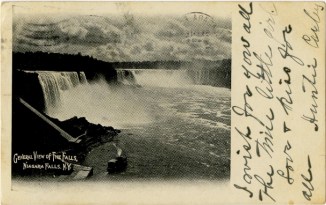 Before moving to Costa Rica in the mid-1990s I was working for a few years at a desk with images like the one above taped to the walls around the desk, and postcards from the previous century, like the one to the right, scattered about for inspiration.
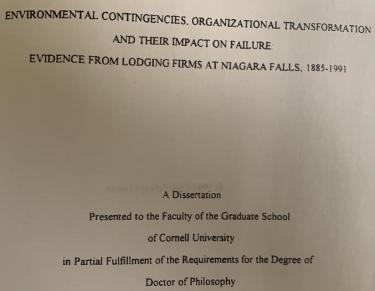 On the desk were drafts of a dissertation whose summary, on page 131, states: “…the results of the first hypothesis suggest that lodging firms in a tourism destination, such as Niagara Falls, should be directly involved with the strengthening and support of the institutional environment in which they operate.”
In other words, if you benefit from nature for your livelihood one of your best investments will be in building and strengthening institutions that protect nature. It may now sound like stating the obvious, but Nobel laureate economists made claims to the contrary that were treated as gospel truth twenty five years ago.

So 132 pages, not including bibliography, were used to make the point. Ever since, members of our team have wondered whether it could be summed up more simply. Meeting recently with graphic designers to discuss how to communicate more effectively about Organikos, we think now maybe the answer is yes.
 When we saw this hand and tree side by side in that meeting, we had a reaction that was related to what the graphic designer intended, but not exactly.
 Whatever his precise intent was, someone’s mouth opened and blurted out: Yes! Nature is in our hands. And so we have come upon a way to say a little more simply what Organikos means in addition to what Organikos does.
Floating Solar
When we think of Holland, we think of its engineering contributions to the world’s lower elevation places that have water management issues. Such as Kerala historically, and soon to be many more places due to climate change-related water levels rising. Here is a novel twist on using their expertise with water, for which we give thanks to the Guardian:
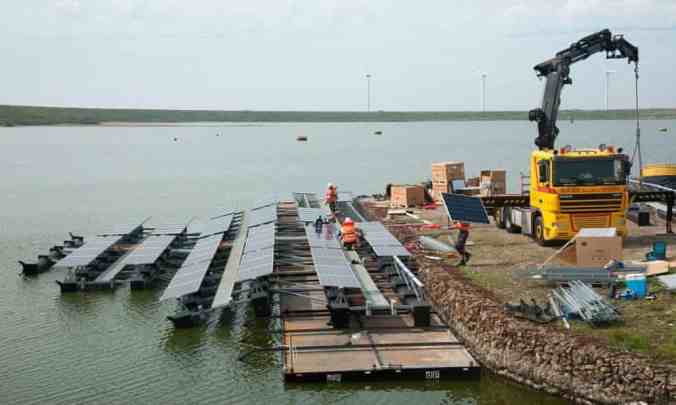
The islands will contain 73,500 panels. Photograph: Floating Solar
Dutch engineers build world’s biggest sun-seeking solar farm
The 15 floating solar islands will possess sunflower-like ability to turn to face the sun
Dutch engineers are building what will be the world’s largest archipelago of islands made up of sun-tracking solar panels.
Growing resistance to the construction of wind turbines or fields of solar panels on land has led the renewable energy industry to look for alternative options. Large islands of solar panels are under construction or already in place in reservoirs and lakes across the Netherlands, China, the UK and Japan. Continue reading
Charismatic Doesn’t Always Have to Be Cute
We applaud Pennsylvania lawmakers for choosing to highlight a creature whose presence in waterways indicates healthy ecosystems. Thanks to NPR for the story.
Snot Otter Emerges Victorious In Vote For Pennsylvania’s Official Amphibian
Pennsylvania’s soon-to-be official amphibian has more than its fair share of nicknames: snot otter, mud devil, Allegheny alligator, devil dog, lasagna lizard.
In short, it’s not exactly a looker.
But the Eastern hellbender salamander was the overwhelming choice of lawmakers for amphibian representation in the state. On Tuesday, the state’s House of Representatives voted 191-6 on a bill that would name the aquatic creature its state amphibian. The Senate passed the bill in February.
The hellbender is a nocturnal salamander that can grow more than 2 feet long. The mud-colored creature, covered in a layer of mucus, breathes primarily through loose flaps of thick, wrinkled skin that look a little bit like lasagna noodles.
The hellbender is also a canary for environmental degradation. Continue reading
Falter, Bill McKibben’s Latest Book

Mikel Jaso
My morning hike yesterday was accompanied by Bill McKibben. We have featured him so frequently in these pages that I was surprised that I had not already known he had a new book. So I found what I could read about the book, starting with Jared Diamond’s review (snippet below), and a book talk by the author himself (above).

A floating island of solar panels in Santiago, Chile.CreditEsteban Felix/Associated Press
Solar panels and nonviolent movements are the two of the causes for hope that McKibben mentions in his podcast interview, and in the book talk in Philadelphia, and according to Diamond’s review those are substantive but not sufficient. Hope and fear are both motivators and getting the balance right is the most important task in perhaps the entire history of mankind. I highlight only this part of the review because it is an echo of what Nathaniel Rich says in an interview about his own book:

…McKibben’s book is much more about grounds for fear, which take up some 18 chapters, than about grounds for hope, which take up five. Fear will motivate some people who are currently undecided, and increase the motivation of others already convinced. But in my experience most people need a strong dose of hope to be spurred to action. Why waste effort on a hopeless cause? One group that has learned this lesson is the cancer lobby, which succeeds at raising funds for research by stressing cures that may be just around the corner more than the grim statistics of the disease’s ongoing toll.
In fact, there are reasons for hope besides those McKibben discusses. One is the change in policies of some powerful multinational corporations. I can already hear the horrified screams of many of my environmentalist friends as I say this. Continue reading
The Wind Calls For Attention

A wind farm in Pomeroy, Iowa. Credit Jim Watson/Agence France-Presse — Getty Images
In the current political climate it may sound like howling in the wind, at first, but read on:
A Case for a Market-Driven Green New Deal
Any serious energy transformation will need to harness America’s powerful and creative economic engine.
By Amory B. Lovins and Rushad R. Nanavatty
Mr. Lovins and Mr. Nanavatty work at Rocky Mountain Institute, which is focused on creating a clean, low-carbon energy future.
The best thing to come from the Senate’s floor debate on the Green New Deal late last month may have been these eminently sane remarks, calling on lawmakers of both parties to “move together” in order “to lower emissions, to address the reality of climate change, recognizing that we’ve got an economy we need to keep strong, that we have vulnerable people we need to protect, that we have an environment that we all care about — Republicans and Democrats.”
Who said it? A Republican, Senator Lisa Murkowski of Alaska, who leads the Energy and Natural Resources Committee. “My hope is we get beyond the high-fired rhetoric to practical, pragmatic, bipartisan solutions,” she said on the chamber floor.
The path is there, if our leaders will only choose to take it. In 2011, Reinventing Fire, an energy study by Rocky Mountain Institute, where we work, showed how a business-led transition could triple energy efficiency, quintuple renewables and sustain an American economy 2.6 times larger in 2050 than it was in 2010 with no oil, coal or nuclear energy, and one-third less natural gas. The net cost was $5 trillion less than business-as-usual — or even more valuable if a price was put on carbon emissions.
Bird Habitat One Yard At A Time
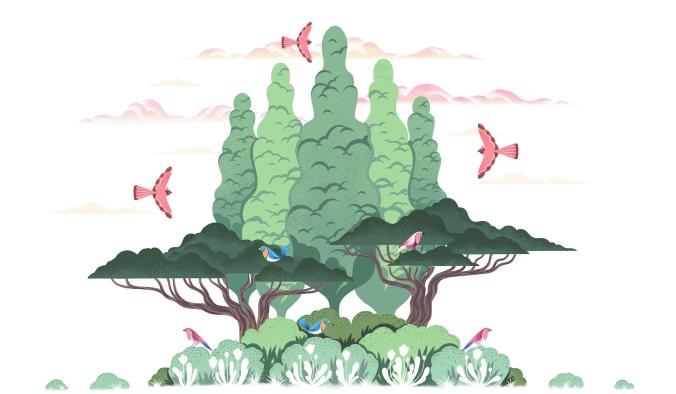
Photo: Illustration: Marina Muun
Sometimes the planning is as fulfilling as the outcome. Thanks to Janet Marinelli and Audubon Magazine:
Plant Trees that Turn Your Yard Into a Bird Oasis—and Carbon Sponge
Trees create habitat and store CO2 for decades to come. Just be sure to pick carefully.
One of the best ways to combat climate change is to fill your garden with as many trees, shrubs, and other plants as possible. Whether a tiny orchid or towering oak, all plants have the amazing ability to remove carbon dioxide from the atmosphere during photosynthesis and store it in their wood, shoots, and roots.
Because they’re the giants of the plant kingdom, trees are also powerhouses of carbon storage. In one year, a mature tree can absorb 48 pounds of CO2—about the amount emitted by driving 150 miles in a hybrid plug-in car. Collectively, according to the U.S. Forest Service, trees offset 10 to 20 percent of U.S. emissions from burning fossil fuels each year. The carbon benefits really begin to add up when you consider that trees fight global warming in other ways. For example, carefully placed trees can reduce the energy required to heat and cool a home by 25 percent (see tips here on how to place trees). Because they cool the air by casting shade and releasing water vapor when they breathe, trees also alleviate one of the most underestimated health threats of climate change—heat waves. Continue reading
Organikos & Coffee Restoration

The image above shows where coffee can be planted on land that currently has grass cover. For most of the last century that land had high grade arabica coffee growing on it, but two decades ago the coffee was removed. The residential value of the land was seen to be greater than the agricultural value, and a large plantation was subdivided into parcels between 3 and 10 acres.
 That was then, this is now. Coffee is more valuable than grass. And the value of coffee that is as world class as what Seth planted at Xandari and also resistant to the challenges brought on by climate change is even greater. The trees that will be planted to shade the coffee will be of greater value–to birds as well as to the coffee–than the view of undulating hillside. The image above is a first step in the planning process of this restoration initiative. Organikos will start selling coffee in August, and the proceeds of those sales will pay for the restoration and ongoing improvements of this lot. That is an example of what we mean by 100% Forward.
Faith-Based Green Resistance

In 2015, the Adorers of the Blood of Christ, a congregation of nuns, learned that an energy company planned to build a pipeline on their land. So they started a resistance movement. Photograph by Dave Parry
Thanks to Eliza Griswold, who writes about religion (which does not feature often in our pages) and occasionally finds an overlap with environmental causes:
The Renegade Nuns Who Took On a Pipeline
On a crisp October morning in 2017, Sister Sara Dwyer, a sixty-eight-year-old nun wearing a red T-shirt that read “you will not spoil our land,” led three elderly nuns and seventy other protesters onto an industrial work site in Lancaster County, Pennsylvania. Many carried red banners stencilled with wheat sheaves. They were there to protest Williams, an Oklahoma-based pipeline company that was trying to build the Atlantic Sunrise Pipeline, a two-hundred-mile natural gas pipeline that would carry shale gas from fields in northeastern Pennsylvania to the coast, where the fuel could be shipped abroad. The company was trying to lay the line under a cornfield belonging to the nuns, and the sisters had decided to fight back, hoping that they might draw attention to the issue of climate change. “Just being in resistance is not the goal,” Dwyer told me. “The goal is spiritual conversion.” As the protesters entered the work site, Malinda Clatterbuck, who had helped plan the event with the sisters, reminded the participants, “This is a nonviolent protest in all ways. We’re not going to yell or speak to the workers.” She walked around asking each person to nod in agreement. “If you’re angry today, go home and come back to an action once you’re in a better place,” she said. Continue reading
Climate Change May Be Illegal
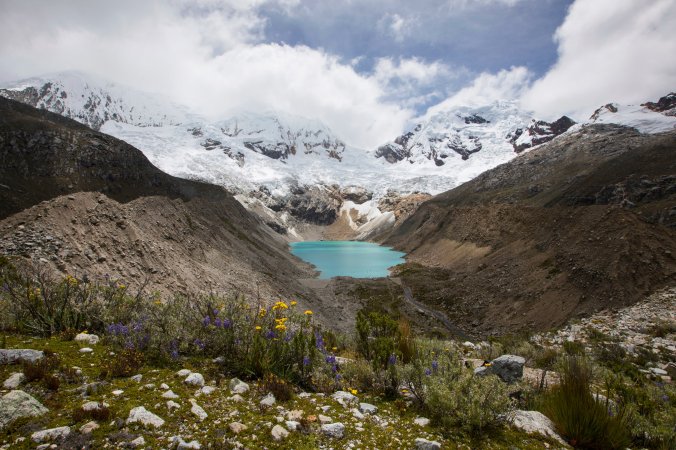
Lake Palcacocha in the Peruvian Andes. Felipe Fittipaldi for The New York Times
Brooke Jarvis, whose mastery of the complex environmental story we have pointed to a couple times already, shares the story below about a novel legal approach to fighting climate change. It is long, detailed and even more complex than the other stories we have seen by her. But if her subject prevails, the result may be even more profound as well. These two photos alone should draw you in. Thanks to the New York Times Magazine:

The city of Huaraz in the Peruvian Andes. Felipe Fittipaldi for The New York Times
In the mountains far above the red-brick city, behind a locked gate, there is a great, green valley. Its high stone walls are streaked by waterfalls; its floor dotted with flowers and grazed by horses and cows. Six boulder-strewn miles beyond the gate, the valley ends abruptly at an enormous wall of rock and ice. Beneath it lies a stretch of calm, bright water in milky turquoise — Lake Palcacocha. Though few of its residents have ever seen this lake, the city below lives in fear of it. Continue reading
Horses Reversing Domestication
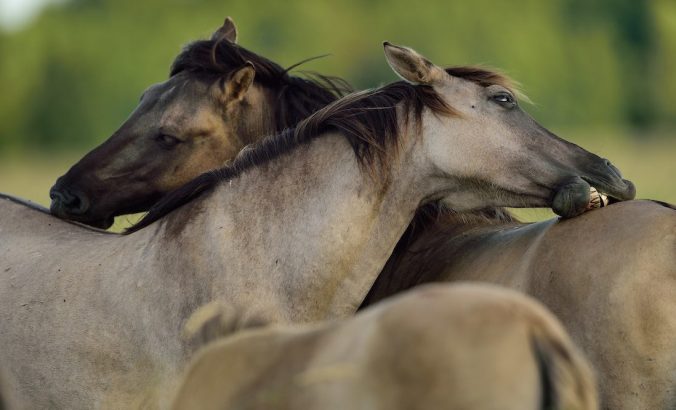
The group of 23 wild Konik horses which arrived in the Ukrainian village of Orlovka on March 26 represents the first translocation of such animals into the Danube Delta. SOLVIN ZANKL / REWILDING EUROPE
Thanks, as always, to our friends at Rewilding Europe for another story about an animal we always think of as one of the oldest examples of domestication, and its role in rewilding:
Natural grazing in the Ukrainian Danube Delta boosted by arrival of Konik horses
Representing the first ever translocation of Konik horses into the Danube Delta, the shipment of 23 animals travelled by road from Latvia to the Ukrainian village of Orlovka. By helping to create and maintain mosaic landscapes, their grazing will help to boost biodiversity in the Danube Delta rewilding area.
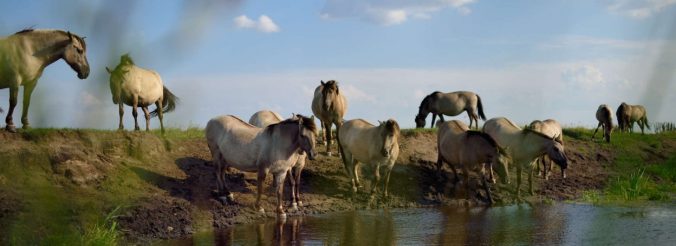
The sturdy Koniks, which lived over 20 years in the wild in Latvia, are well-suited to life in the Danube Delta. SOLVIN ZANKL / REWILDING EUROPE
Two herds of wild Konik horses will soon be roaming the landscapes of the Ukrainian Danube Delta, boosting the area’s biodiversity through their natural grazing. A shipment of 23 horses (made up of two family groups) arrived in the small delta village of Orlovka on March 26, having made the long road journey from Latvia. Despite the lengthy trip of around 1800 kilometres, which took nearly two days and two nights, all of the animals were pronounced fit and well on arrival by a veterinarian. Continue reading
 Organikos